Trump Administration Preparing Fix for Obamacare Risk Payments

https://www.bloomberg.com/news/articles/2018-07-19/obamacare-potential-fix-is-prepared-after-halt-in-risk-payments

Image result for Trump Administration Preparing Fix for Obamacare Risk Payments


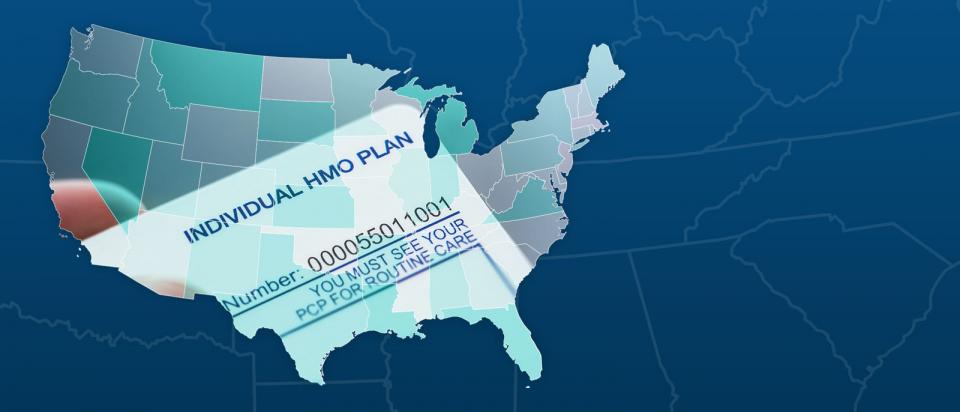
The Trump administration is preparing a regulation that would allow the resumption of billions of dollars in payments to health insurers in Obamacare.

The Office of Management and Budget was sent a rule on Wednesday from the Centers for Medicare and Medicaid Services tied to the risk-adjustment program, which transfers money to insurers who take on sicker customers.

An administration official said the rule is an option being considered to resolve the legal dispute that has held up the payments.

The rule is labeled as an interim final rule, a status that would allow it to go into effect immediately. It’s titled “Ratification and Reissuance of the Methodology for the HHS-operated Permanent Risk Adjustment Program under the Patient Protection and Affordable Care Act.”

The administration official asked not to be identified, because the rule hasn’t been made public. Details of government rules aren’t released to the public until they’re reviewed by the budget office.

Health-insurance industry groups had pushed the Trump administration to issue an interim final rule for the risk-adjustment program to resolve a legal dispute that had threatened to halt payments under the program. The risk-adjustment payments, worth $10.4 billion for 2017, are part of a program in the Affordable Care Act meant to help balance the insurance markets when some insurers inevitably got stuck with costlier patients.

Insurers had warned they might have to raise Obamacare premiums for 2019 if the dispute wasn’t resolved quickly. The program moves money among insurers, transferring funds from insurers with healthier customers to those with sicker ones. Among publicly traded insurers, Centene Corp. and Molina Healthcare Inc. owe money to other insurers under the program, while Anthem Inc. is set to receive funds.

The Blue Cross Blue Shield Association, an industry trade group whose members include Anthem, said it approves of the effort, though it will need to examine the details of the rule carefully once it’s available.

“This regulation needs to be put in place quickly and effectively in order to avoid disruption for consumers and small businesses who will be purchasing coverage this fall,” Kris Haltmeyer, vice president for legislative and regulatory policy at the association, said by email.


Sniffles? Cancer? Under Medicare Plan, Payments for Office Visits Would Be Same for Both


Image result for Sniffles? Cancer? Under Medicare Plan, Payments for Office Visits Would Be Same for Both

The Trump administration is proposing huge changes in the way Medicare pays doctors for the most common of all medical services, the office visit, offering physicians basically the same amount, regardless of a patient’s condition or the complexity of the services provided.

Administration officials said the proposal would radically reduce paperwork burdens, freeing doctors to spend more time with patients. The government would pay one rate for new patients and another, lower rate for visits with established patients.

“Time spent on paperwork is time away from patients,” said Seema Verma, the administrator of the Centers for Medicare and Medicaid Services. She estimated that the change would save 51 hours of clinic time per doctor per year.

But critics say the proposal would underpay doctors who care for patients with the greatest medical needs and the most complicated ailments — and could discourage some physicians from taking Medicare patients. They also say it would increase the risk of erroneous and fraudulent payments because doctors would submit less information to document the services provided.

Medicare would pay the same amount for evaluating a patient with sniffles and a head cold and a patient with complicated Stage 4 metastatic breast cancer, said Ted Okon, the executive director of the Community Oncology Alliance, an advocacy group for cancer doctors and patients. He called that “simply crazy.”

Dr. Angus B. Worthing, a rheumatologist, said he understood the administration’s objective. “Doctors did not go to medical school to type on a computer all day,” he said.

But, he added: “This proposal is setting up a potential disaster. Doctors will be less likely to see Medicare patients and to go into our specialty. Patients with arthritis and osteoporosis may have to wait longer to see the right specialists.”

Private insurers often follow Medicare’s lead, so the proposed change has implications that go far beyond the Medicare program.

The proposal, part of Medicare’s physician fee schedule for 2019, is to be published Friday in the Federal Register, with an opportunity for public comment until Sept. 10. The new policies would apply to services provided to Medicare patients starting in January.

“We anticipate this to be a very, very significant and massive change, a welcome relief for providers across the nation,” Ms. Verma said, adding that it fulfills President Trump’s promise to “cut the red tape of regulation.”

“Evaluation and management services” are the foundation of an office visit. Medicare now recognizes five levels of office visits, with Level 5 involving the most comprehensive medical history and physical examination of a patient, and the most complex decision making by the doctor.

Level 1 is mostly for nonphysician services: for example, a five-minute visit with a nurse to check the blood pressure of a patient recently placed on a new medication.

A Level 5 visit could include a thorough hourlong evaluation of a patient with heart failure, chronic obstructive pulmonary disease, high blood pressure and diabetes with blood sugar out of control.

“The differences between Levels 2 to 5 are often really difficult to discern and time-consuming to document,” said Dr. Kate Goodrich, Medicare’s chief medical officer.

Medicare payment rates for new patients now range from $76 for a Level 2 office visit to $211 for a Level 5 visit. The Trump administration proposal would establish a single new rate of about $135. That could mean gains for doctors who specialize in routine care, but a huge hit for those who deal mainly with complicated patients, such as rheumatologists and oncologists.

For established patients, the proposal calls for a payment rate of about $93, in place of current rates ranging from $45 to $148 for the four different levels of office visits.

“This proposal is likely to penalize physicians who treat sicker patients, even though they spend more time and effort and more resources managing those patients,” said Deborah J. Grider, who has audited tens of thousands of medical records and written a book on the subject.

Dr. Atul Grover, the executive vice president of the Association of American Medical Colleges, said, “The single payment rate may not reflect the resources needed to treat patients we see at academic medical centers — the most vulnerable patients, those who have complex medical needs.”

While the proposal would redistribute money among doctors, it is not intended to cut spending under Medicare’s physician fee schedule, which totals roughly $70 billion a year.

If the new rules really do simplify their work, doctors say, they will be elated.

“We can focus more on patient care and less on the administrative burden of documentation and billing,” said Dr. David B. Glasser, an assistant professor of ophthalmology at the Johns Hopkins University School of Medicine. “We sometimes joke that it can be more complicated trying to get the coding level right than it is to figure out what’s wrong with the patient.”

But, Dr. Glasser said, the financial impact of the proposal on eye doctors is not yet clear.

Documentation requirements have increased in response to growing concerns about health care fraud and improper payments that cost Medicare billions of dollars a year.

In many cases, federal auditors could not determine whether services were actually provided or were medically necessary. In some cases, they found that doctors had billed Medicare — and patients — for more costly services than they actually performed.

In a report required by federal law, officials estimated early this year that 18 percent of Medicare payments for office visits with new patients were incorrect or improper, about three times the error rate for established patients.

To prevent fraud and abuse, Medicare officials have repeatedly told doctors to document their claims. “If it is not documented, it has not been done” — that is the principle set forth in Medicare’s billing manual for doctors.

The Trump administration is moving away from that policy.

“We have proposed to move to a system with minimal documentation requirements for Levels 2 to 5 and one single payment rate,” Dr. Goodrich said.

Doctors now must provide more documentation for higher levels of care. Under the proposal, “practitioners would only need to meet documentation requirements currently associated with a Level 2 visit.” That would reduce the need for audits to verify the level of office visits.

Medicare officials acknowledged that doctors who typically bill at Levels 4 and 5 could see financial losses under the proposal. But they said some of the losses could potentially be offset by “add-on payments” for primary care doctors and certain other medical specialists.

With such adjustments, Medicare officials said, the impact on most doctors would be relatively modest. A table included in the proposed rule indicates that obstetricians and gynecologists would gain the most, while dermatologists, rheumatologists and podiatrists would lose the most.


Medicare option is popular but vague among Democrats

https://www.axios.com/democrats-single-payer-public-option-health-care-1532047129-3b97bb26-f2ff-407a-af5b-6821981b6e45.html

A public health care plan — once deemed too liberal to make it into the Affordable Care Act — is now the more moderate position for many Democrats who are uncomfortable with the party’s rapid embrace of “Medicare for All.”

Yes, but: Democrats haven’t decided yet what a public option should look like.

Show less
“In some ways, a public option or buy in to Medicare or Medicaid has become a place for Democrats uncomfortable with single payer to land.”
— Larry Levitt, Kaiser Family Foundation

Driving the news: Members of Congress have now introduced as many as five bills expanding government involvement in health care, as Vox has reported. A public option is also coming up frequently on the campaign trail, either as a step toward “Medicare for All” or as a policy goal in and of itself.

  • In Iowa’s third district, which is rated as a toss-up, Democrat Cindy Axne is running on a public option “that allows Americans to choose between Medicare or Medicaid.”
  • In New Jersey’s third district, another toss-up, Democrat Tom Malinowski supports creating a universal Medicare option that people could buy into.
  • “I think the much more plausible path to a single payer health care system is through a public option. I just don’t know that the country is ready to support a bill that outlaws private insurance,” said Sen. Chris Murphy, a sponsor of one of the public option plans.

Flashback: A public option for the individual market was almost included in the Affordable Care Act, but former Sen. Joe Lieberman blocked it.

  • “It was too liberal for Joe Lieberman” — not for the entire party — back in 2009, Democratic Minority Whip Dick Durbin told me. “We had 60 votes and he said he wouldn’t vote for it. That was the end of that.”
  • “You may have more people today supporting single payer, Medicare for All than 10 years ago, but I’m not sure that the floor has moved as much as the ceiling has,” Murphy said.

The big question: Some Democrats want a public option to be offered in the employer market in addition to the individual market.

  • “Now, a public option for just the individual market would likely be unsatisfying to single payer supporters, providing no relief from health care costs for the much larger number of people with employer coverage,” Levitt said.

The details: A central tenet of adopting a public option is using the government’s purchasing power to bring down underlying health care prices.

  • “The common denominator of all Democrats is that they want more affordable options for people, and how broadly you apply to tool depends on how broadly you define the problem right now,” said Chris Jennings, a Democratic health care consultant.
  • “Lurking behind the public option discussion is really the issue of health care prices. A public option of any kind would use the leverage and regulatory power of the government to get lower prices for health care,” Levitt said.
  • But determining how far to go would be tricky and comes with risk.
  • “There is some room to put some downward pressure on provider prices without having significant adverse consequences on access to care or quality of care, but the big question is how much,” said Aviva Aron-Dine of the left-leaning Center on Budget and Policy Priorities.


“The Inevitable Math behind Entitlement Reform”

“The Inevitable Math behind Entitlement Reform”

Image result for Entitlement Reform


That’s the title of a new NEJM Perspective by Michael Chernew and me. After crunching the numbers, our argument is that for long term cost control we will probably need to address growth in per capita health care utilization. The easy “solutions” won’t be enough.

Much of the projected increase in inflation-adjusted spending on health care entitlements, particularly for Medicare, stems from assumed increases in utilization (e.g., 2.75 percentage points of the 5.33% annual projected growth for Medicare spending). Strategies for holding utilization growth below projections (and more in line with very recent historical growth) will thus be central to the success of any attempt at cost containment.

[One approach] is to dissuade patients from seeking care by charging them more at the point of service. About 85% of Medicare beneficiaries have supplemental plans (e.g., Medigap) that reduce their out-of-pocket costs. Policies that limit the generosity of such plans could reduce Medicare spending considerably. However, such strategies would increase beneficiaries’ financial risks, reduce access to care, and probably exacerbate health disparities.

A second strategy is to help beneficiaries improve their health by enhancing long-term care management and preventive services with the goal of avoiding more expensive services. Evidence suggests that although this type of approach is probably beneficial to patients and may be cost-effective, it is generally not cost saving.

The piece continues with some more promising approaches, in our view. Click to read it in full (unfortunately pay-walled though).


Hidden From View: The Astonishingly High Administrative Costs of U.S. Health Care

Hidden From View: The Astonishingly High Administrative Costs of U.S. Health Care

Related image

It takes only a glance at a hospital bill or at the myriad choices you may have for health care coverage to get a sense of the bewildering complexity of health care financing in the United States. That complexity doesn’t just exact a cognitive cost. It also comes with administrative costs that are largely hidden from view but that we all pay.

Because they’re not directly related to patient care, we rarely think about administrative costs. They’re high.

A widely cited study published in The New England Journal of Medicine used data from 1999 to estimate that about 30 percent of American health care expenditures were the result of administration, about twice what it is in Canada. If the figures hold today, they mean that out of the average of about $19,000 that U.S. workers and their employers pay for family coverage each year, $5,700 goes toward administrative costs.

Such costs aren’t all bad. Some are tied up in things we may want, such as creating a quality improvement program. Others are for things we may dislike — for example, figuring out which of our claims to accept or reject or sending us bills. Others are just necessary, like processing payments; hiring and managing doctors and other employees; or maintaining information systems.

That New England Journal of Medicine study is still the only one on administrative costs that encompasses the entire health system. Many other more recent studies examine important portions of it, however. The story remains the same: Like the overall cost of the U.S. health system, its administrative cost alone is No. 1 in the world.

Using data from 2010 and 2011, one study, published in Health Affairs, compared hospital administrative costs in the United States with those in seven other places: Canada, England, Scotland, Wales, France, Germany and the Netherlands.

At just over 25 percent of total spending on hospital care (or 1.4 percent of total United States economic output), American hospital administrative costs exceed those of all the other places. The Netherlands was second in hospital administrative costs: almost 20 percent of hospital spending and 0.8 percent of that country’s G.D.P.

At the low end were Canada and Scotland, which both spend about 12 percent of hospital expenditures on administration, or about half a percent of G.D.P.

Hospitals are not the only source of high administrative spending in the United States. Physician practices also devote a large proportion of revenue to administration. By one estimate, for every 10 physicians providing care, almost seven additional people are engaged in billing-related activities.

It is no surprise then that a majority of American doctors say that generating bills and collecting payments is a major problem. Canadian practices spend only 27 percent of what U.S. ones do on dealing with payers like Medicare or private insurers.

Another study in Health Affairs surveyed physicians and physician practice administrators about billing tasks. It found that doctors spend about three hours per week dealing with billing-related matters. For each doctor, a further 19 hours per week are spent by medical support workers. And 36 hours per week of administrators’ time is consumed in this way. Added together, this time costs an additional $68,000 per year per physician (in 2006). Because these are administrative costs, that’s above and beyond the cost associated with direct provision of medical care.

In JAMA, scholars from Harvard and Duke examined the billing-related costs in an academic medical center. Their study essentially followed bills through the system to see how much time different types of medical workers spent in generating and processing them.

At the low end, such activities accounted for only 3 percent of revenue for surgical procedures, perhaps because surgery is itself so expensive. At the high end, 25 percent of emergency department visit revenue went toward billing costs. Primary care visits were in the middle, with billing functions accounting for 15 percent of revenue, or about $100,000 per year per primary care provider.

“The extraordinary costs we see are not because of administrative slack or because health care leaders don’t try to economize,” said Kevin Schulman, a co-author of the study and a professor of medicine at Duke. “The high administrative costs are functions of the system’s complexity.”

Costs related to billing appear to be growing. A literature review by Elsa Pearson, a policy analyst with the Boston University School of Public Health, found that in 2009 they accounted for about 14 percent of total health expenditures. By 2012, the figure was closer to 17 percent.

One obvious source of complexity of the American health system is its multiplicity of payers. A typical hospital has to contend not just with several public health programs, like Medicare and Medicaid, but also with many private insurers, each with its own set of procedures and forms (whether electronic or paper) for billing and collecting payment. By one estimate, 80 percent of the billing-related costs in the United States are because of contending with this added complexity.

“One can have choice without costly complexity,” said Barak Richman, a co-author of the JAMA study and a professor of law at Duke. “Switzerland and Germany, for example, have lower administrative costs than the U.S. but exhibit a robust choice of health insurers.”

An additional source of costs for health care providers is chasing patients for their portion of bills, the part not covered by insurance. With deductibles and co-payments on the rise, more patients are facing cost sharing that they may not be able to pay, possibly leading to rising costs for providers, or the collection agencies they work with, in trying to get them to do so.

Using data from Athenahealth, the Harvard health economist Michael Chernew computed the proportion of doctors’ bills that were paid by patients. For relatively small bills, those under $75, over 90 percent were paid within a year. For larger ones, over $200, that rate fell to 67 percent.

“It’s a mistake to think that billing issues only reflect complex interactions between providers and insurers,” Mr. Chernew said. “As patients are required to pay more money out of pocket, providers devote more resources to collecting it.”

A distinguishing feature of the American health system is that it offers a lot of choice, including among health plans. Because insurers and public programs have not coordinated on a set of standards for pricing, billing and collection — whatever the benefits of choice — one of the consequences is high administrative burden. And that’s another reason for high American health care prices.


Healthcare Triage News: Juice – It’s Sugary, It’s Caloric, and It’s Not Great for You

Healthcare Triage News: Juice – It’s Sugary, It’s Caloric, and It’s Not Great for You

Image result for Healthcare Triage News: Juice – It’s Sugary, It’s Caloric, and It’s Not Great for You


How Would State-Based Individual Mandates Affect Health Insurance Coverage and Premium Costs?

https://www.commonwealthfund.org/publications/fund-reports/2018/jul/state-based-individual-mandate?omnicid=EALERT%25%25jobid%25%25&mid=%25%25emailaddr%25%25

How Would State-Based Individual Mandates Affect Health Insurance Coverage and Premium Costs?


ABSTRACT

  • Issue: The Tax Cuts and Jobs Act of 2017 eliminated the financial penalty of the Affordable Care Act’s individual mandate. States could reinstate a similar penalty to encourage health insurance enrollment, ensuring broad sharing of health care costs across healthy and sick populations to stabilize the marketplaces.
  • Goal: To provide state-by-state estimates of the impact on insurance coverage, premiums, and mandate penalty revenues if the state were to adopt an individual mandate.
  • Methods: Urban Institute’s Health Insurance Policy Simulation Model (HIPSM) is used to estimate the coverage and cost impacts of state-specific individual mandates. We assume each state adopts an individual mandate similar to the ACA’s.
  • Findings and Conclusion: If all states implemented individual mandates, the number of uninsured would be lower by 3.9 million in 2019 and 7.5 million in 2022. On average, marketplace premiums would be 11.8 percent lower in 2019. State mandate penalty revenues would amount to $7.4 billion and demand for uncompensated care would be $11.4 billion lower. The impact on coverage and on premiums varies in significant ways across states. For example, in 2019, the number of people uninsured would be 19 percent lower in Colorado and 10 percent lower in California if they implemented their own mandates. With mandates in place, average premiums would be 4 percent lower in Alaska and 15 percent lower in Washington.

Background

One of the Affordable Care Act’s central aims was to reform insurance markets by sharing health care risks and costs more broadly across the healthy and sicker populations. Strategies to accomplish this goal include modified community rating, guaranteed issue, and benefit standards, with the greatest changes made to nongroup insurance markets. Spreading risks tends to decrease costs for people with medical needs and increase them for healthy people. As a consequence, financial incentives to become and remain insured regardless of health status are necessary to ensure the risk pool is large and stable. The ACA established the individual responsibility requirement — also referred to as the individual mandate — to require most people to enroll in minimum essential health care coverage or pay a tax penalty. The Tax Cut and Jobs Act of 2017 sets the ACA’s penalties for individuals who remain uninsured to $0, beginning in 2019.

The Congressional Budget Office (CBO) estimated that eliminating the individual mandate penalties would lead to an additional 3 million uninsured people in 2019.1 It also estimated that premiums in the nongroup insurance market will increase by 15 percent between 2018 and 2019. Because of the elimination of mandate penalties, fewer healthy people are estimated to enroll in nongroup insurance; thus, the average nongroup insurance enrollee will be more likely to have higher health care expenses. As a result, premiums will be higher. Other pending changes, such as expansion of short-term, limited-duration plans, are expected to worsen the nongroup risk pool and increase premiums as well. The changes, taken together, may lead to some insurers ending or limiting their participation in ACA-compliant nongroup insurance markets.2 Acting on these concerns, some states have considered or passed legislation to implement state-specific individual mandates.3 New Jersey enacted its individual mandate on May 30, 2018;4 Massachusetts did so in 2006, well before the passage of the ACA.

This analysis provides estimates of the effects of state-specific individual mandates on insurance coverage, nongroup insurance premiums, federal and state government spending (including penalty revenue to states), and demand for uncompensated care. Findings are provided nationally as if every state adopted its own individual mandate and for 48 states and the District of Columbia (but excluding Massachusetts and New Jersey because they have their own mandates under current law), assuming each state adopts a penalty structure similar to that of the ACA. We do not anticipate every state taking this approach, but present findings this way for ease of exposition and as a reference point for understanding the effects of the mandate. (A full description of our methods is available below.)

Key Findings

Our central estimates assume that state mandates are implemented in each state as soon as the federal penalties are eliminated in 2019. The effect of a mandate grows over time as health care costs grow relative to incomes; we show some of our results in 2022 to illustrate this. State mandates would have two central effects. First, more people would retain insurance coverage to avoid the penalty. Second, premiums in the nongroup market would be lower because the insurance pool will not lose healthy people that would otherwise drop their coverage without a mandate. As a result, even more people will enroll because of the lower premiums.


HHS proposes allowing some drug importation, but impact would be limited

HHS proposes allowing some drug importation, but impact would be limited

Money pile and medicine pills representing medical expenses

Nevertheless, the proposed policy could take Martin Shkreli-like practices “out of the ballgame,” expert says.

Regulators could allow importation of certain drugs in an effort to keep prices down, under a proposal from the Department of Health and Human Services.

On Thursday, HHS Secretary Alex Azar requested that Food and Drug Administration Commissioner Scott Gottlieb create a working group to find how to safely import drugs from abroad in cases when their US-made marketed equivalents undergo dramatic price increases.

However, experts said the effect of such a policy on prices – if it passes – will be limited.

Azar pointed to the now infamous example of the toxoplasmosis drug Daraprim, whose price manufacturer Turing Pharmaceuticals increased from $13.50 per pill to $750 in 2015, drawing nationwide scorn for Turing and its CEO, Martin Shkreli. Shkreli was sentenced to seven years in prison in April following his August 2017 conviction on charges of securities fraud and conspiracy. Turing, which has since changed its name to Vyera Pharmaceuticals, is currently losing money, STAT reported, and shareholders will vote Friday on a proposal to change the name again, to Phoenixus.

Several political leaders have proposed allowing importation of drugs. In May, Republican Vermont Gov. Phil Scott signed a bill that would allow importation of drugs from Canada, though HHS must still certify the law. Independent Vermont Sen. Bernie Sanders also introduced a bill in the Senate, S. 469, The Affordable and Safe Prescription Drug Importation Act, that would allow the same, with cosponsorship from several Senate Democrats. The bill would wholesalers, pharmacies and individuals to import a range of medications.

However, the HHS proposal is more narrow, focusing specifically on drugs that have seen significant price increases. Gerard Anderson, professor of health policy and management at Johns Hopkins University, and several colleagues made a similar proposal in a paper published in JAMA in February 2016. Under their proposal, GlaxoSmithKline – the original manufacturer of Daraprim – would be able to import the drug from the United Kingdom, where it sells for less than $1 per tablet. The paper compared the proposal to FDA allowances for importation during shortages of critical medications.

Still, Anderson said in a phone interview that the HHS proposal will not likely have a broader spillover effect on drug prices, but will only affect the specific drugs that are included. “For a very narrow subset of medications, it could take the Martin Shkrelis out of the ballgame because these drugs are very inexpensive in other countries,” he said.

In addition to Turing, other companies that have become notorious for raising drug prices include Shkreli’s prior company, Retrophin, and Valeant Pharmaceuticals. Questcor Pharmaceuticals raised the price of Acthar Gel from $1,650 per vial to $23,269 in 2007, and the price has risen to $38,892 since Questcor’s 2014 acquisition by Mallinckrodt Pharmaceuticals. More recently, larger drug companies have also taken heat for smaller price increases. Pfizer backed down from a plan to raise the prices of about 100 of its medications after criticism from the Trump administration, while Novartis and Merck & Co. have pledged to limit price increases as well.

The government stipulating what constitutes a “dramatic price increase” could create a de facto price ceiling that drugmakers would stay under when changing their prices, said Lev Gerlovin, vice president at Boston-based consultancy Charles River Associates, in a phone interview. It’s hard to assess whether that would have a material effect on the industry, given that the ceiling may be greater than what most manufacturers already tend to do as a matter of course. However, while cautioning that he is not a Washington observer, Gerlovin said likely industry pushback citing patient safety concerns makes the proposal appear unlikely to pass.