Payer trade groups slam short-term health plan proposal

https://www.healthcaredive.com/news/payer-trade-groups-slam-short-term-health-plan-proposal/521941/


More organizations, including Aetna and the American Medical Association, submitted comments on the proposed rule Monday.

Dive Brief:

  • The Alliance of Community Health Plans (ACHP) and America’s Health Insurance Plans (AHIP) both slammed CMS’ proposal to expand short-term, limited duration (STLD) insurance plans, saying the proposed rule would undermine key consumer protections, lead to higher premiums in the individual market and jeopardize market stability.
  • The proposed rule, pushed by the Trump administration as a way to increase access to cheaper plan alternatives and sidestep the Affordable Care Act, would allow consumers to purchase plans for up to 12 months that do not adhere to federal rules for individual health insurance. STLD plans can charge those with pre-existing conditions more and may not cover ACA essential health benefits such as prescription drug coverage.
  • The insurance lobbies argued that other policy mechanisms would be more effective at improving the individual health insurance market. AHIP pointed to increasing 1332 state waiver flexibility and the adoption of regulations aimed at preventing improper steering of Medicare and Medicaid consumers into the individual market, and ACHP advocated for the creation of a federal reinsurance program as more effective ways to promote affordable coverage.

Dive Insight:

The comments are indicative that many insurers are hesitant to back health plans that lack the consumer protections the ACA put into place due to a fear such plans would destabilize the individual market. Monday is the last day to submit comments on the rule.

new Kaiser Family Foundation brief notes that many middle-income people not shielded by premium subsidies in the individual market would likely see premium costs increase. Combined with the individual mandate penalty being zeroed out, the effort to increase STLD plans could result in fewer individuals enrolled in the ACA market, adversely impacting its stability.

“Short-term plans were designed for consumers to use as temporary, stop-gap measures when moving between plans – not as long-term replacements for health insurance,” ACHP CEO Ceci Connolly said in a statement. “A broad, stable risk pool is crucial for providing affordable coverage and care. ACHP believes that other policy options, such as reinsurance, would be far more effective at promoting high-quality, affordable coverage and care for all Americans.”

ACHP argued the proposed rule should not be finalized, saying the current status-quo limit of 90 days should be maintained.

AHIP called for any final rule to limit the duration of STLD plans to six months, adding that the plans should be required to have a plain-language disclosure that the plans should not be considered comprehensive health insurance. The group argued that the effective date of any final rule should come no sooner than Jan. 1, 2020.

“As the Departments advance policies to expand access to lower-cost coverage choices for a subgroup of consumers, it is critical to improve the affordability of comprehensive coverage options for all Americans, regardless of health status,” Matthew Eyles, AHIP COO, wrote in the group’s comment.

But major insurer Aetna, which left AHIP in 2016, said in its comment STLD plans “can be a valuable option for many consumers.”

The insurer argued that such plans must be transparent with disclosure language, limit any look-back period for pre-existing conditions to 12 months and define a minimum floor of benefits including inpatient hospital services, physician services, mental health and substance abuse services and one annual physical and annual well-woman visit before the deductible.

A group of Senate Democrats were among those asking for the rule to not be finalized, arguing it “could increase costs and reduce access to quality coverage for millions of Americans, harm people with pre-existing conditions, and force premium increases on older Americans.”

The American Medical Association also echoed the insurance lobby’s concern, saying STLD plans would endanger the coverage gains of the past decade and destabilize the market. AMA argued the administration should withdraw the proposed rule, saying it is “a step in the wrong direction and will lead to a proliferation of inadequate health insurance policies in the market.”

A joint comment of 21 consumer advocates, including March of Dimes and the American Cancer Society Cancer Action Network, also called for withdrawing the proposal.

PhRMA voiced concern in its comment over the lack of prescription drug coverage in STLD plans, citing an analysis that found than 71% of such plans do not cover outpatient prescription drugs. “If consumers can renew these plans for an extended period, it increases the chances that consumers may find themselves diagnosed with a new condition that can be effectively treated by an innovative drug at a time when they are covered by a short-term plan that does not cover prescriptions drugs,” PhRMA wrote.


Court allows class-action CSR payment lawsuit

https://www.healthcaredive.com/news/court-allows-class-action-csr-payment-lawsuit/521866/

Dive Brief:

  • In a decision that could ultimately result in billions of dollars in subsidies for insurers, the U.S. Court of Federal Claims gave the OK last week for a class action suit involving Common Ground Healthcare Cooperative. The suit seeks the cost-sharing reduction (CSR) payments that the Trump administration stopped paying in October.
  • In the 18-page opinion and order, the court said Common Ground, a Brookfield, WI-based nonprofit payer that offers coverage to small businesses, nonprofits, individuals and families, “satisfied all of the requirements” to maintain a class action suit. The Department of Justice may appeal the ruling.
  • The decision to stop CSR payments had an effect on marketplace enrollment in 2018, according to a new report from the Robert Wood Johnson Foundation. The share of enrollees in bronze tier plans increased from 23% to 29%, as customers found those plans gave them a better deal.

Dive Insight:

The ACA provided CSR payments to insurers to cover Americans with household incomes between 100% and 250% of the poverty line. The payments were supposed to keep down out-of-pocket costs for lower-income Americans.

However, Trump ended the CSR payments last October with the administration arguing Congress is responsible for them. Efforts on Capitol Hill to grant those payments have since faltered.

Without those CSR payments, insurance companies in the ACA exchanges charged higher premiums for 2018. Middle class and upper middle class members in ACA plans saw their insurance premiums rise this year.

However, stopping CSR payments actually resulted in lower healthcare costs for the poorest people in the ACA marketplace. An ACA provision kicked in that provides premium-reducing subsidies if the premiums increased too much for lower-income members.

Another piece in the CSR discussion is the payer practice of “silver loading,” in which ACA insurers put all the losses associated with no CSR payments onto their silver plans. CSR discounts were only offered for silver plans and they make up more than half of ACA plans. CMS Administrator Seema Verma recently declined to say whether the administration will limit payers’ use of government subsidies, and a Robert Wood Johnson Foundation paper predicted “silver loading is likely to continue next year and will probably expand to more states.”

As the deadline for payers to set 2019 rates narrows, insurers are threatening even higher premiums without CSRs and other market stabilization efforts, such as a reinsurance program.

Alliance of Community Health Plans CEO Ceci Connolly recently told Healthcare Dive, “Losing the individual mandate, losing the cost-sharing reduction subsidies and losing any hint of reinsurance, not to mention the risk corridors that were already gone, you’re just running out of options to manage the cost of this program.”

In a recent report, the Center on Budget and Policy Priorities warned higher premiums may cause healthy members in ACA plans to flee the market and either drop health coverage or choose a low-cost plan, such as a short-term catastrophic plan.


Health Care and the Midterms

1 big thing: health care and the midterms

More than half of voters in Arizona, Nevada and Tennessee want Congress to modify the Affordable Care Act, while less than a third want it to be completely repealed and only 6% think Congress should “let it fail.”

Why it matters: Arizona and Nevada are seen as the states where Democrats have the best chance in November to take Senate seats currently held by Republicans, and Tennessee is working its way up the list. One of Democrats’ most unifying and effective messages this cycle is health care, and they’ll be sure to campaign hard against the GOP’s repeal effort in these states.

Why health care costs are making consumers more afraid of medical bills than an actual illness

https://www.cnbc.com/2018/04/22/why-health-care-costs-are-making-consumers-more-afraid-of-medical-bills-than-an-actual-illness.html

Image result for Why health care costs are making consumers more afraid of medical bills than an actual illness

  • Health care costs are spiraling higher, but patient visits to a doctor have been on the decline.
  • A growing number of consumers are staying away out of fear of big bills.
  • However, “untimely visits or delay of visits to the physician ultimately leads to the increased cost of care,” the Cleveland Clinic’s CEO told CNBC.


As health care costs keep rising, more people seem to be skipping physician visits.

It’s not fear of doctors, however, but more of a phobia about the bills that could follow. Higher deductibles and out-of-network fees are just some of the out-of-pocket costs that can hit a consumer’s pockets.

U.S. health care costs keep rising, and hit more than $10,000 a year per person in 2016. According to a recent national poll, over the past 12 months, 44 percent of Americans said they didn’t go to the doctor when they were sick or injured because of financial concerns. Meanwhile, 40 percent said they skipped a recommended medical test or treatment.

Also, the study found most people who are delaying or skipping care actually have health insurance. Some 86 percent of those surveyed said they’re covered either through their employer, have insurance they purchased directly, or through government programs like Medicare and Medicaid.

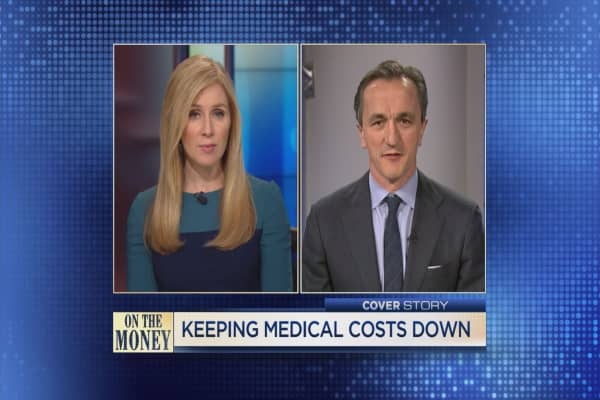
“There have been so many changes in the health care landscape in the United States that this news is not entirely surprising,” Cleveland Clinic president and CEO Tom Mihaljevic told CNBC’s “On the Money” in a recent interview. However, Mihaljevic warned that skipping visits or treatment can be counterproductive.

“One of most important consequences of skipping medical care or delaying care ultimately impacts the quality of care, impacts the outcome,” he said. “Untimely visits or delay of visits to the physician ultimately leads to the increased cost of care.”

However, the poll, conducted by the University of Chicago and the West Health Institute, found Americans fear large medical bills more than they do serious illness. The data showed 33 percent of those surveyed were “extremely afraid” or “very afraid” of getting seriously ill. About 40 percent said paying for health care is more frightening than the illness itself.

“Part of problem here is healthcare tends to be very complex, and every patient typically requires a number of procedures and tests to be done, so it’s really difficult to estimate the upfront cost of care, ” Mihaljevic told CNBC.

Additionally, the survey found 54 percent of those polled received one or more medical bills over the past year for something they thought was covered by their insurance. And 53 percent received a bill that was higher than they expected.

Mihaljevic acknowledged the range of different fees for the same services should be made clearer for consumers. “There is an absolute need for increased transparency when it comes to cost and this is one of mandates for our industry as a whole,” he said.

How technology can help

To combat rising health costs, Mihaljevic explained that the Cleveland Clinic is focused on the “standardization of care.”

“When we reduce the variability of the way we take care of patients, we manage to decrease the cost and at the same time improve the quality of care that we provide,” he added.

In addition, the health system is also pushing ahead with advances in medical technology, which may help bring down costs in the future. “We firmly believe digital technology is going to have a transformative effect,” Mihaljevic said. Among the initiatives is a partnership with IBM Watson to use big data to help clinical decision making.

And through the Cleveland Clinic’s Express Care Online, 25,000 virtual doctor visits were completed in 2017. Although virtual visits are billed as more cost effective,new data suggest otherwise.

“We are constantly looking how to make our care more accessible more affordable and of higher quality,” Mihaljevic added.

Is health care the ‘number one issue in America’?

https://www.washingtonpost.com/news/fact-checker/wp/2018/04/24/is-health-care-the-number-one-issue-in-america/?_hsenc=p2ANqtz–NxmBuGbCb-WK7blyKySWy6ME3uUjKgFSm61zLyI3XT2iet1YTYypb1BnC-0YTsZytFSfykIKS76UfuBGFmePrKznp7Q&_hsmi=62331318&noredirect=on&utm_campaign=KHN%3A%20First%20Edition&utm_content=62331318&utm_medium=email&utm_source=hs_email&utm_term=.e30b8b35fc8f

Image result for number one issue in america

“There is no question we’ll have to act [on health care]. It’s the No. 1 issue in America. The polls are clear.”
— Sen. Chris Murphy (D-Conn.), quoted in an article in Vox, April 18, 2018

Politicians are often eager to cite polling as a reason for action. In an article that highlighted a proposal by Murphy and Sen. Jeff Merkley (D-Ore.) to allow individuals and large employers to purchase health insurance coverage through Medicare, Murphy described health care as the “number one issue” in America.

Does polling back up that assertion?

The Facts

Laura Maloney, a spokeswoman for Murphy, directed us to a number of polls. She first provided four examples, but three — a Bloomberg News poll, a Morning Consult poll and an NBC News exit poll from the Virginia governor’s race — were from 2017. They were taken as Republicans were trying to repeal and replace the Affordable Care Act, so health care was certainly in the news at the time.

The fourth poll, a HuffPost/YouGov poll from April, was more on target. Asked to choose their two top issues from a list, 30 percent of registered voters picked health care. But gun policies and immigration were close behind, at 25 percent each, with the economy at 24 percent. There was a clearly partisan divide on some of these issues — 43 percent of Republicans picked immigration compared with 10 percent of Democrats — but both Democrats and Republicans rated health care highly.

In a follow-up email, Maloney also cited a Gallup poll that asked Americans about their “top worry.” In that survey, 55 percent of respondents said they worry “a great deal” about the availability and affordability of health care, more than 14 other issues that Gallup asked about. Crime, federal spending and the availability of guns followed, tied at 51 percent.

“Top worry,” however, is not the same as “top issue.” In fact, there is another poll by Gallup that is more often cited for its analysis of “the top problem” — and it comes to a starkly different conclusion. This Gallup poll is based on an open-ended question in which people were asked, “What do you think is the most important problem facing this country today.” Gallup conducts the poll once a month.

Just 4 percent volunteered “health care” or “hospitals,” far behind “dissatisfaction with government” (23 percent), immigration-illegal aliens (15 percent), race relations (7 percent) gun control/guns (6 percent), economy (5 percent) and unifying the country (4 percent). Health care had been in third place, with 9 percent, in November but faded as a top concern.

In a Pew Research poll from January, “reducing health care costs” ranked fourth, after terrorism, education and the economy and just before Social Security. The poll shows only a slight increase over the past year.

Finally, Quinnipac’s poll in March asked for “the most important issue” from a list of five issues. This is not as flexible as the other polls, but health care narrowly edged the economy, 23 percent to 22 percent.

The Pinocchio Test

Rather than the polls being clear, it’s actually quite murky. Murphy can point to a poll that shows health care at the top of the list. But other polls — including Gallup’s monthly open-ended question that is widely cited for identifying the top problem — show that health care is lower on the list of concerns.

Clearly, the methodology of a poll makes a difference in the result. The open-ended nature of the Gallup poll might get closest to what concerns Americans have when they do not have to choose from a list.

Murphy may be convinced that health care is what will motivate voters in the coming year. But based the polls, he might be fooling himself.


Federal Appeals Court Puts Chill On Maryland Law To Fight Drug Price-Gouging

https://khn.org/news/federal-appeals-court-puts-chill-on-maryland-law-to-fight-drug-price-gouging/

States continue to battle budget-busting prices of prescription drugs. But a federal court decision could limit the weapons available to them — underscoring the challenge states face as they, in the absence of federal action, go one-on-one against the powerful drug industry.

The 2-to-1 ruling Friday by the U.S. 4th Circuit Court of Appeals invalidated a Maryland law meant to limit “price-gouging” by makers of generic drugs. The measure was inspired by cases such as that of former Turing Pharmaceutical CEO Martin Shkreli, who raised one generic’s price 5,000 percent after buying the company.

The law, which had been hailed as a model for other states, is one of a number of state initiatives designed to combat rapidly rising drug prices. It gave the state attorney general power to intervene if a generic or off-patent drug’s price increased by 50 percent or more in a single year.

If dissatisfied with the company’s justification, the attorney general could have filed suit in state court. Manufacturers would have faced a fine of up to $10,000 and potentially have to reverse the price hike. The generics industry was fiercely critical of the law.

“We are evaluating all options with regard to next steps,” said Maryland Attorney General Brian Frosh in a statement. His office would not elaborate further.

The state could appeal to have the case heard “en banc,” meaning by the full 4th Circuit, with jurisdiction over five states.

Such appeals aren’t commonly granted, but this law could be a strong candidate, suggested Aaron Kesselheim, an associate professor at Harvard Medical School who researches drug-price regulation.

The Friday ruling looms large as other state legislatures grapple with ever-climbing drug prices.

Similar price-gouging legislation has been introduced in at least 13 states this year, though none of those measures became law, according to the National Conference of State Legislatures (NCSL). Three other bills failed to gain passage.

The NCSL also cited the law in a March advisory for states seeking new approaches to regulating drug prices.

The court’s finding could have a chilling effect on such efforts, especially as more state legislatures wrap up business for 2018.

“A negative court ruling will put a damper or a pause on state activities,” said Richard Cauchi, NCSL’s health program director. “Unless this topic is your No. 1 priority of the year, your legislators are juggling multiple bills, multiple strategies. When bill three gets in trouble, they move to bill four.”

The appeals court held that Maryland’s law overstepped limits on how states can regulate commerce — specifically, a constitutional ban on states controlling business that takes place outside their borders. The majority ruling argues that since most generics manufacturers and drug wholesalers engage in trade outside Maryland, the state cannot control what prices they charge.

In a dissenting opinion, the panel’s third judge argued Maryland can regulate the drug prices charged within the state since the law is meant to affect only medications being sold to its own residents.

Kesselheim, in an article published last month in the journal JAMA, argued a similar point.

Regardless, striking down a law on constitutional grounds can be particularly discouraging, suggested Rachel Sachs, an associate law professor at Washington University in St. Louis who researches drug regulations.

“If it had been a rejection on vagueness grounds, that’s something you can cure with a more specific statute,” she said. “But the fact that they said this is unconstitutional poses real concern for other states.”

That’s important. While the federal government has talked a big game on bringing down drug prices, it has done little. Instead, states have taken the lead — spurred by the budget squeeze pricey prescriptions impose on their Medicaid programs and on state employee benefits packages.

But states have far fewer tools at their disposal than does Congress. Most state laws so far tackle only pieces of the problem — targeting a specific drug or particular practice, experts said.

“We’ll get more broad and better evolution on this issue if the federal government decides to take it seriously — which it hasn’t so far,” Kesselheim said.

To be fair, Maryland’s law is only one of a bevy of approaches.

Other states have focused on price transparency laws. In California, drug companies must disclose in advance if a price might increase by more than a set percent and that they justify the increase. Industry has sued to block the California law.

New York has limited what the state will pay for drugs, establishing a process to review if expensive drugs are priced out of step with their medical value.

A number of states have since 2017 passed laws regulating pharmacy benefit managers — the contractors who negotiate discounted drug coverage for insurance plans, but who rarely reveal what level of discount they actually pass on to consumers.

Experts expect that activity to continue, especially as escalating drug prices show little sign of letting up.

“The states are going to keep trying and experimenting,” Sachs added. “This is a problem that isn’t going away.”

Even efforts such as Maryland’s — which targeted price-gouging — will likely remain at the forefront.

“I don’t think this is the end of states trying to do something on price-gouging,” said Ellen Albritton, a senior policy analyst at the left-leaning advocacy group Families USA who consults with states on drug-pricing policy. “It’s such an issue that offends people’s sensibilities. It’s crazy people can do this.”


Congress Urged To Cut Medicare Payments To Many Stand-Alone ERs

https://khn.org/news/congressional-advisers-urge-medicare-payments-to-many-stand-alone-ers-be-cut/

The woman arrived at the emergency department gasping for air, her severe emphysema causing such shortness of breath that the physician who examined her put her on a ventilator immediately to help her breathe.

The patient lived across the street from the emergency department in suburban Denver, said Dr. David Friedenson, who cared for her that day a few years ago. The facility wasn’t physically located at a hospital but was affiliated with North Suburban Medical Center several miles away.

Free-standing emergency departments have been cropping up in recent years and now number more than 500, according to the Medicare Payment Advisory Commission (MedPAC), which reports to Congress. Often touted as more convenient, less crowded alternatives to hospitals, they often attract suburban walk-in patients with good insurance whose medical problems are less acute than those who visit an emergency room located in a hospital.

If a recent MedPAC proposal is adopted, however, some providers predict that these free-standing facilities could become scarcer. Propelling the effort are concerns that MedPAC’s payment for services at these facilities is higher than it should be since the patients who visit them are sometimes not as severely injured or ill as those at on-campus facilities.

The proposal would reduce Medicare payment rates by 30 percent for some services at hospital-affiliated free-standing emergency departments that are located within 6 miles of an on-campus hospital emergency department.

“There has been a growth in free-standing emergency departments in urban areas that does not seem to be addressing any particular access need for emergency care,” said James Mathews, executive director of MedPAC. The convenience of a neighborhood emergency department may even induce demand, he said, calling it an “if you build it, they will come” effect.

Emergency care is more expensive than a visit to a primary care doctor or urgent care center, in part because emergency departments have to be on standby 24/7, with expensive equipment and personnel ready to handle serious car accidents, gunshot wounds and other trauma cases. Even though free-standing emergency departments have lower standby costs than hospital-based facilities, they typically receive the same Medicare rate for emergency services. The Medicare “facility fee” payments, which include some ancillary lab and imaging services but not reimbursement to physicians, are designed to help defray hospitals’ overhead costs.

The proposal would affect only payments for Medicare beneficiaries. But private insurers often consider Medicare payment policies when setting their rules.

According to a MedPAC analysis of five markets — Charlotte, N.C.; Cincinnati; Dallas; Denver; and Jacksonville, Fla. — 75 percent of the free-standing facilities were located within 6 miles of a hospital with an emergency department. The average drive time to the nearest hospital was 10 minutes.

Overall, the number of outpatient emergency department visits by Medicare beneficiaries increased 13.6 percent per capita from 2010 to 2015, compared with a 3.5 percent growth in physician visits, according to MedPAC. (The reported data doesn’t distinguish between conventional and free-standing emergency facility visits.)

“I think [the MedPAC proposal] is a move in the right direction,” said Dr. Renee Hsia, a professor of emergency medicine and health policy at the University of California-San Francisco who has written about free-standing emergency departments. “We have to understand there are limited resources, and the fixed costs for stand-alone EDs are lower.”

Hospital representatives say the proposal could cause some free-standing emergency departments to close their doors.

“We are deeply concerned that MedPAC’s recommendation has the potential to reduce patient access to care, particularly in vulnerable communities, following a year in which hospital EDs responded to record-setting natural disasters and flu infections,” Joanna Hiatt Kim, vice president for payment policy at the American Hospital Association, said in a statement.

Independent free-standing emergency departments that are not affiliated with a hospital would not be affected by the MedPAC proposal. These facilities,which make up about a third of all free-standing emergency facilities, aren’t clinically integrated with a hospital and can’t participate in the Medicare program.

The MedPAC proposal will be included in the group’s report to Congress in June.

Even though stand-alone emergency facilities might not routinely treat patients with serious trauma, they can provide lifesaving care, proponents say.

Friedenson said that for his emphysema patient, avoiding the 15- to 20-minute drive to the main hospital made a critical difference.

“By stopping at our emergency department, I truly think her life was saved,” he said.


Would Americans Accept Putting Health Care on a Budget?

Would Americans Accept Putting Health Care on a Budget?

Image result for global budget health care

If you wanted to get control of your household spending, you’d set a budget and spend no more than it allowed. You might wonder why we don’t just do the same for spending on American health care.

Though government budgets are different from household budgets, the idea of putting a firm limit on health care spending is far from unknown. Many countries, including Canada, Switzerland and Britain, pay hospitals entirely or partly this way.

Under such a capped system, called global budgeting, a hospital has an incentive to deliver less care — including reducing hospital admissions — and to increase the efficiency of the care it does deliver.

Capping hospital spending raises concerns about harming quality and access. On these grounds, hospital executives and patient advocates might strongly resist spending constraints in the United States.

And yet some American hospitals and health systems already operate this way, including Kaiser Permanente and the Veterans Health Administration. To address concerns about access and quality, these programs are usually paired with quality monitoring and improvement initiatives.

That brings us to Maryland’s experience with a capped system. The evidence from the state is far from conclusive, but this is a weighty and much-watched experiment for health researchers, so it’s worth diving into the details of the latest studies.

Starting in 2010 with eight rural hospitals, and expanding its plan in 2014 to the state’s other hospitals, Maryland set global budgets for hospital inpatient and outpatient services, as well as emergency department care. Each hospital’s budget is based on its past revenue and encompasses all payers for care, including Medicare, Medicaid and commercial market insurance. Budgets for hospitals are updated every year to ensure that their spending grows more slowly than the state’s economy.

Because physician services are not part of the budgets, there is an incentive to provide more physician office visits, including primary care. According to some reports, Maryland hospitals are responding to this incentive by providing additional support outside their walls to patients who have chronic illnesses or who have recently been discharged from a hospital. Greater use of primary care by such patients, for example, could reduce the need for future hospital admissions.

In 2013, early results found, rural hospital admissions and readmissions were both down from their levels before the system was introduced.

In the first three years of the expanded program, revenue growth for Maryland’s hospitals stayed below the state-set cap of 3.58 percent, saving Medicare $586 million. Spending was lower on hospital outpatient services, including visits to the emergency department that do not lead to hospital admissions. In addition, preventable health conditions and mortality fell.

According to a new report from RTI, a nonprofit research organization, Maryland’s program did not reap savings for the privately insured population (even though inpatient admissions fell for that group). However, the study corroborated the impressive Medicare savings, driven by a drop in hospital admissions. In reaching these findings, the study compared Maryland’s hospitals with analogous ones in other states, which served as stand-ins for what would have happened to Maryland hospitals had global budgeting not been introduced.

But a recent study, published in JAMA Internal Medicine, was decidedly less encouraging.

Led by Eric Roberts, a health economist with the University of Pittsburgh, the study examined how Maryland achieved its Medicare savings, using data from 2009-2015. Like RTI’s report, it also compared Maryland hospitals’ experience with that of comparable hospitals elsewhere.

However, unlike the RTI report, Mr. Roberts’s study did not find consistent evidence that changes in hospital use in Maryland could be attributed to global budgeting. His study also examined primary care use. Here, too, it did not find consistent evidence that Maryland differed from elsewhere. Because of the challenges of matching Maryland hospitals to others outside of the state for comparison, the authors took several statistical approaches in reaching their findings. With some approaches, the changes observed in Maryland were comparable to those in other states, raising uncertainty about their cause.

A separate study by the same authors published in Health Affairs analyzed the earlier global budget program for Maryland’s rural hospitals. They were able to use other Maryland hospitals as controls. Still, after three years, they did not find an impact of the program on hospital use or spending.

Changes brought about by the Affordable Care Act, which also passed in 2010, coincide with Maryland’s hospital payment reforms. The A.C.A. included many provisions aimed at reducing spending, and those changes could have led to hospital use and spending in other states on par with those seen in Maryland.

A limitation of Maryland’s approach is that payments to physicians are not included in its global budgets. “Maryland didn’t put the state’s health system on a budget — it only put hospitals on a budget,” said Ateev Mehrotra, the study’s senior author and an associate professor of health care policy and medicine at Harvard Medical School. “Slowing health care spending and fostering better coordination requires including physicians who make the day-to-day decisions about how care is delivered.”

broader global budget program for Maryland is in the works. The U.S. Centers for Medicare and Medicaid Services is reviewing a state application that commits to global budgets for Medicare physician and hospital spending. An editorial that accompanied the JAMA Internal Medicine study noted that a few years may be insufficient time to detect changes. It suggests that five to 10 years may be more appropriate.

“Maryland hospitals are only beginning to capitalize on the model’s incentives to transform care in their communities,” said Joshua Sharfstein, a co-author of the editorial and a professor at the Johns Hopkins Bloomberg School of Public Health. “This means that as Maryland moves forward with new stages of innovation, there is a great deal more potential upside.” As former secretary of health and mental hygiene in Maryland, he helped institute the Maryland hospital payment approach.

Global budgets are unusual in the United States, but their intuitive appeal is growing. A California bill is calling for a commission that would set a global budget for the state. And soon Maryland won’t be the only state using such a system. Pennsylvania is planning a similar program for its rural hospitals.

Can this system work across America?

How much spending control is ceded to the government is the major battle line in health care politics. An approach like Maryland’s doesn’t just poke a toe over that line, it leaps miles beyond it.

But the United States has been trying to get a handle on health care costs for decades, spending far more than other advanced nations without necessarily getting better outcomes. A successful Maryland experiment could open an avenue to cut costs through the states, perhaps one state at a time, bypassing the steep political hurdle of selling a national plan.


Mainers voted to expand Medicaid last year. Could these states be next?

https://www.pbs.org/newshour/politics/mainers-voted-to-expand-medicaid-last-year-could-these-states-be-next

Jennie Pirkl campaign manager for "Yes on 2" announces victory on 2017 Election Day in Portland, Maine. Photo by Shawn Patrick Ouellette/Portland Press Herald via Getty Images

Republicans in Congress may have relented on their attempts to repeal the entire Affordable Care Act, but the battle has shifted to states. Citizens in Idaho, Utah, Missouri and Nebraska have taken Medicaid expansion under the Affordable Care Act into their own hands via ballot initiative campaigns, hoping to force statewide votes to either adopt or reject expansion this coming November.

Medicaid provides health coverage for more than 68 million Americans with low incomes or disabilities through federal and state programs. The far-reaching 2010 Affordable Care Act law, which expanded Medicaid coverage, was lambasted by conservatives as federal overreach. A 2012 Supreme Court ruling said that rather than being forced, states had to opt into Medicaid expansion.

Since then, 32 states have done so. But 18 states have not.

It’s been politically challenging for governors and legislators “who spent years railing against the federal overreach or the assaults on individual liberty in the ACA” to now back Medicaid expansion, said Matt Salo, executive director of the National Association of Medicaid Directors.

But for many states “expanding Medicaid makes a lot of sense” since more people get coverage and the federal government pays nearly the full cost, said Ben Ippolito, a research fellow at the American Enterprise Institute who focuses on health economics.

The campaigns to expand Medicaid via ballot have varied in scope and success. After Maine voters petitioned for and passed a first-of-its-kind expansion last November, campaigns in Idaho and Utah have gained momentum to expand Medicaid coverage. In Missouri, there was a longshot effort to gather 100,000 signatures to put expansion on the state ballot. The head of the campaign, Gary Peterson, couldn’t get the state Democratic party on board, only mustering support from local church groups. He told the PBS NewsHour that he suspended his campaign in February. And in Nebraska, residents launched a petition drive to appeal to voters this November after six consecutive years of failed legislation.

Where is the fight over Medicaid expansion now, and where will it go next? Here’s what we know.

Who exactly does Medicaid affect?

In 24 states, at least 50 percent of births are financed by Medicaid, according to data compiled by the Kaiser Family Foundation. Medicaid also covers costs for about 62 percent of seniors living in nursing homes.

The ACA’s Medicaid expansion raised the income limit on the program, allowing more people to qualify, and also allowed adults without children to enroll.

In a 2016 study, the Urban Institute reported that expanding Medicaid in the 19 states who had not yet done so would make more than 13 million people newly eligible. (Maine didn’t expand until 2017.)

Maine

The issue: In November, Medicaid expansion made the ballot in Maine — the first time this had occurred in any state since Congress passed the ACA in 2010. Fifty-nine percent of Mainers who voted supported expanding Medicaid, rebuking Republican Gov. Paul LePage, who had previously vetoed five expansion bills.

On July 2, people will become eligible under the law.

What’s happening now: LePage, who called expansion “fiscally irresponsible,” had to submit by April 3 a state plan to the federal government on how it would fund the expansion. In December, LePage sent a letter to the Maine Legislature outlining demands for how to fund the expansion, stating, for example, that raising taxes or drawing money from Maine’s Budget Stabilization (or, rainy day) Fund was “not an option.”

When asked whether the administration submitted the state plan by the deadline, LePage spokeswoman Julie Rabinowitz said that “we should not make a down payment without a plan to pay for the ongoing cost” and that LePage “laid out four simple principles to guide how to pay for expansion without jeopardizing the state’s long-term fiscal health,” referring to the December letter.

What’s next: In an interview, Maine’s Democratic Speaker of the House Sara Gideon called LePage’s December correspondence “his imaginary if-I-were-king letter,” and said that it was “not really going to impact what we’re doing here.”

If the administration shirks funding duties, Gideon said the state’s existing Medicaid funds “are enough to start getting people [from the expansion] online” until January.

Idaho and the “Medicaid mobile”

The campaign: In summer 2017, Luke Mayville drove his forest green 1977 Dodge Tioga RV, dubbed the “Medicaid mobile,” across Idaho to campaign for expanded health care access.

His RV had been the rolling trademark of Reclaim Idaho, the organization coordinating the Medicaid expansion ballot initiative. The “Medicaid for Idaho” campaign began as “an awareness raising tour” with the founders touring the Medicaid mobile across Idaho to gauge and build support, Mayville said.

An estimated 78,000 Idahoans fall into the Medicaid coverage gap — people with incomes too high to qualify for Medicaid, but too low to be eligible for the ACA subsidies that help buy coverage.

By the end of the summer, the RV “was covered with signatures.”

What’s happening now: For Medicaid expansion to reach the ballot, the campaign must gather signatures from a total of 56,192 voters (six percent of the state’s 936,529 registered voters in the 2016 general election). They must also meet separate signature thresholds in just more than half of the state’s 35 legislative districts by May 1.

What lawmakers say: Most of the state’s registered voters are Republican and the GOP-led Legislature stalled on expansion in the past. Republican Gov. Butch Otter presented his own plan, but it was pulled from the House floor in February.

What’s next: So far, the campaign has accumulated about 40,000 signatures, leaving about three weeks to gather the remaining 16,000. Mayville said he believes Medicaid is a nonpartisan issue that people on either side of the aisle can sympathize with. “It really cuts across party lines,” he said.

Utah

The campaign: Advocates have been pushing for Medicaid expansion in Utah for years. In 2016, drawn-out battles in the Legislature and governor’s office led to a limited expansion. But advocates like Utah Democratic Sen. Jim Dabakis called it “less than crumbs,” according to The Salt Lake Tribune.

RyLee Curtis, campaign manager of Utah Decides Healthcare, the organization coordinating Utah’s Medicaid expansion ballot initiative, said early efforts she was involved with attracted the attention of The Fairness Project, a nonprofit organization that supports ballot initiatives on issues such as raising the minimum wage and expanding Medicaid. The organization has provided more than 90 percent of Utah Decides’ roughly $900,000 in contributions, much of which has been spent on signature gathering, according to public records.

What’s happening now: Paid canvassers and volunteers have racked up more than 130,000 signatures to date.

What lawmakers say: At the same time, the state Legislature passed a new partial expansion last month that is estimated to cover about 70,000 low-income Utahns in the Medicaid gap, The Salt Lake Tribune reported. For states that undergo full ACA Medicaid expansion, the federal government funds 90 percent of its costs while the state finances the rest. But this partial expansion, which includes a work requirement, must get federal approval for that same 90 percent federal funding.

Matt Salo, executive director of the National Association of Medicaid Directors, said that the Trump administration did not approve a similar request from Arkansas and says it’s unclear whether the administration will approve Utah’s request. Still, it could be “an attractive political compromise.”

What’s next: The campaign for a ballot initiative has exceeded the required 113,143 signatures statewide, but still has to get at least 10 percent of voters from the time of the 2016 election in 26 of the state’s 29 senate districts by April 15. All considered, Curtis said, “we are confident that we can get there.”

Nebraska

The campaign: Proposals have been introduced into the Nebraska Legislature for six consecutive years — all have failed. So one state senator and a group of Nebraskans are trying different approaches.

A petition drive kicked off last month to put Medicaid expansion on the ballot.

Insure the Good Life, the organization leading the charge, and local media outlets have said that expanding Medicaid would provide coverage for about 90,000 additional Nebraskans.

What’s happening now: Amanda Gershon, a sponsor of the petition, told Live Well Nebraska that “the governor and the legislature haven’t solved this problem, so it’s now time for the people to decide.”

Gershon, 35, has been battling chronic health problems since college and around that time lost her health coverage. She said she “went so long without [health] care” that she became gravely ill, but was eventually able to get Medicaid through disability. Even after being approved for disability it took another nine months of paperwork to qualify for Medicaid, Gershon said.

“I really don’t want to see anybody else have to go down that same road to get the health care they need,” Gershon added.

What lawmakers say: Nebraska’s governors have staunchly opposed Medicaid expansion. Republican Gov. Pete Ricketts has a slew of lengthy statements outlining his objections to Medicaid expansion and decrying attempts by the Legislature to expand coverage.

But 32-year-old state Sen. Adam Morfeld, a Democrat, proposed a state constitutional amendment that would also put expansion on the ballot. “Every year that we have tried on Medicaid expansion in this state, the people that are opposed to it have never come up with alternative solutions — the governor included,” Morfeld told the NewsHour.

“[F]or thousands of people in my district who are low-income, working-class folks, it’s [current Nebraska health care] not only making them go bankrupt, they’re starting to die,” Morfeld said. His bill was referred to a committee.

What’s next: Organizers will have until July 5 to collect about 85,000 valid signatures and meet thresholds in 38 of 93 Nebraska counties.

https://www.pbs.org/newshour/health/why-maine-voted-to-expand-medicaid-and-whats-next


Trump administration issues rule further watering down Obamacare

https://www.reuters.com/article/us-usa-healthcare-regulation/trump-administration-issues-rule-further-watering-down-obamacare-idUSKBN1HG384

Image result for Trump administration issues rule further watering down Obamacare

The Trump administration took additional steps to weaken Obamacare on Monday, allowing U.S. states to relax the rules on what insurers must cover and giving states more power to regulate their individual insurance markets.

The Centers for Medicare and Medicaid Services issued a final rule that allows states to select essential health benefits that must be covered by individual insurance plans sold under former President Barack Obama’s healthcare law. The 2010 Affordable Care Act requires coverage of 10 benefits, including maternity and newborn care and prescription drugs. Under the new rule, states can select from a much larger list which benefits insurers must cover.

That could lead to less generous coverage in some states, according to Avalere Health, a research and consulting firm.

President Donald Trump’s administration has used its regulatory power to undermine Obamacare after the Republican-controlled Congress last year failed to repeal and replace the law. About 20 million people have received health insurance coverage through the program.

The new CMS rule also allows states the possibility of modifying the medical loss ratio (MLR) formula, the amount an insurer spends on medical claims compared with income from premiums that is also a key performance metric. A state can request “reasonable adjustments” to the medical loss ratio standard if it shows that it could help stabilize its individual market.

Insurers could also have an easier time raising their rates under the new rule. Obamacare mandated that premium rate increases of 10 percent or more in the individual market be scrutinized by state regulators to ensure that they are necessary and reasonable. The new CMS rule raises that threshold to 15 percent.