Calif. hospital to pay 3 former employees $1.7M in harassment suit

http://www.beckershospitalreview.com/legal-regulatory-issues/calif-hospital-to-pay-3-former-employees-1-7m-in-harassment-suit.html

Community Hospital of Long Beach (Calif.) and the former manager of the hospital’s psychiatric unit have been ordered to pay $1.7 million to three ex-employees who alleged they were subjected to sexual harassment and discrimination, according to the Long Beach Patch.

The plaintiffs accused Keith Kohl, RN, who directed the hospital’s psychiatric unit and was employed by Memorial Psychiatric Health Services, of discrimination. The female plaintiffs alleged Mr. Kohl flaunted his homosexuality, creating a hostile work environment. They further alleged he gave preferential treatment to gay males.

In their suit, the plaintiffs argued their employment with the hospital was wrongfully terminated, while the hospital claimed they had been fired for putting a patient in restraints without a physician’s orders and lying during an investigation into the incident.

After nearly three hours of deliberation, the jury issued a verdict in favor of the plaintiffs, finding evidence of sexual harassment, discrimination, failure to prevent harassment and discrimination, wrongful termination, defamation and negligent supervision.

Wall Street Journal combs through nonprofit hospitals’ board-business ties: 6 things to know

http://www.beckershospitalreview.com/finance/wall-street-journal-combs-through-nonprofit-hospitals-board-business-ties-6-things-to-know.html

As some of the largest nonprofits in the U.S., hospitals face a major challenge — their board members or executives often have direct ties to organizations with which the hospital does business, The Wall Street Journal reports.

Here are six things to know about nonprofit hospitals and their business associations, according toWSJ.

The Life-Changing Magic of Choosing the Right Hospital

There’s an exceedingly simple way to get better health care: Choose a better hospital. A recent study shows that many patients have already done so, driving up the market shares of higher-quality hospitals.

A great deal of the decrease in deaths from heart attacks over the past two decades can be attributed to specific medical technologies like stents and drugs that break open arterial blood clots. But a study by health economists at Harvard, M.I.T., Columbia and the University of Chicago showed that heart attack survival gains from patients selecting better hospitals were significant, about half as large as those from breakthrough technologies.

That’s a big improvement for nothing more than driving a bit farther to a higher-quality hospital.


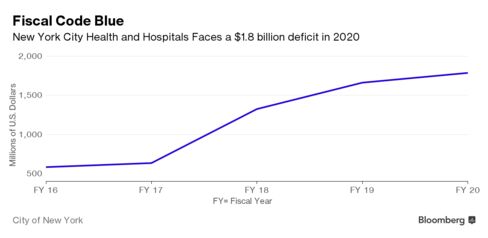
New York Hospitals Facing Fiscal Code Blue

http://www.bloomberg.com/politics/articles/2016-08-22/new-york-city-hospitals-seen-unwilling-to-take-stronger-medicine?utm_campaign=KHN%3A+Daily+Health+Policy+Report&utm_source=hs_email&utm_medium=email&utm_content=33278487&_hsenc=p2ANqtz–Ua5Q-PC5Hs3i1ni8bTaDNOfHhzF8R8meSEL9ZdWL6LejSQMUC3wLCDN9J_cuBB9IHRmZmF7BdmyqhMlNtFPa8KBOrzA&_hsmi=33278487

New York City’s public hospitals are in critical condition with rising costs and plummeting revenue. There’s no dispute about that diagnosis. The problem is with Mayor Bill de Blasio’s proposed cure, according to health policy makers, hospital administrators and budget watchdogs.

As NYC Health + Hospitals President Ram Raju describes it, the largest U.S. municipal-healthcare provider is an ailing system of 11 hospitals that’s losing revenue because of increased competition from non-profit hospitals for Medicaid patients and drastic cuts in federal and state aid for indigents.

His prescription: shift its 40,000-plus employees into a system of neighborhood clinics and transform campuses into affordable housing and long-term care, build enrollment of its MetroPlus insurance plan and persuade federal and state governments to spend more. That aid is projected to fall by almost $1 billion -– from $2.2 billion in FY16 to $1.4 billion in 2020.

Public Health Officials Struggle To Identify Sepsis Before It Becomes Deadly

http://khn.org/news/public-health-officials-struggle-to-identify-sepsis-before-it-becomes-deadly/?utm_campaign=KHN%3A+Daily+Health+Policy+Report&utm_source=hs_email&utm_medium=email&utm_content=33278487&_hsenc=p2ANqtz-_8KIyYxXNIF-21jTIsaT1TCz3UXX37BTMaIxr7_hnAyIOw4I6NhoeCq28LgUM3bjzRgNkA6fCTpslqrXZ1qMCGsCvXeQ&_hsmi=33278487

After Rory Staunton fell at the gym and cut his arm in March of 2012, the 12-year-old became feverish and vomited during the night, complaining of a sharp pain in his leg. When his parents called his pediatrician the next day, she wasn’t worried. She said there was a stomach virus going around New York City, and his leg pain was likely due to his fall.

However, she advised his parents, Orlaith and Ciaran Staunton, to take the youngster to the emergency department because he might be dehydrated. There hospital workers did some blood work, gave him fluids and sent him home.

The next day Rory’s pain and fever were worse. His skin was mottled and the tip of his nose turned blue. The Stauntons raced back to the hospital, where he was admitted to intensive care. The diagnosis: septic shock. Rory was fighting a system-wide infection that was turning his skin black and shutting down his organs. On Sunday, four days after he dove for the ball in gym class, Rory died.

“It was frightening to think that something could kill my son so fast and it would be something that I had never heard of,” said Orlaith Staunton.

She’s not alone. Sepsis kills more than 250,000 people every year. People at highest risk are those with weakened immune systems, the very young and elderly, patients with chronic diseases such as diabetes, cancer or kidney disease and those with illnesses such as pneumonia or who use catheters that can cause infections. But it can strike anyone, even a healthy child like Rory.

Sepsis is a body’s overwhelming response to infection. It typically occurs when germs from an infection get into the bloodstream and spread throughout the body. To fight the infection, the body mounts an immune response that may trigger inflammation that damages tissues and interferes with blood flow. That can lead to a drop in blood pressure, potentially causing organ failure and death.

FL Health System on Path to Save Millions by Standardizing Surgical Practice

http://www.healthleadersmedia.com/leadership/fl-health-system-path-save-millions-standardizing-surgical-practice?spMailingID=9394331&spUserID=MTMyMzQyMDQxMTkyS0&spJobID=981810720&spReportId=OTgxODEwNzIwS0

Ongoing discussions with large employers including Disney have led Florida Hospital to examine granular surgical data in an attempt to wring out unnecessary costs.

Hospital CEO pay rises faster than overall health care spending

https://www.bostonglobe.com/business/2016/08/16/pay-packages-rise-for-many-hospital-ceos/Sytc3sUiubyr21tPhVxp3K/story.html

BOSTON, MA - 6/24/2016: Brigham and Women's Healthcare President Elizabeth Nabel speaks at a news conference at One Brigham Circle on Friday, June 24, 2016. Hospital officials said they were reducing patient capacity and bringing in hundreds of temporary nurses in anticipation of a strike by nurses on Monday. (Timothy Tai for The Boston Globe)

Pay increases for many top Massachusetts hospital executives outpaced the growth of state health spending in 2014, according to new filings with the Internal Revenue Service.

Leading the pack was Elizabeth G. Nabel, president of Brigham and Women’s Hospital in Boston, who drew total compensation of $5.4 million that year, up 119 percent from her $2.5 million pay package in 2013. Most of the increase was attributed to a jump in deferred compensation in 2014, the year she vested in a retirement plan managed by Brigham and Women’s corporate parent, Partners HealthCare.

Cut Healthcare Spending or Face the Public Option

http://www.healthleadersmedia.com/finance/cut-healthcare-spending-or-face-public-option?spMailingID=9394331&spUserID=MTMyMzQyMDQxMTkyS0&spJobID=981810720&spReportId=OTgxODEwNzIwS0#

“If we don’t get a handle on spending at some point, we will have a government-financed system,” predicts the head of the Pacific Business Group on Health.”

HIPAA is 20 years old. What has it meant for healthcare?

HIPAA is 20 years old. What has it meant for healthcare?

birthday cake

On Aug. 21, 1996 — 20 years ago Sunday — President Bill Clinton signed the Health Insurance Portability and Accountability Act (HIPAA) into law.

Back when bipartisanship still occasionally happened in Washington, this law, championed by then-Sens. Edward M. Kennedy (D-Massachusetts) and Nancy Kassebaum (R-Kansas) has come become to be defined by the privacy and security regulations that it enabled. Those took effect in 2002 and 2003, respectively, after the Bush administration modified rules that the Clinton administration rushed to finish before Clinton left office in January 2001.

But, as the formal name implies, HIPAA initially was known for giving people the right to “portability” of health insurance when they change jobs by limiting the ability for insurers to exclude coverage of pre-existing conditions. The complex law also led to standards for healthcare administrative transactions and a national system of provider identity codes.

HIPAA did call for a national patient identifier as well, but in 1998, Congress voted to deny the Department of Health and Human Services funding to implement a patient ID. The program still has never been funded, and the private sector has since taken it upon itself to address the issue.

So what has HIPAA accomplished in 20 years? Where has it fallen short?