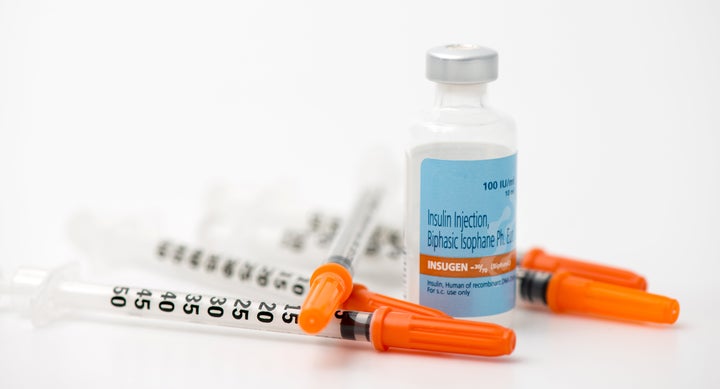
How A Drug Company Under Pressure For High Prices Ratchets Up Political Activity

https://khn.org/news/how-a-drug-company-under-pressure-for-high-prices-ratchets-up-political-activity/

Business looked challenging for Novo Nordisk at the end of 2016. As pressure mounted over the pharma giant’s soaring insulin prices, investors drove its stock down by a third on fears that policymakers would take action, limit prices and hurt profits.

Then things got worse. A Massachusetts law firm sued the company and two other pharma firms on behalf of patients, claiming that high insulin prices of hundreds of dollars a month forced diabetics to starve themselves to minimize their blood sugar while skimping on doses. At least five states began investigating insulin makers and their business partners.

As scrutiny rose, Novo Nordisk engaged in what analysts say is a time-honored response to public criticism. It aggressively ratcheted up spending to spread its influence in Washington and to have a louder say in the debates over drug prices.

The drugmaker’s political action committee spent $405,000 on federal campaign donations and other political outlays last year, more than in 2016 — an election year — and nearly double its allocation for 2015, data compiled by Kaiser Health News show.

“We remain committed to being part of the discussion,” said Tricia Brooks, head of government relations and public affairs for Novo Nordisk, acknowledging scrutiny over insulin prices but saying the company has many other issues to work on with policymakers. “I don’t want us to run away from it and hide or keep our head down and wait for it to roll over.”

Novo Nordisk also spent $3.2 million lobbying Congress and federal agencies in 2017, its biggest-ever investment in directly influencing U.S. policymakers, according to the Center for Responsive Politics.

Part of that surge included summoning more than 400 Novo Nordisk employees to contact lawmakers and their staffs on Capitol Hill, “a huge increase from anything we’ve ever done before,” Brooks said.

Taken together, the increases represent a “major corporate policy shift” for the company and appear to be a classic business response to growing political risk, said Kent Cooper, a former Federal Election Commission official who has tracked political money for decades.

The pharma industry as a whole has behaved similarly, cranking up political contributions and lobbying. Meanwhile, despite much talk about change, Congress and the Trump administration have done little to control drug prices or threaten drug-company profits.

Pharma businesses overall made political donations of $12.1 million last year, down from a $13.6 million election-year surge in 2016 but 9 percent higher than the haul for 2015, according to the KHN analysis. Pharma industry lobbying expenses surpassed $171 million last year, the highest level since 2009, during negotiations over the Affordable Care Act, according to CRP.

“It’s been hot in the health care arena for — how many years now?” said Steven Billet, who teaches lobbying and PAC management at George Washington University. “Anybody in this world now is sitting there thinking, “When I go back to the board next year, I’m going to ask for 15 percent more in my [lobbying and campaign finance] budget. Because this isn’t going away.’”

Like most big corporations, Novo Nordisk runs a political action committee, or PAC, which solicits employee donations and gives the proceeds to political candidates’ campaigns. The company is Danish. Only workers who are U.S. citizens or permanent residents are allowed to support the PAC.

Like many PACs, Novo Nordisk spreads money to both parties, concentrating on powerful committee members and other leaders. Since 2013 it has given $22,500 to House Speaker Paul Ryan, a Republican, and $20,472 to South Carolina’s James Clyburn, a member of the Democratic House leadership.

Brooks gave the PAC $4,370 last year, the data show. Some employees gave as little as $20 or $30.

The firm’s influence-seeking has grown along with its U.S. sales, which went from hundreds of millions of dollars in the early 2000s to some $9 billion last year. Its biggest business is diabetes, including various types of insulin whose list prices have more than doubled in recent years.

The wholesale list price for a vial of Novo Nordisk’s Levemir, a long-acting insulin, went from $144.80 in 2012 to $335.70 in January, when the price rose 4 percent, according to Connecture, a research firm.

Even Alex Azar, a former Eli Lilly executive who became Health and Human Services secretary in January, said in his confirmation hearing that “insulin prices are high, and they’re too high.” Along with Novo Nordisk and Sanofi, Lilly is one of the three big insulin makers under investigation by state attorneys general for price increases that seem suspiciously similar in size and timing.

Sanofi and Lilly both spent more last year on political donations and federal lobbying than Novo Nordisk. Lilly’s political spending was $548,100 for 2017, up 12 percent from 2015, the previous off-election year, the data show. Sanofi’s was $527,200, down from 2015.

But potential insulin price limits threaten Novo Nordisk more than those companies because diabetes-related drugs account for an exceptionally big portion of its business, analysts said. Several proposals under consideration by Congress could lower insulin prices or limit future increases.

One would allow the Medicare program for seniors to negotiate prices for covered drugs, thus lowering the cost.

Other proposals would make it easier for competing, “biosimilar” alternatives to break through the thicket of patents created by sellers of complex drugs such as insulin. Others would bring more transparency, requiring companies to publish and justify price increases.

None of the proposals has made it out of congressional committees. In the face of inaction by Washington, Novo Nordisk’s stock has recovered much of the ground it lost in 2016.

Novo Nordisk rejects suggestions that it coordinated price increases with competitors. So do Sanofi and Lilly.

List prices such as those tracked by Connecture don’t reflect what patients or their insurers ultimately pay, said Novo Nordisk spokesman Ken Inchausti. Growing discounts and rebates substantially reduced the reported list price, he said.

Even including discounts, however, the company’s net profit margin for 2017 was 34 percent, its highest since at least 2000, when it was half that high.

Official filings show Novo Nordisk lobbyists have been weighing in on numerous measures related to drug prices, including proposals to import less expensive drugs from Canada.

The company lobbies Washington on a wide range of issues including diabetes prevention, budget matters, chronic disease and making obesity an accepted medical disease that insurers will pay to prevent, Brooks said.

But last year’s increase in campaign donations and lobbying doesn’t look like business as usual for Novo Nordisk, said Billet, a former AT&T lobbyist who directs GWU’s Legislative Affairs program.

“I’m not surprised,” he said. “They’ve obviously had some issues recently. This is maybe a predictable enough element in their strategy.”

 

Federal Appeals Court Puts Chill On Maryland Law To Fight Drug Price-Gouging

https://khn.org/news/federal-appeals-court-puts-chill-on-maryland-law-to-fight-drug-price-gouging/

States continue to battle budget-busting prices of prescription drugs. But a federal court decision could limit the weapons available to them — underscoring the challenge states face as they, in the absence of federal action, go one-on-one against the powerful drug industry.

The 2-to-1 ruling Friday by the U.S. 4th Circuit Court of Appeals invalidated a Maryland law meant to limit “price-gouging” by makers of generic drugs. The measure was inspired by cases such as that of former Turing Pharmaceutical CEO Martin Shkreli, who raised one generic’s price 5,000 percent after buying the company.

The law, which had been hailed as a model for other states, is one of a number of state initiatives designed to combat rapidly rising drug prices. It gave the state attorney general power to intervene if a generic or off-patent drug’s price increased by 50 percent or more in a single year.

If dissatisfied with the company’s justification, the attorney general could have filed suit in state court. Manufacturers would have faced a fine of up to $10,000 and potentially have to reverse the price hike. The generics industry was fiercely critical of the law.

“We are evaluating all options with regard to next steps,” said Maryland Attorney General Brian Frosh in a statement. His office would not elaborate further.

The state could appeal to have the case heard “en banc,” meaning by the full 4th Circuit, with jurisdiction over five states.

Such appeals aren’t commonly granted, but this law could be a strong candidate, suggested Aaron Kesselheim, an associate professor at Harvard Medical School who researches drug-price regulation.

The Friday ruling looms large as other state legislatures grapple with ever-climbing drug prices.

Similar price-gouging legislation has been introduced in at least 13 states this year, though none of those measures became law, according to the National Conference of State Legislatures (NCSL). Three other bills failed to gain passage.

The NCSL also cited the law in a March advisory for states seeking new approaches to regulating drug prices.

The court’s finding could have a chilling effect on such efforts, especially as more state legislatures wrap up business for 2018.

“A negative court ruling will put a damper or a pause on state activities,” said Richard Cauchi, NCSL’s health program director. “Unless this topic is your No. 1 priority of the year, your legislators are juggling multiple bills, multiple strategies. When bill three gets in trouble, they move to bill four.”

The appeals court held that Maryland’s law overstepped limits on how states can regulate commerce — specifically, a constitutional ban on states controlling business that takes place outside their borders. The majority ruling argues that since most generics manufacturers and drug wholesalers engage in trade outside Maryland, the state cannot control what prices they charge.

In a dissenting opinion, the panel’s third judge argued Maryland can regulate the drug prices charged within the state since the law is meant to affect only medications being sold to its own residents.

Kesselheim, in an article published last month in the journal JAMA, argued a similar point.

Regardless, striking down a law on constitutional grounds can be particularly discouraging, suggested Rachel Sachs, an associate law professor at Washington University in St. Louis who researches drug regulations.

“If it had been a rejection on vagueness grounds, that’s something you can cure with a more specific statute,” she said. “But the fact that they said this is unconstitutional poses real concern for other states.”

That’s important. While the federal government has talked a big game on bringing down drug prices, it has done little. Instead, states have taken the lead — spurred by the budget squeeze pricey prescriptions impose on their Medicaid programs and on state employee benefits packages.

But states have far fewer tools at their disposal than does Congress. Most state laws so far tackle only pieces of the problem — targeting a specific drug or particular practice, experts said.

“We’ll get more broad and better evolution on this issue if the federal government decides to take it seriously — which it hasn’t so far,” Kesselheim said.

To be fair, Maryland’s law is only one of a bevy of approaches.

Other states have focused on price transparency laws. In California, drug companies must disclose in advance if a price might increase by more than a set percent and that they justify the increase. Industry has sued to block the California law.

New York has limited what the state will pay for drugs, establishing a process to review if expensive drugs are priced out of step with their medical value.

A number of states have since 2017 passed laws regulating pharmacy benefit managers — the contractors who negotiate discounted drug coverage for insurance plans, but who rarely reveal what level of discount they actually pass on to consumers.

Experts expect that activity to continue, especially as escalating drug prices show little sign of letting up.

“The states are going to keep trying and experimenting,” Sachs added. “This is a problem that isn’t going away.”

Even efforts such as Maryland’s — which targeted price-gouging — will likely remain at the forefront.

“I don’t think this is the end of states trying to do something on price-gouging,” said Ellen Albritton, a senior policy analyst at the left-leaning advocacy group Families USA who consults with states on drug-pricing policy. “It’s such an issue that offends people’s sensibilities. It’s crazy people can do this.”


The driving force of health care fear

https://www.axios.com/driving-force-health-care-fear-c90adaf6-e5f8-4c11-816d-d3893b5d1374.html

Stethoscope

Insurers are afraid of a deteriorating market for individual coverage, fueled by the repeal of the Affordable Care Act’s individual mandate as well as regulatory changes from the Trump administration.

What to watch: Over the course of the spring, they’ll be deciding whether it makes sense to simply quit offering ACA coverage in some parts of the country. Rural areas will likely be the first to see insurers leave.

Pharma fears Washington after a couple of surprising defeats on Capitol Hill have shown the industry may not be as bulletproof as it seems.

  • What to watch: The Trump administration is eager to show progress on drug prices, and its early efforts have largely steered clear of drug companies themselves. But Health and Human Services secretary Alex Azar is open to reining in some of the industry’s patent tricks — a move that could cost drugmakers billions of dollars.

Everyone fears Amazon. Just the possibility that it might enter the pharmacy business has accelerated a trend of health care mega-mergers, as the old guard looks to lock in as much market power as it can.

And the public fears the cost of health care. That’s part of the reason the industry, which profits from those costs, is right to worry about what’s ahead.


Why DOJ must block the Cigna-Express Scripts merger

Why DOJ must block the Cigna-Express Scripts merger

Why DOJ must block the Cigna-Express Scripts merger

If one message is becoming clear, it’s that increased concentration is harming consumers and leading to less competition, decreased choice and higher cost. The need for corporations to compete is dampened when markets are dominated by a small number of firms. Worse, when consumers don’t have the ability to discipline markets there is a lack of transparency or accountability.

Nowhere is that more true than in the market for Pharmacy Benefit Managers (PBMs) — the unregulated entities that control the reimbursement of drugs. These little known, unregulated middlemen are able to ramp up the cost of drugs by demanding rebates and other payments from drug manufacturersand because of a lack of transparency and choice they are able to pocket much of these rebates, escalating the cost of drugs.

The Council of Economic Advisors, after a comprehensive review of rising drug costs, identified the lack of PBM competition as a major culprit. It found that only three PBMs controlled more than 85 percent of the market, “which allows them to exercise undue market power against manufacturers and against the health plans and beneficiaries they are supposed to be representing, thus generating outsized profits for themselves.”

The effect of market power on rebates and other payments to PBMs is clear. As one study found pharmaceutical manufacturer rebates skyrocketed 108 percent from 2011 to 2016 — rising from $66 billion to $127 billion in those five years.

Do skyrocketing rebates benefit consumers? Not much. As Health and Human Services Secretary Alex Azar has observed, “this thicket of negotiated discounts makes it impossible to recognize and reward value, and too often generates profits for middlemen rather than savings for patients.” Consumers pay more because their copays are based on list prices that are inflated by the rebates and other payments secured by the PBMs.

You do not need a Ph.D. in economics to figure out that the market is not competitive and that consumers are paying more than they otherwise would. FDA Commissioner Scott Gottlieb observed, “Kabuki drug-pricing constructs — constructs that obscure profit taking across the supply chain that drives up costs; that expose consumers to high out of pocket spending; and that actively discourage competition.”

Gottlieb identifies the lack of PBM competition and transparency as the real culprit. “The consolidation and market concentration make the rebating and contracting schemes all that more pernicious. And the very complexity and opacity of these schemes help to conceal their corrosion on our system — and their impact on patients.”

Now the two largest PBMs seek to merge with two insurance giants — CVS Caremark’s proposed acquisition of Aetna and Cigna’s proposed acquisition of Express Scripts. I have already observed how the CVS deal will harm competition and consumers. Adding another deal is like fighting a fire with gasoline.

These mergers rightly face tough scrutiny before the Antitrust Division of the Department of Justice. As the American Antitrust Institute’s recent comprehensive white paper documents in detail, these mergers significantly threaten competition in health insurance, pharmacy and PBM markets and must be blocked.

And as Rep. Rick Crawford’s (R-Ariz.) recent letter to Attorney General Jeff Sessions opposing the CVS/Aetna merger nicely emphasizes, such “vertical integration does not encourage competition or lower prices, but rather, could limit the choices and access for patients, driving out competitors while driving up prices and reimbursements for themselves.”

The reasons are straightforward and compelling. Many insurance companies want the service of an independent PBM — one not aligned with a rival insurance company. PBM services and the ability to control pharmaceutical costs are a crucial input for any insurance company, especially since the costs of drugs is an increasing part of the costs that need to be controlled.

Such reforms would include meaningful transparency and disclosure of rebates to payers, eliminating pharmacy gag clauses that prevent pharmacists from disclosing lower priced drugs, preventing PBMs from egregious reimbursement practices that force pharmacists to dispense below cost, and proper disclosure of pricing to pharmacists. As a basic first step both Express Scripts and Cigna must commit to pass through rebates to lower consumer costs as UnitedHealthcare has done.

But even these commitments are probably not enough. History tells a dismal story — past mergers have harmed consumers through less choice and higher costs as PBM profits have soared. No promises of good conduct can overcome the excessive concentration in the PBM market. The CEA recommended, “policies to decrease concentration in the PBM market … can increase competition and further reduce the price of drugs.” DOJ can begin this process by preventing the market from getting worse and simply blocking these mergers.


We Must Hold Big Pharma Accountable For Predatory Pricing

https://www.huffingtonpost.com/entry/opinion-beggelman-price-gouging_us_5ab45270e4b008c9e5f5c47f


It’s hard to remember now, but there once was a time when pharmaceutical companies were considered heroes, not villains.

In the 1920s, Dr. Frederick Banting and Charles Best discovered insulin could be purified and administered to diabetes patients via injection. Before this groundbreaking discovery, people living with diabetes were placed on starvation diets as a form of treatment, and many patients died.

Banting and Best understood the enormity of their discovery and considered insulin a public good. But as these researchers soon realized, insulin wouldn’t be able to save lives if patients couldn’t access it. They sold the rights to the drug to the University of Toronto for $1. The university, in turn, gave it to pharmaceutical company Eli Lilly for a 5 percent royalty so the company could manufacture at scale to meet the enormous demand. In 1923, insulin became widely available and saved countless lives, thanks to Banting and Best – and Eli Lilly.

Now, just under a century later, Eli Lilly and other insulin manufacturers are taking the exact opposite approach.

Big Pharma is pushing every scheme imaginable to squeeze money from the pockets of patients who need insulin to survive. Many with diabetes, faced with tripling insulin prices ($200 to $700 per month), are now forced to choose between life and rent. Some patients ― like 26-year-old Alec Raeshawn Smith, who aged out of his parents’ health insurance plan and whose job didn’t offer comprehensive coverage ― have died from a lack of affordable insulin.

Pharmaceutical companies can become heroes again, but only if they stop taking advantage of the patients who need them.

Eli Lilly says the company strives “to make life better for all those affected by diabetes around the world.” And because drug companies do save and improve lives (or, at least, are supposed to), the U.S. government allows them special privileges and protections. This includes tax breaks, government subsidies, extensive patent protection, free access to publicly funded scientific discoveries and more.

However, when drug companies use empty words to make promises they have no intentions of honoring, they do not deserve the public’s largesse.

Big Pharma has not shown any inclination to change its price gouging practices. On the contrary, drug companies continue to push higher costs despite the horrific impact this has both on human life and the U.S. economy. Price freezes in the U.S. are rare (and are exclusively voluntary). They also tend to be set at high levels, like the price “freeze” for the HIV drug Isentress, which caused a stir among HIV patients because of its exorbitant cost compared to competitive products.

Some companies have rolled back drug prices but typically only in response to public humiliation. Doctors at Memorial Sloan-Kettering publicly rejected Sanofi’s Zaltrap, a colon cancer drug, because it was priced twice as high as a competing product. Three weeks after the doctors’ announcement, Sanofi cut its price in half. This is why consumers shouldn’t be satisfied with price freezes; only rolling back prices will return us to reasonable drug costs.

Pharmaceutical companies do sometimes offer “solutions” to runaway drug prices, like value-based pricing and discount cards, but though these practices may help some, they are generally gimmicks meant to distract the public. Value-based pricing sets prices according to a drug’s perceived value rather than according to the actual costs of developing and manufacturing it. Such a practice can put a limit on the price of marginally effective drugs, but on the other hand, it increases the price of medications like insulin ― drugs that save lives but have been around for years and are cheap to produce. Discount cards are sometimes offered to a small subset of insured patients and do very little to help the vast majority of users or those who need the drugs most.

In the U.S., our 20 top-selling medications cost consumers three times more than the exact same drugs cost in Britain. I once paid $36 for a medication in Canada that costs me more than $700 here at home. In many European countries, government committees calculate “reference prices” for classes of drugs with similar ingredients, based on the costs to develop and manufacture them and their clinical effectiveness. That said, it’s probably not realistic to expect our politicians to agree to this kind of approach; in the U.S., pharmaceutical companies are some of the largest contributors to political campaigns, giving more than $2.3 billion over the past 10 years.

Big Pharma is pushing every scheme imaginable to squeeze money from the pockets of patients who need insulin to survive.

Our legislators, too afraid to challenge Big Pharma’s pocketbooks, continue to propose tepid solutions, like price transparency, that only work around the edges. Pharmacy benefit managers ― the industry middlemen who play a role in drug pricing ― take a piece of the pie, but how large a piece remains a secret. Legislation around transparency regarding undisclosed PBM deals could drive down drug prices somewhat, but it likely wouldn’t affect the baseline prices set by drug manufacturers.

The Right Care Alliance ― a group of patients, physicians, nurses, patient advocates, students and other community members with chapters around the country ― is currently organizing a campaign to target price gouging in the pharmaceutical industry. We are planning year-long grassroots actions, including town hall meetings, marches and demonstrations, to pressure Big Pharma to stop predatory pricing, particularly for life-saving medications.

We must force companies like Eli Lilly to address the gap between what they say they stand for and their actions. We must be loud with our demands to counterbalance the hold Big Pharma has on U.S. politics. Drug companies can become heroes again but only if they stop taking advantage of the patients who need them.


Poll: Americans Aghast Over Drug Costs But Aren’t Holding Their Breath For A Fix

https://khn.org/news/poll-americans-aghast-over-drug-costs-but-arent-holding-their-breath-for-a-fix/

The recent school shootings in Florida and Maryland have focused attention on the National Rifle Association’s clout in state and federal lobbying activities.

Yet more than the NRA or even Wall Street, it’s the pharmaceutical industry that Americans think has the most muscle when it comes to policymaking.

poll from the Kaiser Family Foundation found that 72 percent of people think the drug industry has too much influence in Washington —outweighing the 69 percent who feel that way about Wall Street or the 52 percent who think the NRA has too much power. Only the large-business community outranked drugmakers. (Kaiser Health News is an editorially independent program of the foundation.)

Drug prices are among the few areas of health policy where Americans seem to find consensus. Eighty percent of people said they think drug prices are too high, and both Democrats (65 percent) and Republicans (74 percent) agreed the industry has too much sway over lawmakers.

Democrats were far more likely than Republicans — 73 vs. 21 percent — to say the NRA had too much influence.

The monthly poll also looked at views about health care. Americans may be warming to the idea of a national health plan, such as the Medicare-for-all idea advocated by Sen. Bernie Sanders (I-Vt.). Overall, 59 percent said they supported it, and even more, 75 percent, said they would support it if it were one option among an array for Americans to choose.

Americans are far more concerned with lowering prescription drug prices, though they don’t trust the current administration to fix the problem. Fifty-two percent said lowering drug costs should be the top priority for President Donald Trump and Congress, but only 39 percent said they were confident that a solution would be delivered.

“There’s more action happening on the state level; what we are finding is they’re not seeing the same action on the federal level,” said Ashley Kirzinger, a senior survey analyst for KFF’s public opinion and survey research team. “They’re holding the president accountable as well as leaders of their own party.”

Overall, at least three-quarters of people don’t think Democrats and Republicans in Congress, as well as the Trump administration, are doing enough to bring costs down.

Twenty-one percent reported that they didn’t trust either party to lower prices, up from 12 percent in 2016. And, unlike other health-related policy questions such as repealing the Affordable Care Act or creating a national health plan, the poll does not find a partisan divide on this perception.

Passing legislation to lower drug prices was at the top of the list of the public’s priorities, making it more important than infrastructure, solving the opioid epidemic, immigration reform, repealing the ACA or building a border wall.

Looking ahead to the 2018 midterm elections, 7 percent reported that creating a national health plan was the “single most important factor” for how they would vote in 2018. However, 7 in 10 said it is an important consideration, and 22 percent said it is not an important factor at all.

The poll found that support for the federal health law fell this month, from February’s all-time high of 54 percent to 50 percent in March. Opposition moved up slightly from 42 to 43 percent.


Drug prices are still skyrocketing

https://www.axios.com/newsletters/axios-vitals-60130f85-58f2-499f-abf8-271cf0d1c225.html

Falcon Heavy Rocket GIF - Find & Share on GIPHY

The Trump administration — primarily the president himself — has talked a lot about cracking down on prescription drug prices. But the pharmaceutical industry hasn’t changed its ways since Trump took office: 20 drugs have seen price hikes of 200% or more since January 2017, my colleague Bob Herman reports this morning.

  • The drugs to watch: High-cost, high-use prescriptions like Humira, Enbrel and Revlimid. AbbVie hiked the price of Humira, the highest-selling drug in the world, by 19% over the 14-month period, and Amgen did the same for Enbrel. Celgene raised the list price of Revlimid by 20%.
  • The big one: SynerDerm, a prescription skin cream, had the largest price hike. Phlight Pharma, the maker of SynerDerm, raised the list price by 1,468% over the past 14 months.
  • The runners-up: A total of 39 drugs saw price hikes of at least 100%, although many of them — like anti-venom extracts — are rarely used and don’t cost the health care system much overall.

The impact: These increases, which can be found in an analysis by Pharmacy Benefits Consultants, are in the drugs’ list prices, before rebates and discounts are applied. People with insurance don’t pay these full amounts, but price hikes still affect everyone.

  • Copays and deductibles are often based on drugs’ list prices, and uninsured patients can find themselves on the hook for a drug’s entire list price.


Pharma karma catches up: Shkreli sentenced to 7 years

Pharma karma catches up: Shkreli sentenced to 7 years

The man who embodied the phrase “pharma bro” and once urged his fans to pull a hair from Hillary Clinton’s head at a book signing has had a visit from pharma karma. The judge in Martin Shkreli’s fraud case, Kiyo Matsumoto, has sentenced the poster man for pharmaceutical company greed to seven years. Estimates are that Shkreli, 34, might get out in a couple of years if his behavior is good.

At his sentencing hearing, Shkreli apparently, and rather uncharacteristically, expressed contrition and shed enough tears that the judge called for the court officer to bring the defendant a box of tissues. Shkreli, in making his plea for leniency, tearfully told the judge that “the one person to blame for me being here today is me.” The judge apparently was unmoved, although the sentence is less than the 15 years the prosecution requested.

Shkreli drew the time after a jury found him guilty of one count of conspiracy to commit securities fraud and 2 counts of securities fraud. The same jury found him not guilty on an additional five counts, raising some hope from his legal team that his sentence would be light. The crimes, related to stock manipulation of shares in Retrophin, one of Shkreli’s companies, and ripping off hedge fund backers, could have carried a sentence of up to 20 years.

In February 2018, Matsumoto found that losses resulting from Shkreli’s crimes tallied up to $10.4 million.

Although he’s probably best known for overseeing a 5,000 percent price hike of a toxoplasmosis drug for HIV-positive patients, Shkreli’s post-pharmaceutical shenanigans caught a much attention as his venality while helming Turing Pharmaceuticals. He dropped $2 million on the sole copy of the Wu-Tang Clan album ‘Once Upon a Time in Shaolin,” which the judge has included in his assets. He harassed a journalist on Twitter, getting himself suspended, and seemed to want to fashion himself into the Snark King of Social Media.

His posturing ended up being his downfall.

While awaiting sentencing, Shkreli boasted that he would end up serving hardly any time and what time he did serve would be in the relatively posh environs of a “Club Fed” prison for white collar criminals. But after he exhorted Facebook followers to pluck a hair from Clinton’s head and offered $5000 per sample, the judge who sentenced him revoked Shkreli’s bail and ordered him to be placed in Brooklyn’s Metropolitan Detention Center, a far different experience for the pharma bro.

Although Shkreli is at the center of his own story, some believe that the industry overall is not blame-free. STAT journalist Adam Feuerstein has pointed out that the pharmaceutical industry can’t entirely disown Pharma Bro and his behavior, noting that Shkreli “was doing what lots of other biotech and pharma CEOs did, and still do to various degrees. Legally.”


Big Pharma’s lobbyists are losing despite their ‘pass the buck’ campaigns

http://thehill.com/opinion/healthcare/376699-big-pharmas-lobbyist-are-losing-despite-their-pass-the-buck-campaigns

Big Pharma's lobbyists are losing despite their 'pass the buck' campaigns

As policymakers and the administration focus on high drug prices, the brand drugmaker lobby has responded by unleashing millions of dollars in an attempt to shift blame.

They’ve blamed price gouging scandals on a “broken system” and claim to want to reform. They bankroll more than 1,400 lobbyists along with many “patient groups” and so-called “experts” to carry these messages to the media outlets and politicians on whom they lavish millions in advertising dollars and campaign contributions.

However, their polling numbers remain as low as before their advertising blitz began as Americans have overwhelmingly negative views of drugmakers and the pricing schemes of “Pharma Bro” Martin Shkreli and others who increased drug prices simply because they found that they could.

The response from the drugmaker lobby has been to rollout slick public relations slogans like “Share the Savings” and “Let’s Talk About Cost” that use fancy infographics in an attempt to move the conversation away from those setting the price of the drug (drug companies) to everyone else who uses or pays for their products, like employers, hospitals, pharmacy benefit managers, insurers, and others.

This isn’t surprising and certainly not unpredictable, but ignores the basic challenge facing drug companies: no amount of money can change the fact that Republicans and Democrats know the problem is high drug prices and that drugmakers alone set those prices.

So despite all this overwhelming lobbying and financial firepower, the question remains: Why are drugmakers losing?

In the recent budget bill, drugmakers were singled out by both parties to pay billions more in discounts to help seniors in the Medicare prescription drug benefit “donut hole.”

This comes as states across the country are taking a harder look at drugmaker pricing schemes and passing legislation in California and Nevada that faced significant pushback from drug companies (and their surrogates).

Like the emperor who wore no clothes, drugmakers have confused politician’s fear of speaking out against them with support for their pricing practices. It appears that most politicians will tolerate, but not believe in the drug lobby’s messages or goals.

Drug manufacturers have a number of options to alter public perception of their pricing strategies. They can assert that their products are a great value at any price but there is definitely a level where that argument fails. They can also compete on price and refrain from automatic pricing increases that obviously impact healthcare affordability.

Instead, they peddle distracting narratives and government mandates that undermine federal programs and result in huge industry profit windfalls. One recent example would be to prevent brand discounts and rebates from being used to lower premiums for seniors.

According to the White House’s budget proposal, this mandate alone would cost the government about more than $42 billion and lead to higher premiums for Medicare beneficiaries.

This is yet another distraction from the real problem of excessive drug pricing. If the drugmakers were truly concerned about affordability, the drug companies would simply reduce their prices. That would have a direct impact on the cost of health care to every American consumer.

Simply put, drugmakers have failed to give policymakers the one thing they need: real solutions that reduce costs. They’ve offered no solutions that score savings — in fact, they all raise costs.

Their relentless, ongoing PR blitz is simply an effort to pass the buck and direct attention away from their pricing strategies. The drug lobby has underestimated the one politician, with whom their money and power doesn’t carry much weight: President Trump. It was only last year that he said drugmakers were “getting away with murder.”

If the record is any indicator, he still thinks Big Pharma is one of the creatures lurking in the swamp he intends to drain.


The Price They Pay

https://features.propublica.org/drug-prices/high-cost-drugs-the-price-they-pay/


THE BURDEN of high drug costs weighs most heavily on the sickest Americans.

Drug makers have raised prices on treatments for life-threatening or chronic conditions like multiple sclerosis, diabetes and cancer. In turn, insurers have shifted more of those costs onto consumers. Saddled with high deductibles and other out-of-pocket costs that expose them to a drug’s rising list price, many people are paying thousands of dollars a month merely to survive.

For more than a year, President Donald Trump and Democrats in Congress have promised to take action on high drug prices, but despite a flurry of proposals, little has changed.

These are the stories of Americans living daily with the reality of high-cost drugs. And there are millions of others just like them.