Kaufman Hall: Hospitals saw profitability bump in October, boosted by rise in volume

https://www.fiercehealthcare.com/hospitals-health-systems/kaufman-hall-hospitals-saw-profitability-surge-october-boosted-by-rise?mkt_tok=eyJpIjoiTVdGaU5XVmlZelZsTVRNMSIsInQiOiI4Umh2ZWxjOExQVFBIM1RxT2RuRHM5RUFBOGhmUjVncU0zTitQUGtYVjhzd2ltZkpYT05Zd1plUElBNlh5OXlwYWpLeXViM2pxWHJJMVpQbEo5aGpNdklNVFdzaFJLa1B3XC9pejgxTVJGNUJjRng3cHlYUzBiMERDNnE5ODRTXC96In0%3D&mrkid=959610

A bar chart showing positive business growth

Hospitals saw a profitable October, spurred by a boost in volume and length of stays, according to a new report. 

Kaufman Hall’s latest flash report, based on financial data from 600 hospitals in October, showed improved performance in both operating margin and EBITDA compared to September and to October 2017.

Year-over-year EBITDA margin improvements were reported across the country, aside from the Northeast and mid-Atlantic, with the greatest gains reported in the Midwest. Midsized hospitals with between 200 and 300 beds made the greatest profitability gains, while large hospitals with 500 or more beds struggled to manage costs as effectively, according to the report.

“For Halloween, October delivered a treat rather than a trick for hospitals,” Jim Blake, managing director and publisher at Kaufman Hall, wrote in the report.

A major source of the improvement, according to the report, was a 15.8% month-over-month increase in operating room minutes. Kaufman Hall’s team found a 5.2% increase in discharges and a 3.6% increase in emergency department visits. 

Though October’s results were positive, the analysts say it’s hard to determine whether one month of gains portends a longer-term rebound. But in the short term, Kaufman Hall does predict a strong December compared to the year before, though it could trail October and November’s figures.

As increased volume also means increased labor and supply costs, the report additionally spotlights the role the Centers for Medicare & Medicaid Service’s expansion of cuts to 340B discounts could play in the profitability discussion for 2019.  

In late 2017, the agency finalized changes to the drug discount program’s payment rate, cutting it to 22.5% less than the average sales price for a drug. For 2019, CMS will expand those changes from hospitals to off-campus provider facilities, which will naturally tighten belts further, according to the report. 

The decrease in payments is likely to be less than the $1.6 billion culled from the program in 2018, according to the report, but it does mean hospitals should be paying close attention to how their outpatient and ambulatory facilities prescribe 340B drugs. 

It’s especially crucial to be vigilant, according to the report, as it’s likely CMS is considering other changes in this vein, and commercial payers follow the feds’ lead.

“The new CMS rule on 340B drugs is a sign of things to come, and healthcare leaders should be alert to such changes,” according to the report. “The federal government is likely to challenge any lines of business in which hospitals and health systems make significant margins.” 


Federal cuts to hospitals to reach $218B in next decade, AHA report says

https://www.fiercehealthcare.com/hospitals-health-systems/report-federal-cuts-to-hospitals-to-reach-218b-next-decade

Image result for Federal cuts to hospitals

A report commissioned by the American Hospital Association and the Federation of American Hospitals warns that a conglomeration of health measures could result in funding losses of up to $218.2 billion for hospitals by 2028.

The report looked at multiple measures—from sequestration to cuts in Medicare payments for bad debt, hospital coding and documentation adjustment and clarifications to the three-day payment window—to project the cumulative losses between 2010 and 2028.

The single most costly changes they found? Adjustments to Medicare Severity Diagnosis Related Groups documentation and coding, which is expected to add up to $79.3 billion in cuts over that time period.

Here’s a look at what else they took into account:Sequestration

Among the reductions taken into account under sequestration, the Budget Control Act of 2011 imposed across-the-board cuts in federal spending, including a 2% reduction in Medicare payments after April 1, 2013. Sequestration cuts have since been extended several times to stretch through fiscal 2027.
Estimated cost: $73.1 billion by 2028.

Changes to Medicaid Disproportionate Share Hospital payments

The group took multiple pieces of legislation into account, namely the Affordable Care Act, which required cuts to federal DSH payments beginning in 2014 to account for the decrease in uncompensated care anticipated under health insurance coverage expansion. It was delayed but will take effect in 2020 and extend through 2025.
Estimated cost: $25.9 billion between 2020 and 2025

Off-campus provider-based departments

The Bipartisan Budget Act of 2015 modified the CMS definition of provider-based off-campus hospital outpatient departments so only those off-campus PBDs that were billing under CMS’ outpatient prospective payment system prior to November 2015 could continue to bill under the OPPS starting in 2017. Off-campus PBDs would otherwise be eligible under reimbursements from other payment schedules.
Estimated cost:  $13.2 billion between 2017 and 2028

Post-acute care reductions

The Medicare Access and CHIP Reauthorization Act of 2015 capped Medicare reimbursements to post-acute care facilities by no more than 1% in fiscal 2018. Further, the Bipartisan Budget Act of 2018 continued restricting inflation-based payment increases for home health services starting in fiscal 2020.
Estimated cost: $6.1 billion between 2018 and 2028.

Hospice transfer policy

The Bipartisan Budget Act of 2018 extended the definition of post-acute care providers to include hospitals, which meant patients who are discharged from an IPPS hospital to a hospital will result in a reduced payment to the hospital starting in fiscal 2019.
Estimated cost: $5.5 billion

Bad debt

Under the Middle-Class Tax Relief and Job Creation Act of 2012, bad debt reimbursement was phased down to 65%.
Estimated cost: $5 billion between 2013 and 2028.

3-day window

This refers to the American Jobs and Closing Tax Loopholes Act of 2010, which was meant to prevent unbundling of related services within three days of an inpatient admission.
Estimated cost: $4.2 billion in 2010 and 2011.


Advocate Aurora raising minimum wage to $15/hour

https://www.healthcaredive.com/news/advocate-aurora-raising-minimum-wage-to-15hour/543378/

Image result for competitive labor market

Dive Brief:

  • Advocate Aurora Health, a 27-hospital non-profit health system covering Illinois and Wisconsin, announced it will increase its minimum wage to $15 an hour by early 2021. The system plans to make the increase in steps, reaching $13 an hour in the middle of next year and $14 in early 2020.
  • In a message to staff, Kevin Brady, chief human resources office at Advocate Aurora, said the pay raise “aligns with our longstanding commitment to be market competitive and remain a place that attracts and retains top talent.”
  • It’s the latest in a growing list of health systems that are raising minimum wages. Allegheny Health Network and UPMC also set targets of $15 an hour this year.

Dive Insight:

Health systems are making these moves as they struggle to find employees in the competitive job market. Labor costs remain a major issue for hospitals and have led to nursing strikes over the past two years.

A recent Navigant analysis predicted hospitals and health systems will continue to see higher labor costs in the coming years as administrators raise wages to tackle shortages. Total employment compensation for the industry increased 2% in 2017 and 2.3% the previous year, according to the Bureau of Labor Statistics employment cost index.

Many states are also moving forward with minimum wage increases, including some that have increased pay to $15 an hour.

Brady said the health system’s goal is to be a “destination employer where our team members feel valued, have opportunities for growth and connect with our values and purpose-driven culture.” The decision will improve the workplace and, in turn, make patients “feel this is the best place to entrust their health and wellness,” he added.

Brady said the health system is investing in higher pay while still facing shrinking reimbursements and rising pharmaceutical costs. “Continuing to ensure that our team members have access to rewarding jobs with comprehensive benefits, competitive wages and an engaging work environment will not only strengthen our workplace, it will strengthen our marketplace and most importantly, enhance the quality of life in our communities from Green Bay to Bloomington Normal and everywhere in between,” he wrote to staff.

The Downers Grove, Illinois-based health system was created earlier this year with the merger of Advocate Health Care and Aurora Health Care. The system experienced a 20% drop in operating income in the first six months. The decrease was related to added costs connected to the merger and a new EHR.

Cerner, Epic’s analytics tools prove most popular in clinical surveillance market

https://www.beckershospitalreview.com/healthcare-information-technology/cerner-epic-s-analytics-tools-prove-most-popular-in-clinical-surveillance-market.html?origin=cioe&utm_source=cioe

Image result for Cerner, Epic's analytics tools prove most popular in clinical surveillance market


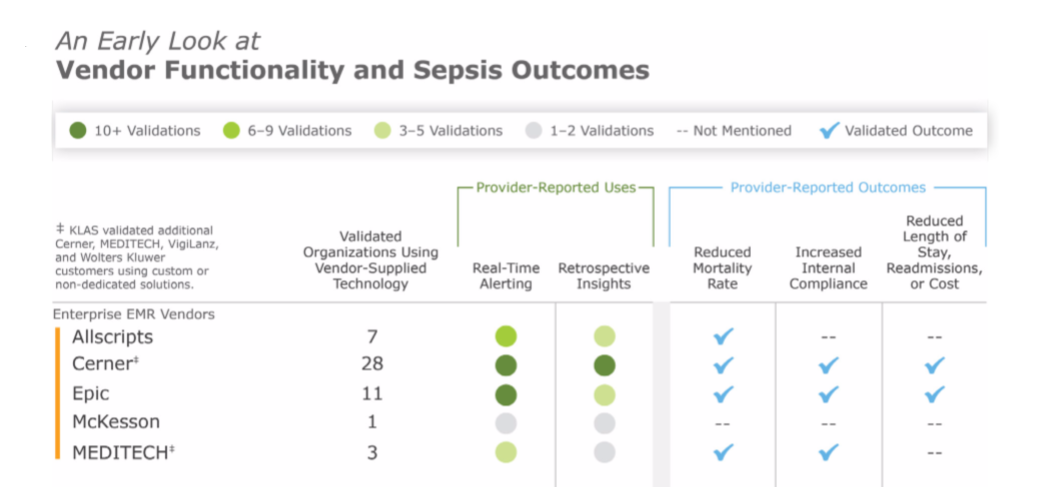
Cerner and Epic offer the most frequently adopted clinical surveillance tools in the provider market, according to a KLAS Research report.

KLAS interviewed providers about their experiences with vendors offering popular clinical surveillance tools for its report. These tools review information from data sources such as EMRs to alert clinicians about a range of patient care activities that decrease readmissions and mortality. The most common use case for clinical surveillance tools today is sepsis detection, according to KLAS.

Cerner and Epic were the only vendors KLAS validated as having “extensive adoption” for their clinical surveillance tools. Of the 17 Cerner customers surveyed, most were using the vendor’s clinical surveillance for sepsis detection. The 18 Epic customers KLAS surveyed tended to use the vendor’s functionalities for sepsis detection, orders checking and floorwide alerts, among a few other less-common use cases.

KLAS noted that although Cerner and Epic were the most widely adopted clinical surveillance vendors, customers of these two vendors tended to be “less satisfied than customers of the other charted vendors in this report,” which included companies like Bernoulli and Stanson Health.

Cerner customers told KLAS they felt the system needed to better integrate with physician workflows and lacked customization options. Epic customers said that the vendor’s alerts were difficult to set up, but were pleased with its ease of use after implementation. KLAS noted Epic does not have a dedicated clinical surveillance modality, but customers have adapted its EMR to provide similar features.


14 recent hospital, health system outlook and credit rating actions

https://www.beckershospitalreview.com/finance/14-recent-hospital-health-system-outlook-and-credit-rating-actions.html?origin=cfoe&utm_source=cfoe

Related image

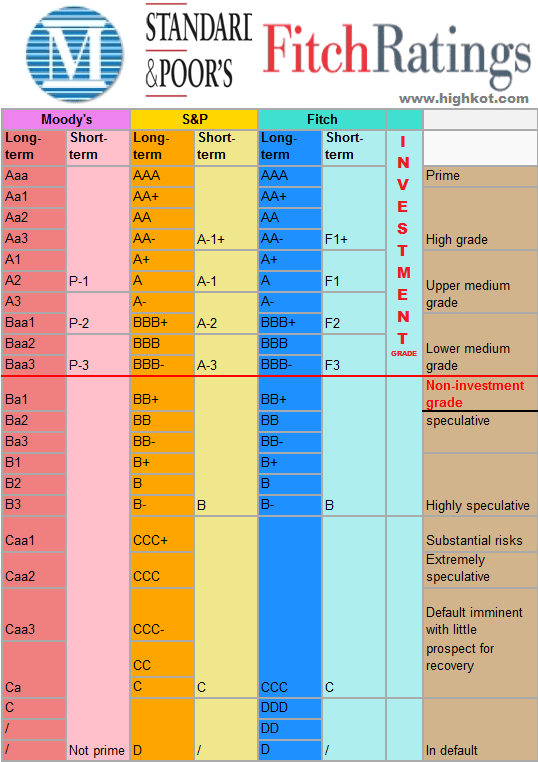
The following hospital and health system credit rating and outlook changes or affirmations occurred in the last week, beginning with the most recent:

1. Fitch affirms ‘AA-‘ rating for SSM Health

Fitch Ratings affirmed St. Louis-based SSM Health’s “AA-” issuer default rating and “AA-“/”F1+” rating where applicable on outstanding rated bonds.

2. Moody’s affirms Cook Children’s Medical Center’s ‘Aa2’ rating

Moody’s Investors Service affirmed its “Aa2” and “Aa2/VMIG 1” ratings for Fort Worth, Texas-based Cook Children’s Medical Center, affecting $356 million of outstanding revenue bonds.

3. Moody’s affirms ‘Baa2’ rating for Children’s Hospital Los Angeles

Moody’s Investors Service affirmed its “Baa2” rating for Children’s Hospital of Los Angeles, affecting $438 million of rated debt.

4. Moody’s affirms ‘A1’ rating for Lucile Packard Children’s Hospital

Moody’s Investors Service affirmed its “A1” revenue bond rating for Palo Alto, Calif.-based Lucile Packard Children’s Hospital.

5. Moody’s affirms ‘A2’ rating for Mary Greeley Medical Center

Moody’s Investors Service affirmed its “A2” rating for Ames, Ia.-based Mary Greeley Medical Center, affecting $64 million of outstanding revenue bonds.

6. Moody’s downgrades Marion County Health and Hospital to ‘Aa2’

Moody’s Investors Service downgraded Marion County (Ind.) Health and Hospital Corp.’s rating from “Aa1” to “Aa2.”

7. Moody’s assigns ‘A2’ rating to HonorHealth

Moody’s Investors Service assigned an “A2” rating to Scottsdale, Ariz.-based HonorHealth’s revenue bonds and affirmed its “A2” rating for the system’s outstanding parity debt.

8. Moody’s upgrades Gainesville Hospital District rating to ‘Ba1’

Moody’s Investors Service upgraded Gainesville (Texas) Hospital District issuer and general obligation limited tax debt ratings from “Ba2” to “Ba1.”

9. Moody’s downgrades Monroe County Health Care Authority rating to ‘Ba1’

Moody’s Investors Service downgraded Monroe County (Ala.) Health Care Authority’s rating from “A3” to “Ba1,” affecting $3.6 million in general obligation limited tax bonds.

10. Moody’s affirms ‘A2’ rating for MedStar Health

Moody’s Investors Service affirmed its “A2” rating on Columbia, Md.-based MedStar Health, affecting $1.4 billion of debt.

11. Moody’s assigns ‘A2’ rating to Mercy Health

Moody’s Investors Service assigned an “A2” rating to Cincinnati-based Mercy Health’s proposed taxable bond and also affirmed its “A2” and “A2/VMIG 1” ratings on the system’s outstanding bonds.

12. S&P revises Spartanburg Regional Health’s outlook to negative

S&P Global Ratings revised its outlook for Spartanburg (S.C.) Regional Healthcare System from stable to negative.

13. S&P affirms ‘A+’ rating for Rush University Medical Center

S&P Global Ratings affirmed its “A+” long-term rating for Chicago-based Rush University Medical Center’s outstanding revenue bonds.

14. S&P raises rating for Columbus Regional Healthcare to ‘A+’

S&P Global Ratings raised its rating for Whiteville, N.C.-based Columbus Regional Healthcare System from “BBB-” to “A+.”


Sales Reps May Be Wearing Out Their Welcome In The Operating Room

https://www.npr.org/sections/health-shots/2018/11/23/659816082/sales-reps-may-be-wearing-out-their-welcome-in-the-operating-room?utm_source=Sailthru&utm_medium=email&utm_campaign=Newsletter%20Weekly%20Roundup:%20Healthcare%20Dive%2012-01-2018&utm_term=Healthcare%20Dive%20Weekender

In the operating room, surgical masks and matching scrubs can make it hard to tell who’s whom — at least for outsiders.

Patients getting wheeled in might not realize that salespeople working on commission are frequently present and sometimes even advise the clinical team during surgery.

Who are these salespeople, and why are they there?

The answer to the first question is pretty easy. These sales reps typically work for medical device companies, such as Stryker, Medtronic or DePuy Synthes. Many surgeries, especially orthopedic trauma and cardiac procedures, require insertion of artificial joints or other hardware manufactured by these companies.

But as to why they’re present in the operating room, the answer depends on whom you ask.

Critics of the practice contend that device reps attend surgeries to strengthen their relationships with particular surgeons and thereby persuade them to choose one brand of artificial hip joint or stent or pacemaker over a competitor’s.

The device reps contend they observe surgeries because they are experts on particular devices and their accompanying toolkits, which often include hundreds of wrenches, screws and other hardware to aid in installation.

Sometimes, the device reps have observed more surgeries with a particular device than any one surgeon. That depth of experience can be helpful, the reps say, especially with the newest device model or upgrade.

“I can’t keep my socks together through the dryer. You can imagine trying to get 100 pans or 300 pans of instruments all set up correctly,” says orthopedic surgeon Michael Christie of Nashville, who specializes in new hips.

Device reps have been attending surgeries for years, but that practice is coming under new scrutiny. As baby boomers age, there has been exponential growth in device-dependent procedures like total joint replacements. In addition, insurers are starting to crack down on health care costs, telling hospitals that they’ll only pay a fixed price, known as a “bundled payment,” for certain surgical procedures, such as hip or knee replacements.

That approach has forced hospitals to take a hard look at the price tags of the devices and the salespeople who are pushing the latest models. Hospitals are “starting to figure out what these reps make for a living. They feel like they’re making too much money, and I think that’s why they want them out,” says Brent Ford, a former sales rep who now works for Nashville-based HealthTrust, a firm that handles contracting and purchasing of supplies like hip implants for 1,600 U.S. hospitals.

Medical device reps are more often business majors than biology buffs, but they train for the job as if they might have to conduct surgery themselves. At an educational center in Colorado, future reps learn how to saw off a hip bone and implant an artificial hip.

Their corporate training frequently involves cadavers, which helps reps develop the steel stomach required for the unsettling sights and sounds of an orthopedic operating room — like a surgeon loudly hammering a spike into a bone.

“Before we’re allowed to sell our products to surgeons, we have to know the anatomy of the body, go through tests of why physicians use these types of products and how we can assist in surgery,” says Chris Stewart, a former rep for Stryker, one of the largest device manufacturers.

Stewart now works for Ortho Sales Partners, a company that helps device manufacturers navigate relationships with hospitals.

Keeping those relationships strong is crucial, because hospitals don’t have to allow reps into their operating rooms. But if reps are allowed, there are rules: Reps can’t touch the patient or anything that’s sterile.

Big companies like Stryker have developed detailed policies for their own reps about how to behave in the operating room. And some hospitals, like hospital chain HCA’s flagship medical center in Nashville, have instituted even stricter rules — selling is banned in the OR and reps are only allowed to provide support for surgical cases.

But Stewart maintains reps still can be useful. Some help surgical assistants find a particular tiny component among the trays of ancillary tools. Some reps even deliver the tool trays to the hospital themselves, prior to the surgery. They want the procedure to run as smoothly as possible so that a busy surgeon will become a steady customer.

“Obviously, there’s a patient on the table being operated on, so that’s where the sense of urgency is,” Stewart says. “You have to become an expert in understanding how to be efficient with helping everyone in the OR making sure your implants are being utilized correctly.”

Keeping up with technology

Stewart says it has become difficult for the hospital staff to keep pace with constant design changes for artificial joints or spinal rod systems.

But the speed of innovation concerns some researchers, including Adriane Fugh-Berman, a Georgetown University medical doctor who studies the relationships between industry and physicians.

“What we need are skilled helpers in the operating room who are not making money off of the choices of the surgeons,” she says.

Fugh-Berman has come to believe that reps should be banned from operating rooms. Her biggest concern is safety, including the occasional violations of sterile protocol. As part of her research, she anonymously interviewed reps who said they’re instructed to always push the latest, most expensive products, even when the old version is more proven.

“The newest device is not necessarily the best device,” she says. “In fact, it may be the worst device.”

Cost concerns

Yet safety issues are not what has worn out the welcome for some reps — it’s their potential influence on surgical costs. Their exact effect remains hard for hospitals to quantify, but hospital executives now have a new incentive to push back on the role of the rep because insurance reimbursement formulas have changed.

For example, in 2016 the government-run Medicare program began changing how it pays hospitals for a joint replacement — from a traditional billing-for-costs model to a fixed-dollar amount for each surgery. It’s a cost-control move, because joint replacement has become one of the most common reasons for inpatient hospitalization for Medicare patients.

Increasingly, hospitals are feeling the squeeze of these new payment caps.

“They’re looking at costs and saying, ‘I want to understand everything that drives cost in my OR,’ ” says Doug Jones, a former rep with DePuy who now works for HealthTrust to control surgical spending. “I think they’re becoming more aware that that rep is in there and saying, ‘Is there a cost associated with it?’ ”

HealthTrust hasn’t been telling administrators to kick out sales reps. But it has been suggesting hospitals reassess their role. The company, which is a subsidiary of for-profit hospital chain HCA, has studied particular devices, like pedicle screws, often used in spine procedures. They cost anywhere from $50 to $100 to manufacture, but a hospital might pay a thousand dollars apiece to keep them in stock. One basic spine procedure can involve several screws and rods, with the sales rep standing to make a 10 percent to 25 percent commission on the equipment used, according to HealthTrust’s market research.

And in many places, upselling occurs in the room, says HealthTrust’s Ford. He recalls seeing reps encouraging a surgeon preparing for a procedure to use a fancier device that wasn’t on the hospital’s discounted list.

Other HealthTrust clients are starting pilot projects on running operating rooms without company-sponsored reps and buying equipment directly from smaller firms, which often have devices that are nearly identical to the brand names.

But getting rid of the rep may have hidden costs, too.

Surgeon-rep relationships

Joint replacements have become so routine that an experienced surgical team can nearly operate in silence. When the surgeon says “neck” and reaches out his hand, an assistant places the piece in his hand without a moment’s delay.

The array of tools and components are often in the right place because a device rep made sure of it. Logistics is a big part of the job — delivering trays of instruments in the pre-dawn hours to be sterilized by the hospital, the “non-glorious side of being a rep,” Ford says.

The logistical role has essentially been filled by the manufacturers instead of hospitals in recent decades. And now surgeons may trust their reps more than anyone else in the room. They’re often the first call he or she makes when scheduling a case, to make sure the device will be ready to go.

“If that widget isn’t there the next day when I’m doing a case and I need the widget, we’re kind of at an impasse,” says Christie, the Nashville-based joint replacement surgeon.

Many experienced surgeons, like Christie, also have financial ties to manufacturers, collecting substantial royalties for helping design new implants. As of 2013, these payments are now disclosed publicly. Christie, for example, was paid $123,000 by DuPuy in 2017.

An industry trade group spokesman defends the close relationship as a way to improve their products and provide hands-on training to surgeons. “Those are two areas where it’s key to maintain a close, collaborative relationship, with the appropriate ethical limitations,” says Terry Chang, associate general counsel for AdvaMed.

Filling a personnel gap

The overall result is that many clinicians are happy to have reps in the room.

“You say ‘sales rep,’ ” says Marley Duff, an operating room manager at TriStar Centennial Medical Center. “I look at them more being somebody that’s expertly trained in their field to provide support for the implants that they happen to sell.”

Duff says reps can be especially helpful when a failing artificial joint needs to be removed and replaced.

Hospitals are reluctant to remove reps, for fear of irritating surgeons, who typically don’t work directly for a particular hospital and could move their cases to another institution. Those hospitals experimenting with going “rep-less” have done so quietly and have had to hire additional staff to pick up the slack.

One of the first in the country to try, Loma Linda University Health, boasted in 2015 of reducing costs for total knee and hip replacements by more than 50 percent by going rep-less.

But a hospital spokesperson now tells NPR that the medical center has abandoned the effort, though she refused to discuss why.


Illinois hospital will have to meet constitutional charity standards, judge rules

https://www.beckershospitalreview.com/finance/illinois-hospital-will-have-to-meet-constitutional-charity-standards-judge-rules.html?origin=cfoe&utm_source=cfoe

Image result for tax exempt

An Illinois judge has ruled that the operator of Carle Foundation Hospital in Urbana must meet constitutional standards for charitable organizations in order to receive tax exemptions, The News-Gazette reports.

The Carle Foundation is seeking retroactive property tax exemptions for 2004-2011 and a refund for taxes it paid to local authorities during that time. However, Champaign County Judge Randy Rosenbaum agreed with the recent Illinois Supreme Court ruling that hospitals seeking tax exemptions must not only offer as much charity care as they would have paid in taxes; they also must extend charity care to an indefinite number of people and not create any barriers to it.

Hospitals looking for a tax exemption  also must show they do not have any capital, stock or shareholders. Carle Foundation attorneys  have argued that they need only show that the hospital complies with the terms of the hospital tax-exemption law.

John Colombo, a retired law professor at the University of at Illinois Urbana-Champaign, said that the ruling is important for the Carle Foundation’s upcoming trial, but does not clearly define charitable use for the future of Illinois hospitals.

“The Illinois Supreme Court is going to have to say at some point, ‘Here’s what it takes for an Illinois hospital to be tax-exempt,'” said Mr. Colombo.


BETH ISRAEL, LAHEY HEALTH MERGER GETS FTC, MASSACHUSETTS AG’S APPROVAL

https://www.healthleadersmedia.com/beth-israel-lahey-health-merger-gets-ftc-massachusetts-ags-approval?utm_source=silverpop&utm_medium=email&utm_campaign=ENL_181130_LDR_BRIEFING%20(1)&spMailingID=14711589&spUserID=MTY3ODg4NTg1MzQ4S0&spJobID=1522364043&spReportId=MTUyMjM2NDA0MwS2

he condition-laden approval stipulates a seven-year price cap that guarantees that the merged health system’s price increases will be kept below the state’s healthcare cost growth benchmarks.


KEY TAKEAWAYS

The Federal Trade Commission calls the merger ‘a close call’ but defers to state regulators.

The merged health system will provide $71 million for care in underserved areas.

The merged, 13-hospital health system will be one of the largest in the Bay State.

The proposed merger of Beth Israel Deaconess Medical Center and Lahey Health System cleared a huge hurdle today when Massachusetts Attorney General Maura Healey announced her conditional support.

The approval comes with what Healey called an “unprecedented” seven-year price cap that guarantees that the merged health system’s price increases will be kept below the state’s Health Care Cost Growth benchmark.

“Through this settlement, Beth Israel Lahey Health will cap its prices, strengthen safety net providers across the region, and invest in needed behavioral health services,” Healey said in a media release.

“These enforceable conditions, combined with rigorous monitoring and public reporting, create the right incentives to keep care in community settings and ensure all our residents can access the high-quality health care they deserve,” she said.

The deal also cleared a key federal hurdle when the Federal Trade Commission voted to close its investigation in light of Healey’s agreement.

“The assessment of whether to take enforcement action was a close call. However, based on Commission staff’s work and in light of the settlement obtained by the Massachusetts AG, we have decided to close this investigation,” the FTC said in a media release.

Kevin Tabb, MD, CEO of Beth Israel Deaconess Medical Center, who will serve as CEO of Beth Israel Lahey Health, called the state and federal approvals “an important step forward in making our vision a reality.”

“We appreciate the enormous effort that the Attorney General, her staff and the Federal Trade Commission have devoted to our proposal.  We share their commitment to health care innovation in Massachusetts, and we are eager to build on the strengths of our legacy organizations and deliver on our promise to our patients, their families and our communities,” Tabb said.

Massachusetts’ Health Care Cost Growth benchmark controls the annual growth of total medical spending in the state and is now set at 3.1%. Over the seven-year term, the cap will avoid more than $1 billion of the potential cost increases projected by the state’s Health Policy Commission.

When finalized, the merged, 13-hospital health system will be will one of the largest in the Bay State.

The merger push began in 2017, with Beth Israel and Lahey justifying the consolidation as a market-based attempt to address rising costs, price disparities, and healthcare access issues.

However, the deal has faced headwinds since its inception.

Even as late as this September, the Massachusetts Health Policy Commission noted that the merger would create a health system roughly the same size as Partner’s HealthCare System, the state’s largest health system, which would “increase substantially” market concentration in eastern Massachusetts.

“BILH’s enhanced bargaining leverage would enable it to substantially increase commercial prices that could increase total healthcare spending by an estimated $128.4 million to $170.8 million annually for inpatient, outpatient, and adult primary care services,” MHPC said.

In addition, the commission said spending on specialty physician services could increase by as much as $60 million annually if the merged health system obtains similar prices increases for those services.

“These would be in addition to the price increases the parties would have otherwise received,” the commission wrote. “These figures are likely to be conservative. The parties could obtain these projected price increases, significantly increasing healthcare spending, while remaining lower-priced than Partners.”

Those concerns appeared to have been alleviated on Thursday, when MHPC Commissioner Martin Cohen said “the investments required by the settlement will have a real impact on access to treatment for mental health and substance use disorders for patients across Eastern Massachusetts.”

Healey’s assurance of discontinuance also includes requirements that the merged Beth Israel Lahey Health pledge $71.6 million to support healthcare services for underserved areas.

The deal also requires BILH to strengthen its commitment to MassHealth; engage in business planning with its safety net hospital affiliates; enhance access to mental health and substance use disorder treatment; and retain a third-party monitor to ensure compliance with the terms.

The deal exempts affiliated safety net hospitals from the price-cap constraints. Lawrence General Hospital CEO Dianne J. Anderson said the exemption for her safety net will “ensure a commitment to joint, long-term planning for distribution of health care resources across the region.”

The $71.6 million that BILH will spend over eight years for underserved areas will include:

  • $41 million to fund affiliated community health centers and safety net hospitals, which guarantees support at the systems’ historic levels.
  • At least $8.8 million in additional financial support for affiliated community health centers and safety net hospitals.
  • At least $5 million in strategic investment to expand access to healthcare for low-income communities through community health centers.
  • At least $16.9 million to develop and expand behavioral health services across the BILH system.

“THROUGH THIS SETTLEMENT, BETH ISRAEL LAHEY HEALTH WILL CAP ITS PRICES, STRENGTHEN SAFETY NET PROVIDERS ACROSS THE REGION, AND INVEST IN NEEDED BEHAVIORAL HEALTH SERVICES.”


340B FINAL RULE WILL LAUNCH ON JANUARY 1, 2019

https://www.healthleadersmedia.com/340b-final-rule-will-launch-january-1-2019

HHS shortens the 340B final rule implantation by six months after determining that it would not ‘interfere’ with the departments ‘comprehensive policies’ to address high drug costs.


KEY TAKEAWAYS

PhRMA says the ‘overly burdensome’ final rule fails to address hospital abuse of the program.

The new rule provides drug pricing information to 340B participants through a closed website.  

Proponents scoff at drug makers’ claims that more time is needed before the oft-delayed final rule is implemented.

After several delays, hundreds of public comments, a lawsuit, and an eight-year-old Congressional mandate, the federal government on Thursday bumped up the starting date of its 340B drug pricing final rule by six months.

In a notice published this week in the Federal Register, the Department of Health and Human Services said the final rule—which is designed to protect hospitals from being overcharged by drug manufacturers—would take effect on January 1, 2019, instead of July 1, 2019.

The final rule was supposed to take effect on January. 5, 2017, but HHS delayed implementation because it said it was in the midst of “developing new comprehensive policies to address the rising costs of prescription drugs.”

Hospitals got tired of waiting and filed suit, asking a federal judge to order the Trump Administration to launch the final rule on January 1, 2019. The hospitals allege that the delays are causing significant financial harm to the nearly 2,500 hospitals nationwide that participate in the 340B Drug Pricing Program.

In late October, the Trump Administration said it was considering accelerating implementation.

In bumping up the final rule implantation by six months, HHS said it “has determined that the finalization of the 340B ceiling price and civil monetary penalty rule will not interfere with HHS’s development of these comprehensive policies.”

Under the new rule, federal regulators will provide pricing information to 340B hospitals through a closed website, which proponents of the rule say is essential for ceiling price enforcement.

As expected, hospitals praised the action, and drug makers expressed disappointment.

“This rule is good for patients and for essential hospitals, which rely on 340B savings to make affordable drugs and health care services available to vulnerable people and underserved communities,” said America’s Essential Hospitals President and CEO Bruce Siegel, MD.

“It also ends years of delay for much-needed measures to hold drug companies accountable for knowingly overcharging covered entities in the 340B program,” Siegel said.

Maureen Testoni, interim president and CEO of 340B Health, called the announcement “a big step toward stopping drug companies from overcharging 340B hospitals, clinics, and health centers.”

“The next step toward ensuring true 340B drug maker transparency is for the administration to launch its ceiling price website so hospitals, clinics, and health centers can ascertain that they are paying the correct amounts for 340B medications,” Testoni said.

“We are encouraged that HHS says it will release that pricing reporting system shortly and that the department will communicate additional updates through its website,” she said.

PhRMA said it was “disappointed the Administration did not issue new proposals for this rule as it repeatedly stated it would.”

The pharmaceutical industry advocates said HHS “ignored the numerous concerns raised by stakeholders on the proposed ceiling price calculations, offset policy and civil monetary penalty provisions.”

Drug makers allege that hospitals have been scamming the 340B program, and PhRMA said Thursday that the final rule’s “flawed policies are not in line with the 340B statute and fail to address root problems in the 340B program that have enabled private 340B hospitals to generate record profit without commensurate benefit to patients.”

“Not only is the final rule itself overly burdensome in its requirements, but moving up its effective date also leaves manufacturers with very little time to make operational changes to systems and procedures,” PhRMA said.

Testoni scoffed at claims that more time was needed.

“The regulation now will be going into effect more than eight years after Congress mandated it—and only after a lawsuit filed by 340B Health and other hospital organizations to stop repeated administrative delays to the effective date,” Testoni said.

“As today’s final rule notes, these delays have given drug makers ‘more than enough time to prepare for its requirements.'”

“THESE DELAYS HAVE GIVEN DRUG MAKERS MORE THAN ENOUGH TIME TO PREPARE FOR ITS REQUIREMENTS.”