RWJBarnabas hospital exec placed on administrative leave after Facebook comment

https://www.beckershospitalreview.com/hospital-management-administration/rwjbarnabas-hospital-exec-placed-on-administrative-leave-after-facebook-comment.html?origin=cfoe&utm_source=cfoe

Image result for facebook

Michellene Davis, an executive vice president and chief corporate affairs officer for West Orange, N.J.-based RWJBarnabas Health, was placed on administrative leave pending an investigation into a racially charged Facebook comment, according to the North Jersey Record.

Ms. Davis commented on a NorthJersey.com article that her friend shared on Facebook.
“Who is going to train them not to shoot black children first?!?” Ms. Davis commented.

The comment has since been deleted. It did not appear on a public post, but screenshots began circulating on social media.
A few days later Ms. Davis posted an apology on Facebook for what she called “an insensitive and offensive comment.”
She has reportedly deleted her Facebook page.

“My concern for the safety of schoolchildren and gun violence led me to react to a headline without thinking,” she wrote in the apology post, according to the North Jersey Record. “Having a late sister and other family in law enforcement I deeply respect the law enforcement community and appreciate their service and admire their sacrifice.”

RWJBarnabas Health is conducting an internal investigation into the incident.

Ellen Greene, a spokesperson for RWJBarnabas, told the North Jersey Record, “statements posted by RWJBarnabas Health official social media outlets are the only statements that represent the views and policies of the organization.”

Read the full article here.


4 hospital business models of the future

https://www.beckershospitalreview.com/hospital-management-administration/pwc-4-hospital-business-models-of-the-future.html?origin=cfoe&utm_source=cfoe


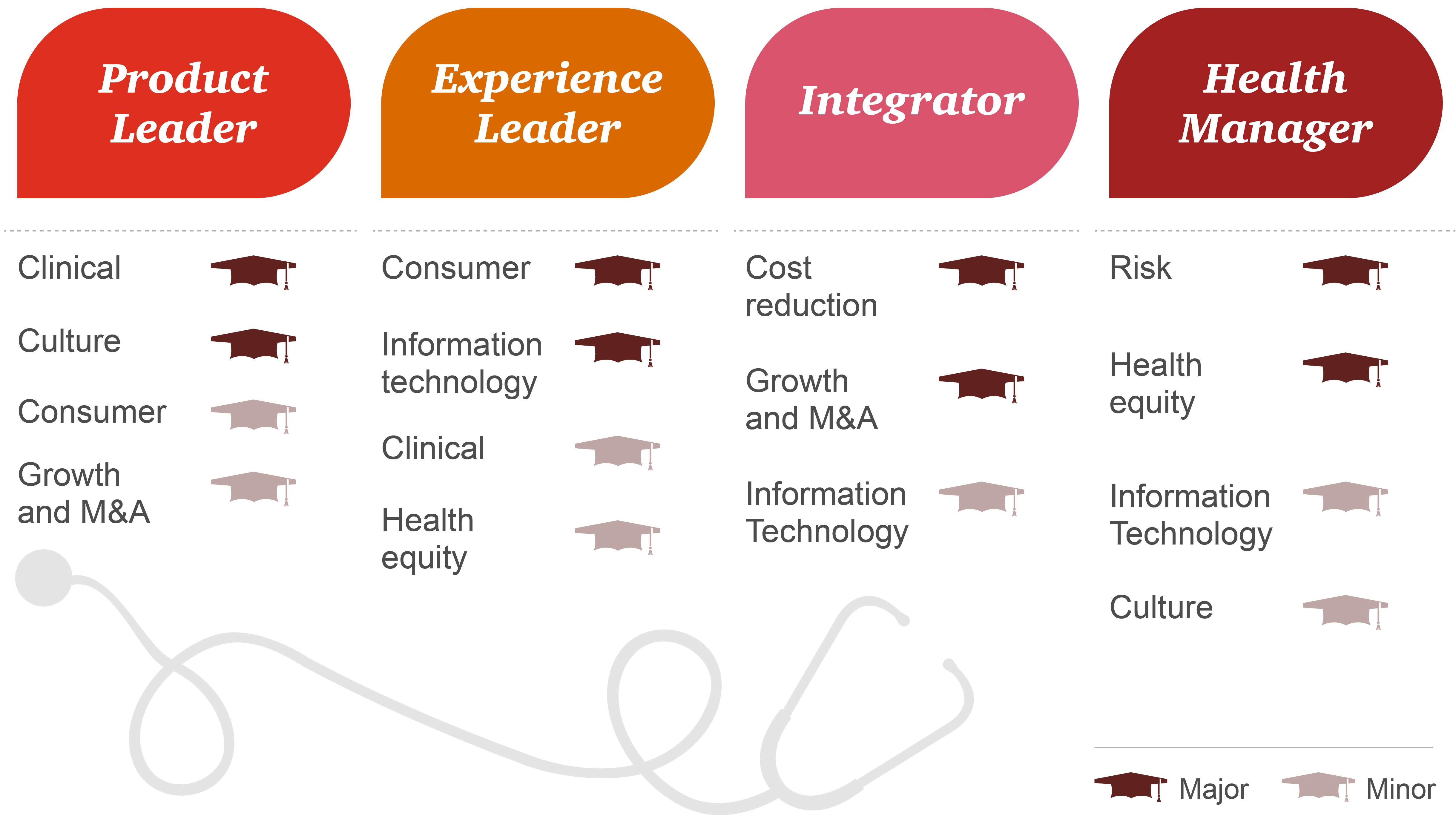
For hospitals, the million-dollar question is, “How do we adapt to the changing needs of the healthcare industry and remain fiscally stable?” PwC’s Health Research Institute articulates four potential answers to that question in a report published Oct. 4.

Here are the four business models identified by PwC’s HRI as successful strategies for hospitals over the next decade:

1. The product leader. Under this model, hospitals are focused on delivering top-notch, advanced care. Best-in-class care is the core product. This model will focus on specific healthcare needs, particularly those that may be costly or complex. Whole patient care, low-cost options and a large footprint are not the focus. This model is focused on the product and the brand and will build scale using technology like telehealth. It relies on partnerships with other provider types for referrals and new patients.

2. The experience leader. This model is focused on building the best possible customer experience. It relies on patient retention and loyalty. This is built on offering consistency and convenience. A focus on wellness, patient preferences and cost transparency is key. Offering the lowest cost option isn’t a top priority, so long as consumers understand what goes into the pricing and get what they are looking for.

3. The integrator. This business model focuses on offering the best value option to consumers via scale and scope. This is the largest of the business models and will likely require a multiregional or national presence. The top focus isn’t the brand, however. Instead, it’s about offering low-cost options, which will require working with providers outside of the hospital and aligning economic incentives to keep prices down.

4. The health manager. The last model puts a premium on the health of populations. Its focus is on keeping complex populations out of high-cost settings by addressing social determinants of health. This model requires a broad understanding of populations, a balance of risk and health equity, and partnership with the public sector. It will require hospitals to take on the broadest definition of healthcare to succeed, including mental, social and logistical supports for patients.

Learn more about PwC’s analysis here.

https://www.pwc.com/us/en/health-industries/health-research-institute/provider-systems-future.html


CHS shares sink to new low

https://www.beckershospitalreview.com/finance/chs-shares-sink-to-new-low-100518.html

Image result for medical device prices

Shares of Franklin, Tenn.-based Community Health Systems closed Oct. 4 at $2.67, their lowest closing price ever and down 1.1 percent from the day prior.
The hospital chain’s stock price traded as low as $2.62 on Oct. 4 after closing Oct. 3 at $2.70 per share. Over the past year, CHS shares have traded between $2.62 and $7.62.

CHS saw its net loss shrink in the second quarter of 2018 as the company continued to refine its hospital portfolio. The company is using proceeds from the hospital divestitures to pay down its debt load.


US hospitals pay up to 6 times more for medical devices, study finds

https://www.beckershospitalreview.com/supply-chain/us-hospitals-pay-up-to-6-times-more-for-medical-devices-study-finds.html

Image result for medical device prices


U.S. hospitals spend more on prescription drugs than their peers in European countries, and the same is true for medical devices, a new study published in Health Affairs suggests. In some cases, hospitals in the U.S. paid six times more for a medical device than their European counterparts.

The study was conducted by two researchers from the London School of Economics and Political Science who looked at what hospitals in the U.S., U.K., France, Italy and Germany paid for various heart implants, such as stents and pacemakers. They used data from 2006 to 2014 from a large hospital panel survey consisting of 30,000 unique price points.

The researchers found that depending on the type of stent or pacemaker, U.S. hospitals paid anywhere from two to six times more than the country that paid the lowest prices. The country that often paid the lowest price was Germany.

One example provided was drug-eluting stent prices. The price of the device in the U.S. consistently exceeded the price in Germany by $1,000.
Prices between countries differed for various reasons, including the market power of medical device manufacturers and each country’s tech-based regulations.
The findings suggest “that manufacturers exploit varying levels of willingness to pay and bargaining power between buyers to charge different prices across hospitals and increase profits,” the researchers wrote.


15 health systems with strong finances

https://www.beckershospitalreview.com/finance/15-health-systems-with-strong-finances-100418.html

Here are 15 health systems with strong operational metrics and solid financial positions, according to recent reports from Moody’s Investors Service and Fitch Ratings.

Note: This is not an exhaustive list. Health system names were compiled from recent credit rating reports and are listed in alphabetical order.

1. St. Louis-based Ascension has an “Aa2” senior debt rating and stable outlook with Moody’s. The health system has a large diversified portfolio of sizable hospitals and strong liquidity. Moody’s expects Ascension’s margins to improve in fiscal year 2019.

2. Morristown, N.J.-based Atlantic Health System has an “Aa3” rating and stable outlook with Moody’s. The system has a strong market position, favorable balance sheet ratios and strong operating performance, according to Moody’s.

3. Atrium Health has an “Aa3” rating and stable outlook with Moody’s. The Charlotte, N.C.-based health system has historically stable operating performance and solid cash-flow metrics, according to Moody’s.

4. Prince Frederick, Md.-based Calvert Health System has an “AA-” rating and stable outlook with Fitch. The system has a leading market share, a favorable payer mix and stable cash flow, according to Fitch.

5. Children’s Healthcare of Atlanta has an “Aa2” rating and stable outlook with Moody’s. The health system has a dominant market position, strong margins and ample liquidity, according to Moody’s.

6. Cleveland Clinic has an “Aa2” rating and stable outlook with Moody’s. Cleveland Clinic has strong brand recognition, exceptional fundraising ability and healthy cash flow, according to Moody’s.

7. Inova Health System has an “Aa2” rating and stable outlook with Moody’s. The Falls Church, Va.-based health system has consistently strong cash-flow margins, a leading market position and a good investment position, according to Moody’s.

8. Philadelphia-based Main Line Health has an “Aa3” rating and stable outlook with Moody’s. The system has a strong market position, healthy balance sheet metrics and a light debt burden, according to Moody’s.

9. Rochester, Minn.-based Mayo Clinic has an “Aa2” rating and stable outlook with Moody’s. Mayo has a strong clinical reputation, favorable fundraising capabilities and a robust balance sheet, according to Moody’s.

10. Dallas-based Methodist Health System has an “Aa3” rating and stable outlook with Moody’s. The health system has a favorable liquidity position, consistent operating results and a growing market population, according to Moody’s.

11. Omaha-based Nebraska Medicine has an “AA-” rating and stable outlook with Fitch. The system has strong operating margins and a light debt burden, according to Fitch.

12. Fort Wayne, Ind.-based Parkview Health System has an “Aa3” rating and stable outlook with Moody’s. The system has healthy debt service coverage, manageable capital spending and improving liquidity metrics, according to Moody’s.

13. Sisters of Charity of Leavenworth (Kan.) Health System, which does business as SCL Health, has an “Aa3” rating and stable outlook with Moody’s. The system has a good market position in a favorable service area, strong operating margins and limited capital spending, according to Moody’s.

14. Hollywood, Fla.-based South Broward Hospital District has an “Aa3” rating and positive outlook with Moody’s. The health system has a dominant market position, robust debt coverage and improving operating margins, according to Moody’s.

15. Chapel Hill-based University of North Carolina Hospitals has an “Aa3” rating and stable outlook with Moody’s. The health system has an excellent market position, strong patient demand and healthy financial performance, according to Moody’s.


Hospitals led healthcare industry hiring in September

http://www.modernhealthcare.com/article/20181005/NEWS/181009931

Month after month this year, the ambulatory sector has led the pack when it comes to healthcare industry hiring. But hospitals managed to push ahead in September to take the top spot.

Hospitals added 12,000 jobs last month, 47% of total healthcare hiring, and easily beating out ambulatory’s 10,300 jobs. Healthcare overall added a healthy 25,700 jobs in September, 23% fewer than the 33,200 jobs added in August, but still well above July’s 16,700 new hires, according to the U.S. Bureau of Labor Statistics’ newest jobs report released Friday.

The September jobs report ticked the U.S. unemployment rate down to 3.7%, the lowest it’s been since 1969. A total of 134,000 new jobs were added to the U.S. economy last month. Healthcare hiring trailed that of professional and business services, which added 54,000 jobs, but beat out transportation and warehousing, which added 23,800 new jobs. The construction industry made 23,000 new hires.

Ambulatory sector hiring was weak in September compared with its robust showing for much of the year. Physicians’ offices added the most jobs, at 4,100—800 fewer than in August. Home health added 2,200 jobs, 72% fewer than the month before. Dental office hiring, which has been weak in recent months, shed 500 jobs.

Outpatient care centers added 1,000 jobs in September, while offices of other health practitioners added 2,000.

Nursing and residential care facilities added 3,400 jobs in September, 13% fewer than in August. Within that sector, other residential care facilities added 1,400 jobs, and community care facilities for the elderly made 1,100 new hires. Nursing care facilities, a typically weak hiring area this year, made 200 new hires in September. Residential mental health facilities added 700 jobs.

Cleveland Clinic may grow to 15 hospitals

https://www.beckershospitalreview.com/hospital-transactions-and-valuation/cleveland-clinic-may-grow-to-15-hospitals.html

Image result for cleveland clinic


The boards of Cleveland Clinic and Vero Beach, Fla.-based Indian River Medical Center voted to approve a series of agreements allowing IRMC to integrate into the Cleveland Clinic, the organizations announced Oct. 3.

Here are five things to know:

1. The advisers and legal teams of both organizations shared details of the agreements with board members during a public meeting Sept. 25. Board members and trustees spent the last week analyzing the details and finalized their decision Oct. 3. Officials from both organizations will formally sign the agreements later this week.

2. Under the deal, IRMC and its affiliates will become part of the Cleveland Clinic, which also agreed to commit at least $250 million to IRMC over the next 10 years.

3. Cleveland Clinic will maintain full governance over IRMC and has committed to maintaining maternity care, inpatient well-baby care/pediatrics and gynecology services, behavioral health services, and other inpatient and outpatient services for at least 10 years. However, the hospital district will phase out support for indigent care at IRMC during the three years after the transaction closes.

4. The deal is still pending regulatory approval.

5. Cleveland Clinic recently inked a definitive agreement to purchase Martin Health System, a three-hospital institution in Stuart, Fla. If both deals are successful, Cleveland Clinic will comprise 15 hospitals in addition to its main campus.


Dignity Health’s net income more than doubles

https://www.beckershospitalreview.com/finance/dignity-health-s-net-income-more-than-doubles.html

Related image


Dignity Health, a 40-hospital system based in San Francisco, saw its financial position improve in fiscal year 2018 as it booked higher revenue and benefited from a one-time payment related to a transaction that closed earlier this year.

Dignity recorded revenues of $14.2 billion for the year, which ended June 30, compared with revenues of $12.9 billion for fiscal 2017, according to recently released financial documents

In fiscal 2017, Dignity and other California healthcare providers struggled with loss of funds from the state’s provider-fee program, which is designed to help hospitals and health systems treat a large number of indigent patients. The program levies a tax on hospitals, and the state then pools funds to receive federal matches for Medicaid dollars. The Medicaid dollars are distributed back to hospitals based on the number of indigent patients they treat.

In November 2016, California’s participation in the provider-fee program was made permanent with the passage of Proposition 52. However, CMS did not approve the first iteration of the program, which covers the period from Jan. 1, 2017, to June 30, 2019, until December 2017. Accordingly, Dignity’s financial statements for fiscal year 2018 include $447 million in provider-fee payments for the most recent fiscal year plus an additional $217 million of catch-up related to fiscal 2017.

Although the provider-fee payments helped improve Dignity’s financial picture, the system said its unpaid Medi-Cal costs totaled $556 million even after the inclusion of the provider-fee and supplemental payments.

After factoring in expenses, which climbed 6 percent year over year, Dignity ended fiscal 2018 with operating income $529.3 million. That’s compared to fiscal 2017, when the system recorded an operating loss of $66.8 million. The system’s net income more than doubled year over year to $932.5 million.  

During fiscal 2018, Dignity’s financial position was boosted by a one-time gain of $120 million related to a deal with Mechanicsburg, Pa.-based Select Medical to combine occupational medicine and urgent care businesses. Under the transaction, which closed in February, Select Medical’s Concentra Group Holdings and Dignity’s U.S. HealthWorks combined.

Daniel Morissette, Dignity Health’s senior executive vice president and CFO, said several of the system’s balance sheet-related financial metrics also improved in fiscal 2018.

“Our balance sheet continued to strengthen, and cash flows were solid, as we remain focused on further enhancing the long term financial viability of our enterprise and honoring our commitments to the many communities and constituents we serve,” he said in a press release.


UPMC, Highmark face off over out-of-network prepayment rule: 5 things to know

https://www.beckershospitalreview.com/payer-issues/upmc-highmark-face-off-over-out-of-network-prepayment-rule-5-things-to-know.html

Image result for out of network providers

A state-brokered consent decree between Pittsburgh rivals Highmark Health and UPMC expires June 30, 2019, after which Highmark’s Medicare Advantage members will be unable to access UPMC at in-network rates. A recent report from Trib Live found the systems are clashing over a new rule concerning how some nonemergent care will be paid for by out-of-network Highmark members.

Here are five things to know:

1. Beginning in July, Highmark MA members will have to pay any estimated upfront charges for nonemergent treatment in full before accessing care from most UPMC providers, UPMC said in an Oct. 1 internal memo.

2. For example, a Highmark MA member wishing to schedule a surgery next July at most UPMC hospitals will have to request an estimate for the service from UPMC and pay it in full before undergoing surgery, according to Trib Live, which cites the internal memo.

3. Partial payments or arranged payment plans will not be accepted, according to UPMC. “If you choose to access nonemergency care from a UPMC provider that is out-of-network, you will be required to pay in advance,” a UPMC mailer sent to patients explains. It adds that patients can maintain in-network access to UPMC through plans sold by Aetna, its subsidiary Coventry, Cigna and UnitedHealthcare.

4. Highmark officials were surprised by the new rule. They told Trib Live the mandate is “an extremely unusual” move by UPMC. A Highmark spokesperson told the publication the rule runs counter to other “providers across the nation, when our Medicare Advantage members travel and may see an out-of-network provider.”

5. A UPMC spokesperson told Trib Live the system sent out the Oct. 1 memo to physicians “because we didn’t want any of their patients to be surprised.”


WHY HEALTH SYSTEMS SHOULD WORRY ABOUT WALGREENS AND CVS

https://www.healthleadersmedia.com/strategy/why-health-systems-should-worry-about-walgreens-and-cvs


There’s a building threat from the nation’s two retail drugstore giants to hospitals and health systems as providers move toward value-based care and lower-cost outpatient services.

Even with Amazon threatening to compete with retail drugstore chains CVS Health and Walgreens with its own online pharmacy, these retailers aren’t giving up on brick-and-mortar as a way to attract more patients into their stores.

And that’s bad news for the nation’s hospitals and health systems.

There’s a building threat from the nation’s two retail drugstore giants to hospitals and health systems as medical care providers move away from fee-for-service medicine to value-based care and lower-cost outpatient services.

Walgreens and CVS are looking to healthcare as a way to keep customers coming into their stores, particularly in an era where consumers are fleeing brick-and-mortar to shop online via Amazon.

As front-end retail sales have fallen in recent years, CVS and Walgreens are moving more rapidly into healthcare from simply their historic role of filling prescriptions beyond the pharmacy counter and treating routine maladies with nurse practitioners in their retail centers to more services.

They are partnering more closely with health insurance companies that will work harder to funnel more patients to outpatient healthcare services inside the stores that will make them direct competitors of U.S. hospitals and health systems.

CVS has more than 1,100 retail MinuteClinics compared to 800 five years ago and 400 a decade ago.

CVS was opening 100 clinics per year 10 years ago, and that has slowed because they are now focusing on expanding healthcare services in the clinics as well as their stores generally. The same goes for Walgreens.

Walgreens has increased the services in its retail clinics, advertising the ability of nurse practitioners to conduct routine exams and student physicals and has been aggressively lobbying states across the country to change scope-of-practice laws to allow pharmacists to administer an array of vaccines.

“Why not use those locations as a strategy for healthcare?” Walgreens Chief Medical Officer Dr. Patrick Carroll says of the drugstore chain’s nearly 10,000 locations across the country. “We have the space. We should use it.”

To be sure, Walgreens is looking to provide more physician services like x-rays and procedures by partnering with UnitedHealth Group’s Optum to connect its MedExpress brand urgent care centers to an adjacent Walgreens. Like most retailers, Walgreens’ sales of general merchandise in the front end of the store is falling just as pharmacy sales, personal healthcare, and wellness revenues rise.

In the first such ventures, the Walgreens store and the MedExpress center each have their own entrance with a door inside connecting the urgent care center with the drugstore. It’s designed for a medical provider to guide a patient to either facility depending on their prescription or other needs.

For now, there are 15 locations in six states that have MedExpress urgent care centers connected to Walgreens stores as part of the pilot. The markets include Las Vegas; Dallas; Minneapolis; Omaha, Nebraska; two cities in West Virginia; and Martinsville, Virginia.

“We’re working closely with a number of partners in the healthcare community to bring services closer to our customers,” Carroll said. “With our stores serving as more of a neighborhood health destination, we can best meet the changing needs of our customers, while also complementing our expanded pharmacy services.”

Meanwhile, CVS plans to offer more healthcare services inside its stores after its merger with Aetna closes. CVS executives say they aren’t ruling out developing urgent care centers as well.

CVS’ network of nearly 10,000 pharmacies and over 1,000 retail clinics, and Optum’s growing network of ambulatory facilities like the MedExpress urgent care centers are emerging as a model health insurers want to do business with as fee-for-service medicine gives way to value-based care that keeps patients out of the hospital.

And in CVS’ case, the pharmacy will soon own Aetna, a health plan with more than 20 million members. That combination, which is currently wending its way through the regulatory process, is expected to lead to more narrow network health plans that encourage patients to use providers in the Aetna-CVS network over other health systems’ facilities.

Health systems should be concerned, healthcare analysts say.

“CVS and Aetna, in their own words, are promising to reinvent the front door of American healthcare,” says Kenneth Kaufman, managing director and chair of the consulting firm Kaufman Hall. “That promise should be of serious concern for legacy hospital providers since those providers have occupied that front door for the past 75 years.”

CVS Health President and CEO Larry Merlo is beginning to offer some details to their strategies.

While cautioning that it’s “very early” in the development of new programs the combined company will develop, Merlo has said the larger company plans to first focus on three primary patient populations: those patients with any of five chronic diseases: diabetes, hypertension, hyperlipidemia, asthma, and depression.

CVS and Aetna will also focus on “patients undergoing transitions in care,” and a third “broader focus on managing high-risk patients,” Merlo told analysts on the company’s second quarter earnings call in May.

“By extending our new health care model more broadly in the marketplace, patients will benefit from earlier interventions and better connected care leading to improved health outcomes,” Merlo said on September 20 at a CVS Health town hall meeting in Los Angeles.

“Think again about that senior leaving the hospital, knowing that the care plan prescribed by her doctor is being seamlessly coordinated by CVS and her caregiver. By fully integrating Aetna’s medical information and analytics with CVS Health’s pharmacy data and our 10,000 community locations, we can enable more effective treatment of the whole patient,” he says.