NEARLY 50% OF UPPER-LEVEL MANAGERS AVOID HOLDING PEOPLE ACCOUNTABLE

Nearly 50% of Upper-Level Managers Avoid Holding People Accountable


46% of upper-level managers are rated “too little” on the item, “Holds people accountable … .” (HBR)

You missed the point if accountability is:

  1. Coercing reluctance to do things it isn’t committed to do.
  2. Expecting performance from weakness. Accountability won’t help squirrels lay eggs.
  3. Punishment.

Accountability:

  1. Says we are responsible to each other.
  2. Expresses commitment. Those who aren’t willing to be accountable haven’t committed.
  3. Defines dependability. What’s more insulting than one unprepared person on a team filled with talent?
  4. Demonstrates confidence and self-respect.
  5. Sets the ground rules for respect and trust.

Accountability recognizes strength and honors performance.

Mutual accountability:

I’ve never been asked to lead a workshop on how to hold ourselves accountable. It’s always about others. That is the heart of the problem.

Accountability is something to work on together, not mandate from on high.

One-sided accountability:

  1. Leverages fear.
  2. Depends on carrots and sticks.
  3. Promotes disconnection and arrogance. Relationships disintegrate when leaders stand aloof.
  4. Invites resentment and disengagement.
  5. Dis-empowers those who need to feel powerful.

Mutual accountability:

  1. Requires leaders to go first.
  2. Demands respect-based interactions.
  3. Strengthens connection and relationship. We are responsible to help the people around us succeed.
  4. Honors integrity and courage.
  5. Gives opportunity for humility.

Jim Whitehurst, CEO of Red Hat, said, “Go into every interaction with those who work for you believing that you are as accountable to them for your performance as they are to you for their performance.”, and author of, “The Open Organization.”

Practice accountability:

Blurry responsibility leads to vague accountability. Vague accountability is no accountability.

  1. Who owns the project or initiative?
  2. Who makes decisions? The group. A project leader. Someone who isn’t in the room.
  3. What are the deliverables?
  4. What are the milestones and deadlines?
  5. What happens when deadlines are missed?

Complexity is like fog to accountability.

What might mutual accountability look like in your organization?

How might leaders lift accountability out of the category of punishment?

4 MORE ENEMIES OF VITALITY ALL LEADERS MUST AVOID

4 More Enemies of Vitality All Leaders Must Avoid

Leaders who suck the life out of people promote failure and embrace defeat.

The first four enemies of vitality:

#1. Distrust.

#2. Disrespect.

#3. Proper channels.

#4. Excluding the outside.

Posted here.

4 more enemies of vitality:

#5. Isolation: the message that others don’t matter

3 ways ineffective leaders practice isolation:

  1. Avoid the front-line. Hang with the upper crust.
  2. Mandate don’t communicate.
  3. Make policies when something goes wrong rather than using values as guides.

#6. Favoritism: discouragement for the masses. Energy for the favorites.

Leaders play favorites when they:

  1. Believe they’re above flattery. “… we have a craving for anything that makes us feel good about ourselves. We’ll go to great lengths to get positive feedback, … .” (HBR, July 2010)
  2. Give cushy assignments based on the brown-nose index. (Those who brown-nose the most are at the top of the brown-nose index.)
  3. Promote suck ups. The more someone kisses up, the more likely they are to move up.

Suck-ups get ahead because flattery works.

#7. Lousy meetings: insulting the brains around the table

Talkative leaders suck the life out of meetings.

Rule of thumb: The leader of any meeting speaks no more than 25% of the time. (15 minutes in a 60 minute meeting.)

  1. Assign agenda items to team members.
  2. Create discussion by asking everyone to give one reason why the idea on the table won’t work. Turn the tables and ask everyone to give one reason the idea should be adopted.
  3. Call on quiet team members. If the person is an introvert, give them prep time. “Wilma, would you prepare to address item #2 on tomorrow’s agenda?”

The worst romance is infatuation with the sound of your own voice.

#8. Cowardice: playing it safe is rewarded with advancement

Cowardly leaders:

  1. Can’t make decisions.
  2. Hide behind policy.
  3. Throw people under the bus.

Cowardly leaders suck the life out of people who want to get something done.

Which one of the eight enemies of vitality is most deadly?

What leadership behaviors suck the life out of people?


THE LISTENING SANDWICH AND INSPIRING OTHERS

The Listening Sandwich and Inspiring Others

Banter provides relational energy but don’t focus on yourself.

People enjoy hearing leaders talk about themselves as long as they don’t talk about themselves all the time.

The listening sandwich:

  1. Show interest in others.
  2. Share a bit about yourself (Banter).
  3. Show interest in others again.

Illustration:

A leader told me his word for 2018 is “Care”. We practice the “One Word” principle described in the book of the same name.

Instead of asking him a series of questions, I shared a bit of myself, “My word for 2018 is “Book”. For a moment, the conversation turned toward me.

When banter turns ugly:

Banter turns ugly when it becomes a monologue about yourself.

Inspiring leaders make conversations about others. Yes, share a bit of yourself. Let people know what you think. But a series of machine-gun-questions makes people wonder what you’re after.

Banter lowers barriers.

From banter to curiosity and inspiration:

Banter – sharing a bit of yourself – sets people at ease.

I have questions about “Care” for my friend. The fact that he knows my “word” establishes a connection point as long as we discuss BOTH words.

I want to inspire my friend as he “cares” in 2018. The questions I have for him don’t feel like an inquisition because he knows my word.

Curiosity strengthens connection, nurtures humility, and inspires others.

Curiosity:

  1. You’re already a caring leader. How did you happen to choose “Care” as your word for 2018?
  2. What’s important about caring?
  3. How will you take your Care-game to the next level?
  4. How’s your care-game going?

Because he knows my word, curiosity about his word is vulnerability for me.

How might leaders employ the listening sandwich?

When is sharing about yourself out of line for leaders? Too much?


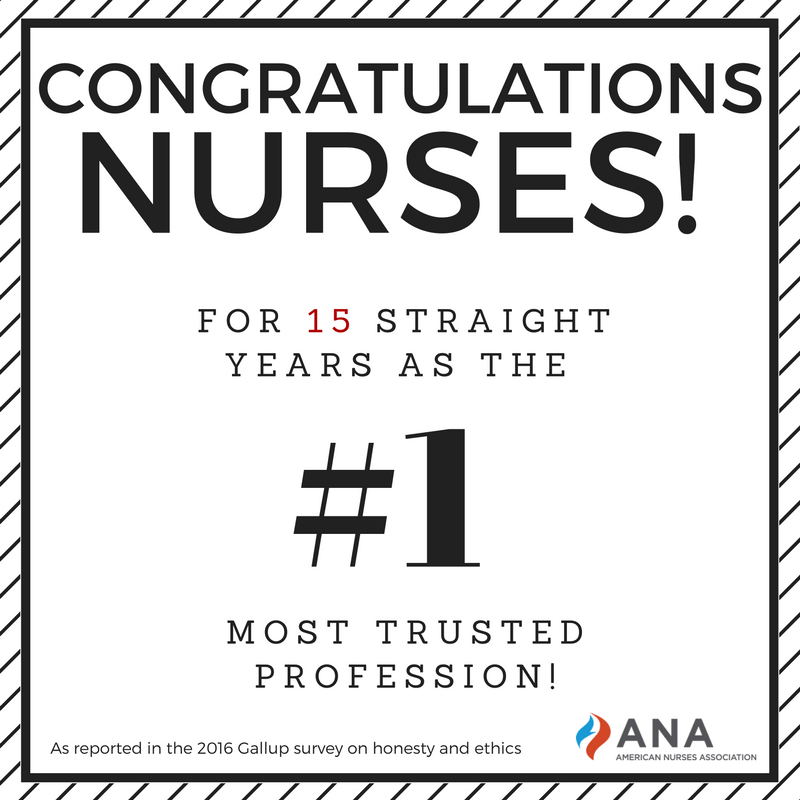
Nursing named most trusted profession for 16th consecutive year

https://www.beckershospitalreview.com/human-capital-and-risk/nursing-named-most-trusted-profession-for-16th-consecutive-year.html

Image result for 16 straight years most trusted profession

Nurses are the most trusted professionals in the United States, according to the 2017 edition of Gallup’s annual poll. The poll marks the 16th consecutive year nursing topped the list as the most honest and ethical profession.

For the 2017 poll, Gallup asked a random sample of 1,049 U.S. adults to rate honesty and ethical standards for 22 occupations. The respondents selected ratings of very high/high, very low/low or average.

Healthcare providers took three spots in the top five most trusted professions, with a high percentage of respondents rating their honesty and ethical standards as very high or high. They are listed below along with their rank:

  • Nurses (1) — 82 percent rated honesty and ethical standards very high or high
  • Medical doctors (4) — 65 percent
  • Pharmacists (5) — 62 percent

Since Gallup first included nurses in the survey in 1999, respondents have ranked the frontline providers as the most trusted profession in all but one year. In 2001, firefighters topped the list after Gallup included the profession in the poll in the wake of 9/11.

“Nurses provide much more than bedside care,” said Pamela Cipriano, PhD, RN, president of the American Nurses Association, in an emailed release. “We advocate for patients, deliver primary care, meet the complex needs of patients with chronic conditions, volunteer for disaster relief efforts, and are a trusted voice in boardrooms across the country.”


THE GIFTS OF LEADERSHIP: HOW TO GIVE ADVICE THAT PEOPLE RESPECT

The Gifts of Leadership: How to Give Advice That People Respect

the surprising truth about giving advice

People don’t want advice. They want the pain to go away. They want to keep doing the same thing but get different results.

The world is full of answer-givers, but who can find a skillful advisor?

The surprising truth about giving advice is it’s more about listening than talking.

What kind of advisor are you?

  1. Expert. You know something others need to know. Perhaps you have relevant technical knowledge.
  2. Experienced. You’ve been there and done that. You’ve failed and learned.
  3. Skilled. You have relevant abilities?
    • Problem-solving.
    • Conflict-resolution.
    • Option-generating.
    • Question-asking.
  4. Outsider. You see things differently. Perhaps you’re older or younger, married or single, on the front-line or in management, or from a different culture.

Warnings:

Don’t fall in love with giving advice.

Give advice from a position of humility. It’s heady to have someone seek your advice. Keep your feet on the ground.

Avoid these seven advice-givers.

#1. Needy advisors rush to answers. Good advice begins by exploring and defining problems. People who are eager to tell people what to do, don’t know the real problem.

Explore roots, not just fruits. There are symptoms to problems and there are root causes.

#2. Hard-headed advisors make up their minds quickly and defend their position.

#3. Inept advisors neglect values and strengths. Advice needs to fit the advisee. Generic advice should be presented as guiding principles that anyone might use.

#4. Bungling advisors think it’s all about advice and forget about energy. Good advice fits the situation AND lights people up.

#5. Incompetent advisors always have an answer. Instead say, “I don’t know, but lets figure it out.”

#6. Self-centered advisors talk about themselves more than asking about others.

#7. Confused advisors have it all together. They don’t have their own issues, challenges, and problems. Problem free advisors are blind, ignorant, arrogant, or all three.

Anyone who has it all together, doesn’t.

How might you turn the above warnings into suggestions for giving advice that people respect?

What are the qualities of skillful advisors?