

Click to access PDF%20HealthCareCostsQRGDec16.pdf


Medicaid represents $1 out of every $6 spent on health care in the US and is the major source of financing for states to provide coverage to meet the health and long-term needs of their low-income residents. Medicaid is administered by states within broad federal rules and jointly funded by states and the federal government. President-elect Trump and other GOP proposals have put forth fundamental changes in Medicaid financing. This brief examines the following 3 key Medicaid financing questions:

Medicaid is the nation’s public health insurance program for people with low income. The Medicaid program covers more than 70 million Americans, or 1 in 5, including many with complex and costly needs for care. The vast majority of Medicaid enrollees lack access to other affordable health insurance. Medicaid covers a broad array of health services and limits enrollee out-of-pocket costs. The program is also the principal source of long-term care coverage for Americans. As the nation’s single largest insurer, Medicaid provides significant financing for hospitals, community health centers, physicians, and nursing homes, and jobs in the health care sector. The Medicaid program finances over 16% of all personal health care spending in the U.S.
Medicaid is a federal-state program. Subject to federal standards, states design and administer their own Medicaid programs. Beyond the federal requirements, states have extensive flexibility to determine covered populations, covered services, health care delivery models, methods for paying physicians and hospitals, and many other aspects of their Medicaid programs. States can also get Section 1115 waivers to test and implement approaches that diverge from federal Medicaid rules but that the Secretary of Department of Health and Human Services (HHS) determines advance program objectives. All Americans who meet Medicaid eligibility requirements are guaranteed coverage.
The federal government matches state Medicaid spending on an open-ended basis. The guarantee of federal matching funds increases state resources for coverage of their low-income residents and also permits state Medicaid programs to respond to demographic and economic shifts, changing coverage needs, technological innovations, public health emergencies such as the opioid addiction crisis, and disasters and other events beyond states’ control. Medicaid is a complex program because it has evolved over time to serve diverse populations with a wide range of needs, including many individuals who are very poor and very frail, and because of wide variation across state Medicaid programs. The Centers for Medicare and Medicaid Services (CMS) within HHS is the federal agency responsible for Medicaid. Title XIX of the Social Security Act and a large body of federal regulations govern the program, defining federal Medicaid requirements and state options and authorities.
https://www.brookings.edu/blog/fixgov/2017/01/24/medicaid-governors-and-congress/
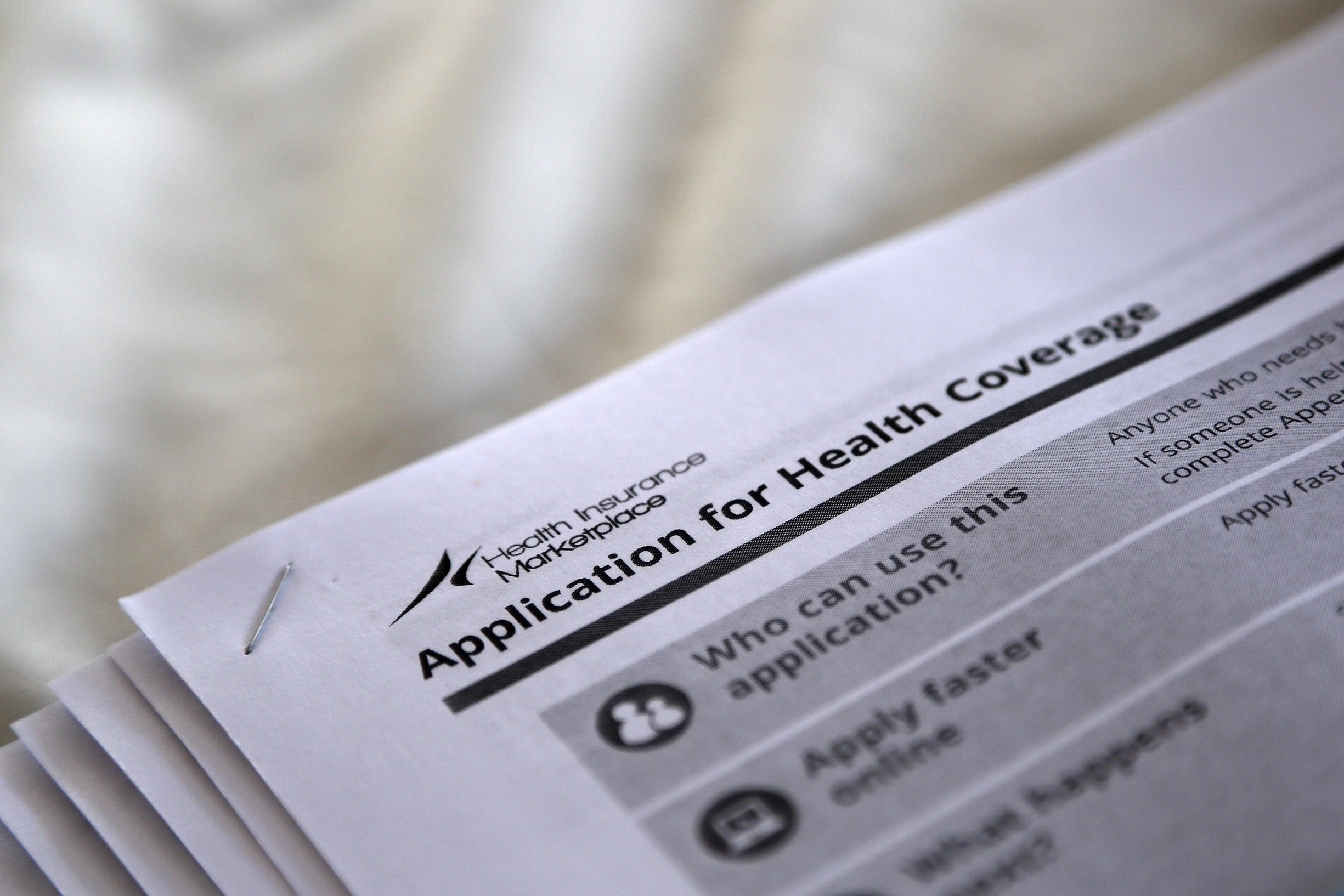
The House and Senate took the first steps two weeks ago towards an eventual repeal of parts of the Affordable Care Act (ACA). At the same time, significant uncertainty as to how efforts proceed from here remains. There are disagreements among congressional Republicans on virtually every component of a path forward, including a timeline, the connections between a repeal bill and an approach to replacement, and what, if any, components of the law should be preserved.
One important set of actors, however, has already begun to weigh in on the process: several of the nation’s Republican governors. In particular, a number—including Charlie Baker of Massachusetts, Rick Snyder of Michigan, John Kasich of Ohio, Asa Hutchinson of Arkansas, and Brian Sandoval of Nevada—have voiced concerns about eliminating the Medicaid expansion. Together, these governors—several of whom recently met with members of the Senate Finance Committee to discuss the law—lead roughly one third of the 16 states that chose to expand Medicaid and currently have Republican executives. According to new data from the Kaiser Family Foundation, they represent roughly 2.2 million individuals who enrolled in Medicaid in 2015 thanks to the ACA’s expansion, or roughly 6 percent of the total population in these states. (By comparison, the national average for states for which Kaiser was able to obtain data is roughly 7 percent of a state’s population.)
In the case of Medicaid, as political scientist Shanna Rose has demonstrated, Republican governors have a long history of taking a different tack than their national counterparts. One source of this state-level variation involves the ability of the Secretary of Health and Human Services to waive provisions of federal law, at a state’s request, to allow for Medicaid pilot, or demonstration, programs. Beginning in earnest during the Reagan administration and escalating in particular under Clinton, governors nationwide have experimented with service delivery through waivers. Some feared that this experimentation could lead to restricted access, but research by Frank Thompson and Courtney Burke finds that, pre-ACA, governors more often than not used section 1115 Medicaid waivers to expand access for low-income Americans. This historical trend has continued throughout the ACA era, as governors have bargained with the Obama administration to secure waivers that expand access to Medicaid in their states.
Healthcare Triage: Republican Plans for The Affordable Care Act

After campaigning for years on a plan of “repeal and replace Obamacare,” Republicans finally have the means within their grasp to make much of that possible. They control the presidency, the House, and the Senate. The filibuster still poses some potential threats to their plans, but it’s also within their means to abolish its widespread use in such a way that they could both repeal the Affordable Care Act and replace it with something of their own design.
What would that be? In contrast to what many say, there are Republican plans out there to consider. They’re the topic of this week’s Healthcare Triage.
http://khn.org/news/not-turning-back-california-governor-vows-to-protect-states-health-care/

In an unusually impassioned speech, Gov. Jerry Brown vowed Tuesday to protect California’s health care gains under Obamacare against Republican attempts in Washington, D.C., to roll them back.
“More than any other state, California has embraced the Affordable Care Act,” Brown told state legislators and appointees in his annual State of the State address at California’s Capitol. “I intend to join with other Governors and Senators, and with you, to do everything we can to protect the health care of our people.”
Brown said California would not “turn back” on advances it’s made in health coverage under pressure from the new Republican administration in Washington. Under the new federal leadership, he said, the “future is uncertain and dangers abound.”
Health coverage for Californians under the Affordable Care Act “has come with tens of billions of dollars from the federal government,” said Brown. “Were any of that were to be taken away, our state budget would be directly affected, possibly even devastated.”
Leveraging an estimated nearly $20 billion federal money, health coverage has been extended to five million Californians under Obamacare, which includes federally subsidized private health plans and an expansion of eligibility for Medicaid, the program for low-income people — known in this state as Medi-Cal.
http://khn.org/news/block-grants-medicaid-faq/

President Donald Trump’s administration made explicit this weekend its commitment to an old GOP strategy for managing Medicaid, the federal-state insurance plan that covers low-income people — turning control of the program to states and capping what the federal government spends on it each year.
It’s called “block granting.” Right now, Medicaid, which was expanded under the 2010 health law to insure more people, covers almost 75 million adults and children. Because it is an entitlement, everyone who qualifies is guaranteed coverage and states and the federal government combine funds to cover the costs. Conservatives have long argued the program would be more efficient if states got a lump sum from the federal government and then managed the program as they saw fit. But others say that would mean less funding for the program —eventually translating into greater challenges in getting care for low-income people.
Block granting Medicaid is a centerpiece of health proposals supported by House Speaker Paul Ryan and Rep. Tom Price, Trump’s nominee to run the Department of Health and Human Services. This weekend, Trump adviser Kellyanne Conway emphasized the strategy as key to the administration’s health policy.
But what would this look like, and why is it so controversial? Let’s break down how this policy could play out, and its implications — both for government spending and for accessing care.

President Trump’s plan to replace the Affordable Care Act will propose giving each state a fixed amount of federal money in the form of a block grant to provide health care to low-income people on Medicaid, a top adviser to Mr. Trump said in an interview broadcast on Sunday.
The adviser, Kellyanne Conway, who is Mr. Trump’s White House counselor, said that converting Medicaid to a block grant would ensure that “those who are closest to the people in need will be administering” the program.
A block grant would be a radical change. Since its creation in 1965, Medicaid has been an open-ended entitlement. If more people become eligible because of a recession, or if costs go up because of the use of expensive new medicines, states receive more federal money.
If Congress decides to create block grants for Medicaid, lawmakers will face thorny questions with huge political and financial implications: How much money will each state receive? How will the initial allotments be adjusted — for population changes, for general inflation, for increases in medical prices, for the discovery of new drugs and treatments? Will the federal government require states to cover certain populations and services? Will states receive extra money if they have not expanded Medicaid eligibility under the Affordable Care Act, but decide to do so in the future?


 HENRY KOTULA