ANA CRITICIZES ‘CRIMINALIZATION OF MEDICAL ERRORS’ AS VANDERBILT NURSE ARRAIGNED

https://www.healthleadersmedia.com/nursing/ana-criticizes-criminalization-medical-errors-vanderbilt-nurse-arraigned?utm_source=silverpop&utm_medium=email&utm_campaign=ENL_190220_LDR_BRIEFING_resend%20(1)&spMailingID=15165362&spUserID=MTY3ODg4NjY1MzYzS0&spJobID=1581568052&spReportId=MTU4MTU2ODA1MgS2

The statement expresses support for handling medical errors with ‘a full and confidential peer review process.’


KEY TAKEAWAYS

The fatal error was made in December 2017, but it didn’t become public until November 2018, with a CMS report.

Vanderbilt was threatened with a loss of its Medicare status over the incident.

The nurse was indicted this month and scheduled for an arraignment Wednesday.

As a former nurse for Vanderbilt University Medical Center in Nashville, Tennessee, was scheduled to appear in court Wednesday morning for an arraignment on felony charges of reckless homicide and impaired adult abuse, the American Nurses Association raised concerns about the precedent the case could set.

Radonda Vaught administered a fatal dose of the wrong medication to a 75-year-old woman in late 2017, after overriding system safeguards, as The Tennessean’s Brett Kelman reported, citing an investigation report by the Centers for Medicare & Medicaid Services. That incident, which VUMC reportedly failed to convey to the medical examiner, prompted CMS to threaten VUMC’s Medicare status last November.

Vaught was indicted earlier this month, prompting the ANA to voice some concerns.

“Health care is highly complex and ever-changing resulting in a high risk and error-prone system,” the ANA said in a statement Tuesday. “However, the criminalization of medical errors could have a chilling effect on reporting and process improvement.”

Related: How DeKalb Medical Fixed Drug Safety Problems After Fatal Error

The statement, which specifically mentions Vaught’s case, expresses support for handling medical errors with “a full and confidential peer review process.”

The ANA also offered its condolences to the those who have suffered as a result of this error.

“This tragic incident should serve as reminder to all nurses, other health care professionals, and administrators that we must be constantly vigilant at the patient and system level,” the ANA added.


EHRs Play Role in More Malpractice Claims

http://www.healthleadersmedia.com/technology/ehrs-play-role-more-malpractice-claims?spMailingID=12201343&spUserID=MTY3ODg4NjY1MzYzS0&spJobID=1262028504&spReportId=MTI2MjAyODUwNAS2#

Image result for EHRs Play Role in More Malpractice Claims

There was a continuous increase over the past decade in malpractice claims in which the use of EHRs contributed to patient injury, says a new study.

As EHR usage grows more widespread, so too does the technology’s role in malpractice claims, finds a new study.

The Doctors Company, a physician-owned medical malpractice insurer, found a continuous increase over the past decade in malpractice claims in which the use of EHRs contributed to patient injury.

From 2007 through 2010, there were just two claims in which EHRs were a factor. From 2011 through December 2016, however, that number skyrocketed to 161.

David B. Troxel, MD, study author and medical director at The Doctors Company, noted in a statement that the EHR is typically a contributing factor in a claim, rather than the primary cause.

The Doctors Company says this is its second study of EHR-related claims.

Its latest research compares 66 claims made from July 2014 through December 2016 with the results of the first study of 97 claims from 2007 through June 2014.

Compared with the earlier research, the new study shows that system factors that contributed to claims increased 8%. These factors include things like technology and design issues, lack of integration of hospital EHR systems, and failure or lack of alerts and alarms.

On the other hand, user factors, such as copy-and-paste errors, data entry errors, and alert fatigue, decreased 6%.

Internal medicine, hospital medicine, and cardiology showed marked decreases among specialties involved in claims, while orthopedics, emergency medicine, and obstetrics/gynecology showed increases, the study found.

The study also notes that hospital clinics/doctors’ offices remain the top location for EHR-related claim events.

Adoption of EHRs has been relatively fast. Data released last summer showed that only 4% of U.S. hospitals didn’t use EHRsThe Doctors Company study notes that the technology “has great potential to advance both the practice of good medicine and patient safety.”

“However, there are always unanticipated consequences when new technologies are rapidly adopted—and the EHR is no exception,” the study concludes.


Judge weighs in on whether Jahi McMath is brain dead

Judge weighs in on whether Jahi McMath is brain dead

In this Oct. 2, 2014 file photo Sandra Chatman, left, and Nailah Winkfield look on as a photo of their granddaughter and daughter, respectively, Jahi McMath, 13, is shown during a press conference at Dolan Law Firm in San Francisco, Calif. Christopher Dolan, attorney for Jahi McMath’s family, showed photos and a pair of videos where McMath moves her foot and arm in response to the voice of her mother Nailah Winkfield in a home in New Jersey. She was declared brain-dead in California after tonsil, throat and nose surgeries to relieve her sleep apnea. (Ray Chavez/Bay Area News Group)

Jahi McMath, the Oakland teenager whose brain death case has sparked national debate, may not currently fit the criteria of death as defined by a state law written in conjunction with the medical establishment, a judge wrote in an order Tuesday.

In his ruling, Alameda County Superior Court Judge Stephen Pulido wrote that while the brain death determination in 2013 was made in accordance with medical standards, there remains a question of whether the teenager “satisfies the statutory definition of ‘dead’ under the Uniform Determination of Death Act.”

His ruling comes in the years-long medical malpractice suit against UCSF Benioff Children’s Hospital Oakland and its doctors, which also challenges the hospital’s 2013 brain death diagnosis of the Oakland teenager following a complex nose, throat and mouth surgery.

The judge’s order pertains to the personal injury claim in the lawsuit, which the hospital sought to dismiss, and could result in a trial on whether Jahi is alive. An attorney for the family is arguing Jahi is alive and therefore entitled to more than the cap of $250,000 on medical malpractice lawsuits involving children who die as a result of surgery.

Pulido heavily cited Dr. Alan Shewmon, who concluded in a court declaration that Jahi doesn’t currently fit the criteria for brain death after reviewing 49 videos of her moving specific fingers and other extremities when given commands to do so. Shewmon, a professor emeritus of pediatrics and neurology at UCLA, wrote that Jahi “is a living, severely disabled young lady, who currently fulfills neither the standard diagnostic guidelines for brain death nor California’s statutory definition of death.” Shewmon also reviewed an MRI.

The girl’s family released some of the videos in 2014.

Reached Wednesday, hospital spokeswoman Melinda Krigel referred to a statement issued in July in which Children’s Hospital stood by its position that Jahi “fulfills the legal diagnostic criteria for brain death.” After her December 2013 surgery ended tragically, two doctors declared the teenager dead. An independent and court-appointed doctor from Stanford University later affirmed the diagnosis.

“The videotapes do not meet the criteria set forth in the guidelines” for determining brain death, the hospital said in the statement.

Bruce Brusavich, an attorney for Jahi’s family, did not return a call for comment Wednesday. The family has also filed a federal lawsuit.

Jahi’s story and her family’s fight to remove her from Children’s Hospital captured worldwide attention and inspired other families to question brain death determination of their loved ones.

In late December 2013, then-family attorney Christopher Dolan was successful in convincing a judge to order Jahi released from the Oakland facility, allowing the family to take her cross-country to a hospital in New Jersey. Unlike California, the Garden State has a law allowing guardians to reject a brain death diagnosis on religious grounds.

After leaving the New Jersey hospital, Jahi has been hooked up to breathing and feeding machines in a nearby apartment she shares with her mother, Nailah Winkfield, and other family members. She has used the machines to breathe and eat for nearly four years, a duration that is believed to be longer than any other U.S. patient declared brain dead.

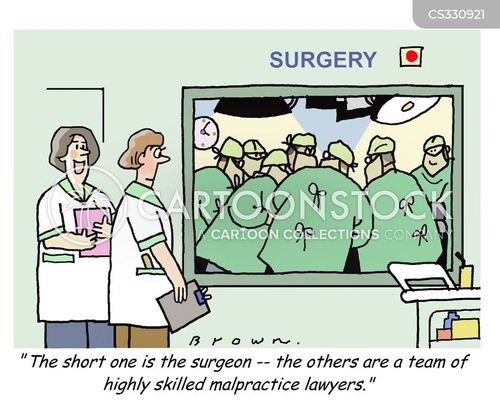
House narrowly passes malpractice reform legislation

http://www.healthcaredive.com/news/house-narrowly-passes-malpractice-reform-legislation/446208/

Image result for medical malpractice

Dive Brief:

  • Lawmakers in the House voted 218-210 this week to pass the Protecting Access to Care Act of 2017, paving the way for the potential of major tort reforms this year.
  • H.R. 1215 would cap noneconomic damages in malpractice litigation at $250,000 and limit the fees lawyers can charge in healthcare lawsuits. It also protects providers from liability in product liability lawsuits involving an FDA-approved drug or medical device.
  • Sponsored by Rep. Steve King (R-Iowa), the bill would apply to lawsuits where a patient’s coverage was provided through a federal program, subsidy or tax benefit. That includes patients insured under the Affordable Care, veterans, service members, civil servants and Medicare and Medicare beneficiaries.

Dive Insight:

The bill is designed to protect providers from superfluous lawsuits and unnecessary costs and would preempt state laws with higher limits on damages or no limits at all. According to a Congressional Budget Office analysis, the measure would save taxpayers $50 billion over the next 10 years.

American Medical Assocation President Dr. David Barbe praised the House action, calling H.R. 1215 “an important first step toward fixing” a broken medical liability system, adding, “By redirecting healthcare spending from defensive medicine, additional dollars can go to patient care, safety and quality improvements, and to health information technology systems that would help improve care and outcomes.”

Republicans in Congress are eyeing 2017 as a major year for tort reform. Though clinicians will likely champion H.R. 1215, some have questioned whether the reform is necessary. According to Doctors Company, a major malpractice insurer, the rate of malpractice has been halved since 2003. Tort reform has been on the mind of HHS Secretary Tom Price for 20 years so a Republican-controlled Congress allows for such reforms to be made.

President Donald Trump’s administration also expressed his support for the legislation. His fiscal year 2018 budget proposal includes a provision that would alter the collateral source rule to allow evidence of a plaintiff’s income from other sources to be introduced at trial.

In addition to H.R. 1215, three other tort reform bills are under review. H.R. 720, the Lawsuit Abuse Reduction Act, would discourage the filing of frivolous claims by requiring mandatory sanctions on those who do and eliminating the ability of plaintiffs and their lawyers to avoid sanctions by withdrawing claims after a motion to sanction.

Another bill, the Fairness in Class Action Litigation Act, H.R. 985, would make it more difficult for plaintiffs’ attorneys to file class action lawsuits by requiring that all claimants in the class experienced the same type and degree of injury.

Finally, the Innocent Party Protection Act, H.R. 725, would let defendants sued in state courts remove the case to the federal level if the plaintiff and defendant are from different states and more than $75,000 in damages is on the line.

https://www.washingtonpost.com/news/to-your-health/wp/2016/12/30/top-republicans-say-theres-a-medical-malpractice-crisis-experts-say-there-isnt/?utm_term=.6d703b176017


How can Doctors avoid Malpractice Suits?

Image result for how doctors can avoid malpractice suits

Why do doctors get sued? How can malpractice suits be avoided? It turns out, the answer may be simple. Defensive medicine refers to the idea that doctors are forced to order extra tests, perform extra procedures, or push for more office visits because they think that without them, they’re at greater risk for being sued.

Leading Republicans See A Costly Malpractice Crisis — Experts Don’t

Leading Republicans See A Costly Malpractice Crisis — Experts Don’t

Rep. Tom Price, President-elect Donald Trump's pick to run the Department of Health and Human Services, has worked to protect doctors from malpractice lawsuits. (Tom Williams/CQ Roll Call)

As top Republicans see it, a medical malpractice crisis is threatening U.S. health care: Frivolous lawsuits are driving up malpractice insurance premiums and forcing physicians out of business. Doctors and hospitals live in fear of litigation, ordering excessive tests and treatments that make health care unaffordable for Americans.

That’s why Republican House Speaker Paul Ryan and Rep. Tom Price, tapped to be the nation’s top health official by President-elect Donald Trump, are vowing to make tort reform a key part of their replacement plan for the Affordable Care Act.

But, according to researchers and industry experts, the reality doesn’t match the GOP rhetoric. They say the nation’s medical malpractice insurance industry is running smoothly and the last crisis dates back more than a decade.

“It’s a wonderful time for doctors looking for coverage and it’s never been better for insurers,” said Michael Matray, editor of Medical Liability Monitor, a trade publication.

Doctors are paying less for malpractice insurance than they did in 2001 — without any inflation adjustment, according to the Doctors Company, one of the nation’s largest malpractice insurers. And the rate of claims has dropped by half since 2003.

“It’s a time of relative calm and this hasn’t been a front burner issue or crisis,” said Nicholas Pace, a researcher who studies the civil justice system at the Rand Corp., a nonprofit think tank. “But now Republicans see an opportunity to make changes they have wanted for a long time as they replace Obamacare.”

Victims Seek Payments As ‘Dr. Death’ Declares Innocence

http://khn.org/news/victims-seek-payments-as-dr-death-declares-innocence/

Farid Fata

Victims of “Dr. Death” had until this week to submit receipts for unnecessary chemotherapy, medical bills for liver damage and funeral expenses for their loved ones. By an initial count on Tuesday, 517 former patients and their families had filed claims against Farid Fata, the Detroit-area cancer doctor convicted of raking in over $17 million by poisoning patients with chemotherapy and other drugs they did not need.

Fata was branded by prosecutors as “the most egregious fraudster” in U.S. history for scamming Medicare and private insurers by giving at least 553 patients, some of whom did not have cancer, thousands of doses of unnecessary and expensive drugs. Now he insists he did nothing wrong. Breaking his silence in a jailhouse interview, Fata said victims claiming he killed loved ones or ruined their lives are misguided and that those who died were “going to die anyhow because of the nature of the diseases.”

Fata, nicknamed “Dr. Death” by his victims, is serving a 45-year sentence in a federal prison in South Carolina after pleading guilty to 13 counts of health care fraud, one count of conspiracy to pay or receive kickbacks and two counts of money laundering. He ran one of Michigan’s largest private cancer practices, with a network of clinics outside of Detroit, from 2005 to 2013.

The 51-year-old prisoner told Kaiser Health News he plans to speak in court at a Jan. 17 restitution hearing and declare his innocence. Fata said his guilty plea in 2014 came under duress, and he is preparing to seek freedom through a habeas corpus petition, by which a judge would determine if his detention is lawful.

http://www.beckershospitalreview.com/legal-regulatory-issues/physician-claims-innocence-after-admitting-he-administered-unnecessary-chemotherapy-to-patients.html


Biggest healthcare frauds in 2016: Running list

http://www.healthcarefinancenews.com/slideshow/biggest-healthcare-frauds-2016-running-list?mkt_tok=eyJpIjoiWVRrMVl6UmtNek5qTURkaSIsInQiOiJ0Q2t5WUwzMm1TMDZaM0NrVU53eWtLWXIrb2tNUDBRZWhpNHRBb3VqWWh0blIzNUR2S1BlSVwveGFCTG9EYStDTFNTWjIrXC9LMmR4YU1DYXU3NVY1QUNoNUxDOW5zWVJVcjdvcFU2TW9vOU04PSJ9

Lazy Image


No one knows how many patients are dying from superbug infections in California hospitals

http://www.latimes.com/business/la-fi-torrance-memorial-infections-20161002-snap-story.html?utm_campaign=KHN%3A+First+Edition&utm_source=hs_email&utm_medium=email&utm_content=35220326&_hsenc=p2ANqtz–q48_nyJSgCl8xVrBEwT6GLi1L5uwbL-wFLD1CzsDaqKwJvA7Gvbnan0dOU4uApCaA6Nc4bjRnR-iXNQlJtbH0Z6T0mA&_hsmi=35220326

Sharley McMullen's death certificate says she died from respiratory failure and septic shock caused by her ulcer.

We, the community of physicians, had been watching these patients die and trundling them off to the morgue for years.— Dr. Barry Farr, former president, Society for Healthcare Epidemiology of America