Welcome to the New Health-Care Debate

https://www.bloomberg.com/view/articles/2018-08-03/health-care-debate-helps-republicans-hurts-conservatives

America’s health-care debate is entering a new phase. Liberals, inspired by self-described socialists such as Senator Bernie Sanders and Representative-to-be Alexandria Ocasio-Cortez, are excited about the possibility of “Medicare for All.” Republicans have at the same time largely abandoned efforts to enact major reforms of health care.

This new phase of the debate is full of opportunity for Republicans, and peril for conservatives.

But perhaps it would be better to say that the debate is reverting to an older pattern. For roughly four decades, liberals have highlighted the flaws of the existing health-care system, chiefly high costs and unequal access, and proposed increased governmental involvement as the solution. Conservatives talked up the dangers of bigger government, chiefly even higher costs and the disruption of existing arrangements, and reminded voters of the virtues of the status quo.

Most of the time, health care has been a back-burner issue, and discontent with the system has been a modest source of political strength for liberals. When health care has become a dominant issue, however, public fear of disruption has helped conservatives. From 2009 through 2016, Republicans were able to exploit public unhappiness with the changes that Obamacare first threatened to make and then did make.

There have been two brief exceptions to this pattern. In 1995-96 and 2017-18, Republicans advanced their own sweeping changes to health policy. Led by Newt Gingrich 20 years ago, they tried to reform Medicare and Medicaid. Over the last two years, they tried to replace Obamacare and reform Medicaid. 1

Both times the public’s fear of change was turned against Republican politicians, who did not like the pressure one bit. Most of them are relieved to have dropped their party’s Obamacare and Medicaid proposals. They are eager to settle into the familiar role of criticizing liberal health-care proposals.

There’s plenty to criticize. In polls, most people say they like their existing insurance policies — which may be a way for them to signal to politicians that they fear their meddling with those policies. The single-payer plans that are ascending among Democrats would by definition threaten most existing coverage.

These plans pose much bigger political risks than Obamacare did. Obamacare was carefully designed to insulate Democrats from charges that they were turning people’s coverage upside down.

In selling the legislation, President Barack Obama spent much of his time reassuring people that they could keep their doctors and their insurance plans if they liked them. The law mostly avoided changes to the employer-provided coverage through which most Americans get health care.

Yet Obamacare still provoked a backlash. That backlash was especially intense when, in the fall of 2013, it resulted in a significant number of plan cancellations. But many voters have also resented the narrower networks and higher premiums and deductibles that Obamacare has foisted on them.

As even more sweeping left-wing proposals move to the center of the debate, Republicans can reclaim the advantage of opposing disruption. But they may also again be saddled with the disadvantage of being associated with an unsatisfactory status quo.

They are in charge of Congress and the White House; they have been talking about reworking the health-care system for years; and they have succeeded in making significant changes, albeit much less ambitious ones than they sought. They have, for example, ended the fines on people without health insurance that were a major part of Obamacare. In addition, the Trump administration is in the process of liberalizing the rules for short-term insurance plans that do not have to comply with the regulations Obamacare imposes on most other plans.

The Republicans therefore have some, and growing, political ownership of the health-care system. The more they argue against left-wing proposals to change the system, the more ownership they will have.

For Republican politicians, defending even a flawed status quo is probably preferable to trying to impose disruptive changes to it. But if they adopt that position, it will mean that the only solutions on offer to popular concerns about health care will be left-wing ones.

It will mean, as well, that occasionally liberals will have enough political power to enact some, and maybe a lot, of their preferred changes to the system. We will move, that is, toward a health-care system with a larger and larger degree of governmental control even as Republicans make political gains by resisting that trend.

The new shape of the debate may be good news for Republican politicians, then, but it’s bad news for conservatives who favor limited government and free markets.

  1. Arguably there was a third exception: In 2011 and 2012, Paul Ryan led congressional Republicans to endorse increasing competition within Medicare as part of their budget proposals. They did not, however, attempt to advance legislation that would actually change Medicare.


Behind the Debate Over ‘Medicare for All’

https://www.weeklystandard.com/chris-deaton/behind-the-debate-over-medicare-for-all

Image result for Behind the Debate Over ‘Medicare for All’

The federal price tag of Bernie Sanders’s proposal is not surprising. But the implications are kind of insane.

Bernie Sanders’s “Medicare for all” proposal is receiving new scrutiny because of an estimate released this week by economist Chuck Blahous of the right-leaning Mercatus Center. Blahous projects that the plan would cost the government $32.6 trillion over 10 years but also reduce the country’s overall level of health expenditures by $2 trillion. “M4A” advocates say that these numbers are two sides of the same coin: that because the program would redirect spending for health care to the government and lower aggregate expenses in the economy, the exorbitant cost to taxpayers would be, as multiple left-leaning analyses have put it, “a bargain.” But Blahous’s research of the Sanders plan, like that of his contemporaries, is loaded with assumptions and caveats that reduce conclusions about the idea’s cost-saving to speculation. If anything, it’s fair to say that the research shows how M4A is a risk of historic price.

For the average individual, the point of “Medicare for all” is to have federal tax revenue pay for health coverage that is comprehensive and basically free to use. Sanders’s proposal includes wide-ranging benefits applicable in “medically necessary or appropriate” circumstances and eliminates cost-sharing, meaning no copays, deductibles, or similar charges. The expense to households is less take-home pay: a new, de facto “premium” paid to Washington, maybe higher payroll taxes, and, depending on income level and economic behavior, higher income taxes from rate hikes.

Similar trade-offs would appear elsewhere: Businesses would not offer their employees coverage under an M4A scheme, for example. But they, too, would have to foot the cost, through a higher corporate tax rate, potential taxes on their own behavior (like on carbon), and perhaps an employer-specific premium like the one paid by individuals. Some of these ideas are incorporated into Sanders’s thinking; depending on the bill’s projected cost, more of them may be necessary to compensate for the government’s expense.

This is where Blahous’s work comes in. Whereas Sanders’s campaign forecast his M4A plan to cost $1.38 trillion per year, Blahous projected that number to be more than double, at $3.26 trillion, in the paper he published on Monday. “For perspective on these figures, consider that doubling all currently projected federal individual and corporate income tax collections would be insufficient to finance the added federal costs of the plan,” he wrote. His assessment met skepticism from some in the press, given Mercatus’s affiliation with the Koch brothers.

Notwithstanding the sloppiness of such a charge—Mercatus is directed by a world-class economist respected across the political spectrum, Tyler Cowen, and Blahous’s paper was peer-reviewed and reflected his own research, regardless—Blahous’s findings were similar to the Urban Institute’s, a well-regarded and left-leaning think tank that examined the Sanders proposal in 2016. Its 10-year federal cost estimate was $3.20 trillion a year.

The Urban Institute economists ran their numbers based on the Vermont senator’s framework for Medicare for all. But Sanders introduced his legislation in the Senate last year, which provided Blahous more specifics to analyze and alternative scenarios to consider. For example: Sanders’s plan caps reimbursements to physicians and hospitals for services at the Medicare reimbursement rate, which is significantly lower than reimbursements under private plans (but higher than those under Medicaid). “In 2014, Medicare hospital payment rates were 62 percent of private insurance payment rates and are currently projected to decline to below 60 percent by the time M4A would be implemented, and to decline further afterward. Medicare physician payment rates were 75 percent of private insurance rates in 2016 and … are projected to decline sharply in relative terms in future years, also falling below 60 percent within the first full decade of M4A,” Blahous writes.

The surprising finding in his study is that Sanders’s Medicare for all bill would decrease national health expenditures (NHEs) over the next decade by $2 trillion. Many M4A advocates celebrated this estimate, given the unlikely source of it. But there are two things to keep in mind. One, national health expenditures are different from government expenditures: They comprise aggregate spending on health care in the United States, in both the private and public sectors. (They have a specific definition, per the Centers for Medicare and Medicaid services, available on Page 6 here.) Two, while keeping reimbursement rates at the relatively low Medicare level would help contain the total dollar figure of NHEs, it also would jar the finances of medical providers.

“Perhaps some facilities and physicians would be able to generate heretofore unachieved cost savings that would enable their continued functioning without significant disruptions,” writes Blahous. “However, at least some undoubtedly would not, thereby reducing the supply of healthcare services at the same time M4A sharply increases healthcare demand.” Difficulty accessing care “almost certainly must arise”—which is not a controversial statement, but mere economic intuition.

“Setting provider payment rates for acute care services at levels consistent with the current law Medicare program may be too restrictive,” the Urban Institute study stated. “Payment rates may in fact have to be higher, at least initially and perhaps indefinitely, to be acceptable to providers.”

Anticipating this scenario, Blahous runs the numbers keeping reimbursements to providers and physicians on pace with current projections. This situation results in an annual cost to government of $3.80 trillion, not $3.26 trillion—and a net increase in NHEs of $3.25 trillion over a decade, instead of a decrease of $2.05 trillion. This represents a range of realistic outcomes, and given political and economic realities, something close to the alternative payment arrangement has to be considered a likelihood.

Of course, all this discussion pertains only to finances, not the pluses and minuses of access and quality of care: low-income individuals getting covered, but consumers demanding more care while suppliers shrink the availability of it, for instance. It also does not consider how the goalposts of whether the public scores a good deal with M4A could move. Jacobin magazine called the Sanders plan “a bargain” based on Blahous’s score, since “[w]e get to insure every single person in the country, virtually eliminate cost-sharing, and save everyone from the hell of constantly changing health insurance all while saving money.” But what if the public doesn’t save money, as in the alternative scenario Blahous evaluates? The same advocates could argue so what?—even if the public is paying more money on net, it’s doing so in the cause of insuring 30 million more people. They could frame those numbers as being worth it.

The thrust of the costs is that M4A is not some unassailable good and an easy system relative to the status quo, even for all the inefficiencies of the current, messy health insurance market. Again, this is not a critique confined to a right-of-center perspective. As the Center for American Progress’s Topher Spiro wrote on Monday (in a since-deleted tweet):

spiro-m4a.jpg

Medicare for all would represent an historically large cost shift between the American economy and federal government. Simply citing the budget impact of such a proposal—$32.6 trillion over a decade—to invalidate the merits of the idea cuts the debate unjustifiably short, as left-of-center critics have stated. But incorporating the other financial aspects of M4A does not cinch their case. It instead complicates it, undermines it, and brings the debate about American health care back to philosophical grounds.

Does the public believe Washington should have total financial control of the market, to the tune of more than $3 trillion in tax revenue a year? Does it trust Washington to allocate those taxes fairly? And given the range of outcomes for reducing health costs—to the point it may not reduce them at all—does it believe that such a transition merits the risk?


The Health 202: ‘Medicare for all’ is the dream. ‘Medicaid for more’ could be the reality.

https://www.washingtonpost.com/news/powerpost/paloma/the-health-202/2018/08/02/the-health-202-medicare-for-all-is-the-dream-medicaid-for-more-could-be-the-reality/5b61d4ed1b326b0207955ea2/?utm_term=.f54d337c2d74

Image result for incremental health reform

“Medicare for all” is the hottest position on the left these days, but there’s a quieter push afoot to create a public option using Medicaid. 

Chanting “Medicaid for more” may not sound as bold for progressives seeking to prove their bona fides before the midterm elections. Yet all the most-hyped 2020 Democratic presidential candidates are on board with the idea, including the Medicare expansion’s biggest champion, Sen. Bernie Sanders (I-Vt.).

The idea in concept is simple: Allow states to open up their Medicaid programs to anyone regardless of income. Those people could buy in to the social safety net and have access to Medicaid’s provider network and benefits. The groundwork for expanding the program for low-income Americans has already been laid to some extent as 34 states have expanded Medicaid under the Affordable Care Act.

Sen. Brian Schatz (D-Hawaii) has introduced the “State Public Option Act” to promote states to expand Medicaid — co-sponsored by some familiar Democratic faces: Sanders, Elizabeth Warren (Mass.), Cory Booker (N.J.), Kamala Harris (Calif.) and Kirsten Gillibrand (N.Y.). But the real efforts are happening at the state level where legislatures all over the country are seriously considering the idea.

Heather Howard, a lecturer at Princeton University who also helps states with their health-care systems, said many plans are in their infancy, but that 14 states across the country have made moves to, at minimum, weigh the benefits and challenges of shifting Medicaid to a publicly available health insurance option.

“There are a lot of policy considerations to think about, but while the federal policy debate is stalled, you have states thinking about what tools do we have. [Medicaid] is the immediate tool you have,” she told me.

That’s because Medicare is operated at the federal level so any major changes to it have to be decided in Washington. Medicaid, on the other hand, is run by the states, so they have more discretion over how the program is set up. 

There are real critiques of Medicaid as it now exists, such as low reimbursement rates for doctors and uniform access to care. To offer it to everyone would require responding to those criticisms as well as new questions such as the cost to states, whether states have to apply for federal waivers to alter the program and whether a public option lives on or off the ACA exchanges.

This week stakeholders across New Mexico met with President Obama’s former Centers for Medicare and Medicaid Services Administrator Andy Slavitt to begin some of those conversations. Earlier this year, New Mexico’s state legislature passed a bill to create a committee to study a Medicaid buy-in program. Medicaid is popular there; one-third of New Mexicans are enrolled. Yet 230,000 people remain uninsured in the state, according to Kaiser Family Foundation data, and proposed premium rates for 2019 for those who don’t qualify for ACA subsidies are increasing anywhere from 9.2 percent to 18.5 percent.

Slavitt is the board chair of a new group, United States of Care, which has an impressive roster of bold-faced names leading it from investor Mark Cuban to former Obama speechwriter Jon Favreau to former congresswoman Gabrielle Giffords (D-Ariz.) and her astronaut husband Mark Kelly. In the absence of Washington leadership, the group is working with states on ways to improve health care.

Allison O’Toole, the group’s director of state affairs, was also on the ground in New Mexico this week and told me there’s a “real hunger” and “momentum” around the idea of allowing states to expand Medicaid.

“Washington is in gridlock and not addressing people’s real concerns around the cost and affordability of health care,” O’Toole said. “This has created a greater sense of urgency and necessity by states to pick up that ball and run with it.”

With the Republicans’ failure to repeal the ACA and the public outcry when they tried, Democrats are feeling emboldened this year to talk ambitiously about their health-care goals. 

Health care is a leading issue heading into November, and polls show at least half of Americans are in favor of a “Medicare for all” program. But even if Democrats win the House majority and make gains in the Senate, President Trump has said Obamacare is unsustainable and his administration has worked persistently to chip away at it.

That’s why Michael Sparer, a public- health professor at Columbia University, believes “Medicaid for more” is not only good policy, but also good politics. It’s the type of proposal, he reasons, that could peel off moderate Republicans in a way that a national Medicare program never could. 

It’s true that Medicaid is a favorite GOP punching bag. The Trump administration is urging states to add work requirements to their programs and the GOP playbook has long included capping how much the federal government pays each state to administer Medicaid.

Yet 34 states, including many with Republican governors, expanded the ACA under Medicaid to include more low-income residents, and several more red states are on the precipice of following them. It’s a program that has endured and grown for 53 years.

“The Medicaid buy-in is more of a compromise program, it’s not viewed as a big national program. People who believe in states’ rights can view it as states having more flexibility,” Sparer said.

Sparer has written extensively on the topic and told me his support for expanding Medicaid is heavily influenced by the political viability of focusing on the program for low-income Americans versus the one covering seniors — meaning states don’t have to wait for a new president to do something meaningful. But that doesn’t mean he thinks national political figures like Sanders should stop talking about “Medicare for all.”

“The advantage is [Medicaid buy-in] is incremental, it adds populations here and there. But incremental isn’t a great political slogan. You put ‘let’s change the system’ on a bumper sticker and I get that,” he said. “But the more there’s momentum for ‘Medicare for all,’ then ‘Medicaid for more’ could be the back up plan.”

“Given the ever-present debate,” he added, “a more incremental path is a better path.”


CMS Adminstrator dismisses Affordable Care Act

CMS Adminstrator dismisses Affordable Care Act

Image result for 2018 midterm elections


About 1.4 million Californians buy coverage through the state’s Obamacare exchange, Covered California, and nearly 4 million have joined Medicaid as a result of the program’s expansion under the law.

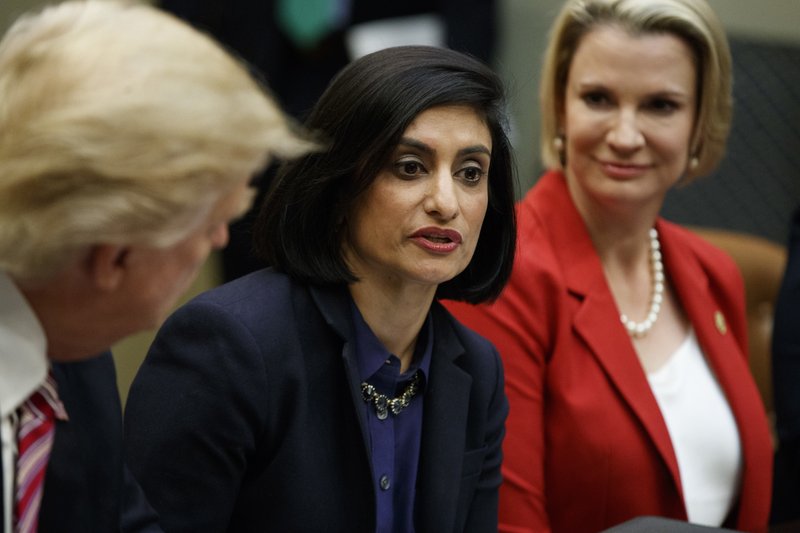
Stepping into the land of the Trump resistance, Seema Verma flatly rejected California’s pursuit of single-payer health care as unworkable and dismissed the Affordable Care Act as too flawed to ever succeed.

Speaking Wednesday at the Commonwealth Club here, the administrator of the Centers for Medicare & Medicaid Services said she supports granting states flexibility on health care but indicated she would not give California the leeway it would need to spend federal money on a single-payer system.

“I think a lot of the analysis has shown it’s unaffordable,” Verma said during a question-and-answer session following her speech. “It doesn’t make sense for us to waste time on something that’s not going to work.”

During her speech, Verma issued a broader warning to advocates pushing for a Medicare-for-all program nationally. She said that “socialized” approach to medicine would endanger the program and the health care it provides for millions of older Americans.

“We don’t want to divert the purpose and focus away from our seniors,” Verma said in the address before more than 200 people. “In essence, Medicare for all would become Medicare for none.”

Single-payer has emerged as a key issue in the California governor’s race this year. The current front-runner for governor, Gavin Newsom, a Democrat and the current lieutenant governor, has vowed to pursue a state-run, single-payer system for all Californians if elected in November. Many California lawmakers have endorsed that idea as the next step toward achieving universal coverage and to tackling rising costs.

California has enthusiastically embraced the Affordable Care Act, and state leaders have struggled with — and even bucked — the Trump administration on a variety of health-policy fronts. The state stands to lose more than any other if the Trump administration is successful in further dismantling the ACA.

About 1.4 million Californians buy coverage through the state’s Obamacare exchange, Covered California, and nearly 4 million have joined Medicaid as a result of the program’s expansion under the law.

Verma wields enormous power as head of CMS, overseeing a $1 trillion budget. The agency sets policy for Medicare, Medicaid and the federal insurance exchanges under the ACA.

The landmark health law, she said, was so flawed it could not work without further action from Congress.

“It wasn’t working when we came into office and it continues not to work,” Verma said, responding to a question from moderator Mark Zitter, founder of the Zetema Project, a nonprofit organization that promotes debate on health care across partisan lines. “The program is not designed to be successful.”
Zitter billed the event as a rare chance for Californians to hear directly from a top Trump administration official, although Verma’s remarks broke little new ground, he said.

Trump health care policies figure into many of California’s congressional races this fall in which incumbent Republicans are fending off Democratic challengers. And in court, California Attorney General Xavier Becerra is leading a coalition of attorneys general who are defending the constitutionality of the ACA in a Texas case with national implications.

The Trump administration has sided with the officials waging the lawsuit, choosing not to defend the health law’s protections for people with preexisting conditions. Separately, the administration has backed work requirements for many people on Medicaid.

Short
California’s state Senate passed a law in May banning such requirements as a condition for eligibility in Medi-Cal, the state’s Medicaid program. The bill is pending in the state Assembly.

“Making health insurance coverage contingent on work requirements goes against all we’ve worked for here in California,” state Sen. Ed Hernandez (D-West Covina), author of SB 1108, said in May.

State lawmakers also are considering bills that would limit the GOP-backed sale of short-term health policies and prevent people from joining association health plans that don’t have robust consumer protections.

In an interview after the speech, Verma criticized those legislative efforts in California because they would limit consumer choice.
“Any efforts to thwart choice and competition and letting Americans make decisions about their health care is bad health policy,” she said.

Peter Lee, executive director of Covered California, the state’s ACA marketplace, has criticized the Trump administration for promoting those cheaper, skimpier policies as an alternative to ACA-compliant plans. He said he fears consumers will be harmed by “bait-and-switch products” that don’t provide comprehensive benefits.

“There have been a series of policies from Washington that have the effect of raising costs, particularly for middle-class Americans, and pricing them out of coverage,” Lee said in an interview last week. “This is not a failure of the ACA. This is entirely happening since the new administration.”

Most of Verma’s speech in San Francisco focused on Medicare. She outlined a number of initiatives designed to strengthen the program and protect taxpayers from ballooning costs. After the speech, CMS announced proposed changes to Medicare payment policies for outpatient care that could yield savings for the government and patients.

In her remarks, Verma reiterated the Trump administration’s efforts to reduce prescription drug prices, improve patients’ access to their own medical records and eliminate burdensome regulations on doctors and other medical providers.

Verma received a polite round of applause at the beginning and end of her appearance.


Trump’s top Medicare official slams ‘Medicare for All’

https://apnews.com/a69f5ada0db24ada9bc5bd8a44604f3b

The Trump administration’s Medicare chief on Wednesday slammed Sen. Bernie Sanders’ call for a national health plan, saying “Medicare for All” would undermine care for seniors and become “Medicare for None.”

The broadside from Medicare and Medicaid administrator Seema Verma came in a San Francisco speech that coincides with a focus on health care in contentious midterm congressional elections.

Sanders, a Vermont independent, fired back at Trump’s Medicare chief in a statement that chastised her for trying to “throw” millions of people off their health insurance during the administration’s failed effort to repeal the Affordable Care Act.

Verma’s made her comments toward the end of a lengthy speech before the Commonwealth Club of California, during which she delved into arcane details of Medicare payment policies.

Denouncing what she called the “drumbeat” for “government-run socialized health care,” Verma said “Medicare for All” would “only serve to hurt and divert focus from seniors.”

“You are giving the government complete control over decisions pertaining to your care, or whether you receive care at all,” she added.

“In essence, Medicare for All would become Medicare for None,” she said. Verma also said she disapproved of efforts in California to set up a state-run health care system, which would require her agency’s blessing.

In his response, Sanders said that “Medicare is, by far, the most cost-effective, efficient and popular health care program in America.

He added: “Medicare has worked extremely well for our nation’s seniors and will work equally well for all Americans.”

The Sanders proposal would add benefits for Medicare beneficiaries, coverage for eyeglasses, most dental care, and hearing aids. It would also eliminate deductibles and copayments that Medicare and private insurance plans currently require.

Independent analyses of the Sanders plan have focused on the enormous tax increases that would be needed to finance it, not on concern about any potential harm to seniors currently enrolled in Medicare.

But so-called “Mediscare” tactics have been an effective political tool for both parties in recent years, dating back to Republican Sarah Palin’s widely debunked “death panels” to fan opposition to President Barack Obama’s health care overhaul. Democrats returned the favor after Republicans won control of the House in 2010 and tried to promote a Medicare privatization plan.

Democrats clearly believe supporting “Medicare for All” will give them an edge in this year’s midterm elections.

More than 60 House Democrats recently launched a “Medicare for All” caucus, trying to tap activists’ fervor for universal health care that helped propel Sanders’ unexpectedly strong challenge to Hillary Clinton for the 2016 Democratic presidential nomination. Just a few years ago, Sanders could not find co-sponsors for his legislation.

A survey earlier this year by the Kaiser Family Foundation and The Washington Post found that 51 percent of Americans would support a national health plan, while 43 percent opposed it. Nearly 3 out of 4 Democrats backed the idea, as did 54 percent of independents. But only 16 percent of Republicans supported the Sanders approach.

Early in his career as a political figure, President Donald Trump spoke approvingly of Canada’s single-payer health care system, roughly analogous to Sanders’ approach. But by the 2016 presidential campaign Trump had long abandoned that view.


Medicare option is popular but vague among Democrats

https://www.axios.com/democrats-single-payer-public-option-health-care-1532047129-3b97bb26-f2ff-407a-af5b-6821981b6e45.html

A public health care plan — once deemed too liberal to make it into the Affordable Care Act — is now the more moderate position for many Democrats who are uncomfortable with the party’s rapid embrace of “Medicare for All.”

Yes, but: Democrats haven’t decided yet what a public option should look like.

Show less
“In some ways, a public option or buy in to Medicare or Medicaid has become a place for Democrats uncomfortable with single payer to land.”
— Larry Levitt, Kaiser Family Foundation

Driving the news: Members of Congress have now introduced as many as five bills expanding government involvement in health care, as Vox has reported. A public option is also coming up frequently on the campaign trail, either as a step toward “Medicare for All” or as a policy goal in and of itself.

  • In Iowa’s third district, which is rated as a toss-up, Democrat Cindy Axne is running on a public option “that allows Americans to choose between Medicare or Medicaid.”
  • In New Jersey’s third district, another toss-up, Democrat Tom Malinowski supports creating a universal Medicare option that people could buy into.
  • “I think the much more plausible path to a single payer health care system is through a public option. I just don’t know that the country is ready to support a bill that outlaws private insurance,” said Sen. Chris Murphy, a sponsor of one of the public option plans.

Flashback: A public option for the individual market was almost included in the Affordable Care Act, but former Sen. Joe Lieberman blocked it.

  • “It was too liberal for Joe Lieberman” — not for the entire party — back in 2009, Democratic Minority Whip Dick Durbin told me. “We had 60 votes and he said he wouldn’t vote for it. That was the end of that.”
  • “You may have more people today supporting single payer, Medicare for All than 10 years ago, but I’m not sure that the floor has moved as much as the ceiling has,” Murphy said.

The big question: Some Democrats want a public option to be offered in the employer market in addition to the individual market.

  • “Now, a public option for just the individual market would likely be unsatisfying to single payer supporters, providing no relief from health care costs for the much larger number of people with employer coverage,” Levitt said.

The details: A central tenet of adopting a public option is using the government’s purchasing power to bring down underlying health care prices.

  • “The common denominator of all Democrats is that they want more affordable options for people, and how broadly you apply to tool depends on how broadly you define the problem right now,” said Chris Jennings, a Democratic health care consultant.
  • “Lurking behind the public option discussion is really the issue of health care prices. A public option of any kind would use the leverage and regulatory power of the government to get lower prices for health care,” Levitt said.
  • But determining how far to go would be tricky and comes with risk.
  • “There is some room to put some downward pressure on provider prices without having significant adverse consequences on access to care or quality of care, but the big question is how much,” said Aviva Aron-Dine of the left-leaning Center on Budget and Policy Priorities.


SINGLE PAYER GETTING MORE ATTENTION AT STATE LEVEL, NOT GOING AWAY

https://www.healthleadersmedia.com/finance/single-payer-getting-more-attention-state-level-not-going-away

Image result for SINGLE PAYER GETTING MORE ATTENTION AT STATE LEVEL, NOT GOING AWAY

States are testing the waters with Medicare-for-all type plans while waiting for federal solutions. The cost of single-payer plans could be the biggest hurdle.

“Medicare for all” is becoming a rallying cry in state elections, with state legislators coming up with their own versions of single-payer healthcare despite, or possibly because of, the stagnation of similar ideas at the federal level.

The push for a single-payer healthcare system is proving successful for some, such as socialist Alexandria Ocasio-Cortez, who rocked New York by beating the 10-term incumbent Joe Crowley in a New York City district. She is a vocal proponent of single-payer healthcare.

The proliferation of state plans and in particular Ocasio-Cortez’s victory in New York could indicate growing support for single-payer healthcare, says Sally C. Pipes, president and CEO of the Pacific Research Institute in San Francisco.

Pipes says the American public may be drawn by the promises of a healthcare plan that eliminates premiums and other disliked features of the current system.

“The horse is out of the barn in terms of single payer. They keep pushing it and pushing it and this has become a major issue that gets the voters’ attention, especially for progressive Democrats,” Pipes says.

She says, “There’s an effort in the states to test the waters as they wait for things to change in Washington. Because Obamacare wasn’t repealed and replaced, Democrats are saying single payer is what they wanted all along, so now they’re going for it.”

MULTIPLE STATE PROPOSALS

Four single payer proposals are on the table nationally, including one from Sen. Bernie Sanders (I-VT) that calls for Medicare to be available to all Americans. State legislators and candidates are taking up the issue ahead of midterm elections, rallying the many voters who are fed up with the current healthcare system and want a solution in the form of a government-sponsored single payer.

The state plans are similarly idealistic, calling for universal coverage of all residents regardless of income and eliminating premiums, copays, and deductibles.

Many states have serious proposals for single-payer systems. In Michigan, Rep. Yousef Rabhi (D-Ann Arbor) is proposing a government-administered single-payer system to provide coverage to everyone in the state.

The MiCare plan would provide state residents with medical, dental, mental health, and prescription drug coverage while eliminating healthcare premiums, copays, and deductibles, Rabhi says.

Healthcare providers would remain independent, and patients would be able to pick among participating providers under the MiCare plan. Michigan would pay for the plan by cutting administrative costs generated by for-profit insurance companies and raising taxes, Rabhi says. He claims the state would save a net $20 billion in the first year.

“Instead of the exorbitant costs, stress and uncertainty of premiums, deductibles, co-insurance and other out-of-pocket payments, working families would pay a small and simple progressive payroll tax designed to save real money on their overall health expenses,” Rabhi explains in his proposal.

He continues, “Large and medium employers would pay a payroll tax set at a level lower than the current average employer expenditures for employee health care, saving many employers money immediately.”

Also, in Michigan, a Democrat running for governor has proposed MichCare. Abdul El-Sayed, MD, says he would pay for his single-payer plan with a new, graduated payroll tax that all working people would pay, coupled with new taxes on the gross earnings of businesses making more than $2 million a year.

The New York state Assembly recently passed a bill calling for a statewide single-payer universal healthcare system, for the fourth year in a row.

The New York Health Act would include comprehensive outpatient and inpatient medical care, primary and preventive care, prescription drugs, lab tests, rehab, dental, vision, hearing, and all benefits required by current state insurance law, by publicly funded medical programs or provided by the state public employee package.

The bill passed easily in the Democrat-led chamber but the state’s Republican-led Senate is not expected to take up the measure this year.

Minnesota State Rep. Erin Murphy (DFL-St. Paul) is running for governor on a platform that includes her Pathway to Single-Payer plan, which will set the state up to “lead the nation by becoming the first state to provide guaranteed, affordable health care to everyone,” as stated in a press release.

MORE MOMENTUM THAN IN PAST

Pipes opposes single-payer healthcare, saying Americans would regret the choice only after experiencing the increased taxes and reduced services of such a system. But single payer has become a powerful political tool, she says.

“Before Bernie Sanders proposed single payer in 2016, it wasn’t really taken seriously, but now you have all these states supporting it,” she says. “Political leaders are seeing this as an issue they can run on and get lots of support, draw big crowds, and look like they’re giving people what they want.”

Americans have been on the fence about Medicare-for-all plans for a while, with one survey of  1,850 U.S. adults finding that 51% supported the idea.

That figure could be increasing, Pipes says. If it is, Pipes says she suspects it is largely because politicians can run on the pie-in-the-sky promises of eliminating premiums, copays, and deductibles while giving few details about how to pay for such a plan.

“Both New York and Michigan say theirs would be paid for by progressive income tax increases and a new payroll tax, but they haven’t come out and said just what the cost would be. That’s unlike in California, where the Senate appropriations committee said SB 562 would cost $400 billion a year,” Pipes says. “People are drawn to the promised improvements, but they have to consider the cost at some point.”

Single payer is a polarizing topic, with Democrats and Republicans typically coming down sharply on either side of the issue, but Pipes says Democrats run the risk of dividing their own voters.

“People support single payer when you ask them if they’d like a system that eliminates everything they don’t like about the current system, but when you ask if they want to pay more taxes that support goes down,” Pipes says.

“The Democrats are finding this is a successful way to motivate people in a campaign but when they have to answer questions about raising taxes on everyone, including working class voters, they could find themselves driving a wedge between their constituents,” she says.


The “pleasant ambiguity” of Medicare-for-all in 2018, explained

https://www.vox.com/policy-and-politics/2018/7/2/17468448/medicare-for-all-single-payer-health-care-2018-elections

Are we talking about single-payer health care or something else?

Democrats across the country are running on three simple words, recognizable to every American: Medicare for all.

“There’s no more popular brand in American politics than Medicare,” says Adam Green, co-founder of the lefty Progressive Change Campaign Committee (PCCC). “Our hope is that Democrats wrap themselves in the flag of Medicare in 2018.”

In Democratic primaries around the country, Medicare-for-all candidates are winning — from Kara Eastman in Nebraska to Katie Porter in Orange County, California, to Alexandria Ocasio-Cortez in the Bronx, the message is resonating.

“The system we have, the status quo is not acceptable,” Porter told me when I covered her primary race in May. “We’re questioning whether we can rely on major players, like health insurance companies, to continue to be reliable partners in delivering health care.”

Even before these candidates started winning, polling was showing that Medicare-for-all is really popular: 62 percent of Americans liked the sound of it in last November. Almost every single rumored 2020 candidate in the Senate has backed Sen. Bernie Sanders’s Medicare-for-all bill. It’s clear the idea is in ascendancy among Democrats.

But someday, a reckoning will come. When Democrats hold power again — especially control of Congress and the White House — they will be expected to actually deliver on these Medicare-for-all promises. And when that day arrives, the party will have to decide whether they want to blow up America’s current health care system to build something new or figure out a less disruptive path, but risk falling short of truly universal coverage.

So even now, there is some jockeying among Democrats to define those three little words.

What does “Medicare-for-all” actually mean?

As popular as Medicare-for-all is, the slightly more vexing question is what it actually means.

Historically, Medicare-for-all has meant single-payer health insurance, a national government-run program that covered every American and replaced private coverage entirely, similar to the government-run health care programs in Canada and some European countries.

Then-Rep. John Conyers (D-MI) first introduced the Expanded and Improved Medicare for All Act in 2003. Conyers has since been disgraced by sexual harassment allegations but the idea lives on. It’s now sponsored by Rep. Keith Ellison (D-MN) and it is still a single-payer proposal. So is Sanders’s Medicare-for-all bill, a cornerstone of his unexpectedly resonant 2016 presidential campaign.

But these days, other plans are falling under the Medicare-for-all umbrella. Some progressives, like Green, are even comfortable with the term being applied to the various proposals to allow all Americans buy into Medicare. Some of those plans used to be branded as a “public option”; they would not end private insurance that more than half of Americans get, usually through work, as a true single-payer would. But these plans would also not provide the same guarantee of universal coverage that a single-payer system does.

“For anybody who supports Medicare-for-all single payer, what better way to debunk the right wing lies than to allow millions and millions of Americans to voluntarily opt into Medicare and love it?” Green told me in our interview. “As a political strategy, having Medicare-for-all be a broad umbrella where any candidate can embrace some version of it… that moves the center of gravity in the Democratic party.”

In 2018, with control of Congress at stake, nobody is taking up arms to insist that their version should be orthodoxy. What we know for certain is that Medicare-for-all is popular, and so Democrats of all stripes want to campaign on it. Governing comes later.

What does the public think about Medicare-for-all versus single-payer health care?

Ultimately, the direction the Democratic party goes in may have a lot to do with how far the public is willing to go.

One chart from the Kaiser Family Foundation, the gold standard for health policy polling, sums up why there is any debate at all about the meaning of Medicare-for-all.

Medicare-for-all gets nearly two-thirds support, but a “single-payer health insurance system” is a little more divisive: 48 percent have a positive reaction, and 32 percent have a negative reaction; the gap between favor and disfavor closes considerably. Medicare buy-ins poll the highest, with the support of three-fourths of Americans, including 6 out of 10 Republicans.

You could absolutely argue these numbers still seem pretty strong for single-payer described as such, given the conventional wisdom that such a plan is unworkable. But it is undoubtedly true that Medicare-for-all, as a slogan, is more popular — as are some of these more incremental policies, like giving people the option of buying into Medicare.

The “pleasant ambiguity” of Medicare-for-all, explained

Back in 2012, a group of progressive activists and Democratic lawmakers got together to talk about what they would do if the Supreme Court ruled the Affordable Care Act unconstitutional. That looked like a real possibility, and they agreed on a new campaign to keep pushing for universal health care.

Democrats planned to run on a platform of Medicare-for-all if the Court struck the law down. At that point, the Conyers single-payer bill had been around for nearly a decade, but the PCCC’s Green says that on that day and in that room, some people heard Medicare-for-all and thought of a single-payer system. Yet others heard the same thing and thought of something that looks more like a public option. From his perspective, those different ideas aren’t a problem.

“There is a pleasant ambiguity and more of a north star goal nature around Medicare-for-all,” Green said. “This really does not need to be a huge intra-party battle. Why get in the weeds during the campaign?”

Voters themselves seem to like the sound of Medicare-for-all, even if they themselves don’t always agree on what it means. BuzzFeed’s Molly Hensley-Clancy reported on this phenomenon while covering Eastman’s campaign in Nebraska ahead of the May primary:

[C]onversations with more than two dozen Omaha voters reveal a dynamic that polling, too, has begun to capture: When some moderate and left-leaning voters say “Medicare for All” sounds like a pretty good idea, they aren’t actually thinking about single-payer health care. Instead, they’re thinking about simply expanding the program to include more seniors or children, or offering a public option that people can buy into.

On one warm May day a week from the primary, Phil, a devout liberal, told Eastman the story of his wife’s brain cancer — rejected by Medicaid, and still too young for Medicare, they’ve barely been able to afford pricey experimental treatments.

He likes the sound of Medicare for All, he said, but wouldn’t want everyone to be part of a single-payer, government-run system. “I wouldn’t want one system,” he told BuzzFeed News. “I wouldn’t want that.”

We heard similar ambiguity when Vox conducted some focus groups with Hillary Clinton voters in suburban Washington, DC, last fall. Those voters, particularly the ones who currently had their own insurance through work, liked the idea of having a choice, having an option. They also liked the sound of Medicare-for-all, but a top-to-bottom overhaul of the American health care system made them nervous.

“To me, [single-payer] sounds like it’s somehow complete overhaul of everything, whereas Medicare-for-all sounds like warming people up to the idea using the structure that’s already in place to deliver that care,” Dennis, a 34-year-old Hillary Clinton voter in Bethesda, told us.

One of the things that made Democrats the most nervous about single payer is how political health care has become. They see how Trump has attacked Obamacare, and they see future Republican administrations meddling with single-payer health care as a real possibility. That could be a sticking point for some Democratic voters, especially those who are better off and already get good insurance through work.

Medicare-for-all is uniting Democrats for now — but it could divide them later

That explains why there’s this fledgling competition over what Medicare-for-all is really describing.

The best example might be the health care plan from the Center of American Progress, which is, tellingly, called “Medicare Extra For All.” It’s a seriously ambitious plan, one that would achieve universal coverage through a combination of government plans and private insurance, while preserving employer-based insurance for those who want it. But it is not single payer. And it is notably produced by an organization closely aligned with the Democratic establishment.

“To the extent there will be moments where we have to bring clarity to what Medicare-for-all means for us on the progressive side of the house, compared to other people who want to dance around the issue, we will do that,” Nina Turner, who leads the Sanders-affiliated Our Revolution, told me. “For us, at Our Revolution, it is Medicare for all, the whole thing, for everybody in this country.”

The scars from the Obamacare reveal themselves in this debate. For all the health care law has achieved, it also showed the limits of incrementalism. Even Medicaid expansion, the closest thing the law had to a single-payer pilot, was undermined by the Supreme Court by allowing Republican-led states to refuse it. The Obamacare insurance markets have been susceptible to sabotage from Republicans in Congress and the Trump administration.

Yes, the uninsured rate has reached historic lows under Obamacare, but 10 percent of Americans still lack coverage. Democrats will be faced again, at some point, with a choice between a more incremental approach, like the Medicare public options introduced by some Democrats in Congress, or a sweeping overhaul like single-payer. They can put it off for a while and campaign, as Green suggests, on whatever Medicare-for-all means to voters. But eventually that debate will need to be had.

Its outcome is far from certain. Eastman, one of Medicare-for-all’s most notable champions so far in 2018, described the dilemma perfectly.

She unambiguously supports single-payer Medicare-for-all. But “with the current Congress, with the current president, is that feasible?” she said. “I think you have to be practical about what’s happening in our country.”

Yet even if she recognizes the political realities of the moment, she wants Democrats to be bolder in their agenda.

“We have to stop backing off from this issue,” Eastman said. “That’s one of the problems with the ACA. It didn’t go far enough.”


Getting Ready for Health Reform 2020: What Past Presidential Campaigns Can Teach Us

https://www.commonwealthfund.org/publications/fund-reports/2018/jun/getting-ready-health-reform-2020-presidential?omnicid=EALERT%%jobid%%&mid=%%emailaddr%%

Getting Ready for Health Reform 2020

Abstract

  • Issue: The candidates for the 2020 presidential election are likely to emerge within a year, along with their campaign plans. Such plans will include, if not feature, health policy proposals, given this issue’s general significance as well as the ongoing debate over the Affordable Care Act.
  • Goal: To explain why campaign plans matter, review the health policy components of past presidential campaign platforms, and discuss the likely 2020 campaign health reform plans.
  • Methods: Review of relevant reports, data, party platforms, and policy documents.
  • Findings and Conclusions: Proposals related to health care have grown in scope in both parties’ presidential platforms over the past century and affect both agendas and assessments of a president’s success. Continued controversy over the Affordable Care Act, potential reversals in gains in coverage and affordability, and voters’ concern suggest a central role for health policy in the 2020 election. Republicans will most likely continue to advance devolution, deregulation, and capped federal financing, while Democrats will likely overlay their support of the Affordable Care Act with some type of Medicare-based public plan option. The plans’ contours and specifics will be developed in the months ahead.

This report is the first in a series on health reform in the 2020 election campaign. Future papers will delve into key reform design questions that candidates will face, focusing on such topics as: ways to maximize health care affordability and value; how to structure health plan choices for individuals in ways that improve system outcomes; and how the experience of other nations’ health systems can inform state block-grant and public-plan proposals.

Introduction

During the 2020 presidential campaign, which begins in earnest at the end of 2018, we are sure to hear competing visions for the U.S. health system. Since 1988, health care has been among the most important issues in presidential elections.1 This is due, in part, to the size of the health system. In 2018, federal health spending comprises a larger share of the economy (5.3%) than Social Security payments (4.9%) or the defense budget (3.1%).2 Moreover, for the past decade, partisan disagreement over the Affordable Care Act (ACA) has dominated the health policy debate. If health care plays a significant role in the 2018 midterm elections, as some early polls suggest it will,3 the topic is more likely to play a central role in the 2020 election.

This report on health reform plans focuses on policies related to health insurance coverage, private insurance regulation, Medicare and Medicaid, supply, and tax policy. It explains why campaign plans are relevant, their history since 1940, the landscape for the 2020 election, and probable Republican and Democratic reform plans. The Republican campaign platform is likely to feature policies like those in the Graham-Cassidy-Heller-Johnson amendment: a state block grant with few insurance rules, replacing the ACA’s coverage expansion. The Democratic platform will probably defend, improve, and supplement the ACA with some type of public (Medicare-like) health plan. The exact contours and details of these plans have yet to be set.

Importance of Campaign Plans

Campaign promises, contrary to conventional wisdom, matter.4 During elections, they tell voters each party’s direction on major topics (e.g., health coverage as a choice or a right in 1992). In some cases, candidates or party platforms include detailed policies (reinsurance in Republicans’ 1956 platform, prospective payment in Democrats’ 1976 platform). Campaign plans tend to be used to solidify party unity, especially in the wake of divisive primaries (2016, e.g.).5 Election outcomes are affected by such factors as the state of the economy, incumbency, and political competition rather than specific issues.6 That said, some exit polls suggest that candidates’ views on health policy can affect election outcomes.7

Campaign plans also help set the agenda for a president, especially in the year after an election. Lyndon B. Johnson told his health advisers, “Every day while I’m in office, I’m gonna lose votes. . . . We need . . . [Medicare] fast.”8 Legislation supported by his administration was introduced before his inauguration and signed into law 191 days after it (Exhibit 1). Bill Clinton, having learned from his failure to advance health reform in his first term, signed the bill that created the Children’s Health Insurance Program (CHIP) 197 days after his second inauguration. Barack Obama sought to sign health reform into law in the first year of his first term, but the effort spilled into his second year; he signed the ACA into law on his 427th day in office. These presidents, along with Harry Truman, initiated their attempts at health reform shortly after taking office.

In addition, campaign plans are used by supporters and the press to hold presidents accountable. For instance, candidate Obama’s promises were the yardstick against which his first 100 days,9 first year,10 reelection prospects,11 and presidency were measured.12 Though only 4 percent of likely voters believe that most politicians keep their promises, analyses suggest that roughly two-thirds of campaign promises were kept by presidents from 1968 through the Obama years.13

Health as a Campaign Issue (1912–2016)

The United States has had public health policies since the country’s founding, with its policy on health coverage, quality, and affordability emerging in the twentieth century. Teddy Roosevelt supported national health insurance as part of his 1912 Bull Moose Party presidential bid.14 Franklin Delano Roosevelt included “the right to adequate medical care and the opportunity to achieve and enjoy good health” in his 1944 State of the Union address, although it was not mentioned in the 1944 Democratic platform.15 Harry Truman is generally credited with being the first president to embrace comprehensive reform. He proposed national health insurance in 1945, seven months after F.D.R.’s death, and campaigned on it in 1948 as part of a program that would become known as the Fair Deal, even though it was not a plank in the Democratic platform. Legislation was blocked, however, primarily by the American Medical Association (AMA), which claimed that government sponsoring or supporting expanded health coverage would create “socialized medicine.”16 Health policy became a regular part of presidential candidates’ party platforms beginning about this time (Exhibit 2).

After Truman’s failure, the next set of presidential candidates supported expanding capacity (e.g., workforce training, construction of hospitals and clinics) and making targeted coverage improvements. In 1960, John F. Kennedy campaigned on a version of Medicare legislation: extending Social Security to include hospital coverage for seniors. It was opposed by the AMA as well, whose spokesman, the actor Ronald Reagan, claimed socialized medicine would eventually limit freedom and democracy.17 It took the death of Kennedy, the landslide Democratic victory in 1964, and persistence by Lyndon B. Johnson to enact Medicare and Medicaid, in 1965. This was about 20 years after Truman introduced his proposal; President Johnson issued the first Medicare card to former President Truman.

Shortly after implementation of Medicare and Medicaid, how best to address rising health care costs became a staple subject in presidential campaigns. Between 1960 and 1990, the share of the economy (gross domestic product) spent on health care rose by about 30 percent each decade, with the public share of spending growing as well (Exhibit 3). In his 1968 campaign, Richard Nixon raised concerns about medical inflation, and subsequently proposed his own health reform, which included, among other policies, a requirement for employers to offer coverage (i.e., an employer mandate).18 Nixon’s proposal was eclipsed by Watergate, as Jimmy Carter’s health reform promises were tabled by economic concerns. Presidents and candidates in the 1980s set their sights on incremental health reforms.19

In 1991, comprehensive health reform helped Harris Wofford unexpectedly win a Pennsylvania Senate race. In 1992, it ranked as the second most important issue to voters.20 Democratic candidates vied over health reform in the 1992 primaries, with Bill Clinton embracing an employer “pay or play” mandate. George H. W. Bush developed his own plan, which included premium tax credits and health insurance reforms. Five days after his inauguration, President Clinton tasked the first lady, Hillary Clinton, with helping to develop health care legislation in the first 100 days. Yet, mostly because he prioritized economic and trade policy, Clinton did not address a joint session of Congress until September and did not send his bill to Congress until November of 1993. Key stakeholders (including the AMA and the Health Insurance Association of America) initially supported but ultimately opposed the legislation. In September 1994, the Senate Democratic leadership declared it could not pass a bill.21 Less than two months later, Democrats lost their majorities in the House and the Senate, and did not regain them for over a decade. This created a view that comprehensive reform of the complex health system was politically impossible.22 Indeed, presidential candidates in 1996, 2000, and 2004 did not emphasize major health policies. That said, by 2004, health system problems had escalated and, at least on paper, the candidates’ plans addressing them had expanded.23

In 2008, health reform was a dominant issue in the Democratic primaries and platform. Hillary Clinton supported a requirement for people who could afford it to have coverage (i.e., the individual mandate). Barack Obama limited his support to a requirement that all children be insured. Both candidates supported an employer mandate.24 John McCain countered with a plan whose scope exceeded those of many Republican predecessors: it would cap the tax break for employer health benefits and use the savings to fund premium tax credits for the individual market.25 Attention to health reform waned during the general election, as the economy faltered. Even so, the stage was set for a legislative battle. President Obama opened the door to his rivals’ ideas at a White House summit in March 2009.26 After more than a year of effort, he signed the Affordable Care Act into law.27 Obama said that he did so “for all the leaders who took up this cause through the generations — from Teddy Roosevelt to Franklin Roosevelt, from Harry Truman, to Lyndon Johnson, from Bill and Hillary Clinton, to one of the deans who’s been fighting this so long, John Dingell, to Senator Ted Kennedy.”28

Nonetheless, the partisan fight over the ACA extended into the 2012 and 2016 presidential elections. Despite the ACA’s resemblance to his own 2006 reform plan for Massachusetts, Mitt Romney, as the 2012 Republican presidential candidate, vowed to repeal the ACA before its major provisions were implemented; Republicans would subsequently replace it with conservative ideas (mostly to be developed). Four years later, even though the health system landscape had dramatically changed following the ACA’s implementation, the Republicans’ position had not altered.29 Candidate Donald Trump joined his primary rivals in pledging to “repeal and replace Obamacare” (he also embraced unorthodox ideas such as Medicare negotiation for drug prices). Democratic candidate Hillary Clinton proposed a wide array of improvements to the ACA rather than a wholesale replacement of it with a “Medicare for All” single-payer proposal, as did her Democratic primary rival, Bernie Sanders.30 The intra-party differences among primary candidates in 2016 increased attention to the party platforms relative to previous elections.31 But despite continued voter interest (Exhibit 4), differences in health policy were not credited with determining the outcome of the 2016 election.

Setting the Stage for 2020

President Trump’s attempt to fulfill his campaign promise to repeal and replace the ACA dominated the 2017 congressional agenda. In January 2017, the Republican Congress authorized special voting rules toward this effort, while President Obama was still in office. On the day of his inauguration, Trump signed an executive order to reduce the burden of the law as his administration sought its prompt repeal.32 Yet among other factors,33 the lack of a hammered-out, vetted, and agreed-upon replacement plan crippled the Republicans’ progress.34 Speaker Paul Ryan had to take his bill off the House floor on March 24, 2017, because it lacked the necessary votes; the House passed a modified bill on May 4. Senator Mitch McConnell’s multiple attempts in June and July to secure a majority in favor of his version of a health care bill failed on July 26, when Senator John McCain cast the deciding vote against it. In September, Senators Lindsey Graham, Bill Cassidy, Dean Heller, and Ron Johnson failed to get 50 cosponsors for their amendment, the prerequisite for its being brought to the Senate floor.35 The Republicans subsequently turned to tax legislation and, in it, zeroed out the tax assessment associated with the ACA’s individual mandate. At the bill’s signing on December 22, Trump claimed that “Obamacare has been repealed,”36 despite evidence to the contrary.37

A different type of legislative effort began in mid-2017: bipartisan attempts to improve the short-run stability of the ACA’s individual market. This was in part necessitated by the Trump administration’s actions pursuant to the Inauguration Day executive order: reductions in education efforts, marketing funding, and premium tax credits, among others.38 On October 12, 2017, the president signed a second ACA executive order, directing agencies to authorize the sale of health plans subject to fewer regulatory requirements.39 On the same day, his administration halted federal funding for cost-sharing reductions, a form of subsidy, claiming the ACA lacked an appropriation to make such payments. Concerns that these actions would increase premiums, reduce insurer participation, and discourage enrollment prompted coalitions of bipartisan lawmakers to introduce bills. Most notable was a bill by Senators Lamar Alexander and Patty Murray; their proposal, released October 18, 2017, had 12 Republican cosponsors and implicit support from all Democrats, giving it the 60 votes needed in the Senate to overcome a filibuster.40 Yet the version that Senator McConnell ultimately brought to the floor for a vote, in March 2018, included changes that repelled Democrats, preventing its passage.41 Partisans on both sides have blamed this failure, in part, for emerging increases in health insurance premiums.

Indeed, benchmark premiums in the health insurance marketplaces rose by an average of over 30 percent in 2018 and are projected to increase by 15 percent in 2019, largely because of policy changes.42 Some data suggest that the growth in health care costs may be accelerating as well.43 This may have contributed to an increase in the number of uninsured Americans. One survey found that the number of uninsured adults, after falling to a record low in 2016, had risen by about 4 million by early 2018.44 These statistics could heighten candidates’ interest in health policy in 2020.

Public opinion, too, could help health reform gain traction. Tracking polls suggest that concerns about health care persist, with 55 percent of Americans worrying a great deal about the availability and affordability of health care, according to a poll from March 2018.45 Interestingly, while the partisan differences of opinion on the ACA continue, overall support for the ACA has risen, reaching a record high in February 2018 (Exhibit 5).

This concern about health care has entered the 2018 midterm election debate. It is currently a top midterm issue among registered voters, a close second to jobs and the economy.46 Some House Republicans who formerly highlighted their promise to repeal and replace the ACA no longer do so in light of the failed effort of 2017.47 Democrats, in contrast to previous elections, have embraced the ACA, unifying around its defense in the face of Republican “sabotage.”48 The debate also has been rekindled by Trump’s decision to abandon legal defense of key parts of the ACA.49 Regardless of what happens in the courts, this signifies his antipathy toward the law. Barring a midterm surprise, the next Congress is unlikely to succeed where the last one failed. As such, “repeal and replace” would be a repeat promise in Trump’s reelection campaign.

Likely 2020 Campaign Plans

Against this backdrop, presidential primary candidates and the political parties will forge their health care promises, plans, and platforms. Common threads from past elections are likely to be woven into the 2020 debate. The different parties’ views of the balance between markets and government have long defined their health reform proposals.50 Republicans will most likely still be against the ACA as well as uncapped Medicare and Medicaid spending, and for market- and consumer-driven solutions. Democrats will most likely blame Republicans’ deregulation for rising health care costs; defend the ACA, Medicare, and Medicaid; and advocate for a greater role for government in delivering health coverage and setting payment policy. Potential policies for inclusion in candidates’ plans have been introduced in Congress (Exhibit 6). But major questions remain, such as: how will these campaign plans structure choices for individuals and employers, promote efficient and high-quality care, and learn from the experience of local, state, national, and international systems?

Likely Republican Campaign Plan: Replace the ACA with Devolution and Deregulation

President Trump has indicated he will run for reelection in 2020.51 His fiscal year 2019 budget included a proposal “modeled closely after the Graham-Cassidy-Heller-Johnson (GCHJ) bill.” It would repeal federal financing for the ACA’s Medicaid expansion and health insurance marketplaces, using most of the savings for a state block grant for health care services. It would also impose a federal per-enrollee spending cap on the traditional Medicaid program. States could waive the ACA’s insurance reforms.52 The congressional bill also would repeal the employer shared responsibility provision (i.e., the employer mandate) and significantly expand tax breaks for health savings accounts, among other policies.53 The framework for this proposal — repealing parts of the ACA, replacing them with state block grants, reducing regulation, and expanding tax breaks — is similar to the 2016 Republican platform.

Trump may continue to express interest in lowering prescription drug costs. In 2016 and early 2017, he supported letting Medicare negotiate drug prices54 — a policy excluded from the 2016 Republican platform and his proposals as president. His 2019 budget seeks legislation primarily targeting insurers and other intermediaries that often keep a share of negotiated discounts for themselves.55 On May 11, 2018, he released a “blueprint” to tackle drug costs, including additional executive actions and ideas for consideration. Polls suggest that prescription drug costs rank high among health care concerns.56

One policy initiative in the recent Republican platforms but not embraced by the president is Medicare reform. The idea of converting Medicare’s defined benefit into a defined contribution program and raising the eligibility age to 67 was supported by Vice President Mike Pence when he was a member of Congress and by Speaker of the House Paul Ryan.57 Major Medicare changes were excluded from the 2017 ACA repeal and replace proposals. In contrast, versions of Medicaid block grant proposals appeared in various bills, including the GCHJ amendment, as well as numerous Republican presidential platforms.

Historically, presidents running for reelection have limited competition in primaries. Those challengers, by definition, emphasize their differences with the incumbent, which may include policy. It may be that John Kasich will run on maintaining the ACA Medicaid expansion but otherwise reforming the program (his position as governor of Ohio throughout 2017). Or, Rand Paul could campaign on his plan to repeal even more of the ACA than the Republicans’ 2017 bills attempted to do. Incumbents tend to have slimmer campaign platforms than their opponents in general and primary elections, since their budget proposals, other legislative proposals, and executive actions fill the policy space (see Reagan, Clinton, George W. Bush, Obama). Exceptions include George H. W. Bush, who in 1992 developed a plan given voters’ concerns about health; and Nixon, who offered a proposal for health reform at the end of his first term.

Likely Democratic Campaign Plan: Improve the ACA and Add a Public Plan

It is possible and maybe probable that the ultimate Democratic Party platform in 2020 will resemble that of 2016: build on the ACA and include some sort of public plan option. Legislation has been introduced during this congressional session that builds on the law by extending premium tax credits to higher-income marketplace enrollees (e.g., Feinstein, S. 1307), lowering deductibles and copayments for middle-income marketplace enrollees (e.g., Shaheen, S. 1462), providing marketplace insurers with reinsurance (e.g., Carper, S. 1354), and strengthening regulation of private market insurance (e.g., Warren, S. 2582). Some proposals aim to increase enrollment following the effective repeal of the individual mandate, by, for example, raising federal funding for education and outreach, and testing automatic enrollment of potentially eligible uninsured people (e.g., Pallone, H.R. 5155). These proposals would have different effects on health insurance coverage, premiums, and federal budget costs.58

The Democrats will inevitably discuss a public plan in their platform, although the primary contenders will most likely disagree on its scale (e.g., eligibility) and design (e.g., payment rates, benefits).59 In September 2017, Senator Bernie Sanders introduced the Medicare for All Act (S. 1804). It would largely replace private insurance and Medicaid with a Medicare-like program with generous benefits and taxpayer financing. “Medicare for more” proposals have also been introduced: Medicare Part E (Merkley, S. 2708), an option for individuals and small and large businesses; Medicare X (Bennet, S. 1970), which is available starting in areas with little insurance competition or provider shortages; and a Medicare buy-in option, for people ages 50 to 65 (Higgins, H.R. 3748). A Medicaid option (Schatz, S. 2001), similar to Medicare Part E, offers a public plan choice to all privately insured people, aiming to capitalize on the recent popularity of that program. Publicly sponsored insurance plans have long been included in Democratic presidents’ platforms, although the government’s role has ranged from regulating the private plans (Carter, Clinton) to sponsoring them (Truman, Obama). It may be that the candidate who prevails in the primaries will determine whether the Democratic platform becomes “Medicare for all” or “Medicare for more.”

This may be the extent of Medicare policies in the 2020 Democratic platform. Relatively high satisfaction and low cost growth in Medicare have limited Democratic interest in Medicare policy changes in recent years. Similarly, Democrats have not introduced or embraced major reforms of Medicaid. However, the public concern about prescription drug costs has fueled Democratic as well as Republican proposals, some of which target the drug companies (e.g., addressing “predatory pricing,” allowing Medicare rather than prescription drug plans to negotiate the prices for the highest-cost drugs).60

Discussion

Predictions about presidential campaigns have inherent limits, as many experts learned in the 2016 election. Events concerning national security (e.g., conflict), domestic policy (e.g., a recession), or the health system (e.g., a disease outbreak) could alter the policy choices of presidential candidates. New ideas could emerge, or candidates could take unconventional approaches to improving the health system. And, while campaign plans have relevance, the long history of attempts at health reform underscores that by no means are promises preordained.

That said, perennial policies and recent political party differences will likely figure in 2020. Republican presidential candidates, with few exceptions, have adopted a small government approach to health reform: shifting control to states, cutting regulation, preferring tax breaks and block grants over mandatory federal funding, and trusting markets to improve access, affordability, and quality. Democratic presidential candidates have supported a greater government role in the health system, arguing that market solutions are insufficient, and have defended existing programs like Medicare, Medicaid, and, now, the ACA. Some will probably support the government’s taking a primary role in providing coverage given criticism of the efficacy and efficiency of private health insurers. The direction and details of the campaign plans for 2020 will be developed in the coming months and year. Given such plans’ potential to shape the next president’s agenda, now is the time to scrutinize, modify, and generate proposals for health reform.


Two-thirds of Voters Say a Candidate’s Position on Pre-existing Conditions is Important to their Vote, More than Say the Same about Drug Costs, ACA Repeal or Medicare-for-All

Kaiser Health Tracking Poll – June 2018: Campaigns, Pre-Existing Conditions, and Prescription Drug Ads

Key Findings:

  • Health care continues to be one of the top issues that voters want to hear candidates talk about during their 2018 congressional campaigns. One-fourth of voters say health care is the “most important issue” for 2018 candidates to discuss during their campaigns, which is similar to the share who say the same about the economy and jobs (23 percent). While health care is a top issue for Democratic and independent voters, it remains a second tier issue for Republican voters.
  • Few voters (about one in ten) say a candidate’s support for a variety of different health care positions will be the “single most important factor” in their 2018 vote choice. But among the health care issues provided, majorities of Democratic voters, independent voters, and Republican voters say a candidate’s support for continued protections for people with pre-existing health conditions is either the “single most important factor” or “very important, but not the most important factor” to their vote.
  • In light of a recent federal lawsuit and subsequent decision by the Trump administration, this month’s tracking poll finds most of the public – including majorities of Republicans, Democrats, and independents – say it is “very important” to them that the ACA’s provisions protecting those with pre-existing conditions remain law. Three-fourths say it is “very important” that the ACA provision prohibiting insurance companies from denying coverage due to someone’s medical history remains law, and seven in ten say the same about the ACA provision prohibiting insurance companies from charging sick people more. Nearly six in ten Americans say they live in a household where someone has a pre-existing medical condition.
  • A majority of the public – including eight in ten Democrats – support President Trump’s plan to require drug manufacturers to publish list prices for their prescription drugs in television advertisements.
  • While most have seen or heard advertisements for prescription drugs, about one in seven say they have talked to their doctor as a result of seeing an advertisement for a prescription drug. Yet, among the fourteen percent of the public who have talked to their doctor about a drug they saw advertised – more than half (55 percent, 11 percent of adults) say they were prescribed the drug they asked about and half (48 percent, 10 percent of adults) discussed the price of the drug with their doctor.


Top Issues for 2018 Congressional Campaigns

Health care continues to be one of the top issues that voters want to hear candidates talk about during their 2018 congressional campaigns. One-fourth of voters say health care is the “most important issue” for 2018 candidates to discuss during their campaigns, which is similar to the share who say the same about the economy and jobs (23 percent). Slightly fewer say gun policy (20 percent), immigration (18 percent)1, and foreign policy (13 percent) are the most important issues for 2018 candidates to talk about during their campaigns.

Health Care and Republican Voters

While health care is a top issue for Democratic and independent voters, it remains a second tier issue for Republican voters. One-fourth (27 percent) of Republican voters say the economy and jobs is the most important issue for candidates to talk about during their campaigns, followed by immigration (19 percent), and health care (18 percent). However, the share of Republican voters who say health care is the most important issue has risen slightly since January 2018 when one in ten (13 percent) Republican voters said it was the most important issue.

Which Health Care Issues Matter Most to Voters?

Few voters (about one in ten) say a candidate’s support for a variety of different health care positions will be the “single most important factor” in their 2018 vote choice, but about two-thirds say a candidate’s support for continued protections for people with pre-existing health conditions is either the “single most important factor” or “very important, but not the most important factor.” Fewer – but still a majority – say a candidate’s support for passing legislation to bring down prescription drug costs (58 percent), support for repealing the Affordable Care Act (ACA) (53 percent), or passing legislation to stabilize the ACA marketplaces (52 percent) is either the single most important or a very important factor. Half (48 percent) say a candidate’s support for passing a national health plan, or Medicare-for-all is very or most important to their 2018 vote choice.

Partisans Differ on Top Health Care Positions for Candidates

Partisan voters have different views on how a candidate’s support for various health care positions will affect their vote choice. For Democratic voters, a candidate’s support for continued protections for people with pre-existing conditions is at the top of the list with eight in ten (81 percent) Democratic voters saying it is the most important or very important factor to their 2018 vote choice. This is followed by a candidate’s support for stabilizing the ACA marketplaces (69 percent), support for passing a national health plan, or Medicare-for-all (68 percent), and support for passing legislation to bring down the price of prescription drugs (66 percent). Fewer (57 percent) say a candidate’s support for repealing the ACA will be very or most important to their vote.

Among Republican voters, nearly six in ten say a candidate’s support for repealing the ACA is very or most important to their 2018 vote choice. Half say the same about a candidate’s support passing legislation to bring down the price of prescription drugs (52 percent) and support for continued protections for people with pre-existing conditions (51 percent). Across all other issues, less than half of Republican voters say it will be very or most important to their 2018 vote.

Public Supports ACA Protections for Those With Pre-Existing Conditions

President Trump’s administration announced earlier this month that it will no longer defend the ACA’s protections for people with pre-existing medical conditions. These provisions prohibit insurance companies from denying coverage based on a person’s medical history (known as guaranteed issue), and prohibit insurance companies from charging those with pre-existing conditions more for coverage (known as community rating). The Trump administration argues that both of these protections are unconstitutional and should be deemed invalid once the individual mandate penalty goes away starting January 1, 2019. The majority of the public – including majorities of Republicans, Democrats, and independents – say it is “very important” to them that the ACA’s provisions protecting those with pre-existing conditions remain law.

Three-fourths of the public (76 percent) say it is “very important” to them that the provision that prohibits health insurance companies from denying coverage because of a person’s medical history remains law. An additional fifteen percent say it is “somewhat important” this provision remains law. Similarly, seven in ten (72 percent) say it is “very important” that the provision that prohibits health insurance companies from charging sick people more remains law, while an additional one in five (17 percent) say it is “somewhat important.”

Majorities Across PArty Lines Support Protections for Those With Pre-eXisting Conditions

Majorities, across party identification and household health status, say it is “very important” that these protections remain law. Nine in ten Democrats (88 percent), 77 percent of independents, and 58 percent of Republicans say it is “very important” that insurance companies cannot deny coverage because of a person’s medical history. Similarly, a majority (85 percent of Democrats, 70 percent of independents, and 58 percent of Republicans) – say it is “very important” that health insurance companies cannot charge sick people more. Even among those living in households without anyone with pre-existing conditions – therefore, unlikely to be affected negatively by this change in policy – a majority say it is “very important” these protections remain.

This most recent poll finding is similar to previous KFF polling on this issue. Public support for protections for individuals with pre-existing conditions had broad support prior to the passage of the 2010 health care law. A February 2010 Kaiser Health Tracking Poll found three-fourths (76 percent) of the public saying it is either “extremely important” or “very important” that reforming health insurance so that insurance companies can’t deny coverage based on pre-existing conditions is passed into law. Immediately after the election of President Trump, KFF polling found there was still majority support for the requirement that health insurance companies have to cover everyone regardless of medical history, with majorities of Democrats (75 percent), independents (65 percent), and Republicans (63 percent) saying they had a favorable opinion of this ACA provision.

Nearly Six in Ten Say They or Someone in Their Household Has a Pre-Existing Health Condition

Nearly six in ten (57 percent) say they or someone in their household suffers from pre-existing medical conditions such asthma, diabetes, or high blood pressure. Women (61 percent) are more likely to report someone in their household with a pre-existing condition than men (53 percent), as are older individuals (67 percent of those age 65 or older) compared to half (49 percent) of adults 18 to 29 years old.

Broad Support for Requiring Prices in Prescription Drug Advertisements

On May 11, 2018, President Trump announced his plan titled, “American Patients First,” an effort aimed at lowering the price of prescription drugs. One key element of this plan is to require drug manufacturers to publish list prices for their prescription drugs in television advertisements. Three-fourths (76 percent) of the public favor the federal government requiring prescription drug advertisements to include a statement about how much the drug costs. In a rare instance of bipartisanship, this policy proposal is supported by a majority of Democrats (83 percent), independents (73 percent) and Republicans (72 percent).

Prevalence of Prescription Drug Advertisements

Seven in ten (72 percent) say they have ever seen or heard any advertisements for prescription drugs, which is similar to the share who say they saw or heard such an advertisement in the past 12 months (69 percent).

One in seven say they have talked to their doctor as a result of seeing an advertisement for a prescription drug while more than half (56 percent) say they have seen or heard advertisements for prescription drugs but have never spoken to their doctor about these ads.

Among those who have spoken to their doctor about a specific medicine they saw advertised, nearly six in ten (55 percent) say the doctor gave them the drug they asked about, their doctor recommended a different prescription drug (54 percent), or their doctor recommended that they make changes in their behavior or lifestyle (54 percent). Half (48 percent) say their doctor discussed the cost of the drug while four in ten (41 percent) say their doctor recommended an over-the-counter drug instead.

Public’s Views of the Affordable Care Act

Half of the public continue to hold favorable views of the 2010 health care law, known as the Affordable Care Act. This continues the more than a year-long trend of a larger share of the public viewing the law favorably (50 percent) than unfavorably (41 percent).