CHS subsidiary to pay $262M to settle fraud probe

https://www.beckershospitalreview.com/legal-regulatory-issues/chs-unit-to-pay-262m-to-settle-fraud-probe.html

Related image

Franklin, Tenn.-based Community Health Systems subsidiary Health Management Associates has agreed to pay the federal government $262 million to settle fraudulent billing and kickback allegations.

The settlement resolves allegations that HMA billed government payers for inpatient services that should have been billed as less costly observation or outpatient services, paid physicians in exchange for referrals, and submitted claims to Medicare and Medicaid for falsely inflated emergency department facility fee charges.

HMA’s conduct occurred between 2003 and 2012, before CHS acquired HMA. HMA was facing multiple qui tam lawsuits and was the subject of criminal and civil investigations when it was acquired by CHS, and CHS cooperated with the government in its investigation.

“Since acquiring HMA in 2014, it has been our goal to resolve the government’s investigation into all of these allegations which occurred prior to the acquisition and which were already under investigation at the time of the transaction,” CHS said in a press release.

In addition to the $262 million settlement, HMA entered a nonprosecution agreement with the Justice Department. Under the NPA, the government agreed not to bring criminal charges as long as HMA and CHS cooperate with the investigation, report evidence of violations of federal healthcare offenses, and ensure their compliance and ethics programs satisfy the requirements of a corporate integrity agreement between CHS and HHS’ Office of Inspector General.

Under the settlement, Carlisle HMA, the HMA-affiliated entity that formerly operated Carlisle (Pa.) Regional Medical Center, agreed to plead guilty to one count of conspiracy to commit healthcare fraud. CHS divested Carlisle Regional in 2017.

“We are pleased to have reached the settlement agreements so we can move forward now without the burden or distraction of ongoing litigation,” said CHS. “As an organization, we are committed to doing our very best to always comply with the law in what is a very complex regulatory environment and to operate our business with integrity, ethical practices and high standards of conduct.”


6 things wrong with hospital medicine

https://www.kevinmd.com/blog/2018/09/6-things-wrong-with-hospital-medicine.html

Image result for hospitalist movement

In 2002, when I began my first hospitalist job, I was a dyed-in-the-wool hospital medicine convert, convinced that the transfer of inpatient care to true specialists in hospital medicine (hospitalists) would dramatically improve the quality and efficiency of inpatient care, increase patient satisfaction and decrease costs.

By 2008, I had developed serious doubts, which prompted me to publish an editorial in the Journal of Hospital Medicine, entitled “The Expanding or Shrinking Universe of the Hospitalist” (2008) that attempted to raise a red flag of concern about hospitalists, in general, failing to become “hospital medicine specialists” and instead accepting the inferior role of “triage shift workers.”

Now, in 2018, I believe it is more appropriate to raise a white flag of surrender. I could write a book on the topic, but briefly, here are the six pillars of what went wrong with hospital medicine, in my opinion.


First pillar. In the first decade of the hospitalist movement, private hospitalist management groups (and hospital-employed hospitalist groups) popped up quickly all over the country, jockeying aggressively for market share, and working with a simple equation: a hospitalist physician was a fixed cost, and his/her patient load (primarily) was revenue. So the larger the patient load per hospitalist, the greater the profit. Young hospitalist applicants — almost all fresh out of training, in debt, hungry for income and already accustomed to long hours of work — were easily lured to the hospitalist positions offering the highest salaries, which were logically accompanied by the highest patient loads. Rising salaries were repeatedly celebrated by hospitalist leaders as evidence of the growing value of hospitalists, whereas they were more likely a result of the above market forces.


Second pillar. The high workloads resulted, quite naturally, in hospitalists aligning themselves in ways that increased patient encounters but minimized effort, which largely meant deferring responsibility for patient care and clinical decisions to others; that is, primarily, a liberal use of specialist consultations. In my experience, hospitalist progress notes quickly evolved into something like this: “Acute kidney injury, per nephrology; Chest pain, per cardiology; Cellulitis, per infectious disease.” Next patient. Time-consuming tasks, like end-of-life care discussions, were whittled down to a single line: “Consult palliative care.” (One hospitalist colleague actually explained to me once how he strategically avoided patients whose families were currently in the room, since he had to see over 30 patients a day on weekends and couldn’t spare the time for any family discussions.) Obviously, this short-sighted approach to a new medical specialty was a death blow to almost all of the claimed benefits of the hospital medicine movement.


Third pillar. With hospitalists increasingly dominating inpatient care, hospital administrators found that they could use this captive group of young doctors to increase hospital revenue by raising the case-mix index with “proper documentation.” Whereas comprehensive documentation of one’s clinical findings and decision making is certainly an essential part of quality inpatient care, the unspoken goal of the hospitals was to push the case-mix index higher and higher. A troponin of 0.05 became an NSTEMI. A cough and temperature of 99.5 became sepsis or severe sepsis (if there was a slight creatinine bump or relative hypotension) — and why not add acute respiratory failure, if someone happened to catch a low oxygen saturation reading (from a malpositioned pulse oximeter). In a darkly comical twist, the risk management mantra that “if you don’t document it, it didn’t happen” was tragically flipped into its false corollary: “If you do document it, it did happen”; that is, “oxygen saturation dropped to 85 percent on room air,” “patient was in severe respiratory distress,” etc. Unfortunately, this gray area of potentially exaggerated documentation muddies the clinical communication between clinicians, not to mention issues of ethics and law.


Fourth pillar. In much the same way, hospitalists were placed in the center of “level of care” assignments; that is, observation status versus inpatient status. Specifically, if an inpatient stay could be justified, by a “good” hospitalist’s “improved” documentation, the hospital could increase revenue by two to three times over an observation stay. Hospitalists were given subtle encouragement to transform things like atypical chest pain, UTI, or tingling fingers into life-threatening conditions, requiring complex decision making, and fraught with numerous potentially serious complications, and absolutely requiring more than two midnights to evaluate and treat properly. Once again, the ideal of a careful and proper diagnosis, with an appropriate plan of care in an appropriate setting, was profaned. Clinical decision making often blurred into a form of hospitalist doublespeak which obscured the actual severity of illness to achieve desirable metrics, earn a bonus or negotiate a better contract next cycle.


Fifth pillar. In addition, utilization review nurses were pressing hospitalists to get fixed-DRG patients out of the hospital as quickly as possible, to increase profit margins and make room for more patients and more revenue. This rapid-fire inpatient management r encouraged “good” hospitalists to order a shotgun round of tests and consultations up front on their admitted patients, and ultimately led to a lot of unnecessary testing, and a lost reliance on a proper history and exam, serial assessments and a cognitive, algorithmic approach to diagnosis and treatment — all further diminishing the clinical acumen of highly-trained individuals who truly could have been, in a different world, hospital medicine “specialists.”


Sixth pillar. Quality measures, supposedly aimed at improving patient outcomes, were an additional blow, as they unfortunately led physicians to do things that were not consistent with good clinical judgment. For example, in a case I saw, a patient presented with an acute tonic-clonic seizure, and their lactic acid level was markedly elevated (of course, from the seizure); but they were treated for sepsis with a fluid bolus and broad-spectrum antibiotics, because if someone saw the lactate level, the case would “fall out.” Similarly, triple antibiotic regimens were inappropriately used for viral bronchitis because of a stated concern for health care-associated pneumonia. Basically, non-thinking was being promoted in the service of higher quality scores — not higher quality.


Although these pillars are surely not generalizable to all hospitalist programs, especially academic ones, the hospitalist movement as a whole is a perfect example of how administrative and market forces in health care can largely extinguish the incredible potential of a new specialty. And that’s sad.


By law, hospitals must now tell Medicare patients when care is ‘observation’ only

http://www.fiercehealthcare.com/regulatory/by-law-hospitals-now-must-tell-medicare-patients-when-care-observation-only?utm_medium=nl&utm_source=internal&mrkid=959610&mkt_tok=eyJpIjoiTlRrd09UVTNNMlEyWlRkayIsInQiOiJNUWd0R2JcL0hydzN1TUp5N3I3eFpjaGtST1wvNzk5bWdBU1JmdWl1WFwvSzNWYk1XUmdoOWhBaHBpRE0xMzFLdGFUaUljcWVwNjdjVE80N3RVWkZnckFucVVzeDhpdk9GazBsXC9SXC9GSmI1bUtuRGdnd3AwazBQRWNlY1NQcERvcEF6In0%3D

Doctor talking to senior patient and her husband

Under a new federal law, hospitals across the country must now alert Medicare patients when they are getting observation care and why they were not admitted—even if they stay in the hospital a few nights. For years, seniors often found out only when they got surprise bills for the services Medicare doesn’t cover for observation patients, including some drugs and expensive nursing home care.

The notice may cushion the shock but probably not settle the issue.

When patients are too sick to go home but not sick enough to be admitted, observation care gives doctors time to figure out what’s wrong. It is considered an outpatient service, like a doctor’s visit. Unless their care falls under a new Medicare bundled-payment category, observation patients pay a share of the cost of each test, treatment or other services.

And if they need nursing home care to recover their strength, Medicare won’t pay for it because that coverage requires a prior hospital admission of at least three consecutive days. Observation time doesn’t count.

“Letting you know would help, that’s for sure,” said Suzanne Mitchell of Walnut Creek, California. When her 94-year-old husband fell and was taken to a hospital last September, she was told he would be admitted. It was only after seven days of hospitalization that she learned he had been an observation patient. He was due to leave the next day and enter a nursing home, which Medicare would not cover. She still doesn’t know why.

“If I had known [he was in observation care], I would have been on it like a tiger because I knew the consequences by then, and I would have done everything I could to insist that they change that outpatient/inpatient,” said Mitchell, a retired respiratory therapist. “I have never, to this day, been able to have anybody give me the written policy the hospital goes by to decide.” Her husband was hospitalized two more times and died in December. His nursing home sent a bill for nearly $7,000 that she has not yet paid.

The notice is—as of last Wednesday—one of the conditions hospitals must meet in order to get paid for treating Medicare beneficiaries, who typically account for about 42% of hospital patients. But the most controversial aspect of observation care hasn’t changed.

“The observation care notice is a step in the right direction, but it doesn’t fix the conundrum some people find themselves in when they need nursing home care following an observation stay,” said Stacy Sanders, federal policy director at the Medicare Rights Center, a consumer advocacy group.

Medicare officials have wrestled for years with complaints about observation care from patients, members of Congress, doctors and hospitals. In 2013, officials issued the “two-midnight” rule. With some exceptions, when doctors expect patients to stay in the hospital for more than two midnights, they should be admitted, although doctors can still opt for observation.

But the rule has not reduced observation visits, the Health and Human Services inspector general reported in December. “An increased number of beneficiaries in outpatient stays pay more and have limited access to [nursing home] services than they would as inpatients,” the IG found.

The new notice drafted by Medicare officials must be provided after the patient has received observation care for 24 hours and no later than 36 hours. Although there’s a space for patients or their representatives to sign it “to show you received and understand this notice,” the instructions for providers say signing is optional.

Some hospitals already notify observation patients, either voluntarily or in more than half a dozen states that require it, including California and New York.

Observation status, ED visits create illusion of fewer readmissions, quality gains

http://www.fiercehealthcare.com/story/hospitals-cheat-readmissions-quality-standards-with-observation-status/2015-08-27

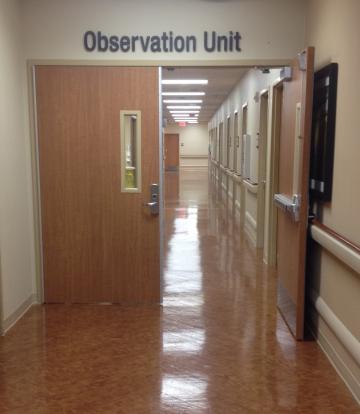
Observation Unit

Pay for performance “pressures hospitals to cheat,” authors say

Patient Notification of Observation Status is Now Law

http://healthleadersmedia.com/content.cfm?topic=QUA&content_id=319548

digitalcaduceus

Under new federal law, Medicare patients who have been in the hospital for more than 24 hours will be required to be notified of their status within 36 hours of when they start receiving medical services as an outpatient.

Observation status bill sails through Senate

http://www.fiercehealthfinance.com/story/observation-status-bill-sails-through-senate/2015-07-30?utm_medium=nl&utm_source=internal

Legislation would require hospitals to notify Medicare patients when they aren’t admitted as inpatients

Observation Status Appeal Advances in Federal Court

http://www.healthleadersmedia.com/content/HEP-312471/Observation-Status-Appeal-Advances-in-Federal-Court

Highlights from the Senate Special Committee on Aging’s Hearing on Medicare Observation Status

Highlights from the Senate Special Committee on Aging’s Hearing on Medicare Observation Status

Healthcare Law Blog