Insurers don’t pay full price for medicines, why do you?

https://www.letstalkaboutcost.org/

Image result for health insurance drug discounts

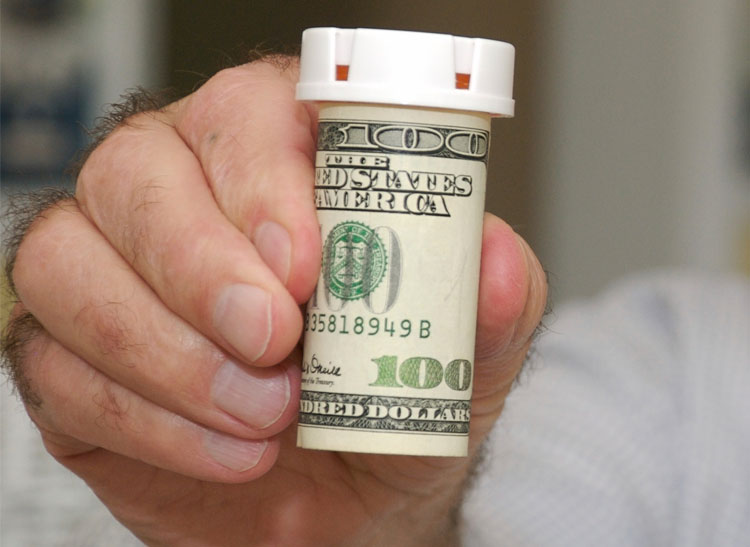
A new study found net prices for medicines grew just 1.5% last year. Unfortunately, it doesn’t feel that way for you. Forty percent of a medicine’s list price is given as a rebate or discount to the government and middlemen, like insurers and pharmacy benefit managers (PBMs).

These rebates and discounts exceed $150 billion annually, but insurers don’t always share these savings with you.

Visit LetsTalkAboutCost.org to find out more.


Congress Is Making Quiet Progress on Drug Costs

https://www.commonwealthfund.org/blog/2018/congress-making-quiet-progress-drug-costs?omnicid=EALERT1477719&mid=henrykotula@yahoo.com

Progress on drug costs

While the Trump administration has taken small steps to implement its blueprint to lower prescription drug prices, Congress has recently made quiet progress on some policies that could help lower drug costs for patients.

First, both the Senate and House advanced legislation to ban “gag clauses” that prevent pharmacists from telling patients that they can save money on medications by paying for them out of pocket. Certain prescription benefit managers (PBMs) have used gag clauses as part of their formulary design. While this is not a widespread industry practice, a 2016 survey of community pharmacists found that nearly 60 percent had encountered a gag clause in the previous 10 months. Two bills (S. 2553 and H.R. 6733) would prohibit private Medicare plans from instituting gag clauses. A third, related bill (S. 2554) — passed by the Senate on Monday with overwhelming support — prohibits private health insurance plans from using them. While they enable pharmacists to advise patients on how to spend less at the pharmacy counter, these bans won’t necessarily lower the prices of drugs.

Second, a lesser-known provision of S. 2554, added by the Senate Committee on Health, Education, Labor and Pensions (HELP), could help lower drug prices by shedding light on patent-settlement agreements between drug manufacturers. Brand-name manufacturers sometimes use these agreements to extend their monopolies and keep drug prices higher by directly and indirectly compensating generic manufacturers for voluntarily delaying generics from coming to market. The Congressional Budget Office has found that setting a standard to rein in these types of settlements would produce $2.4 billion in savings over 10 years.

The HELP committee provision would require manufacturers of biologics (large-molecule drugs) and biosimilars (nearly identical copies of original biologics) to report patent-settlement agreements to the Federal Trade Commission (FTC) — an important step in understanding and preventing abuse of what is sometimes referred to as “pay for delay.”

Pay-for-Delay Stalls Drug Competition, Costing Patients Billions

In 2003, Congress required patent-settlement agreements between brand-name and generic small-molecule drug manufacturers to be filed with the FTC for review after they are made. (Currently most drugs sold are small-molecule drugs, but the biologics market is growing rapidly.) Such agreements effectively delay the sale of lower-cost generic drugs by nearly 17 months longer than agreements without payments, according to a 2010 report by the FTC. These anticompetitive agreements cost taxpayers approximately $3.5 billion each year.

In 2012, the U.S. Supreme Court decided in FTC v. Actavis that a brand-name drug manufacturer’s payment to a generic competitor to settle patent litigation can violate antitrust law. After the Court’s decision, the number of pay-for-delay agreements declined two years in a row. With drug companies now required to report these settlements to the FTC, the agency has been able to act to protect patients from anticompetitive deals that delay cheaper, generic drug products from coming to market. The FTC reviews reported settlements and, if it determines an agreement violates antitrust law, the agency challenges the agreement in the courts.

For example, in 2008 the FTC sued Cephalon, Inc., for paying four generic companies $300 million to delay marketing of their generic versions of Cephalon’s sleep-disorder drug, Provigil, until 2012. In 2015, the FTC reached a settlement with Cephalon’s owner, Teva Pharmaceutical Industries, Ltd., which agreed to ending pay-for-delay agreements for all their U.S. operations. The company also paid $1.2 billion in compensation for Cephalon’s anticompetitive behavior.

FTC Reporting Requirement Does Not Apply to Biologic and Biosimilar Manufacturers

The FTC reporting requirement applies only to small-molecule drugs, however, and not to far more expensive biologics and biosimilars. The potential savings of having biosimilars available for sale are significant: even one biosimilar competing against a brand-name biologic can result in a 35 percent lower price for patients and payers. Without delays in competition with brand-name biologics, biosimilars could save $54 billion to $250 billion over 10 years.

But there are concerns that manufacturers are entering into pay-for-delay agreements to keep prices for these drugs artificially high. Since 2015, when the biosimilar pathway was implemented, the FDA has approved 12 biosimilars, yet only three are currently available to patients — likely because of patent litigation and pay-for-delay agreements.

FTC Review Is Part of the Solution

In his remarks upon releasing the U.S. Food and Drug Administration’s Biosimilars Action Plan in July, FDA commissioner Scott Gottlieb noted the FTC’s key role in monitoring U.S. markets to protect consumers from anticompetitive behaviors, including those of prescription drug manufacturers. He also pointed out the patent litigation tactics manufacturers use to delay biosimilar competition.

As it does for the small-molecule drug market, the FTC can play a proactive role in monitoring what is happening in the biologic and biosimilar markets. At a workshop on drug pricing held last year, acting FTC chair Maureen Ohlhausen said that while her agency has been making progress in eliminating pay-for-delay agreements, it has not seen the last of them. She said they will remain a target. But to move forward, the FTC needs clearer authority to review patent settlements between biologic and biosimilar manufacturers.

With Senate passage of S. 2554 and its FTC reporting provision, Congress has taken an important step in encouraging a robust biosimilar market. (While the House has not passed a similar measure, the Senate bill could be added to a reconciliation of the House and Senate gag clause bills.) Engaging all the relevant market regulators — including the FTC, the U.S. Patent and Trademark Office, the Centers for Medicare and Medicaid Services, and the FDA — will inject needed competition into this nascent market and help lower drug prices for U.S. consumers.


New Accumulator Adjustment Programs Threaten Chronically Ill Patients

https://www.healthaffairs.org/do/10.1377/hblog20180824.55133/full/?utm_term=Read%20More%20%2526gt%3B%2526gt%3B&utm_campaign=Health%20Affairs%20Sunday%20Update&utm_content=email&utm_source=Act-On_2018-08-05&utm_medium=Email&cm_mmc=Act-On%20Software-_-email-_-Individual%20Mandate%20Litigation%3B%20Housing%20And%20Equitable%20Health%20Outcomes%3B%20Simplifying%20The%20Medicare%20Plan%20Finder%20Tool-_-Read%20More%20%2526gt%3B%2526gt%3B

Related image

For too many Americans with chronic illnesses, such as HIV, arthritis, and hemophilia, insurance companies and their pharmacy benefit managers (PBMs) are erecting access barriers to innovative and life-saving prescription medicines. A new and growing trend—called accumulator adjustment programs—threatens to exacerbate the problem by significantly increasing out-of-pocket spending for patients. On top of it, patients are not even aware of this sudden and very costly change.

Patients with chronic illnesses already jump through hoops to receive their drugs. First, they have to ensure that their medicines are covered by their plan. Then they often have to work through a series of utilization management steps, such as prior authorization and step-therapy.

On top of those hurdles, more and more patients are facing high deductibles for prescription drugs or are being asked to pay a percentage of the cost of a drug, which is called coinsurance, instead of a nominal copayment. Coinsurance and deductibles often require patients to pay cost sharing based on the list price, which does not reflect the rebates that the PBMs receive from the drug companies.

When patients are still satisfying their deductible or are paying high coinsurance, they can face out-of-pocket spending of thousands of dollars to fill one prescription. If they cannot afford these costs, they will leave the pharmacy counter empty-handed and risk becoming sick or getting sicker. Drug manufacturers offer coupons to prevent this and make cost sharing for these drugs affordable. Historically, commercial insurance plans have applied the value of these coupons to a patient’s annual deductible and out-of-pocket maximum; reaching these limits translates into lower out-of-pocket spending for the rest of the year.

Now, however, accumulator adjustment programs are currently being pushed by PBMs, such as Express Scripts and CVS Caremark, to insurers including United HealthcareMolina, and BlueCross BlueShield of Texas and Illinois, and to large employers such as WalmartHome Depot, and Allstate. These programs change the calculus for patients by no longer applying the copay coupons to patient deductibles and out-of-pocket maximums. Patients must spend more out of pocket to reach their deductible; sometimes thousands of dollars more. For too many patients, this makes the drugs they depend on unaffordable.

While there has been an ongoing debate between the insurance industry and the drug companies regarding who is responsible for the high cost of some medications, this new practice has nothing to do with the actual cost of the drug. The only thing that has changed is how much the insurance company, employer, or PBM is requiring patients to pay for their drug. And these entities are beginning to implement accumulator adjustment programs without adequately informing beneficiaries, who will be shocked to learn that the cost-sharing assistance they have been relying on no longer applies toward their deductible or out-of-pocket costs.

People living with HIV and hepatitis have long relied on these copay coupons to afford the cost of their medications. The impact on a countless number of peoples’ lives has been profound. But this new practice will increase patient out-of-pocket spending, leaving patients at risk of hitting a “cost cliff” mid-year. This cliff could cause disruptions to patients’ care as medication becomes prohibitively expensive. For people living with HIV, hepatitis, and so many other health conditions, the resulting decision can literally mean life or death.

While some may claim that coupons are being used to incentivize brand-name drugs over generics, the fact is 87 percent of the coupons are for drugs that have no generic equivalent. The 13 percent of branded drugs programs in which generic equivalent products are available accounted for only 0.05 percent of all prescriptions filled.

There is a relatively new drug regimen, known as pre-exposure prophylaxis (or PrEP), that when taken regularly, prevents HIV. Because there is no generic alternative, most patients can’t afford the high coinsurance and rely on manufacturer copay assistance to reach their deductible and lighten the burden. This new practice of no longer applying the copay coupons to patient deductibles and out-of-pocket maximums by the insurance companies and PBMs are making access to this remarkable treatment more difficult and will have a significant impact on our efforts to prevent HIV in the United States.

But it does not have to be like this. The growing practice of not counting copay coupons toward a beneficiary’s deductible most likely stems from PBMs, insurers, and human resources professionals, who sign off on these plans, failing to fully comprehend the impact these programs will have on vulnerable patient populations and the overall health care system.

Patient groups and employees across the country should reach out to their health insurance providers and workplace plan managers to check whether their plan is implementing this new troubling practice. And if they are, people need to speak up and push back. These new insurance practices are not acceptable and bad for the health of our country.


CMS allows Medicare Advantage plans to negotiate Part B drug prices, implement step therapy

https://www.fiercehealthcare.com/payer/cms-allows-medicare-advantage-plans-to-negotiate-part-b-drug-prices-implement-step-therapy?mkt_tok=eyJpIjoiWlRsak1qTmpPV0poTVRBeCIsInQiOiI4TVwvbjloekN1OGJxWlJVTUw1djE5YXZkNlhONEpUQ3pXVFpmN3hlckFBcFRhSFBVRURkcCtVSmhpbVF0NlZoYkVmNVpHczVKbjBLXC9ZbjkxUlwvQVYrdm9FemhcL0FId3BmWkYzelg0a2tcLytaUEpHZ2VlU0dScldoRGJhWXlwUDlzIn0%3D&mrkid=959610

The Centers for Medicare & Medicaid Services (CMS) is giving Medicare Advantage (MA) plans more power in how they pay for Part B drugs.

The agency will allow MA plans to negotiate Part B drug prices with manufacturers, as well as to implement step therapy for Part B drugs. Plans will be required to pass half of the savings generated through negotiation to patients.

Negotiating Part B drug prices will foster competition and allow MA plans to get a better deal for their enrollees, according to CMS. These negotiations may also lead to price decreases in traditional Medicare.

The move represents perhaps the most significant step in the administration’s push to reduce drug prices, offering a new lever to combat ever-increasing costs.

Step therapy is a form of prior authorization that requires patients to try a “preferred” drug—that is, a less-expensive biosimilar— before the plan will cover a different, more expensive one. CMS says this will reduce costs for plans and beneficiaries alike.

Under the Affordable Care Act, at least 85% of plans’ savings must go toward healthcare services and quality improvement activities.

Further, the new policy requires “more than half of the savings required to be passed on directly to patients,” CMS said in a press release. A memo (PDF) from the agency says the savings may come in the form of “gift cards or other items of value.”

It is “unique that Medicare Advantage has not done this,” said CMS administrator Seema Verma in a press call on Tuesday evening, noting that traditional Medicare and private insurance plans have long been allowed to implement a step therapy policy.

MA plans will not be required to implement step therapy. Those that decide to do so must inform beneficiaries before the next enrollment period in October.

Verma added that patients and doctors can appeal the step therapy requirement through the existing appeals process.

The Pharmaceutical Care Management Association (PCMA), a trade association representing pharmacy benefit managers (PBMs), called the move “an important step toward reducing costs for the program and beneficiaries,” adding that “some of the highest priced drugs are found in Medicare Part B.”

Opponents of step therapy, who sometimes call it “fail first,” say limiting medication options can have negative consequences for consumers.

Step therapy policies “dangerously intrude on patient safety” and “weaken the doctor/patient relationship by negating the healthcare plan that they created together,” according to patient advocacy organization Fail First Hurts.

Part B drugs are either generally administered by a physician, administered via durable medical equipment, or otherwise specified by statute.


Chart of the Day: Where Prescription Drug Spending Goes

http://www.thefiscaltimes.com/2018/08/03/Chart-Day-Where-Prescription-Drug-Spending-Goes


U.S. spending on pharmaceuticals totaled $480 billion in 2016, according to a report published this week in Health Affairs.

“Two-thirds of this total ($323 billion) was captured by drug manufacturers in the form of net revenues,” the researchers from Memorial Sloan Kettering’s Center for Health Policy and Outcomes write. “The remaining third ($157 billion) was retained as gross profits in the supply chain. Of this share, nearly half was captured by retail and specialty pharmacies ($73 billion), and about 20 percent ($35 billion) by providers, such as hospitals and doctors’ offices. PBMs and wholesalers together captured approximately 25 percent ($23 billion and $18 billion, respectively).”

The takeaway: The analysis — which factors in the entire prescription drug supply chain, including pharmacies and pharmacy benefit managers as well as drugmakers themselves — shows that prescription drugs make up closer to 15 percent of all health care spending rather than the 10 percent more typically cited.


How drug companies are beating Trump at his own game

https://www.politico.com/story/2018/08/03/trump-drug-prices-companies-721145
People pass the Pfizer headquarters in New York. |Getty Images


Recent price freezes and rollbacks are symbolic measures with little lasting impact.

A July tweet from President Donald Trump sent panic through the C-suites of some of the world’s biggest drug companies, prompting Pfizer and nine other companies to roll back or freeze prices.

But there’s less to those announcements than meets the eye. The gestures turned out to be largely symbolic — efforts to beat Trump at his own game by giving him headlines he wants without making substantive changes in how they do business.

The token concessions are “a calculated risk,” said one drug lobbyist. “Take these nothing-burger steps and give the administration things they can take credit for.”

Of the few companies that actually cut prices, for instance, most targeted old products that no longer produce much revenue — such as Merck’s 60 percent discount to a hepatitis C medicine that had no U.S. revenues in the first quarter.

Others volunteered to halt price increases for six months — in some cases, just weeks after announcing what is normally their last price hike for the year.

“A lot of this shit is meaningless to satisfy Trump,” said another drug lobbyist.

The industry’s deft response to Trump’s tweet shaming has also become a test of whether his administration is serious about following up with an aggressive crackdown on the companies or will simply declare victory based on token measures and move on.

“I think right now it’s a lot of noise, not a lot of substantial impact to the companies,” said Les Funtleyder, a health care portfolio manager at E Squared Asset Management, which owns shares in Pfizer. The prospect for meaningful change “is out there … but that will take motivation on the part of regulators and policymakers.”

Analysts are in broad agreement that the spate of recent concessions won’t hurt bottom lines, or rein in drug prices beyond this six-month period, because many companies already increased prices this year — in some cases, just weeks before publicly pledging to freeze them for the rest of 2018.

“There’s the glass-half-full and glass-half-empty interpretation,” said Walid Gellad, director of the Center for Pharmaceutical Policy and Prescribing at the University of Pittsburgh. “Glass half full says we have never before seen pharma promise not to raise prices anymore. So this is a step forward — including for patients. Glass half empty is that these are token measures — either on drugs few people use, or drugs that just had their price raised, and that prices will just go up next year.”

Either way, Gellad said, “this is not the kind of structural change we want in the market so that prices go down.”

Drug prices are a fixation for Trump, who rants about them in conversations with aides and advisers, according to people close to the president. He sees the issue as a political winner, especially among his conservative — and largely older — base, which relies heavily on prescription drugs. And after facing huge hurdles moving his legislative priorities through Congress, he sees this as something he can win on by using his executive authority.

That has put huge pressure on Health and Human Services Secretary Alex Azar, a former top official of Eli Lilly and Co.

“They talk three times a week, and they never have a conversation where drug pricing isn’t a topic,” said one person briefed on the conversations, adding that Trump has also interrupted Cabinet meetings to encourage Azar to brief the group on the latest developments.

But even as Azar implements his 44-page blueprint aimed at lowering prices, Trump has grown impatient with the glacial pace of rulemaking and arcane details of drug policy.

His outlet is Twitter, where he can marshal the rage of his millions of followers in an instant. White House aides say he sees his Pfizer tweet as a warning shot to other drug companies — part of a public “shaming” campaign designed to pressure companies to take voluntary steps to lower prices.

That strategy diverges sharply from what Azar is saying publicly — raising doubts about how serious the administration is about cracking down on drugmakers.

The HHS secretary’s rhetoric often targets pharmacy benefits managers — the obscure middlemen who manage the drug side of patients’ health insurance benefits — not drug companies. And targeting the middlemen is a play directly out of pharma’s strategy book — drug companies have long sought to pin patients’ frustration with rising costs on PBMs. HHS has also signaled it wants to overhaul a drug discount program for hospitals that could put money back in pharma’s pocket.

Pfizer CEO Ian Read himself praised the president’s blueprint on the company’s recent second-quarter earnings call, just a few weeks after Trump’s Pfizer tweet.

“I don’t think the administration is gunning for [pharma],” said Ronny Gal, a financial analyst at Sanford Bernstein. Everything they are doing right now is “scratching around the problem,” he said.

“You can tell by the way the stock has performed that investors aren’t too concerned,” Funtleyder said. “They figure, ‘OK, the pharma companies waved the white flag for now, so they’re out of the cross hairs.‘”

Meanwhile, HHS and drug industry officials have worked closely to show Trump they are getting results, administration and pharmaceutical industry sources tell POLITICO.

In private meetings with drug officials, HHS officials ask what steps they’ve taken that they might relay to Trump to keep the president satisfied, said drug company sources.

“They’re also like, ‘Hey, don’t be stupid. If you’re going to do something you feel like we can mutually take some credit for, let us know. … If you can get a good tweet out of it, don’t be an idiot. Let us know [ahead of time],’” said one person familiar with the conversations.

“They’ve said: ‘What would it take for you to lower prices?’” said another top drug industry official.

“There is a real fear that Trump only understands things very simplistically,” said a lobbyist for several drug companies. “So they want to keep tossing treats for him or he will go after blunt instruments,” like government drug price negotiations — steps neither the conservative leadership at HHS nor the drug industry want.

Observers both inside HHS and outside the administration see Azar’s drug pricing team as a buffer for the drug industry.

“To be candid, the secretary is pro-patient, pro-innovation and pro-competition and, quite frankly, really standing in between the industry and some faster ways to lower prices that some would say are not pro-competition,” said HHS’ John O’Brien, a senior adviser to Azar, at a drug cost event one day after Trump’s tweet attacking Pfizer.

Azar prefers the industry and HHS work to make change together, rather than it being adversarial, according to people familiar with HHS’ strategy.

He publicly touts industry price freezes and reversals “in part to show Trump they’re making progress, but also to show the industry that you get recognized for playing ball,” said a person familiar with the discussions.

The White House, meanwhile, was thrilled about the industry’s recent price freezes, even as officials acknowledged the companies’ announcements are only a first step — and promised what one official characterized as a “deluge” of drug price-related regulatory action in the coming months.

“Nothing about what they do or don’t do is going to really turn the tide in a major, major way on a voluntary basis,” the official said of the drug companies’ actions, promising that the administration will take aggressive action.

In the meantime, the White House isn’t ruling out more Twitter shaming.

“You’ll see continuing of the tweeting and announcing different actors doing good or bad things in the market,” the official said.

That will get particularly tricky for the industry come January, when drugmakers would typically take their biggest price increases of the coming year — and when their public concessions sunset.

“They can live with the changes that were made — but they can’t live with not raising prices forever,” Gal said. “It’s a noose they put their head into. In January, we will see what happens with that noose. Does it tighten or not?”


The health care industry’s bubble

https://www.axios.com/the-health-care-industrys-bubble-1515720779-70510df9-9809-42f3-b981-c621db68cbd2.html

Image result for The health care industry's bubble

Health care companies at this year’s J.P. Morgan Healthcare Conference celebrated the Republican tax overhaul and trumpeted optimistic views of their future financial power. But as more Americans become unable to afford drug prices, hospital bills, deductibles and copays — and as they voice their anger — there is sentiment brewing in the industry that a day of reckoning will come.

Key quote: “We are in the middle of a bubble in all health care asset classes,” said Bijan Salehizadeh, a health care investor at NaviMed Capital. “Everyone knows it, but no one knows how it will end.”

What we’re hearing: The one part of health care that multiple people at the conference said desperately needed to change was pharmaceuticals.

  • Many companies continue to hike list prices on generics and brand-name drugs, game the system by extending old drug patents, and are coming out with relatively fewer breakthroughs compared with a much higher number of “me-too” drugs that provide limited benefits over existing drugs.
  • Firms that are developing innovative treatments are commanding prices that surpass many estimates of what is reasonable.
  • Drug companies looking to get bought out are expecting high takeout prices based on the assumption current pricing tactics will remain the status quo.

Yes, but: As many presentations from the J.P. Morgan event confirmed, problems aren’t confined to the pharmaceutical industry.

  • Hospital profits and cash reserves are hovering near historic highs.
  • Premium rates reflect the high cost of health care services and drugs, but observers have raised questions about whether insurers are getting the best deals possible, and whether narrow networks have been helpful.
  • Independent Medicare policymakers continue to push for regulatory changes to nursing homes, home health companies and other non-hospital providers that are earning sizable profit margins from the government.

“Providers are part of it,” Rod Hochman, CEO of Providence St. Joseph Health, a large not-for-profit hospital system based on the West Coast, acknowledged in an interview. “But also pharma has to be part of the solution. Insurers have to be part of the solution.”

Spencer Perlman, a health care analyst at Veda Partners who wasn’t at the J.P. Morgan meeting, has long said companies that obstruct competition or play with regulatory loopholes have been playing with fire.

“So much of current health care valuations are based on revenue and earnings projections that are generated by reimbursement arbitrage, legal maneuvering and/or rent-seeking behaviors,” Perlman said.

Get smart: Health care eats up almost one-fifth of the U.S. economy. The companies that get a slice of that pie don’t have incentives to give it up. Even if Congress or federal agencies intervene with new policies, look for many players to point fingers at industries they believe are bigger abusers — like the current fight between drug companies and pharmacy benefit managers.


Trump Likes Drug Price Negotiations; His Nominee for Health Secretary Doesn’t

Image result for high drug prices

 Alex M. Azar II, President Trump’s nominee for secretary of health and human services, said Tuesday that he was wary of proposals for the government to negotiate drug prices for Medicare beneficiaries, an idea endorsed by Mr. Trump in the 2016 campaign.

But Mr. Azar said that in some situations, he was willing to look at proposals to negotiate prices for a limited number of medicines.

He made the comments at a Senate confirmation hearing on Tuesday, where he tried to allay the concerns of some Democrats who asserted that he would be biased in favor of pharmaceutical companies because he had worked for a decade as a top executive at Eli Lilly, the company in Indiana that sells drugs for diabetes, erectile dysfunction and schizophrenia, among other conditions.

Mr. Azar’s remarks on drug price negotiations were carefully circumscribed and somewhat ambiguous — an approach that allowed him to get through the hearing largely unscathed.

If Medicare negotiates drug prices, he said, patients might have less access to some medicines because the government would probably establish a list of preferred products.

“For the government to negotiate there, we would have to have a single national formulary that restricted access to all seniors for medicines,” Mr. Azar told the Senate Finance Committee. “I don’t believe we want to go there in restricting patient access.”

At the same time, Mr. Azar said, “it’s worth looking at” proposals to allow price negotiations for drugs in Part B of Medicare. Under this part of the program, patients receive cancer drugs and other medications, often by infusion or injection, in doctor’s offices and hospital outpatient clinics.

Mr. Azar, who worked for six years in the administration of President George W. Bush, is expected to win confirmation, with support from Republicans and perhaps a few Democrats, who view him as a pragmatic problem solver rather than an ideologue. He would take charge of a cabinet department that spends more than a trillion dollars a year providing health insurance to more than 130 million Americans.

Senator Bill Nelson, Democrat of Florida, asked Mr. Azar whether he would support cuts in Medicare, Medicaid or Social Security to offset increases in the federal budget deficit that would be caused by the recently passed tax legislation.

“The president has stated his opposition to cuts to Medicare, Medicaid or Social Security,” Mr. Azar replied. “He said that in the campaign, and I believe he remains steadfast in his views on that. He’s made that commitment. I will live up to that if I’m confirmed.”

But like many Republicans, Mr. Azar said that cuts in the growth of federal benefit programs were not really cuts if federal spending on the programs continued to increase.

Democrats kept returning to the question of drug prices. Mr. Azar said that the expertise he acquired in the pharmaceutical industry would help him rein in drug costs as a federal official.

“Across the board,” he said, “drug prices are too high. Insulin prices are too high. All drug prices are too high in this country.”

Democrats were generally skeptical, based on Lilly’s record during Mr. Azar’s time at the company.

“The price of Lilly’s bone-growth drug Forteo, used to treat osteoporosis, more than doubled on Mr. Azar’s watch,” said Senator Ron Wyden of Oregon, the senior Democrat on the Finance Committee. In the same period, Mr. Wyden said, the company more than doubled prices for other drugs including Humalog, used to treat diabetes, and Strattera, for attention deficit hyperactivity disorder.

Mr. Wyden asked Mr. Azar if, as head of Lilly’s operations in the United States, he had ever approved a reduction in the price of a Lilly drug.

Mr. Azar avoided a direct answer and blamed “the system.”

“I don’t know that there is any drug price of a branded product that has ever gone down from any company on any drug in the United States because every incentive in this system is toward higher prices,” Mr. Azar said, adding: “No one company is going to fix that system. That’s why I want to be here working with you.”

Mr. Azar said he saw no need for the government to negotiate prices for drugs covered by Part D of Medicare, which pays for pills and other products that patients can give themselves and purchase from neighborhood drugstores and mail-order pharmacies.

Medicare’s Part D drug benefit is delivered entirely by private companies under contract with the government. These companies and their agents, known as pharmacy benefit managers, negotiate with drug manufacturers, and Mr. Azar said he did not believe the government could get lower prices by negotiating directly with drug companies.

A 2003 law prohibits the Department of Health and Human Services from interfering in negotiations between drug manufacturers and insurers that provide drug coverage under Part D of Medicare. “You would not get better pricing by removing” that prohibition, Mr. Azar said.

In the 2016 campaign and since taking office, Mr. Trump has said that Medicare could save large sums by negotiating directly with drug companies. But drug companies adamantly oppose that idea, and Mr. Trump has not taken steps to translate that into practice.

Asked specifically if Medicare should negotiate drug prices, Mr. Azar said: “In Part D, we do significant negotiation through pharmacy benefit managers that get the best rates of any commercial payers. We don’t do that in Part B, which is where we have physician-administered drugs. We basically pay sales price plus 6 percent or some other number.”

As an alternative, Mr. Azar said he supported proposals to link the pricing of prescription drugs to an assessment of how well they work for patients. Under such arrangements, known as value-based pricing, insurers would pay more for medicines that were highly effective and less for those that did not work well.

Mr. Azar also said he supported an agency created by the Affordable Care Act to test novel ways of delivering and paying for health care. And he said that some of the experiments could require doctors and hospitals to participate. Republicans in Congress have generally opposed mandatory participation.

Californians will get more information on what’s driving prescription drug prices under law signed by governor

http://www.latimes.com/politics/la-pol-ca-prescription-drug-price-disclosure-20171009-story.html

Image result for Californians will get more information on what’s driving prescription drug prices under law signed by governor

Gov. Jerry Brown approved a measure Monday to increase disclosure on prescription drug prices, the focal point of growing efforts to clamp down on climbing pharmaceutical costs.

Supporters call the law the nation’s most sweeping effort to make prescription drug pricing more transparent. The measure would require drugmakers to provide notice to health plans and other purchasers 60 days in advance of a planned price hike if the increase exceeds certain thresholds.

The measure, SB 17 by state Sen. Ed Hernandez (D-Azusa), will also require health plans to submit an annual report to the state that details the most frequently prescribed drugs, those that are most expensive and those that have been subject to the greatest year-to-year price increase.

”The essence of this bill is pretty simple,” Brown said at a Capitol signing ceremony. “Californians have a right to know why their medical costs are out of control, especially when pharmaceutical profits are soaring.”

The disclosure, backers say, would help shed light on how prescription drugs are contributing to overall healthcare costs.

“SB 17 speaks to the needs of all Californians who have felt the strain of nonstop prescription drug price increases,” Charles Bacchi, president and chief executive of the California Assn. of Health Plans, said in a statement. “Pharmaceutical prices have long played an outsized role in driving up the cost of health coverage across the board. SB 17 gives us the tools to address the issue by helping us prepare for price hikes and discouraging needless cost increases.”

But pharmaceutical companies strongly opposed the measure, arguing the information would paint an inaccurate picture of drug spending, since the disclosure centers on full sticker cost set by manufacturers. Purchasers rarely pay the full list price, either through negotiated discounts or through use of consumer rebates or coupons.

“It is disappointing that Gov. Brown has decided to sign a bill that is based on misleading rhetoric instead of what’s in the best interest of patients,” Priscilla VanderVeer, a spokeswoman for the Pharmaceutical Research and Manufacturers of America, said in a statement. She said the measure “ignores the reality that spending on prescription medicines remains a much smaller portion of overall healthcare spending.”

VanderVeer said the manufacturers’ group was ready to work to combat affordability issues but added: “It’s time to move beyond creating new, costly bureaucratic programs that don’t make a dent in patients’ costs for medicines.”

Escalating drug prices inspired a slate of measures from lawmakers this year. Brown on Monday signed an additional measure, AB 265 by Assemblyman Jim Wood (D-Healdsburg), that will restrict the use of drug rebates or coupons for brand-name drugs when cheaper generic alternatives are available.

The law includes a number of exemptions, including for when patients have gotten authorization from their health insurers for brand-name treatments. But Wood has pitched his measure as a way to stem widespread use of such vouchers, which some researchers have said drive higher overall healthcare costs by giving patients incentive to pick pricier medicines.

Other related bills, including a measure to clamp down on gifts doctors can receive from pharmaceutical companies and a proposal to regulate pharmacy benefit managers, a little-scrutinized part of the drug supply chain, sputtered earlier this year.

The disclosure bill was seen as the centerpiece of the focus on drug prices, setting off a fierce lobbying battle in which the pharmaceutical industry squared off against a coalition of backers that included health plans, labor groups and consumer advocates.

It also garnered support from some Republican lawmakers, who have typically been aligned with drug makers.

“Shouldn’t we do something to help make this system operate better so we can get better cost savings for our consumers? That’s a conservative principle,” said Assemblyman James Gallagher (R-Yuba City).

Now, Hernandez said, he hoped the law would inspire similar action on a national level.

“I want to challenge our federal elected officials…to do the same thing at the national level,” he said, “so that we can make sure that every single person in this country not only has access to healthcare but they can afford their healthcare premium dollars.”

In his signing remarks, Brown said the angst over rising drug costs — and manufacturers’ substantial profits — was symptomatic of the broader gap between the haves and have-nots.

“The social and political fabric is being ripped apart,” Brown said. “The inequities are growing. The rich are getting richer, the powerful are getting more powerful and a growing number of people are getting more desperate, more alienated.”

He directed a message to the pharmaceutical industry that opposed the bill: “You’ve got to join with us. You’re part of America. And if we all don’t pull together, we’re going to pull apart.”

Facebook Live: The Prescription Drug Pricing Pipeline

http://khn.org/news/facebook-live-the-prescription-drug-pricing-pipeline/?utm_campaign=KHN%3A%20First%20Edition&utm_source=hs_email&utm_medium=email&utm_content=55788948&_hsenc=p2ANqtz–od0NkOnZ3JW63AcEvWasisokdBxSkvpXO26Fjun675RM0hdMqrzrJFyv1mPagID4A6YaGGliyY42elFVZt4M1Cbax7A&_hsmi=55788948

Related image


Who contributes to what you pay at the pharmacy? Why are prescription drugs so expensive in the United States? In this Facebook Live, KHN’s Julie Appleby talks with Stephanie Stapleton and answers readers’ questions about the prescription drug pricing pipeline and the industry stakeholders who have a role in what you pay.

For more in-depth conversations with KHN reporters, check out our Facebook video archive.

Here are videos and a chart to help make sense of drug pricing. And remember you can republish KHN content for free:

Pharmacy benefit managers — companies that are often unnoticed and even less understood by most consumers — hold an important place in the prescription drug-pricing pipeline. In this video, Kaiser Health News details the emergence of these multimillion-dollar corporations and the impact they have on medication costs and patients’ access to these treatments.