

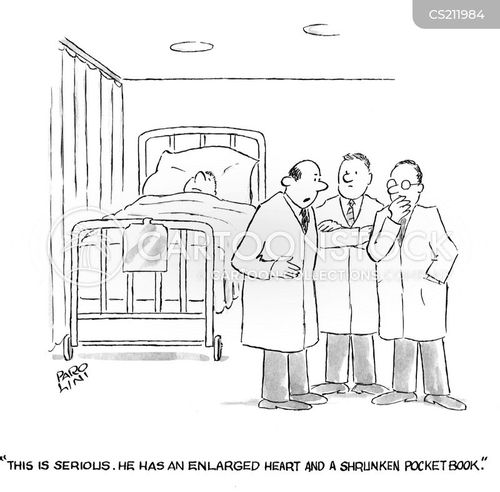
Cartoon – This is Serious


A 60-year-old Texas physician was sentenced Aug. 9 to 35 years in prison for orchestrating a $375 million healthcare fraud scheme, according to the Department of Justice.
Federal prosecutors said Jacques Roy, MD, and his cohorts used promises of cash, groceries and food stamps to recruit patients, including some of Dallas’ homeless, as part of the fraud scheme.
From January 2006 to November 2011, Dr. Roy’s office, Medistat Group Associates in DeSoto, Texas, handled more home healthcare visits than any physician’s office in the country. Dr. Roy allegedly certified or directed the certification of more than 11,000 individual patients from more than 500 home healthcare agencies for home health services during that time, according to the DOJ.
“A doctor cannot care for 11,000 patients at once,” Assistant U.S. Attorney P.J. Meitl said during the trial, according to The Dallas Morning News
In April 2016, Dr. Roy, who has lost his medical license, was found guilty on eight counts of healthcare fraud, two counts of making a false statement relating to healthcare matters, one count of obstruction of justice and one count of conspiracy to commit healthcare fraud. Three owners of home healthcare agencies were also convicted on various felony offenses.
In addition to his 35-year prison term, Dr. Roy was ordered to pay $268.15 million in restitution.

Study shows more work, fewer new patients, little health benefit.
Telemedicine and other “e-visits” are supposed to be a win-win for physicians and patients alike. Doctors could spend less time on simple requests, patients would get frictionless access to their provider.
But a new study published in Management Science finds that all that access hasn’t translated into the outcomes so many had hoped for. Instead, e-visits lead to more office visits and more phone consultations without measurable improvement to patients’ health. And maybe most damaging for physicians’ practices, they’re associated with fewer new patients.
The findings may be surprising, but study leader Hessam Bavafa, PhD, of the University of Wisconsin School of Business, said they make sense when you consider the process of the usual e-visit. Patients can reach out with even the smallest concerns, he said, and that puts doctors in a bind.
“There’s an issue of obligation,” Bavafa told MedPage Today. “If you ignore the signal, who knows what’s going to happen next, right?”
The study used five years of data from a large health system with multiple hospitals and more than 2,000 total beds. It included all primary care encounters for 140,000 patients from 2008 to 2013, including office visits, phone calls, and e-visits, all cholesterol tests, and all blood glucose tests for the physicians with the largest panel sizes. It was limited, however, to those patients who had three or more office visits over the period analyzed, as the study was designed to focus on active healthcare users.
The results were stark. After adopting e-visits — in this instance, essentially an email with a subject line and generic box of text — office visits increased by 6% as physicians met with patients who had reached out online. Physicians also ended up spending 45 more minutes each month on those visits.
Oh, and the extra work of responding to patients requests did not bring extra compensation. “God knows what happens if you start paying doctors for these,” Bavafa said.
And with the increased workload came a corresponding 15% drop in the number of new patients physicians saw.
Bavafa said the findings are a natural consequence of physicians’ limited time: if one patient group is getting more of it, another will feel the squeeze.
But Peter Yellowlees, MD, president of the American Telemedicine Association, said the findings go against his own experience and much of the literature.
He questioned the wisdom of excluding patients who had fewer than three office visits. That eliminated a large group of patients, he pointed out, and may have affected the outcome.
“Effectively they only looked at two-thirds of the patients, which is a bit odd to me,” he said. “It’s perfectly reasonable that those people had problems that could be managed with an occasional email and everything’s fine and they don’t need to come in.”
He also pointed to strong adoption of e-visits in the paper as evidence of their value. The study found fewer than 100 monthly e-visits in 2008. By the end of the period analyzed, that had ballooned to nearly 6,500.
“As a physician, we don’t do things that we don’t think are worthwhile. That level of adoption is strong evidence, from my perspective, that this is a really good idea,” Yellowlees said.
He also wondered whether some other change within the system analyzed could have led to the changes observed. He said the e-visits couldn’t be considered causative.
While he didn’t agree with the findings, he said he was happy to see a study try to examine their impact.
Bavafa, too, was hopeful about the future of e-visits and other telemedicine efforts. Already, he said, some providers are toying with pricing to see if they can affect the way patients communicate with their doctors. The experiments include charging a “subscription” fee for electronic access to doctors, or even a charge for each individual contact.
He compared the current process to Amazon in the 1990s, or taxis as opposed to Uber and Lyft.
“This is the future, we just have to think about how to do it,” he said. “The ideas may not be novel, but it’s about figuring out the whole ecosystem.”

http://www.healthcaredive.com/news/house-narrowly-passes-malpractice-reform-legislation/446208/

The bill is designed to protect providers from superfluous lawsuits and unnecessary costs and would preempt state laws with higher limits on damages or no limits at all. According to a Congressional Budget Office analysis, the measure would save taxpayers $50 billion over the next 10 years.
American Medical Assocation President Dr. David Barbe praised the House action, calling H.R. 1215 “an important first step toward fixing” a broken medical liability system, adding, “By redirecting healthcare spending from defensive medicine, additional dollars can go to patient care, safety and quality improvements, and to health information technology systems that would help improve care and outcomes.”
Republicans in Congress are eyeing 2017 as a major year for tort reform. Though clinicians will likely champion H.R. 1215, some have questioned whether the reform is necessary. According to Doctors Company, a major malpractice insurer, the rate of malpractice has been halved since 2003. Tort reform has been on the mind of HHS Secretary Tom Price for 20 years so a Republican-controlled Congress allows for such reforms to be made.
President Donald Trump’s administration also expressed his support for the legislation. His fiscal year 2018 budget proposal includes a provision that would alter the collateral source rule to allow evidence of a plaintiff’s income from other sources to be introduced at trial.
In addition to H.R. 1215, three other tort reform bills are under review. H.R. 720, the Lawsuit Abuse Reduction Act, would discourage the filing of frivolous claims by requiring mandatory sanctions on those who do and eliminating the ability of plaintiffs and their lawyers to avoid sanctions by withdrawing claims after a motion to sanction.
Another bill, the Fairness in Class Action Litigation Act, H.R. 985, would make it more difficult for plaintiffs’ attorneys to file class action lawsuits by requiring that all claimants in the class experienced the same type and degree of injury.
Finally, the Innocent Party Protection Act, H.R. 725, would let defendants sued in state courts remove the case to the federal level if the plaintiff and defendant are from different states and more than $75,000 in damages is on the line.

Only 18% of clinical recommendations were based on high-quality, patient-oriented evidence, a primary care research study shows.
Research-based evidence to help primary care physicians make decisions seems to be hard to come by, according to research from the University of Georgia.
Researchers, led by Mark Ebell, epidemiology professor at UGA’s College of Public Health, analyzed 721 topics from an online medical reference for generalists and found that only 18% of the clinical recommendations were based on high-quality, patient-oriented evidence. Their work appears in the journal BMJ Evidence-Based Medicine.
“The research done in the primary care setting, which is where most outpatients are seen, is woefully underfunded, and that’s part of the reason why there’s such a large number of recommendations that are not based on the highest level of evidence,” Ebell said in a statement.
The researchers used Essential Evidence, an online, evidence-based, medical reference for generalists to identify areas of care that are supported by high-quality studies and others that are not. Each of Essential Evidence’s topics are graded A, B, or C using the Strength of Recommendations Taxonomy (SORT), the study said.
They found that topics related to pregnancy and childbirth, cardiovascular health, and psychiatry had the highest percentage of recommendations backed by research-based evidence. Hematological, musculoskeletal and rheumatological, and poisoning and toxicity topics had the lowest percentage.
In addition, just 51% of the recommendations overall were based on studies reporting patient-oriented outcomes, such as morbidity, mortality, quality of life, or symptom reduction, instead of laboratory markers like blood sugar or cholesterol levels.
“Practice should wherever possible be guided by studies reporting patient-oriented health outcomes,” Ebell said. “You would want your care to be guided by studies that have demonstrated that what the physician recommends will help you live better or longer. We should all want that kind of information to guide care.”
The study authors also note that the lack of funding for primary care research stands in stark contrast to patients’ primary care usage: Primary care visits account for 53.2% of all physician office visits, according to the CDC.
 HENRY KOTULA