Why There’s No Substitute for the Individual Mandate

http://www.commonwealthfund.org/publications/blog/2017/jul/no-substitute-for-the-individual-mandate?omnicid=EALERT1248041&mid=henrykotula@yahoo.com

Image result for individual mandate

Republicans seeking to replace the Affordable Care Act (ACA) are finding it difficult to eliminate its individual mandate while maintaining protections for people with preexisting conditions. The mandate has succeeded in keeping young, healthy people in the insurance market. The alternatives under consideration won’t accomplish that and would cause some people harm.

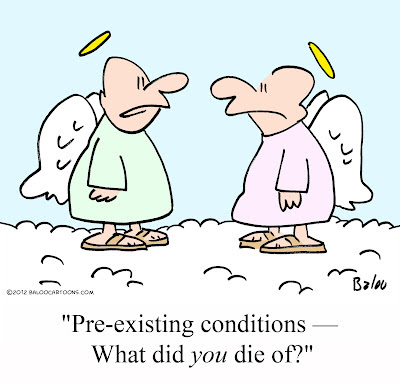
Protections for people with preexisting health conditions can destabilize health insurance markets because these protections encourage people to sign up for coverage only when they need care. The ACA addresses this by requiring those who can afford it to buy insurance even if they’re not sick and imposing a penalty on those who fail to make timely coverage purchases. The mandate has been quite effective because people may or may not believe they will need health insurance, but they can be sure they will have to pay a penalty at tax time if they don’t purchase it.

The ACA’s mandate worked. Although some have argued the law’s penalties are insufficient, the evidence indicates that they did lead young, healthy people who could afford coverage to buy insurance. In 2013, just before implementation of the ACA reforms, the uninsured rate among college-educated men ages 26 to 34—the group most likely to be able to afford coverage but not see it as a priority—was 6.9 percent. By 2015, during the first full year of the mandate, that rate had dropped to 3.8 percent, a decline of 45 percent (Exhibit 1).

Republican proposals would replace the individual mandate with provisions that penalize people who don’t maintain continuous coverage, either by forcing them to pay a premium surcharge when they do sign up for coverage (House plan), or forcing them to wait six months for coverage (Senate plan). These proposals would therefore replace the ACA’s modest but predictable assessment with larger but far-off, uncertain penalties for not buying coverage.

Studies over more than half a century consistently show that in most situations people are more responsive to immediate and certain consequences than they are to far-off, uncertain ones.1 That result is even stronger in the context of our fragmented health care system. For the Republican penalties to encourage continuous coverage, people must believe there’s a good chance they’ll face consequences if they delay purchasing insurance. But in our health care system, they know they probably won’t.

In the individual insurance market, prior to the ACA’s reforms, penalties for delaying insurance were large, far-off, and uncertain—as in the current Republican proposals. Just as in the current Republican proposals, coverage in the nongroup market before the ACA was guaranteed renewable, meaning that once in the market, people could continue to obtain coverage at prices that did not reflect changes in their health status. But before the ACA, when people first entered the nongroup market after being uninsured, insurers could lock out those with health conditions, exclude preexisting conditions, or charge any level of premiums they wanted. Those very costly consequences ought to have provided a strong inducement to avoid breaks in coverage. But the reality is that very few people actually faced those consequences. Over a seven-year period, just 15 percent of those who lost their health insurance coverage ultimately made their way to the individual market (Exhibit 2). Instead, most people who switched coverage eventually moved to employer plans (as policyholders or dependents) or to Medicaid or Medicare, which have few penalties for delaying the purchase of insurance.

This is especially true for young people. Not only are these “young invincibles” less likely to believe they need health coverage, they assume that if they do eventually want it, they will be able to get it outside of the individual market. From 2003 to 2009, about 23 percent of those ages 55 to 63 with a change in coverage eventually entered the individual market. Just 12 percent of those ages 25 to 34 did so. Most young adults who had been uninsured eventually gained coverage through an employer plan. That’s a big reason why the large, but far-off and uncertain, penalties in the pre-ACA market were never enough to encourage many young, healthy people to sign up for individual coverage—and why the ACA mandate, by contrast, prompted so many of them to sign up.

The Republican penalties are not just likely to be ineffective in encouraging people to make timely insurance purchases. As with any arbitrary penalty, their burden would disproportionately fall on some people. Before the ACA, some unlucky people who lost coverage assumed they’d regain it through a job or public program, but guessed wrong. While uninsured, they became ill or got injured. Some may then have paid exceptionally high premiums for individual coverage, many went without care, and still others paid their health care costs out of pocket. In that last group were nearly 150,000 people who became uninsured each year and incurred more than $20,000 in out-of-pocket medical expenses; 20,000 of them incurred over $50,000 in expenses. That’s a hefty price to pay for an unlucky choice.

The Republican proposals to replace the individual mandate with large but uncertain penalties would leave us in the worst of both worlds: high prices for those who do participate in the market and hefty punishments for those who are unlucky. The proposals won’t persuade young, healthy people to enter, and help to stabilize, the individual market. And they will leave some unlucky people who gambled wrong, held off buying coverage, and got sick to face exorbitant costs.


Would your plan cover John McCain’s treatment?

https://www.healthinsurance.org/blog/2017/07/25/would-your-plan-cover-john-mccains-treatment/

Image result for adequate health insurance coverage

The Arizona Senator’s health plan will ensure top-notch glioblastoma treatment, but how would Americans with other health coverage fare?

Last week, we heard the sad news that Senator John McCain has been diagnosed with glioblastoma. McCain had surgery at Phoenix’s Mayo Clinic in mid-July, and it’s expected that he’ll also receive chemotherapy and radiation, along with other potential treatments. Senator McCain has proven time and again that he’s tough as nails, and appears to be facing this latest battle head-on. One thing that he likely has on his side is top-notch health insurance.

McCain is 80, which means he’s presumably been on Medicare for 15 years. Currently serving federal lawmakers are able to obtain employer-subsidized coverage in the Washington DC small-business exchange, and they can have this coverage in addition to Medicare.

How good is McCain’s coverage?

McCain hasn’t said publicly exactly what insurance he has, and his office has not responded to my inquiry. But the most likely scenario is that he has Medicare plus employer-sponsored coverage through the DC exchange – a very comprehensive benefits package.

There are certainly lots of other people who have similar coverage arrangements – either because they’re still working after turning 65, like McCain, or because they receive generous retiree health benefits that supplement their Medicare coverage. For those who don’t, there are private Medicare supplements available that cover virtually all of the out-of-pocket costs associated with Medicare.

But health coverage in the United States is a bit of a mixed bag, with some people having much better coverage than others. A serious illness tends to shine a spotlight on the flaws that exist in some health plans, so let’s take a look at how the average American facing a glioblastoma diagnosis would fare under various health plans.

Employer-sponsored health insurance

Most employer-sponsored health insurance plans provide pretty solid health coverage. According to a 2016 Kaiser Family Foundation analysis, the average deductible for covered workers was about $1,500, and that doesn’t count the 17 percent of covered workers whose plans had no deductible at all.

In addition, the average employer paid more than two-thirds of the total premiums. And the tax exclusion of employer-sponsored insurance premiums amounts to a subsidy that cost the federal government $250 billion in fiscal year 2016.

However, employer-sponsored health insurance is, by definition, linked to employment. A person going through a serious illness like glioblastoma might not be able to continue working, depending on the specifics of the treatment.

As long as the employer has at least 20 employees, the employee will be able to continue the coverage under COBRA for 18 months, even if he or she is unable to work. But COBRA is expensive, as the employer contribution to the premiums and the tax exclusion of the premiums are eliminated. (COBRA premiums are counted as a medical expense for the purpose of itemized medical deductions, but only expenses that exceed 10 percent of your income can be deducted this way.)

Although most employer-sponsored plans provide good coverage, that’s due in part to the ACA. It was not uncommon – particularly in low-wage, high turnover industries – for employers to offer “mini-meds” before the ACA, with exceedingly low benefit caps. (The ACA’s ban on lifetime and annual benefit limits means that these plans are no longer offered to employees.)

A mini-med with a $2,000 or $5,000 annual benefit maximum would not have done much in the face of glioblastoma. Vox reported that just the initial craniotomy to remove a blood clot above Senator McCain’s eye would likely have been billed at more than $76,000. And that was before the cancer diagnosis.

ACA-compliant individual market coverage

The pre-ACA individual market included plenty of solid plans. But dubious coverage also abounded, and regulations varied considerably from one state to another.

The ACA imposed a bevy of regulations on the individual health insurance market, bringing all new (as of 2014) plans up at least a basic minimum standard. Individual major medical coverage can no longer be sold without the ACA’s essential health benefits.

And for those benefits, insurers cannot limit how much they’ll pay during a year or over the course of an insured’s lifetime. (Sadly, another Arizona resident with cancer, Arijit Guha, died in 2013 at age 32. Guha’s health insurance plan had a $300,000 lifetime cap – which is no longer allowed, thanks to the ACA – and his treatment, including chemotherapy that cost $11,000 per session, quickly exceeded that limit.)

Individual-market plans also cannot discriminate against people with pre-existing conditions, either by charging them higher prices or declining their applications (both of those were standard practice in nearly every state prior to 2014). Notably, Senator McCain has a history of melanoma, which would have virtually guaranteed a declined application in the individual market pre-ACA if he had been in need of non-group coverage for some reason.

A person with ACA-compliant individual market coverage would have solid coverage for glioblastoma. The maximum out-of-pocket costs during 2017 would be $7,150, although most plans have out-of-pocket maximums below that threshold. And 57 percent of people who enrolled through the exchanges in 2017 have cost-sharing subsidies, which further reduce the out-of-pocket costs.

The American Cancer Society explains in more detail how the ACA improves access to care for people with cancer. But the short story is that a person facing glioblastoma with a 2017 individual health insurance policy has a much more secure financial safety net than someone with the same diagnosis a decade ago.

Medicaid

Medicaid provides comprehensive coverage. Although the benefits available under traditional Medicaid vary from one state to another, Medicaid expansion coverage is required to include the ACA’s essential health benefits. (The Senate’s Better Care Reconciliation Act – BCRA – would eliminate this requirement after 2019.)

Medicaid has minimal cost-sharing, limited to no more than 5 percent of a family’s annual income.

It’s true that compared with private health insurance and Medicare, fewer medical providers accept Medicaid. But the majority do work with Medicaid. (According to a Kaiser Family Foundation analysis, about 69 percent of office-based physicians accept new Medicaid patients, while about 85 percent accept new privately-insured patients.)

Short-term health insurance

The ACA implemented regulations that apply to virtually all types of health insurance. But some plans are not regulated by the law, including short-term health insurance.

As evidenced by the name, short-term plans are limited in their duration. As of 2017, a short-term plan can last no more than three months, although people who remain healthy can purchase a second short-term plan after the first one ends.

Short-term plans do not cover pre-existing conditions. So if you were to be diagnosed with glioblastoma while covered under a short-term plan, the first thing the insurer would do is go back through your medical records to make sure that you didn’t have any symptoms prior to enrolling in the plan.

Assuming you were healthy before you enrolled, your short-term plan would start to cover your treatments. But you would be facing a looming and inflexible coverage termination date, along with annual and lifetime benefit maximums. Short-term plans vary considerably in quality – some have lifetime benefit maximums of $250,000 or less, while others provide benefits well in excess of a million dollars. In the case of a glioblastoma diagnosis, coverage would end when the policy reached its predetermined end date, or when you hit your benefit maximum – whichever happened first.

Either way, you’d want to hope that you had other coverage already lined up and ready to go at that point. The cancer diagnosis would make it impossible to obtain another short-term policy.

And since a short-term plan is not considered minimum essential coverage, the termination of the short-term policy would not trigger a special enrollment period for individual or employer-sponsored insurance. You would still be able to enroll in a regular individual-market plan, or an employer plan if you’re eligible for one, during regular annual open enrollment. But you might experience a significant gap in coverage, which can be disastrous in the middle of cancer treatment.

A limited-benefit plan

Limited-benefit plans are another category of coverage that’s not regulated by the ACA (despite attempts by the Obama Administration to place some regulations on certain types of fixed indemnity coverage).

Fixed indemnity means that the plan pays a specific dollar amount if the insured has a covered claim. For example, the plan might pay $1,000 per day for hospitalization, or $50 for a doctor visit. There’s no cap on how much the patient has to pay, and these plans often have very low annual and lifetime benefit limits.

So imagine a plan that will pay $2,000 per day for hospitalization, for up to 25 days. It will also pay $2,500 for an outpatient surgical procedure and $2,500 for an inpatient surgical procedure. And it will pay $625 for anesthesia, but it does not cover prescriptions (these numbers are from a real plan currently available in the limited benefit market).

Remember that McCain’s craniotomy – before the glioblastoma was even diagnosed – likely cost $70,000. He was home very soon after the surgery, so if he was hospitalized at all, it wasn’t more than a day or two. A limited benefit plan like the one described above would have paid $2,000 for each day in the hospital (which amounts to zero dollars if the procedure didn’t result in an inpatient stay), $2,500 for the surgery, and $625 for the anesthesia. That would leave a sizeable chunk of the $70,000 bill as the patient’s responsibility.

And all of that is before the treatment for the glioblastoma even begins.

A Cruz Amendment plan

In mid-July, Senator Ted Cruz introduced an amendment to the BCRA aimed at reducing regulations on health insurance plans. The Cruz Amendment, if included in the BCRA, would allow insurers to offer non-ACA-compliant plans as long as they also offered at least one Silver plan, one Gold plan, and one plan that complies with the BCRA’s benchmark standards (58 percent actuarial value).

The non-compliant plans would likely range from decent to terrible, since they would have wide latitude in terms of the consumer protections they’d be able to waive. Essentially, it would be a return to the pre-ACA days when there was more of an “anything goes” approach to health insurance. Plans would be available without essential health benefits, would not have to cover pre-existing conditions, and could be offered with higher out-of-pocket limits than ACA compliant plans.

These plans would likely appeal to healthy people, as they would be less expensive than ACA compliant plans. But a person who seems perfectly healthy can be diagnosed with glioblastoma, at which point the holes in the coverage become glaringly apparent.

What about those who lack McCain’s coverage

In glioblastoma, Senator McCain is facing a fierce battle, and our hearts go out to him and his family. But thanks to McCain’s health coverage, he won’t have to worry about how to pay for his treatment. I’m glad he has that health coverage.

Senator McCain is not alone in his battle. There are more than 12,000 Americans who will be diagnosed with glioblastoma this year. Unfortunately, many of them do not have the level of health coverage that McCain has. Even with the best health insurance, the diagnosis plunges each family into an immensely challenging situation. With lesser – or no – coverage, the challenge becomes even more insurmountable.

Nobody deserves cancer. And nobody deserves to have to fight cancer with less-than-adequate health insurance. With our current medical know-how, we can’t keep everyone from getting cancer. But we can make sure that as many people as possible are covered by high-quality health insurance. We owe it to all the lesser-known John McCains out there to work towards that goal.

That means pushing back against any sort of “reform” that would result in fewer people with insurance. It also means rejecting proposals that would allow junk insurance plans to flood the market, lulling consumers into a false sense of security – until they’re diagnosed with brain cancer.


Small Missouri Town Went For Trump, Now Some Fear Health Care Overhaul

http://kcur.org/post/small-missouri-town-went-trump-now-some-fear-health-care-overhaul-0#stream/0

The closest emergency room is 20 miles east on the highway. That’s why it isn’t unusual for people experiencing heart attacks, blood clots and strokes to show up at Dr. Rodney Yager’s clinic on Main Street in Monroe City, Missouri.

Yager, who grew up in the area, can handle the fast pace of a small-town clinic. What worries him more is how federal health care policies being shaped in Washington, D.C., could affect his patients.

The most recent proposal by Senate Republicans would cut taxes for the wealthy and leave 22 million more U.S. residents uninsured by 2026, compared to current law.

But voter frustrations with the Affordable Care Act’s rollout in communities like Monroe City helped fuel the elections of candidates who promised to dismantle it.

“Honestly, I can see the Republican side of wanting to make budget cuts and try to eliminate waste,” Yager said.”But at the same time, they’re hurting a lot of people.”

This town of almost 2,500 people sprang up about 130 miles northwest of St. Louis, along the railroad in the 1850s. Monroe City, which is just west of Hannibal, was once a Democratic stronghold in northeast Missouri. In the last decades, voters have shifted to favor conservative Republican candidates and their policies. In the most recent presidential election, Monroe, Marion, and Ralls counties voted for Republican Donald Trump over Hillary Clinton, his Democratic rival, by a 3 to 1 margin.

Nevertheless, Democratic U.S. Sen. Claire McCaskill received a warm welcome at the Monroe City Senior Nutrition Center last week, where she held her eighth of 10 town halls during the Senate’s July 4 recess. Her Republican counterpart, Sen. Roy Blunt, held none, a decision that drew protests in the St. Louis area. Members of Blunt’s staff said he met with constituents one-on-one throughout the week.

McCaskill is in a tough spot. Her six-year term will be up at the end of 2018, and she’s running for re-election in an increasingly red state. But in Monroe City, about 60 people listened as she vowed to vote against the latest Republican plan to gut the Affordable Care Act, and reiterated a call for Republican senators to accept amendments proposed by Democrats.

“It’s really a big tax break for wealthy folks, paid for by cutting the Medicaid program,” McCaskill said. “So I’m hoping it doesn’t pass. And then we can sit down together and try and fix what we have, repair what we have.”

It took just three questions before someone asked whether health insurance should be the basis of a health care system at all. Nearly everyone in the room raised their hands when McCaskill asked who would favor extending Medicare coverage to everyone, of any age. The idea of a single-payer system for American health care is a non-starter for conservative lawmakers and think tanks, but has grown in popularity among the general public. A recent Politico poll found that 44 percent of respondents would support a federal health care program for everyone.

“Even though more of you are for ‘Medicare for all,’ I’m worried that we can’t afford it right now,” McCaskill told the crowd. “It’s very expensive.”

Like many small towns in the United States, Monroe City’s population is aging. While voters are more likely to cast their ballot for Republican candidates, they are disproportionately affected by cuts in public spending for health care programs.

CBO: ObamaCare repeal without replace would cost 32 million insurance

CBO: ObamaCare repeal without replace would cost 32 million insurance

Image result for uninsured

Repealing ObamaCare without a replacement would result in 32 million people losing their insurance in the next 10 years, according to the Congressional Budget Office.
The bill, much of which would take effect in 2020, would also massively increase insurance premiums. According to the CBO, average premiums would increase by about 25 percent in 2018 alone. The increase would reach about 50 percent in 2020, and premiums would increase nearly 100 percent by 2026, CBO said.
Senate Republicans said this week they would consider voting on repeal only, after it appeared their replacement legislation had failed. However, negotiations attempting to revive repeal and replace continue and senators are scheduled to huddle Wednesday night to discuss if there’s a path forward.
The unfavorable score of the repeal-only bill could help jumpstart discussions about returning to the repeal-and-replace legislation.

A previous CBO score of the Senate’s repeal-and-replace bill estimated that 22 million people would lose insurance over the next decade.

The CBO hasn’t released a score on the most recent revision, which includes a controversial amendment from Sen. Ted Cruz (R-Texas).

The Senate will vote next week on a motion to proceed, though it’s not clear which bill Majority Leader Mitch McConnell (R-Ky.) wants to move to — a straight repeal or the repeal-and-replace legislation that seemed dead just days ago.

Both the House and Senate passed the “repeal-only” bill in 2015 that was vetoed by President Obama. Among other provisions, the “repeal only” bill would eliminate: ObamaCare’s individual and employer mandates, the Medicaid expansion, and subsidies for low-income individuals.

It would retain the requirements that protect people with pre-existing conditions from discrimination and would continue to require insurers to offer specific benefits.

According to the CBO “eliminating the penalty associated with the individual mandate and the subsidies for insurance while retaining the market regulations would destabilize the nongroup market, and the effect would worsen over time.”

Republicans have argued that they need to repeal and replace ObamaCare to “rescue” the growing number of people who live in counties with no insurers on the healthcare exchanges. But according to the CBO, repeal-only would make the problem worse.

The repeal-only bill would cause insurers to begin dropping out of the marketplace as soon as next year, the CBO said. It would also leave about half of the nation’s population without any ObamaCare insurers by 2020, a figure that would increase to about three-quarters of the population by 2026.

Insurers shred Senate health care bill: “Premiums will skyrocket for preexisting conditions”

https://www.vox.com/policy-and-politics/2017/7/15/15976244/senate-health-care-bill-health-insurance-companies-letter

Health insurance companies have largely bit their tongues about the Senate health care plan, but they are turning against it now, warning that a recent revision would send premiums skyrocketing for people with high medical costs.

The insurance industry has been one of the few health care sectors to even tentatively embrace the Senate’s plan, as Vox has documented, but that has changed in the last few days. Their most influential representatives in Washington — America’s Health Insurance Plans and the Blue Cross Blue Shield Association — sent a letter to Senate leaders Friday urging them to remove Sen. Ted Cruz’s amendment from the legislation.

The Cruz amendment, added in the revised Senate plan, would allow health plans to sell insurance on the individual marketplaces that does not comply with Obamacare’s insurance regulations as long as they also sold plans that did comply. Outside experts have warned this would segment the market, with healthy people buying skimpier non-Obamacare coverage and sicker people buying more robust Obamacare plans.

That would then send costs, and in turn premiums, spiraling upward in the Obamacare market, the insurance trade associations warned in their letter. They noted particularly that middle-class families who do not qualify for financial assistance would not be shielded at all from those increasing premiums.

“As healthy people move to the less-regulated plans, those with significant medical needs will have no choice but to stay in the comprehensive plans, and premiums will skyrocket for people with preexisting conditions,” the groups said.

The Senate does include $70 billion to offset increased costs under the Cruz amendment. But that money does not appear to be enough to assuage the insurance industry’s concerns.

“Finally, this provision will lead to far fewer, if any, coverage options for consumers who purchase their plan in the individual market,” the groups said. “As a result, millions of more individuals will become uninsured.”

It is unclear whether the Cruz amendment will be evaluated as part of the Congressional Budget Office score of the Senate bill to be released this coming week. A source familiar with the situation told me that the US Department of Health and Human Services office of planning and evaluation has been asked to review the proposal and its cost and coverage implications.

The insurance groups urged Senate Republicans leaders to remove the Cruz provision from the legislation.

Dave Dillion, an expert with the Society of Actuaries, told me Friday that part of the insurance industry’s objections is likely the uncertainty that the Cruz plan would introduce to the insurance market.

“I think while obviously a lot of carriers have not been enthralled with [Obamacare], you get comfortably number, you know the rules, and you go on about your business,” he said, adding of the Cruz proposal: “There’s so much uncertainty about what it really means. It’s not black and white.”

High-Risk Pools for People with Preexisting Conditions: A Refresher Course

http://www.commonwealthfund.org/publications/blog/2017/mar/high-risk-pools-preexisting-conditions

Image result for high risk pools

During the recent effort to repeal and replace the Affordable Care Act (ACA), some members of Congress and the Trump administration seemed to be experiencing a certain nostalgia for high-risk pools, which operated in 35 states before the ACA was enacted. At a CNN Town Hall Meeting in January, Speaker of the House Paul Ryan responded to a question about coverage for people with preexisting conditions by saying:

We believe that state high-risk pools are a smart way of guaranteeing coverage for people with preexisting conditions. We had a really good one in Wisconsin. Utah had a great one . . . . What I mean when I say this is, about 8 percent of all the people under 65 have that kind of preexisting condition . . . . So, by financing state high-risk pools to guarantee people get affordable coverage when they have a preexisting condition, what you’re doing is, you’re dramatically lowering the price of insurance for everybody else. So, if we say let’s just, as taxpayers—and I agree with this—finance the coverage for those 8 percent of Americans under 65 in a condition like yours, they don’t have to be covered or paid for by their small business or their insurer who is buying the rates for the rest of the people in their insured pool, and you’d dramatically lower the price for the other 92 percent of Americans.

As high-risk pools and other changes to the ACA continue to be debated, it is critical to deconstruct statements such as these and remind ourselves of how high-risk pools really worked and how unaffordable they were. It is important to remember that high rates of uninsurance and lack of affordability for all buyers in the individual market existed before the ACA, even in states with high-risk pools. In addition, policymakers seem to substantially underestimate the number of Americans with preexisting conditions who might be forced to purchase coverage through a high-risk pool if insurers are allowed to deny coverage in the marketplace.

Affordability and Costs of State High-Risk Pool Coverage Pre-ACA

High-risk pools were expensive because they concentrated people with health conditions into a single pool, with no healthy members to offset their costs. As a result, out-of-pocket costs for enrollees were very high and coverage was often quite limited, as administrators sought to limit losses and lower premiums by imposing high deductibles and cost-sharing, as well as annual and lifetime coverage caps. In state high-risk pools operating before the ACA:

  • Premiums ranged from 125 percent to 200 percent of average premiums in the individual market, yet covered only about 53 percent of claims and administrative costs nationally (Wisconsin allowed premiums up to 200 percent of average).
  • Fourteen states had plans with deductibles of $10,000 per year or higher, substantially greater than the current maximum $7,150 deductible for catastrophic plans in the marketplaces.
  • Thirty states imposed maximum lifetime limits; others had annual coverage limits as low as $75,000 per year (Utah had both a lifetime and an annual limit).
  • In 2010, the 35 state high-risk pools incurred about $2.4 billion in total costs—to cover just 221,879 people.

The U.S. Department of Health and Human Services (HHS) recently estimated that up to 17,875,000 people with preexisting conditions were uninsured in 2010. Had all of them been covered by high-risk pools, the cost would have been $194.8 billion in 2010 dollars, with premiums covering only $103.3 billion. Thus, states and the federal government would have needed to find $91.5 billion in additional funding to cover them all—much more than the up to $10 billion per year in federal assistance to states recently proposed by congressional Republicans.

Uninsured Rates When High-Risk Pools Were in Operation

In 2010, 32,939,000 people were uninsured in the 35 states that operated high-risk pools, and more than 47 million were uninsured nationally. In those states with high-risk pools, less than half of 1 percent of the total population was enrolled in them, and less than 1 percent of the uninsured population. That same year, The Commonwealth Fund found that 60 percent of people who shopped for health insurance in the individual market found it difficult or impossible to find a plan they could afford. This fact belies the claim that state high-risk pools made coverage for other people more affordable.

Percentage of Americans Under Age 65 with Preexisting Conditions

In the same Commonwealth Fund survey, more than one-third (35 percent) of those who sought insurance on the individual market reported being denied coverage or being charged a higher price because of a preexisting condition—certainly more than the 8 percent of people Speaker Ryan suggested would need to turn to high-risk pools for coverage. Indeed, based on federal survey data, HHS estimated that up to 51 percent of nonelderly Americans have preexisting conditions for which they could be denied coverage in the individual market.

Reality Check

The reality is that high-risk pool coverage was prohibitively expensive and there is little evidence to suggest that the existence of such pools made coverage less costly for others in the individual insurance market. Without substantially more federal funding than currently proposed, these facts are not likely to change. People with preexisting conditions may have “access” to coverage, but most will not be able to afford it and those who can will face limited benefits and extremely high deductibles and out-of-pocket payments.

Why and How to Avoid High-Risk Pools for Americans with Preexisting Conditions

http://www.commonwealthfund.org/publications/blog/2017/jun/how-and-why-to-avoid-high-risk-pools

Image result for pre existing conditions

The American Health Care Act (AHCA)—the U.S. House of Representatives’ bill to repeal and replace the Affordable Care Act (ACA)—would allow states to apply for waivers to reduce existing consumer protections and provide funding for states to set up high-risk pools or other mechanisms for people with preexisting conditions who have lapses in their coverage. In previous posts, I have talked about the high costs and meager coverage associated with high-risk pools that operated before the ACA and the fact that their use did not significantly reduce costs for other people who buy their own health plans in the individual market. Moreover, the Congressional Budget Office analysis of the AHCA finds that the funding it makes available to states for the high-risk pools is inadequate.

In a recent commentary for Annals of Internal Medicine on high-risk pools, I note that people with preexisting conditions constitute roughly 51 percent of Americans. Here, let’s explore who might end up in a high-risk pool, what their experiences might be, and policymakers’ alternative options for stabilizing the marketplaces.

The U.S. Department of Health and Human Services (HHS) estimated that 23 percent of Americans with preexisting conditions had a period of uninsurance in 2014, often because of job changes or periods of financial instability. Young people reaching age 26 who transition off their parents’ coverage also sometimes experienced gaps in coverage—and some of them have preexisting conditions. Should the AHCA become law, individuals with preexisting conditions and lapses in coverage who live in states that obtain waivers to allow insurers to charge people based on their health would likely end up in high-risk pools.

Research has shown that the greater out-of-pocket costs and limited coverage associated with high-risk pools led to enrollees forgoing needed care and experiencing worse outcomes. In fact, before the ACA, high-risk pool enrollees in Kansas were eight times more likely to transition to federal disability programs than members of the general population with these conditions.

Current Medicaid beneficiaries also would be affected. The Congressional Budget Office analysis of the AHCA estimated that 14 million fewer people would have Medicaid coverage as a result of the federal funding cuts. Many of them would be forced to look to the individual insurance market to gain coverage, yet half of these former Medicaid beneficiaries would have serious preexisting conditions. Given the historically very high costs for consumers associated with high-risk pools, the majority of these individuals would likely go uninsured instead. Many would end up using the emergency room to access care once their needs become urgent, and their uncompensated health care costs would be borne by others with insurance. Some would likely suffer serious health consequences, even preventable deaths.

Supporters of the AHCA suggest that the legislation gives states more options to design coverage for their citizens, thereby better meeting their needs. Section 1332 of the ACA, however, already gives states a great deal of flexibility in designing their marketplaces while still providing comprehensive and affordable coverage. Indeed, both Alaska and Minnesota are pursuing 1332 waiver programs to specifically address concerns about high-risk individuals by implementing reinsurance programs, rather than segregating people with preexisting conditions into high-risk pools. These programs would maintain the overall larger pool of insured people in the state while protecting insurers against catastrophic costs. Reinsurance programs, such as the one temporarily instituted under the ACA for its first three years, have historically been proven to bring down premium costs for everyone. Given that reinsurance programs are a more effective and evidence-based mechanism for stabilizing the individual insurance market, state policymakers should strongly consider pursuing these programs under the existing ACA rules instead of establishing high-risk pools. And, federal policymakers should acknowledge and support this mechanism to strengthen the marketplace, bring down costs, and encourage participation by insurers.


The massive Senate GOP shift on pre-existing conditions

https://www.axios.com/the-massive-senate-gop-shift-on-pre-existing-conditions-2458798705.html

Image result for pre existing conditions

Over the past several weeks, senior GOP aides have repeatedly said that if the Senate bill touches pre-existing conditions in any way, it will lose around a third of the caucus. Today, a provision that could cause sick people to pay much higher premiums than they currently do has not caused any Republicans to say they’ll vote against the GOP health bill.

  • When Senate GOP leaders first presented their plan to the caucus in a PowerPoint presentation, it explicitly said that pre-existing conditions wouldn’t be touched, aides say.
  • As recently as two weeks ago, aides said members were surprised and angry to learn that Sen. Ted Cruz’s Consumer Freedom Option would allow plans that didn’t include the Affordable Care Act’s pre-existing conditions protections. (They could only be sold by insurers that also offered plans with the protections.)
  • Sen. Bob Corker: “I think people understand that’s got to be protected, and people understand what happened when the House dealt with it and opened it up, and it’s just not something that senators are wishing to do.”
  • Sen. Shelley Moore Capito over recess: “I think that reopens an issue that I can’t support, that it would make it too difficult for people with pre-existing conditions to get coverage.”
  • Sen. Chuck Grassley last week: “There’s a real feeling that that’s subterfuge to get around pre-existing conditions.”

Now, that resistance is “melting away,” as one Senate Republican aide put it today. “No one wants to be bad guy.”

Indeed, almost seven hours after the revised bill — including the Cruz provision — had been released, no Republican senator had threatened to vote against the bill unless the provision is removed. In fact, Republicans had surprisingly little to say about it.

What the Consumer Freedom Option does: 

  • It allows insurers that offer ACA-compliant plans to also sell plans that do not comply with ACA regulations, including the law’s essential health benefits and its pre-existing conditions protections.
  • Advocates of the bill say that while this could sort sick and healthy people into two different marketplaces, causing premiums to skyrocket for sick people, they’ll be insulated from these costs by premium subsidies and the bill’s stabilization fund.
  • Members “don’t realize we are basically creating single payer for sick people,” the GOP aide told me, saying that Republicans’ support is growing because people with pre-existing conditions can still get exchange plans.
  • The problem: “If there were hearings, everyone would have a lot more information about Cruz. Right now, Cruz is the only seller of the amendment and he’s the only one with information about the amendment,” said one well-connected GOP lobbyist, who said Cruz’s sales pitch seems to be convincing members to support his idea.
What insurers and experts are saying: 
  • America’s Health Insurance Plans: “Patients with pre-existing conditions … would potentially lose access to comprehensive coverage and/or have plans that were far more expensive.”
  • Scott Serota, president and CEO of the Blue Cross Blue Shield Association: “The ‘Consumer Freedom Option’ is unworkable as it would undermine pre-existing condition protections, increase premiums and destabilize the market.”
  • Kaiser Family Foundation: 1.5 million people with pre-existing conditions could have higher premiums under the Cruz amendment.
Yes, but: The conservative groups love it, as it addresses the ACA regulations that weren’t fully addressed in the previous version of the bill. They believe those regulations are driving up the cost of insurance. Stripping the provision could lose these groups’ support.

And Michael Cannon of the libertarian Cato Institute says the provision “would make access to healthcare more secure for patients who develop expensive conditions” — because it would free insurers to introduce a wider variety of health plans and make them less likely to leave the markets.