Reversal: Some Republicans now defending parts of ObamaCare

Reversal: Some Republicans now defending parts of ObamaCare

Image result for Reversal: Some Republicans now defending parts of ObamaCare

The House’s debate over repealing ObamaCare has had an unintended effect: Republicans are now defending key elements of President Obama’s health law.

Many House Republicans are now defending ObamaCare’s protections for people with pre-existing conditions, in the face of an effort by the conservative House Freedom Caucus to repeal them.

Some Republican lawmakers are also speaking out in favor of ObamaCare’s expansion of Medicaid and its mandates that insurance plans cover services such as mental health and prescription drugs.

Rep. Patrick McHenry (R-N.C.), the GOP’s chief deputy whip, said Wednesday that the Freedom Caucus’s calls for states to be able to apply for waivers to repeal pre-existing condition protections are “a bridge too far for our members.”

Those ObamaCare protections include what is known as community rating, which prevents insurers from charging higher premiums to people with pre-existing conditions, and guaranteed issue, which prevents insurers from outright denying coverage to them.

McHenry spoke in personal terms about the importance of keeping in place those Affordable Care Act (ACA) provisions, contained in Title I of the law.

“If you look at the key provisions of Title I, it affects a cross section of our conference based off of their experience and the stories they know from their constituents and their understanding of policy,” McHenry said.

“My family history is really bad, and so my understanding of the impact of insurance regs are real, and I believe I’m a conservative, so I look at this, understand the impact of regulation, but also the impact of really bad practices in the insurance marketplace prior to the ACA passing,” he continued. “There are a lot of provisions that I’ve campaigned on for four election cycles that are part of the law now that I want to preserve.”

McHenry’s defense of those ObamaCare pre-existing condition protections is striking because just last year, House Republicans touted a healthcare plan, called A Better Way, that would have repealed the protections and replaced them with a different system.

Rather than ObamaCare’s protections, the Better Way plan would have protected people with pre-existing conditions only if they maintained “continuous coverage,” meaning they had no gaps in coverage. Unlike under ObamaCare, the plan would not extend the protections to people who were uninsured and trying to enroll in coverage. For those people, Republicans proposed subsidizing coverage through separate high-risk pools.

During a town hall at Georgetown University last year, Speaker Paul Ryan(R-Wis.) called for repealing ObamaCare’s community rating protection and allowing insurers to return to the days of “underwriting,” when they could charge people with pre-existing conditions more. Instead, sick people could get coverage subsidized through high-risk pools, he said.

“Open up underwriting, have more insurance companies, have more competition, and just pay for the person with the pre-existing condition to make sure that they can get affordable coverage when that moment happens and make it much more competitive for everybody else,” Ryan said then. “I think it’s a smarter way to do it economically and it gives people more freedom, more choices.”

Now, though, many House Republicans are defending the ObamaCare protections.
Trump’s New Plan to Penalize the Sick

https://www.americanprogress.org/issues/healthcare/news/2017/04/06/430156/trumps-new-plan-penalize-sick/

Image result for penalizing the sick

Republicans need to stop making a terrible health care bill even worse. A little over a week ago, President Donald Trump declared that the White House would be moving on from its efforts to repeal the Affordable Care Act, or ACA. However, in an abrupt about-face, the administration is now reportedly considering a new proposal in an attempt to reinvigorate talks: allowing insurers to drastically raise prices on people with pre-existing conditions, even to the point of preventing them from obtaining insurance at all.

First Republicans had a proposal that would lead to skyrocketing uninsurance and out-of-pocket costs while increasing premiums. Then they argued for driving up coverage prices for services like maternity care and substance abuse treatment while simultaneously weakening protections for employer-provided insurance. Now they’re threatening to eliminate protections for the up to 133 million individuals who have pre-existing conditions.

Repealing the Affordable Care Act

https://www.brookings.edu/blog/unpacked/2017/03/08/repealing-the-affordable-care-act/?utm_campaign=Economic%20Studies&utm_source=hs_email&utm_medium=email&utm_content=45259936

Image result for brookings institute

THE ISSUE: If Congress rejects the new House Republican-backed replacement for the Affordable Care Act (ACA), the full repeal long advocated for by many Republicans could be their next option.

A straight ACA repeal would leave an estimated 20+ million people without health coverage.

THE THINGS YOU NEED TO KNOW

  • Republicans have long advocated for repealing the ACA and if their new replacement isn’t approved, that plan could soon be put into motion.
  • The ACA provides coverage, and subsidies towards coverage, to people who previously couldn’t get health insurance through the individual market.
  • A straight ACA repeal would leave an estimated 20+ million people without health coverage.
  • If the ACA is repealed, many lower-income Americans (earning a maximum family income of about $33,000) participating in Medicaid, which was expanded under the ACA, would lose health coverage.
  • Many individuals with pre-existing medical conditions, previously unable to get health insurance, would also lose coverage.
  • The ACA also benefits health insurance industry by stabilizing coverage, and provides assurance to state hospitals that patients have coverage of some kind.
  • It is incumbent upon Republicans to provide a clear plan and implement it quickly in order to stabilize the markets and assure Americans that whatever replaces the ACA will be at least as good and at least as affordable as their current plans.
  • Polling on repeal shows that people are unhappy with the ACA, but not with their coverage. They most frequently criticizes the cost and the availability of coverage.
  • Republicans are faced with a challenge: Americans don’t just want repeal, they want a replacement that is comprehensive and affordable.

GOP releases bills to repeal and replace ObamaCare

http://thehill.com/policy/healthcare/322609-gop-releases-bill-to-repeal-and-replace-obamacare

Image result for gop healthcare plan

Click to access AmericanHealthCareAct.pdf

Click to access AmericanHealthCareAct_WM.pdf

House Republicans on Monday unveiled their long-awaited legislation to repeal and replace ­ObamaCare, with plans to quickly push the measure through committee votes this week.

The two measures dismantle the core aspects of ­ObamaCare, including its subsidies to help people buy coverage, expansion of Medicaid, taxes and mandates for people to have insurance. The bills also dramatically restructure the Medicaid program overall by capping federal payments.

In its place, Republicans would put a new system centered on a tax credit to help people buy insurance.

House Republicans plan to take up the legislation at a breakneck pace, with two committees — Energy and Commerce and Ways and Means — scheduled to hold votes on Wednesday. A vote in the full House is expected to soon follow, within weeks.

House Ways and Means Committee Chairman Kevin Brady (R-Texas) said Monday on Fox News that he’s confident the legislation will pass with solid Republican support despite recent party infighting over the details.

“We’ve been listening very carefully to our Republican members for months now to make sure we get it right,” he said. “I am confident we are going to pass this.”

Brady noted that many of the elements of the bills have passed the House “a number of times” over the years.

Speaker Paul Ryan (R-Wis.) in a statement claimed that ­ObamaCare “is rapidly collapsing” and vowed the GOP’s plan — dubbed the American Health Care Act — will “give every American access to quality, affordable health insurance.”

Republicans acknowledge that their plan will cover fewer people, saying that unlike ­ObamaCare, they are not forcing people to buy coverage through a mandate. They say their system is less intrusive and provides people a tax credit without mandates or a range of tax increases.

But the measures face a rocky path, particularly in the Senate. Four Republican senators earlier Monday objected to an earlier version of the House plan, saying that it fails to protect ­ObamaCare’s Medicaid expansion.

Even in the House, there are objections. Conservatives in the House Freedom Caucus object that the new tax credit is a “new entitlement.” They have enough votes to kill the legislation, but it remains to be seen whether they will actually vote against a bill that dismantles the core of ­ObamaCare.

The GOP measure significantly restructures the Medicaid program, which provides coverage for around 70 million poor, disabled and elderly people, to cap federal payments.

The repeal of the Medicaid expansion and ­ObamaCare’s subsidies would not take effect until 2020, meaning current enrollees could keep their coverage this year.

Republicans would also grandfather in current Medicaid enrollees so that they can stay on the program. But once 2020 arrives, the federal government would no longer provide the extra federal funds that allow for expansion.

That plan has drawn objections from more centrist Republican senators, who want to protect the expansion and are worried about constituents losing coverage and their states losing federal funds.

The legislation would maintain ­ObamaCare’s protections for people with pre-existing conditions, who could still not be denied coverage by insurers. Instead of ­ObamaCare’s mandate, the GOP plan would seek to encourage healthy people to sign up by allowing insurers to charge people 30 percent higher premiums if a new enrollee has had a gap in coverage.

The legislation also repeals nearly all of the taxes created by ­ObamaCare, including the medical device tax and health insurance tax, starting in 2018. The bills scrap a controversial Republican proposal in earlier drafts that would have started taxing some employer-sponsored health insurance.

To ensure that the legislation passes muster under special budgetary rules, it keeps ­ObamaCare’s “Cadillac tax” on generous plans after 2025. That provision, which could prove controversial, will help ensure that the measure does not add to the federal deficit in that decade.

Trump Outlines 5 Principles for Healthcare Reform

http://www.healthcaredive.com/news/trump-outlines-5-principles-for-healthcare-reform/437171/

Image result for healthcare reform


Pre-ACA Market Practices Provide Lessons for ACA Replacement Approaches

Pre-ACA Market Practices Provide Lessons for ACA Replacement Approaches

Image result for Pre-ACA Market Practices Provide Lessons for ACA Replacement Approaches

Significant changes to the Affordable Care Act (ACA) are being considered by lawmakers who have been critical of its general approach to providing coverage and to some of its key provisions. An important area where changes will be considered has to do with how people with health problems would be able to gain and keep access to coverage and how much they may have to pay for it.  People’s health is dynamic. At any given time, an estimated 27% of non-elderly adults have health conditions that would make them ineligible for coverage under traditional non-group underwriting standards that existed prior to the ACA. Over their lifetimes, everyone is at risk of having these periods, some short and some that last for the rest of their lives.

One of the biggest changes that the ACA made to the non-group insurance market was to eliminate consideration by insurers of a person’s health or health history in enrollment and rating decisions.  This assured that people who had or who developed health problems would have the same plan choices and pay the same premiums as others, essentially pooling their expected costs together to determine the premiums that all would pay.

Proposals for replacing the ACA such as Rep. Tom Price’s Empowering Patients First Act and Speaker Paul Ryan’s “A Better Way” policy paper would repeal these insurance market rules, moving back towards pre-ACA standards where insurers generally had more leeway to use individual health in enrollment and rating for non-group coverage.1  Under these proposals, people without pre-existing conditions would generally be able to purchase coverage anytime from private insurers.  For people with health problems, several approaches have been proposed: (1) requiring insurers to accept people transitioning from previous coverage without a gap (“continuously covered”); (2) allowing insurers to charge higher premiums (within limits) to people with pre-existing conditions who have had a gap in coverage; and (3) establishing high-risk pools, which are public programs that provide coverage to people declined by private insurers.

The idea of assuring access to coverage for people with health problems is a popular one, but doing so is a challenge within a market framework where insurers have considerable flexibility over enrollment, rating and benefits.  People with health conditions have much higher expected health costs than people without them (Table 1 illustrates average costs of individuals with and without “deniable” health conditions). Insurers naturally will decline applicants with health issues and will adjust rates for new and existing enrollees to reflect their health when they can.  Assuring access for people with pre-existing conditions with limits on their premiums means that someone has to pay the difference between their premiums and their costs.  For people enrolling in high-risk pools, some ACA replacement proposals provide for federal grants to states, though the amounts may not be sufficient.  For people gaining access through continuous coverage provisions, these costs would likely be paid by pooling their costs with (i.e., charging more to) other enrollees.  Maintaining this pooling is difficult, however, when insurers have significant flexibility over rates and benefits.  Experience from the pre-ACA market shows how insurers were able to use a variety of strategies to charge higher premiums to people with health problems, even when those problems began after the person enrolled in their plan.  These practices can make getting or keeping coverage unaffordable.

Discussion

There were many aspects of the pre-ACA non-group market that made it difficult for people with health problems to get and keep non-group coverage.  Any proposal for replacing the ACA will have to determine which, if any, of these previous insurance practices will once again be permitted.  Medical screening was the most obvious barrier, combined with high premium costs for people who were HIPAA-eligible.  Even people who purchased coverage when they were healthy sometimes were unable to keep it because certain rating approaches could cause their premiums to spiral.  Returning to a less structured, less regulated non-group market raises questions about how people with health problems will be treated in terms of access to and cost of coverage.  Health insurance underwriting and rating is complex, and reviewing how the pre-ACA market operated provides information about the types of issues that people with health problems may confront if the ACA market structure is replaced.


What Made Obamacare Succeed In Some States? Hint: It’s Not Politics

http://khn.org/news/what-made-obamacare-succeed-in-some-states-hint-its-not-politics/

People standing in line at the Panorama Mall to sign-up for Covered California at an enrollment event in 2014. (Irfan Khan/Los Angeles Times via Getty Images)

Ask anyone about their health care and you are likely to hear about ailments, doctors, maybe costs and insurance hassles. Most people don’t go straight from “my health” to a political debate, and yet that is what our country has been embroiled in for almost a decade.

study out Thursday tries to set aside the politics to examine how the insurance markets function and what makes or breaks them in five specific states.

Researchers from The Brookings Institution were exploring a basic idea: If the goal is to replace or repair the Affordable Care Act, then it would be good to know what worked and what failed.

“The political process at the moment is not generating a conversation about how do we create a better replacement for the Affordable Care Act,” said Alice Rivlin, senior fellow at The Brookings Institution, who spearheaded the project. “It’s a really hard problem and people with different points of view about it have got to sit down together and say, ‘How do we make it work?’”

The researchers focused on CaliforniaFloridaMichiganNorth Carolina and Texas, interviewing state regulators, health providers, insurers, consumer organizations, brokers and others to understand why insurance companies chose to enter or leave markets, how state regulations affected decision making and how insurers built provider networks.

“Both parties miss what makes insurance exchanges successful,” said Micah Weinberg, president of Bay Area Council Economic Institute who led the California research team. “And it doesn’t have anything to do with red and blue states and it doesn’t have anything to do with total government control or free markets.”

Despite the political diversity of the five states, some common lessons emerged. Among them:


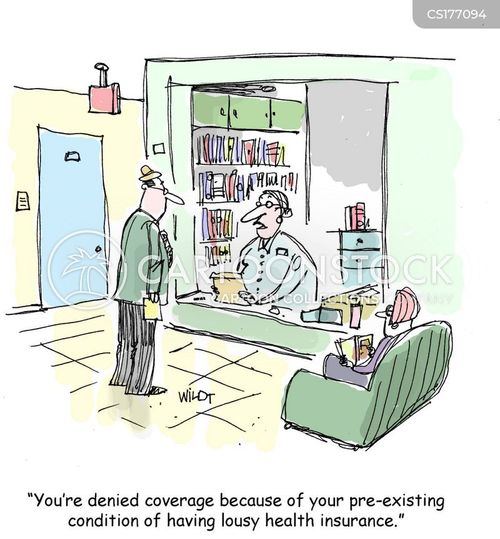
Cartoon – US Healthcare Options

Image result for cartoon health insurance benefits

Could Minnesota Health Reforms Foreshadow Repeal And Replace?

http://www.healthleadersmedia.com/health-plans/could-minnesota-health-reforms-foreshadow-repeal-and-replace?spMailingID=10382992&spUserID=MTY3ODg4NTg1MzQ4S0&spJobID=1100574162&spReportId=MTEwMDU3NDE2MgS2#

Image result for Minnesota Health Reforms

In the midst of the uncertainty about the Affordable Care Act, Minnesota has taken three unusual actions.

What’s going to happen to the federal health law? The quick answer is no one knows. But in the midst of the uncertainty about the Affordable Care Act, states still must govern their insurance markets. Most have been muddling through with the 2017 status quo, but Minnesota is a special case, taking three unusual actions that are worth a closer look.

Last month, Minnesota:

  • Passed a one-time bailout for some consumers in the individual insurance market dealing with skyrocketing premiums.
  • Rejected an attempt to let insurers offer cheaper, bare-bones coverage.
  • Laid the groundwork for a sort of homegrown “public option” insurance plan.

Here’s more on each item.