Suicide rates rise sharply across the United States, new report shows

https://www.washingtonpost.com/news/to-your-health/wp/2018/06/07/u-s-suicide-rates-rise-sharply-across-the-country-new-report-shows/?noredirect=on&utm_term=.2e83fb652ffe


Suicide rates rose in all but one state between 1999 and 2016, with increases seen across age, gender, race and ethnicity, according to a report released Thursday by the Centers for Disease Control and Prevention. In more than half of all deaths in 27 states, the people had no known mental health condition when they ended their lives.

In North Dakota, the rate jumped more than 57 percent. In the most recent period studied (2014 to 2016), the rate was highest in Montana, at 29.2 per 100,000 residents, compared with the national average of 13.4 per 100,000.

Only Nevada recorded a decline — of 1 percent — for the overall period, although its rate remained higher than the national average.

Increasingly, suicide is being viewed not only as a mental health problem but a public health one. Nearly 45,000 suicides occurred in the United States in 2016 — more than twice the number of homicides — making it the 10th-leading cause of death. Among people ages 15 to 34, suicide is the second-leading cause of death.

The most common method used across all groups was firearms.

“The data are disturbing,” said Anne Schuchat, the CDC’s principal deputy director. “The widespread nature of the increase, in every state but one, really suggests that this is a national problem hitting most communities.”

It is hitting many places especially hard. In half of the states, suicide among people age 10 and older increased more than 30 percent.Percent change in annual suicide rate* by state, from 1999-2001 to 2014-2016 (Centers for Disease Control and Prevention)

“At what point is it a crisis?” asked Nadine Kaslow, a past president of the American Psychological Association. “Suicide is a public health crisis when you look at the numbers, and they keep going up. It’s up everywhere. And we know that the rates are actually higher than what’s reported. But homicides still get more attention.”

One factor in the rising rate, say mental health professionals as well as economists, sociologists and epidemiologists, is the Great Recession that hit 10 years ago. A 2017 study in the journal Social Science and Medicine showed evidence that a rise in the foreclosure rate during that concussive downturn was associated with an overall, though marginal, increase in suicide rates. The increase was higher for white males than any other race or gender group, however.

“Research for many years and across social and health science fields has demonstrated a strong relationship between economic downturns and an increase in deaths due to suicide,” Sarah Burgard an associate professor of sociology at the University of Michigan, explained in an email on Thursday.

The dramatic rise in opioid addiction also can’t be overlooked, experts say, though untangling accidental from intentional deaths by overdose can be difficult. The CDC has calculated that suicides from opioid overdoses nearly doubled between 1999 and 2014, and data from a 2014 national survey showed that individuals addicted to prescription opioids had a 40 percent to 60 percent higher risk of suicidal ideation. Habitual users of opioids were twice as likely to attempt suicide as people who did not use them.

High suicide numbers in the United States are not a new phenomenon. In 1999, then-Surgeon General David Satcher issued a report on the state of mental health in the country and called suicide “a significant public health problem.” The latest data at that time showed about 30,000 suicides a year.

Kaslow is particularly concerned about what has emerged with suicide among women. The report’s findings came just two days after 55-year-old fashion designer Kate Spade took her own life in New York — action her husband attributed to the severe depression she had been battling.

“Historically, men had higher death rates than women,” Kaslow noted. “That’s equalizing not because men are [committing suicide] less but women are doing it more. That is very, very troublesome.”

National Institute of Mental Health director Joshua A. Gordon explains some of the latest research surrounding suicide rates in the U.S. 

Among the stark numbers in the CDC report was the one signaling a high number of suicides among people with no diagnosed  mental health condition. In the 27 states that use the National Violent Death Reporting System, 54 percent of suicides fell into this category.

But Joshua Gordon, director of the National Institute of Mental Health, said that statistic must be viewed in context.

“When you do a psychological autopsy and go and look carefully at medical records and talk to family members of the victims,” he said, “90 percent will have evidence of a mental health condition.” That indicates a large portion weren’t diagnosed, “which suggests to me that they’re not getting the help they need,” he said.

Cultural attitudes may play a part. Those without a known mental health condition, according to the report, were more likely to be male and belong to a racial or ethnic minority.

“The data supports what we know about that notion,” Gordon said. “Men and Hispanics especially are less likely to seek help.”

The problems most frequently associated with suicide, according to the study, are strained relationships; life stressors, often involving work or finances; substance use problems; physical health conditions; and recent or impending crises. The most important takeaway, mental health professionals say, is that suicide is an issue not only for the mentally ill but for anyone struggling with serious lifestyle problems.

“I think this gets back to what do we need to be teaching people — how to manage breakups, job stresses,” said Christine Moutier, medical director of the American Foundation for Suicide Prevention. “What are we doing as a nation to help people to manage these things? Because anybody can experience those stresses. Anybody.”People without known mental health conditions were more likely to be male and to die by firearm. (CDC)

The rates of suicide for all states and the District of Columbia were calculated using data from the National Vital Statistics System. Information about contributing circumstances for those who died by suicide was obtained via the National Violent Death Reporting System, which is relatively new and in place in only 27 states.

“If you think of [suicide] as other leading causes of death, like AIDS and cancer, with the public health approach, mortality rates decline,” Moutier said. “We know that same approach can work with suicide.”


Prescription for secrecy

https://projects.jsonline.com/news/2018/2/28/is-your-doctor-banned-from-practicing-in-other-states.html

Image result for state medical board secrecy


Is your doctor banned from practicing in other states? State licensing system keeps patients in the dark.

Like traveling medicine hucksters of old, doctors who run into trouble today can hopscotch from state to state, staying ahead of regulators.

Instead of snake oil, some peddle opioids. Others have sex with patients, bungle surgeries, misdiagnose conditions or are implicated in patient deaths.

Even after being caught in one state, they can practice free and clear in another; many hold a fistful of medical licenses.

Stories about individual doctors avoiding discipline in a second state have been reported before. An investigation by the Milwaukee Journal Sentinel and MedPage Today shows how widespread the problem is: At least 500 physicians who have been publicly disciplined, chastised or barred from practicing by one state medical board have been allowed to practice elsewhere with a clean license.

And their patients are kept in the dark — even as more become victims — thanks to an antiquated system shrouded in secrecy.

In Colorado, Gary Weiss’ care of a multiple sclerosis patient prompted four doctors to complain to the state medical board when the patient died in 2011. The board and Weiss agreed that he was “permanently inactivating” his license in 2014, meaning he could never get it back.

But in Florida, where Weiss has a long-standing practice, officials applied no restrictions despite malpractice lawsuits from seven other patients in two states, all accusing him of misdiagnosing them with multiple sclerosis.

Plastic surgeon John Siebert had sex with a patient in New York, got his license suspended for three years and was permanently ordered to have a chaperone in the room with any female patients. But he operates free of medical board restrictions in Wisconsin. In fact, he was appointed to an endowed chair at the University of Wisconsin-Madison, funded in part by billionaire Diane Hendricks, a patient and a major political contributor to Gov. Scott Walker.

Look up Jay Riseman on the website of the Division of Professional Registration in Missouri, where he practices as a hospice doctor: It lists no disciplinary history, no red flags.

But in Illinois, where a medical board official once called him an “imminent danger to the public,” the families of three patients who died remain haunted by what he did. Riseman continues to practice, despite having prescribed massive amounts of pre-surgery laxatives to infants and failing to act in the case of an older woman with a blood infection.

Among the more than 500 doctors identified by the Journal Sentinel and MedPage Today, the single biggest reason for board action was medical errors or oversights. One fifth of the cases were a result of putting patients in harm’s way.

All have slipped through a system that makes it difficult for patients, employers and even regulators in other states to find out about their troubling pasts.


As a first step to sensible gun policy, lift congressional brakes on gun-violence research and data-sharing: editorial

http://www.cleveland.com/opinion/index.ssf/2018/02/as_a_first_step_to_sensible_gu.html#incart_2box_opinion

Image result for public health research


Knowledge is power. Yet Congress has limited its own access to facts vital to understanding the nation’s gun violence pandemic. That’s because, since 1996,  Congress has effectively prevented the Centers for Disease Control and Prevention from continuing public health research into the consequences of gun violence.

At the same time, while Congress forever proclaims its support of the men and women in blue, lawmakers have fettered law enforcement around the country in understanding gun-crime trends by restricting how the Bureau of Alcohol, Tobacco, Firearms and Explosives can share its gun-trace data.

Assuming Ohio’s congressional delegation doesn’t confuse talk with action, Ohio’s two senators and 16 U.S. House members — three of whom represent portions of Cuyahoga County, thanks to gerrymandering — should work together to eliminate these grotesque and paradoxical restrictions.

They blind congressional decision-making about gun policy – and about the extent and results of illegal gun trafficking.

The United States is awash in weapons, with more guns per 100 residents (89) than any other nation, reports CNN, citing the Swiss-based Small Arms Survey. The next closest is war-torn Yemen, with 55 guns per 100 inhabitants.

With crime guns relatively easy and cheap to obtain, cities like Cleveland are seeing steadily rising rates of gun violence. In Cuyahoga County, gun deaths as a percentage of overall homicides rose more than 14 percent in the last 25 years, according to data from the county medical examiner’s office.

Why would Congress tie the hands of police and policymakers to address this scourge? It makes no sense.

Even the late sponsor of the congressional amendment that precipitated the prohibition on CDC gun research, then-Rep. Jay W. Dickey Jr., an Arkansas Republican, later regretted it publicly.

“I wish we had started the proper research and kept it going all this time,” Dickey, who died last year, told the Huffington Post in 2015, in a story updated last year. “I have regrets.”

Dickey said such gun violence research might have developed safety measures or mechanisms for guns, as highway safety research has made roads safer: “If we had somehow gotten the research going, we could have somehow found a solution to the gun violence without there being any restrictions on the Second Amendment,” he said. “We could have used that all these years to develop the equivalent of that little small [highway barrier] fence.”

It’s not too late to restart this important research effort.

After accomplishing that, Ohio’s delegation should next work to repeal the Tiahrt amendment, named for then-Rep. Todd Tiahrt, a Kansas Republican. As modified, the 2003 amendment has added to the budget a nondisclosure requirement for ATF’s gun-trace efforts.

ATF says this doesn’t bar it from sharing gun-trace data with a law enforcement agency engaged in a “bona fide” criminal investigation, or from doing jurisdictional-specific gun trend investigations, but the amendment limits broadly how ATF can share its gun-trace data. That in turn creates critical knowledge barriers on crime-gun trends for officials in Ohio and every other state.

Repealing the Dickey and Tiahrt amendments wouldn’t crimp the rights of law-abiding gun owners. Instead, unlocking those congressional handcuffs would empower Congress by providing accurate information on which to fashion fair and practical legislation.

That assumes, of course, good faith rather than bombast on the part of Congress and the men and women Ohio sends to the U.S. House and Senate.

Twelve of Ohio’s 16 U.S. representatives, plus Sen. Rob Portman, of suburban Cincinnati, are Republicans, the congressional majority party.

That gives them leverage on eliminating these gun-ignorance amendments. They need to use that leverage. If they don’t, Ohio voters may remind them sooner rather than later that they want their lawmakers armed — with knowledge, not ignorance.


At Some California Hospitals, Fewer Than Half Of Workers Get The Flu Shot

At Some California Hospitals, Fewer Than Half Of Workers Get The Flu Shot

How well are doctors, nurses and other workers at your local hospital vaccinated against the flu?

That depends on the hospital.

According to data from the California Department of Public Health, flu vaccination rates among health care staffers at the state’s acute care hospitals range from a low of 37 percent to 100 percent.

Overall, flu vaccination rates among hospital workers climbed significantly in the past several years — from an average of 63 percent during the 2010-11 influenza season to 83 percent during the 2016-17 season, according to the California Department of Public Health. Vaccination rates for the current season won’t be determined until later this year.

But that general increase masks some big variations. Monrovia Memorial Hospital in Los Angeles, Los Robles Hospital and Medical Center, East Campus and Thousand Oaks Surgical Center in Ventura each reported that fewer than 40 percent of their health care workers received the flu vaccine last year. Representatives from those hospitals did not return repeated calls for comment.

On the other end of the spectrum, Rady Children’s Hospital in San Diego reported that every single person working there got the vaccine.

California’s flu vaccination policies for hospital workers, and those of many other states, are far from uniform or ironclad. In various states, health care workers have legally challenged hospital requirements for vaccination on religious and seculargrounds. And some unions in California and elsewhere oppose a legal mandate, partly for civil rights reasons.

Public health officials themselves have different takes on the legal requirements for hospital workers. The Centers for Disease Control and Prevention lists California and Massachusetts among the handful of states where the flu vaccination is mandated for health care workers. But the states’ laws allow health care workers to opt out by signing a form declining the vaccine. For that reason, officials from those two states said they do not actually consider the vaccine mandatory.

Colorado law requires hospital health care workers to provide proof of immunization or a doctor’s note providing for a medical exemption, and requires that non-immunized workers wear masks. Hospitals that achieve a 90 percent or higher flu vaccination rate are exempt from these rules, however.

In California, state law requires that hospitals offer the vaccine free of charge. Many hospitals offer vaccines to personnel in the cafeteria, and during day and night shifts. “The key to getting more people vaccinated is to make it more easily accessible for people,” said Lynn Janssen, chief of the California Department of Public Health’s associated infections branch.

She also said many California counties and hospitals have required health care workers to either get the flu vaccine or wear a mask, which can help prevent spreading illness to others.

Partly as a result, nearly a third of the state’s hospitals now have flu vaccination rates above 90 percent.

Vaccination rates vary significantly among different categories of hospital workers, however. Hospital employees had an average vaccination rate of 87 percent statewide in 2016-17, while licensed independent practitioners — including some physicians, advance practice nurses and physician assistants who do not receive paychecks from the hospital — had a rate of just 67 percent.

The CDC recommends that health workers get one dose of influenza vaccine annually, and cites data showing the vaccine in recent years has been to up 60 percent effective — though it was far less so this year. Dr. Bill Schaffner, an infectious diseases professor at Vanderbilt University School of Medicine in Nashville, Tenn., says there are three principal reasons to get vaccinated: to prevent workers from infecting patients, to keep them healthy in order to care for patients and to spare them a bout with the flu.

A 2017 Canadian study, however, suggests that the benefits of health care worker vaccinations have been overstated.

In any case, just because experts say health care personnel should get the vaccine doesn’t mean they will choose to do so.

“In the studies, and also in our experience, it turns out — to everyone’s great surprise — that health care workers are human beings,” Schaffner said. “Some are too busy, some don’t think the flu vaccine is worth it, some don’t like shots. Some are not convinced they can’t get flu from the flu vaccine.” (Experts say they can’t.)

Because of this, Schaffner said, it’s up to hospital leadership to push staffers to get vaccinated. At Vanderbilt University Medical Center, vaccination rates increased from 70 percent to 90 percent once leaders there effectively made the flu vaccine “mandatory,” he said, requiring noncompliant hospital personnel to present vaccine exemption requests to a hospital committee.

Health officials also encourage patients to ask whether their caregivers are vaccinated.

Jan Emerson-Shea, spokeswoman for the California Hospital Association, said her organization would like the flu vaccine to be mandatory for all health care personnel. Independent physicians have proven an especially challenging group to motivate, she said, since hospitals hold little sway over them.

“I, for the life of me, can’t imagine why a physician wouldn’t want to be vaccinated,” she said. “But they make that choice.”

Yet the California Nurses Association strongly opposes making flu vaccines mandatory, said Gerard Brogan, a registered nurse and spokesman for the union.

He said the union does recommend that providers get the vaccine, but it objects to making vaccination a condition of employment. He said some employees have religious issues or safety concerns about the vaccines and “we think that should be respected as a civil rights issue,” he said.

He also called rules requiring unvaccinated providers to wear a face mask “punitive.”

“It’s almost like the scarlet letter to shame you,” he said.

He said the masks can frighten patients — a contention made by a New York union as well. In any case, he said, wearing the masks is not especially effective in stopping the spread of flu (although some researchers say otherwise). Instead, he said, employees should be encouraged to wash hands and to stay home when they are sick.

Too often, he said, nurses are asked to come in to work when they are ill. He said he was not able to find any nurses willing to discuss their decision not to get the flu shot.


‘If you are sick, you need to stay home:’ Flu bug biting with a vengeance

http://www.chicagotribune.com/suburbs/naperville-sun/news/ct-nvs-flu-outbreak-st-0110-20180109-story.html

Image result for Worst of deadly flu season may still be to come, Dallas County officials say

To avoid spreading germs, Justin Karubas opted to phone in his comments and votes during Monday’s Indian Prairie District 204 meeting — a courtesy his fellow board members likely appreciated.

Karubas, of Naperville, is among the many who are experiencing the misery of one of the worst flu seasons in years, now widespread across 46 states, including Illinois, according to the Centers for Disease Control and Prevention.

When over-the-counter remedies no longer help, folks are flocking to the doctor to seek relief.

Mary Anderson, manager of Infection Control at Edward Hospital in Naperville, said the health system is seeing high volumes of patients arriving in the emergency room, walk-in clinics and doctors’ offices with flu-like symptoms.

The time of year and the recent spate of cold weather both play into the increase in influenza cases. “Over the holidays, there are lots of opportunities for transmission,” Anderson said.

While a rise in the flu cases might not be out of the ordinary, what is different is the severity of the symptoms.

“A higher number (of patients) than usual are requiring hospital admission,” Anderson said. “Over the last two weeks, 80 people were admitted with confirmed cases of influenza.”

Even at the height of a typical flu season, Anderson said the hospital might admit 35 people in a given week.

The influenza A strain known as H3N2 is the behind many of the cases. “It hits particularly hard the very old and the very young,” Anderson said.

According to DuPage County weekly influenza surveillance reports, 17 people were admitted to the intensive care units of county hospitals during the last two weeks of December, bringing the total number of admissions to 28 since Oct. 1.

That’s more than four times higher compared to the same period last year, when there had been only had six ICU admissions as of Dec. 31, 2016.

Kane County also experienced an explosion in flu numbers during the last two weeks of December.

Of the 916 confirmed cases of influenza reported in Kane County from Oct. 1 to Dec. 30, 70 percent, or 634 cases, were diagnosed between Dec. 17 and 30.

Last year, 162 incidents of the flu were reported in Kane County during the last three months of 2016.

Kane County Health Department spokesman Tom Schlueter said the last time nearly 10 percent of Kane hospital visits were for flu-like symptoms was during an outbreak in the 2014-15 influenza season.

If the trend continues, the area could experience a few more weeks of severe flu cases before the numbers begin to drop off.

So far this flu season, 86 percent of the Kane diagnoses involve influenza A. Schlueter said that’s not surprising since influenza A generally peaks before other strains, such as influenza B and influenza AB.

He warned the number flu cases could climb again in late January and February, when influenza B generally hits and after students — from preschool through college — are back in school.

Alpesh Patel, an epidemiologist with the Will County Health Department, said most adults can infect other people beginning one day before symptoms develop and up to five to seven days after becoming sick; children may pass the virus for longer than seven days.

“This means that you may be able to pass on the flu to someone else before you are sick, as well as while you are sick. In addition, some people can be infected with the flu virus, have no symptoms and still spread the virus to others,” Patel said in a statement.

Will County figures show hospital emergency rooms treated 860 patients with flu-like symptoms from Dec. 25 to 31, compared to 391 during the same week the previous year. Of those 860, nearly half — 384 — tested positive for influenza.

“There is a lot of illness out there. We need to increase our prevention efforts and minimize human interaction where we can,” Patel said in the statement.

“If you are sick, you need to stay home and not be around other people, loved ones or co-workers. Hand hygiene has to be extremely important, along with covering when we cough and sneeze.”

Health professionals also advise it’s not too late to get vaccinated.

“A flu shot anytime during flu season is appropriate, but remember it takes two weeks to be effective,” Anderson said.

Last season’s shot, which contains the same mix as this year, was 43 percent effective against the H3N2 virus and 48 percent effective overall, according to the CDC. In Australia, the vaccine was found to be only 10 percent effective against the H3N2 flu strain.

While it might not prevent a person from getting the flu, the CDC reports the risk of hospitalization decreases with people who are vaccinated, Anderson said.

http://www.latimes.com/local/california/la-me-ln-flu-peak-20180109-story.html

https://www.dallasnews.com/news/dallas-county/2018/01/09/dallas-county-flu-fatalities-jump-11-18-four-days


Fracking sites may raise the risk of underweight babies, new study says

https://www.washingtonpost.com/news/energy-environment/wp/2017/12/13/fracking-sites-raise-the-risk-of-low-birth-weight-babies-new-study-says/?utm_term=.021acebde81f

Living within half a mile of a hydraulic fracturing site carries a serious risk for pregnant women, a new study has found. The drilling technique, also known as fracking, injects high-pressure water laced with chemicals into underground rock to release natural gas.

Women who lived within that distance to fracking operations in Pennsylvania were 25 percent more likely to give birth to low-weight infants than were mothers who lived more than two miles beyond the sites.

The five-year study of more than 1.1 million births in the state between 2004 and 2013, published Wednesday in the journal Science Advances, also found lower birth weights, although not as low, in infants whose mothers lived between half a mile and two miles from a fracking site. Beyond two miles, there was no indication of any health effect to newborns, a significant drop-off, the study said.

“I think I was surprised by the magnitude of the impact within the half-mile radius,” said Michael Greenstone, a professor and director of the Energy Policy Institute at the University of Chicago, and one of three authors of the study.

There are about 4 million births per year in the United States. According to the study’s research, about 30,000 births are within half a mile of a fracking site and 100,000 are within two miles. “I don’t think that’s an insubstantial number,” Greenstone said.

Greenstone said it’s important not to read too much into the study’s conclusion. “I like to joke that there’s a little bit for everyone to hate in this paper,” he said. “There’s a big effect within one kilometer of sites, which the oil and gas industry dislikes, but the impact on the population beyond that may not be massive, which opponents of fracking won’t like.”

Reid Porter, a spokesman for the American Petroleum Institute, an advocacy group for the oil and gas industry, condemned the study, saying that while it addresses a legitimate health issue in the United States, it “fails to consider important factors like family history, parental health, lifestyle habits” and other factors that lead to low birth weight.

In his emailed statement, Porter did not address why those factors might have led to underweight babies near the sites but not farther from them.

Food and Water Watch, a nonprofit environmental group, referred to the study in calling on Pennsylvania Gov. Tom Wolf (D), who wants to expand hydraulic fracturing in the state, to reverse course.

“This study adds to existing scientific literature that tells us the serious health consequences linked to fracking,” the group’s executive director, Wenonah Hauter, said in a statement. “Unfortunately, Gov. Wolf [is] encouraging news drilling and expanding fossil fuel operations. We call on him to heed the science.”

When Greenstone and his co-authors — Janet Currie, a Princeton University economics professor, and Katherine Meckel, an assistant professor of economics at the University of California at Los Angeles — embarked on the research, he said, the aim wasn’t to condemn fracking, which is a relatively new method of drilling vertically underground, then switching to a horizontal direction to reach gas trapped in shale rock formations.

The practice has come under scrutiny because of the potentially toxic chemicals used to crack the shale and the amount of water used to force out natural gas. State health officials and residents near fracking operations have complained that wastewater from fracking taints local drinking water. Companies in some cases have been forced to provide bottled drinking water for residents who relied on underground wells. A number of states, such as Maryland and New Jersey, have banned fracking.

A U.S. Geological Survey study in 2014 said pumping wastewater into deeply buried storage wells was probably why Oklahoma was experiencing more small earthquakes than California. The sites are also known to leak methane, a gas that’s up to 100 times more harmful than carbon dioxide in causing global warming in the atmosphere.

But those drawbacks are offset by the benefits of natural gas, Greenstone said. Hydraulic fracturing for oil and natural gas “has led to a sharp increase in U.S. energy production and generated enormous benefits, including abruptly lower energy prices, stronger energy security and even lower air pollution and carbon dioxide emissions by displacing coal in electricity generation.”

The authors hope that policymakers will use the study’s finding as a talking point in a robust debate over fracking. They chose to study Pennsylvania because they got access to birth record data that identified “the exact locations of the mothers and the wells,” Greenstone said. “This was like a great success of big data.”

Most drilling operations sit in remote areas where they have little chance of harming pregnant women.

But some sites in Pennsylvania are near Pittsburgh, and others in Texas are inside heavily populated Fort Worth.

“Different communities are going to feel differently about this,” Greenstone said. “If you’re in Fort Worth, where fracturing is occurring in a dense area, you’re probably going to feel differently about it than if you’re in rural North Dakota.”


About 15% of Americans with HIV don’t know they’re infected, CDC report says

http://www.latimes.com/science/sciencenow/la-sci-sn-hiv-infection-knowing-20171128-story.html

Image result for About 15% of Americans with HIV don't know they're infected, CDC report says

Half of the Americans recently diagnosed with HIV had been living with the virus for at least three years without realizing it, missing out on opportunities for early treatment and in some cases spreading it to others, according to a new report by the Centers for Disease Control and Prevention.

What’s more, of the 39,720 Americans newly diagnosed with HIV in 2015, one-quarter had been infected for seven years or more without knowing they were ill.

Among all 1.2 million Americans living with HIV in 2015, the CDC estimates that about 15% were unaware of their HIV-positive status. Those people are thought to be responsible for 40% of new transmissions of HIV, according to the study published Tuesday in the CDC’s Morbidity and Mortality Weekly Report.

The human immunodeficiency virus, or HIV, is responsible for causing AIDS. Infection used to be considered a death sentence, until antiretroviral medications capable of suppressing the virus came into broad use in the late 1990s.

For each of the new cases diagnosed in 2015, researchers estimated a rough time of infection on the basis of a patient’s level of disease progression. Based on patients’ initial count of infection-fighting CD4 cells, they gleaned how long the HIV virus likely had replicated unchecked. A normal range for CD4 cells lies between 500 and 1,500; a CD4 count below 200 brings a diagnosis of AIDS.

Although the median time between infection and diagnosis for all Americans was three years, there was considerable variability among patients of different racial and ethnic groups.

For instance, half of African Americans had been infected for 3.3 years when they were diagnosed, while the median time for whites was 2.2 years. This gap was seen despite the fact that African Americans were more likely than whites to have been tested for HIV in the previous year.

For Latinos, the median time to diagnosis was also 3.3 years; for Asian Americans, it was 4.2 years.

The authors of the CDC report surmised that the longer diagnosis delay among nonwhite racial and ethnic groups might reflect an observed trend: For whites, men who have sex with men are the predominant sources of HIV spread, but for other groups, sexual contact between men and women is responsible for a higher proportion of infections.

Age, too, was a key factor, with older patients more likely than younger ones to go years without knowing they were HIV-positive. Half of newly-diagnosed patients 55 and over were HIV-positive for 4.5 years or more without knowing it. Among those 34 and younger, the median delay between infection and diagnosis was about 2.5 years.

Fully half of people with undiagnosed HIV infection in 2015 were living in the South, the CDC said. States with the highest rates of undiagnosed HIV infection — between 16% and 19% — included Nevada, Arizona, Texas, Michigan, Iowa, Indiana, North Dakota and Wisconsin. New Jersey, Pennsylvania, Vermont and South Dakota and Idaho had the lowest rates, between 5% and 10%.

Overall, the three-year gap between infection and diagnosis actually represents progress. In 2011 — the last time the CDC took such measures — half of Americans newly diagnosed with HIV had been infected for 3.6 years or more.

That suggests that public health campaigns started by the CDC, including the “Testing Makes Us Stronger” push rolled out in 11 cities, have made inroads. Two CDC campaigns, launched in 2007 and 2011, set out to encourage testing and early HIV care on the part of African Americans and Latinos, and particularly among men who have sex with men.

Such public health efforts have increased rates of testing among many groups at high risk. Among men who have sex with men, 71% told surveyors they had been tested in the last year, as did 58% of people who inject drugs. Only 41% of heterosexual Americans at increased risk of HIV infection said they had been tested in the last 12 months.

Taking HIV medicine as prescribed allows people with the virus to live a virtually normal lifespan, generally without health complications. Managing one’s HIV infection with medication also significantly reduces the likelihood of transmitting the virus to sexual partners.

“The benefits are clear,” said Dr. Jonathan Mermin, director of the CDC’s National Center for HIV/AIDS, Viral Hepatitis, STD, and TB Prevention. “Prompt diagnosis is prevention. It is the first step to protecting people living with HIV and their partners.”

The CDC recommends testing all people between the age of 13 and 64 for HIV at least once in their lifetime, and people at higher risk for HIV — including IV drug users and sexual partners of infected persons — at least annually. Healthcare providers may find it beneficial to test some sexually active gay and bisexual men as frequently as every three to six months.

Dr. Brenda Fitzgerald, the CDC’s director, called the new statistics “more encouraging signs that the tide continues to turn on our nation’s HIV epidemic.”

HIV is being diagnosed more quickly, Fitzgerald said. The number of people who have the virus under control is up, and annual infections are down, she added.

“While we celebrate our progress, we pledge to work together to end this epidemic forever,” she said.


The mystery of a 1918 veteran and the flu pandemic

https://theconversation.com/the-mystery-of-a-1918-veteran-and-the-flu-pandemic-86292?utm_medium=email&utm_campaign=Latest%20from%20The%20Conversation%20for%20November%209%202017%20-%2087627308&utm_content=Latest%20from%20The%20Conversation%20for%20November%209%202017%20-%2087627308+CID_39875ee4af1bb4acf1d1c57209a48369&utm_source=campaign_monitor_us&utm_term=The%20mystery%20of%20a%201918%20veteran%20and%20the%20flu%20pandemic

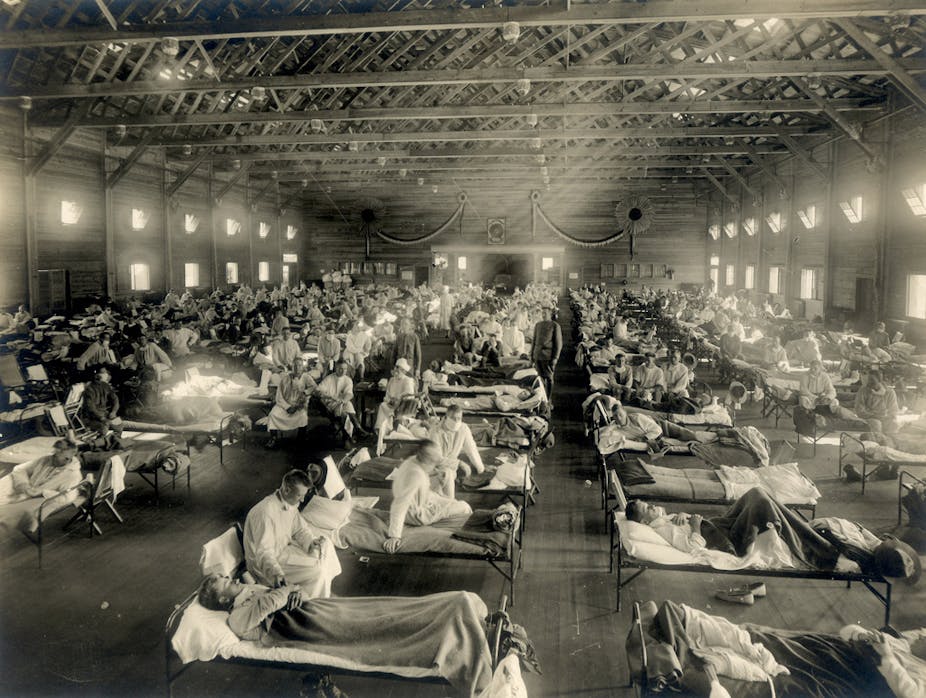
Vaccination is underway for the 2017-2018 seasonal flu, and next year will mark the 100-year anniversary of the 1918 flu pandemic, which killed roughly 40 million people. It is an opportune time to consider the possibility of pandemics – infections that go global and affect many people – and the importance of measures aimed at curbing them.

The 1918 pandemic was unusual in that it killed many healthy 20- to 40-year-olds, including millions of World War I soldiers. In contrast, people who die of the flu are usually under five years old or over 75.

The factors underlying the virulence of the 1918 flu are still unclear. Modern-day scientists sequenced the DNA of the 1918 virus from lung samples preserved from victims. However, this did not solve the mystery of why so many healthy young adults were killed.

I started investigating what happened to a young man who immigrated to the U.S. and was lost during World War I. Uncovering his story also brought me up to speed on hypotheses about why the immune systems of young adults in 1918 did not protect them from the flu.

The 1918 flu and World War I

Certificates picturing the goddess Columbia as a personification of the U.S. were awarded to men and women who died in service during World War I. One such certificate surfaced many decades later. This one honored Adolfo Sartini and was found by grandnephews who had never known him: Thomas, Richard and Robert Sartini.

The certificate was a message from the past. It called out to me, as I had just received the credential of certified genealogist and had spent most of my career as a scientist tracing a gene that regulates immune cells. What had happened to Adolfo?

To follow up, I posted a query on the “U.S. Militaria Forum.” Here, military history enthusiasts explained that the Army Corps of Engineers had trained men at Camp A. A. Humphreys in Virginia. Perhaps Adolfo had gone to this camp?A bit of sleuthing identified Adolfo’s ship listing, which showed that he was born in 1889 in Italy and immigrated to Boston in 1913. His draft card revealed that he worked at a country club in the Boston suburb of Newton. To learn more, Robert Sartini bought a 1930 book entitled “Newton War Memorial” on eBay. The book provided clues: Adolfo was drafted and ordered to report to Camp Devens, 35 miles from Boston, in March of 1918. He was later transferred to an engineer training regiment.

While a mild flu circulated during the spring of 1918, the deadly strain appeared on U.S. soil on Tuesday, Aug. 27, when three Navy dockworkers at Commonwealth Pier in Boston fell ill. Within 48 hours, dozens more men were infected. Ten days later, the flu was decimating Camp Devens. A renowned pathologist from Johns Hopkins, William Welch, was brought in. He realized that “this must be some new kind of infection or plague.” Viruses, minuscule agents that can pass through fine filters, were poorly understood.

With men mobilizing for World War I, the flu spread to military installations throughout the U.S. and to the general population. It hit Camp Humphreys in mid-September and killed more than 400 men there over the next month. This included Adolfo Sartini, age 29½. Adolfo’s body was brought back to Boston.

His grave is marked by a sculpture of the lower half of a toppled column, epitomizing his premature death.

The legacy of victims of the 1918 flu

The quest to understand the 1918 flu fueled many scientific advances, including the discovery of the influenza virus. However, the virus itself did not cause most of the deaths. Instead, a fraction of individuals infected by the virus were susceptible to pneumonia due to secondary infection by bacteria. In an era before antibiotics, pneumonia could be fatal.

Recent analyses revealed that deaths in 1918 were highest among individuals born in the years around 1889, like Adolfo. An earlier flu pandemic emerged then, and involved a virus that was likely of a different subtype than the 1918 strain. These analyses engendered a novel hypothesis, discussed below, about the susceptibility of healthy young adults in 1918.

Support for this hypothesis was seen with the emergence of the Hong Kong flu virus in 1968. It was in “Group 2” and had severe effects on people who had been children around the time of the 1918 “Group 1” flu.Exposure to an influenza virus at a young age increases resistance to a subsequent infection with the same or a similar virus. On the flip side, a person who is a child around the time of a pandemic may not be resistant to other, dissimilar viruses. Flu viruses fall into groups that are related evolutionarily. The virus that circulated when Adolfo was a baby was likely in what is called “Group 2,” whereas the 1918 virus was in “Group 1.” Adolfo would therefore not be expected to have a good ability to respond to this “Group 1” virus. In fact, exposure to the “Group 2” virus as a young child may have resulted in a dysfunctional response to the “Group 1” virus in 1918, exacerbating his condition.

To 2018 and beyond

What causes a common recurring illness to convert to a pandemic that is massively lethal to healthy individuals? Could it happen again? Until the reason for the death of young adults in 1918 is better understood, a similar scenario could reoccur. Experts fear that a new pandemic, of influenza or another infectious agent, could kill millions. Bill Gates is leading the funding effort to prevent this.

Flu vaccines are generated each year by monitoring the strains circulating months before flu season. A time lag of months allows for vaccine production. Unfortunately, because the influenza virus mutates rapidly, the lag also allows for the appearance of virus variants that are poorly targeted by the vaccine. In addition, flu pandemics often arise upon virus gene reassortment. This involves the joining together of genetic material from different viruses, which can occur suddenly and unpredictably.

An influenza virus is currently killing chickens in Asia, and has recently killed humans who had contact with chickens. This virus is of a subtype that has not been known to cause pandemics. It has not yet demonstrated the ability to be transmitted from person to person. However, whether this ability will arise during ongoing virus evolution cannot be predicted.

The chicken virus is in “Group 2.” Therefore, if it went pandemic, people who were children around the time of the 1968 “Group 2” Hong Kong flu might have some protection. I was born much earlier, and “Group 1” viruses were circulating when I was a child. If the next pandemic virus is in “Group 2,” I would probably not be resistant.

It’s early days for understanding how prior exposure affects flu susceptibility, especially for people born in the last three to four decades. Since 1977, viruses of both “Group 1” and “Group 2” have been in circulation. People born since then probably developed resistance to one or the other based on their initial virus exposures. This is good news for the near future since, if either a “Group 1” or a “Group 2” virus develops pandemic potential, some people should be protected. At the same time, if you are under 40 and another pandemic is identified, more information would be needed to hazard a guess as to whether you might be susceptible or resistant.


Don’t Nudge Me: The Limits of Behavioral Economics in Medicine

Don’t Nudge Me: The Limits of Behavioral Economics in Medicine

Image result for the behavioral economics of health and healthcare

Whenever I talk to physicians about outcomes that are worse than you’d expect, they are quick to point out that noncompliance — when a patient does not follow a course of treatment — is a major problem.

Sometimes prescriptions aren’t filled. Other times they are, but patients don’t take the drugs as prescribed. All of this can lead to more than 100,000 deaths a year.

thorough review published in The New England Journal of Medicine about a decade ago estimated that up to two-thirds of medication-related hospital admissions in the United States were because of noncompliance, at a cost of about $100 billion a year. These included treatments for H.I.V., high blood pressure, mental health and childhood illnesses (it can be difficult to get children to take their medicine, too).

To address the issue, researchers have been trying various strategies, including those rooted in behavioral economics. So far, there hasn’t been much progress. A systematic review published five years ago in Annals of Internal Medicine looked at all kinds of trials that tried to improve patient compliance. It found some limited successes in improving patient compliance in different disorders, but most of the trials were small and not easily generalized outside the research setting.

A more recent Cochrane review concluded that “current methods of improving medication adherence for chronic health problems are mostly complex and not very effective.”

At first glance, behavioral economics — the basis of Richard Thaler’s recent Nobel Prize in Economics — seems like a rich field of potential solutions. People tend to do things, like donate organs, when it’s the default option as opposed to something they need to request. They tend to be less likely to miss appointments if you tell them how many other patients show up for theirs. They tend to be more likely to engage in preventive behaviors like using sunscreen if you focus on the benefits, not the harms. Many are turning to ideas like these to improve medication adherence.

But those excited about the potential of behavioral economics should keep in mind the results of a recent study. It pulled out all the stops in trying to get patients who had a heart attack to be more compliant in taking their medication. (Patients’ adherence at such a time is surprisingly low, even though it makes a big difference in outcomes, so this is a major problem.)

Researchers randomly assigned more than 1,500 people to one of two groups. All had recently had heart attacks. One group received the usual care. The other received special electronic pill bottles that monitored patients’ use of medication. Those patients who took their drugs were entered into a lottery in which they had a 20 percent chance to receive $5 and a 1 percent chance to win $50 every day for a year.

That’s not all. The lottery group members could also sign up to have a friend or family member automatically be notified if they didn’t take their pills so that they could receive social support. They were given access to special social work resources. There was even a staff engagement adviser whose specific duty was providing close monitoring and feedback, and who would remind patients about the importance of adherence.

This was a kitchen-sink approach. It involved direct financial incentives, social support nudges, health care system resources and significant clinical management. It failed.

The time to first hospitalization for a cardiovascular problem or death was the same between the two groups. The time to any hospitalization and the total number of hospitalizations were the same. So were the medical costs. Even medication adherence — the process measure that might influence these outcomes — was no different between the two groups.

The researchers in this trial deserve praise for their frank assessment of their results, as well as for trying to brainstorm ways in which they might achieve success in the future. Getting patients to change their behavior is very hard. In the past, we’ve tried making drugs free to patients to get them to adhere to their medications and improve outcomes. That failed. We’ve tried lotteries (as in the study above) to nudge people to achieve better compliance. That failed.

Maybe financial incentives, and behavioral economics in general, work better in public health than in more direct health care. There have been successes, after all, with respect to weight loss — although these seemed to disappear over time. We’ve also seen promise with respect to smoking cessation, although these come with caveats as well.

Experts caution that the interventions that achieve success are often very intensive. They demand a great deal of attention, and can be quite expensive. Moreover, they are very focused, usually on a single issue or condition.

The problem is that health has so many moving parts. The health care system has even more. Trying to improve any one aspect can make others worse. Behavioral economics may offer us some fascinating theories to test in controlled trials, but we have a long way to go before we can assume it’s a cure for what ails Americans.

Gun Death Rate Rose Again in 2016, C.D.C. Says

The rate of gun deaths in the United States rose to about 12 per 100,000 people, the second consecutive increase after a period of relative stability.

The rate of gun deaths in the United States rose in 2016 to about 12 per 100,000 people, the Centers for Disease Control and Prevention said in a report released on Friday. That was up from a rate of about 11 for every 100,000 people in 2015, and it reflected the second consecutive year that the mortality rate in that category rose in the United States.

The report, compiled by the C.D.C.’s National Center for Health Statistics, showed preliminary data that came after several years in which the rate was relatively flat.

“The fact that we are seeing increases in the firearm-related deaths after a long period where it has been stable is concerning,” Bob Anderson, chief of the mortality statistics branch at the health statistics center, said in a telephone interview on Friday. “It is a pretty sharp increase for one year.”

Mr. Anderson also said the rates for the first quarter of this year showed an upward trend, compared with the same three-month period of 2016.

“It clearly shows an increase,” he said, while emphasizing the data was preliminary. “With firearm-related deaths it is seasonal — the rates generally are a little higher in the middle of the year than they are at the end of the year,” he added. “Homicides are more common in the summer.”

More than 33,000 people die in firearm-related deaths in the United States every year, according to an annual average compiled from C.D.C. data.

The data released on Friday did single out other causes of death in the United States that were higher than the firearm-related rate. The drug overdose rate, for example, was almost 20 deaths per 100,000 last year, up from 16.3 in 2015.

The death rate for diabetes was about 25 per 100,000 people; cancer was 185 per l00,000, and heart disease about 196 deaths per 100,000 people.

But statistics about gun deaths, nearly two-thirds of which are suicides, have been ingrained in the national discourse in the United States, particularly after mass shootings, such as the one in Las Vegas last month in which 58 people were killed, and in debates over legislation related to guns.

In June 2016, the 49 fatalities in the Pulse nightclub shooting in Orlando represented one of the highest death tolls in a single mass shooting in recent United States history. But gun violence researchers note that although mass shooting fatalities account for no more than 2 percent of total deaths from firearm violence, they are having an outsize effect.

Garen J. Wintemute, director of the Violence Prevention Research Program at the University of California, Davis, School of Medicine, wrote in the Annals of Internal Medicine after the Las Vegas shooting that mass killings are “reshaping the character of American public life.”

“Whoever we are, they happen to people just like us; they happen in places just like our places,” he wrote. “We all sense that we are at risk.”

Dr. Wintemute said the latest C.D.C. report means the nation is approaching two decades since there has been any substantial improvement in the rate of gun deaths. The rate for the first three months of 2017 was about the same as the corresponding period in 2016. Hopefully, that is a sign it will level off again, Dr. Wintemute told The Associated Press.

Mr. Anderson said the data was not broken down by states, which each have different levels of comprehensiveness in their reporting to the federal agency. “As they get more and more timely we hope to include state-level information in these reports,” he said.

Suicides account for about 60 percent of firearm-related deaths, and homicides about 36 percent, Mr. Anderson said. Unintentional firearm deaths and those related to law enforcement officials account for about 1.3 percent each. The rest are undetermined.

The final data for 2016 will be released in the first week of December, Mr. Anderson said. “It could be this is a sort of blip, where it will stabilize again,” he said. “It is hard to predict.”