

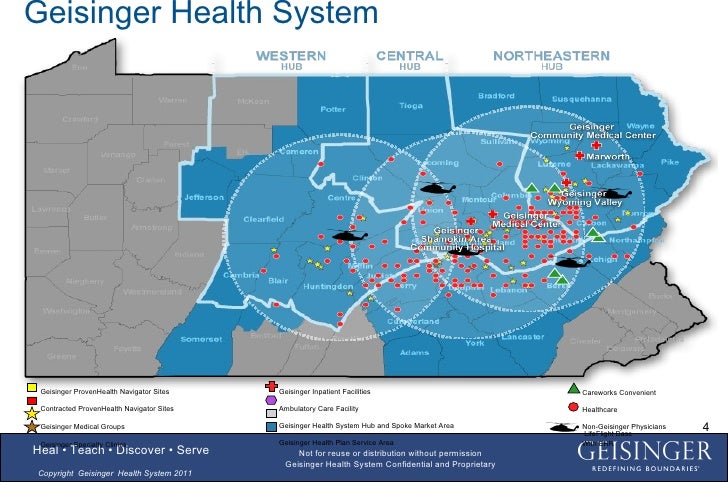
http://www.healthcaredive.com/news/geisinger-health-seeking-2000-new-hires/437319/
http://blog.americashealthcareleaders.com/company-values-and-their-impact-on-hiring/

During each interview we have had the pleasure of conducting and featuring on AHL, the topic of company values comes up a lot—especially in terms of the impact they have on hiring. When the values are inconsistent between the company and the employee other issues arise, and both the company and the employee suffer.
The segments featured today are from three separate organizations, but each leader discusses the critical need for prospective employees to share the values of the company.
In the first segment, Chris Van Gorder, president & CEO of Scripps Health, discusses his search for a new CFO after taking the position at Scripps. As he interviewed individuals who were qualified for the position, he stated, “I was waiting for them to start talking about patients but it never happened.” Van Gorder kept up the search for a new CFO until he found someone who openly expressed his passion for people and the patients the hospital would be serving.
In the second segment, Traci Bernard, president of Texas Health Harris Methodist Hospital Southlake, discusses a similar approach to hiring.
“I’ve said it before, skill can be taught. So I’m interested in passion, I’m interested in an understanding of who we are… and somebody who’s very compassionate and caring and puts the team first.”
In the final segment, Mike Williams, president & CEO of Community Hospital Corporation, discusses the rigorous interview process for CHC and the defining role company values play in the hiring decisions.
Click to access B.E.%20Smith_2017%20Healthcare%20Trends%20White%20Paper.pdf

HEALTHCARE TRENDS 2017
The latest B.E. Smith Healthcare Leadership Intelligence Report explores 11 trends across four high-interest topics including industry, career, workforce recruitment and retention, and leadership. The results of the 2017 Healthcare Trends Survey continue the expansion of scope begun with the 2016 Healthcare Trends Survey. This year’s survey produced input from the broadest leadership representation yet. Survey responses were received from a diverse cross-section of nearly 1,000 healthcare leaders: 32% C-level/President, 17% Senior VP/VP, and 51% Director/Manager. B.E. Smith has analyzed the data and supplemented it with independent research and field intelligence derived from its client practice. The findings were compiled into this report outlining the most crucial trends and issues expected to impact healthcare leaders throughout 2017 and beyond.

Last Spring, Sally Fields starred in a movie called Hello, My Name is Doris as a wacky 60-something clerk working in a hip company run by millennials. Leaving aside the film’s focus on Doris’s unrequited crush on a younger colleague, the film provided ample evidence of the disconnect when baby boomers work among younger (read: more hip) employees.
Sight gags abound: Doris unable to keep her balance on the mandated switch from office chair to stability ball; Doris learning how to use the Internet (gasp!) from her friend’s granddaughter. You get the picture. As much as it made this baby boomer cringe, this film, like DeNiro’s The Intern, went over the top in portraying how cool the young folks discovered their older colleagues can be. Talk about condescending.
I reference movies frequently, but that’s because they reflect our cultural zeitgeist, whether or not we want to admit it. And what I suspect most HR people and managers throughout the organizations don’t want to admit is a level of condescension towards employees who are outside the mean with respect to age, political leaning or educational levels.
https://hbr.org/2015/07/recruiting-for-cultural-fit


#1. Only hire curious people.
Dolts and divots don’t ask questions. It doesn’t matter how smart they appear to be. An hour with a person who doesn’t ask questions is an hour with a toothache.
People who are committed to the pursuit of excellence ask questions.
Curious people:
The longer you wait to ask dumb questions, the dumber you become. Pretending we know more than we know is one reason we don’t know more.
The more you learn, the more you want to learn.

If you want to understand the future of the $3 trillion U.S. healthcare industry, the lesson of the past is to ‘follow the money.’ And no one would argue that the place to do that is the infamous JP Morgan Healthcare Conference taking place this week in San Francisco.
While there are an estimated 4,000 people attending the conference, there’s roughly another 20,000 here for ‘off the grid’ meetings in every nook and cranny you can find. It is a surreal atmosphere in the form of the top executives from more than 450 private and public companies in biotech, pharmaceutical, medical device and technology, as well as healthcare providers, payers, private equity and venture capital firms and investment banks. Simply stated, this is where medicine’s flow happens.
With that said, roughly $1 trillion or one-third of annual U.S. healthcare spend flows through hospitals and healthcare delivery systems. So, if you want to understand what’s happening now and what will happen in the future, a good place to start is in the nonprofit healthcare provider track, where CEOs and CFOs of over 20 of our nation’s largest healthcare delivery systems presented their strategic plans in rapid fire 25-minute presentations.
Together these organizations represent over $100 billion or 10 percent of that $1 trillion spend. Incredible. The average organization presenting had over $6 billion in annual revenue, 15 hospitals, close to 30,000 employees and thousands of physicians on staff. Many of the name brands in healthcare including Downers Grove, Ill.-based Advocate Health Care, Irving, Texas-based CHRISTUS Health, Cleveland Clinic, Detroit-based Henry Ford Health System, Salt Lake City-based Intermountain Healthcare, Indianapolis-based IU Health, Oakland-based Kaiser Permanente, Cincinnati-based Mercy Health, New York-Presbyterian, Chicago-based Northwestern Medicine, Northwell Health in Great Neck, N.Y., and Robert Wood Johnson Barnabas Health based in West Orange, N.J., presented along with leading children’s hospitals such as Children’s Hospital of Philadelphia and innovative physician focused models such as Marshfield Clinic in Wisconsin and Geisinger Health System in Danville, Pa.
This provided an incredibly important snapshot of both the ground level view of what’s happening in the real world today as well as the bets being placed for the future. What follows is a high-level perspective of what was shared by these prominent provider organizations.
So, follow the money…and here’s the Top 10 Trends shaping how that money is flowing:

#1. Overlooking introverts. Extroversion is not a requirement to lead.
#2. Succumbing to the seduction of charisma, talent, education, or good looks.
Degrees, talent, and charisma might open doors. But, all the talent in the world doesn’t compensate for bad character.
#3. Thinking doers are leaders. You sweat your way into leadership, but leadership is more than getting things done.
It’s foolish to define leadership as getting things done. The focus of leadership is people. You earn leadership opportunities by getting things done. You become a leader when you get things done through others.
When someone steps into leadership they leverage the talent of others.

Experience and age are great gifts when it comes to effectively and successfully hiring and retaining great talent. Below are my guiding principles of hiring gleaned from 34 years of learnings — the four areas I focus candidates on and the questions I typically use as my filter in the first hour we have together.
 HENRY KOTULA