About 1.4 million Californians buy coverage through the state’s Obamacare exchange, Covered California, and nearly 4 million have joined Medicaid as a result of the program’s expansion under the law.
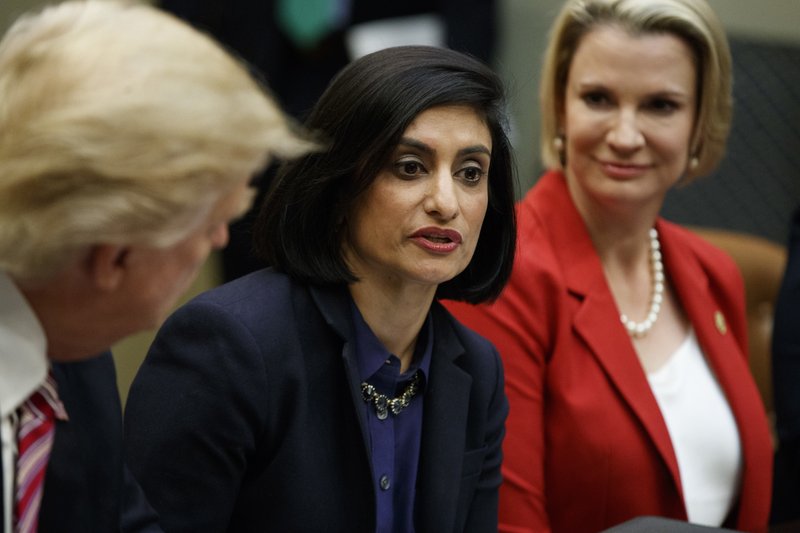
Stepping into the land of the Trump resistance, Seema Verma flatly rejected California’s pursuit of single-payer health care as unworkable and dismissed the Affordable Care Act as too flawed to ever succeed.
Speaking Wednesday at the Commonwealth Club here, the administrator of the Centers for Medicare & Medicaid Services said she supports granting states flexibility on health care but indicated she would not give California the leeway it would need to spend federal money on a single-payer system.
“I think a lot of the analysis has shown it’s unaffordable,” Verma said during a question-and-answer session following her speech. “It doesn’t make sense for us to waste time on something that’s not going to work.”
During her speech, Verma issued a broader warning to advocates pushing for a Medicare-for-all program nationally. She said that “socialized” approach to medicine would endanger the program and the health care it provides for millions of older Americans.
“We don’t want to divert the purpose and focus away from our seniors,” Verma said in the address before more than 200 people. “In essence, Medicare for all would become Medicare for none.”
Single-payer has emerged as a key issue in the California governor’s race this year. The current front-runner for governor, Gavin Newsom, a Democrat and the current lieutenant governor, has vowed to pursue a state-run, single-payer system for all Californians if elected in November. Many California lawmakers have endorsed that idea as the next step toward achieving universal coverage and to tackling rising costs.
California has enthusiastically embraced the Affordable Care Act, and state leaders have struggled with — and even bucked — the Trump administration on a variety of health-policy fronts. The state stands to lose more than any other if the Trump administration is successful in further dismantling the ACA.
About 1.4 million Californians buy coverage through the state’s Obamacare exchange, Covered California, and nearly 4 million have joined Medicaid as a result of the program’s expansion under the law.
Verma wields enormous power as head of CMS, overseeing a $1 trillion budget. The agency sets policy for Medicare, Medicaid and the federal insurance exchanges under the ACA.
The landmark health law, she said, was so flawed it could not work without further action from Congress.
“It wasn’t working when we came into office and it continues not to work,” Verma said, responding to a question from moderator Mark Zitter, founder of the Zetema Project, a nonprofit organization that promotes debate on health care across partisan lines. “The program is not designed to be successful.”
Zitter billed the event as a rare chance for Californians to hear directly from a top Trump administration official, although Verma’s remarks broke little new ground, he said.
Trump health care policies figure into many of California’s congressional races this fall in which incumbent Republicans are fending off Democratic challengers. And in court, California Attorney General Xavier Becerra is leading a coalition of attorneys general who are defending the constitutionality of the ACA in a Texas case with national implications.
The Trump administration has sided with the officials waging the lawsuit, choosing not to defend the health law’s protections for people with preexisting conditions. Separately, the administration has backed work requirements for many people on Medicaid.
Short
California’s state Senate passed a law in May banning such requirements as a condition for eligibility in Medi-Cal, the state’s Medicaid program. The bill is pending in the state Assembly.
“Making health insurance coverage contingent on work requirements goes against all we’ve worked for here in California,” state Sen. Ed Hernandez (D-West Covina), author of SB 1108, said in May.
State lawmakers also are considering bills that would limit the GOP-backed sale of short-term health policies and prevent people from joining association health plans that don’t have robust consumer protections.
In an interview after the speech, Verma criticized those legislative efforts in California because they would limit consumer choice.
“Any efforts to thwart choice and competition and letting Americans make decisions about their health care is bad health policy,” she said.
Peter Lee, executive director of Covered California, the state’s ACA marketplace, has criticized the Trump administration for promoting those cheaper, skimpier policies as an alternative to ACA-compliant plans. He said he fears consumers will be harmed by “bait-and-switch products” that don’t provide comprehensive benefits.
“There have been a series of policies from Washington that have the effect of raising costs, particularly for middle-class Americans, and pricing them out of coverage,” Lee said in an interview last week. “This is not a failure of the ACA. This is entirely happening since the new administration.”
Most of Verma’s speech in San Francisco focused on Medicare. She outlined a number of initiatives designed to strengthen the program and protect taxpayers from ballooning costs. After the speech, CMS announced proposed changes to Medicare payment policies for outpatient care that could yield savings for the government and patients.
In her remarks, Verma reiterated the Trump administration’s efforts to reduce prescription drug prices, improve patients’ access to their own medical records and eliminate burdensome regulations on doctors and other medical providers.
Verma received a polite round of applause at the beginning and end of her appearance.
https://apnews.com/a69f5ada0db24ada9bc5bd8a44604f3b

The Trump administration’s Medicare chief on Wednesday slammed Sen. Bernie Sanders’ call for a national health plan, saying “Medicare for All” would undermine care for seniors and become “Medicare for None.”
The broadside from Medicare and Medicaid administrator Seema Verma came in a San Francisco speech that coincides with a focus on health care in contentious midterm congressional elections.
Sanders, a Vermont independent, fired back at Trump’s Medicare chief in a statement that chastised her for trying to “throw” millions of people off their health insurance during the administration’s failed effort to repeal the Affordable Care Act.
Verma’s made her comments toward the end of a lengthy speech before the Commonwealth Club of California, during which she delved into arcane details of Medicare payment policies.
Denouncing what she called the “drumbeat” for “government-run socialized health care,” Verma said “Medicare for All” would “only serve to hurt and divert focus from seniors.”
“You are giving the government complete control over decisions pertaining to your care, or whether you receive care at all,” she added.
“In essence, Medicare for All would become Medicare for None,” she said. Verma also said she disapproved of efforts in California to set up a state-run health care system, which would require her agency’s blessing.
In his response, Sanders said that “Medicare is, by far, the most cost-effective, efficient and popular health care program in America.
He added: “Medicare has worked extremely well for our nation’s seniors and will work equally well for all Americans.”
The Sanders proposal would add benefits for Medicare beneficiaries, coverage for eyeglasses, most dental care, and hearing aids. It would also eliminate deductibles and copayments that Medicare and private insurance plans currently require.
Independent analyses of the Sanders plan have focused on the enormous tax increases that would be needed to finance it, not on concern about any potential harm to seniors currently enrolled in Medicare.
But so-called “Mediscare” tactics have been an effective political tool for both parties in recent years, dating back to Republican Sarah Palin’s widely debunked “death panels” to fan opposition to President Barack Obama’s health care overhaul. Democrats returned the favor after Republicans won control of the House in 2010 and tried to promote a Medicare privatization plan.
Democrats clearly believe supporting “Medicare for All” will give them an edge in this year’s midterm elections.
More than 60 House Democrats recently launched a “Medicare for All” caucus, trying to tap activists’ fervor for universal health care that helped propel Sanders’ unexpectedly strong challenge to Hillary Clinton for the 2016 Democratic presidential nomination. Just a few years ago, Sanders could not find co-sponsors for his legislation.
A survey earlier this year by the Kaiser Family Foundation and The Washington Post found that 51 percent of Americans would support a national health plan, while 43 percent opposed it. Nearly 3 out of 4 Democrats backed the idea, as did 54 percent of independents. But only 16 percent of Republicans supported the Sanders approach.
Early in his career as a political figure, President Donald Trump spoke approvingly of Canada’s single-payer health care system, roughly analogous to Sanders’ approach. But by the 2016 presidential campaign Trump had long abandoned that view.

“Medicare for all” is becoming a rallying cry in state elections, with state legislators coming up with their own versions of single-payer healthcare despite, or possibly because of, the stagnation of similar ideas at the federal level.
The push for a single-payer healthcare system is proving successful for some, such as socialist Alexandria Ocasio-Cortez, who rocked New York by beating the 10-term incumbent Joe Crowley in a New York City district. She is a vocal proponent of single-payer healthcare.
The proliferation of state plans and in particular Ocasio-Cortez’s victory in New York could indicate growing support for single-payer healthcare, says Sally C. Pipes, president and CEO of the Pacific Research Institute in San Francisco.
Pipes says the American public may be drawn by the promises of a healthcare plan that eliminates premiums and other disliked features of the current system.
“The horse is out of the barn in terms of single payer. They keep pushing it and pushing it and this has become a major issue that gets the voters’ attention, especially for progressive Democrats,” Pipes says.
She says, “There’s an effort in the states to test the waters as they wait for things to change in Washington. Because Obamacare wasn’t repealed and replaced, Democrats are saying single payer is what they wanted all along, so now they’re going for it.”
Four single payer proposals are on the table nationally, including one from Sen. Bernie Sanders (I-VT) that calls for Medicare to be available to all Americans. State legislators and candidates are taking up the issue ahead of midterm elections, rallying the many voters who are fed up with the current healthcare system and want a solution in the form of a government-sponsored single payer.
The state plans are similarly idealistic, calling for universal coverage of all residents regardless of income and eliminating premiums, copays, and deductibles.
Many states have serious proposals for single-payer systems. In Michigan, Rep. Yousef Rabhi (D-Ann Arbor) is proposing a government-administered single-payer system to provide coverage to everyone in the state.
The MiCare plan would provide state residents with medical, dental, mental health, and prescription drug coverage while eliminating healthcare premiums, copays, and deductibles, Rabhi says.
Healthcare providers would remain independent, and patients would be able to pick among participating providers under the MiCare plan. Michigan would pay for the plan by cutting administrative costs generated by for-profit insurance companies and raising taxes, Rabhi says. He claims the state would save a net $20 billion in the first year.
“Instead of the exorbitant costs, stress and uncertainty of premiums, deductibles, co-insurance and other out-of-pocket payments, working families would pay a small and simple progressive payroll tax designed to save real money on their overall health expenses,” Rabhi explains in his proposal.
He continues, “Large and medium employers would pay a payroll tax set at a level lower than the current average employer expenditures for employee health care, saving many employers money immediately.”
Also, in Michigan, a Democrat running for governor has proposed MichCare. Abdul El-Sayed, MD, says he would pay for his single-payer plan with a new, graduated payroll tax that all working people would pay, coupled with new taxes on the gross earnings of businesses making more than $2 million a year.
The New York state Assembly recently passed a bill calling for a statewide single-payer universal healthcare system, for the fourth year in a row.
The New York Health Act would include comprehensive outpatient and inpatient medical care, primary and preventive care, prescription drugs, lab tests, rehab, dental, vision, hearing, and all benefits required by current state insurance law, by publicly funded medical programs or provided by the state public employee package.
The bill passed easily in the Democrat-led chamber but the state’s Republican-led Senate is not expected to take up the measure this year.
Minnesota State Rep. Erin Murphy (DFL-St. Paul) is running for governor on a platform that includes her Pathway to Single-Payer plan, which will set the state up to “lead the nation by becoming the first state to provide guaranteed, affordable health care to everyone,” as stated in a press release.
Pipes opposes single-payer healthcare, saying Americans would regret the choice only after experiencing the increased taxes and reduced services of such a system. But single payer has become a powerful political tool, she says.
“Before Bernie Sanders proposed single payer in 2016, it wasn’t really taken seriously, but now you have all these states supporting it,” she says. “Political leaders are seeing this as an issue they can run on and get lots of support, draw big crowds, and look like they’re giving people what they want.”
Americans have been on the fence about Medicare-for-all plans for a while, with one survey of 1,850 U.S. adults finding that 51% supported the idea.
That figure could be increasing, Pipes says. If it is, Pipes says she suspects it is largely because politicians can run on the pie-in-the-sky promises of eliminating premiums, copays, and deductibles while giving few details about how to pay for such a plan.
“Both New York and Michigan say theirs would be paid for by progressive income tax increases and a new payroll tax, but they haven’t come out and said just what the cost would be. That’s unlike in California, where the Senate appropriations committee said SB 562 would cost $400 billion a year,” Pipes says. “People are drawn to the promised improvements, but they have to consider the cost at some point.”
Single payer is a polarizing topic, with Democrats and Republicans typically coming down sharply on either side of the issue, but Pipes says Democrats run the risk of dividing their own voters.
“People support single payer when you ask them if they’d like a system that eliminates everything they don’t like about the current system, but when you ask if they want to pay more taxes that support goes down,” Pipes says.
“The Democrats are finding this is a successful way to motivate people in a campaign but when they have to answer questions about raising taxes on everyone, including working class voters, they could find themselves driving a wedge between their constituents,” she says.

Of the more than 12,000 Americans who have served in Congress since it convened in 1789, few have had careers as fruitful as Henry Waxman’s. Representing west Los Angeles and its surrounding areas for 40 years, Waxman, 78, left a remarkable imprint on US health policy. His manifold accomplishments were capped by the passage of the Affordable Care Act (ACA) in 2010. A son of south-central Los Angeles, he worked at his father’s grocery store, earned a law degree at the University of California, Los Angeles, and in 1968 won a seat in the State Assembly. He was elected to the US House in 1974 in an era when bipartisanship was ordinary and health care had yet to become an overwhelming economic and political force in American life. Waxman was known in Congress for his persistence at wearing down opposition. Republican Senator Alan Simpson of Wyoming famously called him “tougher than a boiled owl” after negotiating the landmark Clean Air Act amendments of 1990. Waxman led efforts to ban smoking in public places and to require nutrition labels on food products. I talked with him recently about his experiences, the future of health policy, and the changing language of health reform. The transcript has been lightly edited for length and clarity.
Q: In 1974, when Los Angeles voters first sent you to Washington, health policy wasn’t the ticket to political influence. You are a lawyer, not a doctor. What drew you to health care?
A: When I was first elected to the California State Assembly in 1968, I believed that if I specialized in a policy area I would have more impact than if I tried to be an expert on everything. Health policy fit my district in Los Angeles, and I could see that government needed to be involved in a whole range of decisions, from health care services to biomedical research to public health. I was chairman of the Assembly Committee on Health. I was elected to Congress in 1974 in a Democratic wave election. I wanted to get on a health policy committee, which was Energy and Commerce. Democrats picked up so many seats and there were so many committee vacancies that year that it was easy to claim one, and I got on that committee. Within four years there was a vacancy for chair of the health and environment subcommittee, and I stepped up to that. It gave me a lot more impact.
Q: What role do you think health care will play in the upcoming elections?
A: If the Democrats do as well as I expect and hope, it will be more because of what Trump was doing in the health area than anything else. Even though people value health care services and insurance, the idea that the president and the GOP wanted to take away health insurance and reduce benefits for people who needed it — that was something they didn’t expect and were angry about.
Q: Is it feasible to provide health coverage to everyone?
A: I have always felt we needed access to universal health coverage. It wasn’t until we got the ACA under Obama that we were able to narrow the gap of the uninsured — those who couldn’t get insurance through their jobs, who weren’t eligible for Medicare and Medicaid, who had preexisting conditions, or who couldn’t afford the premiums. The ACA helped people have access to an individual health policy by eliminating insurance company discrimination and giving a subsidy to those who couldn’t afford coverage. It wasn’t a perfect bill, but it was important. The idea that Republicans would come along and bring back preexisting conditions as a reason to deny people coverage is what drove enough GOP senators to stop the GOP repeal bill from going forward last year. We’ll see what they do by way of executive orders or through the courts to try to frustrate people’s ability to buy insurance.
The Republican ACA repeal bill last year was a real shock because they also wanted to repeal the Medicaid program and allow states to cut funds for people in nursing homes, people with disabilities, and low-income patients who rely so heavily on that program. And they had proposals to hurt Medicare that House Speaker Paul Ryan had been advancing. The American people do not want to deny others insurance coverage and access to health services.
Q: Bipartisanship has gone out of style. Can it be revived?
A: It doesn’t look very likely now, but I built my legislative career on the idea that there could be bipartisan consensus to move forward on legislation. All the big bills had bipartisan support. The only bill that got through on a strictly partisan basis was the Obamacare legislation, and I regretted that. The Republicans just wanted to denigrate it and scare people into believing the ACA would provide for death panels, hurt people, take away their insurance, and keep them from getting access to care. None of that was true.
Q: A growing number of Democrats want to establish a single-payer health care system for the state. Do you agree with them?
A: A lot of people mistake the phrase “single payer” with universal health coverage. While I share the passion of people who want to cover everybody, single payer is not a panacea. My goal is universal health coverage. The Republican attempt last year to repeal the ACA and send 32 million Americans into the ranks of the uninsured was an albatross around their necks.
But the Democrats could turn this winning issue into a loser if some make a single-payer bill such as Medicare for All into a litmus test. I cosponsored single-payer legislation in Congress with Senator Ted Kennedy, and I always sought to bring the nation closer to universal coverage. I authored laws to bring Medicaid to more children and to establish the Children’s Health Insurance Program, and I led the fight to enact the ACA. These bills were very important. If we passed something like a single-payer bill, which would be extremely hard to do, we would be passing up opportunities to make progress. A lot of people who want a Medicare for All bill don’t realize that those of us on Medicare have to pay for supplemental insurance, because Medicare doesn’t cover everything. Medicare doesn’t generally cover certain services like nursing home care, so to get help you have to impoverish yourself to qualify for Medicaid.
One organization is sending out letters telling voters to support a single-payer bill and you won’t have to pay anything anymore. We can’t afford something like that. Democrats can embrace a boundless vision for a health care future without being trapped by a rigid model of how to get there. We should increase the number of people with comprehensive health insurance and focus on lowering costs. People with Medicare don’t want to give it up. People have health insurance on the job.
I would rather expand on what we have and build it out to cover everybody.
People don’t seem to remember that Democrats could barely muster the votes for the ACA when we had 60 votes in the Senate and a 255–179 majority in the House. Even if we recapture Congress and the presidency, I don’t think we would get a Medicare for All bill passed. It would require such a high tax increase that people would be absolutely shocked.
Q: What would be the national impact of California adopting a universal coverage plan?
A: Californian progress would be a model for the rest of the country, and we would be doing what’s right for the people of California who don’t have access to coverage. I think California is a trendsetter — for good and for bad. Proposition 13 and term limits started in California and spread to other states, and I think they have been a disservice. We’ve also done a lot of good things in California, and the rest of the country follows those things as well.
People who try to marginalize California do so at their own risk. People around the country look at California as a leader. California embraced the ACA, expanded Medicaid, and has been moving forward on making sure our public health care system is reforming itself to represent the needs for population health care and to ensure that uninsured low-income patients get access to decent, good-quality health care.
Q: More states are adopting work requirements in Medicaid. Do you think that will become the standard nationwide?
A: Work requirements are inconsistent with the Medicaid law. We’re talking about making people go to work to get health care when they’re sick. I just don’t think it makes sense. The courts may throw it out, and if not, at some point there will be a reaction against it, and it will be repealed by a future Congress.
Q: Some see parallels between the conduct of tobacco companies and opioid makers. Do you think “Big Pharma” will be held to account like “Big Tobacco?”
A: In the difficult fight against big tobacco, one of the lessons we learned was that even an extremely powerful group like the tobacco industry could be beaten if you keep pushing back. Even though there was overwhelming public support for regulation of tobacco, it took until 2009 before we could enact tobacco regulation by giving the Food and Drug Administration (FDA) authority to act. In the meantime, there were lawsuits by states to recover money they spent under Medicaid programs to cope with the harm from smoking. With opioids, there will be more and more lawsuits against distributors and manufacturers whose actions resulted in deaths of people from opioid addiction. Congress now is grappling with many bills to help people who are addicted, to prevent addiction from spreading further, and to restrict the ability to get the drug product. I’m optimistic we can come to terms with this crisis.
Q: What have you been doing since retiring from Congress?
A: I wanted to stay in the DC area near my son, Michael Waxman, and his family. He had a traditional public relations firm and he asked me to join him. In the health area, we represent Planned Parenthood in California, public hospitals in California, community health centers at the national level, and hospitals that get 340b drug discounts because they serve many low-income patients. We have foundation grants to work on problems of high pharmaceutical prices, and foundation grants to have a program to make sure women know about the whole range of health services available to them for free under the ACA. I enjoy working with my son and pursuing causes I would have pursued as a member of Congress.
![]()
Are we talking about single-payer health care or something else?
Democrats across the country are running on three simple words, recognizable to every American: Medicare for all.
“There’s no more popular brand in American politics than Medicare,” says Adam Green, co-founder of the lefty Progressive Change Campaign Committee (PCCC). “Our hope is that Democrats wrap themselves in the flag of Medicare in 2018.”
In Democratic primaries around the country, Medicare-for-all candidates are winning — from Kara Eastman in Nebraska to Katie Porter in Orange County, California, to Alexandria Ocasio-Cortez in the Bronx, the message is resonating.
“The system we have, the status quo is not acceptable,” Porter told me when I covered her primary race in May. “We’re questioning whether we can rely on major players, like health insurance companies, to continue to be reliable partners in delivering health care.”
Even before these candidates started winning, polling was showing that Medicare-for-all is really popular: 62 percent of Americans liked the sound of it in last November. Almost every single rumored 2020 candidate in the Senate has backed Sen. Bernie Sanders’s Medicare-for-all bill. It’s clear the idea is in ascendancy among Democrats.
But someday, a reckoning will come. When Democrats hold power again — especially control of Congress and the White House — they will be expected to actually deliver on these Medicare-for-all promises. And when that day arrives, the party will have to decide whether they want to blow up America’s current health care system to build something new or figure out a less disruptive path, but risk falling short of truly universal coverage.
So even now, there is some jockeying among Democrats to define those three little words.
As popular as Medicare-for-all is, the slightly more vexing question is what it actually means.
Historically, Medicare-for-all has meant single-payer health insurance, a national government-run program that covered every American and replaced private coverage entirely, similar to the government-run health care programs in Canada and some European countries.
Then-Rep. John Conyers (D-MI) first introduced the Expanded and Improved Medicare for All Act in 2003. Conyers has since been disgraced by sexual harassment allegations but the idea lives on. It’s now sponsored by Rep. Keith Ellison (D-MN) and it is still a single-payer proposal. So is Sanders’s Medicare-for-all bill, a cornerstone of his unexpectedly resonant 2016 presidential campaign.
But these days, other plans are falling under the Medicare-for-all umbrella. Some progressives, like Green, are even comfortable with the term being applied to the various proposals to allow all Americans buy into Medicare. Some of those plans used to be branded as a “public option”; they would not end private insurance that more than half of Americans get, usually through work, as a true single-payer would. But these plans would also not provide the same guarantee of universal coverage that a single-payer system does.
“For anybody who supports Medicare-for-all single payer, what better way to debunk the right wing lies than to allow millions and millions of Americans to voluntarily opt into Medicare and love it?” Green told me in our interview. “As a political strategy, having Medicare-for-all be a broad umbrella where any candidate can embrace some version of it… that moves the center of gravity in the Democratic party.”
In 2018, with control of Congress at stake, nobody is taking up arms to insist that their version should be orthodoxy. What we know for certain is that Medicare-for-all is popular, and so Democrats of all stripes want to campaign on it. Governing comes later.
Ultimately, the direction the Democratic party goes in may have a lot to do with how far the public is willing to go.
One chart from the Kaiser Family Foundation, the gold standard for health policy polling, sums up why there is any debate at all about the meaning of Medicare-for-all.
Medicare-for-all gets nearly two-thirds support, but a “single-payer health insurance system” is a little more divisive: 48 percent have a positive reaction, and 32 percent have a negative reaction; the gap between favor and disfavor closes considerably. Medicare buy-ins poll the highest, with the support of three-fourths of Americans, including 6 out of 10 Republicans.
You could absolutely argue these numbers still seem pretty strong for single-payer described as such, given the conventional wisdom that such a plan is unworkable. But it is undoubtedly true that Medicare-for-all, as a slogan, is more popular — as are some of these more incremental policies, like giving people the option of buying into Medicare.
Back in 2012, a group of progressive activists and Democratic lawmakers got together to talk about what they would do if the Supreme Court ruled the Affordable Care Act unconstitutional. That looked like a real possibility, and they agreed on a new campaign to keep pushing for universal health care.
Democrats planned to run on a platform of Medicare-for-all if the Court struck the law down. At that point, the Conyers single-payer bill had been around for nearly a decade, but the PCCC’s Green says that on that day and in that room, some people heard Medicare-for-all and thought of a single-payer system. Yet others heard the same thing and thought of something that looks more like a public option. From his perspective, those different ideas aren’t a problem.
“There is a pleasant ambiguity and more of a north star goal nature around Medicare-for-all,” Green said. “This really does not need to be a huge intra-party battle. Why get in the weeds during the campaign?”
Voters themselves seem to like the sound of Medicare-for-all, even if they themselves don’t always agree on what it means. BuzzFeed’s Molly Hensley-Clancy reported on this phenomenon while covering Eastman’s campaign in Nebraska ahead of the May primary:
[C]onversations with more than two dozen Omaha voters reveal a dynamic that polling, too, has begun to capture: When some moderate and left-leaning voters say “Medicare for All” sounds like a pretty good idea, they aren’t actually thinking about single-payer health care. Instead, they’re thinking about simply expanding the program to include more seniors or children, or offering a public option that people can buy into.
On one warm May day a week from the primary, Phil, a devout liberal, told Eastman the story of his wife’s brain cancer — rejected by Medicaid, and still too young for Medicare, they’ve barely been able to afford pricey experimental treatments.
He likes the sound of Medicare for All, he said, but wouldn’t want everyone to be part of a single-payer, government-run system. “I wouldn’t want one system,” he told BuzzFeed News. “I wouldn’t want that.”
We heard similar ambiguity when Vox conducted some focus groups with Hillary Clinton voters in suburban Washington, DC, last fall. Those voters, particularly the ones who currently had their own insurance through work, liked the idea of having a choice, having an option. They also liked the sound of Medicare-for-all, but a top-to-bottom overhaul of the American health care system made them nervous.
“To me, [single-payer] sounds like it’s somehow complete overhaul of everything, whereas Medicare-for-all sounds like warming people up to the idea using the structure that’s already in place to deliver that care,” Dennis, a 34-year-old Hillary Clinton voter in Bethesda, told us.
One of the things that made Democrats the most nervous about single payer is how political health care has become. They see how Trump has attacked Obamacare, and they see future Republican administrations meddling with single-payer health care as a real possibility. That could be a sticking point for some Democratic voters, especially those who are better off and already get good insurance through work.
That explains why there’s this fledgling competition over what Medicare-for-all is really describing.
The best example might be the health care plan from the Center of American Progress, which is, tellingly, called “Medicare Extra For All.” It’s a seriously ambitious plan, one that would achieve universal coverage through a combination of government plans and private insurance, while preserving employer-based insurance for those who want it. But it is not single payer. And it is notably produced by an organization closely aligned with the Democratic establishment.
“To the extent there will be moments where we have to bring clarity to what Medicare-for-all means for us on the progressive side of the house, compared to other people who want to dance around the issue, we will do that,” Nina Turner, who leads the Sanders-affiliated Our Revolution, told me. “For us, at Our Revolution, it is Medicare for all, the whole thing, for everybody in this country.”
The scars from the Obamacare reveal themselves in this debate. For all the health care law has achieved, it also showed the limits of incrementalism. Even Medicaid expansion, the closest thing the law had to a single-payer pilot, was undermined by the Supreme Court by allowing Republican-led states to refuse it. The Obamacare insurance markets have been susceptible to sabotage from Republicans in Congress and the Trump administration.
Yes, the uninsured rate has reached historic lows under Obamacare, but 10 percent of Americans still lack coverage. Democrats will be faced again, at some point, with a choice between a more incremental approach, like the Medicare public options introduced by some Democrats in Congress, or a sweeping overhaul like single-payer. They can put it off for a while and campaign, as Green suggests, on whatever Medicare-for-all means to voters. But eventually that debate will need to be had.
Its outcome is far from certain. Eastman, one of Medicare-for-all’s most notable champions so far in 2018, described the dilemma perfectly.
She unambiguously supports single-payer Medicare-for-all. But “with the current Congress, with the current president, is that feasible?” she said. “I think you have to be practical about what’s happening in our country.”
Yet even if she recognizes the political realities of the moment, she wants Democrats to be bolder in their agenda.
“We have to stop backing off from this issue,” Eastman said. “That’s one of the problems with the ACA. It didn’t go far enough.”
https://khn.org/news/podcast-khns-what-the-health-justice-kennedy-retires-now-what/

The retirement of Supreme Court Justice Anthony Kennedy has triggered a political earthquake in Washington, as Republicans see a chance to cement a conservative majority and Democrats fear a potential overturn of abortion rights and anti-discrimination laws, and even — possibly — challenges to the Affordable Care Act. Kennedy has been the deciding vote in dozens of cases over his long career on the high court, mostly siding with conservatives but crossing ideological lines often enough that liberals see him as the last bulwark against challenges from the right to many policies.
The Supreme Court made other health news this week, ruling that California cannot require anti-abortion “crisis pregnancy centers” to post signs informing women of their right to an abortion and telling them that financial help is available.
And this is a special week for us. It’s our first anniversary. This week’s panelists for KHN’s “What the Health?” are Julie Rovner of Kaiser Health News, Rebecca Adams of CQ Roll Call, Alice Ollstein of Talking Points Memo and Margot Sanger-Katz of The New York Times.
Among the takeaways from this week’s podcast:

Health care is a big political issue, but no place more than in California. In San Francisco last week, voters overwhelmingly approved a ballot measure upholding a ban on flavored tobacco products — over the vehement objections of the tobacco industry.
And the state’s activist attorney general, Xavier Becerra, is leading a group of Democratic officials from more than a dozen states defending the Affordable Care Act in a case filed in Texas. That is important given that the Trump administration’s Justice Department decided not to defend the law in full from charges that changes made by Congress in last year’s tax law invalidates the health law.
This week’s panelists for KHN’s “What the Health?” are: Julie Rovner of Kaiser Health News, Anna Maria Barry-Jester of FiveThirtyEight.com, Carrie Feibel of KQED San Francisco and Joanne Kenen of Politico.
Among the takeaways from this week’s podcast:
Gubernatorial Hopefuls Look To Health Care For Election Edge

California’s leading gubernatorial candidates agree that health care should work better for Golden State residents: Insurance should be more affordable, costs are unreasonably high, and robust competition among hospitals, doctors and other providers could help lower prices, they told California Healthline.
What they don’t agree on is how to achieve those goals — not even the Democrats who represent the state’s dominant party.
“Health care gives them the perfect chance to crystalize that divide” between the left-wing progressives and the “moderate pragmatists” of the Democratic Party, said Thad Kousser, a political science professor at the University of California-San Diego.
Consider the top two Democratic candidates, who both aim to cover everyone in the state, including immigrants living here without authorization.
Lt. Gov. Gavin Newsom — billed as a liberal Democrat — supports a single-payer health care system. That means gutting the health insurance industry to create one taxpayer-funded health care program for everyone in the state.
But former Los Angeles Mayor Antonio Villaraigosa has called single-payer “unrealistic.” He advocates achieving universal health coverage through incremental changes to the current system.
Under California’s “top-two” primary system, candidates for state or congressional office will appear on the same June 5 ballot, regardless of party affiliation. The top two vote-getters advance to the November general election.
A poll in late April by the University of California-Berkeley Institute of Governmental Studies puts Newsom in first place with the support of 30 percent of likely voters, followed by Republicans John Cox, with 18 percent, and Travis Allen with 16 percent. Trailing behind were Democrats Villaraigosa, with 9 percent, John Chiang with 7 percent and Delaine Eastin with 4 percent. Thirteen percent of likely voters remained undecided.
Health care is in the forefront of this year’s gubernatorial campaign because of recent federal attempts to repeal the Affordable Care Act, which would have threatened the coverage of millions of Californians, said Kim Nalder, professor of political science at California State University-Sacramento. California has pushed back hard against Republican efforts in Congress to dismantle the law.
“There’s more energy in California around the idea of universal coverage than you see in lots of other parts of the country,” Nalder said. Democrats and those who indicate no party preference make up almost 70 percent of registered voters. Those voters care more about health coverage than Republicans, she said.
“Whoever is most supportive [of universal health care] is likely to win the votes,” she said.
The top Republican candidates, Cox and Allen, are not fans of increased government involvement, however. They favor more market competition and less regulation to lower costs, expand choice and improve quality.
“Governments make everything more expensive,” said Cox, a former adviser to former House Speaker Newt Gingrich during his presidential run. “The private sector looks for efficiencies.”
California Healthline reached out to the top six candidates based on the institute’s poll, asking about their positions on health insurance, drug prices, the opioid epidemic and hospital consolidation.

With still a few months until the midterm elections are in full swing, the latest Kaiser Health Tracking Poll finds health care costs as the top health care issue mentioned by voters when asked what they want to hear 2018 candidates discuss. When asked to say in their own words what health care issue they most want to hear the candidates talk about during their upcoming campaigns, one-fifth (22 percent) of registered voters mention health care costs. This is followed by a series of other health care issues, such as Medicare/senior concerns (8 percent), repealing or opposition to the Affordable Care Act (7 percent), improve how health care is delivered (7 percent), increasing access/decreasing the number of uninsured (6 percent), or a single-payer system (5 percent). Health care costs is the top issue mentioned by Democratic voters (16 percent) and independent voters (25 percent), as well as one of the top issues mentioned by Republican voters (22 percent), followed by repealing or opposing the ACA (17 percent).
Figure 1: Health Care Costs Are Top Health Care Issue Voters Want 2018 Candidates to Talk About During Their Campaigns
Health care costs are also the top issue mentioned by voters living where there are competitive House, Senate, or Governor races. One-fourth (23 percent) of voters in areas with competitive elections mention health care costs when asked what health care issue they most want to hear candidates talk about. Fewer mention other health care issues such as improve how health care is delivered (9 percent) or increasing access/decreasing the number of uninsured (6 percent).
2018 Midterm Election Analysis
As part of Kaiser Family Foundation’s effort to examine the role of health care in the 2018 midterm elections, throughout the year we will be tracking the views of voters – paying special attention to those living in states or congressional districts in which both parties have a viable path to win the election. This group, referred to in our analysis as “voters in battlegrounds” is defined by the 2018 Senate, House, and Governor ratings provided by The Cook Political Report. Congressional and Governor races categorized as “toss-up” were included in this group. A complete list of the states and congressional districts included in the comparison group is available in Appendix A.
This month’s Kaiser Health Tracking Poll finds a slight increase in the share of the public who say they have a favorable view of the 2010 Affordable Care Act (ACA). The share of the public who say they hold a favorable view of the law has increased to 54 percent (from 50 percent in January 2018) while 42 percent currently say they hold an unfavorable view. This is the highest level of favorability of the ACA measured in more than 80 Kaiser Health Tracking Polls since 2010. This change is largely driven by independents, with more than half (55 percent) now saying they have a favorable opinion of the law compared to 48 percent last month. Large majorities (83 percent) of Democrats continue to view the law favorably (including six in ten who now say they hold a “very favorable” view, up from 48 percent last month) while nearly eight in ten Republicans (78 percent) view the law unfavorably (unchanged from last month).
The February Kaiser Health Tracking Poll finds a slight uptick (from 36 percent in January 2018 to 41 percent this month) in the share of the public who are aware that the ACA’s requirement that nearly all individuals have health insurance or else pay a fine, known commonly as the individual mandate, has been repealed. Yet, misunderstandings persist. The majority of the public (61 percent) are either unaware that this requirement has been repealed (40 percent) or are aware that it has been repealed but incorrectly think the requirement is not in effect in 2018 (21 percent of total). Few (13 percent) are aware the requirement has been repealed but is still in effect for 2018.
In recent months, President Trump’s administration has supported state efforts to make changes to their Medicaid programs, the government health insurance and long-term care program for low-income adults and children. Seven in ten Americans say they have ever had a connection to the Medicaid program either directly through their own health insurance coverage (32 percent) or their child being covered by the program (9 percent), or indirectly through a friend or family member covered by the program (29 percent).
Overall, the majority of the public (74 percent) holds favorable views of Medicaid, including four in ten who have a “very favorable” view. About one-fifth of the public (21 percent) hold unfavorable views of the program. Unlike attitudes towards the ACA, opinions towards Medicaid are not drastically different among partisans and majorities across parties report favorable views. However, a larger share of Republicans do hold unfavorable views (29 percent) compared to independents (21 percent) or Democrats (13 percent).
In addition, more believe the program is working well than not working well for most low-income people covered by the program. This holds true across partisans with about half saying the Medicaid program is “working well” and about one-third saying it is “not working well.”
Figure 6: Larger Shares Say Medicaid Is Currently Working Well for Most Low-Income People Covered by the Program
One of the major changes brought on by the ACA was the option for states to expand Medicaid to cover more low-income people. As of February 2018, 18 states have not expanded their Medicaid programs.
Among individuals living in states that have not expanded their Medicaid programs, most (56 percent) say they think their state should expand Medicaid to cover more low-income uninsured people while four in ten (37 percent) say their state should keep Medicaid as it is today. Slightly more than half of Republicans living in non-expansion states say their state should keep Medicaid as it is today (54 percent) while four in ten (39 percent) say their state should expand their Medicaid program. Majorities of Democrats (75 percent) and independents (57 percent) say their state should expand their Medicaid program.
Figure 8: Democrats and Independents Are More Likely to Want Their State to Expand Medicaid Than Republicans
In January, the Centers for Medicare and Medicaid Services (CMS) provided new guidance for Section 1115 waivers, which would allow states to impose work requirements for individuals to be covered by Medicaid benefits. As of February 21, CMS has approved work requirement waivers in two states (KY and IN) and eight other states have pending requests.1 When asked what they think the reasoning is behind these proposed changes to Medicaid, a larger share of the public (41 percent) believe the main reason is to reduce government spending by limiting the number of people on the program than say the main reason is to help lift people out of poverty (33 percent). There are differences among demographic groups with a larger share of Democrats and independents believing the main reason is to reduce government spending, while Republicans are more divided with similar shares saying the main reason is to lift people out of poverty (42 percent) as reduce government spending (40 percent).
Figure 9: Republicans Are Divided on the Main Reason Behind the Trump Administration Permitting Work Requirements
There are also differences between individuals living in states that have either filed a Medicaid waiver for a work requirement or have had a waiver approved and those living in states that do not have Medicaid work requirement waivers pending or approved.2 Individuals living in states with pending or approved Medicaid work requirements are divided on whether the main reason for these limits is to lift people out of poverty (37 percent) or reduce government spending (36 percent). This holds true even when controlling for other demographic variables such as party identification and income that may influence beliefs.
Figure 10: Those in States with Medicaid Work Requirements Are Divided on the Main Reason Behind Them
In addition to work requirement waivers, five states are currently seeking waivers from the Trump administration to impose Medicaid coverage limits. These “lifetime limits” would cap Medicaid health care benefits for non-disabled adults. When asked how they think Medicaid should work, two-thirds of the public say Medicaid should be available to low-income people for as long as they qualify, without a time limit, while one-third say it should only be available to low-income people for a limited amount of time in order to provide temporary help. The vast majority of Democrats (84 percent) and most independents (64 percent) say Medicaid should be available without lifetime limits, while Republicans are divided with similar shares saying they favor time limits (51 percent) as saying they do not favor such limits (47 percent). Seven in ten (71 percent) of individuals who have ever had a connection to Medicaid say they do not support lifetime limits compared to three in ten (28 percent) who say it should only be available for a limited amount of time in order to provide temporary help.
Figure 11: Majorities of Democrats and Independents Say Medicaid Should Be Available Without a Time Limit; Republicans Are Divided