

Click to access PDF%20AlmanacRegMktBriefLosAngeles2016.pdf


LOS ANGELES: THRIVING OR SURVIVING IN A FRAGMENTED MARKET
http://www.chcf.org/publications/2016/09/regional-market-los-angeles
Click to access PDF%20AlmanacRegMktBriefLosAngeles2016.pdf
LOS ANGELES: THRIVING OR SURVIVING IN A FRAGMENTED MARKET
http://www.chcf.org/publications/2016/09/regional-market-los-angeles

One of the many challenges facing today’s healthcare strategists involves convincing the C-suite and leadership teams, as well as the entire organization, to implement a new strategy. Even when the new idea is supported by abundant data and there are excellent reasons to embrace the strategy, far too often change is a hard sell, and even harder to make happen.
In fact, change is painful, not only for organizations but also for the individuals working within them. Choosing a new direction, moving into new markets, altering processes in order to embrace MACRA or shifting to value-payment models may all be necessary–but very challenging to implement. Many times, people prefer to stay wedded to old ideas and prior strategic directions.

In an era of falling inpatient rates and value-based reimbursement, hospitals and health systems are seeking new ways to grow their revenue streams. For some, that has meant wearing an entrepreneurial hat and marketing home-grown solutions.
One example is the University of Pittsburgh Medical Center, which two years ago created UPMC Enterprises to develop and commercialize novel technologies.

Isadore Sharp, Founder And Chairman, Four Seasons Hotels And Resorts
Starting from a modest offshoot of his family’s construction business (“The Four Seasons Motor Hotel,” if you can believe that), founder and chairman Isadore Sharp has built one of the great brands and organizations in the hospitality industry, the privately-held Four Seasons Hotels and Resorts, with 93 highly-rated luxury hotels and resorts under management worldwide.
Most impressive to me is that the Four Seasons organization has been built in alignment with Mr. Sharp’s longstanding commitment to The Golden Rule, to applying this principle of fairness to all of the entities involved in creating their hospitality experience; to quote the Four Seasons corporate framework, “In all our interactions with our guests, customers, business associates and colleagues, we seek to deal with others as we would have them deal with us.” The success of this approach in employee retention –Four Seasons has one of the lowest turnover rates in the industry–and engagement–Four Seasons has been ranked in the “100 Best Places To Work” for 18 years straight–is evident, and Mr. Sharp also credits this philosophy with allowing Four Seasons to provide what he says is the single most important factor in the success of his company: a superior level of customer service.

Participants at the 2017 HealthLeaders Media CFO Exchangein Coeur d’Alene, Idaho last week said they are generally optimistic about weathering the storm of regulatory changes, new payment models, and shifting market forces buffeting their organizations.
The finance executives at the invitation-only event also shared many mutual concerns such as offsetting traditional revenue-stream declines at hospitals and assessing the appetite to adopt value-based care models in their markets.
Here are 10 of the most insightful comments from the gathered finance leaders:
http://www.healthcaredive.com/news/when-is-it-time-to-bring-in-a-consultant/424031/

There are several good reasons to hire consultants. One is a lack of internal resources. That could be due to management vacancies, or the proposed project could be temporary in nature and hospital officials don’t want to divert existing staff or hire more full-time employees to get it done.
Still another reason is to get a gut check on decisions that are of vital importance to the organization, like planning an acquisition or a major capital expansion.
In other cases, hospitals may have expertise, but bringing in a third party — say, to assess a vendor selection process — can lend independence and objectivity to the solution, resulting in more confidence in the final decision, says Brad Armstrong, senior partner at T2C.
Hospitals turn to consultants during mergers and acquisitions, not only to advise the logistics of deal itself but also on operational changes — figuring out how to bring two entities together in a way is more efficient and functional. Consultants can also bring needed expertise to issues like staff productivity and operational efficiencies.

“The continuing uptick in mergers and acquisitions is not surprising,” says Anu Singh, managing director at Kaufman Hall. “The industry is rapidly changing and many organizations are not optimally positioned to navigate the transition to value-based care on their own. Healthcare leaders should thoroughly evaluate the partnership options to help ensure strong, competitive positioning for their organizations into the future.”

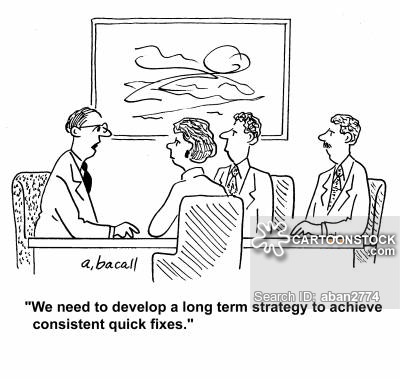
“We need to develop a long term strategy to achieve consistent quick fixes.”

 HENRY KOTULA