Detective, nurse altercation could spur review of hospital policies

http://www.modernhealthcare.com/article/20170904/NEWS/170909968/detective-nurse-altercation-could-spur-review-of-hospital-policies

Image result for Detective, nurse altercation could spur review of hospital policies

In a case that’s gone viral, a Salt Lake City nurse endured a police detective’s rough treatment, handcuffing, and threat of arrest to uphold her hospital’s policy of not allowing police to draw blood from a patient without an arrest, a search warrant, or the patient’s consent.

The incident is likely to spur hospital administrators to evaluate their policies surrounding police access to patients, said Jennifer Mensik, a nursing instructor at Arizona State University and vice president of continuing education for OnCourse Learning.

“I hear nurses all the time say it’s a lot easier not to argue with law enforcement and just draw blood,” Mensik said. “They don’t realize they are putting themselves at risk.”

The incident, captured by police officers’ body cameras, involved Alex Wubbels, a burn unit nurse at University of Utah Medical Center, refusing to let Salt Lake City Police Detective Jeff Payne draw blood from an unconscious patient who was severely burned in a car crash. During the encounter, Wubbels consulted via speakerphone with her supervisor, Brad Wiggins, who stated the hospital’s policy bars blood draws in such situations.

The U.S. Supreme Court ruled last year that police must obtain a warrant to test the blood of motorists suspected of drunken driving. In the Salt Lake City case, the patient, a reserve police officer, reportedly was driving a truck when his vehicle was struck head-on by a man in a pickup truck who was trying to evade police. He was not a suspect in any crime.

Mensik said police requests to draw blood from patients without an arrest, a warrant, or consent are common around the country. Nurses and emergency department staff often go along because they are busy or don’t know their hospital’s policy.

During the July 26 encounter, Wubbels, who’s worked at the hospital since 2009, calmly told Payne he couldn’t proceed with the blood draw. After Wiggins, the burn unit manager, said over the speakerphone that Payne was making a mistake by threatening a nurse, Payne is seen trying to swat the phone out of Wubbels’ hand, grabbing her by the arms, pulling her arms behind her back and handcuffing her.

“Help,” she screamed. “Help me. Stop. You’re assaulting me. Stop. I’ve done nothing wrong. This is crazy.”

Payne then strapped her into the front seat of his car. Another officer arrived and told her she obstructed justice.

“I’m also obligated to my patients,” she replied. “It’s not up to me.”

Wubbels was released without being arrested after hospital COO Dan Lundergan contacted police officials.

Wubbels and her attorney held a news conference last Thursday to describe the incident and play the 19-minute video taken from the officers’ body cams.

Salt Lake City Mayor Jackie Biskupski and Police Chief Mike Brown apologized on Friday for the conduct of Payne, who, along with another officer on the scene, reportedly has been placed on administrative leave. The police department, the district attorney, and the sheriff are conducting a criminal investigation into any misconduct that may have been committed by police during the incident.

Biskupski noted that Wubbles was “simply doing her job.”

“I just feel betrayed, I feel angry, I feel a lot of things,” Wubbles said during her press briefing. “And I’m still confused.”

Following the July 26 incident, the University of Utah Medical Center worked with the Salt Lake City police department to craft an agreement on how to handle police requests for blood draws and medical information from patients, said hospital spokeswoman Kathy Wilets.

Now, law enforcement personnel register at the hospital’s front desk and make their requests through hospital administrators rather than asking front-line providers directly.

Wilets called Wubbles a “rock star” for the way she stuck to hospital policy in that tense encounter with police. “We’re grateful to her. She put the needs of patients first and set a great example for everyone.”

Forgotten Heroes: Remembering Dr. Alvin Blount, Who Helped Integrate America’s Hospitals

http://healthaffairs.org/blog/2017/09/01/forgotten-heroes-remembering-dr-alvin-blount-who-helped-integrate-americas-hospitals/

Related image

Mortar rounds shook the bunker. The 8225th Mobile Army Surgical Hospital (MASH) was crammed with casualties—civilians, Americans, and KATUSAs (Korean Augmentation to US Army). The four surgical tables under the direction of its acting chief surgeon, Alvin G. Blount, often operated around the clock, doing as many as 90 surgeries during sleepless protracted engagements. Blount could shut out the mayhem and focus only on his patient’s needs, as if everything else in the world had stopped. His calm, gentle demeanor commanded respect. His was the first racially integrated MASH unit, and he was its first black chief surgeon. Blount received the Korean War Service Medal for these efforts and would later become part of a group of doctors that helped radically reform US health care. He died earlier this year, the last surviving member of the group that initiated that effort.

The stories of the Korean MASH units would become popularized in a book, a movie, and a popular television series called M*A*S*H that ran from 1972 to 1983 and still appears in syndicated reruns. Yet, in an apparent attempt to assure “historical accuracy,” the television series chose to eliminate the black surgeon that appeared in the book and movie version.

After the war, Blount returned to private practice in racially segregated Greensboro, North Carolina. His Howard University medical school mentor, Charles Drew had warned him, “you boys going south will have to sweat it out, but victory will come.” Despite the US Supreme Court’s 1954 ruling in Brown v. Board of Education of Topeka that separate was inherently unequal in education, “separate but equal” remained the law of the land for hospitals. The Hill-Burton Act of 1946 specifically permitted federal funding for the construction of the two white-only hospitals in Greensboro and made similar provisions for other Southern cities. Black physicians in Greensboro were excluded from medical staff privileges at these white hospitals, one of which was the Moses H. Cone Memorial Hospital, the most well-endowed hospital in the region. Segregation in hospitals remained for another decade as Blount and a few courageous colleagues engaged in a polite and seemingly fruitless struggle against a powerful, entrenched white establishment.

George Simkins, Jr., a dentist and aggressive activist, took charge of the Greensboro chapter of the National Association for the Advancement of Colored People (NAACP) in the early 1950s and sought the help of the NAACP Legal Defense and Educational Fund (LDF) to challenge the city’s segregated hospital system. But recruiting black physicians to join as plaintiffs proved difficult. Some were comfortable with the status quo, and most were concerned about damaging ties with white colleagues, who they relied on for help with their patients. Blount himself was reluctant, but he was close friends with Simkins and knew that the segregated system resulted in lower-quality care for his patients. Blount joined the lawsuit and helped Simkins recruit five other physicians to do the same. These five physicians, in addition to two black dentists, two black patients, Blount, and Simkins, made up the final list of 11 plaintiffs. Michael Meltsner, a young, white protégé of Thurgood Marshall, served as lead attorney.

The suit, filed in US District Court in 1962, argued that Greensboro’s two white hospitals, the Moses H. Cone Memorial Hospital and the Wesley Long Hospital, functioned as an “arm of the state,” having received a total of $2.8 million in federal Hill-Burton program funds. By remaining segregated, the hospitals violated the due process and equal protection clauses of the Fifth and Fourteenth Amendments of the US Constitution. Accordingly, the plaintiffs argued, the Hill-Burton law was unconstitutional because it provided federal funding for the construction of racially segregated institutions. As is customary with any case challenging federal law, the US attorney general was given the opportunity to defend the federal government. Surprisingly, however, Attorney General Robert Kennedy joined the plaintiffs, seizing the opportunity to push the administration’s stalemated civil rights agenda. Despite this unexpected support, the District Court dismissed the suit. The “victory” that Charles Drew had promised seemed increasingly distant.

Blount and his fellow plaintiffs, however, now found themselves at the beginning of a long and unpredictable journey to transform US health care. In a 3:2 decision in 1963, the US Court of Appeals of the Fourth Circuit ruled in favor of the plaintiffs. The hospital defendants appealed to the US Supreme Court, but in a rushed ruling, just days before the Senate began its longest debate on the Civil Rights Act of 1964, the Court chose to not review the lower court decision and let it stand. Title VI of the Civil Rights Act, the most likely provision to be eliminated to assure the bill’s passage, prohibited the provision of any federal funding to organizations that discriminated on the basis of race. By letting the Fourth Circuit decision stand, the Supreme Court effectively made Title VI the law of the land before it had even passed through the legislative branch.

Resistant to any federal interference in their organization, the executive committee of the board of the Moses H. Cone Memorial Hospital recommended to the full board that the hospital return its Hill-Burton funds to the federal government to relieve it of any obligation to desegregate. That recommendation was rejected. Nothing in the Court’s decision, of course, prevented other hospitals from choosing not to apply for Hill-Burton construction funds or from returning funds they had already received. There was also no provision in the law for federal enforcement for those hospitals that had already received federal money. The NAACP LDF or other parties could mount challenges against individual hospitals, but it would be a slow and costly process.

The Medicare legislation enacted less than a year later, however, changed the game. Hospitals could survive without Hill-Burton funds, but they could not “choose” not to be Medicare and Medicaid providers. No hospital would be certified as a Medicare provider without being fully compliant with concrete nondiscrimination requirements. Local civil rights groups whose members included hospital workers served as the final arbiters. Any lapses in enforcement by federal volunteer inspectors or subterfuge by the hospitals would not escape notice.

In less than six months, 6,000 hospitals became fully compliant. Thanks to Medicare, America’s hospitals went from being our country’s most racially and economically segregated institution to our most integrated. Almost all of the separate wooden bench waiting rooms and welfare wards disappeared. Patterns of use of services that had always been shaped by racial and economic privilege began, for the first time, to reflect actual medical need. Over the next 20 years, racial and economic disparities in infant mortality and life expectancy narrowed. In Greensboro, Blount became the first black surgeon to operate at Moses H. Cone Memorial Hospital. Yet, the events that propelled all of these changes have been almost forgotten. Only current political events in North Carolina and nationally have stirred some local reflection about that past.

A statue of Simkins was unveiled on the lawn of the Guilford County Courthouse in October 2016, near where he was jailed for trespassing in 1955 after trying to play golf with friends on the city-owned golf course. Only after his death was he honored as the city’s “Moses.”

In 2016, Blount, at age 94, was the only surviving plaintiff in the Simkins v. Moses Cone Hospital suit. He was still seeing a limited number of patients under the watchful eye of his loyal long-time practice manager, Martha Reid. His office on East Market Street was filled with memorabilia and memories of more than a half century of practice. In October, he was invited to a meeting at the regional nonprofit integrated health system that Moses H. Cone Memorial Hospital became. About 250 health care professionals and community leaders attended, along with Blount’s children. Dr. James Wyatt, a black surgeon and president of the Cone Health medical and dental staff, thanked Blount “for opening doors for me.” Cone CEO, Terry Akin, addressed Dr. Blount: “It seems to me, and to our medical and dental staff, that we needed to take the opportunity to apologize for our role in this chapter of our history and to honor these individuals for challenging us to be our best selves, and for their foresight and courage in changing America.” Cone donated $250,000 to a scholarship fund honoring Blount and the other plaintiffs that will provide support for minority students pursuing careers in health care. It will be administered by the Greensboro Medical Society, one of many local black medical societies across the country that played a key role in the hospital desegregation struggle. A month later, a historical highway marker was unveiled on North Elm Street adjacent to the Moses H. Cone Memorial Hospital, acknowledging the plaintiffs and their role in changing the nation’s hospitals.

Dr. Blount passed away on January 6, 2017, at Moses H. Cone Memorial Hospital after a brief illness. His family marked his passing with a quiet event at the small Episcopal church adjoining the North Carolina A&T State University campus, which served as an early organizing center for the lunch counter sit-in movement. “My life is my memorial,” he had told his practice manager. “No big casket or cemetery plot either—cremation. … Just be sure I’m dead before you burn me.”

His life was indeed his memorial. From caring for wounded soldiers in Korea to feeding arrested Dudley High School students after a lunch counter sit-in, Blount was an endless source of compassion and integrity. He and his wife lovingly raised seven children, and his youngest daughter, Gwen Blount Adolph, now a lawyer in New York, recently reflected on her father’s life: “My daddy was a gentle soul who wanted to do right by everyone.” She recalled the night the arm fell off her brother Alvin’s teddy bear, and he was inconsolable. “We all had this vivid memory of my dad taking needle and thread and operating on Teddy…. We all gathered around, as if it was an operating room. He was so patient, and it was so important to my brother. It was as if everything else in the world had stopped—that was Daddy.”

In these divisive times, it is too easy to be dismissive of the past and despairing about the future. The lives of Dr. Blount and the other Moses Cone plaintiffs tell us something different. They tell us that landmark pieces of social policy such as Medicare, when implemented fairly and compassionately, can promote justice and equality. And they tell us that the power to remedy injustices lies with individuals who are willing to challenge the status quo and further the cause of universal health care for all Americans.

ERISA: A Bipartisan Problem For The ACA And The AHCA

http://healthaffairs.org/blog/2017/06/02/erisa-a-bipartisan-problem-for-the-aca-and-the-ahca/

The Supreme Court has once again been called on to mediate the boundaries of a far-reaching, infamously complex, federal employee benefits law. And once again this law may have an important and unanticipated effect on health care.

The main goal of this law, the Employee Retirement Income Security Act of 1974 (ERISA), was to provide uniform, federal regulation of pensions and employee benefit plans (including health care). But the law has had a far more dramatic impact on health policy beyond what Congress ever contemplated. Because ERISA pushes aside state regulation of these plans, it has impeded the states’ ability to partner with the federal government to achieve key health policy goals. ERISA has also stymied some of Congress’s goals under the Affordable Care Act, and may prove an even greater obstacle to Republican efforts to return more authority over health policy to the states.

ERISA and health reform have not meshed well. For instance, the ACA’s attempt to create greater uniformity of benefits is at odds with the way ERISA creates a special class of protected plans and blocks states efforts to regulate them. When you ask yourself why the ACA’s guarantee of essential health benefits applies to some health plans but not to others, the answer is deference to ERISA. When you ask yourself why some health plans are subject to state-mandated benefit laws but some remain exempt, the answer is ERISA.

The US Supreme Court has not helped. The Court decided two important ERISA cases last term and has another one in the term about to conclude. Those interested in health care should watch this case closely. Last term, even as the Court acknowledged ERISA’s tensions with the ACA, it ruled that ERISA blocked Vermont’s attempt, through an all-payer claims database, to partner in the ACA’s efforts to make health care spending more transparent. States, including Alaska for example, struggle in the wake of this ruling to make an all-payer claims database work. In the second case, the Court indicated that ERISA might thwart a compromise in a dispute between the federal government and Christian nonprofit organizations over the ACA and contraception coverage.

This term, the fight involves the intersection of religion, health, and ERISA once again. And again, the Court must say how far ERISA reaches. ERISA exempts “church plans” from its broad regulation. The Supreme Court will decide whether the exemption for church plans, defined as plans “established and maintained” by houses of worship, applies narrowly to plans created by churches or, more broadly, also to those created by church-affiliated organizations. The three plans in this litigation and many plans in question are pension plans for employees at Catholic hospitals and health systems. In Advocate Health Care Network v. Stapleton, consolidated with two other cases, the Court will determine whether Catholic hospitals—which now care for one in six patients in the U.S.—must guarantee the security of their employees’ pensions. Billions of dollars of pension shortfall and the financial security of 300,000 hospital workers are at stake.

We review the recent and upcoming ERISA jurisprudence below and conclude it is time for the Court, or Congress, to cabin ERISA’s reach when it comes to health care.

Faith-based providers likely to keep pension regulation exemptions

http://www.modernhealthcare.com/article/20170327/NEWS/170329932/faith-based-providers-likely-to-keep-pension-regulation-exemptions

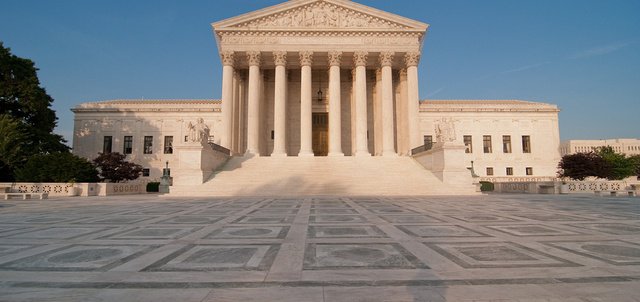
Image result for supreme court

The U.S. Supreme Court on Monday appeared skeptical of arguments that they should subject faith-based health systems to federal pension regulations.

The eight justices considered three cases on Monday involving Advocate Health Care, St. Peter’s Healthcare System and Dignity Health where federal appeals courts determined the faith-based systems did not qualify for a so-called “church plan” exemption from the Employee Retirement Income Security Act. For three decades, the Internal Revenue Service, Department of Labor and Pension Benefit Guaranty Corp. have treated faith-based organizations’ pension plans as exempt from ERISA.

If the appellate decisions are upheld, the health systems and other large and small faith-based organizations will have to comply with ERISA’s disclosure rules, fully fund their pension plans and pay PBGC premiums. The decision could affect the retirement benefits of more than a million employees around the country.

The systems say their pensions are well funded but a ruling against them could force them to pay billions in penalties in the lawsuits. The systems have said that would result in them being able to provide less charity care or eliminate their pension plans altogether.

“Countless” pension plans have been structured based on faith-based organizations’ beliefs that they fell under this church plan exemption, relying on hundreds of letters from the Internal Revenue Service, Department of Labor and PBGC that affirmed that status, according to the health systems’ counsel Lisa Blatt. Reversing that longstanding practice would “unleash a torrent of unintended consequences,” she told the eight justices.

The health systems have argued that Congress intended to allow church agencies – including health systems, schools and other organizations supporting the church’s religious mission – to create their own ERISA-exempt pension plans.

Although several justices questioned whether the underlying congressional statute supports that argument, Chief Justice John Roberts and Justice Sonia Sotomayor both pointed out that the federal agencies obviously had a similar reading of the law.

Similarly, Justice Anthony Kennedy noted the faith-based systems relied in good faith on the federal agencies’ interpretation.

But pension beneficiaries are concerned that this provides massive corporations like Dignity – one of the largest health systems in the country – with an unfair advantage over its competitors that Congress never intended. Faith-based organizations don’t have to insure their plan’s benefits, meet ERISA vesting requirements or clarify rights to future benefits.

“(Congress) wanted a close tie between the church and plan,” the beneficiaries’ counsel James Feldman said during oral arguments Monday. If the church isn’t involved in the pension plan, there’s no reason an organization should receive ERISA exemption, he said.

The federal government has sided with the hospitals, with Deputy Solicitor General Malcolm Stewart telling the justices that Congress expanded the church plan exemption in the 1980s to include church-affiliated organizations’ pension plans after the IRS denied an exemption in the 1970s.


Trump revives policy eliminating funding for foreign groups that provide abortion services

Trump revives policy eliminating funding for foreign groups that provide abortion services

President Trump on Monday reinstated a US policy preventing foreign nonprofit groups that receive federal funds from administering abortions or providing abortion counseling or referrals.

Originally enacted by President Ronald Reagan in 1984, the “Mexico City Policy” was rescinded by Bill Clinton and Barack Obama — and reinstated by George W. Bush and now Donald Trump — in the first days of each new administration.

Known as the “global gag rule” by pro-abortion rights groups, the Mexico City Policy goes a step further than existing legislation, which prevents federal dollars from being used for abortions. Instead, it prevents organizations that receive any federal funds from paying for their own abortion programs.

Existing legislation known as the Helms Amendment already prevents federal funding of foreign abortions “as a method of family planning,” a restriction abortion rights advocates say has led to excessive interpretation. George W. Bush’s administration clarified that the amendment exempted abortions performed in cases of rape, incest, or when the mother’s life would be endangered by the pregnancy.

Trump’s move forces nonprofit groups to choose between cutting abortion services altogether or looking to fill a major budget gap left by the withholding of federal dollars.

The executive order comes as part of a broader salvo on federally funded abortion and contraceptive coverage.

Separately, a bill under consideration by the House rules committee aims to change the Hyde Amendment, a provision in annual appropriations bills that prohibits federally funded abortions, into permanent law. The proposal would also make employers with insurance plans that cover abortion ineligible for tax credits under the Affordable Care Act.

Trump also issued an executive order on Friday that, depending on how the Department of Health and Human Services interprets it, could eliminate the ACA requirement that private insurers include contraception in their coverage.

What Could President Trump Do Through Executive Order to Dismantle the ACA?

http://www.commonwealthfund.org/publications/blog/2017/jan/what-could-president-trump-do-through-executive-order

Image result for executive orders

The Republican House and Senate have begun the process of repealing the Affordable Care Act (ACA) through the budget reconciliation process. Enacting a budget reconciliation bill is likely to take weeks, however, and at this point it seems likely that such a bill will delay repeal of some of the most important provisions of the ACA for much longer.

In a meeting with Republican lawmakers on January 4, 2017, Vice-President-elect Mike Pence stated that the Trump administration may move much more quickly against the ACA through executive action. He told reporters that the Trump administration would begin on the first day of the administration an orderly transition process to unwind the ACA: “We’re working now on a series of executive orders that will enable that orderly transition to take place even as Congress appropriately debates alternatives to and replacements for Obamacare.”

The President and the executive departments and agencies clearly do have a great deal of power. They can exercise their authority through issuing executive orders, rules, and guidance. The executive branch of government operates programs, decides whether and how to defend or settle litigation, and exercises discretion in enforcing the law. But within our constitutional system the president and executive departments and agencies must comply with the laws and operate according to the processes laid down by law.

What can the executive do to “unwind” a law without congressional action and within the law?

Gov. John Kasich vetoes Heartbeat Bill, signs 20-week abortion ban

http://www.dispatch.com/content/stories/local/2016/12/13/John-Kasich-acts-on-abortion-bills.html#

While describing himself as a champion for the sanctity of life, Gov. John Kasich vetoed a bill Tuesday that would have forbidden abortions once a fetal heartbeat could be detected.

The second-term Republican, however, did sign into law a second bill, a GOP-backed lame-duck measure banning abortions after 20 weeks of pregnancy — providing an exception for saving the mother’s life but none for rape or incest.

The Heartbeat Bill’s foremost champion, Janet Porter of Faith2Action, immediately denounced Kasich’s “betrayal of life” and promised a campaign to find the necessary votes in the House to override the governor’s veto. The Senate’s vote was veto-proof on what would have been the nation’s most stringent abortion law.

In his veto message, Kasich said the Heartbeat Bill, which would have forbid abortions at about six weeks into pregnancy, was clearly unconstitutional under U.S. Supreme Court rulings and would have resulted in an expensive — and losing — court battle.

Supreme Court upholds implied certification theory under the FCA

http://www.healthcaredive.com/news/supreme-court-upholds-implied-certification-theory-under-the-fca/421383/

Supreme Court6

In its decision, the Court addressed two major issues. Of greatest significance, it approved an “implied false certification theory of liability” in FCA cases. “The law now treats a provider’s payment request as an implied certification of compliance with all relevant statutes, regulations, or contract requirements, says Brian Mahany, a healthcare fraud expert and whistleblower claims lawyer.

What’s more significant is that for the first time, the Supreme Court imposed real limitations on implied certification. Based on the Court’s decision, for a claim to be considered false or fraudulent under the implied certification theory,” the regulation or contractual provision impliedly violated be must be “material” to the government’s payment decision. “In so holding, the court plainly rejected the government’s more expansive reading of the law,” says Kalb.

Supreme Court strikes down Texas abortion clinic restrictions

https://www.washingtonpost.com/politics/supreme-court-strikes-down-texas-abortion-clinic-restrictions/2016/06/27/ba55d526-3c70-11e6-a66f-aa6c1883b6b1_story.html

The Supreme Court on Monday struck down Texas abortion restrictions that have been widely duplicated in other states, a resounding win for abortion rights advocates in the court’s most important consideration of the controversial issue in 25 years.

Supreme Court strikes down Texas abortion restrictions

http://thehill.com/regulation/court-battles/284974-supreme-court-strikes-down-Texas-abortion

The justices said in the majority opinion that the two parts of the Texas law under challenge create a “substantial obstacle in the path of women” who are seeking abortions and neither provision “offers medical benefits sufficient to justify the burdens upon access that each imposes.”

Two dozen other states have similar restrictions in place, requiring abortion clinics to meet the standards of hospital-style surgical centers and requiring doctors who perform abortions to have admitting privileges at hospitals within 30 miles.