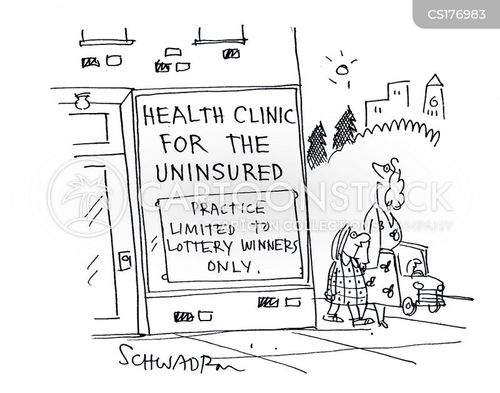
Research: Higher U.S. Physician Spending Doesn’t Lead to Better Patient Outcomes

https://hbr.org/2017/03/research-higher-u-s-physician-spending-doesnt-lead-to-better-patient-outcomes?utm_source=feedburner&utm_medium=feed&utm_campaign=Feed%3A+harvardbusiness+%28HBR.org%29

mar17-13-522846088

Health care spending in the United States reached $3.2 trillion in 2013, which accounted for 17% of U.S. GDP. This is almost twice as much as the OECD average of 9%, yet health outcomes in the U.S. are not twice as good as in these other countries. In fact, many outcomes are worse. For example, life expectancy at birth in the U.S. is 78.8 years, which falls short of the OECD average of 80.5 years.

Health care spending also varies substantially within the United States. Many studies have documented enormous geographic variation in spending, finding no clear relationship with quality of care and health outcomes. While some differences in spending and patient outcomes are due to factors outside the health care system, this evidence suggests that there is considerable waste in U.S. health care spending. Many have concluded that at least 20% of spending could be reduced without harming patients.

Geographic regions, however, do not make health care treatment decisions; hospitals, doctors, and patients do. Yet surprisingly few studies have attempted to analyze how health care spending patterns vary for individual doctors, and more important, whether the practice patterns of doctors relate to their patients’ outcomes. Understanding how practice patterns differ among doctors and whether higher-spending doctors have better outcomes is critically important for finding ways to reduce health care costs and improve efficiency of care without harming patients.

In a study recently published in JAMA Internal Medicine, we investigated how spending varies among individual doctors and how spending relates to patient outcomes. We found that individual physicians vary substantially in their health care spending, even within the same hospital, and that greater spending does not lead to improvement in patient outcomes.


The Benefits Employees Want Don’t Always Cost a Lot

https://hbr.org/video/5357774445001/the-benefits-employees-want-dont-always-cost-a-lot

https://hbr.org/2017/02/the-most-desirable-employee-benefits?referral=00060

W170131_JONES_BENEFITSVALUED

In today’s hiring market, a generous benefits package is essential for attracting and retaining top talent. According to Glassdoor’s 2015 Employment Confidence Survey, about 60% of people report that benefits and perks are a major factor in considering whether to accept a job offer. The survey also found that 80% of employees would choose additional benefits over a pay raise.

Google is famous for its over-the-top perks, which include lunches made by a professional chef, biweekly chair massages, yoga classes, and haircuts. Twitter employees enjoy three catered meals per day, on-site acupuncture, and improv classes. SAS has a college scholarship program for the children of employees. And plenty of smaller companies have received attention for their unusual benefits, such as vacation expense reimbursement and free books.

But what should a business do if it can’t afford Google-sized benefits? You don’t need to break the bank to offer attractive extras. A new survey conducted by my team at Fractl found that, after health insurance, employees place the highest value on benefits that are relatively low-cost to employers, such as flexible hours, more paid vacation time, and work-from-home options. Furthermore, we found that certain benefits can win over some job seekers faced with higher-paying offers that come with fewer additional advantages.

As part of our study, we gave 2,000 U.S. workers, ranging in age from 18 to 81, a list of 17 benefits and asked them how heavily they would weigh the options when deciding between a high-paying job and a lower-paying job with more perks.


Repealing the Affordable Care Act

https://www.brookings.edu/blog/unpacked/2017/03/08/repealing-the-affordable-care-act/?utm_campaign=Economic%20Studies&utm_source=hs_email&utm_medium=email&utm_content=45259936

Image result for brookings institute

THE ISSUE: If Congress rejects the new House Republican-backed replacement for the Affordable Care Act (ACA), the full repeal long advocated for by many Republicans could be their next option.

A straight ACA repeal would leave an estimated 20+ million people without health coverage.

THE THINGS YOU NEED TO KNOW

  • Republicans have long advocated for repealing the ACA and if their new replacement isn’t approved, that plan could soon be put into motion.
  • The ACA provides coverage, and subsidies towards coverage, to people who previously couldn’t get health insurance through the individual market.
  • A straight ACA repeal would leave an estimated 20+ million people without health coverage.
  • If the ACA is repealed, many lower-income Americans (earning a maximum family income of about $33,000) participating in Medicaid, which was expanded under the ACA, would lose health coverage.
  • Many individuals with pre-existing medical conditions, previously unable to get health insurance, would also lose coverage.
  • The ACA also benefits health insurance industry by stabilizing coverage, and provides assurance to state hospitals that patients have coverage of some kind.
  • It is incumbent upon Republicans to provide a clear plan and implement it quickly in order to stabilize the markets and assure Americans that whatever replaces the ACA will be at least as good and at least as affordable as their current plans.
  • Polling on repeal shows that people are unhappy with the ACA, but not with their coverage. They most frequently criticizes the cost and the availability of coverage.
  • Republicans are faced with a challenge: Americans don’t just want repeal, they want a replacement that is comprehensive and affordable.

Five key findings from the CBO’s healthcare score

Five key findings from the CBO’s healthcare score

Image result for congressional budget office bill scoring

The Congressional Budget Office’s (CBO) analysis of the Republican plan to replace ObamaCare is sending shockwaves through Washington.

Democrats have seized on the report, while Republicans have been split over whether to attack the CBO’s conclusions or focus on the more positive aspects of the analysis.

Here are five key findings from the CBO report that is shaking up the ObamaCare debate.

Ten Inconvenient Truths About The Current Healthcare Debate

https://flipboard.com/@flipboard/flip.it%2FS33hcr-ten-inconvenient-truths-about-the-curre/f-2c2e4d8c41%2Fforbes.com

The Bottom Line

Overstatement and the quest for political revenge may mobilize political allies. It may generate lots of likes in the echo chambers of Twitter or Facebook. But does it persuade? Does it contribute to good policy? I doubt it. We should listen to the parting words of the brilliant George Washington:

The alternate domination of one faction over another, sharpened by the spirit of revenge, natural to party dissension, which in different ages and countries has perpetrated the most horrid enormities, is itself a frightful despotism. But this leads at length to a more formal and permanent despotism. The disorders and miseries, which result, gradually incline the minds of men to seek security and repose in the absolute power of an individual; and sooner or later the chief of some prevailing faction, more able or more fortunate than his competitors, turns this disposition to the purposes of his own elevation, on the ruins of Public Liberty.

By law, hospitals must now tell Medicare patients when care is ‘observation’ only

http://www.fiercehealthcare.com/regulatory/by-law-hospitals-now-must-tell-medicare-patients-when-care-observation-only?utm_medium=nl&utm_source=internal&mrkid=959610&mkt_tok=eyJpIjoiTlRrd09UVTNNMlEyWlRkayIsInQiOiJNUWd0R2JcL0hydzN1TUp5N3I3eFpjaGtST1wvNzk5bWdBU1JmdWl1WFwvSzNWYk1XUmdoOWhBaHBpRE0xMzFLdGFUaUljcWVwNjdjVE80N3RVWkZnckFucVVzeDhpdk9GazBsXC9SXC9GSmI1bUtuRGdnd3AwazBQRWNlY1NQcERvcEF6In0%3D

Doctor talking to senior patient and her husband

Under a new federal law, hospitals across the country must now alert Medicare patients when they are getting observation care and why they were not admitted—even if they stay in the hospital a few nights. For years, seniors often found out only when they got surprise bills for the services Medicare doesn’t cover for observation patients, including some drugs and expensive nursing home care.

The notice may cushion the shock but probably not settle the issue.

When patients are too sick to go home but not sick enough to be admitted, observation care gives doctors time to figure out what’s wrong. It is considered an outpatient service, like a doctor’s visit. Unless their care falls under a new Medicare bundled-payment category, observation patients pay a share of the cost of each test, treatment or other services.

And if they need nursing home care to recover their strength, Medicare won’t pay for it because that coverage requires a prior hospital admission of at least three consecutive days. Observation time doesn’t count.

“Letting you know would help, that’s for sure,” said Suzanne Mitchell of Walnut Creek, California. When her 94-year-old husband fell and was taken to a hospital last September, she was told he would be admitted. It was only after seven days of hospitalization that she learned he had been an observation patient. He was due to leave the next day and enter a nursing home, which Medicare would not cover. She still doesn’t know why.

“If I had known [he was in observation care], I would have been on it like a tiger because I knew the consequences by then, and I would have done everything I could to insist that they change that outpatient/inpatient,” said Mitchell, a retired respiratory therapist. “I have never, to this day, been able to have anybody give me the written policy the hospital goes by to decide.” Her husband was hospitalized two more times and died in December. His nursing home sent a bill for nearly $7,000 that she has not yet paid.

The notice is—as of last Wednesday—one of the conditions hospitals must meet in order to get paid for treating Medicare beneficiaries, who typically account for about 42% of hospital patients. But the most controversial aspect of observation care hasn’t changed.

“The observation care notice is a step in the right direction, but it doesn’t fix the conundrum some people find themselves in when they need nursing home care following an observation stay,” said Stacy Sanders, federal policy director at the Medicare Rights Center, a consumer advocacy group.

Medicare officials have wrestled for years with complaints about observation care from patients, members of Congress, doctors and hospitals. In 2013, officials issued the “two-midnight” rule. With some exceptions, when doctors expect patients to stay in the hospital for more than two midnights, they should be admitted, although doctors can still opt for observation.

But the rule has not reduced observation visits, the Health and Human Services inspector general reported in December. “An increased number of beneficiaries in outpatient stays pay more and have limited access to [nursing home] services than they would as inpatients,” the IG found.

The new notice drafted by Medicare officials must be provided after the patient has received observation care for 24 hours and no later than 36 hours. Although there’s a space for patients or their representatives to sign it “to show you received and understand this notice,” the instructions for providers say signing is optional.

Some hospitals already notify observation patients, either voluntarily or in more than half a dozen states that require it, including California and New York.