


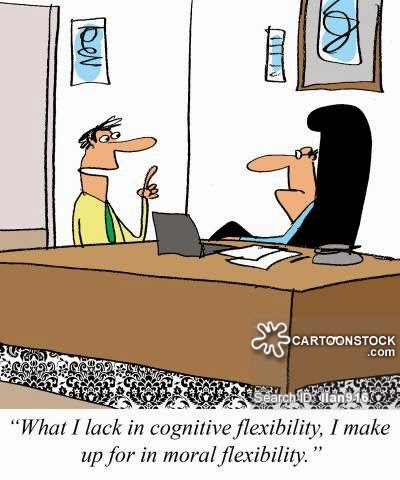
Cartoon – I’ll have to charge extra for that


The health care sector rallied yesterday on another “Merger Monday” with the announcement of Sanofi’s (SNY) purchase of Bioverativ (BIVV) for $11.6 billion, and Celgene’s (CELG) $9 billion purchase of 90 percent of Juno Therapeutics (JUNO). But there’s still one transformative merger that will define and reshape the U.S. health care market in 2018: the CVS/AETNA $69 billion deal announced last December.
CVS is best known for its 9,700 retail pharmacies and 1,100 walk-in clinics, but its most significant profit driver is its pharmacy benefits manager (PBM) enterprise—a middleman between pharmaceutical manufacturers and dispensers like drugstores. The company generated $177.5 billion in net revenue in 2016.
With its purchase of Aetna, another bold company and the nation’s third largest health plan, CVS upended uncomfortable business incentives built into its business model. In theory at least, the CVS PBM has new incentive to bring down drug prices and push for the most efficacious—not necessarily the most expensive—treatment choices, to achieve more competitive insurance premiums. They can also favor common sense preventive and primary care through convenience clinics.
This is what makes the CVS/Aetna deal different. It crosses sectors and realigns previously competing business incentives to better target consumer demand. Most of the merger proliferation we have seen over the past few years involves companies in similar categories within the health care industry. Providers merge with other providers, health plans with other health plans, and pharmaceutical companies with others in pharma.
Realigning incentives is the central problem in the health care marketplace, which is built on thorny knots of unintended consequences and senseless rules that resist untangling. The most famous of those knots are fee-for-service payment rules, still largely dominant, whereby payors reimburse for any and all services, regardless of quality. Among its hazards, fee-for-service incentivizes infections because it results in more care and thus pay better. Nobody thinks that is a good idea, but the business model is extremely difficult to unravel. CVS seems up to the challenge.
CVS Chief Executive, Larry J. Merlo, is the man for the job. His signature style is a laser-focus on the company’s core mission of “helping people on their path to better health,” which he is determined to accomplish even when short-term profit incentives nudge in a different direction. That was why Merlo led CVS to discontinue tobacco sales in 2014, and why CVS recently banned digitally altered photos on cosmetic products sold in their stores. Maybe it sounds logical that a health enterprise shouldn’t sell cigarettes or promote eating disorders and depression, but it takes unusual courage to turn away lucrative business.
Many greeted the news of the CVS/Aetna merger as a play to head off new ventures coming from Amazon or other new players. But what makes me optimistic about this particular deal is the new company’s combination of health industry and retail savvy. Many companies have one but not the other. Enterprising outsiders often enter the health care industry with good backing and an idea that would definitely help patients, only to end up six feet under the health care lobbyists, special interests, regulatory twists, and perverse incentives that have dogged the health care system over decades. There are large graveyards full of great companies that naively believed that normal business models work in health care. CVS is not naïve.
Paying more and getting less: As hospital chains grow, local services shrink

When most hospitals close, it’s plain to see. Equipment and fixtures are hauled out and carted away. Doctors and nurses leave and buildings are shuttered, maybe demolished.
But another fate befalling U.S. hospitals is almost invisible. Across the country, conglomerates that control an increasing share of the market are changing their business models, consolidating services in one regional “hub” hospital and cutting them from others.
In recent years, hospitals across the country have seen their entire inpatient departments closed — no patients staying the night, no nursery, no place for the sickest of the sick to recover. These facilities become, in essence, outpatient clinics.
Hospital executives see these cuts as sound business decisions, and say they are the inevitable consequence of changes in how people are using medical services. But to patients and local leaders who joined forces with these larger health networks just years ago, they feel more like broken promises: Not only are they losing convenient access to care, their local hospitals are also getting drained of revenue and jobs that sustain their communities.
“It’s not even just betrayal. It’s disgust, frankly,” said Mariah Lynne, a resident of Albert Lea, Minn., where Mayo Clinic is removing most inpatient care and the birthing unit from one of its hospitals. “Never would I have expected a brand of this caliber to be so callous.”
In 2015, the most recent year of data, these service reductions accounted for nearly half of the hospital closures recorded around the country, according to the Medicare Payment Advisory Commission. (By MedPac’s definition, the loss of inpatient wards is equivalent to closure.) These data do not capture more discreet closures of surgical and maternity units that are also happening at local hospitals.
And the trend doesn’t just affect nearby residents. It represents a slow-moving but seismic shift in the idea of the community hospital — the place down the street where you could go at any hour, and for any need. Does the need for that hospital still exist, or is it a nostalgic holdover? And if it is still needed, is it economically viable?
The effort to scale back inpatient care is occurring within some of the nation’s most prestigious nonprofit hospitals.
Mayo Clinic announced last summer that it would cease almost all inpatient care at its hospital in Albert Lea. The health network said it would keep the emergency department open, but send most other patients to Austin, 23 miles east.
In Massachusetts, sprawling Partners HealthCare said it will shut the only hospitalin Lynn, a city of 92,000 people near Boston, and instead direct patients to its hospital in neighboring Salem. Only urgent care and outpatient services will remain in Lynn.
And in Ohio, Cleveland Clinic has made similar moves. In 2016, it closed its hospital in Lakewood, a densely packed Cleveland suburb. It is replacing the hospital with a family health center and emergency department.
The cuts follow a period of rapid consolidation in the health care industry. Of the 1,412 hospital mergers in the U.S. between 1998 and 2015, nearly 40 percent occurred after 2009, according to data published recently in the journal Health Affairs.
As large providers have expanded their networks, they have also gained inpatient beds that are no longer in demand — thanks to improved surgical techniques and other improvements that are shortening hospital stays. Hence the closures.
But the hollowing-out of historic community hospitals has surfaced fundamental tensions between providers and the cities and towns they serve. Residents are voicing frustration with large health networks that build expensive downtown campuses, charge the highest prices, and then cut services in outlying communities they deem unprofitable.
Health scholars also note a growing dissonance between the nonprofit status of these hospitals and their increasing market power. While the nonprofits continue to claim tens of millions of dollars a year in tax breaks to serve the sick and vulnerable, some are functioning more like monopolies with the clout to shift prices and services however they wish.
“These providers say they are worth the high price and that in the American system, if you have a reputation for excellence, you deserve higher fees,” said Dr. Robert Berenson, a senior fellow at the Urban Institute. “My response to that would be, if we had a well-functioning market, that might make some sense. But we don’t.”
The financial upheaval in community hospitals is driven by sweeping changes in the delivery of care. Procedures and conditions that once required lengthy hospitalizations now require only outpatient visits.
At Mayo Clinic, Dr. Annie Sadosty knows this evolution well because it roughly traces her career. She uses appendectomies as an example. Twenty-five years ago, when she was in medical school, the procedure was performed through a 5-inch incision and resulted in a weeklong hospitalization.
Today, the same procedure is done laparoscopically, through a much smaller incision, resulting in a recovery time of about 24 hours. “Some people don’t even stay in the hospital,” Sadosty said.
Something similar could be said for a wide range of medical procedures and services — from knee replacements to the removal of prostate glands in cancer patients. Hospital stays are either being eliminated or reduced to one or two days. And patients who were once routinely admitted for conditions like pneumonia are now sent home and managed remotely.
“Hospitals that used to be full of patients with common problems are no longer as full,” said Sadosty, an emergency medicine physician at Mayo and regional vice president of operations. “It’s been a breakneck pace of innovation and change that has led to a necessary evolution in the way that we care for people.”
That evolution has cratered demand for inpatient beds. In 2017, the Medicare Payment Advisory Commission noted that hospital occupancy is hovering around 62 percent, though the number of empty beds varies from region to region.
In Albert Lea, Mayo administrators said the changes at the hospital will only impact about seven inpatients a day. Currently, caring for those patients requires nursing staff, hospitalists, and other caregivers, not to mention overhead associated with operating a hospital around the clock. The financial result is predictable: Hospital executives reported that jointly Albert Lea and Austin hospitals have racked up $13 million in losses over the last two years.
With inpatient demand declining, hospital administrators decided to consolidate operations in Austin. The decision meant the removal of Albert Lea’s intensive care unit, inpatient surgeries, and the labor and delivery unit. Behavioral health services will be consolidated in Albert Lea.
Cleveland Clinic described similar pressures. Dr. J. Stephen Jones, president of the clinic’s regional hospital and family health centers, said use of inpatient beds has declined rapidly in Lakewood, dropping between 5 and 8 percent a year over the last decade. By 2015, 94 percent of visits were for outpatient services — a change that was undermining financial performance. The hospital lost about $46.5 million on operations that year, according to the clinic’s financial statements, and its aging infrastructure was in need of repair.
“Hospitals are very expensive places to run,” Jones said. “Lakewood was losing money on an operating basis for at least five years” before this decision was made.
But the service cuts in Albert Lea, Lynn, and Lakewood — backed by nearly identical narratives from hospital executives — provoked the same reaction from the communities surrounding them.
Outrage.
Residents accused the hospital chains of putting their bottom lines above the needs of patients. Even if these individual hospitals were losing money, they said, nonprofits have an overriding mission to serve their communities.
“Why is profit such a priority, and more of a priority than the Hippocratic oath?” said Kevin Young, a spokesman for Save Lakewood Hospital, a group formed to oppose Cleveland Clinic’s removal of inpatient services. “Why are we allowing this to happen?”
The fight over Lakewood Hospital has persisted for more than three years, spawning lawsuits, an unsuccessful ballot referendum to keep the hospital open, and even a complaint filed by a former congressman to the Federal Trade Commission. None has caused Cleveland Clinic to reverse course.
Meanwhile, in Albert Lea, opponents to the service cuts have taken matters into their own hands: With Mayo refusing to back down, they are hunting to bring in a competitor.
A market analysis commissioned by Albert Lea’s Save Our Hospital group concluded that a full-service hospital could thrive in the community. The report included several caveats: A new provider would need to attract new physicians and capture market share from Mayo, a tall order in a region where Mayo is the dominant provider.
But members of the group said the findings directly contradict Mayo’s explanations to the community. They argue that, far from financially strained, the health system is simply trying to increase margins by shifting more money and services away from poorer rural communities.
“They don’t care what happens in Albert Lea,” said Jerry Collins, a member of the group. “Mayo cares what happens with its destination medical center.” He was referring to Mayo’s $6 billion project — funded with $585 million in taxpayer dollars — to expand its downtown Rochester campus and redevelop much of the property around it.
Sensitivity to Mayo’s service reductions is heightened by its control of the market in Southeastern Minnesota. It is by far the largest provider in the region and charges higher prices than facilities in other parts of the state. A colonoscopy at Mayo’s hospital in Albert Lea costs $1,595, compared to $409 at Hennepin County Medical Center in Minneapolis, according to Minnesota HealthScores, a nonprofit that tracks prices. The gap is even bigger for a back MRI: $3,000 in Albert Lea versus $589 at Allina Health Clinics in Minneapolis.
“All of Southeast Minnesota is feeling the domination of one large corporation,” said Al Arends, who chairs fundraising for Save Our Hospital. “They are ignoring the economic impact on the community and on the health care for patients.”
The community’s loud resistance has drawn the attention of the state’s attorney general and governor, as well as U.S. Rep. Tim Walz, who has begun a series of “facilitated dialogues” between Mayo and its opponents in Albert Lea.
So far, the dialogue has failed to forge a compromise. Mayo is proceeding with its plans. It has relocated the hospital’s intensive care unit to Austin, and inpatient surgeries and labor and delivery services are planned to follow.
Mayo executives reject the notion that they are abandoning Albert Lea or compromising services. The hospital plans to renovate the Albert Lea cancer wing and beef up outpatient care, improvements executives say have gotten lost amid the criticism.
As for inpatient care, they say, Mayo must consider quality and safety issues. With the hospital in Albert Lea only admitting a handful of patients a day, caregivers’ skills are likely to diminish, potentially undermining quality. They also cited recruiting challenges.
“It’s difficult to outfit both [Albert Lea and Austin] hospitals with all the incumbent equipment, expertise, multidisciplinary teams, and nursing staff,” vice president Sadosty said. “This is one way we can preserve and elevate care, and do it in an affordable way so our patients have access to high-quality care as close to their homes as possible.”
Efforts to regionalize medical services also pose a new challenge: Can hospitals transport patients fast enough — and coordinate their care well enough — to ensure that no one falls through the cracks?
It is a question that will face stroke victims and expectant mothers who now must drive greater distances, sometimes in treacherous conditions, to make it to the hospital on time.
In Massachusetts, Partners HealthCare will face that test as it moves inpatient and emergency care from Union Hospital in Lynn to North Shore Medical Center in Salem. The hospitals are less than 6 miles apart. However, the short distance belies the difficulty of coordinating service across it.
Ambulances will have fewer options in emergencies. And if residents drive themselves to the wrong place in a panic, precious time gets wasted.
Dr. David Roberts, president of North Shore Medical Center, said the health system is working to educate patients to ensure that they go to the correct facility. He added that Partners already conducts risk assessments of patients with severe medical problems, and transfers them to hospitals with higher-level care when necessary.
In cases of suspected stroke, Roberts said, Partners employs a telemedicine program in which patients who arrive in its emergency rooms are examined by physicians at Massachusetts General Hospital in Boston. “They instantly, based on imaging, can decide which patient might benefit from having a clot pulled out of an artery in their head,” Roberts said. “They can say, ‘Yeah, this patient needs to be in our radiology suite in the next 30 minutes, and they make that happen.”
Still, opponents of the closure say it raises a broader concern about whether Partners’s actions are driven by a financial strategy to shift care away from low-income communities with higher concentrations of uninsured patients and those on Medicaid, which pays less for hospital services than commercial insurers. Union Hospital serves a largely low-income population.
“Why don’t we see these cuts across the Partners system? Why are we only seeing it in Lynn?” said Dianne Hills, a member of the Lynn Health Task Force. “Are we moving into a world where you have two systems of care — one for the poor and the old, and another for the affluent?”
Roberts said the consolidation at North Shore Medical Center in Salem has nothing to do with the income level of population in Lynn. He said the hospitals serve “identical” mixes of patients with government and commercial insurances.
“Our payer mix at both hospitals is adverse,” he said. “And despite that, Partners invested $208 million” to support the expansion of North Shore Medical Center.
Roberts acknowledged that the closure of the hospital in Lynn will have a negative impact on the city’s economy. But he said construction of a $24 million outpatient complex will mitigate some of that damage. The facility is expected to open in 2019. “It doesn’t take away the sting of losing a hospital,” Roberts said. “I’m hoping the [new] building goes a long way. We’re going to grow it as a vibrant medical village.”
Meanwhile, Mayo is proceeding with its changes in Albert Lea. Executives have assured Albert Lea residents that they will receive the same level of care for emergency services and upgraded facilities for outpatient care.
But some community members said they are already noticing problems with Mayo’s regionalization. One local pharmacist, Curt Clarambeau, said he can’t get timely responses to reports of adverse drug reactions. A call to the hospital in Albert Lea results in several phone transfers and no immediate response.
“It’s just impossible. It takes days,” Clarambeau said. “They’re trying to create efficiencies by not having everyone calling the doctors, but there are certain things we need to talk to them about.”
Don Sorensen, 79, said he’s also had trouble getting access to doctors at the hospital in Albert Lea. He said began to suffer from severe knee pain in November, but couldn’t get an appointment. His wife was put on hold for 40 minutes before learning the earliest appointment was still several days away.
At the suggestion of his RV repairman, Sorensen called a clinic in Minneapolis and got an appointment the same day. His wife, Eleanor, drove him, and he ended up with a brace, a prescription, and another follow up appointment.
But the couple is worried about continuing to make the drive if the logjam persists in Albert Lea. “We used to feel secure because we had Mayo here,” Eleanor Sorensen said. “We could get the care we needed. But now everybody our age feels very very vulnerable.”
Study: Americans using less health care, but paying more for it

Health-care spending has increased because prices are rising, not because Americans are using more health care, according to a new study released Tuesday.
The report from the Health Care Cost Institute (HCCI) showed that total health-care spending grew by 4.6 percent per person from 2015 to 2016 even as utilization of services remained steady, or declined in some cases.
As a result, health-care spending per person reached a new high of $5,407 in 2016.
“It is time to have a national conversation on the role of price increases in the growth of health care spending,” said Niall Brennan, president of the HCCI.
“Despite the progress made in recent years on value-based care, the reality is that working Americans are using less care but paying more for it every year. Rising prices, especially for prescription drugs, surgery, and emergency department visits, have been primary drivers of faster growth in recent years.”
The study focused on people under the age of 65 with employer-sponsored health insurance.
Spending on brand named prescription drugs grew by 110 percent between 2012 and 2016, but utilization dropped 38 percent.
According to the report, the average price for an emergency room visit went up 31.5 percent between 2012 and 2016, but the number of visits only increased slightly.
The average price for surgical admissions increased by 30 percent between that five-year period, but there was a 16 percent drop in utilization.
http://www.wbur.org/commonhealth/2018/01/23/obamacare-household-spending

Passing the Affordable Care Act was always much more about extending coverage than cutting costs. Still, as the landmark law faces one challenge after another, new data are giving a better picture of how the law has played out. That includes a new study that looks at how Obamacare affected household medical spending.
The short answer: On average, Obamacare did not affect household medical spending very much — but it definitely did cut costs for poorer people more than it did for people with more money. Here’s our discussion on Radio Boston, edited:
Host Meghna Chakrabarti: So what did this study find?
Carey Goldberg: The study was looking for how Obamacare was affecting our medical spending. As with everything with Obamacare, it’s complicated. But here we go: In a nationally representative sample of over 80,000 adults, overall, in the first couple of years after Obamacare really kicked in — 2014 and ’15 — out-of-pocket payments dropped by an average of $74.
And by out-of-pocket payments, you mean co-pays and payments you have to make because you haven’t hit your deductible yet.
Right, or procedures that aren’t covered. And meanwhile, the insurance premiums that households paid rose by an average of $232. So it’s a funny little coincidental parallel — out-of-pocket payments dropped by 12 percent, but premium payments rose by 12 percent.
But I’d imagine the effects really varied depending on a household’s income level?
They did. The ACA was meant mainly to help households with lower incomes, and it did. The study found that 6.5 percent of the population became newly insured after the ACA kicked in, and overall, the ACA predominantly helped lower-income people.
Here’s Dr. Anna Goldman, from Cambridge Health Alliance and Harvard Medical School, the lead author on the study: ‘The big picture is that the ACA did make real progress by reducing out-of-pocket spending, especially for poor and low-income households. But even in light of this progress, many American households still continue to face burdensome medical costs.’
On those ‘burdensome costs,’ this study also looked at what’s called ‘high-burden spending,’ which is defined as paying more than 5 or 10 percent of your income on out-of-pocket medical expenses. Premiums can be considered ‘high burden,’ too — that cut-off is if you’re paying more than 9.5 percent of your income.
So if I’m earning 20,000 a year, and I’m hit with out of pocket medical expenses of over $,1,000, that would be considered ‘high-burden’ or a premium that runs me close to $ 2,000 a year.
Right. So on these ‘high burden medical expenses, the good news is that out-of-pocket, high-burden spending fell by 20 percent overall — and it especially dropped for poor people. The not-so-good news for better-off folks is that among middle-income households, there was a 28 percent increase in high-burden spending on premiums.
Because premiums have been getting steeper and steeper. Does this study suggest the ACA is to blame?
No. Dr. Goldman says a better way to look at it is that while the ACA did help with out-of-pocket costs, it didn’t stem from the rise in premiums that was already underway.
I have to admit this is a little underwhelming. We have devoted so much attention and so much political wrangling to Obamacare over the last years, and this study is telling us that at least in the first couple of years, and in terms of household costs, it’s been something of a wash.
I feel the same way. What Dr. Goldman, the lead researcher, commented about that is, look, the ACA was the biggest reform of the health care system since 1965, and to get passed it had to involve a lot of political compromise:
‘It was nowhere near as radical as it could have been,’ she said. ‘I think that a single-payer plan, for example, which many Democrats on the more progressive side of the party were advocating for, would have been much more effective in reducing medical spending by all American households, certainly for people in poor and low-income households — no co-payments, no deductibles, no premiums.”
This isn’t news either, but a single-payer system apparently in this country has not been in the realm of the politically possible.
I would think the ACA as it is right now isn’t even within the realm of political possibility at the moment. The individual mandate is already out.
It’s on its way out. Although not here in Massachusetts, we should note. But what this study also tells us is that as the individual mandate and other aspects of the ACA get phased out, it will be largely the poorer people who will mostly lose out.
In the study’s conclusions the authors write that without the individual mandate, the numbers of people without insurance will go back up again, as will out-of-pocket costs, and premiums will likely rise, too, because healthier people won’t be buying insurance.
The final sentence of the paper says that international experience shows that a universal, comprehensive national health insurance program would be the most effective way to reduce household spending on medical expenses and the gaps between rich and poor.

Heartless leaders build soul-sucking organizations.
Leaders learn how to think with their heads in school. But, leaders who think with their hearts build vibrant organizations.

Results.
Leadership would be simple if results are all that matter and people were machines. It doesn’t take long to learn that results drive business, but it’s people that deliver results.
Heart knows everyone isn’t you.
Thinking with your heart means adapting to others. You have Dreamers, Doers, and Feelers on your team. Show heart by adapting to their orientation.
(Everyone has all three orientations, but minor adjustments to another’s way of seeing shows heart and enhances effectiveness.)
Treating people the way YOU want to be treated frustrates them, unless they’re like you.
Bring heart to work with proactive imagination.
I’ve started a practice that radically impacts my interactions. Before meetings I close my eyes and ask myself how I want people to feel. I actually see them in my mind.
Second, I play the interaction like a movie in my head. I imagine people entering the room. How I greet them is guided by how I want them to feel about themselves. I evaluate questions and comments through the lens of emotions they engender.
Sincerity, honesty, and transparency lift technique above manipulation.
Imagine how you want people to feel about:
What will you do or say that fuels energy, rather than drains it?
Good will opens hearts.
Leaders with heart have unwavering commitment to the welfare of others. The order of good will is:
You’re third on the list.
It takes heart-thinking to build vibrant organizations.
What does heart-based leadership look like?
How might leaders show up with heart?
http://www.commonwealthfund.org/publications/blog/2018/jan/sick-and-alone-socially-isolated-adults

High-need adults — those with two or more chronic medical conditions and physical or cognitive limitations — are more likely to feel socially isolated than those who do not have these health issues, according to a previous Commonwealth Fund analysis.1 The higher rate of isolation among high-need adults is particularly concerning since previous research has shown isolation and loneliness can exacerbate health problems, increase mortality, and cost Medicare more.
To explore how isolation affects high-need adults, we analyzed data from the Commonwealth Fund Survey of High-Need Patients conducted from June to September 2016. We found that high-need adults who are socially isolated (defined as people who report often feeling a lack of companionship, left out, or isolated from others) are more likely to have mental, emotional, and financial issues. They are also less likely to receive timely, good-quality care than high-need adults who do not report feeling alone.
Reviews published in Health Affairs and BMC Public Health of several interventions targeting social isolation have shown that increased access to social supports can improve patient physical and mental health outcomes and lower costs. Providers working with high-need adults should consider the impact of isolation on their patients, and connect those who feel alone to evidence-based support groups or social services.
High-need, isolated adults are more likely to:
High-need adults appear to be especially vulnerable to the damaging effects of social isolation. The health care system, which is increasingly focused on improving care for high-need patients who account for nearly half of all health care spending, can play a role in identifying and addressing isolation among their patients.
Providers should assess high-need patients for social isolation, evaluate the impact it has on their health, mental health, and access to health care, and refer them as needed to appropriate supports. Connecting isolated adults to evidence-based, cost-effective programs, such as support groups and social services like transportation assistance, could not only improve outcomes for high-need patients themselves, but also has the potential to lower the cost of care for this population by reducing unnecessary hospitalizations.
 HENRY KOTULA