


Photo of the Day: Circle of Life


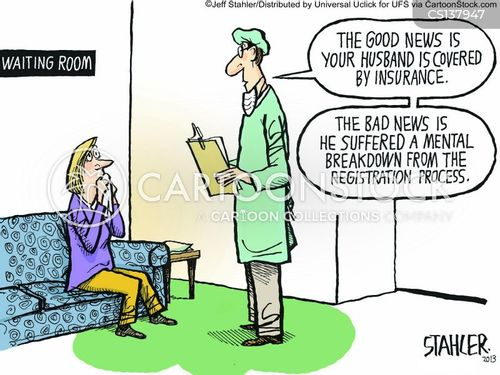


November 2023 marks seven months since the federal government began unwinding Medicaid’s pandemic-related continuous enrollment guarantee. Because Medicaid coverage is associated with improved access and better health outcomes, stabilizing enrollment throughout the public health emergency was a vital public health measure. Now states must grapple with the challenge of returning to normal operations, which means reviewing eligibility for more than 90 million beneficiaries.
By early November, at least 10,135,000 people had been disenrolled. Overall, two-thirds of people had their coverage renewed while about one-third lost eligibility.
The rate of disenrollment during renewal varies greatly, depending on a state’s underlying Medicaid eligibility rules, capacity to process renewals, and strategies for simplifying the process and reducing risks of error. Illinois showed a disenrollment rate of less than 10 percent, while Florida’s rate was one-third. Disenrollment of children appears to be happening at a high rate, even though they should be protected because of the relatively generous eligibility standards governing children’s coverage under Medicaid and the Children’s Health Insurance Program (CHIP).
As of November, children’s enrollment was down by 2.2 million.
Among those disenrolled, more than 70 percent lost coverage for procedural reasons, like failure to return forms or an inaccurate mailing address. High procedural disenrollments also likely reflect agency error (e.g., miscalculating earnings information), but available data do not track the proportion of procedural disenrollments that result from such mistakes.
The high procedural disenrollment problem is exacerbated by the speed at which some states are acting — far faster than required under the federal 12-month unwinding timeline allowed by Congress.
Compounding matters, anecdotal evidence suggests that people terminated for procedural reasons are also being turned away from the health insurance marketplace because states close cases without determining if beneficiaries are truly ineligible for Medicaid. This is happening even though marketplaces and Medicaid agencies are supposed to coordinate activities to ensure that people losing Medicaid can obtain marketplace coverage if eligible.
The numbers are staggering. Texas has disenrolled more than 1.2 million people; Florida’s disenrollments have exceeded 730,000.
Disenrollment rates are the result of a complex process, excessive speed, and overtasked workers, along with states’ underlying eligibility rules for low-income children and adults. If these rules are more restrictive, they increase the disenrollment rate. In states that have not adopted the Affordable Care Act (ACA) expansion, the potential for major coverage loss is far higher. In nonexpansion states, the rules for poor adults (who had coverage throughout the pandemic, including postpartum women or teenage children who have now reached young adulthood) require an extremely low income level — 16 percent of the federal poverty level in Texas or about $4,000 annually for a family of three in 2023. As stated previously, the disenrollment of children has been far higher than expected, affecting even newborns during the first year of life when enrollment is guaranteed.
The ACA streamlined and simplified Medicaid’s historically complex enrollment and renewal process by eliminating in-person interviews, automating data collection functions, and instituting an ex parte process, in which the state performs reviews without placing unnecessary renewal burdens on beneficiaries. In addition, a historic 1970 Supreme Court decision governing due process protections for people receiving means-tested public assistance benefits requires states to fully and comprehensibly explain in writing why coverage is ending and gives beneficiaries the opportunity to contest a termination decision before it takes effect. These constitutional safeguards are especially crucial to Medicaid because termination implicates not only coverage, but access to health care itself.
In 2022, long after the ACA simplification reforms were instituted, the U.S. Department of Health and Human Services (HHS) concluded that of the 15 million people estimated to lose Medicaid during the unwinding process, nearly 45 percent would lose coverage because of procedural issues associated with navigating the renewal process. HHS also foresaw that children and younger adults (including very poor parents) would be disproportionately affected. The evidence appears to be bearing both predictions out.
The federal government and advocates have begun to take action to mitigate erroneous coverage loss. The 2022 unwinding legislation empowers the HHS Secretary to impose corrective action plans in states showing excessive procedural disenrollments. In states that fail to comply with such plans, HHS would “require the State to suspend . . . terminations of eligibility for medical assistance . . . that are for procedural reasons until the State takes appropriate corrective action.” Under this special power, HHS has urged states to guard against improper disenrollments without an individualized ex parte review and also ordered reinstatement of a half-million children and adults disenrolled simply because other family members were no longer eligible. The agency has ordered states to halt disenrollment until corrective action is taken.
In a first-of-its-kind case, beneficiaries in Florida who have lost coverage without required constitutional protections have sued for reinstatement and to halt further disenrollment. Plaintiffs include children (some with serious disabilities) and adults. The complaint describes state notices that are incomprehensible by people with average education and that fail to convey which family members are losing coverage, why coverage is being lost, and the right to a pre-termination hearing. Beneficiaries in other states may follow suit.
The current unwinding situation presents a unique challenge for states, health care providers, and above all, millions of beneficiaries who depend on Medicaid. It is important to remember that continuous enrollment enacted during the pandemic was a response to three structural limitations that are part of everyday Medicaid: first, highly restrictive eligibility limits, particularly in states that do not cover low-income working-age adults; second, the lack of annual guaranteed enrollment for all beneficiaries, regardless of age or basis of eligibility; and third, a redetermination process that, despite improvements, continues to face enormous operational challenges.

Health care sharing ministries (HCSMs) claim to offer health coverage: members follow a common set of religious or ethical beliefs and make monthly payments to help pay the qualifying medical expenses of other members.
These products often appear comparable to insurance, but they lack the consumer protections and benefit standards that apply to comprehensive coverage. HCSMs are under no obligation to pay members’ claims and often require members to negotiate discounts or seek charity care from health care providers.
Because of how HCSMs are marketed, consumers may have difficulty identifying the significant limitations of these arrangements and risk getting stuck with unpaid bills. Until recently, states did not have access to data on HCSMs’ enrollment, operations, and finances.
Massachusetts and Colorado have begun to fill these gaps, and the data they have obtained are revealing. The Massachusetts marketplace began requiring HCSMs to report key data in 2020; and last year, Colorado became the first state to require comprehensive data from all HCSMs enrolling Colorado residents. The state’s first report provides a detailed look at HCSMs selling memberships in Colorado.
The data show HCSMs have grown to include far more members than previously understood and shed light on risks for consumers who pay monthly fees with an expectation that their membership will cover health care claims.
Greater than expected enrollment. National enrollment for the HCSMs included in the Colorado report is larger than previously recognized: 1.7 million people. In Colorado alone, HCSM enrollment (at least 68,000) is equivalent to 30 percent of marketplace enrollment. Because HCSMs often exclude essential health services and are therefore more attractive to people who are relatively healthy, enrollment of this size, relative to marketplace enrollment, may increase premiums for marketplace plans.
It also means a significant number of people have forgone comprehensive coverage and federal subsidies to buy this alternative arrangement that does not guarantee health care costs will be paid.
One HCSM recently surveyed its members and found 42 percent had incomes under 200 percent of the federal poverty level (about $50,000 annually for a family of three). Individuals and families at this income level would likely be eligible for low- or no-cost coverage in the marketplace or Medicaid.
Broker-driven marketing. Seven HCSMs reported using brokers to market their plans; some said they rely heavily or exclusively on brokers to grow membership. About one-third of all enrollment in these seven HCSMs was attributed to brokers.
Because HCSMs pay substantially higher commissions (15% to 20%) than marketplace insurers (2.6%) typically do, brokers have an incentive to place consumers in these arrangements.
Unpaid claims. Though their members submitted about $362 million in claims during the reporting period, the HCSMs asserted that only one-third of this amount — about $132 million — was eligible for payment. During the same time period, HCSMs brought in about $97 million, resulting in an apparent shortfall of $35 million. The low share of eligible claims is attributable in part to the HCSMs’ strict rules that disallow reimbursement for various types of care.
In addition, HCSMs have broad flexibility to refuse sharing of a claim even if it otherwise meets the rules. For example, HCSMs often require their members to negotiate their own discounts or seek charity care from health care providers before their claims will be eligible for sharing.
Essential care ineligible for sharing. HCSMs reported they exclude from sharing any expenses for certain essential health care, including costs related to preventive care, mental health care, and substance use disorders, and exclude coverage for many preexisting conditions, including asthma, autism, cancer, diabetes, and hypertension. Alternatively, comprehensive insurance must cover essential health benefits and all preexisting conditions.
The first-year report shows the challenges of obtaining data from HCSMs that are not subject to any of the standards or oversight that apply to comprehensive health insurance. Regulators determined that several HCSMs marketing memberships in Colorado had failed to report data and getting complete and accurate data from those that did was difficult. A second report, recently released, indicates those challenges continue, making it impossible to draw comparisons between the two years. Still, by requiring HCSMs to use templates and state-defined terms to submit data in a uniform way, Colorado regulators seem to be on the path to a clearer understanding of how HCSMs are working, their financial solvency, and their effect on state residents and the health insurance market. Indeed, data in the second report show the risks to consumers described above persist.
Colorado’s annual requirement to share data will help regulators better understand HCSM operations and finances and, with improved compliance to data submission requirements, should allow for comparisons across HCSMs and from year to year. Data can help point regulators to HCSMs that warrant closer scrutiny and identify for policymakers ways to better protect consumers who may lack a clear understanding of the financial risks of HCSM membership.

West Reading, Pa.-based Tower Health continues to make progress on its performance improvement plan as its operating margin for the three months ended Sept. 30 rose to -4.2% from -8% during the same period in 2022. Its operating cash flow margin also increased from -0.9% to 2.3%.
During the first quarter of fiscal 2024, the three months ending Sept. 30, revenue decreased 2.9% year over year to $457.4 million. Expenses decreased 6.4% to $476.5 million.
Tower’s operating loss for the period was $19.1 million, compared with a loss of $37.6 million for the prior-year period.
As of Sept. 30, total balance sheet unrestricted cash and board-designated investment funds for capital improvements totalled $154 million — a decrease of $54 million from June 30, 2023. The main factors for the decrease were $15 million of debt service payments, physician incentive compensation payments of $9 million, capital expenditures of $6 million, negative changes in working capital of $32 million, partially offset by EBITDA of $10 million.
Total days of cash on hand for the system was 30 on Sept. 30.
After including the performance of its investment portfolio and other nonoperating items, the health system ended the three-month period with a net loss of $20.9 million, compared with a net loss of $37.6 million for the same period in 2022.

West Reading, Pa.-based Tower Health will be out of network for all Cigna Healthcare members starting Jan. 1 following a disagreement over reimbursement rates, the Reading Eagle reported Nov. 24.
The split applies to all Tower Health facilities and physicians for Cigna commercial, Medicare Advantage and behavioral health plans. Cigna said it is continuing to negotiate with Tower Health, but the health system has already begun to notify patients about the impending contract break.
“Tower Health, like other health systems, has been contending with unprecedented cost increases for personnel, supplies, equipment and medication necessary to continue providing high quality care,” a health system spokesperson told the Eagle. “Cigna has been unwilling to compensate Tower Health at reasonable payment rates.”
“We are disappointed that Tower Health is choosing to leave our network Jan. 1 unless we agree to their demands for significant rate increases that will make healthcare much more expensive for the people we serve,” a Cigna spokesperson told the Eagle. “It’s important to understand who pays the bills: any increase in cost of care is paid directly by local employers, their employees and families.”

Medicare Advantage and commercial claims denials have spiked across the country, leaving hospitals increasingly financially strapped, according to research published Nov. 17 by the American Hospital Association and Syntellis.
The report analyzed data from a national sample of 1,300 hospitals and health systems. From January 2022 to July 2023, revenue reductions related to Medicare Advantage denials increased 55.7% for the median hospital. During the same period, denial-related revenue reductions rose 20.2% for commercial plans. For denials relative to net patient service revenue for the median hospital, Medicare Advantage plans saw an increase of 63.3% and commercial plans rose 20%.
“[Hospitals] must take larger revenue reductions to account for those lost reimbursements from commercial payers and Medicare Advantage plans, which cover more than 31 million Americans and make up about half of all Medicare beneficiaries,” the report said. “The challenges will only worsen as Medicare Advantage enrollment continues to grow.”
In November 2022, an AHA survey found that half of hospitals and health systems reported having more than $100 million in unpaid claims that were more than 6 months old. As of June 2023, health systems had a median of 124 days cash on hand, down from 173 days in January 2022.
The new data coincides with recent reporting from Becker’s about hospitals across the country that have ended some or all Medicare Advantage contracts. The reasons behind contract terminations vary by system and by payer offering the plan. Some systems have cited steep losses amid excessive prior authorization denial rates and slow payments from insurers. Others have noted that most MA carriers have faced allegations of billing fraud from the federal government and are being probed by lawmakers over their high denial rates.
“It’s become a game of delay, deny and not pay,” Chris Van Gorder, president and CEO of San Diego-based Scripps Health, told Becker’s in September.
According to data shared with Becker’s by FTI Consulting, among the 64 contract disputes reported in the media this year through Sept. 30, 37 involved Medicare Advantage plans, and 10 disputes exclusively involved MA plans. In the third quarter alone, 15 disputes involved MA plans, compared to seven in the third quarter of 2022, a 115% increase year over year.
 HENRY KOTULA