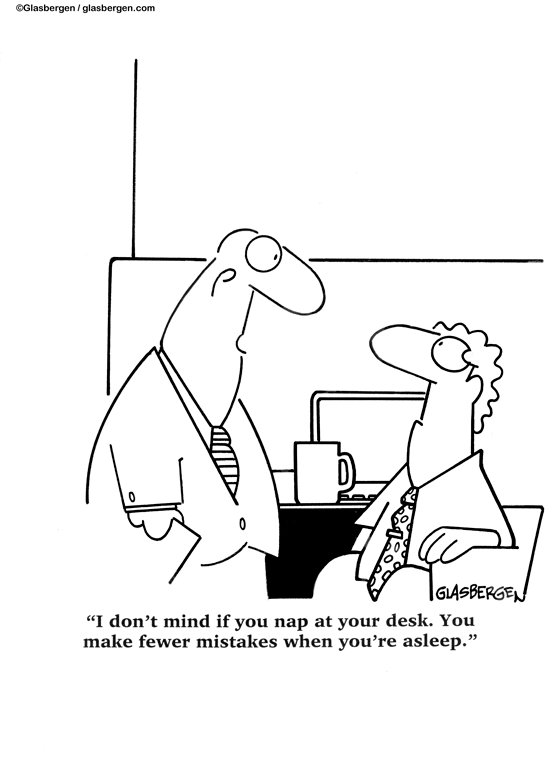
Cartoon – Patient Condition

https://link.wired.com/view/5db707423f92a422eaeaf234g2an9.rsw/db0c8990

The House passed a sweeping spending bill last night that omitted billions in Covid-19 aid. Biden administration officials had said the funds were urgently needed to maintain supplies of essential treatments and support further vaccine development, but Republicans disagreed. Some public health experts have expressed dismay that the pandemic relief money was cut, given the likelihood that new variants will continue to emerge. After all, viruses keep evolving until they run out of hosts to infect, and there are billions of people around the world—and millions in the US—who haven’t been vaccinated against Covid-19.
Cases continue to decline in the US, and a number of top voices in public health recently put out a report mapping when and how the country can transition out of the pandemic. Their recommendations include vaccinating at least 85 percent of the US population by 2023, improving indoor air quality in public buildings, and allocating additional funding for Covid-19 response and to prepare for future pandemics.

Welcome to Friday’s Health 202, where today we have a special spotlight on the pandemic two years in.
🚨 The federal government is about to be funded. The Senate sent the long-term spending bill to President Biden’s desk last night after months of intense negotiations.
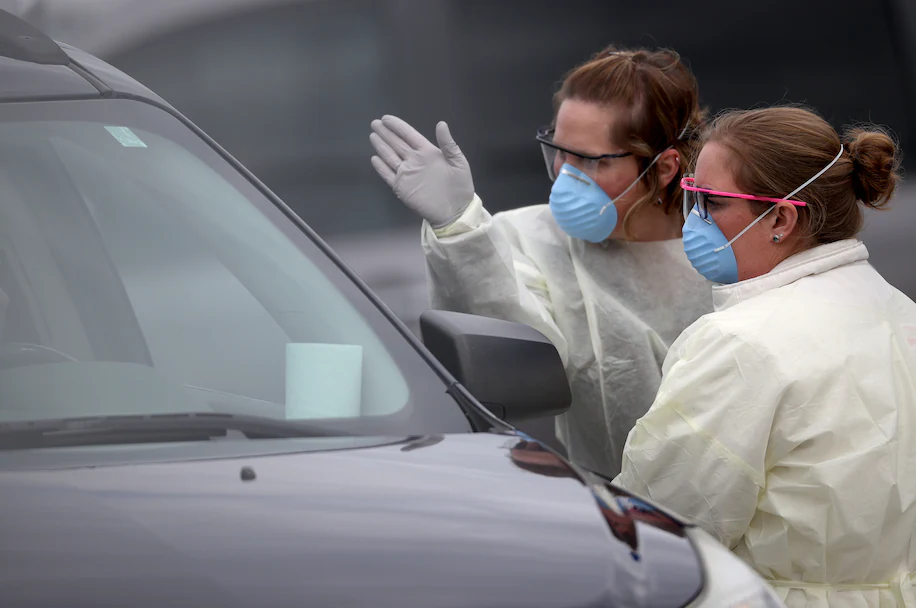
Exactly two years ago, the World Health Organization declared the coronavirus a pandemic and much of American life began grinding to a halt.
That’s when the health-care system, which has never been known for its quickness, sped up. The industry was forced to adapt, delivering virtual care and services outside of hospitals on the fly. Yet, the years-long pandemic has exposed decades-old cracks in the system, and galvanized efforts to fix them.
Today, as coronavirus cases plummet and President Biden says Americans can begin resuming their normal lives, we explore how the pandemic could fundamentally alter the health-care system for good. What changes are here to stay — and what barriers are standing in the way?
What happened: Telehealth services skyrocketed as doctors’ offices limited in-person visits amid the pandemic. The official declaration of a public health emergency eased long-standing restrictions on these virtual services, vastly expanding Medicare coverage.
But will it stick? Some of these changes go away whenever the Biden administration decides not to renew the public health emergency (PHE). The government funding bill passed yesterday extends key services roughly five months after the PHE ends, such as letting those on Medicare access telehealth services even if they live outside a rural area.
But some lobbyists and lawmakers are pushing hard to make such changes permanent. Though the issue is bipartisan and popular, it could be challenging to pass unless the measures are attached to a must-pass piece of legislation.
What happened: The infectious virus tore through nursing homes, where often fragile residents share rooms and depend on caregivers for daily tasks. Ultimately, nearly 152,000 residents died from covid-19.
The devastation has sparked a rethinking of where older adults live and how they get the services they need — particularly inside their own homes.
More money, please: Finding in-home care — and paying for it — is still a struggle for many Americans. Meanwhile, many states have lengthy waitlists for such services under Medicaid.
Experts say an infusion of federal funds is needed to give seniors and those with disabilities more options for care outside of nursing homes and assisted-living facilities.
For instance, Biden’s massive social spending bill included tens of billions of dollars for such services. But the effort has languished on Capitol Hill, making it unclear when and whether additional investments will come.
What happened: Hispanic, Black, and American Indian and Alaska Native people are about twice as likely to die from covid-19 than White people. That’s according to age-adjusted data from a recent Kaiser Family Foundation report.
In short, the coronavirus exposed the glaring inequities in the health-care system.
But will change come? Health experts say they hope the country has reached a tipping point in the last two years. And yet, any real systemic change will likely take time. But, Benjamin said, it can start with increasing the number of practitioners from diverse communities, making office practices more welcoming and understanding biases.
We need to, as a matter of course, ask ourselves who’s advantaged and who’s disadvantaged” when crafting new initiatives, like drive-through testing sites, Benjamin said. “And then how do we create systems so that the people that are disadvantaged have the same opportunity.”

Part of the reason why medical debt is so high is because many Americans don’t have enough savings to pay their deductibles and other out-of-pocket costs, according to a second KFF analysis.
Driving the news: Health insurance plans’ out-of-pocket limits prevent enrollees from paying limitless sums of money for medical care. But that doesn’t mean they protect people from having to pay several thousands of dollars — which not everyone has lying around.
By the numbers: Over 40% of multi-person households can’t cover a mid-range employer family plan deductible of $4,000, and 61% don’t have enough to cover a high-range deductible.

Americans owe at least $195 billion of medical debt, despite 90% of the population having some kind of health coverage, according to new research from the Peterson Center on Healthcare and the Kaiser Family Foundation.
Why it matters: People are spending down their savings and skimping on food, clothing and household items to pay their medical bills, Adriel writes.
About 16 million people, or 6% of U.S. adults, owe more than $1,000 in medical bills, and 3 million people owe more than $10,000.
Go deeper: 16% of privately-insured adults say they would need to take on credit card debt to meet an unexpected $400 medical expense, while 7% would borrow money from friends or family, per the research, which focused on adults who reported having more than $250 in unpaid bills as of December 2019.
It’s not yet clear how much the pandemic and the recession factor into the picture, in part because many people delayed or went without care. There also was a small shift from employer-based coverage to Medicaid, which has little or no cost-sharing.

“Follow the money,” was the advice of Deep Throat to the Watergate journalists. But now, new Federal Trade Commission Chair Lina Khan says that’s not enough when analyzing monopolies in both healthcare and rest of the economy. Follow the algorithms and follow the power, too, not just the money.
We all know how monopolies harm consumers with higher prices. But monopolies and powerful corporations cause harm in other ways. Some examples:
Not all of these examples are linked directly to potentially illegal anticompetitive activities. But all are linked to the exercise of insufficiently checked corporate power. Commissioner Khan has signaled that she will consider such harms when analyzing mergers and other potentially anticompetitive activities.
This expanded view of anticompetitive harm is a departure from Robert Bork’s more narrow approach to antitrust enforcement taken by the F.T.C. since publication of Bork’s 1978 book The Antitrust Paradox. Bork noted that in many cases, mergers resulted in economies of scale that lowered prices for consumers. By his standard, such mergers were permissible as benefiting the consumer.
But now Commissioner Khan – and others like-minded theorists called neo-Brandeisians – point to the other harmful effects beyond the seeming benefit of lower prices. For example, the flip-side of a monopoly’s position as seller is its monopsony as a purchaser of labor. If there is only one big potential employer, workers do not have a competitive labor market, depressing their bargaining power and wages. In the digital economy there is also potential jeopardy to data privacy and security, and coercion to use certain digital products. Think the teenage girls on Instagram.
Employees of a single powerful employer are also inhibited from rocking the boat with innovations, critiques, or whistleblowing. This enervates a truly competitive marketplace.
Commissioner Khan views the antitrust issue not as being one of bigness but rather of power, power that reduces true competition. Beyond merely looking at prices, she seeks to identify and quantify the other elements of power and competition.
This blog has implicated healthcare monopolies as one direct cause of relentless increases in spending. It has also embraced the view of Steven Brill that “over the last five decades a new ‘best and brightest’ meritocracy rigged not only healthcare, but also the entire American financial, legal, and political system to build ‘moats’ of protection to perpetuate their wealth and power.”
Commissioner Khan is now highlighting a key mechanism – anticompetitive political and financial power — by which healthcare corporations rig healthcare and by which other corporations have blocked reform in pursuit of short-sighted profits. She summarizes the remedy:
If you allow unfettered monopoly power to concentrate, its power can rival that of the state., right? And historically, the antitrust laws have a rich tradition and rich history, and a key goal was to ensure that our commercial sphere was characterized by the same types of checks and balances and protections against concentration of economic power that we had set up in our political and governance sphere. And so the desire to kind of check those types of concentrations of power, I think, is deep in the American tradition.
This blog thinks she is on the right track. Because healthcare reform is in the public interest and must be pursued even in the face of powerful special interests.
Take Action
Now, take action.

In recent years, I’ve written and spoken a lot about consequential leadership. History has presented us with far too many examples to share here: Abraham Lincoln, Ernest Shackleton, Rosa Parks, Amelia Earhart, and John Lewis are a few names that immediately come to mind.
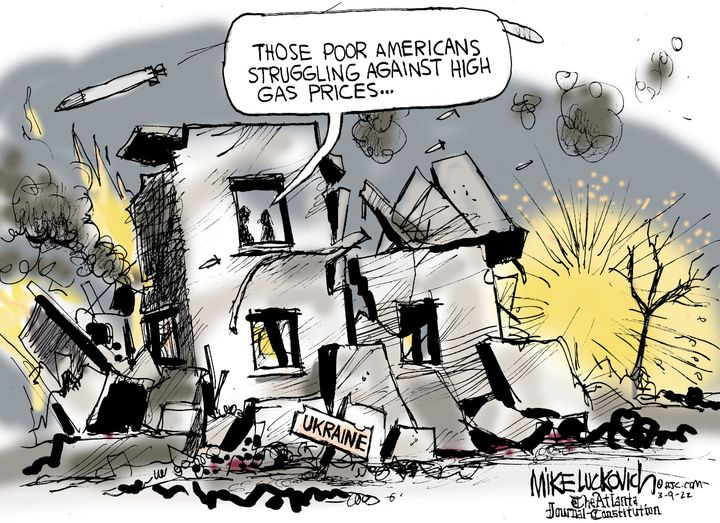
As we watch Russia’s unprovoked invasion of Ukraine unfold night by night, attack by attack, and tweet by tweet, the gut-wrenching and heartbreaking scenes expose an unimaginable magnitude of inhumanity. At the same time, we’re witnessing an unforeseen spirit of resilience, patriotism, and heroism emerge that reveals the best of humanity.
No one personifies the consequential leadership we are observing more than Ukrainian President Volodymyr Zelenskyy. It has been said that a crisis doesn’t build character—it reveals it. The heroic response to this crucible has demanded much of Zelenskyy and his people. But it has revealed even more about the character of this unfamiliar leader and country than any of us ever expected.
As I reflect on this past week, there are five virtues of consequential leadership Zelenskyy and his brave comrades are illuminating for us we can learn from.
Conviction: Consequential leaders know—and honor—their purpose. They recognize their responsibility to use the talent, health, education, opportunities, and influence they are blessed with to solve big problems and do really hard things. And in rare circumstances—like Zelenskyy’s— they are called to do things no person should ever have to do. While most of us devote our lives to preparing to be the leader we want to be, in moments of consequence, we must become the leaders the world needs us to be.
Courage: Consequential leaders have the fearlessness to live their purpose—even under life-threatening conditions. It’s easy for us to talk about our convictions when times are good from the comfort and safety of our corporate suites and government offices. But how many of us and our political leaders would, or could, summon the primal valor we’re seeing Zelenskyy and his lieutenants model?
Composure: Consequential leaders thrive under fire and in times of great uncertainty. There is no blueprint for moments of consequence like the one Zelenskyy is facing. There is no playbook for responding to the unprovoked invasion of your country by a neighboring world superpower. However, leaders of consequence like Zelenskyy don’t panic. They stay calm, rational, and in control. They know that panic fuels fear and that composure catalyzes confidence.
Communication: Consequential leaders communicate frequently, authentically, and truthfully. They speak to our minds, move our hearts, and have the intuition to know when and how to deliver the hard truth as well as realistic hope. Consequential leaders like Zelenskyy are brutally blunt about the abundance of resources they are lacking, but they also remind us of the prosperity of blessings we have—things like family, friends, country, and faith.
Compassion: Finally, consequential leaders put serving others ahead of serving themselves. Zelenskyy and leaders like him put the public interest ahead of their self-interest. While most leaders measure their success in the world, consequential leaders measure their significance on the world. It is never too late for any of us to rethink how we gauge our leadership impact.
It is unclear how the battle over Ukraine will play out. But it is unambiguously clear this moment will redefine leadership for generations. As in all moments of great consequence, history will judge Zelenskyy and Putin, as well as other world leaders, by how they acted–and the consequences of their humanity and inhumanity.
As New York Times columnist David Brooks tweeted yesterday: “Would you be Zelenskyy? Would I? What a high and heroic standard that guy has set for us in the years ahead.”