The Medicare Advantage Trap

In 46 states, once you choose Medicare Advantage at 65, you can almost never leave.

Medicare was founded in 1965 to end the crisis of medical care being denied to senior citizens in America, but private insurers have been able to progressively expand their presence in Medicare.

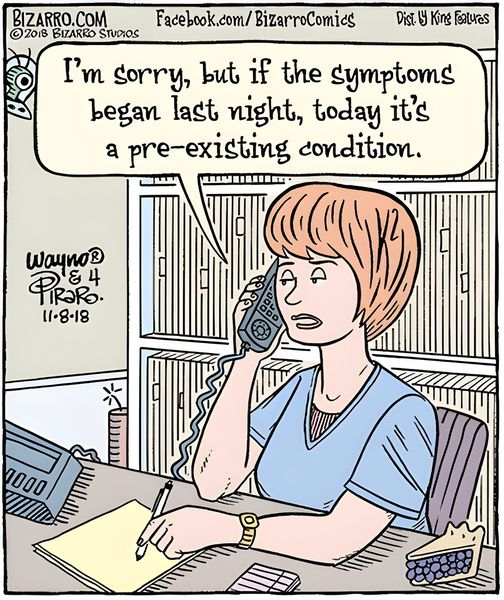
One of the biggest selling points of Obamacare was that it would finally end discrimination against patients on the basis of pre-existing conditions.

But for one vulnerable sector of the population, that discrimination never ended. Insurers are still able to deny coverage to some Americans with pre-existing conditions. And it’s all perfectly legal.

Sixty-five million seniors are in Medicare open enrollment from October 15 until December 7. Nearly 32 million of those patients are enrolled in Medicare Advantage, a set of privately run plans that have come under fire for denying treatment and overbilling the government.

Medicare Advantage patients theoretically have the option to return to traditional Medicare. But in 46 states, it is nearly impossible for those people to do so without exposing themselves to great financial risk.

Traditional Medicare has no out-of-pocket cap and covers 80 percent of medical expenses. Unlike Medicare Advantage plans, in traditional Medicare, seniors can choose whatever provider they want, and coverage limitations are far less stringent. Consequently, there’s a huge upside to going with traditional Medicare, and the downside is mitigated by the purchase of a Medigap plan, which covers the other 20 percent that Medicare doesn’t pay.

While this coverage is more expensive than most Medicare Advantage plans, nearly everybody in their old age would like to be able to choose their doctor and their hospitals, and everybody would want the security of knowing that they won’t be denied critical treatments. In 46 states, however, Medigap plans are allowed to engage in what’s called underwriting, or medical health screening, after seniors have already chosen a Medicare Advantage plan at age 65.

Only four states—New York, Connecticut, Maine, and Massachusetts—prevent Medigap underwriting for Medicare Advantage patients trying to switch back to traditional Medicare. The millions of Americans not living in those states are trapped in Medicare Advantage, because Medigap plans are legally able to deny them insurance coverage.

Medicare Advantage little resembles Medicare as it was traditionally intended, with tight networks and exorbitant costs that threaten to bankrupt the Medicare trust fund. (A recent estimate from Physicians for a National Health Program found that the program costs Medicare $140 billion annually.)

Jenn Coffey, a former EMT in New Hampshire who has been a vocal critic of her Medicare Advantage insurers’ attempts to deny her needed care, told the Prospect that she would jump back to traditional Medicare in a second. But because she became eligible prior to turning 65 due to a disability, she never had the option to pursue traditional Medicare with a Medigap plan. Instead, she pays premiums for a Medicare Advantage plan that nearly mirror what the cost of Medigap would be. But New Hampshire, like most other states, allows Medigap plans to reject her.

“I tried to find out if I could switch to traditional Medicare,” said Coffey. “When I talked to an insurance broker they said that I could. I made an appointment with an insurance agent, who then started looking at my pre-existing conditions, and they said, ‘We’re never going to get somebody to underwrite you.’”

Coffey was stunned by the agent’s words. “I honestly thought that we were completely done with pre-existing conditions” as a determinant for insurance coverage, she said. “Medigap plans are the only place where they are allowed to discriminate against us.”

Medicare Advantage now covers a majority of Medicare participants, thanks to extremely aggressive marketing and perks for healthier seniors like gym memberships.

In the 46 states that lack protections for people with pre-existing conditions, “lots of people don’t know that they may not be able to buy a Medigap plan if they go back to traditional Medicare from Medicare Advantage,” said Tricia Neuman, a senior vice president at KFF who has studied this particular issue.

Technically speaking, they can still go back to traditional Medicare if they don’t like their Medicare Advantage options, Neuman explained. But without access to a Medigap plan, they would be on the hook for 20 percent of their medical costs, which is unaffordable for most seniors.

Neuman told the Prospect about “cases where people have serious medical problems, and wanted to see a specialist,” but were blocked by their Medicare Advantage plan. Those same people had no ability to switch to traditional Medicare with a Medigap plan at precisely the time they need it the most, in nearly every state in the U.S.

“Medigap wasn’t a part of the ACA discussion on pre-existing conditions,” Neuman added. “A lot of people have no idea about this restriction on Medicare coverage, until they find themselves in a position that they want to go back and then it could be too late.”

Academic research shows that seniors often seek to return to traditional Medicare when they become sick.

The critical component that both Medigap and Medicare Advantage plans offer, which traditional Medicare does not, is out-of-pocket caps, said Cristina Boccuti, a director at the West Health Policy Center. “People who want to leave their Medicare Advantage plan, maybe because they are experiencing problems in their plan’s network, decide to disenroll and can’t obtain an out-of-pocket limit which they had previously had in Medicare Advantage,” Boccuti said.

That’s exactly the problem facing Rick Timmins, a retired veterinarian in Washington state. When Timmins was continually delayed care for melanoma, he explored getting out of his Medicare Advantage plan. “I wanted out of Medicare Advantage big-time,” said Timmins. But when he began to look at Medigap plans, he was told that he wouldn’t be guaranteed to get a plan, and that the insurance company could raise premiums based on a pre-existing condition.

“I doubt that I’ll be able to switch over to traditional Medicare, as I can’t afford high premiums,” Timmins said. “I’m still paying off some old medical debt, so it adds to my medical expenses.”

Medicare was founded in 1965 to end the crisis of medical care being denied to senior citizens in America. “No longer will older Americans be denied the healing miracle of modern medicine,” Lyndon Johnson said at the time. “No longer will illness crush and destroy the savings that they have so carefully put away over a lifetime so that they might enjoy dignity in their later years. No longer will young families see their own incomes, and their own hopes, eaten away simply because they are carrying out their deep moral obligations to their parents, and to their uncles, and their aunts.”

But slowly, private insurers were able to progressively expand their presence in Medicare, with a colossal advance made through George W. Bush’s Medicare prescription drug program in 2003. Now, Medicare Advantage covers a majority of Medicare participants, thanks to extremely aggressive marketing and perks for healthier seniors like gym memberships.

Numerous recent studies have shown Medicare Advantage plans to deny care while boosting the profits of private insurance companies. Defenders of Medicare Advantage argue that managed care—which practically speaking means insurance employees denying care to seniors—improves our health care system.

Denial-of-care issues,

combined with the aforementioned $140 billion drain on the trust fund, have attracted far more scrutiny of the program than in years past. Community organizations like People’s Action, along with other groups like Be A Hero, have stepped up their criticism of the program. The Biden administration proposed new rules this year to curb overbilling through the use of medical codes, but a furious multimillion-dollar lobbying campaign from the health insurance industry led to the rules being implemented gradually.

Still, members of Congress have become more emboldened to speak out against abuses in Medicare Advantage. A recent Senate Finance Committee hearing featured bipartisan complaints about denying access to care. And House Democrats have urged the Centers for Medicare & Medicaid Services to crack down on increases in prior authorizations for certain medical procedures, as well as the use of artificial-intelligence programs to drive denials.

Megan Essaheb, People’s Action’s director of federal affairs, said that Medicare Advantage has become a drain on the federal trust fund. “These private companies are making tons of money,” Essaheb said. “The plans offer benefits on the front end without people understanding that they will not get the benefits of traditional Medicare, like being able to choose your doctor.”

Despite the growing scrutiny, the trapping of patients who want to get out of Medicare Advantage hasn’t gotten as much attention from either Congress or state legislatures that could end the practice.

Coffey, the retired EMT from New Hampshire, told the Prospect that she has paid $6,000 in out-of-pocket expenses this year under a Medicare Advantage program. “If I could go to Medigap, I would have better access to care, I wouldn’t be forced to give up Boston doctors,” she said.

“These insurance companies are allowed to reap as much profit as possible for as little service as they can get away with. They pocket all of our money and they don’t pay for anything, they sit there and deny and delay.”


The lifesaving potential of OpenAI’s GPT-4o update

https://www.linkedin.com/pulse/lifesaving-potential-openais-gpt-4o-update-robert-pearl-m-d–ngrmc/

Generative AI tools have made remarkable strides in medicine since the launch of ChatGPT in late 2022. Research has shown that AI, with expert clinician oversight, can significantly enhance diagnostic accuracy, treatment recommendations, and patient monitoring and analysis.

And yet, despite its impressive capabilities and buzz, generative AI is still in the early stages of adoption—both in U.S. healthcare and society.

While almost everyone has heard of genAI, less than a quarter of Americans use it regularly in their personal or professional lives. OpenAI’s newest update, GPT-4o, aims to change that.

In demos released during its spring update, OpenAI showed users engaged in natural, human-like conversations with GPT-4o. The AI interacted with people on their smartphones across video, audio and text, offering real-time spoken responses that sounded eerily human.

In the demo above, AI’s instant answers and friendly voice closely mimic the pace and inflection of normal dialogue. Not coincidently, GPT-4o’s voice sounded remarkably like Scarlett Johansson’s AI character in the movie Her (a decision OpenAI later walked back “out of respect”).

Regardless of the voice coming out of it, GPT-4o is at once awe-inspiring and unsettling. It also represents a significant departure from tech-industry norms. Most tech companies have long avoided creating AI “companions” because of ethical concerns, fearing people could form addictions that exacerbate isolation and loneliness.

What Will GPT-4o’s Rule-Breaking Mean For Medicine?

Critics point out that OpenAI and its peers have yet to resolve a host of major “trust” issues. These include accuracy, privacy, security, bias and misinformation. Of course, these will need to be resolved.

But by creating an AI experience that feels more like talking to a friend, or potentially a doctor, OpenAI has already leapt the tallest hurdle to mass acceptance and adoption. The company understands that humanizing GPT-4o—making it easier and more enjoyable to use—is essential for attracting a wide array of users, including the “late majority” and “laggards” described in Geoffrey Moore’s seminal 1991 book Crossing the Chasm.

Today, 70% of genAI’s non-users are Gen X (ages 44-59) and Baby Boomers (60-78). These generations, which comprise 136 million people, strongly prefer voice and video technologies to typing or touchscreens, and greatly prefer “conversational” AI apps to text-only ones.

They also make up the overwhelming majority of Americans with chronic diseases like diabetes, heart failure and cancer.

GenAI: From Mass Adoption To Mass Empowerment

Once consumers in their 50s, 60s and 70s become comfortable using GPT-4o for everyday tasks, they will then start to rely on it for medical inquiries, too. In a healthcare context, using GPT-4o will closely resemble a video visit or a phone call with a medical professional—two modalities that satisfy the majority of older patients. In fact, 93% of adults over age 70 say they value having telehealth as an option.

With broad adoption, GPT-4o (which will be embedded in next generations of ChatGPT) will empower the sickest Americans to take greater control of their own health, preventing up to hundreds of thousands of premature deaths each year from the complications of chronic disease: heart attacks, strokes, cancer and kidney failure. According to the Centers for Disease Control and Prevention, the effective management of chronic illness would reduce these complications by 30% to 50%, with a similar reduction in mortality.

Generative AI technology contains both the knowledge and ability to help accomplish this:

  • Knowledge. ChatGPT houses an extensive corpus of scientific literature, which includes a diverse and extensive dataset of clinical studies, guidelines from professional medical organizations and research published in top-tier medical journals. In the future, it will be updated with real-time data from medical conferences, health records and up-to-the-minute research, ensuring the AI’s knowledgebase remains both comprehensive and current.
  • Ability. To assist overburdened clinicians, genAI can provide patients with round-the-clock monitoring, insights and advice—empowering them to better diagnose and manage their own health problems. Future generations of these tools will connect with monitoring devices, informing patients about their health status and suggesting medication adjustments or lifestyle changes in clear and friendly terms. These tools will also remind people about preventive screenings and even facilitate testing appointments and transportation. These proactive approaches can reduce complications and improve health outcomes for the 130 million Americans living with chronic diseases.

Combatting Chronic Disease With GPT-4o

To dive deeper into genAI’s difference-making potential, let’s look at two major gaps in chronic disease management: diabetes and hypertension.

Diabetes is the leading cause of kidney failure, a major contributor to heart attacks and responsible for 80% of lower limb amputations. Effective management is possible for nearly all patients and would prevent many of these complications. Yet diabetes is well controlled in only 30% of cases across the United States.

Similarly, effective control of high blood pressure—the leading cause of strokes and a major contributor to kidney failure and heart attacks—is achieved only 55% to 60% of the time. Although some health systems achieve control levels above 90%, the best-available tools and approaches are inconsistently deployed throughout medical practices.

Medical monitoring devices plus AI could play a crucial role in managing hypertension. Imagine a scenario in which a doctor prescribes medication for hypertension and sends the patient home with a wearable device to monitor progress. After a month, the patient has 100 readings—90 normal and 10 elevated. The patient is unsure whether the 90 normal readings indicate all is well or if the 10 elevated ones signal a major problem. The doctor doesn’t have time to review all 100 readings and prefers not to clutter the electronic health record with this data. Instead of the patient waiting four months for the next visit to find out if all is well or not, a generative AI tool could quickly analyze the data (using the doctor’s instructions) and advise whether a medication adjustment is needed or to continue as is.

Today’s generative AI tools aren’t ready to transform medical monitoring or care delivery, but their time is coming. With the technology doubling in power each year, these tools will be 32 times more capable in five years.

Overcoming Barriers To Mass Adoption

Concerns about AI privacy, security and misinformation need to be solved before the majority of Americans will buy in to an AI-empowered future. Progress is being made on those fronts. For example, the leap from GPT-3.5 to GPT-4 saw an 82% reduction in hallucinations, a larger context window and better safety mechanisms.

In addition, clinicians worry about potential income loss if AI leads to healthier patients and reduced demand for medical services. The best solution is to shift from the current fee-for-service reimbursement model (which rewards the volume of medical services) to a value-based, capitated model. This system rewards doctors for preventing chronic diseases and avoiding their most serious complications, rather than simply treating life-threatening medical problems when they arise.

By adopting a pay-for-value approach, medical professionals will embrace genAI as a tool to help prevent and manage diseases (rather than seeing it as a threat to their livelihoods).

The release of GPT-4o shattered the industry norm against creating human-like AI, introducing ethical risks that must be carefully managed. However, the potential for genAI to save thousands of lives each year makes this risk worth taking.

Michael Dowling on the healthcare crisis right under our noses

Healthcare leaders are grappling with a daunting healthcare challenge that persists quietly. Day-to-day, it doesn’t trigger loud alarms, emergency press conferences, or AI pilots, but addressing it will take immense collective effort.

As of 2022, there were 52 million Americans over the age of 65, a population that grows by 10,000 each day. By 2034, older Americans will outnumber younger ones. An estimated 50% of babies born in 2020 are expected to live beyond 100 years. 

Behind these statistics lies a diverse population: 90-year-olds running marathons and 65-year-olds incapacitated by strokes. Biological age is distinct from numerical age, after all. 

The intensifying demands of an aging population on the U.S. healthcare system represent a challenge of a lifetime, yet one often downplayed or overlooked in the day to day. This aligns with the history of geriatric medicine. The specialty focused on medical care for older adults and the promotion of healthy aging was not widely accepted in the U.S. even in the 1980s. 

“About 25 years ago, if you were in most health systems and you talked about geriatric medicine, most clinicians would tell you there was no such thing,” said Michael Dowling, president and CEO of Northwell Health. “There was a denial about the fact that there was geriatric medicine. The idea was that people were older adults that were just getting older.”

Mr. Dowling is a co-author of “The Aging Revolution.” The book, released in June 2024, highlights the revolutionaries who rejected the status quo in elder care and pioneered new methods to improve aging adults’ quality and longevity of life.

Much of the geriatric medicine specialty originates in Northwell’s home base: New York City. There, Robert Butler, MD, earned his medical degree in 1953 and not long after began to notice gaps in his education when caring for older adults. Their health needs were more complex, interrelated, and varied, yet they were treated as no different from younger adults. Driven to know more, he joined the National Institute of Mental Health in Washington, D.C., to explore healthy aging, embarking on an irreversible journey. 

Through the 1960s and early 1970s, Dr. Butler grew more impatient with the status quo healthcare treatment of older adults in America. He observed prevailing attitudes of paternalism, infantilism, avoidance or mere caretaking rather than meaningful treatment. 

Dr. Butler made no effort to hide his frustration with the title of his 1975 book, “Why Survive? Being Old in America.” In it, he argued that healthcare professionals were not adequately trained to meet the needs of older patients. Their medical conditions were considered uninteresting by teaching institutions and stereotyped as cantankerous and bothersome. The book won the Pulitzer Prize for General Non-Fiction and resonated with other physicians, expanding the circle of healthcare professionals seeking specialization in the care of older patients.

In 1982, Dr. Butler established the Department of Geriatrics and Adult Development at Mount Sinai Medical Center in New York City, creating the first department of its kind in a U.S. medical school. He continued to promote the specialty and the pursuit of knowledge in geriatric medicine, a field in which he had no formal education because it did not exist during his training. Dr. Butler passed away in 2010 at the age of 83.

“He was a powerhouse. It was [Dr. Butler] who basically pushed the issue,” said Mr. Dowling. “It doesn’t mean it wasn’t discussed prior, but he actually took it upon himself to make a difference. That’s amazing.” 

Mr. Dowling said the book, co-authored with Maria Torroella Carney, MD, chief of geriatric and palliative medicine for Northwell, and author Charles Kenney, aims to raise awareness about the relatively recent development of geriatric medicine. It highlights how a dedicated group of individuals transformed this field from a notable shortcoming into a reality not that long ago. 

The book includes real patient stories and took two years to write, aiming to help readers understand healthcare for older adults vividly and not merely in theory. It covers the rise of palliative medicine in the 1990s, the return of home care and pioneers’ work to address the toughest geriatric syndromes, like falls and delirium. 

The questions and shortcomings that Dr. Butler forcefully highlighted in the 1970s and 1980s remain relevant today.

Geriatricians provide comprehensive care for adults ages 65 through the end of their life. While this age group consumes more healthcare than any other,

there are fewer than 7,300 physicians that are board-certified geriatricians, which is fewer than 1% of all physicians. 

This deficit places greater demands on entire systems, then, to better meet the needs of the aging population. Demand for services will increase, necessitating the evolution and expansion of skill sets, cultural competencies, access points and care settings.

This work makes the practice of geriatric medicine and the advancements made for older patients relevant to far more than the physicians earning certifications in the specialty. Health systems today face questions about what it means to be an age-friendly health system, which requires more than medical care. Age-friendly care is a specific model from the Institute for Healthcare Improvement and The John A. Hartford Foundation that rests on four M’s: What Matters Most, Medication, Mentation and Mobility. 

Northwell is one of the largest systems to adopt the framework in all adult acute care settings, primary care ambulatory sites, and post-acute care locations. The effort requires staff training, evidence-based assessment tools and metrics, governance and partnerships with outside institutions. Nationwide, more than 4,000 sites of care have been recognized as age-friendly organizations. 

Mr. Dowling’s focus on the topic is a steady one, with more initiatives to come. Aging presents a dual challenge: as people live longer, they place increasing demands on health systems and support infrastructures, compounded by declining birth rates. 

“When the older population is growing by about 10,000 a day, and the population of children is declining, you have this massive imbalance, which is not just a healthcare issue. It’s a huge economic issue,” Mr. Dowling said. The book does not shy away from the challenge, including a chapter with seven experts addressing the question: How will we as a society deliver and pay for care needed by an aging population where every day 10,000 people turn 65? 

“The Aging Revolution” celebrates the strides made in geriatric medicine and honors the pioneers who led the way, helping our elders avoid unnecessary suffering in the pursuit of longer, fulfilling lives. It also serves as a reminder that the aging of our society demands rigorous problem-solving today and in the years ahead, requiring a spirit of innovation equal to, if not greater than, that which drove its inception.

Insurers to pay out more than $1 billion in premium rebates

The rebates that will be issued later this year will be larger than those issued in most prior years, the analysis found.

Health insurers are projected to pay about $1.1 billion in Affordable Care Act medical loss ratio rebates this year, a new KFF report finds.

The medical loss ratio (MLR) provision of the ACA limits the amount of premium income that insurers can keep for administration, marketing and profits. Insurers that fail to meet the applicable MLR threshold are required to pay back excess profits or margins in the form of rebates to individuals and employers that purchased coverage.

The $1.1 billion in estimated total rebates across commercial markets are similar to the $1 billion in total rebates issued in 2022, and the $950 million issued in 2023. Last year, rebates were issued to 1.7 million people with individual coverage and 4.1 million people with employer coverage. In the individual market, the 2023 average rebate per person was $196, while the average rebates per person for the small group market and the large group market were $201 and $104, respectively.

The rebates, to be issued later this year, will be larger than those issued in most prior years, the analysis found, but they’ll fall short of the recent rebate totals of $2.5 billion issued in 2020 and $2 billion issued in 2021, which coincided with the onset of the COVID-19 pandemic.

WHAT’S THE IMPACT?

In the individual and small group markets, insurers are required to spend at least 80% of their premium income on healthcare claims and quality improvement efforts, leaving the remaining 20% for administration, marketing expenses and profit.

The MLR threshold is higher for large group insurers, which have to spend at least 85% of their premium income on healthcare claims and quality-improvement efforts.

MLR rebates are based on a three-year average, meaning that rebates issued in 2024 will be calculated using insurers’ financial data in 2021, 2022 and 2023, and will go to people and businesses who bought health coverage in 2023.

In 2023, the average individual market simple loss ratio – meaning there’s no adjustment for quality improvement expenses or taxes, and doesn’t align perfectly with ACA MLR thresholds – was 84%. That shows insurers spent an average of 84% of their premium income in the form of health claims in 2023, according to KFF data.

However, rebates issued in 2024 are based on a three-year average of insurers’ experience in 2021-2023. Consequently, even insurers with high loss ratios in 2023 may expect to owe rebates if they were highly profitable in the prior two years.

In the small and large group markets, 2023 average simple loss ratios were 84% and 88%, respectively. Only fully insured group plans are subject to the ACA MLR rule, while roughly two-thirds of covered workers are in self-funded plans, to which the MLR threshold doesn’t apply.

THE LARGER TREND

KFF cautioned that the rebate amounts are still preliminary. Rebates and notices are mailed out by the end of September, and the federal government will post a summary of the total amount owed by each issuer in each state later in the year.

Insurers in the individual market can either issue rebates in the form of a check or premium credit. For people with employer coverage, the rebate can be shared between the employer and the employee, depending on the way in which they share premium costs.

If the amount of the rebate is exceptionally small – less than $5 for individual rebates and less than $20 for group rebates – insurers are not required to process the rebate, as it may not warrant the administrative burden required to do so, KFF said.

Consumer Financial Protection Bureau proposes ban on medical bills from credit reports

The proposal would attempt to stop credit reporting companies from sharing medical debts with lenders.

The Consumer Financial Protection Bureau (CFPB) has proposed a rule intended to remove medical bills from most credit reports, increase privacy protections, help to increase credit scores and loan approvals and prevent debt collectors from using the credit reporting system to coerce people to pay.

The proposal would attempt to stop credit reporting companies from sharing medical debts with lenders and prohibit lenders from making lending decisions based on medical information. 

CFPB framed the proposed rule as part of its efforts to address the burden of medical debt and what it called manipulative credit reporting practices.

WHAT’S THE IMPACT?

In 2003, Congress restricted lenders from obtaining or using medical information, including information about debts, through the Fair and Accurate Credit Transactions Act. But federal agencies then issued a special regulatory exception to allow creditors to use medical debts in their credit decisions.

The CFPB is proposing to close the regulatory loophole it said has kept vast amounts of medical debt information in the credit reporting system. The proposed rule is intended to ensure that medical information does not unjustly damage credit scores, and would help keep debt collectors from coercing payments for inaccurate or false medical bills.

Internal research from CFPB shows that a medical bill on a person’s credit report is not a good predictor of whether they will repay a loan. In fact, the analysis shows that medical debts penalize consumers by making underwriting decisions less accurate and leading to thousands of denied applications on mortgages that consumers would repay.

Since these are loans people will repay, the CFPB expects lenders will also benefit from improved underwriting and increased volume of safe loan approvals. In terms of mortgages, the CFPB expects the proposed rule would lead to the approval of approximately 22,000 additional, safe mortgages every year.

In December 2014, the CFPB released a report  showing that medical debts provide less predictive value to lenders than other debts on credit reports. Then in March 2022, it released a report estimating that medical bills made up $88 billion of reported debts on credit reports. In that report, the CFPB announced that it would assess whether credit reports should include data on unpaid medical bills.

Since the March 2022 report, the three nationwide credit reporting conglomerates – Equifax, Experian and TransUnion – announced they would take many of those bills off credit reports, and FICO and VantageScore, the two major credit scoring companies, have decreased the degree to which medical bills impact a consumer’s score.

Despite these voluntary industry changes, 15 million Americans still have $49 billion in outstanding medical bills in collections appearing in the credit reporting system.

The complex nature of medical billing, insurance coverage and reimbursement, and collections means that medical debts that continue to be reported are often inaccurate or inflated, CFPB said.

Additionally, the changes by FICO and VantageScore have not eliminated the credit score difference between people with and without medical debt on their credit reports. CFPB expects that Americans with medical debt on their credit reports will see their credit scores rise by 20 points, on average, if the proposed rule is finalized.

Specifically, the proposed rule would remove the exception that broadly permits lenders to obtain and use information about medical debt to make credit eligibility determinations. Lenders would continue to be able to consider medical information related to disability income and similar benefits, as well as medical information relevant to the purpose of the loan, so long as certain conditions are met.

The rule would also prohibit credit reporting companies from including medical debt on credit reports sent to creditors when creditors are prohibited from considering it. Additionally, it would prohibit lenders from taking medical devices as collateral for a loan, and bans lenders from repossessing medical devices, like wheelchairs or prosthetic limbs, if people are unable to repay the loan.

THE LARGER TREND

The CFPB began its rulemaking in September 2023 with the goals of ending coercive debt collection practices and limiting the role of medical debt in the credit-reporting system. 

The CFPB also published in 2022 a report describing the effects of medical debt, along with a bulletin on the No Surprises Act to remind credit reporting companies and debt collectors of their legal responsibilities under that legislation.

Supreme Court to hear challenge of DSH payment calculations

The current HHS formula costs hospitals more than a billion dollars each year, says AHA.

The Supreme Court has agreed to review a case challenging how the Department of Health and Human Services calculates Disproportionate Share Hospital payments. 

In February, the American Hospital Association and five other hospital organizations had urged the court to review the case. The current formula costs DHS hospitals more than a billion dollars each year, according to the AHA.

“The AHA is pleased that the Supreme Court agreed to consider this case,” said Chad Golder, AHA general counsel and secretary, by statement. “As we explained in our amicus brief urging the Court to grant certiorari, it is critical to hospitals and health systems that HHS interpret the DSH fraction consistently across the statute. The agency’s longstanding failure to do so has cost hospitals more than a billion dollars each year, directly harming the hospitals that serve America’s most vulnerable patients. We look forward to the Supreme Court rectifying this legal error next term.” 

WHY THIS MATTERS

This case, and one heard by SCOTUS in 2002 called Becerra v. Empire Health Foundation, can be viewed as being two sides of the same coin. Both deal with a different portion of the DSH fraction that determines payment. The Empire Health case dealt with the Medicare portion. This latest case is about the Supplemental Security Income portion. 

The AHA and other organizations have argued that HHS incorrectly adopted the view that a patient is entitled to Supplemental Security Income benefits only if the patient actually received cash SSI payments during a hospital stay. This interpretation is inconsistent with the court’s reasoning in Becerra v. Empire Health Foundation, the AHA said. 

That 2022 decision said that patients are entitled to Medicare Part A benefits for purposes of the DSH formula if they qualify for the program, even if Medicare is not paying for their hospital stay. 

“This case concerns a question that is critical to calculating the Medicare DSH fraction: When are patients ‘entitled to’ SSI benefits and so counted in the numerator? Is it when they are eligible for SSI benefits, or when they are actually receiving cash SSI benefits,” the AHA and other organizations wrote in their brief to the court. 

THE LARGER TREND

In February, the American Hospital Association and five other national hospital associations representing hospitals urged the Court to review the case challenging how HHS applies Congress’ formula for calculating Disproportionate Share Hospital payments.. 

“The correct interpretation of the DSH formula is vitally important to America’s hospitals,” the brief said. “Although HHS has refused to share the data that would allow hospitals to accurately count the SSI-eligible patients whom the agency’s approach excludes, the available estimates suggest that hospitals will lose more than a billion dollars each year in DSH funds. What’s more, a hospital’s eligibility for DSH payments affects its entitlement to other federal benefits designed to help hospitals ‘provide a wide range of medical services’ to vulnerable populations. HHS’s error thus has far-reaching implications for hospitals, patients, and the American healthcare system.” 

Becerra v. Empire Health Foundation was a United States Supreme Court case that in 2022 clarified calculations for the Medicare fraction — one of two fractions the Medicare program uses to adjust the rates paid to hospitals that serve a higher-than-usual percentage of low-income patients, according to SCOTUSblog. Those individuals “entitled to [Medicare Part A] benefits” are all those qualifying for the program, regardless of whether they receive Medicare payments for part or all of a hospital stay, the court ruled.

In Becerra v. Empire Health Foundation, the court ruled 5-4 that HHS had properly interpreted the underlying statute and reversed and remanded the decision of the United States Court of Appeals for the Ninth Circuit.

Is Corporatization Killing Primary Care?

One emerging model brings hope for independent primary care in a rapidly transforming healthcare landscape.

More than 48% of all U.S. physician practices and nearly 70% of physicians are now owned or employed by either hospitals or corporate entities, according to the latest research.

Add to this shift the recent news of Amazon’s new One Medical benefit, billed as delivering access to high-quality primary care and 24/7 on-demand virtual care to the company’s more than 160 million Prime subscribers, and it’s clear that the corporatization of primary care is showing no signs of slowing.

As two primary care physicians committed to providing the best possible care for our patients, we have a front-row seat to the threat that corporatization poses to the very essence of independent primary care. We also have hope.

One emerging model is successfully embracing the tenets of independent primary care, shining a light on the path to better patient health in a rapidly transforming healthcare landscape.

Defining high-value primary care  

High-value primary care relies on maintaining its independence. Independent primary care physicians (PCPs) excel at providing personalized care by fostering meaningful relationships with patients, ensuring that medical decisions are tailored to individual needs, and focusing on prevention to avoid health catastrophes and improve overall health. They often integrate with community leaders, influence local health policy, and mobilize community resources to help patients facing socioeconomic challenges.

In the independent setting, patients of these PCPs benefit from a continuous relationship with the same PCP over time, leading to better health outcomes born of a deeper understanding of their unique healthcare needs.

Notably, these PCPs (and their patients) are less likely to be influenced by the economic incentives that perversely drive patients back to hospitals and health systems in search of expensive but preventable or unnecessary care.

In fact, primary care owned or employed by a hospital is often seen as a loss leader for downstream revenue generators. Hospital-based PCPs are also more likely than their independent peers to experience a loss of autonomy over patient care decisions.

recent survey from the Physicians Advocacy Institute found that 60% of physicians believe that the trend away from private practice ownership has reduced care quality, largely due to a lack of clinical autonomy and an increased focus on cost savings by facility leadership. These collective factors are obstacles to the sacred physician-patient relationship in service of a hospital-driven agenda and slow-moving bureaucracy.

Collaboration over corporatization

Maintaining independence in primary care has become increasingly difficult due to powerful industry headwinds that often lead previously independent practice owners to sell their businesses in defeat. Fortunately, PCPs have more options beyond joining hospitals, health systems, or emerging corporatized healthcare, where financial and operational pressures can form barriers to better care.

Collaborative primary care networks, also known as “enablers,” are entities that combine the strengths of independent primary care with the bargaining power and economies of scale associated with larger corporations. These network groups offer a viable way for practices to maintain independence by working together under a federated body to pool resources and improve infrastructure, thereby reducing administrative burden on the practice and bringing in new technologies and care coordination capabilities. These enablers also help independent practices negotiate collectively to secure better payer contracts, which ensure sustainable revenue streams without sacrificing their patient-centered approach. 

Collaborative primary care networks are effective because they embrace the power of consolidation crucial to the success of corporatized care models while preserving practice autonomy, divorced from upstream economic incentives, which place patient care at risk. Such groups are financially rewarded for keeping patients healthy and out of the hospital, which is ultimately what independent primary care does best. 

Incentivizing value alignment 

Only time will reveal Amazon’s impact on care, but the rise of corporate primary care doesn’t have to spell the death of patient-centered care. What we do know is that primary care innovations deliver true value only when the right incentives are in place, as demonstrated by independent primary care. 

When corporatized primary care organizations function independent of misaligned financial incentives, success can instead be defined through health and well-being. When aligned with the values of independent primary care, corporatized primary care can invest in robust multidisciplinary teams, focus on preventive care, and use technology to improve efficiency in a new model of care delivery that combines the best of what corporate and independent primary care each have to offer.

When independence is maintained, high-quality, personalized primary care will retain a meaningful place within the U.S. healthcare system and continue to help patients live healthier, longer lives. And that gives these two veteran physicians more hope for a brighter future.