


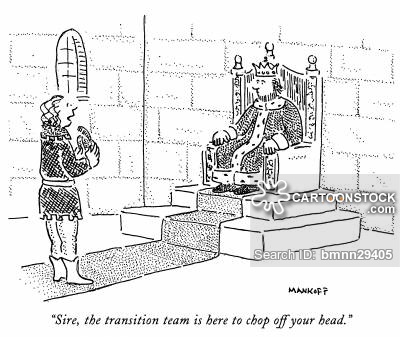
Cartoon – Affordable Deductible Healthcare Act


With the Supreme Court striking down laws that require government workers to pay union fees, one thing is clear: Most public-sector unions in more than 20 states with such laws are going to get smaller and poorer in the coming years.
Though it is difficult to predict with precision, experts and union officials say they could lose 10 percent to one-third of their members, or more, in the states affected, as conservative groups seek to persuade workers to drop out.
The court’s decision is the latest evidence that moves to weaken unions are exacting a major toll. Beyond the dropout campaigns aimed at members, conservatives are bringing lawsuits to retroactively recover fees collected by unions from nonmembers.
In May, President Trump signed three executive orders making it easier to fire government workers and reining in the role of unions representing federal workers.
Dropping out of a union is a more attractive proposition now that workers no longer have to pay a so-called agency fee, typically about 80 percent of union dues, if they choose not to belong to a union. (Those doing so generally account for a small fraction of the workers whom public-sector unions represent.)
In the five years after Michigan passed a law ending mandatory union fees in 2012, the number of active members of the Michigan Education Association dropped by about 25 percent, according to government filings, a much faster attrition rate than before. Its annual receipts fell by more than 10 percent, adjusting for inflation.
Still, the more interesting question is whether the unions, whatever the blow to their ranks and finances, will be substantially weaker.
Union leaders insist that they won’t — that the crisis posed by the case, Janus v. American Federation of State, County and Municipal Employees, has brought more cohesion and energy to their ranks.
“No one wanted this case,” said Randi Weingarten, president of the American Federation of Teachers. “But the gestalt around the country has been to turn an existential threat into an opportunity to engage with our members like never before.”
There are reasons to believe that the claim is not merely desperate bravado.
One parallel to the current development is a 2014 Supreme Court ruling known as Harris v. Quinn, which struck down mandatory union fees for home-based workers who serve private individuals but are paid through government programs like Medicaid.
As of late 2013, the Service Employees International Union represented about 60,000 public-sector home care and child-care workers in Illinois, about 40 percent of whom were union members. (The rest paid agency fees.)
Receipts for the service employees union local representing home-based workers in Illinois dropped significantly in the four years after the decision. But an aggressive membership campaign largely offset the loss of members.
It also built and reinforced personal relationships with members, who could be summoned to make demands of politicians in nearly every legislative district.
“Our members go and meet Sam McCann,” said Keith Kelleher, who until last year was president of the local representing these home-based workers, referring to a Republican state senator. “He says yes most of time because he’s got hundreds of members in his district.”
Public home-based workers in Illinois, a state with a notably anti-union Republican governor, continue to notch victories as a result. Last summer, home care workers won a 48-cent-an-hour wage increase from the state, up from an average wage of $13, in a budget that the legislature passed by overriding the governor’s veto. This spring, home child-care workers won more than a 4 percent raise.
In anticipation of the Janus ruling, major public-sector unions have invested heavily in recent years in reaching out to current members — an effort known as internal organizing — and to prospective members to keep their numbers from dropping precipitously and to create a more activist culture. They plan to continue funding these initiatives even if it requires cutting spending elsewhere.
Mary Kay Henry, the international president of the service employees union, said the union used projections derived from its experience after the Harris decision to cut its budget by 30 percent shortly after Mr. Trump was elected. She said the union, which represents about two million workers, roughly half of them in the public sector, was focusing its spending on recruiting members and mobilizing workers to face down employers and elect pro-labor politicians.
“We intend to prioritize the political and organizing work,” she said.
Government filings show that the union has cut contributions to organizations that it had traditionally supported, including the Children’s Defense Fund, People for the American Way, and the National Immigration Law Center. (The union says it provides nonmonetary support to some of these groups.)
At the same time, the union is investing tens of millions of dollars in a door-to-door canvassing initiative for the midterm elections, intended to turn out people who don’t normally vote.
Lee Saunders, president of the American Federation of State, County and Municipal Employees, said that his union’s two highest priorities going forward would be its internal outreach and helping to organize nonunionized workplaces, and that the union would probably “have to make adjustments” to fund these programs. The union spent more than $15 million during the 2016 campaign cycle supporting political candidates, parties and committees.
Mr. Saunders said the union, which represents over 1.2 million workers, had held one-on-one conversations with nearly 900,000 members since 2013. Among the goals of these conversations, he said, is to inoculate members against campaigns by conservative groups to urge them to quit.
“If someone knocks on their door talking about how you can get out of the union — ‘it would be so easy, you don’t have to pay union dues’ — our folks are prepared to tell them to get the hell off their doorstep,” he said.
Alexander Hertel-Fernandez, a political scientist at Columbia University who studies corporate and conservative efforts to weaken labor, said organized interest groups had traditionally had the greatest impact on elections by educating members about candidates and through on-the-ground canvassing rather than large campaign contributions. “It’s doubly so for unions,” he said, adding that the focus “seems like a wise decision, but the effectiveness has to be weighed against what happens to membership and overall revenues.”
The unions enjoy certain advantages. States like California and New Jersey have tried to ease the blow from Janus pre-emptively by passing legislation that, for example, guarantees public-sector unions access to new hires and their personal contact information to help in recruiting.
There is also a substantial wind at their back: a rising energy on the left during the Trump era. Workers in particular appear more willing to take to the streets and state capitols, including tens of thousands of teachers who walked off their jobs this year in conservative states to protest the underfunding of public education.
When the Supreme Court ruled last month that employment contracts could prohibit workers from bringing class-action lawsuits, activists in states like New York, Vermont and Oregon escalated their efforts to pass so-called private attorneys general legislation, allowing workers to bring cases on the state’s behalf that could benefit all affected workers, the same way litigation by an attorney general would.
“We’ve had many, many folks calling: ‘I heard about this legislation you helped design. How do we make this happen?’” said Deborah Axt, co-executive director of Make the Road New York, an advocacy group pushing the measure. Ms. Axt said the group planned to campaign for the legislation’s enactment this summer.
That kind of energy appears to be benefiting unions. A Gallup poll last summer showed labor’s approval at its highest level since 2003, and unions in West Virginia and several other states where teachers walked off the job this year report gains in members.
“We’ve seen a 13 percent jump in membership because of the walkout,” said Ed Allen, president of the Oklahoma City American Federation of Teachers. “We have over 300 people signed up to work in political campaigns. We’ve never seen those kinds of numbers before.”

This year, Iowa’s legislature took the extraordinary step of abdicating the state’s authority to regulate health insurance products. The bill, enacted in April, exempts health plans offered by the state’s Farm Bureau from state and federal insurance regulation, including Affordable Care Act (ACA) provisions designed to protect people with preexisting conditions and provide a minimum standard of benefits.
Proponents argue that such a law is needed to provide individual market consumers with cheaper health plan options than available under the ACA. Critics point out that younger, healthier consumers are most likely to benefit from these plans. And while details haven’t been provided yet, the Farm Bureau plans are expected to be medically underwritten, and not cover the ACA’s minimum set of benefits. As a result, older Iowans, those with preexisting conditions, and those who need comprehensive coverage are unlikely to find these plans affordable or attractive. And many could be denied enrollment outright. As enrollment in the ACA-compliant individual market becomes older and sicker, marketplace consumers who do not qualify for the ACA’s income-related premium subsidies will face increasingly higher premiums.
Iowa’s Farm Bureau statute is making a bad situation worse for the state’s individual market. Thanks to a number of decisions by state policymakers and the dominant insurance company – Wellmark Blue Cross Blue Shield – premiums in the state’s individual market are already among the highest in the country, with an average annual marketplace plan premium in excess of $10,000 in 2018.
The current dismal state of the ACA individual market in Iowa was not a foregone conclusion. In 2014, when the marketplaces launched, Iowa had four insurers competing in the ACA’s marketplace. In 2018, only one insurer is selling ACA-compliant health plans; it agreed to do so only after implementing an average 50 percent increase to unsubsidized premiums.
Iowa’s marketplace enrollment has also lagged that of other states. As of 2016, only 20 percent of eligible Iowans had enrolled (by comparison, that number was 40 percent in Illinois, 43 percent in Missouri, and 57 percent in Maine). Iowa is an outlier for a critical reason. Wellmark BlueCross BlueShield declined to participate in the marketplace for the first three years, entered only briefly in 2017 and then declined to participate in 2018, but is returning to the market in 2019. The insurer also maintained a large block of pre-ACA grandfathered and transitional, or “grandmothered,” health plans (see table).
Because the enrollees in these plans must pass a health screen before being allowed to enroll, they are relatively healthy. Because Wellmark was able to hang on to these healthy enrollees, the pool of people available for the ACA-compliant market was much smaller and sicker than it otherwise would have been.
| Grandfathered health plans | Policies in effect before the March 2010 enactment of the ACA; not subject to ACA standards and protections. Although these policies can be renewed indefinitely as long as they do not undergo substantial changes, they can’t be newly issued. |
| Grandmothered (transitional) health plans | Policies issued after the ACA’s 2010 enactment but before 2014. Policies are not required to meet critical ACA protections. |
Due to the transitional nature of the individual market and the high administrative costs of maintaining grandfathered health plans, many insurers — other than Wellmark — discontinued these products over time. And unlike several states that prohibited these policies in order to ensure a healthier, more stable individual market, Iowa’s leadership embraced the Obama administration’s decision to allow the renewal of grandmothered health plans. Iowa stands out even among states that did not ban such plans: an estimated 38,000 people remained in grandmothered policies as late as 2018. Indeed, approximately 60 percent of Iowans buying insurance on their own stayed with pre-ACA grandfathered or grandmothered health plans.
Left with a smaller and sicker pool of enrollees than they had projected, it is therefore not surprising that the insurers remaining in the market needed significant premium increases. The premium hike implemented in 2018 likely drove as many as 26,000 Iowans to drop their coverage this year.
What if Iowa had taken a different path? If Wellmark had, like many other insurers, discontinued its grandfathered policies, and if the state had prohibited grandmothered plans, the individual market would be a lot healthier than it is today. In fact, doing so would have added up to 85,000 people to Iowa’s ACA-compliant market, according to a new estimate by Wakely Consulting Group. Those added enrollees, because they are relatively healthy, would have reduced average premiums for ACA-compliant plans by up to 18 percent (see table).1
| Without Grandfathered Plans | Without Grandmothered Plans | Without Grandfathered or Grandmothered Plans | |
| Total change in ACA-compliant enrollment | +25,000 to 40,000 | +30,000 to 45,000 | +55,000 to 85,000 |
| Change in premiums | -5% to -12% | -5% to -12% | -8% to -18% |
Analysis by Wakely Consulting Group. Numbers have been rounded.
Iowa’s experience offers important lessons. The more the individual market is segmented between healthy and the less-healthy consumers, the more likely unsubsidized enrollees are to face unaffordable premiums. Federal proposals such as those to expand the availability of short-term and association health plans, to the extent they are not limited by state policies, could result in more state individual markets resembling Iowa’s. The primary losers in such a scenario are the working middle-class consumers: entrepreneurs who run their own businesses, freelancers and consultants, farmers and ranchers, and early retirees who earn too much to qualify for the ACA’s premium subsidies.
State leaders can protect these families by adopting policies that will expand the risk pool and maintain a balance between healthy and less-healthy enrollees. A number of states have already done so, through state-level reinsurance programs, expanded annual enrollment opportunities, and limits on short-term and association health plans. It’s not too late for other states to follow their lead.
https://www.theverge.com/2018/6/27/17509096/microsoft-healthcare-cloud-systems
/cdn.vox-cdn.com/uploads/chorus_image/image/60195103/HIMSS_OMB_image.0.png)
Microsoft has been working on health-related initiatives for years, but the company is now bringing its efforts together into a new Microsoft Healthcare team. This doesn’t mean you’ll be visiting a Microsoft Store anytime soon for human virus scans, instead it’s a bigger effort to create cloud-based patient profiles, push doctors to the cloud, and eventually have artificial intelligence analyzing data.
The software maker has hired two industry veterans to help out: Jim Weinstein and Joshua Mandel. Weinstein is the former CEO of the Dartmouth-Hitchcock Health system and joins Microsoft as the VP of Microsoft Healthcare, and will work with healthcare organizations to move systems to the cloud. Mandel joins as Microsoft Healthcare chief architect, after completing a nearly two-year stint at Google as an executive for the company’s Verily venture (formerly Google Life Sciences). Mandel will be working closely with the open standards community to create an open cloud architecture for all healthcare providers.
Microsoft’s new Healthcare team appears to be a more formalized approach to the company’s Healthcare NExT (New Experiences and Technologies) company-wide initiative that kicked off last year. NExT was designed to foster health industry partnerships and bring together Microsoft’s research, AI, and cloud teams to focus on healthcare.
Microsoft is trying to find ways to move healthcare data to the cloud securely and in a way that doesn’t break strict compliance requirements for confidentiality. The new Microsoft Healthcare team will be part of Microsoft’s broader AI and Research division. “At Microsoft, we’re confident that many aspects of the IT foundations for healthcare will move from on-premise doctors’ offices and clinics to live in the cloud,” explains Peter Lee, head of Microsoft Healthcare. “We are taking concrete steps with an initial ‘blueprint’ intended to standardize the process for the compliant, privacy-preserving movement of a patient’s personal health information to the cloud and the automated tracking of its exposure to machine learning and data science.”
Lee admits the company has its “work cut out for us,” and this certainly won’t be an easy task for Microsoft. There’s an ongoing race to bring more technology to healthcare and, in particular, artificial intelligence. IBM, Baidu Google, and Alibaba are all working on similar healthcare initiatives, but IBM has struggled with its own efforts. Some analysts predict that AI use in healthcare will grow over the next decade and potentially generate huge savings for the US healthcare economy. Microsoft is clearly part of the broader race to introduce cloud technology, IoT devices, and AI into healthcare, and this new team will be responsible for that. Microsoft now plans to share more about Microsoft Healthcare later this year.
http://www.thefiscaltimes.com/2018/06/27/High-Toll-High-Deductible-Health-Care-Plans

Bloomberg looks at an important trend in health care coverage: the rise of employer-based high-deductible plans that mean many patients and families simply can’t afford to get sick.
Some companies are now rethinking those policies, Bloomberg’s John Tozzi and Zachary Tracer report, after realizing that their goal of reducing costs by getting patients to have more “skin in the game” instead led workers to delay or forgo care, including medications. Patients didn’t become “better” health-care consumers. They simply cut back on what they thought they couldn’t afford — potentially driving up costs in the long run.
“High-deductible plans do reduce health-care costs, but they don’t seem to be doing it in smart ways,” said Neeraj Sood, director of research at the Leonard D. Schaeffer Center for Health Policy and Economics at the University of Southern California.
The trend: Nearly 40 percent of large employers offer only high-deductible plans, up from 7 percent in 2009, according to a survey by the National Business Group on Health cited by Bloomberg. And half of all covered workers now have a deductible of at least $1,000 for an individual, up from 34 percent in 2012 and 22 percent in 2009, according to the Kaiser Family Foundation. Nearly one in four covered workers has a deductible of $2,000 or more.
The key quote: “Why did we design a health plan that has the ability to deliver a $1,000 surprise to employees?” Shawn Leavitt, a senior human resources executive at Comcast, said at a recent conference, according to Bloomberg. “That’s kind of stupid.”
Why it matters: As employers move away from simply shifting more and more costs to their workers, Axios’ Sam Baker notes, they’re also paying more attention to bringing down underlying health care prices .

Americans of all political stripes favor keeping the Affordable Care Act’s provisions prohibiting insurers from denying care or charging more to people with pre-existing medical conditions, according to the latest Kaiser Family Foundation tracking poll.
About three-quarters of people surveyed by Kaiser said it’s “very important” that those provisions remain law. That includes 58 percent of Republicans — even as many of them continue to support a repeal of the Affordable Care Act. Nearly 60 percent of Americans say they live in a household where someone has a pre-existing health problem.
The protections introduced by the Affordable Care Act may be at risk because the Trump administration has refused to defend them in court against a legal challenge brought by 20 Republican state attorneys general who argue that the law is unconstitutional.
The telephone poll of 1,492 U.S. adults was conducted June 11-20. It has a margin of error of 3 percentage points.
 HENRY KOTULA