Paramedics in Southern California are being told to conserve oxygen and not to bring patients to the hospital who have little chance of survival as Los Angeles County grapples with a new wave of COVID-19 patients that is expected to get worse in the coming days.
The Los Angeles County Emergency Medical Services Agency issued a directive Monday that ambulance crews should administer supplemental oxygen only to patients whose oxygen saturation levels fall below 90%.
In a separate memo from the county’s EMS Agency, paramedic crews have been told not to transfer patients who experience cardiac arrest unless spontaneous circulation can be restored on the scene.
Both measures announced Monday, which were issued by the agency’s medical director, Dr. Marianne Gausche-Hill, were taken in an attempt to get ahead of an expected surge to come following the winter holidays.
Many hospitals in the region “have reached a point of crisis and are having to make very tough decisions about patient care,” Dr. Christina Ghaly, the LA County director of health services, said at a briefing Monday.
“The volume being seen in our hospitals still represents the cases that resulted from the Thanksgiving holiday,” she said.
“We do not believe that we are yet seeing the cases that stemmed from the Christmas holiday,” Ghaly added. “This, sadly, and the cases from the recent New Year’s holiday, is still before us, and hospitals across the region are doing everything they can to prepare.”
Speaking to the CBS affiliate in Los Angeles, Gausche-Hill said personnel would continue to do everything possible to save the lives of patients, both at the scene and in the hospital.
“We are not abandoning resuscitation,” she said. “We are absolutely doing best practice resuscitation and that is do it in the field, do it right away.”
“[We] are emphasizing the fact that transporting these patients arrested leads to very poor outcomes. We knew that already and we just don’t want to impact our hospitals,” she added.
Meanwhile, the state is looking for ways to increase its supply of oxygen for use in treating COVID-19 patients, Gov. Gavin Newsom said, according to the Los Angeles Times.
“We’re just looking at the panoply of oxygen support … across the spectrum and looking how we can utilize more flexibility and broader distribution of these oxygen units all up and down the state, but particularly in these areas — San Joaquin Valley and Los Angeles, the larger Southern California region — that are in particular need and are under particular stress,” Newsom said.
Los Angeles County remains the worst-hit county in the U.S. for both confirmed COVID-19 cases and deaths from the disease. Johns Hopkins University listed more than 818,000 confirmed coronavirus cases and more than 10,700 deaths from complications from the virus in Los Angeles County by late Monday.
Last week, the new highly contagious coronavirus strain from the U.K. was discovered in Southern California. Experts have said it spreads faster than the common strain.
Despite the Covid-19 death count in the United States rapidly accelerating, a startlingly high percentage of health care professionals and frontline workers throughout the country—who have been prioritized as early receipts of the coronavirus vaccine—are reportedly hesitant or outright refusing to take it, despite clear scientific evidence that the vaccines are safe and effective.
KEY FACTS
Earlier this week, Ohio Gov. Mike DeWine said he was “troubled” by the relatively low numbers of nursing home workers who have elected to take the vaccine, with DeWine stating that approximately 60% of nursing home staff declined the shot.
Dr. Joseph Varon, chief of critical care at Houston’s United Memorial Medical Center, told NPR in December more than half of the nurses in his unit informed him they would not get the vaccine.
Roughly 55 percent of surveyed New York Fire Department firefighters said they would not get the coronavirus vaccine, the Firefighters Association presidentsaid last month.
The Los Angeles Times reported Thursday that hospital and public officials in Riverside, Calif., have been forced to figure out how best to allocate unused doses after an estimated 50% of frontline workers in the county refused the vaccine.
Fewer than half of the hospital workers at St. Elizabeth Community Hospital in Tehama County, Calif., were willing to be vaccinated, and around 20% to 40% of L.A. County’s frontline workers have reportedly declined an opportunity to take the vaccine.
Dr. Nikhila Juvvadi, the chief clinical officer at Chicago’s Loretto Hospital, said that a survey was administered in December, and 40% of the hospital staff said they would not get vaccinated.
KEY BACKGROUND:
A recent survey by the Kaiser Family Foundation found that 29% of healthcare workers were hesitant to receive the vaccine, citing concerns related to potential side effects and a lack of faith in the government to ensure the vaccines were safe.Frontline workers in the United States are disproportionately Black and Hispanic. The pandemic has taken an “outsized toll” on this segment of the population, which has reportedly accounted for roughly 65% of fatalities in cases in which there are race and ethnicity data. A study published by the journal The Lancet over the summer found “healthcare workers of color were more than twice as likely as their white counterparts” to test positive for the coronavirus. According to a Pew Research Center poll published in December, vaccine skepticism is highest among Black Americans, as less than 43% said they would definitely/probably get a Covid-19 vaccine. Dr. Juvvadi told NPR that “there’s no transparency between pharmaceutical companies or research companies — or the government sometimes — on how many people from” Black and Latino communities were involved in the research of the vaccine. Dr. Varon said that “the fact that [President] Trump is in charge of accelerating the process bothers” those individuals who refuse to be immunized, adding “they all think it’s meant to harm specific sectors of the population.” In an op-ed published in the New York Times earlier this week, emergency physicians Benjamin Thomas and Monique Smith wrote that “vaccine reluctance is a direct consequence of the medical system’s mistreatment of Black people” and past atrocities, such as the unethical surgeries performed by J. Marion Sims and the Tuskegee Syphilis Study, best exemplifies “the culture of medical exploitation, abuse and neglect of Black Americans.”
CRUCIAL QUOTE:
“I’ve heard Tuskegee more times than I can count in the past month — and, you know, it’s a valid, valid concern,”said Dr. Juvvadi.
WHAT TO WATCH FOR:
Dr. Anthony Fauci, the director of the National Institute of Allergy and Infectious Diseases, said in a Friday interview that it’s “quite possible” the Covid-19 vaccine could be required for international travel and to attend school at some point in the future.
BIG NUMBER:
40 million. In early December, government officials said they planned to have 40 million doses available by the end of 2020, which would be enough to fully vaccinate 20 million Americans. However, according to the Centers for Disease Control and Prevention, less than 3 million Americans have received the first dose of the vaccine, with 14 million doses have been distributed.
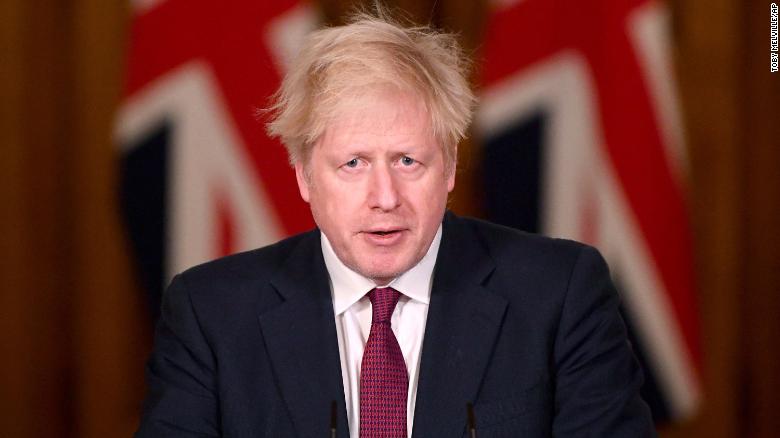
England will enter a national lockdown until at least mid-February to stem the spread of the coronavirus, Prime Minister Boris Johnson announced Monday, as the so-called U.K. variant continues to spread throughout the country.
KEY FACTS
Coronavirus is again surging in the U.K. because of a new, more transmissible mutation of Covid-19 called B.1.1.7.
The lockdown will close all non-essential businesses and restaurants will be required to limit service to takeout orders.
Schools will be closed to all students except for the children of essential workers.
Johnson’s announcement comes after Scotland imposed a similar lockdown earlier Monday.
California reported its first case of a new variant of the coronavirus that may be more transmissible, AP reports.
The big picture:California is the second state to document a confirmed case of the variant — which originated in the United Kingdom — after Colorado reported the first case in the United States on Tuesday.
California Gov. Gavin Newsom announced the infection during an online conversation with Anthony Fauci, head of the National Institute of Allergy and Infectious Diseases, according to AP.
The governor said the case was located in Southern California, but he did not provide any other details about the person who was infected.
“I don’t think Californians should think that this is odd. It’s to be expected,” Fauci said Wednesday, per AP.
Of note:There is thus far no evidence that the new variant is more deadly — only that it appears more transmissible. There is also no evidence that COVID-19 vaccines will be less effective against the new variant.
A non-peer reviewed study by the Centre for Mathematical Modelling of Infectious Diseases at the London School of Hygiene and Tropical Medicine found that the variant is 56% more transmissible than other strains.
The British government previously warned that a new variant could be up to 70% more transmissible.
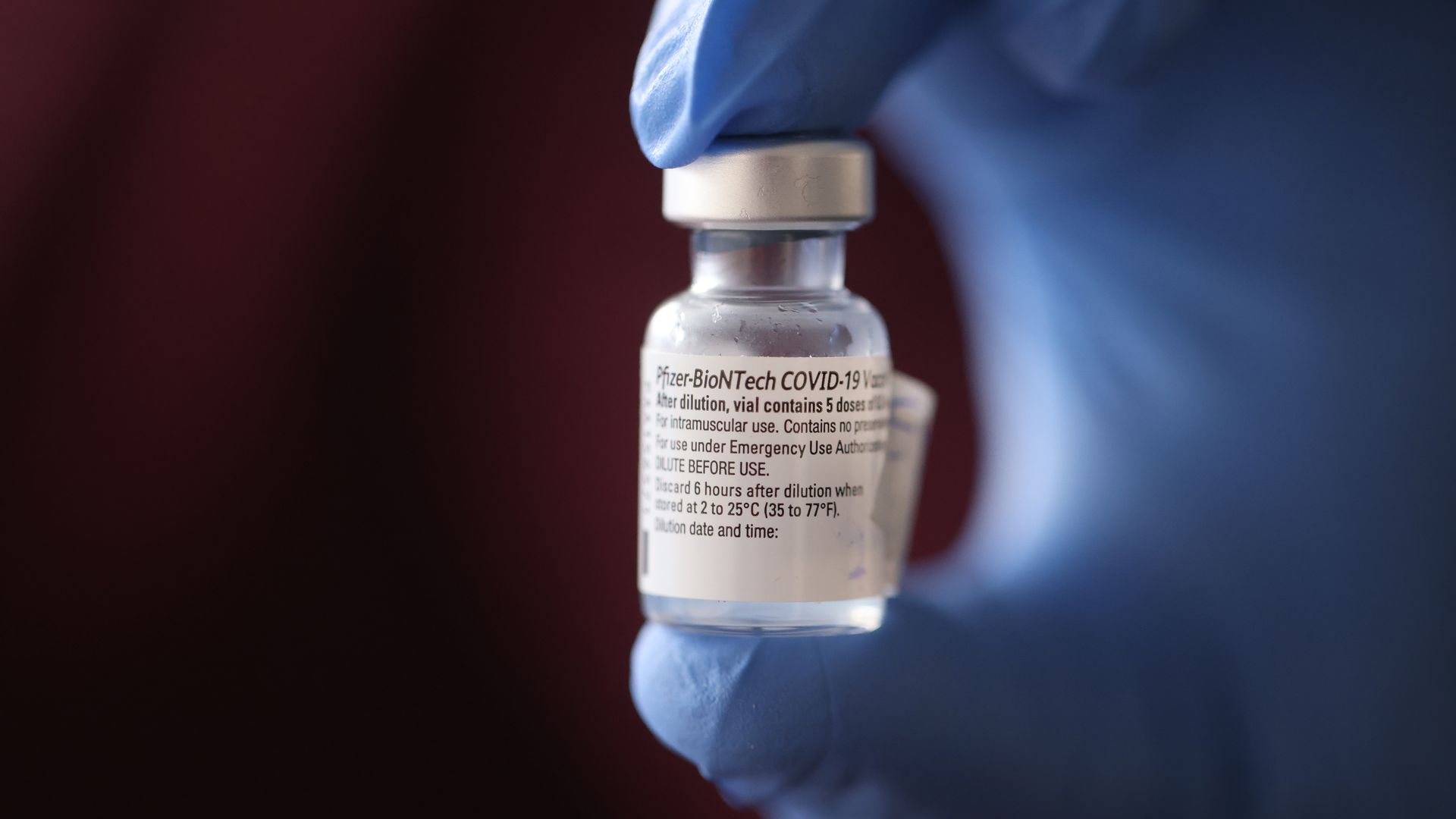
Pfizer said in a statement that there are “no data” to demonstrate that a single dose of its coronavirus vaccine will provide protection from infection after 21 days.
Why it matters: The U.K. announced on Wednesday that it would shift its vaccination strategy “to give as many people in at-risk groups their first dose, rather than providing the required two doses in as short a time as possible.” Some provinces in Canada are doing the same.
Pfizer confirmed in response that although some protection appears to begin as early as 12 days after the first dose, two doses of the vaccine — separated by three weeks — is the only regimen that proved to be 95% effective in Phase 3 trials.
“Everyone will still receive their second dose and this will be within 12 weeks of their first,” the U.K. government added in a statement. “The second dose completes the course and is important for longer term protection.”
The big picture: Pfizer’s warning comes as many countries, including the U.S., debate how to rapidly deploy the vaccines in the most effective way possible. The U.S. is on pace to fall far below its target of vaccinating 20 million people by the end of 2020, with only 3 million single-doses administered as of Wednesday night.
Colorado officials on Tuesday reported the first known case in the United States of a person infected with the coronavirus variant that has been circulating rapidly across much of the United Kingdom and has led to a lockdown of much of southern England.
Scientists have said the variant is more transmissible but does not make people sicker.
The Colorado case involves a man in his 20s, who is in isolation in Elbert County, about 50 miles southeast of Denver, and has no travel history, according to a tweet from the office of Gov. Jared Polis (D).
“The individual has no close contacts identified so far but public health officials are working to identify other potential cases and contacts through thorough contact tracing interviews,” the statement said.
A federal scientist familiar with the investigation said the man’s lack of known travel — in contrast with most confirmed cases outside the United Kingdom — indicates this is probably not an isolated case. “We can expect that it will be detected elsewhere,” said the official, who spoke on the condition of anonymity to discuss the broader context of the announcement.
The Centers for Disease Control and Prevention confirmed as much in a statement Tuesday afternoon, saying additional cases with the new variant will be detected in the United States in coming days. The variant’s apparent increase in contagiousness “could lead to more cases and place greater demand on already strained health care resources,” the agency said in a statement.
Researchers have detected the more transmissible variant in at least 17 countries outside the United Kingdom, including as far away as Australia and South Korea, as of Tuesday afternoon. Officials in Canada had previously said they had identified two cases.
Although the U.K. variant appears more contagious, it is not leading to higher rates of hospitalizations or deaths, according to a report from Public Health England, a government agency. Nor is there any sign that people who were infected months ago with the coronavirus are more likely to be reinfected if exposed to the variant, according to the report. All available evidence indicates that vaccines, and immunity built up in the population, should be protective against this variant.
The Colorado case occurred in a county of about 27,000, which is currently classified, along with much of the state, in the “red” level for the virus, denoting serious but not extreme risk.
Two weeks ago, several hundred people gathered at a community church in the county seat of Kiowa to consider whether to pursue legal actions against Polis and other state officials for imposing coronavirus-related restrictions, according to the Elbert County News. County commissioners and the county sheriff have declined to enforce restrictions emanating from Denver.
“I was expecting to see it in ski country first because those areas are where people from across Colorado, the U.S. and internationally, gather,” said Elizabeth Carlton, an assistant professor of environmental and occupational health at the Colorado School of Public Health. The absence of any apparent travel history associated with the infected person, she said, suggests he “can’t be the only case in Colorado.”
Polis, in his statement, called on Coloradans to do everything they could to prevent transmission by wearing masks, standing six feet apart when gathering with others, and interacting only with members of their immediate households.
The arrival of the new variant “doesn’t fundamentally change the nature of the threat,” said Justin Lessler, an epidemiologist at Johns Hopkins Bloomberg School of Public Health. “It’s no more deadly than the virus was before, and it doesn’t look like it infects people who are immune.”
Lessler echoed others, saying he would be “astounded” if this was the only chain of transmission of the new variant in the United States. “We know that the virus spreads easily and quickly between countries,” he said, and the fact that the infected person had no travel history indicates “this strain has gotten here sometime in the past, and there are chains of transmission ongoing.”
The variant has a higher attack rate, according to the U.K. report, which bolsters the hypothesis that the variant has out-competed other versions of the coronavirus and is now the dominant variant across much of the United Kingdom. Among people known to have been exposed to someone already infected with the variant, 15.1 percent became infected. People exposed to someone infected with the non-variant version had a 9.8 percent infection rate.
That difference suggests the variant is more transmissible, though Public Health England said more investigation is needed to bolster the hypothesis.
The working theory among many scientists is that the increased transmissibility of the variant, known as B.1.1.7, is driven by mutations that have altered the spike protein on the surface of the virus. The variant has 17 mutations — eight of which alter the spike protein.
Precisely how those changes are leading to more infections is unknown. The virus may be binding more easily to receptor cells in the human body, or replicating more easily and driving higher viral loads, enhancing viral shedding by someone who is infected. Another possibility is that people are shedding the virus for a longer period, increasing the chances of passing it along.
“Preliminary evidence suggests that the new variant does not cause more severe disease or increased mortality,” Susan Hopkins, a senior medical adviser to Public Health England, said in a statement released Tuesday.
The newly published data echo the findings in a separate study published last week, based on modeling and hospitalization data — and not yet peer-reviewed — that estimated that the variant is 56 percent more transmissible but does not appear to alter the lethality of the virus.
“The good news is that B.1.1.7 does not seem to cause much more severe disease, and there’s no evidence that it is managing to evade the immune system, which means vaccines are expected to protect against it,” William Hanage, an epidemiologists at the Harvard T.H. Chan School of Public Health, said Tuesday after reviewing the new report. “The bad news is that B.1.1.7 does appear to be much more transmissible.”
Officials in the United States have been signaling since last week that the new variant was probably already present in this country.
“I’m not surprised,” Anthony S. Fauci, director of the National Institute of Allergy and Infectious Diseases, said Tuesday. “I think we have to keep an eye on it, and we have to take it seriously. We obviously take any kind of mutation that might have a functional significance seriously. But I don’t think we know enough about it to make any definitive statements, except to follow it carefully and study it carefully.”
Research findings on coronavirus variants have been ambiguous at times, and scientists say they are still trying to extract reliable signals from noisy data. There have been several false alarms sounded about virus mutations in the past. A major challenge is discerning whether a virus variant is spreading rapidly because it has a competitive advantage based on genetic and structural differences, or because it is simply lucky, having arrived early to a location or leveraged a few superspreader events to gain dominance.
But with the United Kingdom seeing a severe winter surge of infections, public officials are taking no chances and have effectively locked down southern England, including London. Other countries have banned travelers from the United Kingdom.
The United States, despite having the world’s highest number of documented infections, has a weak track record in publishing genomic sequences, the process that enables researchers to track changes in the virus. Most sequences have been published by academic or private research institutions. By comparison, the United Kingdom has a national health system with a robust surveillance system.
“The U.K. made the decision in the spring to do this. The U.S. has sequencing equipment and infrastructure. As with many things in this pandemic, it was not executed the way it should have been,” said Neville Sanjana, a geneticist at New York University.
All viruses mutate randomly, and over time some of those mutations appear to confer some kind of advantage to the virus as it adapts to the human species. The novel coronavirus, SARS-CoV-2, mutates at a slow rate, and scientists do not think the genetic changes seen in the variant so far are sufficient to allow it to elude the vaccines now being administered to millions of people in many countries. But the coronavirus is a moving target and these mutations require surveillance.
Many scientists call the arrival of more transmissible mutations a wake-up call. “The lack of virus sequencing and case tracking in the USA is a scandal,” said Jeremy Luban, a virologist at the University of Massachusetts Medical School.
Francois Balloux, who directs the Genetics Institute at University College London, on Twitter predicted that within two weeks, enough data will accumulate to determine whether this new variant is indeed more transmissible. Previously, Balloux and his colleagues combed through genome sequences, looking for evidence that common variants had increased transmissibility.
“We don’t see much,” he said, referring to a report published in the journal Nature in November that found no signs of mutations that helped the virus to spread more easily. However, he said he “wouldn’t underestimate the evolutionary potential of SARS-CoV-2.”
After officials in the United Kingdom said Saturday that the variant first identified there was spreading 70 percent faster than others, Google searches about the mutation have spiked. But American public health experts and federal officials say that although it appears that the variant may be more contagious, it is not any more dangerous than others already detected in the United States.
“I don’t think there should be any reason for alarm right now,” Adm. Brett Giroir, who has been in charge of testing, told George Stephanopoulos on ABC’s “This Week.”
Variations to the virus are nothing new, and experts say the novel coronavirus does not mutate as much as influenza, meaning it is less likely that a vaccine would need to be developed every year to keep up with the new strains.
Still, much about this variant remains unknown, such as whether it is a new strain — a functionally different version of the virus.
“The take-home message for right now is that we need to get more information,” said Krutika Kuppalli, an infectious-diseases specialist at the Medical University of South Carolina. “In the meantime, we all need to really double down on our public health measures — wearing masks, remaining physically distanced, avoiding crowds of people.”
Where has the variant been detected?
In September, U.K. researchers discovered the variant’s prevalence when they collected samples from infected people in southeastern England. It seemed to spread quickly.
“This lineage came up quite rapidly,” Nick Loman, one of the researchers and a professor of microbial genomics at the University of Birmingham, told The Washington Post.
Since then, Australia, Denmark and the Netherlands have identified cases of the variant in their countries, the World Health Organization told the BBC. On Sunday, Italian officials announced that a patient returning from Britain “in the last few days” was in isolation after scientists detected the mutation.
In South Africa, health officials said Sunday that a version of the virus similar to the U.K. variant has been found in 80 to 90 percent of samples analyzed since mid-November.
Is the variant already in the United States?
The virus has not been detected in the United States, but officials are watching for developments in Britain, Giroir told Stephanopoulos.
Although guidance from federal agencies discourages traveling to Britain, the United States has not banned travel from there.
“I really don’t believe we need to do that yet,” Giroir said.
But New York Gov. Andrew M. Cuomo (D) pointed out Sunday that it would take only one flight to the United States to spread the mutation, urging federal officials to restrict travel.
“Right now, this variant in the U.K. is getting on a plane and flying to JFK,” Cuomo said on a conference call with reporters.
However, Kuppalli warned that little is known about the effectiveness of a ban, referring to instances in which people rushed to airports and congregated in long lines trying to travel before restrictions were put into effect earlier in the pandemic.
It is also not entirely certain whether the virus gained its foothold in the southeast of England because of its altered genetic markers or through super-spreading events, said Scott Gottlieb, a former head of the Food and Drug Administration.
“It seems like this new strain is more contagious,” Gottlieb said on CBS’s “Face the Nation.” “It doesn’t seem to be any more virulent, any more dangerous than run-of-the-mill covid. The next question is: Will it obviate our natural immunity?”
Will the authorized vaccines still be effective against this variant of the virus?
As of now, experts say there has been no indication that the variant is resistant to the Pfizer and Moderna vaccines authorized by the FDA.
“There is no reason to believe that the vaccines that have been developed will not be effective against this virus as well,” Vivek H. Murthy, President-elect Joe Biden’s nominee for surgeon general, told host Chuck Todd on NBC’s “Meet the Press.” “The bottom line is if you’re at home and hearing this news, it does not change what we do in terms of precautions.”
Although the vaccine remains out of reach for most Americans, following guidance such as social distancing and wearing masks remains the most practical way to prevent transmission.




 HENRY KOTULA