

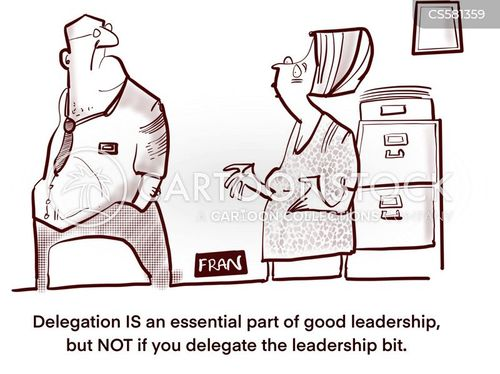
Cartoon – Importance of Delegation
https://mailchi.mp/f9bf1e547241/gist-weekly-february-23-2024?e=d1e747d2d8

At a recent dinner with my good friend and colleague Dave Blom, the former President and CEO of Ohio Health, he and I discussed the difficulties of leading and managing complex healthcare organizations in the post-Covid era.
We agreed that the leadership issues that matter most right now center around the ability of executives to possess and demonstrate an authentic emotional IQ.
Taking care of patients—in fact, taking care of communities—is not only managerially complicated but also emotionally testing.
Success cannot be achieved by technical and clinical excellence alone; rather, it must be built on a platform of an emotional IQ that is supported, valued, and shared by the entire organization.
The below list is what Dave and I settled on as the most important elements of emotional IQ for healthcare leaders today, and we think that leadership teams that fully embrace these behaviors unlock a higher level of organizational trust, as well as corporate and managerial integrity.
–Empathy.
A leader needs to understand and share the feelings of his or her entire organization, as well as understand the difference between sympathy and empathy: sympathy is a passive emotion while empathy is an active emotion. A leader with empathy not only notes the problem but immediately moves to be of help at either the personal or organizational level, whichever is required.
–Vulnerability.
Historically, executive leadership, especially in corporate situations, has been trained and encouraged not to show emotion or weakness. But organizations are changing, and the composition of the today’s workforce is different. The patient care process is emotional in and of itself, and daily operational interactions demand a different kind of leadership—a leadership that is comfortable with both emotion and weakness.
–Humility.
Executives who show humility are willing to ask for help, and don’t insist on everything being done their way; they are quick to forgive and are known for their patience. Humility supports a collaborative and cooperative leadership model, which has at its core a heavy dose of decentralization and delegation.



Click to access infographic-4-drivers-of-sustainable-physician-workforce_0.pdf

When physicians feel they have the tools, resources, and latitude they need to work at the top of their license and provide high-quality patient care, they’re more effective, more loyal, and less prone to burnout. Explore this infographic to understand 4 factors that correlate to more effective and satisfied physicians.
 HENRY KOTULA