U.S. economy adds 339,000 jobs as labor market stays hot

https://www.axios.com/2023/06/02/may-jobs-report-employment

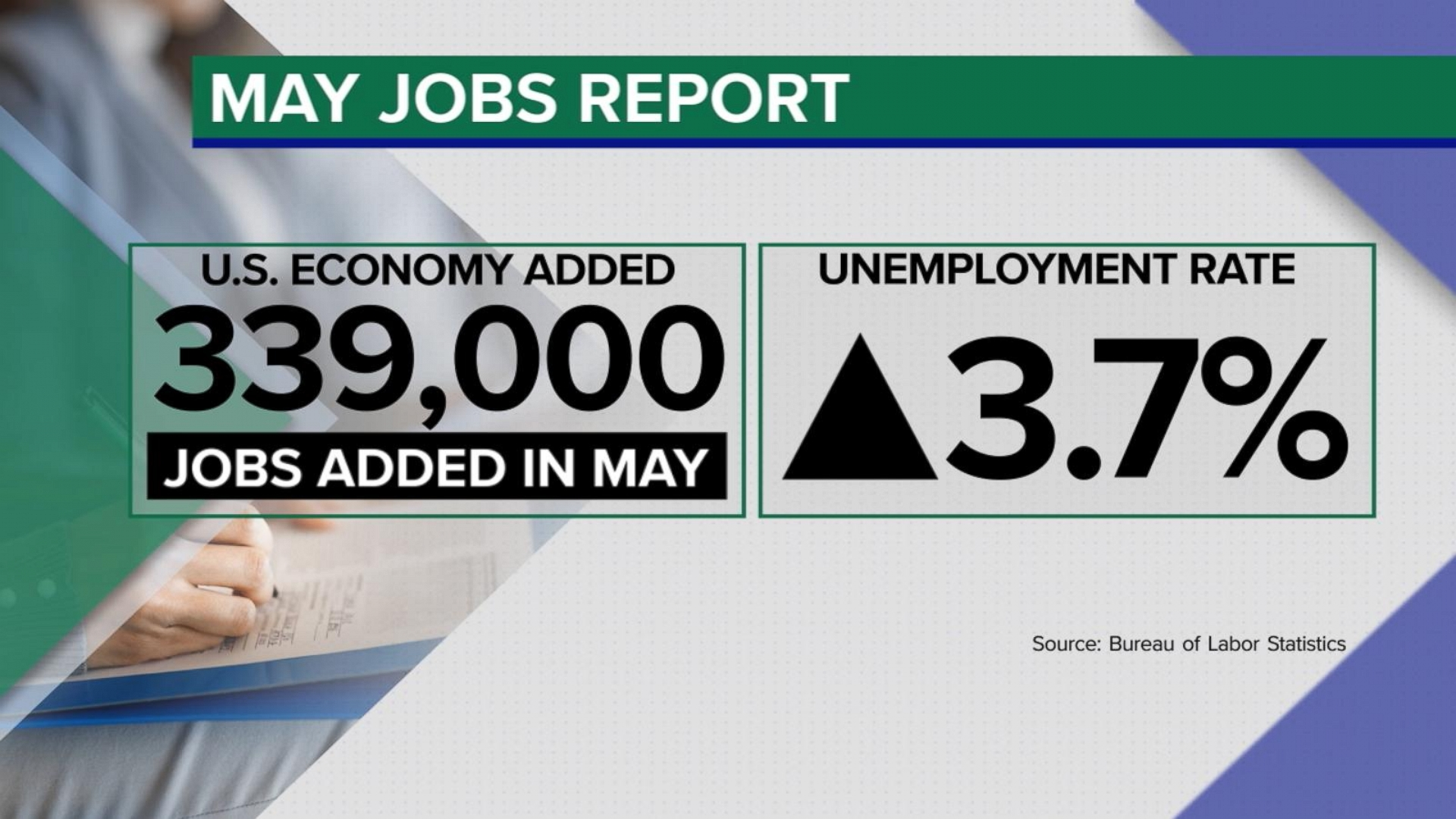
The U.S. economy added 339,000 jobs in May, while the unemployment rate jumped to 3.7% from 3.4%, the Labor Department said Friday.

Why it matters: 

Job gains came in well above forecasters’ expectations — the latest sign that the economy is still underpinned by a hot labor market.

  • Economists expected a gain of 190,000 jobs last month. The May jobs figures are a pickup from the 294,000 added in April, which was revised up by 41,000. Job gains in March were revised up, too.

Details: 

Economic policymakers have kept a close eye on other details from the payrolls report — whether more Americans are joining the workforce and how quickly pay is rising.

  • The labor force participation rate — the share of workers with a job or hunting for one — held at 62.6% in May.
  • Meanwhile, average hourly earnings, a measure of pay, rose by 0.3% in May. Compared to the same period a year ago, wages are up 4.3%.

What we’re watching: 

The May jobs report is among the final data points Federal Reserve officials will consider before deciding whether to continue the interest rate hiking campaign that began more than a year ago.

  • Inflation remains too high, and there are concerns that rapid price gains are being fueled by the tight labor market and strong consumer demand.
  • Still, a top Fed official this week signaled the central bank may skip a rate hike at its meeting later this month.

U.S. labor market booms in April, adding 253,000 jobs

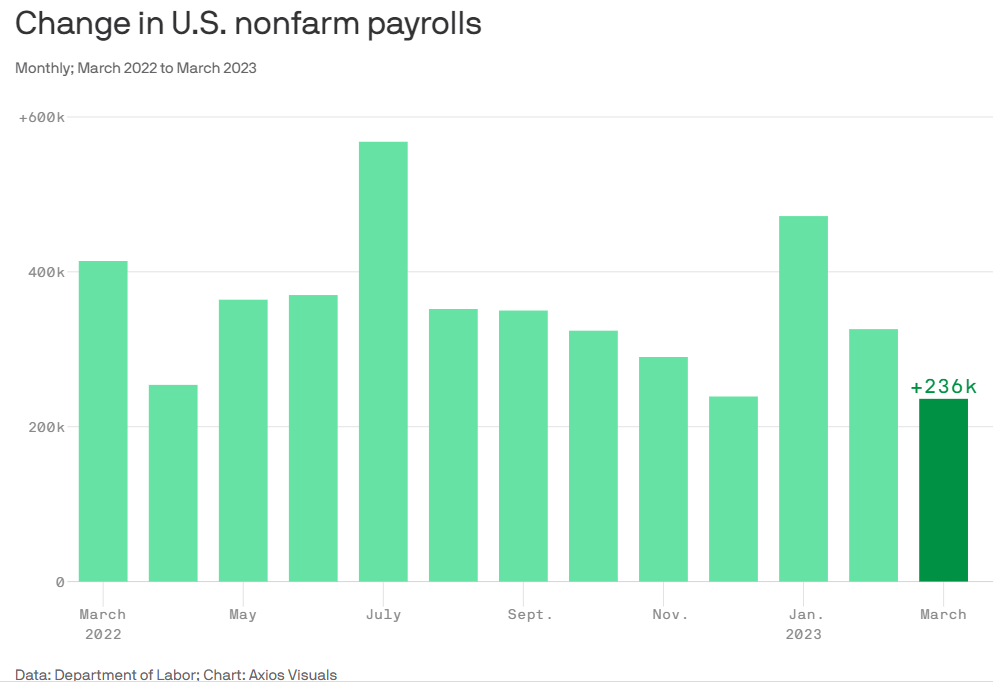
The labor market added 253,000 payrolls in April, while the unemployment rate dipped to 3.4% — a historically low level.

Why it matters:

Job growth continued to boom last month, the latest sign that economy has strong momentum despite recent bank failures.

  • Economists expected a gain of 185,000 jobs last month.

Details:

The April job figures are a pickup from the 165,000 jobs added the previous month, which were revised down by 71,000, the Labor Department said on Friday.

  • The Labor Department said that jobs growth in the previous two months was lower than first estimated: jobs growth was revised down by a combined 149,000 for February and March.

The big picture:

In recent months, more Americans have joined the workforce, helping to ease labor force shortages.

  • The labor force participation rate — or the share of workers employed or looking for work — held at 62.6% in April.
  • Average hourly earnings, a measure of wage growth, rose to 0.5% in March. Wages rose 4.4% from the same time last year.

Where it stands:

The Federal Reserve has been concerned about an out-of-balance labor market that it fears could stoke inflation that’s already running high.

  • But Fed Chair Jerome Powell said this week that there were signs that the workforce was “coming back into better balance,” though it remained “very tight.”

Recalibrating a Responsive Capital Formation Program

Current Funding Environment

Wednesday’s inflation print showed a March increase of 0.1% versus February and a year-over-year increase of 5.0%, both of which were better than expected. Markets rallied following the news, at least until the specter of recession caused a reversal of equity gains. The game remains the same: markets want easy money and inflation plus unemployment plus recession equals Fed policy and interest rate levels. Memories of the long 1970s slog through declining and then accelerating inflation levels suggest that it’s too early to declare victory (5.00% is still a long way from the Fed’s 2.00% target range). Nevertheless, hopes increased that the Fed may truly be at or very near the end of its tightening cycle.

Unsustainable Trends

The web version of The Wall Street Journal got rid of its special section on the “2023 Bank Turmoil,” which is a sign that we’re past the worst of this chapter in the Dickensian saga in which our financial system hero navigates all sorts of unfortunate characters and events in search of a new “normal.” Banking distrust ripples continue, with various clients sharing the work they are doing to peel back layers of counterparty risk to understand whether threats loom in downstream financial dependencies. Our regulatory infrastructure has shown itself to be a mile wide and an inch deep, which fuels the kind of skepticism about the reliability of designated watchdogs that leads to self-directed risk assessments.

At one level, this is a helpful and important exercise. The credit and financing structure of any complex healthcare organization is just another supply chain, and it is good to understand how yours works and whether there are vulnerabilities that should be investigated. But it is equally important to assess whether the progression of COVID to inflation to Silicon Valley Bank has caused your organization to drift from risk management into retrenchment. Organizations naturally migrate along a risk continuum as they shift between prioritizing returns or resiliency. The important question isn’t which of these bookends is right, but rather what shapes the migration; the defining event is the journey, and

the critical Board and C-suite conversation is whether your risk management program is enabling or constraining future growth.

We continue to monitor the extraordinary decline in not-for-profit healthcare debt issuance. Sources we rely on show healthcare public debt issuance through Q1 2023 down almost 70% versus Q1 2022. Similar data sources aren’t available, but anecdotal input from our team suggests a comparable drop-off in healthcare real estate as well as alternative funding channels. At the same time, although margins have recently improved, operating cash flow across the sector has been weak over the past 12-18 months. If capital formation from internal and external sources is a sign of vibrancy, healthcare is listless.

The primary culprit isn’t rates; the sector has raised capital in much higher rate environments with fewer financing channels (including most of the pre-2008 era). Instead, the rationale most frequently advanced is concern about the reaction from key credit market constituents during this time of unprecedented operating disruption. Of course, this makes sense, but sitting underneath this basic rationale is the question of what might be called “capital deployment conviction.” Long experience confirms that organizations armed with a growth thesis they believe in aren’t shy about “selling” their story to rating agencies and investors and are willing to suffer adverse outcomes on rates, ratings, or covenants, if that is the price of growth. This isn’t happening right now, which introduces the troubling idea that issuance trends are about much more than credit management.

No matter the root cause, recent capital formation is not sustainable.

Good risk management leads to caution in challenging times, but being too careful elevates the probability that temporary problems become permanent. $2.8 billion in quarterly external capital formation ($11.2 billion annualized—pause and let that annualized amount sink in) is not sufficient to maintain the not-for-profit healthcare sector’s care delivery infrastructure, especially when internal capital generation is equally anemic. But introduce any competitive paradigm and the underinvestment that accompanies this level of capital formation becomes a harbinger of hard times to come. To riff on Aristotle, capitalism abhors a vacuum, and organizations looking to avoid rating pressure today may be elevating the risk of competitive pressure tomorrow; and it is easier to cope with and eventually recover from rating pressure than it is to confront the long-term consequences of well-capitalized and aggressive competitors. Retrenchment might be the right risk management choice in times of crisis, but once that crisis moderates that same strategy can quickly become a risk driver.

Machiavelli, Sun-Tzu, Napoleon, George Washington, and other great tacticians all advanced some variation of the idea that “the best defense is a good offense.” In the world of risk response, this means that the better choice isn’t to de-risk and hibernate but rather to continuously reposition available risk capacity so that you keep the organization moving forward. Star Trek’s philosopher-king Captain James Tiberius Kirk captured the sentiment best when he said, “the best defense is a good offense, and I intend to start offending right now.”

While getting back on the capital horse is important, clearing rates, relative value ratios, risk premia, and flexibility drivers have all reset over the past 12-18 months, so recalibrating a good capital formation program requires reassessment and may lead to very different tactics.

This means that a critical step is to get organized around funding parameters:

debt versus real estate versus other channels; MTI versus non-MTI; tax-exempt versus taxable; public versus private; fixed versus floating. The other important part of this is gaining conviction about capital structure risk versus flexibility: do you want to retain flexibility at the “cost” of incurring the market risk embedded in short-tenor or floating rate structures or do you want to sell flexibility in exchange for capital structure risk reduction?

What to know about the latest inflation report

Inflation moderated notably in March as a decline in gas prices helped to pave the way for the slowest pickup in prices in nearly two years, providing relief for many American consumers and a positive talking point for President Biden.

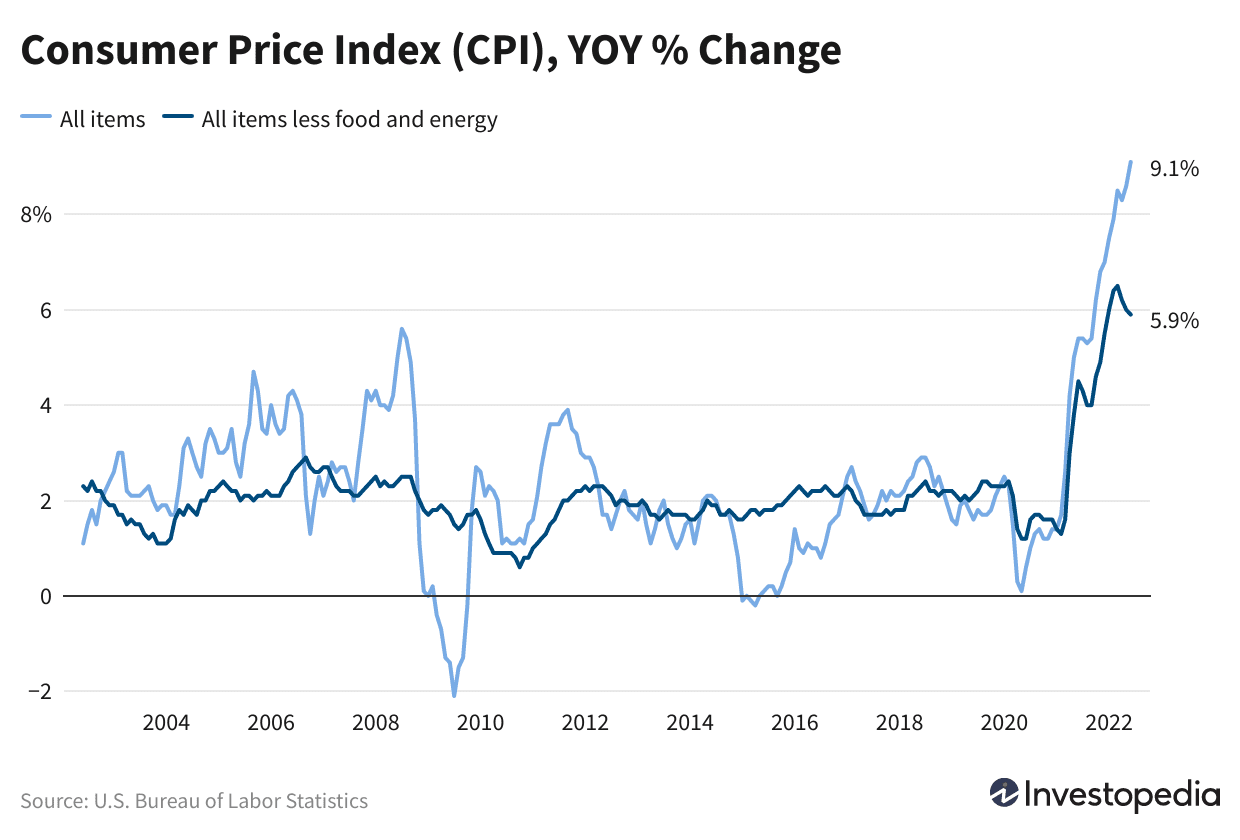
The Consumer Price Index climbed 5 percent in the year through March, down from 6 percent in February. That marked the slowest pace since May 2021.

Still, the details of the report underlined that inflation retains concerning staying power under the surface: A so-called core index that aims to get a clearer sense of price trends by stripping out food and fuel costs, both of which can be volatile, picked up by 5.6 percent from a year earlier. That was up slightly from February’s 5.5 percent increase, and it marked the first acceleration in the yearly number since September.

The mixed signals in the fresh inflation data — which, taken as a whole, suggested that price increases are meaningfully moderating but the progress remains gradual — come at a challenging economic moment for the Federal Reserve. The central bank is the government’s main inflation fighter, and it has been trying to wrestle price increases back under control for slightly more than a year, raising interest rates to nearly 5 percent from near zero as recently as March 2022 to slow the economy and weigh down costs.

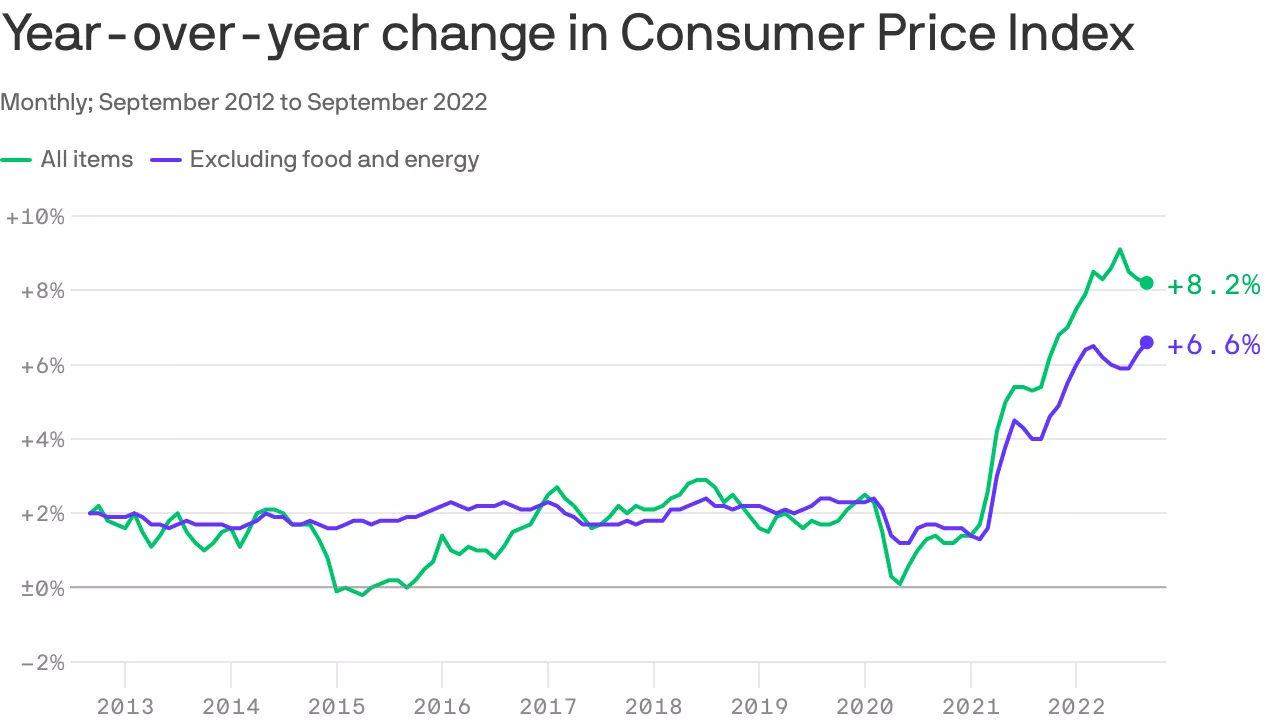
Officials are now assessing how their policy changes are working, and they are trying to gauge how much more they need to do to ensure that price increases come fully under control. Inflation has been slowing after peaking at about 9 percent last summer, but the process has been a slow one. It remains a long way back to the 2 percent inflation that was normal before the onset of the pandemic in 2020.

Uncertainty over how quickly and completely price increases will cool is being compounded by recent developments. A series of high-profile bank blowups last month could slow the economy, but it is unclear by how much. Some Fed officials are urging caution in light of the turmoil, even as others warn that the central bank should keep its foot on the economic brake and remain focused on its fight against rising prices.

The new data “solidifies the case for the Fed to do another hike in May, and to proceed cautiously from here,” said Blerina Uruci, chief U.S. economist at T. Rowe Price, later adding that “it will take time to bring inflation down.”

Fed officials target 2 percent inflation, which they define using a different index: the Personal Consumption Expenditures measure, which uses some data from the consumer price measure but is calculated differently and released a few weeks later. That measure has also been sharply elevated.

While Wednesday’s report showed an uptick in core inflation on an annual basis — one that economists had largely expected — Ms. Uruci said that it also offered some encouraging signs. The core inflation measure slowed slightly on a monthly basis, when the March figures were compared to those in February.

And a few important services prices, which the Fed is watching closely for a sense of whether price increases are poised to fade, cooled notably. Rent of primary residences picked up 0.5 percent compared to the prior month, down from 0.8 percent in the previous reading, for instance. Housing inflation broadly is expected to slow in 2023, and that appears to be starting to take hold.

“There are signs in the details to suggest we’re making some progress toward slowing inflation,” Ms. Uruci said. “It’s not where it needs to be, but it’s progress.”

But those hopeful signs do not mean that inflation will fade smoothly and rapidly. The slowdown in the overall index, for instance, may not last: A big chunk of the decline is owed to a drop in gas prices that may not be sustained.

And a few other indexes continued to show quick price increases, including new vehicles and hotel rooms.

As they try to bring inflation to heel, some central bankers have suggested that they may need to further raise interest rates.

The Fed’s latest estimates, released shortly after the collapse of Silicon Valley Bank and Signature Bank in March, suggested that officials could lift rates another quarter-point this year, to just above 5 percent. The central bank will announce its next policy decision on May 3.

On Tuesday, John C. Williams, the president of the Federal Reserve Bank of New York, said that the Fed had more work to do in bringing down price increases and suggested that the central bank’s March forecast for one more quarter-point rate move was still a “reasonable starting place.”

But Austan D. Goolsbee, the president of the Federal Reserve Bank of Chicago, suggested that recent bank failures could make it tougher for businesses and consumers to access credit, slowing the economy, stoking uncertainty and creating a “need to be cautious.”

“We should gather further data and be careful about raising rates too aggressively until we see how much work the headwinds are doing for us in getting down inflation,” Mr. Goolsbee said.

Higher interest rates have made it much more expensive to borrow money to buy a house or expand a business. That is slowing economic activity. As demand cools and the labor market softens, wage growth is also moderating.

That could help to pave the way for cooler inflation. When wages are climbing quickly, companies might charge more to try to cover their labor bills, and their customers are likely to be able to afford the steeper prices. But as households become more strapped for cash, it could become harder for businesses to raise prices without scaring away shoppers.

Inflation cools in November for the second-straight month

Following a cooler-than-expected inflation reading in October, consumer price gains slowed even further last month: the Consumer Price Index rose 7.1% in the year ending in November, down from 7.7% the prior month, the Labor Department said on Tuesday.

Why it matters: Inflation is still way too high, but the data offers some hope that it can ease alongside a still-healthy economy.

By the numbers: On a monthly basis, CPI rose 0.1%, slower than the 0.4% in October.

  • Core CPI, which strips out volatile food and energy costs, also continued to ease. On a monthly basis, it rose 0.2% — up 6% over the 12 months ending in November.
  • In October, those figures were 0.3% and 6.3%, respectively.

Where it stands: The Federal Reserve has raced to try to get inflation under control, raising interest rates at a historic clip — moves that risk throwing the economy into a recession.

  • Officials will likely raise rates by a smaller (but still historically huge) amount following a two-day policy meeting that concludes on Wednesday.
  • That will come after surprisingly cooler inflation readings, though officials have warned that its war on inflation is far from over.

Inflation drops to zero in July due to falling gas prices

Consumer prices were unchanged in July, as plunging prices for gasoline dragged the Consumer Price Index down to zero. Core inflation, which excludes energy and food, rose only 0.3%, below what analysts expected.

Driving the news: The Labor Department reported that overall consumer prices rose 0% last month, and are up 8.5% over the past year. That compares to a 9.1% year-over-year reported in June.

Why it matters: Falling gasoline prices are clearly giving American consumers some inflation relief, and the broader inflation picture was more favorable in July than economists had expected.

By the numbers: Gasoline prices fell 7.7% in July, dragging down headline inflation. Other items with falling prices included used cars and trucks (-0.4%) and airfares (down 7.8%).

  • But rents kept rising, a major factor in stubbornly high underlying inflation. Renters faced a 0.7% rise in costs.

What’s next: The Federal Reserve has indicated it intends to keep raising interest rates until there is clear evidence inflation is waning. After two straight months of extremely hot inflation readings, this report will be welcome news.

If the U.S. economy is in good shape, why is the Federal Reserve cutting interest rates?

https://www.washingtonpost.com/business/2019/07/31/if-us-economy-is-good-shape-why-is-federal-reserve-cutting-interest-rates/?utm_term=.1346fb3da080&wpisrc=nl_most&wpmm=1

Federal Reserve Board Chair Jerome Powell speaks during a Senate Banking Committee hearing on July 11.

The Federal Reserve is all but certain Wednesday to do something it hasn’t done in more than a decade: cut interest rates. The question on a lot of people’s minds is why.

Lowering interest rates, the Fed’s main way to boost the economy, is typically used in dire times, which it’s difficult to argue the United States is experiencing right now. Instead, top Fed officials are defending this as an “insurance cut” that’s akin to an immunization shot in the arm. They want to counteract the negative effects of President Trump’s trade war and prevent the United States from catching the same cold that Europe, China and elsewhere seem to have.

The Fed’s big decision comes at 2 p.m. Wednesday and will be followed by a 2:30 p.m. news conference from Fed Chair Jerome H. Powell, a frequent target of Trump’s criticism.

The Fed is widely expected to do a modest cut on Wednesday, probably lowering the benchmark interest rate from about 2.5 percent down to just shy of 2.25 percent. But the Fed seldom does just one cut, which is why Trump, Wall Street and much of the world will be listening closely to Powell for signs of when another cut is likely.

Wall Street is pricing in that the Fed will lower interest rates to about 1.75 by the end of the year, a far more dramatic move. And Trump has been blasting the Fed for months, saying he wants to see a “large” cut.

“The Fed is often wrong,” Trump said this week, reiterating his view that the stock market would be up 10,000 more points if the Fed had not raised interest rates four times last year. “I’m very disappointed in the Fed. I think they acted too quickly, by far. I think I’ve been proven right.”

But there are plenty of economists and prominent investors saying the Fed shouldn’t cut at all because it is not justified and will look as though the Fed is caving in to Trump’s bullying — or Wall Street’s.

“I have to conclude the Fed has lost some independence here,” said Blu Putnam, chief economist at CME Group.

The last time the Fed cut rates was in December 2008, when unemployment was over 7 percent (and rising quickly), the stock market had lost a third of its value, and a major financial institution, Lehman Brothers, had just declared bankruptcy, rocking the financial system.

Today unemployment is at a half-century low (3.7 percent), the economy is growing at a healthy pace (over 2 percent) and the stock market is sitting at record highs.

Congress gave the Fed two mandates: to keep unemployment low and prices stable. By about any measure one can look at, the Fed has achieved those goals. The job market is strong, and inflation remains surprisingly low.

The world will be listening closely for Powell’s rationale for lowering rates during fairly good economic times — and for his signal about whether another cut is coming in the fall.

It’s a tricky calculus. The one thing nearly everyone agrees on is this would be the biggest gamble yet for Powell, who took over as the central bank’s chair in early 2018.

The likely cut on Wednesday should make loans a little cheaper for businesses and Americans looking to buy homes and cars or start a company. But realistically, one cut won’t do much. The reason the stock market has rallied sharply in recent weeks is an expectation that this is the first of several cuts.

If the Fed does not do three cuts this year, the market could pull back, making financial conditions “tight” again, even though the Fed is cutting rates to try to loosen conditions.

Top Federal Reserve leaders see three key reasons to cut now.

1. Trump’s trade war. There is concern about the trade war, as well as weakness overseas, dragging down the U.S. economy. A closer look at the U.S. economy reveals there are already a few yellow, if not red, flags. Manufacturing was in a “technical recession” the first half of the year, the housing market remains sluggish, and business investment tanked in the spring as corporate leaders grow more wary of the ongoing trade tensions.

Powell and Fed Vice Chair Richard Clarida refer to these as “head winds” and “downside risks” that are picking up, and they prefer to address them before they grow into deeper problems. Clarida often points to 1995, when the Fed did three modest rate cuts (starting in July 1995 and ending in January 1996) that helped keep the economy growing for years to come.

2. The Fed needs to act sooner rater than later. New York Fed President John Williams, among others, has made the case that the Fed has limited medicine in the medicine cabinet to aid the economy and that it’s better to administer the pills at the first signs of trouble rather than waiting for full-blown illness when there might not be enough medicine left to make a difference. “When you only have so much stimulus at your disposal, it pays to act quickly to lower rates at the first sign of economic distress,” Williams said in a speech earlier this month.

Interest rates are very low by historical standards. For example, the benchmark rate was over 5 percent before the Fed started reducing it in 2007. Now the benchmark rate is half that amount, meaning there will be less stimulus this time around from cutting rates.

3. Inflation is too low. The Fed wants to see inflation of about 2 percent a year. For the past several years, it’s been running below that threshold and is currently sitting around 1.6 percent. Some Fed leaders, such as St. Louis Fed President James Bullard, say the Fed should cut rates to try to run the economy a bit hotter to boost inflation. They see little risk in doing this since inflation is so low, but they see great risk in not getting inflation back to target because business leaders will stop believing that 2 percent is the true target if it is never achieved.

While there are reasons to cut, some Fed leaders, including Boston Fed President Eric Rosengren and Kansas City Fed President Esther George, have raised doubts about whether it makes sense to cut now, before there are clear signs of trouble in the United States.

Rosengren has warned in recent speeches that insurance cuts do not come without a cost. Keeping rates low tends to spur bubbles that can come back to harm the economy later on. Already there are concerns about too much risky corporate lending, and lower rates are only likely to encourage more of those loans. He and others have also pointed out that using up the medicine now doesn’t leave much left to fight worse problems later on.

There are 10 members on the Fed’s committee that decides interest rate policy, and they do not appear to be in unison on this decision, let alone what to do in the fall, a reminder of just how much debate there is about the right course of action.

The U.S. economy is in the midst of a record-breaking expansion that has been growing for more than a decade, the longest expansion in U.S. history. Powell says keeping it going is his top goal.