

Great Leadership starts with
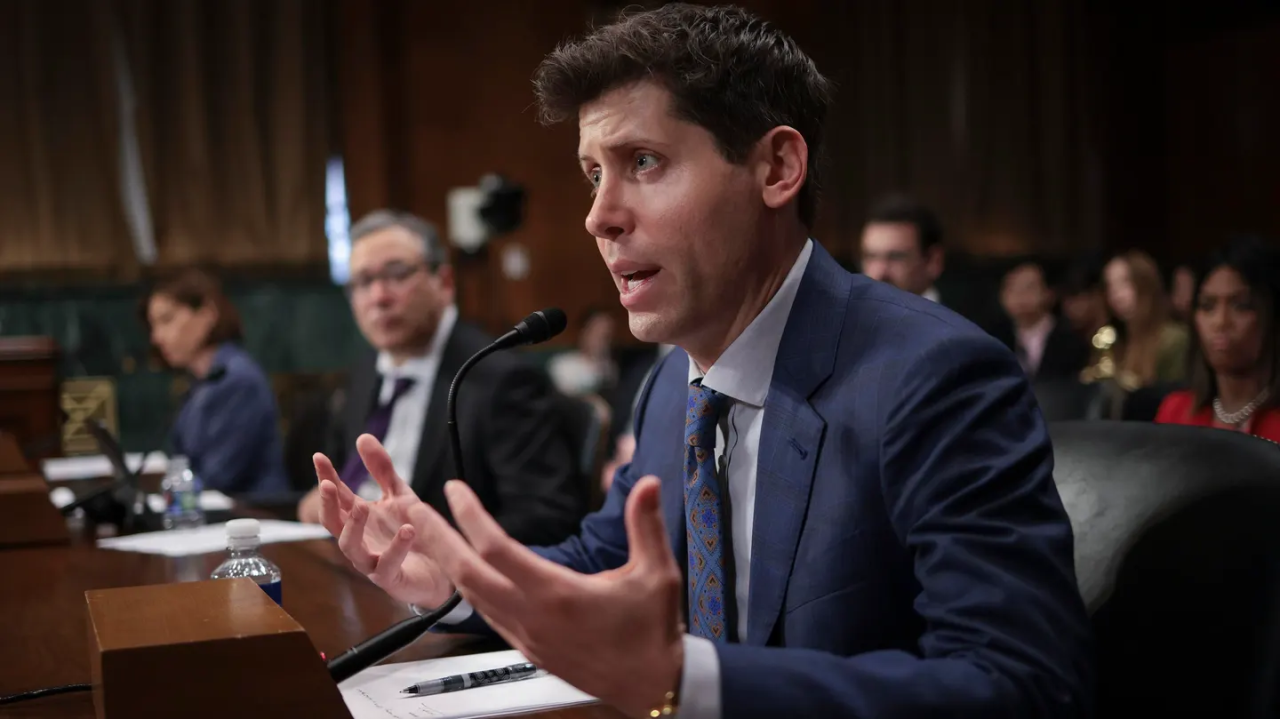
What a wild end to the year it was for Sam Altman, CEO of OpenAI.
In the span of five white-knuckle days in November, the head of Silicon Valley’s most advanced generative AI company was fired by his board of directors, replaced by not one but two different candidates, hired to lead Microsoft’s AI-research efforts and, finally, rehired back into his CEO position at OpenAI with a new board.
A couple weeks later, TIME selected him “CEO of the Year.” Altman’s saga is more than a tale of tech-industry intrigue. His story provides three valuable lessons for not only aspiring and current healthcare leaders, but also everyone who works with and depends on them.
OpenAI’s governance structure presented a unique case: a not-for-profit board, whose stated mission was to protect humanity, found itself overseeing an enterprise valued at more than $80 billion. Predictably, this setup invited conflict, as the company’s humanitarian mission began to clash with the commercial realities of a lucrative, for-profit entity.
But there’s little evidence the bruhaha resulted from Altman’s financial interests. According to IRS filings, the CEO’s salary was only $58,333 at the time of his firing, and he reportedly owns no stock.
While Altman clearly knows the company needs to raise money to fund the creation of ever-more-powerful AI tools, his primary goal doesn’t appear to revolve around maximizing shareholder value or his own wealth.
In fact, I believe Altman and the now-disbanded board shared a common mission: to save humanity. The problem was that the parties were 180 degrees apart when it came to defining how exactly to protect humanity.
Altman’s path to saving humanity involved racing forward as fast as possible. As CEO, he understands generative AI’s potential to radically enhance productivity and alleviate threats like world hunger and climate change.
By contrast, the board feared that breakneck AI development could spiral out of control, posing a threat to human existence. Rather than perceiving AGI (artificial general intelligence) as a savior, much of the board worried that a self-learning system might harm humanity.
This dichotomy pitted a CEO intent on changing the world against a board intent to progress at a cautious, incremental pace.
For Healthcare Leaders: Like OpenAI, American healthcare leaders share a common goal. Be they doctors, insurers or government health agencies, all tout the importance of “value-based care” (VBC), which in general terms, constitutes a financial and care-delivery model based on paying healthcare professionals for the quality of clinical outcomes they achieve rather than the quantity of services they provide. But despite agreeing on the target, leaders differ on what it means and how best to accomplish it. Some think of VBC as “pay for performance,” whereby doctors are paid small incentives based on metrics around prevention and patient satisfaction. These programs fail because clinicians ignore the metrics without incentives and total health suffers.
Other leaders believe VBC means paying insurers a set, annual, upfront fee to provide healthcare to a population of patients. This, too, fails since the insurers turn around and pay doctors and hospitals on a fee-for-service basis, and implement restrictive prior authorization requirements to keep costs down.
Instead of making minor financial tweaks that keep falling short of the goal, leaders who want to transform American medicine must play to win. This will require them to move quickly and completely away from fee-for-service payments (which rewards volume of care) to capitation at the delivery-system level (rewarding superior results by prepaying doctors and hospitals directly without insurers playing the part of middlemen).
Like OpenAI’s former board members, today’s healthcare leaders are playing “not to lose.” They avoid making big changes because they fear the backlash of risk-averse providers. But anything less than all in won’t make a dent given the magnitude of problems. To be effective, leaders must make hard decisions, accept the risks and be confident that once the changes are in place, no one will want to go back to the old ways of doing things.
Many tech-industry commentators have drawn comparisons between Altman and Steve Jobs. Both leaders possess(ed) the rare ability to foresee a better future and turn their visions into reality. And both demonstrate(d) passion for exceeding people’s wants and expectations—not for their own benefit but because they believe in a greater mission and purpose.
Altman and Jobs are what I call visionary leaders, who push their organizations and people to accomplish remarkable outcomes few could’ve believed possible. These types of leaders always challenge conservative boards.
When the OpenAI board realized it’s hard to constrain a CEO like Sam Altman, they fired him.
On day one of that decision, the board might have assumed their action would protect humanity and, therefore, earn the approval of OpenAI’s employees. But the story took a sharp turn when nearly all the company’s 770 workers signed a letter to the board in support of Altman, threatening to quit unless (a) their visionary leader was brought back immediately and (b) the board resigned.
Five days after the battle began, the board was facing a rebellion and had little choice but to back down.
For Healthcare Leaders: The American healthcare system is struggling. Half of Americans say they can’t afford their out-of-pocket expenses, which max out at $16,000 for an insured family. American health is languishing with average life expectancy virtually unchanged since the start of this century. Maternal and infant mortality rates in the U.S. are double what they are in other wealthy nations. And inside medicine, burnout runs rampant. Last year, 71,000 physicians left the profession.
Visionary leadership, often sidelined in favor of the status quo, is crucial for transformative change. In healthcare, boards typically prioritize hiring CEOs with the ability to consolidate market control and achieve positive financial results rather than the ability to drive excellence in clinical outcomes. The consequence for both the providers and recipients of care proves painful.
Like OpenAI’s employees, healthcare professionals want leaders who are genuine, who have the courage to abandon bureaucratic safety in favor of innovative solutions, and who can ignite their passion for medicine. For a growing number of clinicians, the practice of medicine has become a job, not a mission. Without that spark, the future of medicine will remain bleak.
OpenAI’s board simultaneously promoted and feared ChatGPT’s potential. In this era of advanced technology, the dilemma of embracing versus restraining innovation is increasingly common.
The board could have shut down OpenAI or done everything in its power to advance the AI. It couldn’t, however, do both. When organizations in highly competitive industries try to strike a safe “balance,” choosing the less-contentious middle ground, they almost always fail to accomplish their goals.
For Healthcare Leaders: Despite being data-driven scientists, healthcare professionals often hesitate to embrace information technologies. Having been burned by tools like electronic healthcare records, which were designed to maximize revenue and not to facilitate medical care, their skepticism is understandable.
But generative AI is different because it has the potential to simultaneously increase quality, accessibility and affordability. This is where technology and skilled leadership must combine forces. It’s not enough for leaders to embrace generative AI. They must also inspire clinicians to apply it in ways that promote collaboration and achieve day-to-day operational efficiency and effectiveness. Without both, any other operational improvements will be incremental and clinical advances minimal at best.
If the boards of directors and other similar decision-making bodies in healthcare want their organizations to lead the process of change, they’ll need to select and support leaders with the vision, courage, and skill to take radical and risky leaps forward. If not, as OpenAI’s narrative demonstrates, they and their organizations will become insignificant and be left behind.
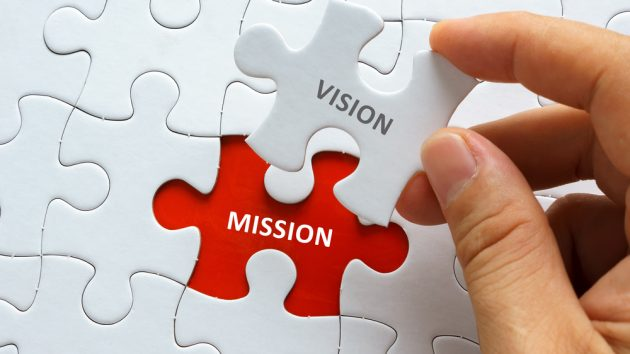
The new year is always an ideal time for healthcare leaders to reflect on the state of our industry and their own organizations, as well as the challenges and opportunities ahead.
As the CEO of a large health system, I always like to reflect on one basic question at the end of each year: Are we staying true to our mission?
Certainly, maintaining an organization’s financial health must always be a priority but we should also never lose sight of our core purpose. In a business like ours that has confronted and endured a global pandemic and immense financial struggles over the past several years, I recognize it’s increasingly difficult to maintain our focus on mission while trying to find ways to pay for rising labor and supply costs, infrastructure improvements needed to remain competitive and other pressures on our day-to-day operations.
After all, the investments we need to make to promote community wellness, mental health, environmental sustainability and health equity receive little or no reimbursement, negatively impacting our financial bottom lines. During an era of unprecedented expansion of Medicaid and Medicare, we get less and less relief from commercial insurers, whose denial and delay tactics for reimbursing medical claims continue to erode the stability of many health systems and hospitals, especially those caring for low-income communities.
Despite those enormous pressures, it’s imperative that we continue to support underserved communities, military veterans struggling with post-traumatic stress, and intervention programs that help deter gun violence and addiction.
The list of other worthy investments goes on and on: charity care to uninsured or underinsured patients who can’t pay their medical bills, funding for emergency services that play such a critical role during public health emergencies, nutritional services for families struggling to put food on the table, programs that combat human trafficking and support women’s health, the LGBTQIA+ community and global health initiatives that aid Ukraine, the Middle East and other countries torn apart by war, famine and natural disasters.
We must also recognize the key role of healthcare providers as educators. School-based mental health programs are saving lives by identifying children exhibiting suicidal behaviors, anger management issues and other troublesome behaviors. School outreach efforts have the added benefit of helping health systems and hospitals address their own labor shortages by introducing young people to career paths that will help shape the future healthcare workforce.
Without a doubt, the “to-do” list of community health initiatives that support our mission is daunting. We can’t do it all alone, but as the largest employers in cities and towns across America, health systems and hospitals can serve as a catalyst to get all sectors of our society — government, businesses, schools, law enforcement, churches, social service groups and other community-based organizations — to recognize that “health” goes far beyond the delivery of medical care.
The health of individuals, families and communities hinges on the prevalence of good-paying jobs, decent and affordable housing, quality education, access to healthy foods, medical care, transportation, clean air and water, low prevalence of crime and illicit drugs, and numerous other variables that typically depend on the zip codes where we live. Those so-called social determinants of health are the driving factors that enable communities and the people who live there to either prosper or struggle, resulting in disparities that are the underlying cause of why so many cities and towns across the country fall into economic decay and become havens for crime and hotbeds for gun violence, which shamefully is now the leading cause of death for children and adolescents.
To revive these underserved communities, many of which are in our own backyards, we have to look at all of the socioeconomic issues they struggle with through the prism of health and use the collective resources of all stakeholders to bring about positive change.
Health is how we work together to build a sense of community. Having a healthy community also requires everyone doing what they can to tone down the political rhetoric and social media-fueled anger that is polarizing our society. Health is bringing back a sense of civility and respect in our public discourse, and promoting the values of honesty, decency and integrity.
As healthcare providers and respected business leaders, we should all make a New Year’s resolution to stay true to our mission and do what we can within our communities to bring oxygen to hope, optimism and a healthier future.
https://www.kaufmanhall.com/insights/thoughts-ken-kaufman/when-financial-performance-matters

The Sunk Cost Fallacy
In behavioral economics, the sunk cost fallacy describes the tendency to carry on with a project or investment past the point where cold logic would suggest it is not working out. Given human nature, the existence of the sunk cost fallacy is not surprising. The more resources—time, money, emotions—we devote to an effort, the more we want it to succeed, especially when the cause is an important one.
Under normal circumstances, the sunk cost fallacy might qualify as an interesting but not especially important economic theory. But at the moment, given that 2022 will likely be the worst financial year for hospitals since 2008 and given that the hospital revenue/expense relationship seems to be entirely broken, there is little that is theoretical about the sunk cost fallacy. Instead, the sunk cost fallacy becomes one of the most important action ideas in the hospital industry’s absolutely necessary financial recovery.
Historically, cases of the sunk cost fallacy can be relatively easy to spot. However, in real time, cases can be hard to identify and even harder to act on. For hospital organizations that are subsidizing underperforming assets, identifying and acting on these cases is now essential to the financial health of most hospital enterprises.
For example, perhaps the asset that is underperforming is a hospital acquired by a health system. (Although this same concept could apply to a service line or a related service such as a skilled nursing facility, ambulatory surgery center, or imaging center.) The costs associated with integrating an acquired hospital into a health system are typically significant. And chances are, if the hospital was struggling prior to the acquisition, the purchaser made substantial capital investments to improve the performance.
As time goes on, if the financial performance of the entity in question continues to fall short, hospital executives may be reluctant to divest the asset because of their heavy investment in it.
This understandable tendency can lead the acquiring organization to throw good money after bad. After all, even when an asset is underperforming, it can’t be allowed to deteriorate. In the case of hospitals, that’s not just a matter of keeping weeds from sprouting in the parking lot. The health system often winds up supporting an underperforming hospital with both working capital and physical capital, which compounds the losses.
And the costs don’t stop there, because other assets in the system are supporting the underperforming asset. This de facto cross-subsidy has been commonplace in hospital organizations for decades. Such a cross subsidy was probably never sustainable, but it is even less so in the current challenging financial environment.
This is a transformative period in American healthcare, when hospital organizations are faced with the need to fundamentally reinvent themselves both financially and clinically. The opportunity costs of supporting assets that don’t have an appropriate return are uniquely high in such an environment. This is true whether the underperforming asset is a hospital in a smaller system, multiple hospitals in a larger system, or a service line within a hospital.
The money that is being funneled off to support underperforming assets may be better directed, for example, toward realigning the organization’s portfolio away from inpatient care and toward growth strategies. In some cases, the resources may be needed for more immediate purposes, such as improving cash flow to support mission priorities and avoiding downgrades of the organization’s credit rating.
The underlying principle is straightforward:
When a hospital supports too many low-performing assets, the capital allocation process becomes inefficient. Directing working capital and capital capacity toward assets that are dilutive to long-term financial success means that assets that are historically or potentially accretive don’t receive the resources they need to grow and thrive. The underlying principle is a clear lose-lose.
In the highly challenging current environment, it is especially important for boards and management to recognize the sunk cost fallacy and determine the right size of their hospital organizations—both clinically and financially.
Some leadership teams may determine that their organizations are too big, or too big in the wrong places, and need to be smaller in order to maximize clinical and balance-sheet strength. Other leadership teams may determine that their organizations are not large enough to compete effectively in their fast-changing markets or in a fast-changing economy.
Organizational scale is a strategy that must be carefully managed. A properly sized organization maximizes its chances of financial success in this very difficult inflationary period. Such an organization invests consistently in its best performing assets and reduces cross-subsidies to services and products that have outlived their opportunity for clinical or financial success.
Executives may see academic economic theory as arcane and not especially relevant. However, we have clearly entered a financial moment when paying attention to the sunk cost fallacy will be central to maintaining, or recovering, the financial, clinical, and mission strength of America’s hospitals.


HBO’s critically acclaimed series Succession recently concluded its fourth and final season with a crescendo of family dramatics and falls from grace. If you haven’t seen the finale, bookmark this article for later. It contains spoilers.
Succession, for those unfamiliar, centers on the uber-wealthy Roy family, majority owners of the global media and entertainment subsidiary Waystar Royco. The plot revolves around the bullishly Machiavellian patriarch Logan Roy and his four adult children, each of them seeking (a) control of the family business and (b) their dad’s approval.
During its run, the show’s endless infighting and fascinating archetypes captivated viewers. But the 39-episode series also provided enduring lessons in dysfunctional leadership, which apply directly and saliently to U.S. healthcare.
As with Waystar Royko, the institutions of medicine (hospitals, medical groups, insurers, pharma and med-tech companies) need excellent leadership just to survive. With millions of dollars and hundreds or thousands of jobs resting on the decisions of top administrators, any major flaw can prove fatal—erasing decades of organizational success.
In any industry, poor leadership can undermine performance and threaten livelihoods. In healthcare, poor leadership puts lives at risk. Here are five dangerous types of leadership personalities, each inspired by a character from Succession:
In the show’s second season, Connor, the eldest and oft-forgotten son of Logan Roy, launches his U.S. presidential campaign on a “no-tax” platform. When the eve of election arrives, he’s polling at less than 1%, yet he refuses to step aside, still convinced he is capable of doing the job.
Like Connor, healthcare’s delusional leaders overestimate their abilities. Their ideas are unrealistic and their vision for the future: pure fiction. But no matter how outlandish their outlook, delusional leaders will always find apostles among the disenfranchised who, themselves, feel undervalued and overlooked.
When confronted with the harshness of reality, deluded leaders and their followers double down, insisting that everyone else is myopic. “Just follow and you’ll see,” they demand.
Unless senior executives or board members step in to relieve this leader of power, the organization will be as doomed as Connor Roy’s bid for presidency.
On the surface, Kendall is by far the most capable and experienced candidate to succeed his father. He’s a smart and articulate heir apparent who appears up to the task of CEO.
But underneath the gold plating, his every action is reflexively self-centered. As such, when the time comes to sacrifice something of himself for the good of the company, he freezes and falters, his decisions corrupted by the compulsion to put himself first.
Like Kendall, healthcare’s narcissistic leaders bask in praise and blind loyalty. They reject and punish those who provide honest feedback and fair criticism. Their obsession with status and self-importance blinds them to long-term threats and opportunities, alike.
Unlike delusional leaders, who fail because their vision cuts against the grain of reality, the narcissistic leader’s passion for winning may advance an organization—in the short run. Long-term, however, their flaws will be exposed and weaknesses manipulated by seasoned competitors.
Across four seasons, Kendall can’t fathom that anyone else might be a better choice to run the company. As a result, he underestimates a rival CEO who’s seeking to acquire Waystar, and he overestimates the loyalty of his siblings. In the end, he’s left hopeless and broken.
Roman, the youngest Roy, is brash and witty, but also unpredictable and unrestrained. His penchant for foul language and cutting insults make for good television, but they’re the telltale signs of insecurity and immaturity.
Like all immature leaders, Roman is addicted to novelty and excitement, often acting without regard for the consequences. He’s fast-talking and loud, which makes him likable enough for many to overlook his incompetence. But he’s incapable of filling his father’s shoes.
Immature leaders get promoted before they’re primed and polished. They often lack boundaries and excel at the sport of making others uncomfortable. At times, they seem more interested in causing a scene than creating results. They chase big ideas—if only for the adrenaline rush—but can’t accurately calculate whether the risk of failure is 20% or 80%. This makes them very dangerous as leaders.
In a world of deluded and despotic men, Shiv comes across as the voice of reason. Smart and strategic, relaxed and composed, Shiv carefully cultivates new allies but never establishes an identity of her own. This makes her an excellent political consultant (the job she has) but a poor candidate for CEO (the job she wants).
Political leaders are better at advancing within an organization than advancing the organization itself. Like chameleons, these leaders change with the scenery, shifting alliances and values as organizational power waxes and wanes. While they’re busy focusing on rumors and relationships, they fail to muster real-life business acumen and experience.
Colleagues rarely respect those who play organizational politics. Once political leaders have accrued enough power and advanced their careers to the max, their shallow alliance and inability to drive performance leaves them stranded at the top—with nowhere to go but down.
Not technically a Roy, Tom is Shiv’s husband and an eager aspirant for CEO.
Once appointed head of Waystar’s struggling cruises division, Tom conceals damaging information to protect his father-in-law. He is a willing henchman, ready to sacrifice his ethics for a shot at the corner office. To advance his interest, Tom repeatedly compromises his integrity, first with Logan, then Kendall, and eventually Lukas Matsson, the incoming global CEO who completes the hostile takeover of Waystar.
In what proves to be Tom’s final interview for U.S. CEO, Matsson asks him whether he will be willing to play the role of “pain sponge,” absorbing any negative fallout the company may experience. After he responds positively, Matsson tests him further by mentioning that he’d like to have sex with Shiv. While viewers squirm in their seats, Tom doesn’t object. For him, every compromise is simply a means to an end.
Compromised leaders are skilled at making promises. They seek support by vowing to fulfill wants and palliate pains. Depending on who these leaders aim to please, they’re willing to slash budgets or raise salaries, regardless of the financial impact. Ultimately, they’ll do anything to keep people happy, even if they have to sink the business in the process.
In the final season of Succession, Logan tells his offspring, “I love you, but you are not serious people.” He is both accurate and accountable. Logan was not a serious father and, as a result, his kids were poorly equipped for life and leadership.
The healthcare industry is replete with stories of once-successful institutions falling on hard times under poor leadership. Although there’s no one way to run an organization, all great healthcare leaders share three characteristics:
Leaders have three jobs. They must create a vision, align people around it and motivate them to succeed. To accomplish these tasks, executives may use carrots and sticks, incentives and disincentives, or positive and negative reinforcement. But these tactics will fail unless they reflect a clear mission and purpose.
Years ago, former CMS administrator Don Berwick started a program with an audacious goal of maximizing patient safety and preventing unnecessary deaths. He called it the 100,000 Lives Campaign. And when he spoke of the program, he leaned hard on its righteous mission. Instead of presenting metrics and statistics, he talked about the weddings and graduation ceremonies that parents and grandparents would attend, thanks to the program and the people behind it. Even hard-weathered clinicians in the audience had tears in their eyes.
Financial incentives drive change in healthcare, but rarely achieve the outcomes intended. Everyone engaged in the 100,000 Lives Campaign knew exactly what they needed to accomplish and were motivated to do so.
Bold ideas and glittering promises always capture attention. Words are powerful and relationships can take aspiring leaders far. But when it comes time to turn big plans into action, there is no substitute for a leader who has been there and done it well.
Exceptional performance, not promises, separate great leaders from the rest—and success from failure. In every industry, past performance is the best predictor of future success. Of course, poor leaders can get lucky and even great ones in bad circumstances may fail. But the odds always favor those who have achieved recurring success throughout their careers.
Emerging leaders can work on their weaknesses. Coaching, training and even therapy can help them quell maladaptive behaviors.
But everything changes when an emerging leader becomes the head of an organization and faces a crisis. As risks and pressures intensify, people tend to fall back on approaches and habits they learned in the past, particularly problematic ones. Whenever tested, the Roy children did exactly that.
After Logan’s death early in the final season, the fatal flaws of each Roy child came into clear view. As a result, the Waystar board made the safest choice for successor: none of the above.
Like a true Shakespearean tragedy, the flaws of the characters in Succession exceeded their abilities.
In healthcare, that’s a guaranteed prescription for failure.

Writing for Forbes, Sachin Jain, president and CEO of SCAN Group and Health Plan, argues that “toxic positivity,” or the idea that one should only focus on what’s going right rather than identifying and working on the underlying causes of a problem, is rampant throughout the healthcare industry and offers a few ideas on how to fix it.
Jain writes that toxic positivity is a “somewhat understandable reaction to seemingly insurmountable obstacles, which perhaps explains toxic positivity’s ascendancy in the healthcare industry.” But now, toxic positivity is “bleeding into situations involving challenging but fully solvable problems.”
For example, Jain writes that nearly every company in the healthcare industry eventually pays a marketing agency to craft “glorious-sounding mission statements” that are then used by leaders whenever they are confronted with their shortcomings.
“Your health system just christened a new billion-dollar hospital, but is unleashing bill collectors on the indigent? Our mission is clear: Patients first!” Jain writes. “Your startup appears to be serving only the wealthiest and healthiest retirees, while pulling no cost from the healthcare system? We’re proudly committed to doing right by seniors by offering value-based care!”
Jain clarifies that he doesn’t believe all healthcare executives are cynically trying to avoid hard issues. Rather, they are “often too far removed from the front lines of the system, and even their own companies’ patient-facing operations, to witness the flaws.”
Often executives don’t notice the flaws in their health systems until a loved one needs help, Jain writes. “Only then do the industry’s leaders confront the reality that, at a person’s most vulnerable point in life, healthcare companies often treat you like a consumer … instead of just taking care of you.”
Without that reality check, it’s easy for executives to rely on their lofty mission statements and value propositions, and to “see their companies as distinct from, rather than intrinsically connected to, the industry’s biggest issues,” Jain writes.
One simple intervention won’t fix toxic positivity in the healthcare industry, Jain writes, but companies can start by talking about their flaws.
“In a perfect world, the healthcare industry would commit to a culture of relentless interrogation of its flaws as a means of driving to better results,” Jain writes. Healthcare leaders need to “stop hiding behind company mission statements and ‘just-so stories’ about their impact and start speaking publicly about the steep challenges we each face as we fall short of fulfilling our specific corporate mission,” Jain adds. That means publicly addressing issues at events and discussing strategies for addressing them.
Private behavior within a company can also help reverse toxic positivity, Jain writes. Leaders should continue celebrating the accomplishments of frontline healthcare providers, but they should also “bring a critical eye to their operations and demand — not just encourage — that their colleagues help them uncover ways they can individually and collectively do better.”
That means asking questions like, “If our organization disappeared tomorrow and people were forced to find their healthcare insurance or services or devices elsewhere, would anyone be truly worse off and why?” Jain writes. If your company doesn’t have an answer for that, then you should work harder to increase your replacement value and drive competitive differentiation.
Addressing toxic positivity also means addressing the flaws in value-based care and having “honest, authentic conversations about what works and what doesn’t and why,” Jain writes. “About whether companies that proclaim to improve care are merely benefitting from arbitrage opportunities in reimbursement systems or are actually, meaningfully improving service to patients.”
Executives need to stop treating the healthcare industry like all other industries and “call BS on the idea that it’s somehow okay to be financially successful without making an actual difference in anyone’s lives,” Jain writes.
The healthcare industry needs to welcome thoughtful, critical, and reflective voices to every table, Jain writes. “Because nothing — absolutely nothing — will actually get better without them.”
https://mailchi.mp/31b9e4f5100d/the-weekly-gist-june-03-2022?e=d1e747d2d8

On Wednesday afternoon, an aggrieved patient shot and killed four people, including his orthopedic surgeon and another doctor, at a Saint Francis Hospital outpatient clinic, before killing himself. The gunman, who blamed his surgeon for ongoing pain after a recent back surgery, reportedly purchased his AR-15-style rifle only hours before the mass shooting, which also injured 10 others. The same day as this horrific attack, an inmate receiving care at Miami Valley Hospital in Dayton, OH shot and killed a security guard, and then himself.
The Gist: On the heels of the horrendous mass shootings in Buffalo and Uvalde, we find ourselves grappling with yet more senseless gun violence. Last week, we called on health system leaders to play a greater role in calling for gun law reforms. This week’s events show they must also ensure that their providers, team members, and patients are safe.
Of course, that’s a tall order, as hospital campuses are open for public access, and strive to be convenient and welcoming to patients. Most health systems already staff armed security guards or police officers, have a limited number of unlocked entrances, and provide active shooter training for staff.
This week’s events remind us that our healthcare workers are not just on the front lines of dealing with the horrific outcomes of gun violence, but may find themselves in the crosshairs—adding to already rising levels of workplace violence sparked by the pandemic.
Something must change.
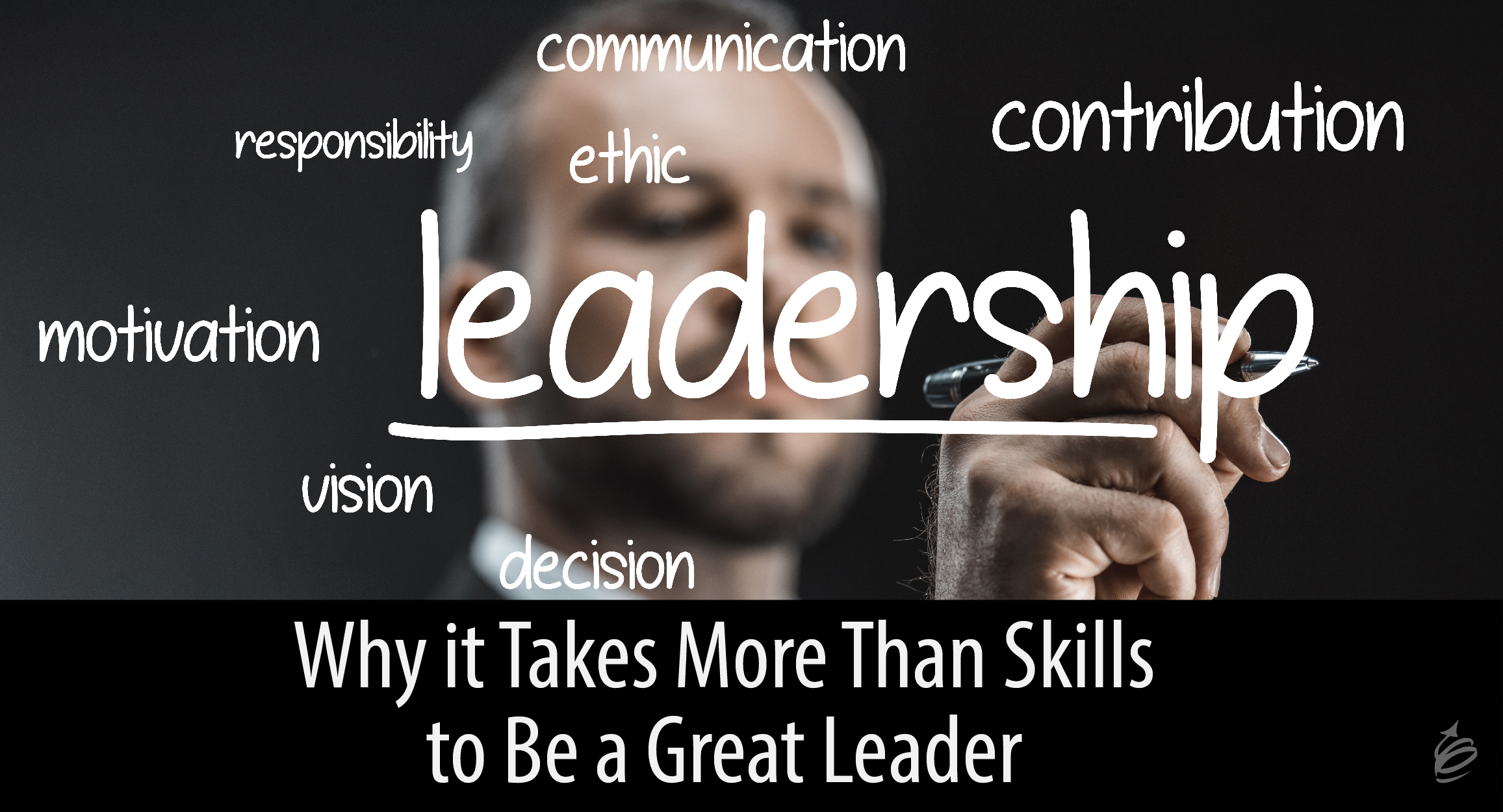
We find the questions, “What makes a great leader?” and “What does great leadership mean in practice?” to be really interesting.
We have seen, for example, the following types of people as leaders: (1) people who appear to have been born to lead and excel as leaders, (2) people anointed as leaders or future leaders who had bold personalities, a certain presence and/or great charisma disappoint completely as leaders, (3) hardworking, organized people without bold personalities who organizations may not have expected to be top leaders grow into their roles and lead organizations to great results.
The greatest leaders leave an organization better than they found it. They leave it in a position to thrive long after they are gone. They have the ability to deliver results today while improving and preparing the organization for tomorrow. Great leaders, as stated by some, have a vision and plan, can build great teams, can motivate the team to pursue and achieve the plan, can take in feedback and adjust the plan as needed.
Here are seven thoughts on great leadership.
1. Great leaders are engaged, excited and passionate about success. Great leaders remain excited about what they are doing and what their team is trying to accomplish. Teams sense whether a leader is engaged or not. It does not take long to detect. It is the unusual leader who can stay enthusiastic and in top form in a position for more than 10 to 20 years; for many, the attention span is less. The phrase “lame duck leader” often applies to those who are still in office despite losing their spark. When leaders find they are losing excitement or engagement, it is time to step down from leadership or take time to rediscover themselves. An excited and engaged leader is critical to success.
We should not confuse passion and excitement with a huge or “rah-rah” personality. A great leader can have a winning personality, and most have excellent people skills, but those two things are only part of the picture. Great leaders are more than mascots or faces of a company — they are engaged with their teams. They are constantly talking to, communicating with, seeing and visiting their teams. They know what is going on with their teams, they know what is going on with their key customers, and they know what is going on with the business.
2. Great leaders build teams and the next level of leaders. The greatest accomplishment of a leader may be building the next level of leadership in a way where the leader is less needed. This is so important to the organization and requires tremendous energy from current leadership, yet it’s not always a leader’s first and foremost goal.
An elite team can go exponentially further and accomplish a great deal more than an elite leader. Anyone who has built an organization beyond a few people understands the importance of great teams and colleagues. When a high-performing team is built, the leader remains important. However, more and more, you can identify a great leader or manager by how special their team is. When a team is magnificent, it is a lot easier to be a great leader or manager. A core concept in Jim Collins’ Good to Great is to build great teams and then set plans. If one has great people, a company or team can then accomplish all kinds of things.
There is a common misconception that leaders welcome their team’s elite performance because it means the leader can work less. We find this could not be further from the truth. Great leaders know that nobody likes working harder than their boss. This adage holds true whether a leader has been in the field for five years or 50. The scope and role of the leader may change as the team grows more adept, elite and accomplished. Exceptional leaders give others space to lead, opportunities to shine and chances to succeed, but this should not be misinterpreted as leaders stepping away out of ambivalence or putting their feet up.
3. Great leaders have big goals and set clear plans. Great leaders set goals for their teams and organizations that are exciting, interesting and far bigger than themselves. The leader needs a goal that one can point to as, “This is what we are trying to be,” or, “This is what we are trying to accomplish.” There’s nothing worse than leaders who transparently appear to get ahead for themselves or accomplish their own goals versus the organization’s or team’s goals.
The late Apple CEO and co-founder Steve Jobs and former GE CEO Jack Welch are examples of great leaders who set big goals. Mr. Welch had the core goal to be No. 1 or No. 2 in any market — or not be in the market at all. It is also critical that the goal is well communicated to the team and that key decisions are consistent with the goal. No plan or strategy is perfect. However, most organizations and teams do far better with a plan and strategy than without. Often, the plan is imperfect but adjusted over time. Either way, in nearly every situation, an imperfect plan is far superior to no plan.
4. Great leaders generally don’t micromanage. High-caliber leaders develop great leaders and teams and allow their teams to excel, perform and grow. They constantly look at benchmarks, hold people accountable and follow up with them. However, on a day-to-day and moment-to-moment basis, their teams are given lots of latitude and autonomy. This is coupled with follow-up and looking at what is accomplished. Warren Buffett may be the world’s best example of a leader who has great CEOs, holds them accountable and doesn’t micromanage them.
Some of the best leaders we have seen recognize when they have an amazing leader working with them. In those situations, the best of leaders can set their egos aside and largely allow the next in line to take credit and lead.
5. Great leaders praise often and recognize contributions. A great leader understands that part of team-building is constantly looking for what people are doing well and encouraging more of it. Great leaders provide praise, recognize what is done well and motivate more of that to be done. They look for what people do exceptionally well, and they look to promote those doing great things. They are constantly looking for the next opportunity for people.
6. Great leaders are not afraid to make hard personnel decisions. The best leaders understand that not everyone is a fit for every job. They are not willing to tolerate mediocrity or toxicity. This doesn’t mean they have a quick trigger. It does mean that they constantly compare current performance to great performance and try to fit people in spots where their performance can excel. For example, someone who is not great at something might be given another try at a different role where they may shine. One of the best leaders I ever witnessed subscribed to the view that it was very hard to change people. He counseled to be fair and patient, but that it was easier to change the person than change a person. In essence, sometimes it’s easier to replace a person than change how a person behaves.
7. Great leaders are emotionally mature. Great leaders do not fly off the handle or make rash decisions, but they do follow their instincts. A remarkable leader does not react to every issue with a great deal of stress. Rather, he or she can take things in, move forward and keep a team on board. A leader’s ability to manage emotions — both his or her own and those of team members — is critical. While great leaders often act with urgency and intent, they too embrace common sense approaches of “sleep on it” or “no sudden movements” when faced with volatility, uncertainty, complexity and ambiguity. They recognize the repercussions of their decisions and movements, and in turn give them the time, thought and reflection they deserve.
 HENRY KOTULA