Here are six key ways Biden is promising to fight the coronavirus pandemic

By the time President-elect Joe Biden takes the oath of office on Wednesday, more than 400,000 Americans will have died of covid-19 — a dismal milestone in the deadly pandemic.

Yet the crucial task he faces  rapidly distributing coronavirus vaccines to the American public  is one that most experts one year ago didn’t think would even be an option by this point. Few expected multiple vaccines to be approved within a year — a record for vaccine development, by any measure. And although the rollout has been criticized, Israel and Great Britain are the only major nations the United States lags in vaccinations per capita and its daily rate of immunizations has more than doubled in the past two weeks.

“You have my word: We will manage the hell out of this operation,” Biden said in a speech on Friday, announcing his own vaccination plan. 

Regardless of whether one views the vaccine effort up to this point as a failure or success, this much is true: Biden and his new administration will face an enormous task, not only in getting the vaccines distributed but also in ramping up testing, convincing Americans to follow public health recommendations and responding to the economic fallout from the pandemic. 

Here are six key promises Biden is making about his pandemic response:

1. Administer 100 million doses of coronavirus vaccine during the first 100 days of his administration.

Biden previously cited this as a goal. He reiterated it Friday while rolling out a broader plan for coronavirus vaccinations

The plan would require a rate of 1 million immunizations per day — and the United States isn’t too far away from that goal right now. Nearly 800,000 Americans are getting shots every day on average. That’s a considerable improvement from two weeks ago, when the daily rate was closer to 350,000.

The 100-shot goal is “absolutely a doable thing,” Anthony S. Fauci, direct of the National Institute for Allergy and Infectious Disease, told NBC’s Chuck Todd yesterday.

“The feasibility of his goal is absolutely clear; there’s no doubt about it,” Fauci said. “That can be done.”

But top Biden advisers are also cautioning ramping up immunizations will be gradual and will require lots of coordination.

“The first days of that 100 days may be substantially slower than it will be towards the end,” Michael Osterholm, a member of Biden’s covid-19 task force, told Stat News. “It’s not going to occur quickly … you’re going to see the ramp-up occurring only when the resources really begin to flow.”

2. Set up mass vaccination clinics.

By the end of his first month in office, Biden has promised to open 100 federally managed clinics to administer shots. According to his vaccination plan, these sites would be set up by the Federal Emergency Management Agency. The federal government would reimburse states for sending National Guard members to help run them.

Biden says he also wants to deploy mobile units to rural and underserved areas, along with boosting the role already being played by pharmacies in distributing shots. 

This approach would diverge significantly from how things are being done now, with the Trump administration leaving it up to hospitals, doctors, pharmacies and state public health departments to administer the shots. Some cities and states have set up large vaccination sites, but many haven’t.

“Overall, the president-elect’s plan lays out a more muscular federal role than the Trump administration’s approach, which has relied heavily on each state to administer vaccines once the federal government ships them out,” Anne Gearan, Amy Goldstein and Laurie McGinley report.

“Many of the elements — such as seeking to expand the number of vaccination sites and setting up mobile vaccination clinics — were foreshadowed in a radio interview Biden gave last week and in an economic and health ‘relief plan’ he issued Thursday, which contains a $20 billion request of Congress to pay for a stepped-up campaign of mass vaccination,” our colleagues add.

3. Allow federally qualified health centers to directly access vaccines.

These community health centers — which receive higher government reimbursements but are required to accept all patients regardless of their ability to pay — are a core part of the nation’s safety net for low-income Americans.

Biden’s plan proposes a new program “to ensure [federally qualified health centers] can directly access vaccine supply where needed,” although here, too, it’s unclear exactly how that might work.

Under the Trump administration’s plan, these centers have been asked to enroll with state health departments as vaccine providers. States were then supposed to communicate to the federal government how many doses were needed and where they should go.

How well this is actually working is “all over the map,” said Amy Simmons Farber of the National Association of Community Health Centers. She said supplies vary from county to county and many health centers have received their supplies with little notice, making it challenging to prioritize and plan.

Farber declined to comment on the Biden plan, saying she doesn’t have a lot of details about it. But she’s “very encouraged by the recognition of the important role health centers have played in fighting the pandemic and the need to adequately resource them.”

4. Use the Defense Production Act to ensure plenty of vaccine supplies.

Several times over the course of the pandemic, President Trump has invoked the Defense Production Act, which allows the president to require companies to prioritize contracts deemed essential for national security.

Ventilator tubes are attached to a covid-19 patient at Providence Holy Cross Medical Center in Los Angeles. 

He has used the DPA to speed the production of coronavirus tests and ventilators, and to keep meatpacking plants open. But he hasn’t invoked the authority to compel faster production of the supplies needed for packaging and administering the vaccine.

Biden says he will invoke DPA to ensure a steady stream of these supplies, which include glass vials, stoppers, syringes, needles and the capacity for companies to rapidly fill vaccine vials and finish packaging them.

5. Sign executive actions to combat the virus.

Biden has promised a raft of executive actions in his first ten days as president, laid out over the weekend in a memo from incoming White House Chief of Staff Ron Klain. They’ll include a number of pandemic-related orders.

On Inauguration Day, Biden intends to issue a mask mandate on federal property and for interstate travel, while encouraging all Americans to wear masks for what he’s calling a “100 Day Masking Challenge.”

The following day, Thursday, he’ll sign executive orders aimed at helping schools and businesses reopen safely, expanding testing, protecting workers and establishing clearer public health standards. And on Friday, Biden will direct his Cabinet secretaries to take immediate action to deliver economic relief to families.

“President-elect Biden will take action — not just to reverse the gravest damages of the Trump administration — but also to start moving our country forward,” Klain wrote.

6. Launch a vaccine education campaign.

The memo says Biden will run a “federally-run, locally-focused public education campaign.”

“The campaign will work to elevate trusted local voices and outline the historic efforts to deliver a safe and effective vaccine as part of a national strategy for beating covid-19,” it says.

But the transition team hasn’t detailed how the education campaign might differ from one launched by the Trump administration last month. 

The Department of Health and Human Services said it plans to spend $250 million on efforts to promote vaccine awareness. It kicked off the effort with a $150,000 buy on YouTube for ads that feature Fauci and Food and Drug Administration Commissioner Stephen Hahn. 

2 months to slow the new spread

How does coronavirus spread: Community spread and COVID-19

🚨New CDC warning: The highly contagious variant B.1.1.7 originally detected in the U.K. could become the dominant strain in the U.S. by March.

Why it matters: The variant is estimated to be 30% to 50% more transmissible than other forms of the virus, threatening efforts to push the U.S. past its record high case count.

  • The variant is in 12 states, but has been diagnosed in only 76 of the 23 million U.S. cases reported to date, the AP reports.
  • It’s likely that the variant is more widespread than currently reported.

The big picture: Americans are exhausted and burned out, and COVID wariness is slipping.

  • So far, the variants do not appear to be resistant to the existing vaccines or cause more severe disease.
  • But the health care system is on the brink in places like Southern California.
  • Another spike in cases could lead us to a very dark place.

The bottom line: There’s no evidence that this variant is transmitted differently, so keep up the masks and social distancing.

Go deeper … The coronavirus variants: What you need to know.

Past Covid-19 Infection Gives Vaccine-Like Immunity For Months, Study Finds

Coronavirus immunity: What do we know? | COVID-19 Special - YouTube

TOPLINE

Most people who have recovered from Covid-19 have similar levels of immunity against future infection to those who received a coronavirus vaccine, a study by Public Health England found, offering early hope against fears of a short-lived immunity spurred on by reports of people catching the virus twice, though the researchers warn that those with immunity may still be able to carry and transmit the virus to others. 

KEY FACTS

Naturally acquired immunity from a previous Covid-19 infection provides 83% protection against reinfection when compared with people who have not had the disease before, government researchers found in a study of more than 20,000 healthcare workers.

The study, which has not yet been peer reviewed for rigor by other scientists, shows that this protection lasts for at least five months and is at a level just below that offered by vaccines from Pfizer-BioNTech (95%) and Moderna (94%) and significantly above that of the vaccine developed by the University of Oxford and AstraZeneca (62%), though manufacturers don’t know for how long this immunity lasts.

The figures suggest reinfection is relatively rare — occurring in fewer than 1% of the the 6,614 people who had already tested positive for the disease — though the scientists warned that while “those with antibodies have some protection from becoming ill with Covid-19 themselves,” early evidence suggests that they can carry and transmit the virus to others.

“It is therefore crucial that everyone continues to follow the rules and stays at home, even if they have previously had Covid-19, to prevent spreading the virus to others,” Public Health England wrote.

The study will continue to follow participants for another 12 months to determine “how long any immunity may last, the effectiveness of vaccines and to what extent people with immunity are able to carry and transmit the virus,” as well as investigate the highly-contagious new variant of coronavirus spreading across the U.K.. 

CRUCIAL QUOTE

Professor Lawrence Young, a virologist and Professor of Molecular Oncology at Warwick Medical School in England, said an important takeaway from the study is that we don’t yet know how long antibody protection will last outside of the five month window. He said it is “possible that many people who were infected during the first wave of the pandemic may now be susceptible to re-infection.” Young said it will be interesting to see whether people previously infected with Covid-19 and are subsequently vaccinated have “an even longer-lived protective immune response” and whether or not these findings hold true for the new virus variant currently spreading in the U.K..

WHAT TO WATCH FOR

The information gathered from reinfection cases could prove important as the pandemic progresses, especially when it comes to designing and implementing an effective vaccination program and deciding whether to ease lockdown measures. Whether or not those who are immune to serious illness are capable of transmitting the infection to others will be a crucial deciding factor.

WHAT WE DON’T KNOW

It’s not yet clear for how long the protection provided by vaccines last. This will have to be studied over time, as with this case of natural immunity, and is something manufacturers are already doing. Moderna believes their vaccine offers at least a year’s protection against disease. Whether or not this protection prevents individuals from infecting others will also need to be figured out. 

BIG NUMBER

384,784. That’s how many people have died from Covid-19 in the U.S. since the pandemic began, according to Johns Hopkins university. According to CDC projections, this figure is set to grow 25% in the next three weeks. At the moment, more than 23 million people have contracted the disease in the U.S..

More than 10 percent of the U.S. Congress has tested positive

Which Members of Congress Have Tested Positive for the Coronavirus - The  New York Times

At least 60 sitting members of Congress — more than one in 10 — have tested positive for the coronavirus or are believed to have had Covid-19 at some point since the pandemic began. The list includes 44 Republicans and 16 Democrats.

That’s a higher proportion than the general population. As of Wednesday, a bit fewer than one in 14 Americans are known to have had the virus, according to a New York Times database, though many more cases have probably gone undetected.

Five House members have reported positive tests since the attack on the Capitol last week, when many lawmakers were holed up in a secure location together and some refused to wear masks — a situation that angered several Democrats, including Representative Pramila Jayapal of Washington, one of those who has since tested positive. Congress’s attending physician warned members afterward that it was possible they were exposed while sheltering and recommended that they get tested.

Congress has struggled to stem the spread within its ranks in recent weeks. Most members who have tested positive have done so since the election in November, as coronavirus cases have surged across the country.

Representative Jake LaTurner, Republican of Kansas, said he received word just after the attack on the Capitol last Wednesday that he had tested positive, and did not return to the House floor for a vote early on Thursday.

Representative Gus Bilirakis of Florida and Representative Michelle Steel of California, both Republicans, were absent from the House floor when the mob entered the Capitol because each had received positive test results earlier that morning. Representative Chuck Fleischmann, Republican of Tennessee, said on Sunday that he had tested positive after exposure to Mr. Bilirakis, with whom he shares a residence.

Covid-19 Live Updates: Distracted by D.C. Political Crisis, U.S. Sets Daily Record for Virus Deaths

Moving a Covid-19 victim from a hospital morgue in Baltimore last month.

More than 4,400 people in the country died of the coronavirus on Tuesday, the day before lawmakers were set to charge President Trump with inciting last week’s violence at the Capitol.

RIGHT NOW

More than 10 percent of the U.S. Congress has tested positive.

The fallout from the Capitol siege has overshadowed the surging U.S. virus death toll.

As America slogs through this grimmest of winters, there is no relief in the daily tabulations of coronavirus-related deaths: More than 4,400 were reported across the United States on Tuesday, according to a New York Times database, a number once unimaginable.

Yet even as Covid-19 touches thousands of families, the nation is distracted by the political crisis gripping Washington in the last days of the Trump administration.

Tuesday’s death count, which set another daily record, represented at least 1,597 more people than those killed in the terrorist attacks of Sept. 11, 2001.

The U.S. death toll, already the world’s highest by a wide margin, is now about 20,000 shy of 400,000 — only a month after the country crossed the 300,000 threshold, a figure greater than the number of Americans who died fighting in World War II.

But much of the nation’s attention is focused on the fallout from the Capitol siege, prompted in part by President Trump’s efforts to prevent Congress from certifying Joseph R. Biden Jr.’s victory in the November election.

On Wednesday, the House will vote to formally charge Mr. Trump with inciting violence against the country. House lawmakers have formally notified Vice President Mike Pence that they will impeach the president if Mr. Pence and the cabinet do not remove Mr. Trump from power by invoking the 25th Amendment.

As people in the country wait to see how Mr. Trump’s tenure will end, they have also focused on the stories of the five people who were left dead after last week’s rampage — in particular, the death of Brian D. Sicknick, a Capitol Police officer who was overpowered by the mob and struck on the head with a fire extinguisher.

“Brian is a hero,” his brother Ken Sicknick said. “That is what we would like people to remember.”

Each coronavirus death is no less painful to the families and friends who have lost loved ones. Among the latest victims are a revered basketball coach, a travel writer who loved country winters and an architect who had survived the Holocaust.

The health Secretary Alex M. Azar II tried to highlight the urgency of the crisis on Tuesday as the Trump administration said that it would release all available vaccine doses and instructed states to immediately begin inoculating every American 65 and older.

“This next phase reflects the urgency of the situation we face,” he said. “Every vaccine dose that is sitting in a warehouse rather than going into an arm could mean one more life lost or one more hospital bed occupied.”

Two Dead Every Minute: U.S. Covid-19 Cases Surge In 2021

COVID-19 on pace to become the third-leading cause of death in Arizona this  year - The Gila Herald

TOPLINE

In the first week of 2021, roughly two people died from Covid-19 in the U.S. every minute, amid a struggling national vaccination effort, soaring coronavirus cases and the deadliest day of the pandemic yet.

KEY FACTS

According to data from the Covid Tracking Project, 19,418 people died from the disease in the first seven days of 2021.

The U.S. is the country hardest hit by the novel coronavirus — more than 4,000 people died on Thursday, the deadliest day yet of the pandemic, and over 355,000 people have died from the disease since the pandemic began. 

Experts warn that things are likely to get worse before they get better as hospitals across the country are stretched to breaking point — hospitals in LA are reportedly rationing oxygen and many are running out of beds. 

More than 132,000 Americans are currently admitted in hospitals for Covid-19-related care. 

Widespread vaccination, which could help turn the tide against the virus, has failed to gain momentum and the U.S. is way behind its inoculation targets.

The Centers for Disease Control and Prevention says that only 28% of the more than 21 million vaccines it has distributed have been used —  many are reportedly languishing in storage. 

WHAT TO WATCH FOR

President-elect Joe Biden has said he will release all available Covid-19 vaccine doses for immediate use upon taking office, ending Trump’s strategy of saving doses to ensure people have access to a recommended second shot. Some countries, such as the U.K., have decided to space out doses beyond what manufacturers recommend in a bid to provide as many people as possible with some degree of immunity. Experts are torn on the strategy. The U.S. Food and Drug Administration recommends the vaccines are distributed as intended, with a second shot after a 21 or 28 day gap. The British medical regulator, and more recently the World Health Organization, say the second shot can be delayed, although they do not agree on how long this should be.

CRUCIAL QUOTE

Biden warned that the U.S. is falling “far behind” what is needed to control the pandemic. Trump’s approach would take “years,” he said. 

WHAT WE DON’T KNOW

A highly infectious variant of coronavirus, first discovered in the U.K., could be circulating in the U.S.. At least 52 cases have been reported so far. Fortunately, scientists do not believe the variant is able to evade the recently-developed vaccines. 

U.S. surpasses 300,000 daily coronavirus cases, the second alarming record this week

CDC advises 'universal' masks indoors as US Covid deaths again break records  | Coronavirus | The Guardian

The United States on Friday surpassed 300,000 daily coronavirus cases, the second alarming record this week. The number, which roughly equates to the population of St. Louis, Pittsburgh or Cincinnati, comes about two months after the country reported 100,000 coronavirus cases a day for the first time, and one day after more than 4,000 people died from the virus, also a record.

The United States has reported 21.8 million infections and 367,458 deaths.

Nearly 60% of COVID-19 spread may come from asymptomatic spread, model finds

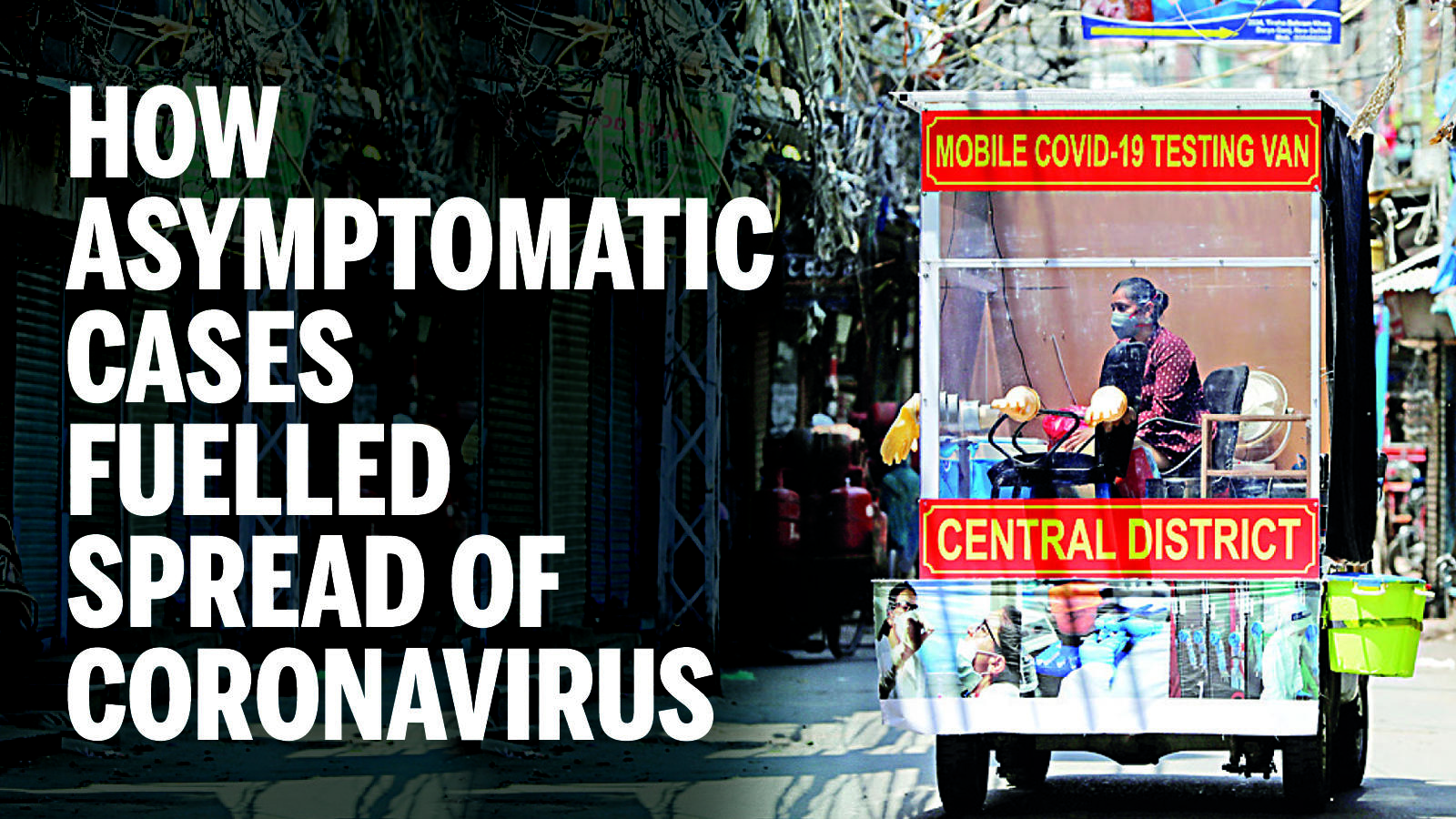
How asymptomatic cases fuelled spread of coronavirus - Times of India

People with COVID-19 who don’t exhibit symptoms may transmit 59 percent of all virus cases, according to a model developed by CDC researchers and published Jan. 7 in JAMA Network Open. 

Since many factors influence COVID-19 spread, researchers developed a mathematical approach to assess several scenarios, varying the infectious period and proportion of transmission for those who never display symptoms according to published best estimates.  

In the baseline model, 59 percent of all transmission came from asymptomatic transmission. That includes 35 percent of new cases from people who infect others before they show symptoms and 24 percent from people who never develop symptoms at all. Under a broad range of values for each of these assumptions, at least 50 percent of new COVID-19 infections were estimated to have originated from exposure to asymptomatic individuals. 

The more contagious variant first identified in the U.K. and since found in six states underscores the importance of the model findings, said Jay Butler, MD, CDC deputy director for infectious diseases and a co-author of the study.

“Controlling the COVID-19 pandemic really is going to require controlling the silent pandemic of transmission from persons without symptoms,” Dr. Butler told The Washington Post. “The community mitigation tools that we have need to be utilized broadly to be able to slow the spread of SARS-CoV-2 from all infected persons, at least until we have those vaccines widely available.”

Whether vaccines stop transmission is still uncertain and was not a scenario addressed in the model. 

States ranked by percentage of COVID-19 vaccines administered: Jan. 8

E.U. Starts Effort to Vaccinate 450 Million - The New York Times

North Dakota has administered the highest percentage of COVID-19 vaccines it has received, according to the CDC’s COVID-19 vaccine distribution and administration data tracker.

The CDC’s data tracker compiles data from healthcare facilities and public health authorities. It updates daily to report the total number of COVID-19 vaccines that have been distributed to each state and the total number each state has administered.

As of 9 a.m. ET Jan. 7, a total of 21,419,800 vaccine doses have been distributed in the U.S. and 5,919,418 have been administered, or 27.64 percent. That means about 1.8 percent of the U.S. population has been vaccinated. 

Below are the states ranked by the percentage of COVID-19 vaccines they’ve administered of those that have been distributed to them.

  1. North Dakota
    Doses distributed to state: 43,950
    Doses administered: 27,289
    Percentage of distributed vaccines that have been administered: 62.09
  2. West Virginia
    Doses distributed to state: 126,275
    Doses administered: 74,016
    Percentage of distributed vaccines that have been administered: 58.61
  3. South Dakota
    Doses distributed to state: 59,900
    Doses administered: 33,389
    Percentage of distributed vaccines that have been administered: 55.74
  4. New Hampshire
    Doses distributed to state: 77,075
    Doses administered: 37,369
    Percentage of distributed vaccines that have been administered: 48.48
  5. Connecticut
    Doses distributed to state: 219,125
    Doses administered: 100,889
    Percentage of distributed vaccines that have been administered: 46.04
  6. Nebraska
    Doses distributed to state: 132,800
    Doses administered: 53,548
    Percentage of distributed vaccines that have been administered: 40.32
  7. Montana
    Doses distributed to state: 69,025
    Doses administered: 27,693
    Percentage of distributed vaccines that have been administered: 40.12
  8. Tennessee
    Doses distributed to state: 454,800
    Doses administered: 179,811
    Percentage of distributed vaccines that have been administered: 39.54
  9. Iowa
    Doses distributed to state: 191,675
    Doses administered: 74,224
    Percentage of distributed vaccines that have been administered: 38.72
  10. Kentucky
    Doses distributed to state: 244,350
    Doses administered: 94,443
    Percentage of distributed vaccines that have been administered: 38.65
  11. Vermont
    Doses distributed to state: 48,550
    Doses administered: 18,740
    Percentage of distributed vaccines that have been administered: 38.6
  12. Maine
    Doses distributed to state: 96,475
    Doses administered: 37,128
    Percentage of distributed vaccines that have been administered: 38.48
  13. Rhode Island
    Doses distributed to state: 72,175
    Doses administered: 27,696
    Percentage of distributed vaccines that have been administered: 38.37
  14. New Mexico
    Doses distributed to state: 133,125
    Doses administered: 48,306
    Percentage of distributed vaccines that have been administered: 36.29
  15. Colorado
    Doses distributed to state: 361,375
    Doses administered: 130,445
    Percentage of distributed vaccines that have been administered: 36.1
  16. Utah
    Doses distributed to state: 191,075
    Doses administered: 62,662
    Percentage of distributed vaccines that have been administered: 34.8
  17. Oklahoma
    Doses distributed to state: 264,000
    Doses administered: 85,978
    Percentage of distributed vaccines that have been administered: 32.57
  18. Texas
    Doses distributed to state: 1,676,925
    Doses administered: 545,658
    Percentage of distributed vaccines that have been administered: 32.54
  19. New York
    Doses distributed to state: 1,134,800
    Doses administered: 353,788
    Percentage of distributed vaccines that have been administered: 31.18
  20. Massachusetts
    Doses distributed to state: 449,025
    Doses administered: 137,858
    Percentage of distributed vaccines that have been administered: 30.7
  21. Ohio
    Doses distributed to state: 576,250
    Doses administered: 175,681
    Percentage of distributed vaccines that have been administered: 30.49
  22. Indiana
    Doses distributed to state: 409,625
    Doses administered: 123,835
    Percentage of distributed vaccines that have been administered: 30.23
  23. Florida
    Doses distributed to state: 1,355,775
    Doses administered: 402,802
    Percentage of distributed vaccines that have been administered: 29.71
  24. Illinois
    Doses distributed to state: 737,125
    Doses administered: 213,045
    Percentage of distributed vaccines that have been administered: 28.9
  25. Missouri
    Doses distributed to state: 401,050
    Doses administered: 113,369
    Percentage of distributed vaccines that have been administered: 28.27
  26. New Jersey
    Doses distributed to state: 572,250
    Doses administered: 155,458
    Percentage of distributed vaccines that have been administered: 27.17
  27. Maryland
    Doses distributed to state: 371,425
    Doses administered: 100,049
    Percentage of distributed vaccines that have been administered: 26.94
  28. Delaware
    Doses distributed to state: 64,375
    Doses administered: 16,677
    Percentage of distributed vaccines that have been administered: 25.91
  29. Hawaii
    Doses distributed to state: 95,200
    Doses administered: 24,558
    Percentage of distributed vaccines that have been administered: 25.80
  30. South Carolina
    Doses distributed to state: 225,850
    Doses administered: 58,044
    Percentage of distributed vaccines that have been administered: 25.7
  31. Minnesota
    Doses distributed to state: 378,425
    Doses administered: 97,098
    Percentage of distributed vaccines that have been administered: 25.66
  32. Pennsylvania
    Doses distributed to state: 789,250
    Doses administered: 202,498
    Percentage of distributed vaccines that have been administered: 25.66
  33. Wisconsin
    Doses distributed to state: 322,775
    Doses administered: 82,170
    Percentage of distributed vaccines that have been administered: 25.46
  34. Alaska
    Doses distributed to state: 87,325
    Doses administered: 21,830
    Percentage of distributed vaccines that have been administered: 25
  35. Virginia
    Doses distributed to state: 556,625
    Doses administered: 136,924
    Percentage of distributed vaccines that have been administered: 24.60
  36. Oregon
    Doses distributed to state: 262,100
    Doses administered: 61,672
    Percentage of distributed vaccines that have been administered: 23.53
  37. Washington
    Doses distributed to state: 518,550
    Doses administered: 121,354
    Percentage of distributed vaccines that have been administered: 23.40
  38. Wyoming
    Doses distributed to state: 40,400
    Doses administered: 9,324
    Percentage of distributed vaccines that have been administered: 23.08
  39. California
    Doses distributed to state: 2,314,350
    Doses administered: 528,173
    Percentage of distributed vaccines that have been administered: 22.82
  40. Idaho
    Doses distributed to state: 104,925
    Doses administered: 22,822
    Percentage of distributed vaccines that have been administered: 21.75
  41. Louisiana
    Doses distributed to state: 298,825
    Doses administered: 64,664
    Percentage of distributed vaccines that have been administered: 21.64
  42. North Carolina
    Doses distributed to state: 647,450
    Doses administered: 139,474
    Percentage of distributed vaccines that have been administered: 21.54
  43. Nevada
    Doses distributed to state: 187,375
    Doses administered: 39,761
    Percentage of distributed vaccines that have been administered: 21.22
  44. Michigan
    Doses distributed to state: 662,450
    Doses administered: 137,887
    Percentage of distributed vaccines that have been administered: 20.81
  45. Alabama
    Doses distributed to state: 245,100
    Doses administered: 48,888
    Percentage of distributed vaccines that have been administered: 19.95
  46. Arizona
    Doses distributed to state: 453,275
    Doses administered: 88,266
    Percentage of distributed vaccines that have been administered: 19.47
  47. Arkansas
    Doses distributed to state: 212,700
    Doses administered: 40,899
    Percentage of distributed vaccines that have been administered: 19.23
  48. Kansas
    Doses distributed to state: 191,225
    Doses administered: 36,538
    Percentage of distributed vaccines that have been administered: 19.11
  49. Mississippi
    Doses distributed to state: 159,625
    Doses administered: 28,356
    Percentage of distributed vaccines that have been administered: 17.76
  50. Georgia
    Doses distributed to state: 619,250
    Doses administered: 103,793
    Percentage of distributed vaccines that have been administered: 16.76