
UnitedHealth’s Reckoning: Wall Street Isn’t Buying the Blame Game

UnitedHealth executives made a valiant attempt yesterday to persuade investors that they have figured out how to improve customer service and keep Congress and the incoming Trump administration from passing laws that could shrink the company’s profit margins – and maybe even the company itself – but Wall Street wasn’t buying.

During their first call with investors since the murder of UnitedHealthcare CEO Brian Thompson, the company’s top brass pointed the finger of blame for rising health care costs everywhere but at themselves – primarily at hospitals and pharmaceutical companies – and made statements that simply were not true. Investors clearly did not find their comments reassuring or credible. By the end of the day shares of UnitedHealth’s stock were down more than 6% to $510.59. That marked a continuation of a slide that began after the stock price peaked at $630.73 on November 11 – a decline of almost 20%. 

In a little more than two months, the company has lost an astonishing $110 billion in market capitalization, and shareholders have lost an enormous amount of the money they invested in UnitedHealth. 

Earlier yesterday morning, the company released fourth-quarter and full-year 2024 earnings, which were slightly higher on a per share basis than Wall Street financial analysts had expected: $6.81 per share in the fourth quarter compared to analysts’ consensus estimate of $6.73 for the quarter. But the company posted lower revenue during the last three months of 2024 than analysts had expected. While revenue was up 7% over the same quarter in 2023, to $100.8 billion, analysts had expected revenue to grow to $101.6 billion.

And on a full-year basis, the company’s net profits fell an eye-popping 36%, from $22.4 billion in 2023 to $14.4 billion last year.

Bottom line: the company, which until last year had grown rapidly, actually shrank in some respects, especially in the division that operates the company’s health plans. UnitedHealthcare, which Thompson led, saw its revenue increase slightly but its profits fall. The other big division, Optum, which among other things owns and operates numerous physician practices and clinics and one of the country’s largest pharmacy benefit managers (PBMs), fared much better.

While Optum’s 2024 revenue was lower than UnitedHealthcare’s ($253 billion and $298 respectively), it made far more in profits on an operating basis ($16.7 billion and $15.6 respectively).

Optum’s operating profit margin was 6.6% while UnitedHealthcare’s was 5.2%.

The company’s executives blamed higher health care utilization, especially by people enrolled in its Medicare Advantage plans, for the decline in profits.

Witty and CFO John Rex pointed the finger of blame at hospitals and drug companies for rising medical prices. And they obscured the huge amounts of money the company’s PBM, Optum Rx, extracts from the pharmacy supply chain. While the company chose not to break out exactly how much of Optum’s revenues of $298 billion came from Optum Rx, it appears that more than half of it was contributed by the PBM. The company did note that Optum Rx revenues increased 15% during 2024.

Nevertheless, Witty and Rex blamed drug makers for high prices.

They also said that they would be changing the PBM’s business practices to pass through rebate discounts from drug makers to its customers, claiming that it already passes through 98% of them and will reach 100% by 2028. That clearly was a talking point aimed at Washington, where there is significant bipartisan support for legislation that would require all PBMs to do so. Despite UnitedHealth’s claim, there is no external verification to back up that they are passing 98% of rebates back to customers.

Another claim the executives made that is not true is that the Medicare Advantage program saves taxpayers money. Numerous government reports have shown the opposite, that the federal government spends considerably more on people enrolled in Medicare Advantage plans than those enrolled in the traditional Medicare program.

Reports have estimated that UnitedHealthcare, which is the largest Medicare Advantage company, and other MA plans are overpaid between $80 billion and $140 billion a year.

There is also growing bipartisan support to reform the Medicare Advantage program to reduce both the overpayments and the excessive denials of care at UnitedHealthcare and other MA insurers.

While company executives might be hoping that their fortunes will improve during the second Trump administration, Trump recently joined some Republican members of Congress, like Rep. Buddy Carter of Georgia, who are calling for significant reforms, especially to pharmacy benefit managers. 

At a news conference last month, Trump promised to “knock out” those middlemen in the pharmacy supply chain.  

“We are paying far too much, because we are paying far more than other countries,” he said. “We have laws that make it impossible to reduce [drug costs] and we have a thing called a ‘middleman’ … that makes more money than the drug companies, and they don’t do anything except they’re middlemen. We are going to knock out the middleman.”
Optum’s behavioral health business: 5 things to know

UnitedHealth Group’s Optum, the largest employer of physicians in the U.S., is expanding its reach in behavioral health. 

The company added 45,000  therapists, psychiatrists and behavioral health providers to its network in 2023, and it has more than 430,000 behavioral health clinicians in its network overall. 

Here are five things to know about Optum’s behavioral health offerings: 

  1. The company is acquiring behavioral health clinics. Optum recently picked up Care Counseling, which employs more than 200 clinicians at 10 clinics in the Minneapolis area. In 2022, Optum acquired Refresh Mental Health, which operates more than 300 outpatient sites in 37 states.
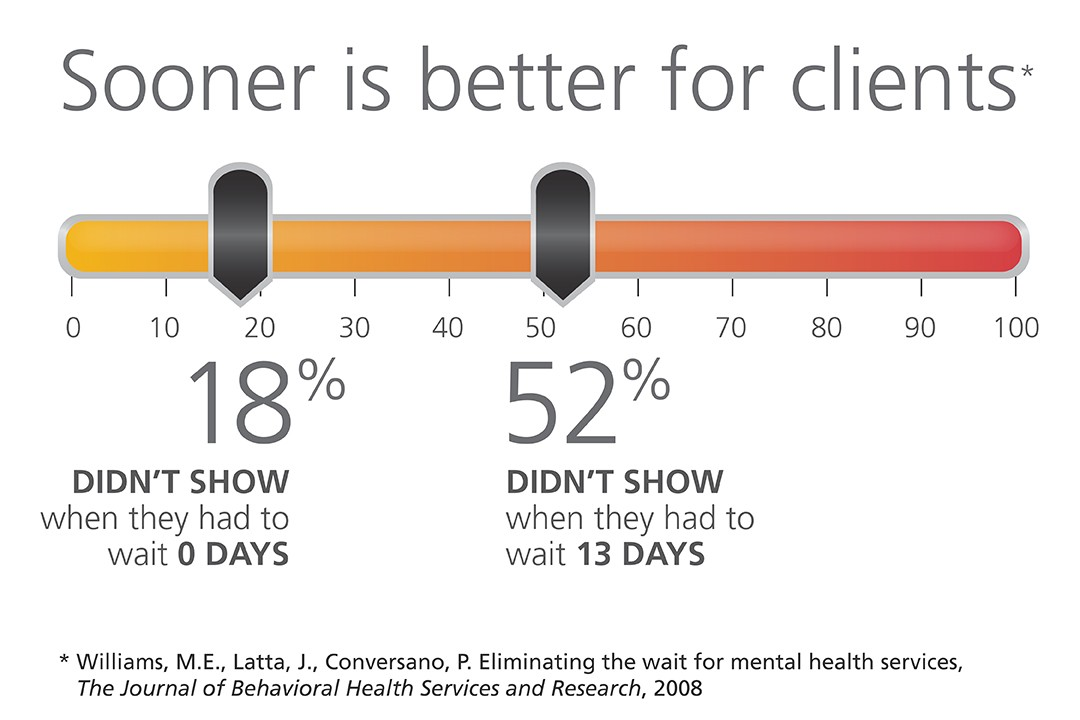
  2. Optum’s acquisitions of behavioral health providers have helped cut wait times for patients, Optum CEO Heather Cianfrocco said in May.

    “On average it takes over 50 to 60 days to get an appointment for high-quality behavioral care,” she said. “We started acquiring our own behavioral providers to be able to reduce that access issue.” 
  3. The company is also targeting in-home behavioral care. In December 2023, Amar Desai, MD, CEO of Optum Health, said the company had integrated behavioral care into its home health offerings.

    “As a practicing physician, I am particularly excited that we are becoming the practice and partner of choice in the marketplace,” Dr. Desai said of the business.
  4. Optum also administers behavioral health benefits systems for states, though it recently lost contracts to manage programs in Maryland and Idaho.
  5. OptumRx, a pharmaceutical benefit manager, provides medication management for behavioral health, substance use disorder and other complex drugs for more than 1 million people each year.

$5.4B acquisition dramatically expands Optum’s home healthcare footprint

UnitedHealth Group’s Optum announced plans to acquire publicly traded, postacute care behemoth LHC Group for $5.4B. The Lafayette, LA-based company, which had $2.2B in revenue last year, operates more than 550 home health locations, 170 hospice sites, and 12 long-term acute care hospitals across 37 states, reaching 60 percent of the country’s Medicare-eligible seniors. LHC also has more than 430 hospital joint venture partners.  

The Gist: This deal will greatly expand Optum’s ability to provide home-based and long-term care, with the goal of moving more care for the insurer’s Medicare Advantage enrollees to lower-cost settings. The acquisition puts Optum’s home healthcare portfolio on par with competitor Humana, which has been the leader in amassing home-based and postacute care assets, and recently moved to take full control of home health provider Kindred at Home. LHC will be part of a growing portfolio of care assets managed by Optum Health, which also includes the company’s owned physician assets. 

Success in lowering cost of care will require Optum to integrate referrals and care management across a rapidly expanding portfolio—and ensure its physician base has confidence in these new models of care. 

Optum’s strategy for 2022 growth

Optum spent the last decade investing in significant growth, adding thousands of physicians to its network and purchasing ASC company Surgical Care Affiliates in 2017. Now the company is focusing more on its primary care network, data offerings and $115 billion pharmacy and medical care business line.

Optum, owned by UnitedHealth Group, has three divisions:

  • Optum Health, the healthcare provider division which includes physician groups and ambulatory surgery centers
  • Optum Insight, which houses the data analytics platforms designed to connect clinical, administrative and financial data
  • Optum Rx, a pharmacy benefits and care services business

Each division has a unique growth strategy focused on the patient and provider experience.

Provider growth
Optum Health now has 60,000 employed or aligned physicians and partners with 100 payers. Optum as a whole now works with 80 percent of health plans and 90 percent of hospitals and 90 percent of Fortune 100 companies.

Wyatt Decker, CEO of Optum Health, said in the 2021 earnings call in January that Optum Health is still a growth platform and the company will make investments to more deeply penetrate established markets. He expects Optum Health to deliver 8 percent to 10 percent margins annually going forward.

“Our approach strengthens the critical provider-patient relationship by empowering our primary care physicians with the latest information, insights and best practices to help them efficiently coordinate all patient care, manage referrals and identify higher-quality, lower-cost options,” the company said in its 2021 yearend highlights report.

ASCs certainly fit the high quality, low-cost care description, but Optum’s executives fell shy of mentioning whether the company would focus on growth in that sector during the 2021 earnings call.

Optum is also expanding its virtual care capabilities, focused on chronic care patients, and its behavioral health services. The company said it needs to add physicians, clinicians and technology to support patient care in those areas. Optum said it has its sights set on providing more whole-person, value-based care, scaling in new markets and having the key data insights to do it better than anyone else.

Value-based care
Last year, Optum and UnitedHealth Group’s health insurance business, UnitedHealthcare, worked together with external partners to grow in commercial and government payer markets, innovate and add 500,000 patients to their value-based contracts. Optum served 100 million patients, and 2 million of the patients were under fully accountable arrangements. Both companies also had a sharpened focus on the consumer experience.

“Taken together, these efforts helped us add more than $30 billion in revenue for the year, about $10 billion above our initial outlook,” said Andrew Witty, CEO of UnitedHealth Group, during the earnings call, as transcribed by The Motley Fool. “And you should expect similar growth in the year ahead. We see an even greater demand for integration to bring together the fragmented pieces of the health system, to harness the tremendous innovation occurring in the marketplace, to help better align the incentives for providers, payers and consumers, and to organize the system around value.”

Data and information
Optum Insights aims to continue growing by acquiring Change Healthcare, a healthcare data and technology company.

“The combination will advance our ability to create products and services that improve the delivery of healthcare and reduce the high costs and inefficiencies that plague the health system,” Optum claimed on its fact sheet about the transaction. “We will share these innovations broadly to benefit those who engage with the health system today and well into the future.”

The acquisition could make the episode of care more seamless for patients and reduce administrative burden for providers, as well as give payers a comprehensive view of the patient’s health outcomes with the potential to reduce cost. But it could also give Optum and UnitedHealth Group an unfair advantage over competitors, the Justice Department argued in a lawsuit filed in February.

“Across Optum, we operate with the highest ethical standards in protecting confidential data and information of our clients and adhere to the safeguards we have had in place for more than a decade to ensure data is accessed and used only for permissible purposes,” according to a statement on Optum’s website responding to the Justice Department’s lawsuit. “We will not be distracted by the DOJ’s complaint and will continue to honorably serve our clients and consumers and those that engage in the health system.”