When private equity and doctors break up

https://mailchi.mp/c02a553c7cf6/the-weekly-gist-july-28-2023?e=d1e747d2d8

We recently spoke with a health system COO who wanted help playing out scenarios regarding the relationship between specialist physicians and their private equity (PE) partners. The system is located in one of the markets referenced in a recent study that has some of the highest levels of private equity ownership in the country. One physician group, whose doctors provide almost all the system’s coverage for a key specialty, has worked with PE partners for five years, and the relationship is not going well. “We’re hearing that many of the younger doctors want to leave. And many of the others are close to retirement,” he shared. 

“We’re really concerned about what could happen if the group implodes.” The key issue: the doctors signed very restrictive noncompete agreements when they sold their practice, which could prohibit them from working in the market. 

The health system would consider bringing some of the doctors into their employed medical group, but executives are worried this might be impossible for the duration of the noncompete agreements. “If these doctors can’t stay locally, we might have to rebuild that specialty from scratch. And I can’t imagine how disruptive that would be,” he worried.
 
When the FTC announced a proposed rule earlier this year that would ban employers from imposing noncompete agreements, many health systems reacted with alarm, fearing the that the freedom to move would lead to frequent bidding wars, ultimately driving up the cost of physician talent in the market.

But the situation shows how perspectives would change depending on who holds the noncompete.

Mid-sized markets like this one, where coverage for several specialties may come from single groups, are particularly vulnerable. Regardless, this situation highlights the need to diversify physician relationships to guard against getting caught in a “coverage crisis”.
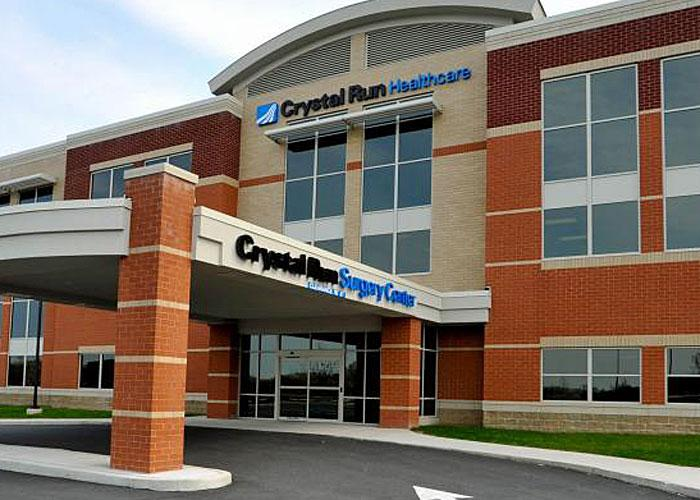
UnitedHealth Group (UHG) quietly acquired Crystal Run Healthcare

https://mailchi.mp/5e9ec8ef967c/the-weekly-gist-april-14-2023?e=d1e747d2d8

 In late February, Crystal Run Healthcare, a Middletown, NY-based physician group with nearly 400 providers, became part of UHG’s Optum division. 

A local paper broke the news after obtaining an email from Crystal Run’s CEO, as neither company issued a press release, though UHG has since confirmed the acquisition. In addition to pandemic-related financial difficulties, Crystal Run recently shuttered its health plan after large losses, and its Medicare accountable care organization failed to earn savings in 2021.

Crystal Run expands Optum’s footprint in the Hudson Valley region north of New York City, following the acquisition of Mount Kisco, NY-based Caremount Medical in 2022. The company’s broader New York metro area footprint includes Connecticut-based ProHEALTH and New Jersey-based Riverside Medical Group, the three of which Optum has since integrated into a single tri-state medical group. 

The Gist: Optum continues to secure its place as the country’s largest aggregator of physicians, now employing or aligning with over 70,000 doctors nationwide. 

Not only does every new deal by UHG bolster its vertical integration strategy, but they also shine a light on gaps in federal antitrust regulations. UHG must only disclose deals that comprise a “significant” portion of its business, a threshold that excludes physician groups as large as Crystal Run—making it difficult to fully examine transactions that are subscale according to regulations, but may be significant for healthcare delivery in a local market. 

Some state governments, including New York, are exploring ways to increase state antitrust scrutiny of provider acquisitions. But in multi-state markets where only the federal government has the authority for full oversight, UHG’s acquisition strategies are proving difficult to even monitor, much less intervene.

Physician Arms Race

https://mailchi.mp/d62b14db92fb/the-weekly-gist-february-10-2023?e=d1e747d2d8

After rumors of a possible deal first surfaced in early January, CVS Health announced on Wednesday that it has entered into a definitive agreement to acquire value-based primary care provider Oak Street Health for $10.6B. The Chicago-based company will join CVS’s recently formed Health Care Delivery organization, bringing with it roughly 600 physicians and nurse practitioners working at 169 senior-focused clinics in 21 states. This move is the latest by CVS to expand its care offerings, following its $100M investment last month in primary and urgent care provider Carbon Health, and its $8B acquisition of in-home evaluation company Signify in September.

The Gist: If this deal goes through, CVS will have the key pieces of the national primary care physician network it needs for a value-based care platform focused on Medicare Advantage—although how they will combine Oak Street’s clinics with retail-based HealthHUBs and other primary care assets remains unclear.

The fact that CVS is paying about a 50 percent share price premium shows how competitive the market for large physician organizations has become, driving up bidding prices such that only cash-rich payers, pharmacies, and retailers can afford them as they seek to emulate UnitedHealth Group’s Optum strategy.

Of note, the same day CVS announced the deal, Aetna competitor and erstwhile investor in Oak Street, Humana announced a five-year network partnership with Oak Street competitor ChenMed.

We’ll be watching for whose strategy proves most effective as we enter the next phase of the physician arms race between vertically-integrated payers, and the emphasis shifts from how many providers are employed to how they’re integrated and deployed.