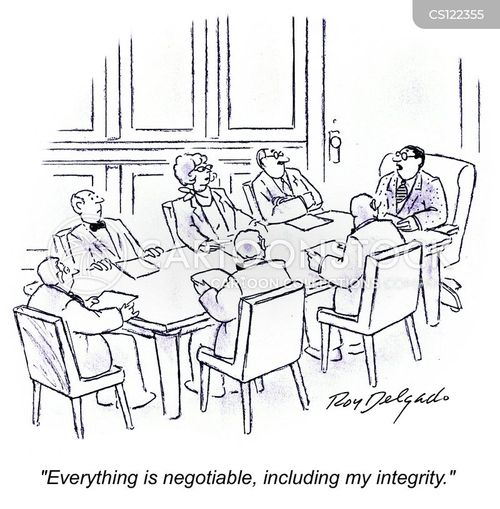
Cartoon – Lacking Leadership


President Trump’s dismissal of David J. Shulkin, the secretary of veterans affairs — and the nomination of a Navy doctor with no known policy views to take his place — has brought renewed focus to an increasingly contentious debate over whether to give veterans the option of using the benefits they earned through military service to see private doctors rather than going to government hospitals and clinics.
The issue, which has pitted almost every major veterans group against Concerned Veterans for America, an advocacy group funded by the billionaire conservative brothers Charles G. and David H. Koch, and its allies, has been at the center of months of intrigue at the sprawling Department of Veterans Affairs, which is charged with caring for the United States’ 20 million veterans.
But Mr. Shulkin’s departure and the abrupt elevation of Dr. Ronny L. Jackson, the White House physician, to the department’s top job on Wednesday have raised new fears among Democrats and groups like the Veterans of Foreign Wars and the American Legion. They worry that the Trump administration will push for a major change in veterans’ health care that they have bitterly opposed.
The groups say the end result would be disastrous, effectively bleeding to death a network of 1,700 hospitals and clinics that has taken decades to build.
Dr. Shulkin, who was dismissed Wednesday evening by presidential tweet, argued in an op-ed article in The New York Times and in a subsequent interview on Thursday that such radical restructuring of veterans’ health care would not work.
He said that a middle path that he had tried to pursue — investing in the department’s own health care system while offering veterans more, though not unfettered, access to private doctors — had been rejected by Trump administration officials interested in rewarding private individuals and companies with a windfall in government money.
“They saw me as an obstacle to privatization who had to be removed,” he wrote in one of the most forceful statements offered yet by a fired Trump administration official.
Senior White House officials offered a different rationale for his firing that was based more on a damaging report about Dr. Shulkin’s use of government funds on a trip to Europe released last month than on a dispute over policy.
Lindsey Walters, a deputy White House press secretary, told reporters aboard Air Force One on Thursday that the nomination of Dr. Jackson should not be interpreted as a signal that Mr. Trump wants to privatize veterans’ health care.
But Mr. Trump seemed to renew those concerns just a short time later, promising in a speech in Ohio that he was going to ensure that veterans “have choice,” harkening back to a campaign promise to enact something like the Koch-backed plan.
Veterans advocates are especially concerned that Dr. Jackson, a rear admiral in the Navy who has no real management or political experience in a large bureaucracy, will be pushed around or, worse, simply co-opted by officials in the administration set on drastically expanding private care.
“We don’t know what his agenda is. We don’t know what his views are,” said Verna L. Jones, the executive director of the American Legion. “No one has had an opportunity to talk to him.”
“Of course we are nervous,” she added.
Leaders of the older, congressionally chartered veterans groups like the Legion are not categorically opposed to easing restrictions on private care, particularly in cases where veterans are facing long wait times and subpar facilities. About 30 percent of veterans’ appointments are currently made with private health providers for those reasons.
But the groups prefer tweaking programs already in place while at the same time addressing the problems that made private care necessary.
John Hoellwarth, the communications director for Amvets, said he thought the first response of most veterans groups to Dr. Jackson was to search for him online.
Dr. Shulkin said that he had been friendly with Dr. Jackson for several years — both men also served in the Obama administration — and encouraged him to go through the interview process to lead the department’s health system this year. Still, he said that he thought concerns about Dr. Jackson’s résumé were justified.
“There is no question about it, but I can’t imagine any job that prepares you for this type of job,” Dr. Shulkin said.
By most accounts, Dr. Shulkin’s rapid fall began as he increasingly butted heads with other Trump administration official over how to approach the expansion of private care. The officials — who included the department’s press secretary and assistant secretary for communications — came to consider Dr. Shulkin as an obstacle and repeatedly tried to have him removed.
Many of those officials, several of whom have ties to the Concerned Veterans group, are still in the administration and are likely to have increased sway in the department. But the ultimate decision about the structure of the department’s health care most likely resides on Capitol Hill, where lawmakers have been struggling for almost a year with the issue.
“I think that there was a miscalculation that if you could get rid of the secretary who is a moderate that things will fall in place, and I just don’t think that is going to happen,” Dr. Shulkin said.
Dan Caldwell, the executive director of Concerned Veterans for America, strenuously disputed Dr. Shulkin’s analysis and said the secretary was using privatization as a “straw man” to distract from his own ethical lapses.
“The president has said he supports full V.A. choice,” Mr. Caldwell said. “The president would not have selected Admiral Jackson if he did not believe he supports his full agenda.”
Mr. Caldwell was referring to a damning report released in February by the department’s inspector general that found “serious derelictions” related to a trip Dr. Shulkin took last year to Britain and Denmark. It concluded that he had spent much of the trip, which cost more than $122,000, sightseeing and that he had improperly accepted Wimbledon tickets as a gift.
Dr. Shulkin has continued to deny any wrongdoing, and on Thursday blamed his political opponents in the department for the investigation itself.
“This is 100 percent about the politics and this is the way that people fight their battles in Washington rather than having intellectually honest discussions,” he said.
The White House did not view it that way. Senior officials came to believe that Dr. Shulkin had misled them in the run-up to the report’s release. His public declarations of innocence only further aggravated top officials, who felt he had too openly aired internal politics with news outlets and had repeatedly opened the White House to criticism.
The exact circumstances surrounding Dr. Shulkin’s firing, and exactly how much the White House chief of staff, John F. Kelly, was aware of it, remained unclear.
One person with direct knowledge of the events said Dr. Shulkin had called Mr. Kelly around 10:30 a.m. Wednesday, asking if he were about to be fired. Mr. Kelly told that him he did not know, and that he would get back to him.
A White House official would not discuss the details of what took place, beyond saying that Mr. Kelly had called Dr. Shulkin to accept his resignation, and that the secretary gave it.
Dr. Shulkin declined to discuss the episode in detail, but said he did speak on the phone with Mr. Trump on Wednesday about the progress of various policy initiatives at the department and implied that his job status did not come up.
A few hours later, he was at home on the phone with his wife when she broke the news: the president had fired him in a tweet.
https://khn.org/news/podcast-khns-what-the-health-va-secretary-out-privatization-in/

David Shulkin, the secretary of Veterans Affairs, was fired Wednesday night by President Donald Trump. To replace him, Trump will nominate his White House physician, naval Rear Adm. Ronny Jackson. Shulkin, however, is not going quietly. He took to The New York Times op-ed page to claim he was pushed out by those who want to privatize VA health services for profit.
Meanwhile, two more states, Iowa and Utah, passed legislation that would sidestep some of the requirements of the Affordable Care Act. Iowa wants to allow the sale of health plans that cover fewer benefits — or restrict coverage for people with preexisting health conditions. Utah wants to expand Medicaid to those higher up the income scale — but not as high as prescribed by the ACA.
This week’s panelists for KHN’s “What the Health?” are Julie Rovner of Kaiser Health News, Anna Edney of Bloomberg News, Sarah Kliff of Vox.com and Alice Ollstein of Talking Points Memo.
Among the takeaways from this week’s podcast:
https://www.sfgate.com/news/article/Discipline-based-on-arrest-records-upheld-for-12792563.php

Doctors and other health professionals in California can be disciplined or lose their licenses for criminal conduct such as possession of illegal drugs even if they complete a pretrial treatment program and have the case erased from their record, under a ruling that has now become final.
The state Supreme Court unanimously refused Wednesday to take up a physician’s appeal of a ruling that said a licensing agency, such as the California Medical Board, can rely on arrest records as evidence that a license-holder committed professional misconduct, even if the underlying criminal case no longer exists.
That ruling, by a San Francisco appellate panel, is now a binding precedent for all trial courts in California. Besides doctors, it applies to other licensed medical professionals such as nurses and pharmacists.
The case involved a Southern California physician, Brandon Erdle, who was arrested in September 2013 on suspicion of possessing cocaine. His lawyer, Mitchell Green, said Erdle was actually arrested for an unrelated minor crime and was carrying bags with small amounts of the drug that he was about to drop into a medical disposal unit.
One DeLand police officer was fired and two others disciplined after losing meth during an arrest.
The case never went to trial, and the drug charge was dismissed in January 2016 after Erdle went through a treatment program known as pretrial diversion. In the meantime the Medical Board, citing his arrest report, accused Erdle of unprofessional conduct, then issued him a public reprimand in 2016 and placed him on probation.

Walmart is in preliminary negotiations to buy Humana, The Wall Street Journal has reported.
There are few details in the potential deal that has not been announced publicly by either the retailer or the insurer.
But speculation has existed among industry analysts for months after the announced $69 billion merger between CVS Health and Aetna.
Two years ago, Aetna was in a proposed $34 billion deal to buy Humana.
Walmart is facing increased competition from such an integrated pharmacy business and is currently in an arms race against Amazon as the online giant has made strides into the Medicaid market by offering those beneficiaries a discounted Prime membership.
Humana specializes in Medicare Advantage plans for seniors, a fast-growing demographic as baby boomers enter retirement age.
The Centers for Medicare and Medicaid Services has shown support for MA plans, said David Friend, MD, chief transformation officer of The BDO Center for Healthcare Excellence & Innovation.
Friend predicts that due to the partnerships and mergers between healthcare companies, retailers and insurers, the traditional pharmacy benefit model could become extinct.
“The CVS-Aetna merger was a watershed moment in healthcare. But Walmart-Humana signifies the beginning of the avalanche that will cause the entire healthcare system to converge,” Friend said by statement. “And as this deal signifies, the healthcare organization that accurately captures and analyzes the data of the fast-growing U.S. demographic — seniors — stands to lead the industry of the future.”

California’s attorney general has filed a lawsuit against Sutter Health, the largest system in the northern part of the state, claiming the organization’s anticompetitive practices have driven up healthcare prices throughout the region
The charges in the lawsuit (PDF) are “not new to Sutter,” AG Xavier Becerra said at a press conference Friday afternoon. The filing follows a statewide investigation into healthcare costs that revealed wide price disparities between the northern and southern parts of the state.
“Sutter Health is throwing its weight around in the healthcare market, engaging in illegal, anticompetitive pricing that hurts California families,” Becerra said in an announcement. “Big business should not be able to throttle competition at the expense of patients.”
Sutter was able to jack up prices for care at its facilities in several ways, according to the lawsuit:
Karen Garner, a spokesperson for Sutter, said in a statement emailed to FierceHealthcare that the system is “aware that a complaint was filed, but we have not seen it at this time, so we cannot comment on specific claims.”
Garner said that data from the state’s Office of Statewide Health Planning and Development show lower prices at Sutter Health facilities compared to other providers operating in Northern California. Sutter has also kept rate increases for its health plan in “low single digits since 2012,” she said.
“It’s also important to note that healthy competition and choice exists across Northern California,” Garner said. “There are 15 major hospital systems and 142 hospitals in Northern California, including Kaiser Permanente, Dignity, Adventist, Tenet, UC and more. And health plans can elect to include or exclude parts of the Sutter Health system from their networks, and health plans have been doing so for many years.”
Multiple California employers and labor unions have taken action against the health system for anticompetitive practices prior to the AG’s involvement. Sutter came under fire late last year after it was revealed that in 2015 it destroyed 192 boxes of documents that these entities sought as evidence, which the system said was a regrettable mistake.
A California judge said there was “no good reason” for Sutter to have destroyed the documents and said the “most generous interpretation” was that the system was “grossly reckless.”
The AG’s lawsuit also alleges that in addition to driving up healthcare costs in Northern California, Sutter’s actions enriched its executives, and fueled acquisitions that led to further consolidation and funding for its own health plan.
Becerra’s office was spurred to act, according to the announcement, following the release earlier this week of a report from the University of California that detailed how much consolidation has impacted healthcare costs in the state, with northern regions especially affected.
The average cost for an inpatient stay in Northern California was $223,278, compared to an average of $131,586 in the southern regions, according to the report (PDF).
Kathleen Foote, senior assistant attorney general in California who heads the antitrust unit, said at the press conference that taking action against Sutter’s practices should lead to increased competition that benefits both price and care quality.
A video of the full press conference is embedded below:

The State of California on Friday filed an antitrust suit against Sutter Health, accusing the Sacramento-based health system of practices that have driven up the cost of care in Northern California.
Sutter is accused of preventing insurance companies from negotiating with the health system on anything but an all-or-nothing basis, which requires insurers to contract with the entire health system, and not just parts of it. The lawsuit also alleges the health system has prevented insurance companies from offering low-cost health plan options and set excessively high out-of-network rates, while restricting the publication of provider cost information for patients’ review.
A Los Angeles Times analysis of medical care costs, which is referenced in the lawsuit, found that hospitals in Northern California’s six most populous counties collect about 56 percent more revenue per patient per day from insurance companies and patients compared to hospitals in Southern California’s six largest counties.
At a news conference this morning, Attorney General Xavier Becerra said the investigation has been in the works for about six years, prompted by complaints from patients and employers about high medical care costs in Northern California.
“It’s time to hold health care corporations accountable,” Becerra said at the news conference. “If we do nothing, it will continue to happen.”
The state attorney general’s office said in a statement that the “excess profits” Sutter took in from its allegedly illegal conduct was put toward “waves of acquisitions, extreme levels of executive compensation and financing its own insurance arm.”
“Much of the increased cost of health care in Northern California is attributable to Sutter and its anticompetitive contractual practices which it has imposed as a result of its market power,” the complaint against Sutter states. “Specifically, Sutter embarked on an intentional, and successful, strategy of securing market power in certain local markets in Northern California.”
The lawsuit seeks to enjoin Sutter from continuing its allegedly illegal contracting practices, including all-or-nothing contract negotiations and so-called price-secrecy terms. The lawsuit also seeks to “restore competition” by requiring Sutter to stagger its negotiations between its providers of inpatient services, outpatient services and affiliated physician groups that refer patients to non-Sutter hospitals.
The lawsuit also seeks to stop Sutter from transferring money earned by its health care providers to finance its health plan, Sutter Health Plus.
“We are aware that a complaint was filed, but we have not seen it at this time, so we cannot comment on specific claims,” said Karen Garner, a spokeswoman for Sutter, in an emailed statement. “It’s important to note that publicly available data (from the OSHPD) show that on average, total charges for an inpatient stay in a Sutter hospital are lower than what other Northern CA hospitals charge.” The OSHPD is the Office of Statewide Health Planning and Development.

Few roles are as important as the chief financial officer at most companies, but the CFOs today who are thinking about tomorrow are growing nervous about a key talent issue. They just don’t think anyone else in the company can assume their role.
Indeed, according to a new Korn Ferry survey, 81% of CFOs surveyed say they want to groom the next CFO internally, but they don’t believe that there’s a viable candidate in-house. Currently, about half of new roles are filled internally.
“The current CFO is the one charged with identifying and developing that talent, and since they know best the skills required to meet what’s coming, they are realizing the internal bench isn’t fully prepared,” says Bryan Proctor, senior client partner and Global Financial Officers practice lead at Korn Ferry.
The lack of confidence is owed in part to CFOs feeling that their firms’ leadership development programs haven’t kept up with the rapidly changing role of CFO. Core functions such as finance and accounting are increasingly being combined under one role, with CFOs citing a lack of resources or skills and career development opportunities as reasons for the merging. Korn Ferry surveyed more than 700 CFOs worldwide, asking them about their own internal talent pipelines. The top two abilities CFOs feel their direct reports need to develop are “leadership skills and executive presence” and “strategic thinking.”
“The tapestry of skills and experiences CFOs of today and tomorrow need are vastly different than what was needed in the past,” says John Petzold, senior client partner and CXO Optimization lead at Korn Ferry. “The reason subfunctions are merging is because the focus is less on a role or person and more about the capabilities that need to be covered by a set of individuals.”
In essence, the CFO function is being deconstructed for optimization. Leaders are breaking down necessary functions based on their organization’s strategy and identifying people with a combination of those skills and piecing them together to get the right set of talent to execute against that plan. Core financial functions such as taxes, capital allocation, and M&A still need to be done accurately and in compliance with regulations, of course. But experts say the CFO role is becoming more about adapting and deploying talent in the most efficient manner possible.
“The leadership profile of the future CFO is less about tactical, direct experience, and more about learning agility, adaptability, and big-picture global perspective,” says Proctor. “That kind of nimbleness and ability to pivot isn’t naturally ingrained in the typical CPA.”