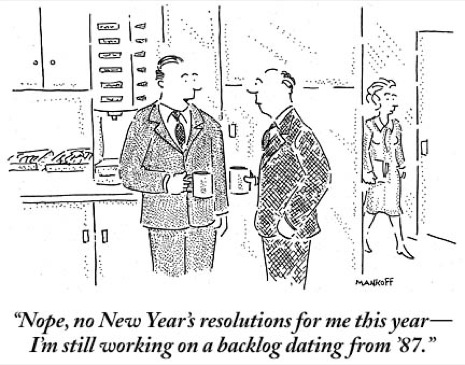
Cartoon – Our Bread and Butter

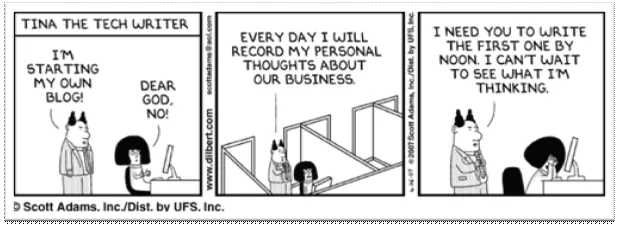


Banter provides relational energy but don’t focus on yourself.
People enjoy hearing leaders talk about themselves as long as they don’t talk about themselves all the time.
The listening sandwich:
Illustration:
A leader told me his word for 2018 is “Care”. We practice the “One Word” principle described in the book of the same name.
Instead of asking him a series of questions, I shared a bit of myself, “My word for 2018 is “Book”. For a moment, the conversation turned toward me.
When banter turns ugly:
Banter turns ugly when it becomes a monologue about yourself.
Inspiring leaders make conversations about others. Yes, share a bit of yourself. Let people know what you think. But a series of machine-gun-questions makes people wonder what you’re after.
Banter lowers barriers.
From banter to curiosity and inspiration:
Banter – sharing a bit of yourself – sets people at ease.
I have questions about “Care” for my friend. The fact that he knows my “word” establishes a connection point as long as we discuss BOTH words.
I want to inspire my friend as he “cares” in 2018. The questions I have for him don’t feel like an inquisition because he knows my word.
Curiosity strengthens connection, nurtures humility, and inspires others.
Curiosity:
Because he knows my word, curiosity about his word is vulnerability for me.
How might leaders employ the listening sandwich?
When is sharing about yourself out of line for leaders? Too much?
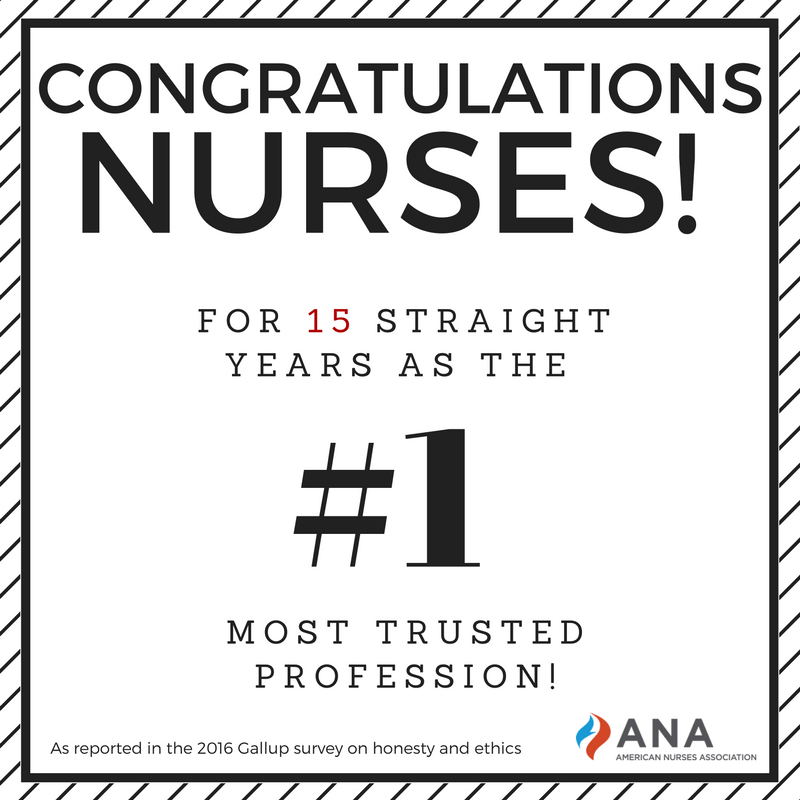
Nurses are the most trusted professionals in the United States, according to the 2017 edition of Gallup’s annual poll. The poll marks the 16th consecutive year nursing topped the list as the most honest and ethical profession.
For the 2017 poll, Gallup asked a random sample of 1,049 U.S. adults to rate honesty and ethical standards for 22 occupations. The respondents selected ratings of very high/high, very low/low or average.
Healthcare providers took three spots in the top five most trusted professions, with a high percentage of respondents rating their honesty and ethical standards as very high or high. They are listed below along with their rank:
Since Gallup first included nurses in the survey in 1999, respondents have ranked the frontline providers as the most trusted profession in all but one year. In 2001, firefighters topped the list after Gallup included the profession in the poll in the wake of 9/11.
“Nurses provide much more than bedside care,” said Pamela Cipriano, PhD, RN, president of the American Nurses Association, in an emailed release. “We advocate for patients, deliver primary care, meet the complex needs of patients with chronic conditions, volunteer for disaster relief efforts, and are a trusted voice in boardrooms across the country.”

The Department of Justice obtained $2.4 billion in fraud and false claims settlements and judgments in fiscal year 2017, marking the eighth consecutive year recoveries in the healthcare sector exceeded $2 billion.
Here are four things to know about the DOJ’s false claims and fraud recoveries.
1. The DOJ recovered more than $900 million from the drug and medical device industry in fiscal year 2017. That total includes Shire Pharmaceuticals’ $350 million settlement. The settlement resolved allegations Shire, a multinational pharmaceutical company with its U.S. headquarters in Lexington, Mass., and one of its subsidiaries paid kickbacks and used other unlawful means to induce physicians and clinics to use or overuse Dermagraft, a bioengineered human skin substitute approved by the Food and Drug Administration for the treatment of diabetic foot ulcers. The settlement was the largest False Claims Act recovery by the federal government in a kickback case involving a medical device.
2. The DOJ also reported substantial recoveries from healthcare providers, including Cleveland, Tenn.-based Life Care Centers of America, which agreed to pay $145 million to settle allegations it caused skilled nursing facilities to submit fraudulent claims to Medicare for unnecessary rehabilitation services.
3. In another substantial settlement this year, Westborough, Mass.-based eClinicalWorks, an EHR vendor, and some of its executives and employees agreed to pay $155 million to resolve false claims allegations. The government alleged eClinicalWorks falsely obtained certification for its EHR software by withholding information from its certifying entity. Due to eClinicalWorks’ alleged misrepresentations, healthcare organizations using the company’s software submitted false claims for federal incentive payments, according to the DOJ.
4. In 2017, the DOJ continued to pursue physicians and healthcare executives involved in fraud cases to hold them personally responsible. For example, in 2015, Fort Myers, Fla.-based 21st Century Oncology paid $19.75 million to settle allegations it violated the False Claims Act by billing for medically unnecessary laboratory urine tests and paid bonuses to physicians based on the number of tests they referred to its laboratory. This year, the DOJ secured separate settlements with various urologists who allegedly referred unnecessary tests to one of 21st Century Oncology’s labs.
https://www.beckershospitalreview.com/finance/8-health-systems-with-strong-finances-122117.html
Here are eight health systems with strong operational metrics and solid financial positions, according to recent reports from Fitch Ratings, Moody’s Investors Service and S&P Global Ratings.
Note: This is not an exhaustive list. Health system names were compiled from recent credit rating reports and are listed in alphabetical order.
1. Lincoln, Neb.-based Bryan Health has an “AA-” rating and stable outlook with Fitch. The system has a strong market position, healthy balance sheet metrics and growing patient volume, according to Fitch.
2. Mercy Health in Cincinnati has an “Aa3” rating and stable outlook with Moody’s and an “AA-” rating and stable outlook with S&P. The health system has solid debt service coverage and strong balance sheet metrics, according to Moody’s.
3. Chicago-based Northwestern Memorial HealthCare has an “Aa2” rating and stable outlook with Moody’s. The system has a prominent and growing market position in the Chicago region, a strong investment position, good margins and manageable leverage, according to Moody’s.
4. San Diego-based Sharp HealthCare has an “Aa3” rating and stable outlook with Moody’s. The system has strong balance sheet measures and a fundamentally stable and strong strategic position, according to Moody’s.
5. Stanford (Calif.) Health Care has an “Aa3” rating and stable outlook with Moody’s. The system has a strong market position as one of two major academic medical centers in the Bay Area, a reputation for clinical excellence and research, and is in a service area with strong population growth and high wealth levels, according to Moody’s.
6. Iowa City-based University of Iowa Hospitals & Clinics has an “Aa2” rating and stable outlook with Moody’s. The health system has a broad market with growing patient volumes and geographic reach for its high-acuity services, according to Moody’s.
7. Philadelphia-based University of Pennsylvania Health System has an “Aa3” rating and stable outlook with Moody’s. The system has a strong and growing market position, good liquidity, and a history of beating budgets and managing capital spending relative to operating performance, according to Moody’s.
8. Yale New Haven (Conn.) Health System has an “Aa3” rating and stable outlook with Moody’s. The system has a leading market position in Connecticut, solid liquidity, moderate capital needs and manageable leverage, according to Moody’s.

Theranos’ outlook for 2018 improved after securing a $100 million loan from Fortress Investment Group, which will help the troubled blood-testing company dodge bankruptcy, according to the Wall Street Journal.
Theranos CEO Elizabeth Holmes wrote in an email to shareholders that the loan is subject to the company “achieving certain product and operational milestones.” She said the deal provides Theranos with “sufficient liquidity through 2018.”
Through the loan, Fortress assumes 4 percent of Theranos’ equity. The investment group specializes in distressed asset investing.
The expose on Theranos that WSJ published in October 2015 prompted a series of events that left what was once a well-funded and perceived-to-be promising startup as an embattled and gutted company. It was reported in April that Ms. Holmes owes the startup $25 million. The company settled several lawsuits this year, including one with Walgreens, and recently moved its operations and staff from Palo Alto, Calif., to a manufacturing facility in Newark, Calif.