Jerks need not apply: 7 ways to a skirt a toxic work environment

https://www.beckershospitalreview.com/hospital-management-administration/jerks-need-not-apply-7-ways-to-a-skirt-a-toxic-work-environment.html

Related image

We live in a time when acrimony and resentment seem to be at an all-time high. These days, individuals feel comfortable hiding behind screens to voice their opinions without giving much thought to the repercussions or the feelings of others.

I freely acknowledge that there have always been mean-spirited people in our lives, workplaces, schools and communities. However lately, it seems as if there is carte blanche to act like a jerk. Maybe this is why kindness seems a bit harder to come by, and why I find myself mentoring young people on how to deal with difficult colleagues more than usual.

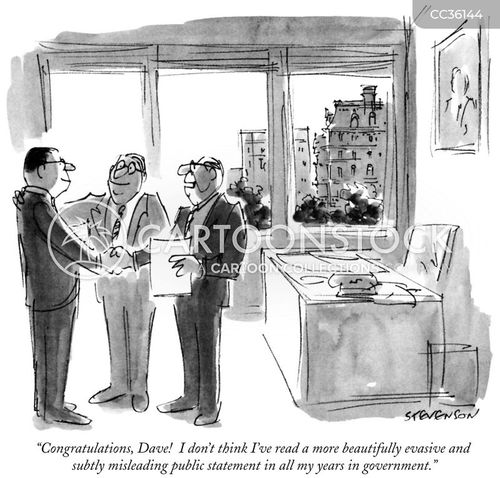
I am certainly not immune to jerks. We’ve all dealt with them — the mean-spirited colleague who thought they knew everything. The person who did not like to share their toys in the proverbial sandbox. The team member who jumped at every opportunity to claim credit for success, plow over others or immediately blame others for failure. Simply put, we’ve all worked with jerks.

While jerks can be highly effective at delivering results, don’t confuse value with productivity. By this, I mean that the toxicity jerks infuse into a team and their work environment can significantly outweigh their contributions. These folks tend to be mean-spirited, manipulative, and can often undermine both the organization’s work and their colleagues’ productivity. They cause strife and, in some cases, drive excellent colleagues away from an organization. At the end of the day, they do far more harm than good, and they make the work environment an unpleasant place to spend the day.

Throughout my career, I have managed a few so-called jerks. While it has not always been easy, and I have certainly made my share of mistakes, I’ve learned to effectively deal with these personalities along the way. Beyond that, I’ve developed some management techniques for how to handle them.

As far as I’m concerned, jerks need not apply to positions within my organization. I have adopted a strict “jerk-free” policy for every organization I lead. From the moment I walk in the door on the first day, I articulate that jerks are not welcome. Personally, I would much rather work with a less experienced person who is kind-hearted and receptive to training than an arrogant jerk, any day of the week.

So, how do you move from simply putting up a “jerks aren’t welcome sign” to creating a jerk-free culture? How can you cultivate anti-jerk behavior across your team and coach others to do the same?

1. Communicate. Talk it out from the outset. You need to communicate, communicate and communicate again. Let your teammates and colleagues know what you need and what you expect. You want to set expectations from the outset, so everyone is on the same page, and there is no room for confusion or deniability. You should also be open, transparent and honest. While there are times it is not the easiest thing to do, the payoff is huge and will keep things running smoothly.

2. Lead by example. Jerks gravitate to jerks. Do your best to be kind, helpful, open and honest. It will do more to inspire others and generate positivity than anything else.

3. Build trust. You build trust and inspire loyalty when you foster an environment where differences of opinion are welcomed and encouraged. Where there is trust and good feeling, it makes it harder for jerks to thrive.

4. Let them know. If someone is a jerk and you feel uncomfortable, let them know. Don’t let behavior that bothers you fester. You want to nip it in the bud. In a positive non-judgmental language explain to them how their behavior is not working for you and reflect on how things can change. I always say the first approach to any situation should be: acknowledge, reflect, move forward.

5. Value differences. It’s important to celebrate differences and the wide variety of skills team members bring to the table. If folks feel they have a unique niche to fill and special skills to contribute, they are less likely to be passive aggressive and will feel confident in their contributions.

6. Celebrate. Having a good time is essential. Work is hard, and it’s important to let off a little steam sometimes. I can’t encourage enough the opportunity to have fun and facilitate opportunities where colleagues can get together outside of the office.

7. Coach it out. I have found that all is not lost when it comes to jerks. There is hope. Some jerks can be rehabilitated. They just need effective coaching to turn their attitude around. Of course, there are rare cases when a jerk is, and always will be, a jerk. Unfortunately, there are times when you will have to make the tough call and leave them behind.

A jerk-free workplace certainly has numerous benefits. Not only is your space more enjoyable and pleasant, but a no-jerk policy also attracts and contributes to retaining the best possible team members — those who are incredibly productive, highly effective and extremely positive.

What team member wants to sign up to work with jerks? A positive environment drives productivity as time is not wasted battling destructive behavior or playing pointless games. It also enhances quality and helps delivers excellent customer service, because team members are happy in their work. The ripple effect of that is that they pass it along to anyone with whom they interact.

Think about it: Your team is like a family, and frankly, we often spend more time with them than anyone else in our lives. While we all enjoy a wacky cousin or a wisecracking uncle, no one likes to engage with the family member who is always complaining or rude to others. So, do you and your fellow team members a favor and say goodbye to the jerks. Make more room at the table for positive and enjoyable folks. Everyone will be glad that you did.


Financial updates for Cleveland Clinic, Sutter + 9 other health systems

https://www.beckershospitalreview.com/finance/financial-updates-for-cleveland-clinic-sutter-9-other-health-systems.html

Image result for dollars

The following 11 health systems recently released financial updates:

1. Naples, Fla.-based NCH Healthcare System saw its revenue and net income improve in the 2018 fiscal year. The health system ended fiscal 2018 with net income of $37.3 million, up 45.3 percent from $20.4 million reported in the year prior.

2. Salt Lake City-based Intermountain Healthcare saw its revenues and operating income improve in fiscal year 2018. After incorporating nonoperating income, which was $240.2 million lower than the year before, Intermountain ended fiscal 2018 with net income of $598.5 million. That’s down 8.6 percent from $655.1 million reported in fiscal 2017.

3. Boston-based Dana-Farber Cancer Institute‘s revenue climbed 11.5 percent year over year to $487.2 million in the first quarter of fiscal year 2019. After factoring in a $31.6 million investment loss, Dana-Farber recorded a net loss of $1.2 million in the first three months of fiscal 2019. That’s compared to the first quarter of fiscal 2018, when the hospital recorded net income of $46.1 million.

4. Bronx, N.Y.-based Montefiore Medical Center saw operating revenue increase in 2018 but ended the period with a lower overall operating margin. After factoring in nonoperating gains and losses, the medical center recorded net income of $26.6 million for 2018, down 52.9 percent year over year from net income of $56.5 million.

5. Renton, Wash.-based Providence St. Joseph Health saw operating revenue increase in fiscal year 2018 but ended the period with a net loss. After factoring in investment losses, Providence St. Joseph ended 2018 with a net loss of $445 million compared to net income of $780 million the year prior.

6. Cleveland Clinic‘s revenue increased in 2018, but the system’s operating income and net income declined year over year. After factoring in nonoperating losses, Cleveland Clinic ended 2018 with net income of $103.9 million, down 91 percent from $1.2 billion in the year prior.

7. Trinity Health recorded higher revenue in the first half of fiscal year 2019 than in the same period of the year prior, but the Livonia, Mich.-based health system ended the first two quarters of the current fiscal year with a net loss. After factoring in nonoperating losses of $419.6 million, including investment losses due to turbulent financial markets, Trinity reported a net loss of $301.5 million in the first half of fiscal 2019. That’s compared to the first six months of fiscal 2018, when the system posted net income of $806.4 million.

8. Quorum Health‘s revenue declined year over year in the fourth quarter of 2018, and the Brentwood, Tenn.-based company ended last year with a net loss. After factoring in expenses and one-time charges, Quorum ended the fourth quarter of 2018 with a net loss of $20.7 million, compared to a loss of $26.8 million in the same period of the year prior. Looking at full-year results, Quorum’s net loss widened from $114.2 million in 2017 to $200.2 million in 2018.

9. Sacramento, Calif.-based Sutter Health reported its first annual loss in 23 years due to investment losses caused by turbulent financial markets in the fourth quarter of 2018 and recognizing less revenue from the California Hospital Fee Program. Sutter reported a net loss of $198 million in 2018, compared to net income of $893 million in the year prior.

10. Columbia, Md.-based MedStar Health saw its revenue increase in the first half of fiscal year 2019, but ended the six-month period with a net loss due to the investment markets’ unfavorable performance. After including nonoperating results, MedStar ended the first half of fiscal 2019 with an $87.5 million net loss, compared to net income of $171.5 million in the first half of the prior year.

11. Philadelphia-based Temple University Health System saw its financial position improve in the six months ended Dec. 31. TUHS ended the six-month period with an operating loss of $26.2 million, compared to an operating loss of $39.1 million in the six months ended Dec. 31, 2017.


Jefferson CEO Dr. Stephen Klasko renews contract through 2024 — 5 notes from his tenure

https://www.beckershospitalreview.com/hospital-management-administration/jefferson-ceo-dr-stephen-klasko-renews-contract-through-2024-5-notes-from-his-tenure.html

Image result for jefferson health

Stephen Klasko, MD, president of Thomas Jefferson University and CEO of Jefferson Health, signed another five-year contract with the Philadelphia-based health system, a spokesperson told Becker’s Hospital Review March 20.

Five things to know about the contract and Dr. Klasko’s first five years with Jefferson:

1. Dr. Klasko, who began leading the health system in 2013, will serve as president of Thomas Jefferson University and CEO of Jefferson Health through 2024.

2. Under Dr. Klasko, Jefferson has grown from three to 14 hospitals. Jefferson’s growth has largely taken place by merging boards across regions. The system has pending deals with Philadelphia-based Einstein Healthcare Network and Temple University’s Fox Chase Cancer Center, also in Philadelphia.

3. At the same time, Jefferson Health has gone from a $1.5 billion system to a more than $5 billion system, generating more than $100 million in savings and efficiencies.

4. New philanthropic initiatives led to the Sidney Kimmel Foundation in Philadelphia donating $110 million to Jefferson Medical College in 2014, representing the largest gift in its history. The college was renamed the Sidney Kimmel Medical College that same year.

5. Under Dr. Klasko’s leadership, Thomas Jefferson University now hosts design curriculum for medical students and operates the No. 3 fashion school in the country.


CEO of U of Maryland Medical System to take leave of absence amid scandal

https://www.beckershospitalreview.com/hospital-management-administration/ceo-of-u-of-maryland-medical-system-to-take-leave-of-absence-amid-scandal.html

Image result for fiduciary duty

The president and CEO of Baltimore-based University of Maryland Medical System agreed to take a leave of absence, effective March 25, amid a scandal involving business deals between the system and several of its board members, according to The Washington Post.

Six things to know:

1. UMMS Board Chairman Stephen Burch announced the board’s unanimous decision March 21 to have President and CEO Robert Chrencik take a leave of absence. The system will also hire an independent accounting and legal firm to audit the board’s contracts, and the search for an independent third party will begin immediately.

“Over the past week, I’ve had the proper time to listen to concerns and reflect. The board and I am firmly committed to evolving our governance principles and operating with even more transparency,” Mr. Burch said.

2. John Ashworth, senior vice president of network development at UMMS and associate dean at the Baltimore-based University of Maryland School of Medicine, will serve as interim president and CEO of the 13-hospital system.

3. The leadership changes follow the resignations of three UMMS board members, including Baltimore Mayor Catherine Pugh. At least four other board members have taken a leave of absence. The deals have been sharply criticized by state lawmakers, including Gov. Larry Hogan.

4. Ms. Pugh resigned from the board after facing criticism for a $500,000 book deal she made with UMMS. A spokesperson for the mayor’s office said March 20 Ms. Pugh has returned $100,000 in profit to the health system because production on the books was delayed and they were not actually delivered to UMMS, which had planned to distribute the books to city schools.

5. Hours before Mr. Burch notified the public of Mr. Chrencik’s leave of absence, the Maryland House of Delegates unanimously fast-tracked a bill to overhaul UMMS’ 27-member board of directors, The Washington Post reports.

6. Amid the scandal at UMMS, The Baltimore Sun reviewed state disclosure and tax forms for several other health systems in the state and found at least five other systems have engaged in business deals with members of their board. The American Hospital Association’s guidance on the issue does not prevent such deals from taking place, but asks that leadership ensure “certain preconditions … to make sure that the organization’s interests prevail in the board’s decision-making.


FURTHER MEDICARE EXPANSION COULD DIMINISH HOSPITAL REVENUES, BUT ACTION REQUIRED

https://www.healthleadersmedia.com/finance/further-medicare-expansion-could-diminish-hospital-revenues-action-required?utm_source=silverpop&utm_medium=email&utm_campaign=ENL_190321_LDR_FIN%20(1)&spMailingID=15334448&spUserID=MTY3ODg4NTg1MzQ4S0&spJobID=1601649422&spReportId=MTYwMTY0OTQyMgS2

Medicare for All

Potential Medicare expansion plans would drastically impact the financial standing of health systems, though some may be more pragmatic solutions than others.


KEY TAKEAWAYS

Implementing Medicare for All as a single payer healthcare system is estimated to create a 22.1% negative impact on a mid-size regional provider’s net margin.

However, a voluntary buy-in plan, also known as ‘Medicare for more,’ might result in only a slight dip to the net margin compared to the status quo.

Regardless, some amount of legislative action regarding Medicare expansion will be necessary in the next five years, according to the study’s authors.

Hospital and health systems should remain aware of the financial impact that several Medicare expansion proposals could have on their respect organizations, according to a Navigant study released Friday afternoon.

Fresh off the 2018 midterm elections where healthcare played a critical role in the electoral shift that saw Democrats retake the House of Representatives, 2020 presidential candidates are heralding sweeping policy proposals to expand coverage through Medicare. 

While several versions of Medicare for All legislation exist, other policy proposals such as ‘Medicare for more’ or the public option have drawn consideration from lawmakers as potentially more viable or pragmatic solutions to America’s healthcare problems.

In its analysis, Navigant found a medium-sized, nonprofit, multi-hospital system with revenues of more than $1 billion and a current operating margin of 2.3% would endure vastly different financial implications under several proposed federal healthcare policy changes.

Medicare for All would reduce revenues by around $330 million, a margin drop of just over 22%, the public option proposal would cause revenue declines in the neighborhood of $153 million, a margin impact of -6.3%, and the ‘Medicare for more’ expansion plan is estimated to have a neutral impact compared to the status quo.

Still, Navigant’s study points out that if Congress does not act on Medicare expansion until after the next presidential election, hospitals could face a scenario with a financial impact comparable to the public option proposal.

Using the model health system as an example, status quo projections without any cost reduction initiatives would see the organization’s net margin decline from 2.3% to negative 6.2% from 2018 to 2023, with operating costs rising between 4.5% to 5% per year and revenues growing at 2.5% to 3% per year.

“There’s going to be a need to control hospital cost structures going forward, regardless of whether it’s in the status quo with baby boomers aging into Medicare and payer mix shifts occurring, or in a scenario that has limited expansion, moderate expansion, or robust Medicare for All,” Jeff Leibach, director at Navigant, told HealthLeaders in an interview. “There are obviously varying degrees of impact on hospitals, but all of them are going to require a level of attention and and management of revenue strategy and cost structure that I think hospital CFOs are struggling with today and will benefit from through continued focus on performance improvement and revenue strategy.”

PLANS, DETAILS, AND IMPACT:

‘Medicare for more’

  • Voluntary buy-in at age 50 and over
  • In one scenario, choice between employer coverage and Medicare
  • No Medicare payment relief
  • No reduction in revenue cycle management operations compared to the status quo
  • 15% reduction in current disproportionate share hospital payments

Public option

  • All lives covered regardless of age
  • Choice between employer coverage and Medicare
  • Range from no Medicare payment relief to payments at 110% of Medicare rate
  • 1.5% reduction in revenue cycle management operations compared to the status quo
  • 70% reduction in current disproportionate share hospital payments

Medicare for All

  • All lives covered regardless of age
  • Single payer healthcare coverage
  • Range from no Medicare payment relief to payments at 120% of Medicare rate
  • 2.5% reduction in revenue cycle management operations compared to the status quo
  • 100% reduction in current disproportionate share hospital payments

Leibach said that the analysis arrives at the early part of the conversation surrounding widespread Medicare expansion at the federal level, which makes it difficult to gauge how health system leaders will react to Navigant’s findings.

Some may be hesistant to support plans that are projected to create such a negative material impact on their respective bottom lines, but others may be willing to consider a policy proposal that significant decreases or even eliminates bad debt costs associated with a large uninsured population.

Even before the report was released, however, the American Hospital Association declined to voice support for Medicare for All late last month. 

Leibach added that he was surprised by the “nominal impact” of the voluntary buy-in plan, arguing that could hospital leaders may rally around that proposal as a compromise to expanding Medicare without fully deteriorating their financial standing.

This approach would also be the least disruptive to the commercial insurance market, according to Leibach, assuming that the Medicare for All proposal would be a true single-payer platform that eliminates private insurers.


Medicines Only Work if Patients Can Afford Them: Solutions For The High Drug Prices Era

https://www.forbes.com/sites/sachinjain/2019/03/18/medicines-only-work-if-patients-can-afford-them-solutions-for-the-high-drug-prices-era/#631717742c7f

Since 2000, more than 500 new medicines have been approved by the Food and Drug Administration. Because of those medicines, many Americans are living longer, better and more active lives. However, new medicines often come with high price tags. And in an environment of rising drug costs, affordability isn’t just a simple matter of economics — it can play a significant role in determining health outcomes.

Perhaps no other drug better illustrates the effect of cost on health than insulin. Over the past decade, insulin prices in the United States have tripled. Most of that increase has been driven by analog insulin medications, which are the newest forms of synthetic insulin. For example, the price of one brand of analog insulin, Humalog, was just $20 per vial in 1996. Today, it’s $275 per vial — a 1,275% increase. (Eli Lilly, the drug’s manufacturer, announced it will soon offer an “authorized generic” of the drug at a 50% discount.)

With insurers’ and patients’ out of pocket costs on the rise, a new report from researchers at Yale University finds that one-quarter of patients with Type 1 or 2 diabetes say they ration their medication. 

This is, to put it simply, bad news all around. When patients don’t take their medications as prescribed, they not only get sicker, but their ailments also become more expensive to treat. One report showed that patients who didn’t take their Type 2 diabetes medications developed complications that cost the U.S. health system $4 billion a year.

Studies like these often leave doctors and nurses scratching their heads, wondering if anything can be done to bridge the affordability gap in order to make it more likely that patients will purchase and take life-saving medicines. One obvious solution is to prescribe less expensive medications. But that only works if the less expensive medications are just as effective as their more costly counterparts. 

Which can sometimes be the case with insulin.

Last year, CareMore, the healthcare system that I lead, partnered with independent researchers from Brigham and Women’s Hospital and Harvard Medical School to study the effects of a program CareMore implemented to switch Type 2 diabetic patients from analog insulin to less expensive humaninsulin. Human insulin first came on the market in the early 1980s and costs about one-tenth as much as analog insulin. (The names can be a bit confusing; both medications are synthetic forms of insulin produced in a laboratory.)

However, our study, published in the Journal of the American Medical Association (JAMA), found that human insulin was just as effective as analog insulin at stabilizing blood sugar levels. This conclusion, frankly, wasn’t entirely surprising. A 2018 study conducted by Kaiser Permanente found that patients who took human insulin were no more likely to need additional health care than their counterparts who took analog insulin.

Crucially, our study found that the switch to human insulin also translated into lower costs for patients. Before the switch, one-fifth of the patients we studied reached the Medicare Part D coverage gap, or “donut hole,” where patients pay substantially higher costs for prescription drugs. After the switch, just 11.1% reached that gap.

Moreover, our analysis found that the program can be replicated safely and at-scale. If even a small proportion of Medicare beneficiaries with Type 2 diabetes switched to human insulin, the resulting savings to the health care system would be substantial.

Switching to lower-cost, older, equivalent medications is one way to increase medication adherence and improve health outcomes. Another, it turns out, is simply to charge patients less. 

In a landmark 2011 study, researchers studied patients who had suffered heart attacks. Normally, these patients have a low rate of medication adherence. But Harvard Medical School professors Niteesh Choudhry and William Shrank, two of the study’s lead authors found that when drug copayments were eliminated, medication adherence rates increased while overall health costs remained constant. 

One might wonder why costs didn’t go up. After all, the co-pays were eliminated and, as adherence improved, the volume of prescriptions filled increased. University of Michigan researchers A. Mark Fendrick and Rajender Agarwal may have the answer.

In a 2018 report, they found that when insurers eliminated co-payments or took other actions to make drugs more affordable, their drug costs went up — but the total cost of insuring patients did not. In fact, in some cases the cost of providing care actually decreased. Fendrick and Agarwal say that’s because patients who take their medications stay healthier and are less likely to require hospitalizations and other expensive types of care. 

None of this is to say that new drug therapies or other cutting-edge treatments don’t have value. On the contrary, they help people live longer, better lives. But in a world of increasing health costs, prescribing life-saving medications for our patients isn’t enough. Physicians, health plans and pharmaceutical manufacturers have to ensure that patients can afford to take them, as well.


WHAT’S TO KEEP AMAZON FROM COMPETING IN BRICK-AND-MORTAR HEALTHCARE? NOT MUCH

https://www.healthleadersmedia.com/strategy/whats-keep-amazon-competing-brick-and-mortar-healthcare-not-much

Amazon could join retail clinics already competing with hospitals and health systems to provide outpatient healthcare services.


KEY TAKEAWAYS

Amazon’s launch of new ‘urban grocery stores’ could serve as a possible beachhead for expansion into outpatient medical care services.

Amazon plans to offer goods besides food in the grocery stores, creating a potential entry point for it to get into brick-and-mortar retail healthcare.

Even in a digital age where more services are headed online, e-commerce retail giant Amazon could be poised, alongside retail healthcare clinics, to compete with hospitals and health systems on their brick-and-mortar playing fields.

And there’s little preventing Amazon from doing this, especially after news the company is looking to launch new “urban grocery stores,” which could serve as a possible beachhead for expansion into outpatient medical care services. Amazon would join retail providers Walgreens, CVS Health, and Walmart, which are competing already with hospitals and health systems to provide outpatient services in their communities.

This potential competition to hospital outpatient business comes as CVS is testing a “HealthHub” store concept in Houston following its acquisition of health insurer Aetna, and as Walgreens is dedicating armies of Microsoft scientists to a “store of the future.” Analysts expect these retail clinics to change the way U.S. healthcare is delivered, which includes efforts to give patients less need to use the hospital and its ancillary outpatient services.

And why not Amazon as well?

“Amazon’s basic approach has been to create a transactional platform that supports an ecosystem of interrelated products and services,” says Ken Kaufman, managing director and chair of consulting firm Kaufman Hall. “Adding brick-and-mortar stores to its online platform will support Amazon’s grocery business and its competition with Walmart but could be applied to other products and services, including healthcare, which is very much on Amazon’s radar.”

Amazon last year acquired the online pharmacy PillPack and formed a new venture recently named Haven with Berkshire Hathaway and JPMorgan Chase to examine ways to lessen the cost of care and improve health outcomes for the three corporate giants’ 1.2 million employees. Amazon’s announcements don’t directly impact hospitals and health systems, though analysts say Amazon, like Walmart, has a laboratory in its large workforce to test what works.

For now, Amazon “plans to launch urban grocery stores that could offer a spectrum of goods that include beauty products alongside food,” as The Wall Street Journal reported. Amazon declined HealthLeaders‘ request for comment on its plans.

But Kaufman sees this as a potential entry point for Amazon to get into brick-and-mortar retail healthcare, given its history to add on services over time from the successful platforms.

For example, Amazon in recent years has opened brick-and-mortar bookstores in New York, Chicago, and Washington, D.C. Earlier this month, Amazon said it is closing 87 of the pop-up kiosk variety stores in malls and Kohl’s stores, but it is maintaining Amazon Books and Amazon “4-star” stores that are largely stand-alone sites.

Amazon is looking at a grocery store model that includes leases with more flexibility than traditional commercial leases, as the Journal reported. That could allow Amazon to jump into healthcare services more quickly.

Though it’s unclear what kind of healthcare services and products Amazon could offer, Kaufman thinks that there’s not much keeping Amazon from exploring brick-and-mortar healthcare delivery in the future.

“It is always difficult to predict the long-term intentions behind Jeff Bezos’ short-term moves,” Kaufman said.

“The more comfortable Amazon gets with physical commerce, the easier it will be to pivot toward healthcare,” he added.


HBO’s Elizabeth Holmes Theranos documentary exposes American health care

https://www.cnet.com/news/hbo-documentary-on-elizabeth-holmes-theranos-lie-exposes-american-health-care/?utm_source=Sailthru&utm_medium=email&utm_campaign=Issue:%202019-03-20%20Healthcare%20Dive%20%5Bissue:19979%5D&utm_term=Healthcare%20Dive

Image result for HBO's Elizabeth Holmes Theranos documentary exposes American health care

“The health care system has become horribly perverted,” says Alex Gibney, director of The Inventor: Out for Blood in Silicon Valley.

Nobody likes having a needle stuck in their arm. And nobody likes having money sucked out of their wallet, either. So when smart young entrepreneur Elizabeth Holmes emerged from Silicon Valley claiming to have a cure for a broken health care system, politicians and journalists and investors couldn’t wait to shower her with praise and money.

But the story of Holmes’ company comes with a sting. Her black outfits helped create an image of a new Steve Jobs-esque voice in Silicon Valley, but after faking demos and lying about patient treatment Holmes and her partners are now awaiting trial on charges of fraud.

The Theranos fraud exposes fundamental problems with Silicon Valley, the health care industry and the myth of the genius inventor from Thomas Edison to Steve Jobs. New documentary The Inventor: Out for Blood in Silicon Valley, now available to stream on HBO, reveals the whole bloody mess.

I asked the film’s Oscar-winning director, Alex Gibney, if we fetishize the idea of a genius inventor. “We do,” he told me by phone from San Francisco, “and it’s bullshit.” Having tackled corruption and deceit in films about Enron, the Church of Scientology and the White House, Gibney describes Holmes as “a variation on a theme” of the type of people he’s seen before. “Elizabeth was afflicted with the notion that the end justifies the means,” Gibney says. “She thought she was entitled to make mistakes because her intention was pure and worthy and socially vital. But the mind plays tricks with you when you start down that path, as you rationalize your behavior in ways that can become quite dangerous and delusional.”

Big-name investors from both inside and outside Silicon Valley fell for Holmes’ delusion, including Rupert Murdoch, who invested $125 million into Theranos. But the question remains whether the profit-driven private sector is even suited to solving health care problems. “Reports show the health care system in the US has become horribly perverted,” says Gibney, “through this patchwork system of insurance and private enterprise and then also government legislative initiatives. Medicare is not allowed to negotiate directly with drug companies, how crazy is that?”

Everyone can agree that fixing problems in health care is a noble cause, but relying on Silicon Valley and the private sector also lined up with other political agendas for the politicians who backed her. “This notion of the entrepreneur lets government off the hook,” Gibney says.

The director does credit Holmes with highlighting problems in the laboratory testing industry. “They’re incredibly opaque with their pricing,” he points out. Patients don’t pay directly for blood tests, so depending on the circumstances, the illness or even the state, lab companies can charge outrageous prices to insurance companies to complete the test.

The health care system “is designed to enrich companies rather than to serve the health of patients,” says Gibney. “It’s full of all sorts of bad incentives.”

While things clearly need to be improved, the Silicon Valley style of disruptive innovations may not be what we as patients need. Taking control of your own health is a “a very cool-sounding libertarian notion,” but Gibney cautions that “we’re not doctors.” He’s concerned about the idea of treating patients as customers, seducing us with promises of competitive prices and greater choice. “That’s good for sneakers,” he says, “but I’m not sure a consumer/producer relationship is necessarily good for health care. You want a patient/doctor relationship, and blood testing is part of it.”

Silicon Valley has adapted the credo of “move fast and break things,” which means iterating and making mistakes until you find the right path. But you can’t make mistakes when people’s lives are at stake. And real people were put at risk when Theranos pushed ahead with a contract with Walgreens to carry out blood tests for ordinary people.

“That was a line Elizabeth crossed,” says Gibney. “If she had just wasted a lot of investors’ money on a machine that didn’t work, there wouldn’t really be a story here. It was when she put people at risk, that was the problem.”

Gibney is concerned that Holmes will be portrayed as a one-off, “one rotten apple in an otherwise pristine barrel.” But he thinks the Theranos fraud shows cracks across Silicon Valley, the health care industry and capitalism as a whole. “I tried to indicate there are bigger problems in Silicon Valley in terms of lying, in terms of becoming disruptors in ways that may make people a lot of money but may not always be a good thing.”

Within Theranos, a culture of silence and paranoia couldn’t suppress the lies forever. And so Theranos employees blew the whistle on the deceit.

“I think all of us should be aware that there are certain cultural, and also legal, impediments to hearing the bad news,” says Gibney, who highlights the use of nondisclosure agreements to gag employees. These legal contracts are supposed to protect trade secrets, but they can also be used to prevent insiders from calling out corruption. “Look at Harvey Weinstein,” Gibney says. “NDAs are rapaciously used by people to cover up misdeeds.” 

Yet for some reason, we have a strange relationship with those insiders who do come forward. “It’s sort of like they’re showing us up,” says Gibney. He recalls being asked the same two questions over and over after making The Smartest Guys in the Room, his film about the corruption within Enron: “One was about this guy who got away with it, sailed off with $200 million and married a stripper. But the other question was about Sharon Watkins, the whistleblower, and it was always, ‘Who does she think she is? How come she’s so holier-than-thou?’ Of all the lessons to take away from Enron, she’s not really the malefactor, but it seemed to really get under people’s skin.”

Gibney has made a career out of exposing corruption from the business sector to the CIA to the White House. “Part of us is secretly thrilled by people who are conning the game,” he says. “But we always at the end want to see them punished, so it’s kinda like a double pleasure. You wanna see ’em sneak around — and then you wanna see the hammer come down.”

“I’ve been spending a lot of time on problems,” Gibney says as we wrap up the interview. “I’m starting to think about doing films about people who are coming up with solutions.”


Former Aetna CEO on being a “radical capitalist” and the current state of health care

https://finance.yahoo.com/video/former-aetna-ceo-being-radical-164919638.html?utm_source=Sailthru&utm_medium=email&utm_campaign=Issue:%202019-03-20%20Healthcare%20Dive%20%5Bissue:19979%5D&utm_term=Healthcare%20Dive

Image result for Former Aetna CEO on being a "radical capitalist" and the current state of health care

Former Aetna CEO Mark Bertolini spent 8 years as company head until 2018 when the insurance giant was sold to CVS. He joins Yahoo Finance’s Adam Shapiro, Julie Hyman, and Julia La Roche to discuss his new memoir “Mission-Driving Leadership: My Journey As A Radical Capitalist.”


CHI Franciscan settles antitrust case: 5 things to know

https://www.beckershospitalreview.com/legal-regulatory-issues/chi-franciscan-settles-antitrust-case-5-things-to-know.html?origin=cfoe&utm_source=cfoe

Image result for hospital antitrust lawsuit

An antitrust lawsuit filed by the Washington state attorney general against CHI Franciscan will not go to trial, according to the Kitsap Sun.

Five things to know:

1. The lawsuit, filed in 2017, alleged Tacoma, Wash.-based CHI Franciscan’s affiliation with two physician groups in Kitsap County raised healthcare prices and decreased competition.

2. “Both transactions also enabled CHI Franciscan to capture more patient referrals and shift services to its wholly owned hospital, Harrison Medical Center, the only civilian acute care hospital in Kitsap County,” states an August 2017 press release from the Washington state attorney general’s office. “The transactions have hobbled CHI Franciscan’s competitors while allowing it to reap the benefit of more expensive, hospital-based rates.”

3. A trial in the case was slated to begin March 19 but was called off March 15 after the parties notified the court that the matter was resolved.

4. Specifics about the settlement have not been released. The parties have until April 29 to file documents outlining the settlement and requesting the case be dismissed, according to the Kitsap Sun.

5. A CHI Franciscan spokesperson told the Kitsap Sun that the settlement will ensure the health system’s affiliations with the two physician groups remain in place.

“This is good for patients and doctors on the peninsula, keeps our highly skilled doctors in our community, and ensures everyone has access to great care close to home,” the spokesperson said.

Access the full Kitsap Sun article here.