Senate committee advances Price nomination without Dems present

http://www.fiercehealthcare.com/healthcare/senate-committee-advances-price-nomination-without-dems-present?mkt_tok=eyJpIjoiTm1RM01HUTJORE15WVdRNSIsInQiOiJFd0pManZSb09vTTVCbXdwQThsTnBycFZvaEdvbmVBZUpFWU42RFlCNHpmNW81eG5vNzFGcFRWVjRodGZFRDhWTlQ1WG1OeU5CTklYaFdjSWN0OCtaWGRLU3laOU5NVGdQV3hYWE5PVUpTeXVtcnZnWFZcL040c241SnB6SytsMXYifQ%3D%3D&mrkid=959610&utm_medium=nl&utm_source=internal

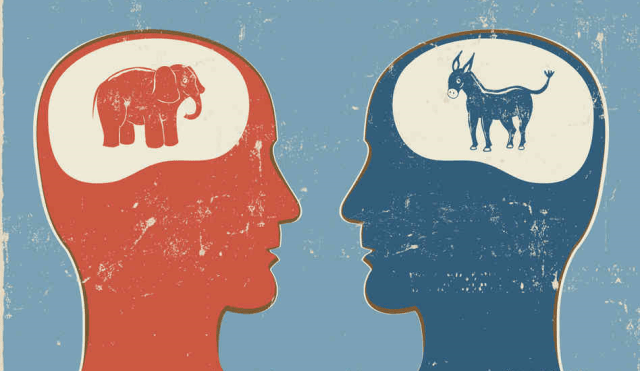
Image result for political partisan controversy

In an unprecedented, dramatic step, the Senate Finance Committee this morning suspended its rules and voted without Democrats present to send Tom Price’s nomination as head of the Department of Health and Human Services to the Senate floor.

The quickly scheduled meeting today took place less than 24 hours after Democrats managed to postpone a planned vote by boycotting the meeting. Under the committee rules, 13 members—including at least one Democrat—must be present for the vote.

Republicans were furious, calling the boycott “amazingly stupid” and “pathetic.” But Democrats said they wanted more information before they vote in light of a new report this week in The Wall Street Journal that Price received a special discounted offer to buy stock in a biomedical company, which contradicted his testimony during congressional hearings.

Rep. Price, R-Ga., an orthopedic surgeon, has served as a member of the House of Representatives for seven terms. But despite his ties to Congress and his medical background, President Donald Trump’s pick to lead HHS has been controversial from the beginning due to Price’s support for dismantling the Affordable Care Act.

But Democrats also raised ethical and conflict-of-interest concerns over reports of insider trading and purchase of thousands of dollars in stock in healthcare, pharmaceutical and biomedical companies while sponsoring legislation that could have influenced those companies’ shares.

The Senate Finance Committee’s ranking member, Sen. Ron Wyden (D-Ore.), said in a prepared statement Tuesday following the boycott that he “asked Congressman Price directly if he got an exclusive discount on stock in an Australian biomedical firm, and he said no. From the committee’s investigation to company documents to the company officials’ own words, the evidence tells a different story. It looks more and more like Congressman Price got special access to a special deal.”

Congress must act by March to stabilize individual markets, experts say during Senate hearing

http://www.fiercehealthcare.com/payer/congress-must-act-by-march-to-stabilize-individual-markets-experts-say-at-senate-hearing?utm_medium=nl&utm_source=internal&mrkid=959610&mkt_tok=eyJpIjoiTm1RM01HUTJORE15WVdRNSIsInQiOiJFd0pManZSb09vTTVCbXdwQThsTnBycFZvaEdvbmVBZUpFWU42RFlCNHpmNW81eG5vNzFGcFRWVjRodGZFRDhWTlQ1WG1OeU5CTklYaFdjSWN0OCtaWGRLU3laOU5NVGdQV3hYWE5PVUpTeXVtcnZnWFZcL040c241SnB6SytsMXYifQ%3D%3D

America’s Health Insurance Plans CEO Marilyn Tavenner testifies during Wednesday’s Senate hearing on the state of the individual marketplaces.

Expert witnesses warned lawmakers during a Senate hearing Wednesday that if they fail to ensure a stable transition while repealing and replacing the Affordable Care Act, they risk worsening the already unstable individual marketplaces.

“Insurance markets do not respond well to uncertainty,” Julie McPeak, Tennessee’s commissioner of commerce and insurance and president-elect of the National Association of Insurance Commissioners, testified at hearing held by the Senate Health, Education, Labor and Pensions Committee. “As you consider ACA reforms, it’s critical to remain transparent and to minimize surprises in our insurance system.”

For his part, Committee Chairman Sen. Lamar Alexander, R-Tenn., asked McPeak how quickly Congress needs to act in order to shore up the marketplaces enough for insurers to feel comfortable participating in 2018.

“I think you need to provide some indication to plans as quickly as possible, but March would be extremely helpful,” McPeak said, noting that insurance carriers have to file their rates by early spring. Janet Trautwein, CEO of the National Association of Health Underwriters, agreed, saying action is needed by late March at the latest.

“Right now, plans are trying to price for ‘18, and the uncertainty around cost-sharing subsidies and the tax credits would cause them to hesitate to price because we need to understand what the funding support is going to be, because that affects premiums,” America’s Health Insurance Plans President and CEO Marilyn Tavenner added.

Thus, she pointed to suggestions AHIP has previously made public, such as making full reinsurance payments for 2016, and continuing to provide premium subsidies and cost-sharing reductions through at least 2018. “Absence of this funding would further deteriorate an already unstable market and hurt the millions of consumers who depend on these programs for their coverage,” Tavenner said.

But that isn’t enough to ensure a stable and workable transition away from the ACA, Tavenner noted. Other necessary steps include recalibrating premium subsidies to encourage more young people to participate, federal risk pool funding and continuous coverage incentives.


Executive actions Trump could take to change the ACA

Executive actions Trump could take to change the ACA

Image result for executive actions

The executive order President Trump signed on Friday does not have any immediate policy effect, but it does call attention to the wide range of administrative actions that a Trump administration could take to change the Affordable Care Act—all without legislation from Congress.

We’ve compiled a list of those actions. It’s not exhaustive; there is a lot more a Trump administration could do. Nor do we mean to suggest that these actions would be legal. Declining to enforce the individual mandate, in particular, would be problematic, although the Trump administration might seek cover from dubious enforcement decisions made by the Obama administration (like the “like it, keep it” fix and employer mandate delays).

Whether and which actions a Trump HHS chooses to pursue will depend on the administration’s willingness to gamble the stability—already quite fragile, in some states—of the individual market. And it will depend, too, on what Congress is willing to do through legislation. If Congress wipes out the individual mandate, for example, there’d be no need to change the rules governing hardship exemptions.

In search of sweet spots in public policy

In search of sweet spots in public policy

Increasing government spending improves educational outcomes and doesn’t enhance them at all.  Augmenting incarceration rates reduces crime and increases it. Raising the minimum wage will increase unemployment and not affect it in the slightest.  These statements are neither Zen koans nor political doublespeak, but summaries of policy research findings that are not as contradictory as they at first may sound. All of them stem from a reality that is frequently forgotten in political discourse: In many public policy areas there exists a “sweet spot” in which pursuing a certain approach does maximal good, and beyond which further increments make less difference, no difference, or even make things worse.

For a range of political, tribal and emotional reasons, sweet spots are always going to be underappreciated in political debates, when tend to be dominated by shouting matches between proponents of simplistic positions that do not change in light of current circumstances, e.g., “More money for health care!”, “Lower taxes now!”, “Tough on crime!”, “Mass incarceration has failed!”. But a sophisticated policy maker, journalist, researcher or voter should recognize that there are few absolutes in public policy.  Very often the policy change that worked at a different point in the curve will no longer yield a benefit or even be counterproductive of further pursued. Our political life is usually characterized by the search for simple answers, but good governance depends on the search for sweet spots.

The health care production function


More families with employer-sponsored insurance are needing public assistance

http://www.academyhealth.org/blog/2017-01/more-families-employer-sponsored-insurance-are-needing-public-assistance

Image result for More families with employer-sponsored insurance are needing public assistance

As employer-sponsored insurance becomes more expensive for children, public programs are picking up the slack.

The Medicaid Expansion, which was responsible for a large part of the reduction in uninsurance in the United States over the last few years, was mostly aimed at adults. This is because Medicaid has traditionally covered nearly all children in poverty for some time. The CHIP program has bolstered that coverage, so that uninsurance in children fell steadily in the 1990’s and well into the 21st century.

The passage of the Medicare Access and CHIP Reauthorization Act of 2015 (MACRA) assured that CHIP coverage would continue for some time. But even before that, trouble was brewing with respect to the coverage of children. These troubles were not in the Medicaid  program, though. Issues were arising in the employer-sponsored insurance market.

As I’ve written about in many posts here before, the cost of employer-sponsored insurance has been rising quite steadily for some time. Further, the out-of-pocket costs for such insurance have also been increasing. Deductibles, co-pays, and co-insurance – not to mention premiums – can put the cost of insurance out of reach for many employees even when it is “offered” as a benefit from their job. The costs of insurance have outpaced both income and wages for more than a decade, meaning that more and more must come out of employee’s pockets if they want to maintain coverage for themselves and their children.


Stop Enabling Bad Management

https://www.eremedia.com/tlnt/stop-enabling-bad-management/?utm_source=hs_email&utm_medium=email&utm_content=41647590&_hsenc=p2ANqtz–0lLWV7ZDcPd0W8UBSYSzx08STfXoHCOd3o-DbpmB9yUtPYzgmYmQkhQINZmLRflrYWgCuCeG98zS_LWaWcFgE18AkEA&_hsmi=41647590

pulp fiction wolfe

One of my favorite movies is the classic Quentin Tarantino film, Pulp Fiction.

There’s a character in the movie who they refer to as “The Wolfe.” He’s a fixer. When someone screws up or makes a serious mess, they call The Wolfe. He shows up to save the day by making the problem
disappear.

I think this is how management often thinks of HR — as their own personal version of “The Wolfe.” When an uncomfortable conversation is needed or they’ve made a mess with an employee, they call HR. And, since we love to feel needed in HR, we swoop in and handle things. The manager’s problem disappears. Everybody wins, right?

Wrong.

Here’s the problem: “The Wolfe” in Pulp Fiction is not a good guy. In fact, he’s a very bad guy who helps other bad guys cover up the bad things they’ve done. He’s an enabler of really bad behavior.

When HR swoops in like The Wolfe to take over for a manager in uncomfortable conversations, we enable bad behavior. When we help them cover up that they aren’t managing their employees’ performance diligently, we enable bad behavior.

When managers don’t feel the consequences of their behavior, there’s no fuel for change. Bad managers continue practicing bad management, HR continues trying to fix it, and employees continue paying the price.

Is “Cultural Fit” Code For “Be Like Me”?

https://www.eremedia.com/tlnt/is-cultural-fit-code-for-be-like-me/?utm_source=hs_email&utm_medium=email&utm_content=41647590&_hsenc=p2ANqtz-8bjPwyPZlM_20PUPn_pwoMI4kh5DniS3YfyhrY9K_a_beurZoNXRSMSIy1IIsB9UGJWakFVW200auIxARozGe-1AUYMQ&_hsmi=41647590

Doris movie boomers millennials

Last Spring, Sally Fields starred in a movie called Hello, My Name is Doris as a wacky 60-something clerk working in a hip company run by millennials. Leaving aside the film’s focus on Doris’s unrequited crush on a younger colleague, the film provided ample evidence of the disconnect when baby boomers work among younger (read: more hip) employees.

Sight gags abound: Doris unable to keep her balance on the mandated switch from office chair to stability ball; Doris learning how to use the Internet (gasp!) from her friend’s granddaughter. You get the picture. As much as it made this baby boomer cringe, this film, like DeNiro’s The Intern, went over the top in portraying how cool the young folks discovered their older colleagues can be. Talk about condescending.

I reference movies frequently, but that’s because they reflect our cultural zeitgeist, whether or not we want to admit it. And what I suspect most HR people and managers throughout the organizations don’t want to admit is a level of condescension towards employees who are outside the mean with respect to age, political leaning or educational levels.


https://hbr.org/2015/07/recruiting-for-cultural-fit