


Cartoon – Managing Expectations


After seven years of a vigorous fight, Jim Hart worried he was running out of options.
Diagnosed with prostate cancer at age 60, Hart had undergone virtually every treatment — surgery, radiation and hormones — to eradicate it. But a blood test showed that his level of prostate-specific antigen, which should have been undetectable, kept rising ominously. And doctors couldn’t determine where the residual cancer was lurking.
“I didn’t like the sound of that,” said Hart, a retired international oil specialist for the federal government. “I wanted it gone,” he added, especially after learning that he had inherited the BRCA2 gene, making him vulnerable to other cancers.
So when Andrew Joel, Hart’s longtime urologist at Virginia Hospital Center in Arlington, mentioned the hospital’s membership in the Mayo Clinic Care Network and suggested consulting specialists at the Rochester, Minn., hospital for a second opinion, Hart enthusiastically agreed.
A Mayo immunologist told Joel about a new PET scan, not then available in the Washington area, that can detect tiny cancer hot spots. Hart flew to Mayo for the scan, which found cancer cells in one lymph node in his pelvis. He underwent chemotherapy at Virginia Hospital Center and five weeks of radiation at the Mayo Clinic. Since September 2016, there has been no detectable cancer.
“This collaboration was sort of a magic process,” Hart said. “I feel very fortunate.”
Hart’s experience showcases the promise of a much-touted but little understood collaboration in health care: alliances between community hospitals and some of the nation’s biggest and most respected institutions.
For prospective patients, it can be hard to assess what these relationships actually mean — and whether they matter.
Leah Binder, president and chief executive of the Leapfrog Group, a Washington-based patient safety organization that grades hospitals based on data involving medical errors and best practices, cautions that affiliation with a famous name is not a guarantee of quality.
“Brand names don’t always signify the highest quality of care,” she said. “And hospitals are really complicated places.”
Affiliation agreements are “essentially benefit by association, ” said Gerard Anderson, a professor of health policy and management at the Johns Hopkins Bloomberg School of Public Health. “In some cases it’s purely branding and in other cases it’s a deep association.”
A key question is “how often does the community hospital interact with the flagship hospital? If it’s once a week, that’s one thing. If it’s almost never, that’s another,” Anderson said.
To expand their reach, flagship hospitals including Mayo, the Cleveland Clinic and Houston’s MD Anderson Cancer Center have signed affiliation agreements with smaller hospitals around the country. These agreements, which can involve different levels of clinical integration, typically grant community hospitals access to experts and specialized services at the larger hospitals while allowing them to remain independently owned and operated. For community hospitals, a primary goal of the brand name affiliation is stemming the loss of patients to local competitors.
In return, large hospitals receive new sources of patients for clinical trials and for the highly specialized services that distinguish these “destination medicine” sites. Affiliations also boost their name recognition — all without having to establish a physical presence.
In some cases, large hospital systems have opted for a different approach, largely involving acquisition. Johns Hopkins acquired Sibley Memorial and Suburban hospitals in the Washington area, along with All Children’s Hospital in St. Petersburg, Fla. The latter was re-christened Johns Hopkins All Children’s Hospital in 2016.
New York’s Memorial Sloan Kettering Cancer Center has embraced a hybrid strategy. It operates a ring of facilities surrounding Manhattan and has forged alliances with three partners in Connecticut, Pennsylvania and Florida.
“Every one of these models is different,” said Ben Umansky, managing director for research at the Advisory Board, a Washington-based consulting firm.
Local hospitals, he said, particularly those operating “in the shadows of giants,” may be better able to retain patients “by getting a name brand on their door. . . . There is a sense that they are plugged in.” (Virginia Hospital Center, for example, competes with Hopkins, MedStar Washington Hospital Center, which has an alliance with the Cleveland Clinic, and the Northern Virginia-based Inova system.)
Doctors can obtain speedy second opinions for their patients and streamline visits for those with complex or unusual medical needs, processes that can be daunting and difficult without connections.
Michael Kupferman, senior vice president of the MD Anderson Cancer Network, said it seeks to “elevate the quality of cancer care” by forming partnerships with “high-quality [hospitals] to keep patients at home and provide the imprimatur of MD Anderson.”
Virginia Hospital Center’s association with Mayo is “not just a branding affiliation, it’s a deep clinical affiliation,” said Jeffrey DiLisi, senior vice president and chief medical officer at the Arlington facility.
Despite extensive marketing, many patients seem unaware of the linkage. “We still think a lot about ‘How do we communicate this?’ ” DiLisi said.
Although affiliation agreements differ, many involve payment of an annual fee by smaller hospitals. Officials at Mayo and MD Anderson declined to reveal the amount, as did executives at several affiliates. Contracts with Mayo must be renewed annually, while some with MD Anderson exceed five years.
Acceptance is preceded by site visits and vetting of the community hospitals’ staff and operations. Strict guidelines control use of the flagship name.
“It is not the Mayo Clinic,” said David Hayes, medical director of the Mayo Clinic Care Network, which was launched in 2011. “It is a Mayo clinic affiliate.”
Of the 250 U.S. hospitals or health systems that have expressed serious interest in joining Mayo’s network, 34 have become members.
For patients considering a hospital that has such an affiliation, Binder advises checking ratings from a variety of sources, among them Leapfrog, Medicare, and Consumer Reports, and not just relying on reputation.
“In theory, it can be very helpful,” Binder said of such alliances. “The problem is that theory and reality don’t always come together in health care.”
Case in point: Hopkins’s All Children’s has been besieged by recent reports of catastrophic surgical injuries and errors and a spike in deaths among pediatric heart patients since Hopkins took over. Hopkins’s chief executive has apologized, more than a half-dozen top executives have resigned and Hopkins recently hired a former federal prosecutor to conduct a review of what went wrong.
“For me and my family, I always look at the data,” Binder said. “Nothing else matters if you’re not taken care of in a hospital, or you have the best surgeon in the world and die from an infection.”
Can the State of California Afford to Provide Universal Health Care Coverage?
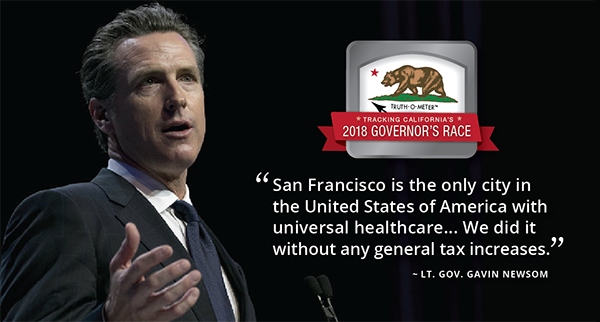
Perhaps no issue looms larger on both the state and national political stage than the question of universal health care coverage.
U.S. Presidential hopeful Kamala Harris (D) sent a shockwave through the national health care debate on Monday Jan. 28th by nonchalantly stating that she would eliminate private insurers as a necessary part of implementing “Medicare-for-all,” according to a CNN report.
Due to a firestorm of attention, most of it negative, the next day the Harris campaign walked back the previous day’s remarks in large part by stating that the candidate would also be open to more moderate health reform plans, which would preserve the private industry, according to the CNN report.
Newly elected California Governor Gavin Newsom (D) campaigned on the issue of single-payer health care and on his very first day in office unveiled a comprehensive package of reform proposals aimed at expanding state health care coverage subsidies and lowering its costs, which includes extending Medi-Cal to undocumented immigrants, according to a report by the LA Times.
In an interview, Gov. Newsom told the LA Times “These are not just symbolic gestures…We’re hoping to ignite a new conversation. It’s a moral imperative, not just economic,” states the LA Time report.
But as many experts, including Gov. Newsom, have pointed out, big systemic reform to the system, such as a move to a single-payer health system, would require the unlikely support of the Trump Administration.
Newsom has done a good job of tempering expectations for single-payer health care and his proposed coverage expansions and prescription cost controls demonstrate to the his supporters and the public that he is serious about expanding coverage as well containing costs.
But the 800-pound guerilla in the universal health care conversation is where will all the money come from to provide guaranteed government financed coverage to every Californian and everyone who likely to come to California once universal health care is guaranteed by the state?
“Where do you get the extra money? This is the whole question…I don’t even get it…how do you do that?,” said former California Governor Jerry Brown (D) following a universal healthcare discussion in Washington, D.C. in a 2017 interview with the LA Times.
At the time, Gov. Brown pointed out that the overall cost of medical care in California is equal to 18% of the state’s gross domestic product, which would be about $450 billion.
“You take a problem and say I’m going to solve it by something that’s an even bigger problem, which makes no sense,” then Governor Brown said at the time, according to the LA Times report.
Gov. Newsom developed some questionable rhetoric during the 2018 campaign, where he said that the State of California cannot afford not to move to a single-payer system because health care has become such a big expense in the state.
It appears that one of the major points of disagreement between former Gov. Brown and now Governor Gavin Newsom is the question of whether the State of California can afford to move to a universal health care system, specifically a single-payer system?
More recently, other high-profile liberal Democrats have come out against single-payer health care with former Mayor of New York City and billionaire Michael Bloomberg stating that Medicare-for-all “would bankrupt us for a very long time,” according to a CNN report.
“I think we could never afford that,” Bloomberg said, addressing pin factory employees in New Hampshire. “We are talking about trillions of dollars.”
“I think you could have Medicare-for-all people who are uncovered, but that’s a smaller group,” Bloomberg said.
“But to replace the entire private system where companies provide health care for their employees would bankrupt us for a very long time,” said Bloomberg according to the CNN report, which noted that Bloomberg made the comments in response to Sen. Kamala Harris calling for an end to the private health care market.
So what does all this mean for the current universal health care debate in California?
It means that California Democrats might want to heed the advice of two of the county’s most prominent liberal Democrats—former Gov. Jerry Brown and Michael Bloomberg—and proceed with great caution regarding the feasibility of California going it alone on universal health care.
There is no question that the state could choose to enact a single-payer or Obamacare-type universal health care system, but the million dollar question, or trillion dollar question rather in this case, is would such a system work and be fiscally sustainable over the long-term?
As a long-time analyst of fiscal issues in California, I believe that former Gov. Jerry Brown and Michael Bloomberg are correct to point out the major challenges and risks of moving to a universal health care system—both at the state level and the federal level.

The Affordable Care Act’s insurance exchanges have been the law’s headline feature over the past eight years, but the law’s Medicaid expansion has covered just as many people, and its rolls are more likely to grow under the Trump administration.
Driving the news: Roughly 8.8% of Americans were uninsured last year, according to new Census figures released yesterday — essentially unchanged from 2016. That means the Trump administration has not kept the ACA’s coverage gains going, nor has it successfully rolled them back — at least, not yet.

A rapidly consolidating industry. One that generally delivers on very difficult work, but with such a horrible customer-service reputation that people hate dealing with it. Known for wringing every last dollar out of its customers. You and the person next to you may be paying wildly different prices.
Health care, or an airline?
It’s a common comparison, and not without merit.
The bottom line: In all seriousness, this analogy does get at an underlying problem with health care: As much as providers love to talk about new payment models, volume is still king — it’s simply too lucrative to give up.

People Googling for ACA coverage often found results that were actually trying to sell them skimpier short-term health plans, according to a report from Robert Wood Johnson Foundation and the Urban Institute.
Why it matters: Consumer confusion is one of the things regulators worried about most when the Trump administration expanded access to “short-term” coverage.
Details: Researchers Googled terms including “cheap health insurance” and “Obamacare plans” and looked at the first 4 results — which are usually ads.
 HENRY KOTULA