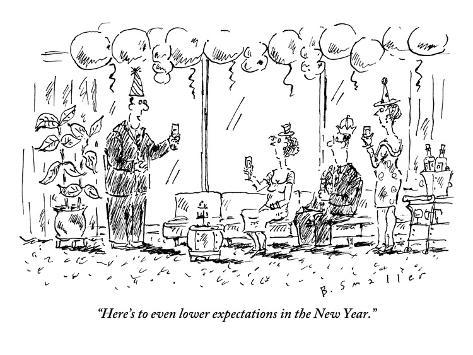
Cartoon – Everything is Negotiable, Including


![]()
https://www.healthleadersmedia.com/finance/healthleaders-top-10-finance-stories-2018

M&A activity among health systems and payers were a dominant narrative throughout 2018.
Policy changes affecting payment models also drew widespread attention from health leaders across the country.
The entrance of corporate disruptors stirred discussion and speculation among traditional healthcare industry players.
This year was marked by changing dynamics relating to healthcare finance, most notably from outside corporate disruptors like Amazon eyeing entry into the industry and widespread M&A activity across most sectors.
HealthLeaders has been on the front line covering the news and policy changes coming out of Washington, D.C., Wall Street, Nashville, and how it is going impact healthcare organizations as they shape their business strategies.
Below are the top 10 healthcare finance stories of 2018:
“Months of public negotiations and tribulations have resulted in a $5.7 billion acquisition of athenahealth set to close in Q1 2019, but it’s not a done deal yet.”
“A plan to simplify the way physicians bill Medicare for evaluation and management (E/M) visits has been finalized and will begin to take effect next year, but the controversial payment component of the plan will be delayed until 2021, giving stakeholders more time to influence policymaking, the Centers for Medicare & Medicaid Services announced.”
“The sale of the nonprofit health plan came after months of review from state regulators and final approval from interim Attorney General Barbara Underwood. ‘We are pleased to have completed our transaction with Fidelis Care on schedule and to enter the New York market by joining with a company with which we are closely aligned on many levels,’ Michael F. Neidorff, CEO of Centene, said in a statement.”
“Since joining Memorial Hermann Health System in 2013, Brian Dean served as both CFO and CEO of Memorial Hermann-Texas Medical Center, before his promotion last month to CFO of the entire system effective this August. Dean spoke to HealthLeaders about ascending to the new role, the lessons he’s learned in his years at the system, and the strategies he’s pursuing to further strengthen the organization’s finances.”
“Healthcare organizations are feeling the effects of the national shortfall of $645 billion in pension liabilities and are pursuing the ‘least bad option’ for handling the problem. The nationwide pension crisis has organizations scrambling to properly fund employee’ retirement packages and represents a self-inflicted dilemma that will have a dramatic impact on the healthcare industry without a clear solution.”
“One observer praised CMS for ‘picking a fight with powerful hospitals’ in the agency’s annual update to payment proposals for outpatient services. Under OPPS 2019, reimbursement for clinic visits in outpatient hospital settings would be capped at the rate paid for clinic visits in physician offices.”
“Through a vertical integration without significant precedence in healthcare, CVS and Aetna have the opportunity to use their increased scale to pursue several innovative business strategies going forward. Many industry players are interested in what the newly merged company could accomplish to further assist consumers at multiple points along the healthcare experience.”
“PBMs, retailers, and providers are getting together to integrate health plans, with Walmart-Humana taking mergers to another level of complexity and transformation, says one healthcare consultant. The Walmart merger with Humana is another strong sign that the healthcare industry is rapidly merging with disparate parts of the retail world, intermingling so much and so quickly that some traditional parts of healthcare may be absorbed and cease to exist as we now know them.”
“Health systems are recouping lost patient revenues by removing barriers to access treatment, and reducing operational costs by coordinating with ridesharing services.Nearly 4 million patients per year miss out on care due to lack of available transportation options related to cost or geographic barriers, according to the 2017 American Hospital Association study, ‘Transportation and the Role of Hospitals.'”
“After attempts to repeal the Obama administration’s signature healthcare law faltered, the Trump administration set an agenda for the Affordable Care Act’s implementation next year.In signing a major tax reform bill into law late last year, President Donald Trump claimed to have “essentially repealed Obamacare” by neutralizing the legislation’s individual mandate penalty.”
https://www.healthcaredive.com/news/fastmed-nextcare-announce-merger/544538/

The shift to value-based care and greater use of alternative care sites is one factor fueling growth in urgent care centers. Meanwhile, the million of Americans newly insured under the Affordable Care Act and a growing aging population has driven up emergency room volumes.
In a 2015 survey, 75% of emergency department physicians said visits had increased over the past year. The result is an overtaxed emergency staff and long wait times for patients. By contrast, urgent care offers medical care when and where patients need it and at a lower price point.
According to MarketsandMarkets, the global urgent care market will reach $26 billion by 2023, growing at a compound annual growth rate of 5.3%. Driving growth are lower costs and shorter wait times, growing investment in the sector, aging of populations and strategic partnerships between urgent care providers and hospitals.
In July, Morristown, New Jersey-based Atlantic Health System and MedExpress partnered to improve urgent care access and care coordination between the companies. The collaboration will allow MedExpress’ urgent care patients to get care at an Atlantic Health facility if more advanced care is needed.
And in October, Walgreens announced a strategic collaboration with Michigan-based McLaren Health Care aimed at improving health and pharmacy services. The vertical pact came as CVS Health and Aetna were wrapping up their megamerger.
https://www.healthcaredive.com/news/what-to-expect-after-whirlwind-aca-ruling/544527/

Judge Reed O’Connor’s unexpectedly sweeping ruling calling the Affordable Care Act unconsitutional late Friday sent shock waves rippling through the healthcare landscape.
The ruling, which will almost certainly be appealed (likely up to the U.S. Supreme Court), would effectively wipe out Medicaid expansion, pre-existing condition protections and could affect a number of hospital payment reforms.
But the decision faces a lengthy appellate process, along with attacks from the left and right alike.
The ruling doesn’t have much immediate impact, as it was a declaratory judgment and not an injunction to stop the ACA. The Trump administration confirmed Friday night that the law would stay in place during appeals.
Still, President Donald Trump himself celebrated on Twitter in the early hours of Monday morning.
The DEDUCTIBLE which comes with ObamaCare is so high that it is practically not even useable! Hurts families badly. We have a chance, working with the Democrats, to deliver great HealthCare! A confirming Supreme Court Decision will lead to GREAT HealthCare results for Americans!
— Donald J. Trump (@realDonaldTrump) December 17, 2018
Not all of the administration officials echoed the tone, however, as CMS Administrator Seema Verma tweeted a message of reassurance Friday night, confirming that the exchanges would stay open through Saturday as previously planned.
The recent federal court decision is still moving through the courts, and the exchanges are still open for business and we will continue with open enrollment. There is no impact to current coverage or coverage in a 2019 plan.
— Administrator Seema Verma (@SeemaCMS) December 15, 2018
A day later, however, Verma returned to script, tweeting “Obamacare has been struck down by a highly respected judge.”
Critics decried the timing of the ruling, which dropped on the penultimate day of an already-lagging open enrollment season for 2019. Kaiser Family Foundation put enrollment in the individual market at 17 million in 2016, 15.2 million in 2017 and 14.2 million as of Q1 2018.
Saturday dawned with potential confusion for tens of thousands of Americans looking to enroll at the last minute. The Justice Department had asked O’Connor to hold off on the ruling so that it didn’t affect 2019 enrollment on Healthcare.gov until after enrollment ended Saturday.
He issued his decision one day before. But it’s unclear what effect the ruling will have, if any, on 2019 insurance.
Republicans were in a bind with the timing as well, along with the mounting popularity of the ACA.
In 2018, as protections for pre-existing conditions took center stage in the midterms, Republicans changed tack and hedged their language around the ACA, promising to protect Americans’ coverage despite dozens of attempts at repealing the entire law.
The decision Friday evening sent ripples through Wall Street with major dips for hospitals and insurers. HCA stock dropped more than 5%, Cigna and Humana each fell 4%, Centene took a 7.5% hit and Molina dropped as much as 13%. Some stocks recovered later Monday morning.
Leerink analysts called Monday a buying opportunity for managed care organizations, along with WellCare and HCA.
While the law touches nearly every aspect of American healthcare, some players will take bigger hits than others.
Hospitals, especially those who serve a disproportionate number of ACA-insured patients, don’t need the further stress on their bottom lines.
America’s Essential Hospitals president and CEO Bruce Siegel called the ruling a “profoundly troubling development,” adding that “the crushing rise in the number of uninsured patients likely to follow this decision, absent a higher court’s reversal, will push [hospitals] to the breaking point.”
Health systems are “deeply disappointed” with O’Connor’s decision, said Rick Pollack, CEO of the American Hospital Association. “The ruling puts health coverage at risk for tens of millions of Americans, including those with chronic and pre-existing conditions, while also making it more difficult for hospitals and health systems to provide access to high-quality care.”
Multiple provider groups urged a stay in the decision until it moves through the appeals process.
https://www.apnews.com/15851f17cb164b89a4fa3d8be33e156b

A divided U.S. appeals court Thursday blocked rules by the Trump administration that allowed more employers to opt out of providing women with no-cost birth control.
The ruling, however, may be short lived because the administration has adopted new rules on contraceptive coverage that are set to take effect next month and will likely prompt renewed legal challenges.
Thursday’s ruling by a three-judge panel of the 9th U.S. Circuit Court of Appeals concerned changes to birth control coverage requirements under President Barack Obama’s health care law that the U.S. Department of Health and Human Services issued in October 2017.
States were likely to succeed on their claim that those changes were made without required notice and public comment, the appeals court panel said in a 2-1 decision.
The majority upheld a preliminary injunction against the rules issued by U.S. District Judge Haywood Gilliam last year. It, however, limited the scope of the injunction, applying it only to the five states in the lawsuit and not the entire country.
Another federal judge also blocked the rules, and her nationwide injunction remains in place.
An email to the Justice Department seeking comment was not immediately returned.
Obama’s health care law required most companies to cover birth control at no additional cost, though it included exemptions for religious organizations. The new policy allowed more categories of employers, including publicly traded companies, to opt out of providing free contraception to women by claiming religious objections. It also allowed any company that is not publicly traded to deny coverage on moral grounds.
The Department of Justice said in court documents that the rules were about protecting a small group of “sincere religious and moral objectors” from having to violate their beliefs. The changes were favored by social conservatives who are staunch supporters of President Donald Trump.
California filed a lawsuit to block the changes that was joined by Delaware, Maryland, New York and Virginia.
“Today’s decision is an important step to protect a woman’s right to access cost-free birth control and make independent decisions about her own reproductive health care,” California Attorney General Xavier Becerra said in a statement.
The states argued that the changes could result in millions of women losing free birth control services, forcing them to seek contraceptive care through state-run programs or programs that the states had to reimburse.
The states show with “reasonable probability” that the new rules will lead women to lose employer-sponsored contraceptive coverage, “which will then result in economic harm to the states,” 9th Circuit Judge J. Clifford Wallace, a nominee of Republican President Richard Nixon, wrote for the majority.
In a dissent, 9th Circuit Judge Andrew Kleinfeld said the economic harm to the states was “self-inflicted” because they chose to provide contraceptive coverage to women. The states, therefore, did not have the authority to bring the lawsuit, Kleinfeld, a nominee of Republican President George H.W. Bush, said.
The case became more complicated after the Trump administration last month issued new birth control coverage rules that are set to supersede those at issue in the lawsuit before the 9th Circuit. Under the new rules, large companies whose stock is sold to investors won’t be able to opt out of providing contraceptive coverage.
Wallace said the new rules did not make the case before the 9th Circuit moot because they are not set to take effect until January.

Could a federal judge in Texas be the catalyst that finally brings down the Affordable Care Act, a law that has withstood countless assaults from Republicans in Congress and two Supreme Court challenges?
On the morning after Judge Reed O’Connor’s startling ruling that struck down the landmark health law, legal scholars were doubtful.
Lawyers on both sides of previous A.C.A. battles said the reasoning behind this one was badly flawed, notably in its insistence that the entire 2010 law must fall because one of its provisions may have been rendered invalid by the 2017 tax overhaul legislation. Had Congress meant to take such radical action, they said, it would have said so at the time.
Legal experts also noted that the Supreme Court, where most people believe the case is headed, historically has been reluctant to strike down federal laws, particularly those that have become ingrained in the lives of millions of citizens.
For now, the ruling is unlikely to affect the more than 23 million people who get health coverage through the insurance marketplaces set up by the law and the expansion of Medicaid in 36 states. The Trump administration immediately said — despite the president’s gleeful tweets hailing the decision — that it would continue to enforce the law until the appeals process plays out, which could take more than a year. That will ensure that the American health care system, which has been operating under the law for more than five years, will not be thrown into immediate chaos.
Judge O’Connor, who was appointed by George W. Bush to the Federal District Court in Fort Worth, has ruled against laws supporting immigration, transgender and Native American rights. Conservative lawyers are known to choose his district to file cases, hoping he will fire opening salvos that propel their issues through the court system.
The crux of Judge O’Connor’s decision centered on the health law’s requirement that most people have health coverage or pay a tax penalty.
That tax penalty was effectively eliminated when Congress reduced its amount to zero in the tax legislation enacted last year. And once the tax penalty no longer stood, the so-called “individual mandate” was unconstitutional and the entire law had to fall, the judge reasoned in accepting the argument of the 20 states that brought the lawsuit challenging the legislation.
But an array of legal experts said that argument was unsound. Jonathan H. Adler, a conservative law professor at Case Western Reserve University in Cleveland, called that position “simply nonsensical” and said the judge’s conclusion was “hard to justify” and “surprisingly weak.”
He and others pointed to the fact that even though Congress erased the tax penalty, it did not touch the rest of the sprawling health act. A longstanding legal doctrine called “severability” holds that when a court excises one provision of a statute, it should leave the rest of the law in place unless Congress explicitly stated that the statute could not survive without that provision.
In this case Congress’s intention was particularly clear, legal experts said.
“Congress amended one provision of a 2,000 page law and did not touch the rest of the law so it is implausible to believe that Congress intended the rest of the law not to exist,” said Abbe R. Gluck, a health law expert at Yale Law School.
Judge O’ Connor also cited congressional intent, focusing on language from the 2010 law, which underscored the significance of the individual mandate to the entire act. But he largely ignored the 2017 congressional action. In essence, legal scholars said, he looked to one congressional view and not the more recent one.
And in so doing, he opened the door for House Democrats to intervene in successive appeals. On Saturday aides to Representative Nancy Pelosi, who is expected to become the next speaker of the House, said she would move quickly to notify the Trump administration that House Democrats intended to step in to defend the law in the case.
As the legal showdown plays out, efforts to protect the A.C.A. are also underway in the courts. Earlier this year the state attorney general of Maryland sued the Trump administration for attempting to gut the act. The case is pending.
Nicholas Bagley, a health law expert at the University of Michigan, suggested that Judge O’Connor may not yet be done with the case. In a series of tweets on Saturday, Mr. Bagley noted that the judge had not yet addressed a handful of central issues in the suit, nor had he issued a final ruling indicating whether the act should fall immediately. Judge O’Connor could indeed hold onto the case before an appellate court takes it up.
But if he lets the case move forward, a likely timeline, according to many legal experts, is that the case will be taken up by the United States Court of Appeals for the Fifth Circuit in New Orleans this spring. If the Fifth Circuit upholds Judge O’Connor’s decision, the Supreme Court is likely to agree to hear the case in its term that starts in October 2019, with a decision in 2020. If the Fifth Circuit overturns the judge’s ruling and upholds the law, there is a good chance the Supreme Court would decline to even take the case, legal scholars said.
One law professor, Ilya Somin of George Mason University, criticized parts of the opinion, but said he was “a bit less confident about the outcome” because “the history of A.C.A.-related litigation is filled with surprises and failed predictions by experts.”
Among the observations flying about was the notion that the Supreme Court only rarely strikes down federal laws, and it is particularly reluctant to do so when the laws have been in place for years and affect millions of people. In fact, Chief Justice John G. Roberts Jr. wrote in his 2012 opinion upholding the health care law, that the court should err on the side of sustaining federal laws.
“As between two possible interpretations of a statute, by one of which it would be unconstitutional and by the other valid,” he wrote, quoting Justice Oliver Wendell Holmes Jr., “our plain duty is to adopt that which will save the act.”
The five justices who voted to uphold the law in a landmark 2012 case, including Justice Roberts, are all still on the court.