

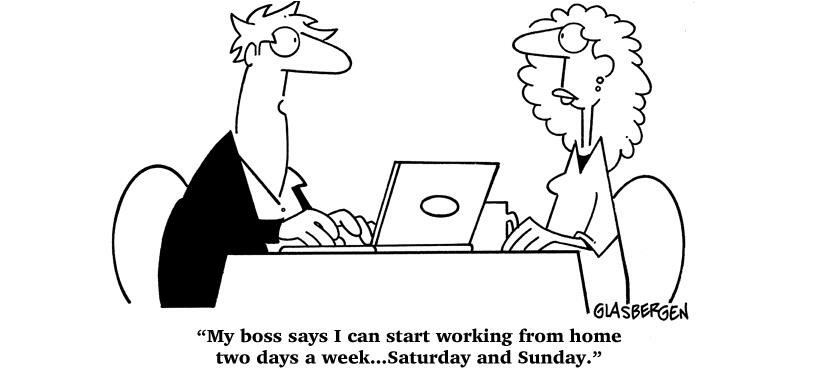
Cartoon – Working from Home
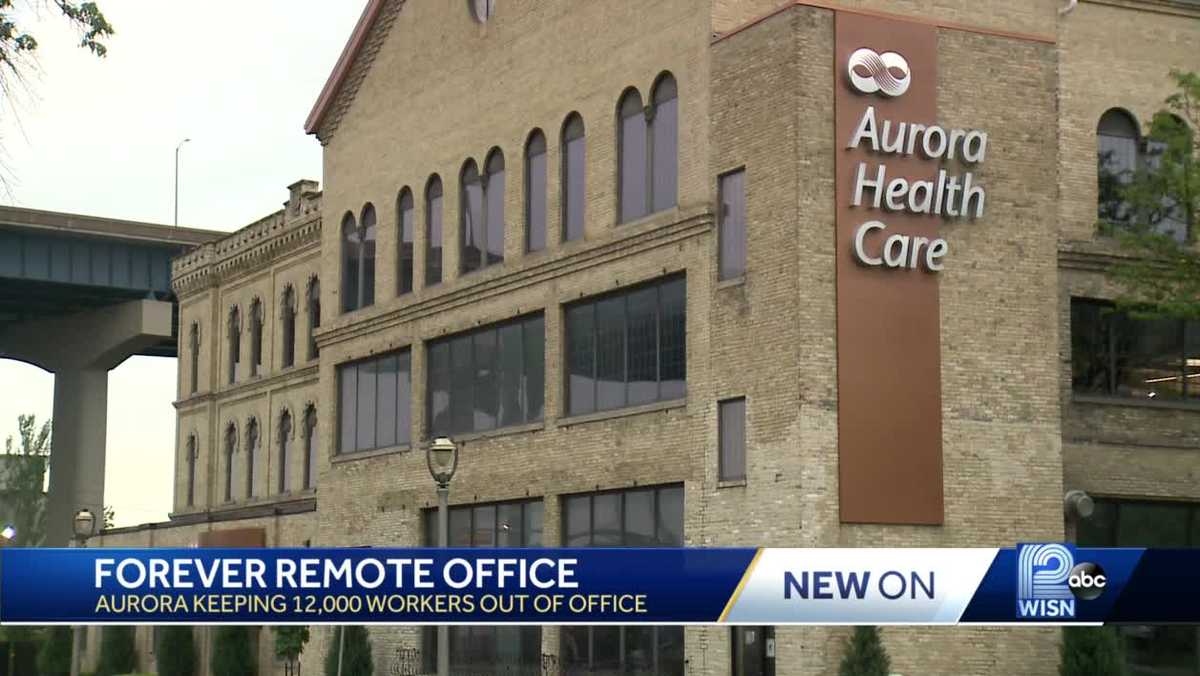
Advocate Aurora Health is implementing a new work model that will move 12,000 non-clinical employee positions in finance, consumer experience and more departments to remote-first operations, according to a May 21 BizTimes report.
Under the new work model, dubbed WorkForward, the 12,000 non-clinical employees who have been working remotely throughout the COVID-19 pandemic will continue to do so permanently; these employees will “no longer have dedicated workspaces” like cubicles or offices at the health system’s Milwaukee and Downers Grove, Ill.-based offices, the publication reports.
Affected departments include finance and accounting, consumer experience and public affairs, strategy and business development, government relations and administration. Employees will be able to choose to work from home, at a coffee shop or other locations, Advocate Aurora Chief Human Resources Officer Kevin Brady told BizTimes.
“For some departments, remote-first may come to mean monthly team meetings in the office, once-a-week collaboration sessions or a trip to an outside-the-box location that inspires the team,” he said.
Advocate Aurora will “regularly evaluate” its real estate needs with the work model transition; the health system recently vacated non-headquarters office space when its lease ended at the end of 2020. Advocate Aurora is also reconfiguring its remaining facilities to create more “innovative and productive” work areas that employees can use for meetings or temporary office space, according to the report.


https://mailchi.mp/f2794551febb/the-weekly-gist-october-23-2020?e=d1e747d2d8

Over the past few weeks we’ve fielded a spate of questions from health system executives wondering about their peers’ plans for employees to return to the office. Some who have set a January 1st target for employees to return to their physical workspaces are now reconsidering.
“The first of the year sounded good back in the summer, but now it seems kind of arbitrary,” one system COO told us. “And if we really are entering a winter ‘third wave’ of COVID, it may not be a sound decision for health reasons, either.” Many have been positively surprised by the levels of communication and productivity since many employees began telecommuting full-time back in the spring. “It would be one thing to tell people they had to come back if the work wasn’t getting done. But for many, productivity has actually been better,” one executive shared.
Eight months into the work-from-home experiment (and with a handful of high-profile companies like Twitter saying employees can work from home forever), some leaders are now wondering whether they too should allow some staff to work from home permanently. The opportunities are obvious: real estate and overhead cost savings, and a potential boost to employee engagement and retention. But contemplating a long-term shift raises big questions.
As remote workers in expensive markets look to move to lower-cost cities, or even to states with lower tax rates, does a geographic connection to the area matter? As new staff who have never met in person are added, can culture and teambuilding be sustained? And how to blend operations and communication across remote staff and those who work in the office, by choice or necessity? (“In-person meetings are great, Zoom meetings have gotten better, but the ones where half of us are in a conference room and the other half are dialing in feel like a death knell,” one physician leader told us.)
The pandemic has likely launched a lasting shift toward “work anywhere”. But in order to capture the benefits of remote or flexible work, leaders must invest time and resources to rethink and transform the way they onboard, manage, operate, and communicate with the hybrid teams of the future.
 HENRY KOTULA