I’m Glad I’m not a California Hospital or Practice Administrator…

On January 1st, 2024 #AB1076 and #SB699, two draconian noncompete laws go into effect. It could put many #employedphysicians in a new position to walk away from #employeeremorse.

AB1076 voids non-compete contracts and require the employer to give written notice by February 14th, 2024 that their contract is void.

Is this a good or bad thing? It depends.

If the contract offers more protections and less risk to the employed physician, and the contract is void – does that mean the whole contract is void? Or is the non-compete voidable?

But for the hospital administrator or practice administrator, we’re about to witness the golden handcuffs come off and administrators will have to compete to retain talent that could be lured away more easily than in the past. But the effect of the non-compete is far more worrisome for an administrator because of the following:

The physicians many freely and fairly compete against the former employer by calling upon, soliciting, accepting, engaging in, servicing or performing business with former patients, business connections, and prospective patients of their former employer.

It could also give rise to tumult in executive positions and management and high value employees like managed care and revenue cycle experts who may have signed noncompete contracts.

If the employer does not follow through with the written notice by February 14th, the action or failure to notify will be “deemed by the statute to be an act of unfair competition that could give rise to other private litigation that is provided for in SB699.

The second law, SB699, provides a right of private action, permitting the former employees subject to SB699 the right to sue for injunctive relief, recovery of actual damages, and attorneys fees. It also makes it a civil violation to enter into or enforce a noncompete agreement. It further applies to employees who were hired outside California but now work in or through a California office.

What else goes away?

Employed physicians can immediately go to work for a competitor and any notice requirement or waiting period (time and distance provisions) are eliminated by the laws. So an administrator could be receiving “adios” messages on January 2nd, and watch market share slip through their fingers like a sieve starting January 3rd.

And what about the appointment book? Typically, appointments are set months in advance, especially for surgeons – along with surgery bookings, surgery block times, and follow up visits.

Hospitals may be forced to reckon with ASCs where the surgeons could not book cases under their non-compete terms and conditions. They could up and move their cases as quickly as they can be credentialed and privileged and their PECOS and NPPES files updated and a new 855R acknowledged as received.

Will your key physicians, surgeons and APPs leave on short notice?

APPs such as PAs and NPs could also walk off and bottleneck appointment schedules, surgical assists, and many office-based procedures that were assigned to them. They could also walk to a new practice or a different hospitals and also freely and fairly compete against the former employer by calling upon, soliciting, accepting, engaging in, servicing or performing business with former patients, business connections, and prospective patients of their former employer.

Next, let’s talk about nurses and CRNAs. If they walk off and are lured away to a nearby ASC or hospital, or home health agency, that will disrupt many touchpoints of the current employer.

Consultants’ contracts are another matter to be reckoned with. In all my California (and other) contracts, contained within them are anti-poaching provisions that state that I may not offer employment to one of their managed care, revenue cycle, credentialing, or business development superstars. Poof! Gone!

The time to conduct a risk assessment is right now! But many of the people who would be assigned this assessment are on holiday vacation and won’t be back until after January 1st. But then again, they too could be lured away or poached.

What else will be affected?

Credentialing and privileging experts should be ready for an onslaught of applications that have to be processed right away. They will not only be hit with new applications, but also verification of past employment for the departing medical staff.

Billing and Collections staff will need to mount appeals and defenses of denied claims without easy access they formerly had with departing employed physicians.

Medical Records staff will need to get all signature and missing documentation cleared up without easy access they formerly had with departing employed physicians.

Managed Care Network Development experts at health plans and PPOs and TPAs will be recredentialing and amending Tax IDs on profiles of former employed physicians who stand up their own practice or become employed or affiliated with another hospital or group practice. This comes at an already hectic time where federal regulations require accurate network provider directories.

The health plans will need to act swiftly on these modifications because NCQA-accredited health plans must offer network adequacy and formerly employed physicians who depart one group but cannot bill for patient visits and surgeries until the contracting mess is cleared up does not fall under “force majeure” exceptions. If patients can’t get appointments within the stated NCQA time frames, the health plan is liable for network inadequacy. I see that as “leverage” because the physician leaving and going “someplace else” (on their own, to a new group or hospital) can push negotiations on a “who needs whom the most?” basis. Raising a fee schedule a few notches is a paltry concern when weight against loss of NCQA accreditation (the Holy Grail of employer requirements when purchasing health plan benefits from a HMO) and state regulator-imposed fines. All it takes to attract the attention of regulators and NCQA are a few plan member complaints that they could not get appointments timely.

Health plans who operate staff model and network model plans that employ physicians, PAs and NPs (e.g., Kaiser and others who employ the participating practitioners and own the brick and mortar clinics where they work) are in for risk of losing the medical staff to “other opportunities.” These employment arrangements are at a huge risk of disruption across the state.

Workers Compensation Clinics that dot the state of California and already have wait times measured in hours as well as Freestanding ERs and Freestanding Urgent Care Clinics could witness a mass exodus of practitioners that disrupt operations and make their walk in model inoperative and unsustainable in a matter of a week.

FQHCs that employ physicians, psychotherapists, nurse practitioners and physician assistants could find themselves inadequately staffed to continue their mission and operations. Could this lead to claims of patient abandonment? Failed Duty of Care? Who would be liable? The departing physician or their employer?

And then, there are people like me – consultants who help stand up new independent and group practices, build new brands, rebrand the physicians under their own professional brands, launch new service lines like regenerative medicine and robotics, cardiac and vascular service lines, analyze managed care agreements, physician, CRNA, psychotherapist, and APP employment agreements. There aren’t many consultants with expertise in these niches. There are even fewer who are trained as paralegals, and have practical experience as advisors or former hospital and group practice administrators (I’ve done both) who are freelancers. I expect I will become very much in demand because of the scarcity and the experience. I am one of very few experts who are internationally-published and peer-reviewed on employment contracts for physicians.

Medicare Advantage growth raises critical financial questions

https://www.healthcarefinancenews.com/news/medicare-advantage-growth-raises-critical-finance-questions?mkt_tok=NDIwLVlOQS0yOTIAAAGQUFhbkkHv384x6craLzqoe6oHg01nqFqx-KlDVb0BCDM6aiCHEBB94evVFaOwkkTkrcUXaAInnPvVDT1QkR_XHnBX1GXxENhSkCIDk4q75UM

In the coming year, more than half of Medicare’s 66 million beneficiaries may opt for private Medicare Advantage plans, a development likely to put further strain on an already overstretched healthcare system, according to a report in the New England Journal of Medicine.

The report, written by Gretchen Jacobson and David Blumenthal, raised several questions regarding the ascendancy of MA, its impact on care quality, cost considerations and the broader implications for the healthcare system.

Jacobson, a vice president at the Commonwealth Fund, and Blumenthal, previously the fund’s president, delve into the intricacies of MA, outlining its operational mechanisms, payment structures and performance relative to traditional Medicare.

WHY THIS MATTERS

Medicare Advantage, also known as Medicare Part C, is an alternative to traditional Medicare offered by private insurance companies.

It typically includes additional benefits such as prescription drug coverage, dental, vision and wellness programs, often with different cost-sharing structures compared to traditional Medicare.

A November report from Inovalon indicated MA beneficiaries generally experience improved health outcomes, encountering reduced avoidable hospitalizations, readmissions and lower rates of high-risk medication use.

The authors of the NEJM report question the affordability of a program that costs a minimum of 6% more per enrollee and scrutinized the insights offered by MA’s popularity concerning the limitations of traditional Medicare.

This growing expense, even prior to factoring in the effects of selective enrollment into MA, elevates federal expenditures, widens deficits and ultimately heightens costs for all beneficiaries.

The report cautioned the resultant fiscal strains exert pressure to curtail Medicare benefits and elevate federal taxes – both politically complex undertakings.

Furthermore, the escalating clout of the MA sector, accompanied by the substantial enrollment of older voters in these plans, presents political hurdles to significantly altering the program’s trajectory. The study also analyzed the implications of MA’s popularity on the constraints of traditional Medicare.

The allure of supplementary benefits and capped out-of-pocket expenses within MA designs has magnetized older and disabled Americans, while attempts to incorporate such services within traditional Medicare have met consistent failure due to explicit cost constraints.

The report notes the federal government indirectly shoulders these expenses through augmented payments to plans, and adds that the profits amassed by MA plans – which it says verge on being excessive – may not uniformly represent genuine efficiencies or enhanced value.

“Aside from these broad policy issues, some more-practical questions arise,” the study explained. “One concerns how the growth of Medicare Advantage will affect the ability of policymakers and researchers to understand and manage the Medicare program and the health system generally.”

The study suggests enhanced federal policies on risk adjustment, coding incentives, payment structures for quality and rectification of market imbalances in MA could improve evaluation of plan value for beneficiaries and taxpayers. It calls for ensuring accurate provider directories to mitigate misleading tactics.

“As Medicare Advantage continues to grow, federal authorities and plan stakeholders face a continuing challenge to craft a program that is affordable, high in quality, and free of abuse and that meets the needs of beneficiaries,” the report concludes.

THE LARGER TREND

A recent analysis of 1,300 hospitals revealed escalating reimbursement delays and shrinking cash reserves, highlighting the urgent need for interventions to ease financial strain and maintain consistent patient care.

The American Hospital Association has also urged the Centers for Medicare and Medicaid Services to address MA insurers that are disregarding CMS coverage rules.

The 2024 MA final rule ensures better alignment and coverage parity between traditional Medicare and MA, and increases oversight of Medicare Advantage Organizations (MAOs).

From -10.6% to 11.1%: 34 systems ranked by operating margins

Hospitals began 2023 with a median operating margin of -0.9%, but that figure has increased steadily month over month to hit 2% in November — the ninth consecutive month of positive margins. Despite a modest positive turning point for some hospitals and health systems this year, Fitch Ratings projects 2024 to be another “make or break” year for a significant portion of the sector.

Editor’s note: Operating margins are based on health systems’ most recent financial documents and vary by reporting periods, such as the three months ending Sept. 30, the nine months ending Sept. 30 and the 12 months ending Sept. 30.

1. Tenet Healthcare (Dallas)
*For the three months ending Sept 30

Revenue: $5.1 billion
Expenses: $4.99 billion
Operating income/loss: $568 million
Operating margin: 11.1%

2. HCA Healthcare (Nashville, Tenn.)
*For the three months ending Sept 30

Revenue: $16.21 billion
Expenses: $14.58 billion
Operating income/loss: $1.63 billion
Operating margin: 10.1%

3. Universal Health Services (King of Prussia, Pa.)
For the three months ending Sept. 30 

Revenue: $3.6 billion
Expenses: $3.3 billion
Operating income/loss: $285.4 million
Operating margin: 7.9%

4. Mayo Clinic (Rochester, Minn.)
*For the three months ending Sept 30

Revenue: $4.5 billion
Expenses: $4.2 billion 
Operating income/loss: $302 million
Operating margin: 6.7%

5. Stanford Health Care (Palo Alto, Calif.)
*For the 12 months ending Aug. 31

Revenue: $7.87 billion
Expenses: $7.46 billion
Operating income/loss: $414.9 million 
Operating margin: 5.3%

6. Community Health Systems (Franklin, Tenn.)
*For the three months ending Sept 30

Revenue: $3.09 billion
Expenses: $2.91 billion
Operating income/loss: $173 million
Operating margin: 5.6%

7. Christus Health (Irving, Texas) 
*For the 12 months ending June 30 

Revenue: $7.8 billion
Expenses: $7.5 billion
Operating income/loss: $324.5 million
Operating margin: 4.2%

8. Northwestern Medicine (Chicago) 
*For the 12 months ending Sept. 30

Revenue: $8.7 billion
Expenses: $8.4 billion
Operating income/loss: $352.3 million
Operating margin: 4.1%

9. IU Health (Indianapolis)
*For the three months ending Sept 30

Revenue: $2.12 billion
Expenses: $2.06 billion
Operating income/loss: $59.6 million
Operating margin: 2.8%

10. Sanford Health (Sioux Falls, S.D.)
*For the nine months ending Sept. 30

Revenue: $5.39 billion
Expenses: $5.27 billion
Operating income/loss: $123.2 million
Operating margin: 2.3%

11. BJC HealthCare (St. Louis)
*For the nine months ending Sept. 30

Revenue: $5.17 billion
Expenses: $5.06 billion
Operating income/loss: $113.2 million
Operating margin: 2.2%

12. Vanderbilt University Medical Center (Nashville, Tenn.)
*For the three months ending Sept 30

Revenue: $1.8 billion
Expenses: $1.77 billion
Operating income/loss: $28 million
Operating margin: 1.6%

13. Banner Health (Phoenix)
*For the nine months ending Sept. 30

Revenue: $10.3 billion
Expenses: $10.2 billion
Operating income/loss: $149.4 million
Operating margin: 1.5%

14. Intermountain Health (Salt Lake City)
*For the nine months ending Sept. 30

Revenue: $11.9 billion
Expenses: $11.2 billion
Operating income/loss: $157 million
Operating margin: 1.3%

15. Prisma Health (Greenville, S.C.)*For the 12 months ending Sept. 30

Revenue: $6 billion
Expenses: $5.9 billion
Operating income/loss: $67.1 million
Operating margin: 1.1%

16. Kaiser Permanente (Oakland, Calif.)
*For the three months ending Sept. 30 2023

Revenue: $24.9 billion
Expenses: $24.7 billion
Operating income/loss: $156 million
Operating margin: 0.6%

17. Advocate Health (Charlotte, N.C.)
*For the nine months ending Sept. 30

Revenue: $22.83 billion
Expenses: $22.75 billion
Operating income/loss: $79.4 million
Operating margin: 0.4%

18. Mercy (St. Louis-based)
*For the 12 months ending June 30 

Revenue: $8.02 billion
Expenses: $8.01 billion
Operating income/loss: $11.8 million
Operating margin: 0.1%

19. OSF HealthCare (Peoria, Ill.) 
*For the 12 months ending Sept. 30

Revenue: $4.1 billion
Expenses: $4.1 billion
Operating income/loss: $1.2 million
Operating margin: 0%

20. Northwell Health (New Hyde Park, N.Y.) 
*For the three months ending Sept. 30 

Revenue: $4.1 billion
Expenses: $4.2 billion
Operating income/loss: ($11.6 million)
Operating margin: (0.3%)

21. Mass General Brigham (Boston)
*For the 12 months ending Sept. 30

Revenue: $18.8 billion (includes $143 million revenue related to federal COVID-19 relief) 
Expenses: $18.7 billion
Operating income/loss: ($48 million)
Operating margin: (0.3% margin)

22. Cleveland Clinic
*For the three months ending Sept. 30 2023

Revenue: $3.6 billion
Expenses: $3.4 billion
Operating income/loss: ($14.9 million)
Operating margin: (0.4%)

23. Montefiore (New York City) 
*For the nine months ending Sept. 30

Revenue: $5.61 billion
Expenses: $5.64 billion
Operating income/loss: ($28.6 million)
Operating margin: (0.5%)

24. SSM Health (St. Louis)
*For the three months ending Sept 30

Revenue: $2.61 billion
Expenses: $2.63 billion
Operating income/loss: ($21.1 million) 
Operating margin: (0.8%)

25. UPMC (Pittsburgh)
*For the nine months ending Sept. 30

Revenue: $20.6 billion
Expenses: $20.8 billion
Operating income/loss: ($177 million)
Operating margin: (0.9%)

26. Scripps Health (San Diego) 
*For the 12 months ending Sept. 30

Revenue: $4.3 billion
Expenses: $4.3 billion
Operating income/loss: ($36.6 million)
Operating margin: (0.9%)

27. Trinity Health (Livona, Mich.) 
*For the three months ending Sept 30

Revenue: $5.6 billion
Expenses: $5.7 billion
Operating income/loss: ($58.6 million)
Operating margin: (1%)

28. UnityPoint Health (West Des Moines, Iowa)
*For the three months ending Sept 30

Revenue: $1.16 billion
Expenses: $1.18
Operating income/loss: ($16.4 million)
Operating margin: (1.4%)

29. Novant Health (Winston-Salem, N.C.) 
*For the three months ending Sept. 30

Revenue: $1.94 billion
Expenses: $1.97 billion
Operating income/loss: (28.6 million)
Operating margin: (1.5%)

30. Geisinger (Danville, Pa.)
*For the nine months ending Sept. 30

Revenue: $5.66 billion
Expenses: $5.76 billion
Operating income/loss: ($104.4 million)
Operating margin: (1.8%)

31. CommonSpirit (Chicago) 
*For the three months ending Sept. 30

Revenue: $8.58 billion
Expenses: $9.02 billion
*Adjusted operating income/loss: ($291 million)
Operating margin: (3.4%)

32. Tower Health (West Reading, Pa.)
*For the three months ending Sept. 30 

Revenue: $457.4 million
Expenses: $476.5 million
Operating income/loss: $19.1 million
Operating margin: (4.2%)

33. Providence (Renton, Wash.) 
*For the three months ending Sept. 30

Revenue: $7.18 billion
Expenses: $7.49 billion
Operating income/loss: ($310 million)
Operating margin: (4.3%)

34. Ascension (St. Louis)
*For the 12 months ending June 30 

Revenue: $28.35 billion
Expenses: $29.9 billion
Operating income/loss: ($3 billion)
Operating margin: (10.6%)

How Elevance Health plans to integrate ‘food as medicine’ across its lines of business

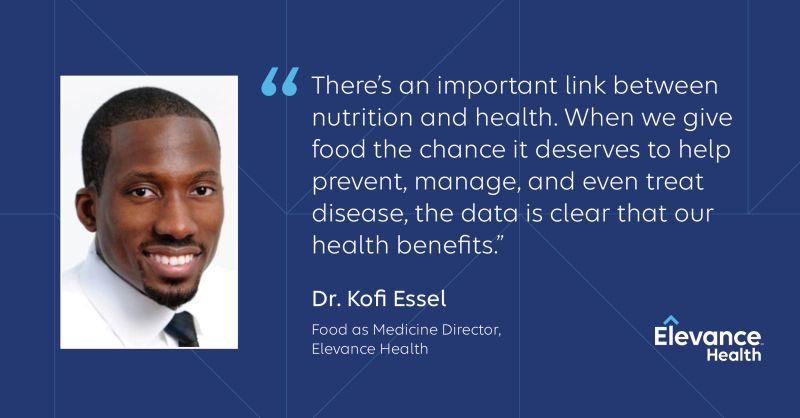
In June, Elevance Health named Kofi Essel, MD, as its first food as medicine program director, signaling a paradigm shift within one of the country’s largest healthcare organizations. 

Dr. Essel is a community pediatrician by training, having most recently worked at Children’s National Health System in Washington, D.C. Before that, he was the director of the culinary medicine program at George Washington University’s School of Medicine and Health Sciences. 

He sat down with Becker’s to discuss how Elevance is building a food as medicine strategy intended to eventually touch and improve the lives of its more than 47 million members nationwide.

Question: How do you define “food as medicine” as it relates to your role at Elevance Health?

Dr. Kofi Essel: The definition I’ve been leading around “food as medicine” are the strategies or interventions that work alongside healthcare and give access to high-quality foods, and a focus on prevention, management and treatment of disease. We also love to center this around health equity and thinking strongly about the importance of high-quality nutrition education as well.

Q: What’s your plan to integrate the “food as medicine” concept into Elevance Health’s insurance and other product offerings?

KE: We as a company strongly believe in the concept of whole health and really recognizing that the health of our members around the country is far more than what’s happening in the four walls of the clinical setting. We also believe that because we get great insight into the lives of our members in a variety of different settings, we are uniquely positioned to be able to respond to their whole health, including socioeconomic and behavioral health backgrounds. Food as medicine fits into this concept because we’re thinking about challenges around food and nutrition insecurity, and diet-related chronic diseases. This is a quite prevalent issue across the country, and we’re thinking about this through every line of business in Medicaid, commercial and Medicare. 

We’ve been doing a lot of work in this space as an organization, and our philanthropic arm has committed $30 million over a three-year period to authentic foods as medicine solutions. One of the grantees that we supported in their community based efforts has been Feeding America, the largest umbrella organization for the majority of food banks around the country. They’ve been doing some phenomenal work creating what we call food pharmacies, which team up with health clinics. We’ve seen them collect some unique data, so we’re really excited about what we expect to see from that partnership in particular. 

I will also say one of the big things that I’ve been working with our teams around is building our actual strategy. How are we going to incorporate this concept into every line of business? We are getting ready to roll out some pilots because the data is quite clear that these interventions are effective.

Q: Are there emerging trends or innovations in nutritional science that you think can enhance traditional health plans?

EF: The science around food as medicine is emerging and exciting and exists — and the data is quite clear that diet affects disease and health outcomes. There are a few different kinds of food as medicine interventions, such as medically tailored meals, medically tailored groceries and produce prescriptions.

There’s also strategies around using federal nutrition programs and other population or community-level policies and programs that we can lean into, including around quality nutrition education. I reviewed one recent study that looked at the power of produce prescription initiatives, which a lot of people have asked me, “What’s the point?” I point them to the data: One in 10 adults and children consume enough fruits and vegetables, meaning our consumption of fiber and other nutrients is quite low. 

When families are provided a produce prescription, we see significant changes in hemoglobin A1C, which is a marker for diabetes. We see significant changes in blood pressure and significant improvement in weight management and overall health outcomes. So the data that these interventions can work is a powerful reminder to keep this great work going.

Q: Why should every major healthcare organization employ someone in your role?

EF: When you look at professional guidelines for organizations addressing a variety of different diet-related chronic diseases, one of the first things you’re going to see as an intervention option for patients is using lifestyle components such as food as a priority.

Unfortunately, the reality is we as medical providers aren’t always given the training that’s necessary to be able to engage in these meaningful conversations with our patients and families. It’s important to have a paradigm shift in how we incorporate this priority topic into how we engage with members across the country. Having a food as medicine director, or prioritizing food as medicine within an organization, is a key element to improving the health of patients and members. 

Senators concerned Medicare Advantage plans deny long-term care

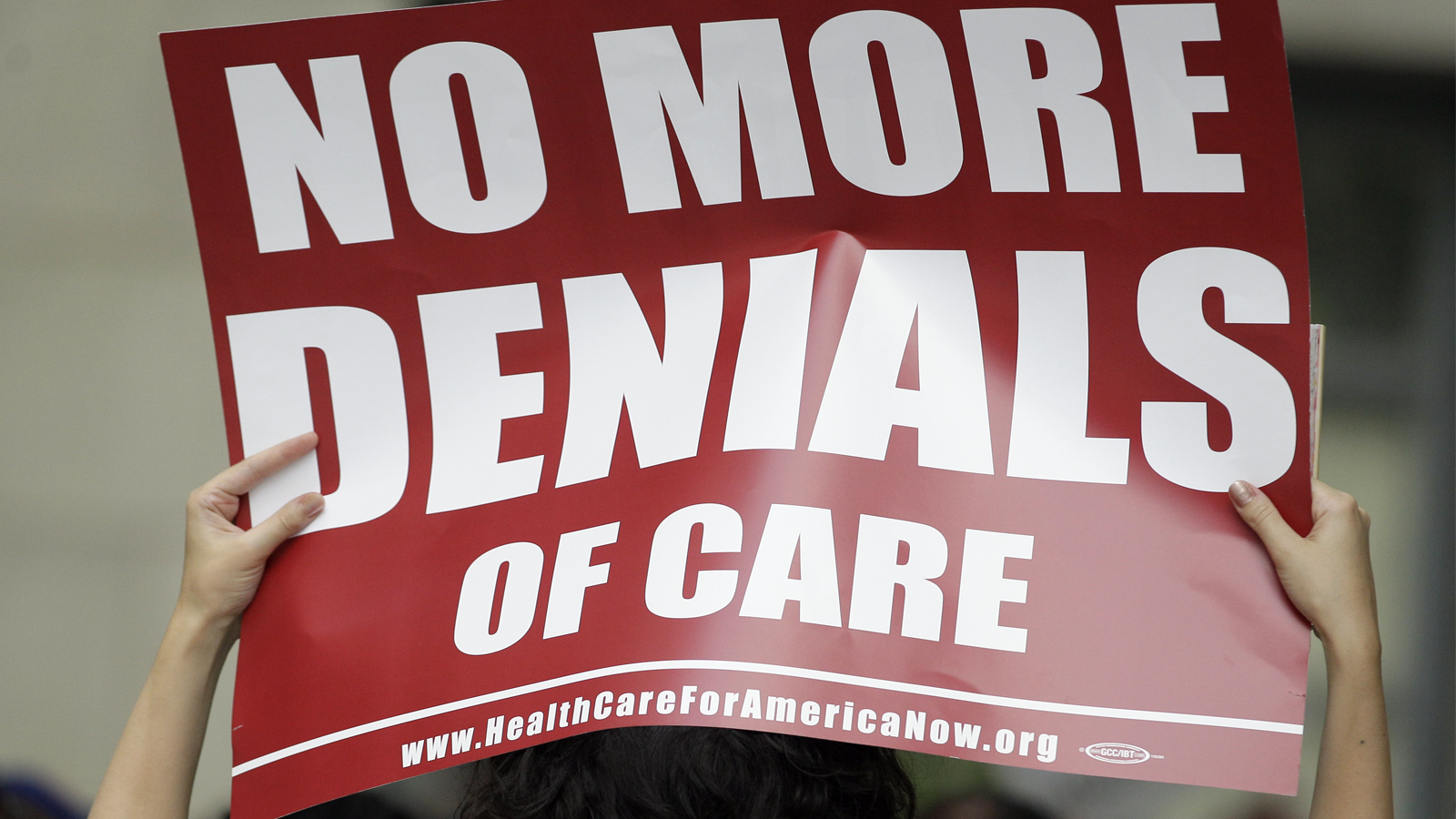
A pair of senators are asking CMS to require Medicare Advantage plans to cover stays in long-term care facilities at the same rate as traditional Medicare. 

Chris Murphy, a Connecticut Democrat, and Thom Tillis, a North Carolina Republican, wrote a letter to CMS Administrator Chiquita Brooks-LaSure Dec. 21, asking the agency to clarify MA plans cannot use different standards to approve long-term care than traditional Medicare. 

In their letter the senators wrote they have heard concerns from long-term care hospitals in states that “regularly receive denial letters from Medicare Advantage plans.” 

“Unfortunately, Medicare Advantage plan prior authorization practices are creating significant barriers to [long-term hospital] care for critically and chronically ill patients,” the senators wrote. 

In a final rule issued in April, CMS said Medicare Advantage plans cannot implement prior authorization criteria that are more stringent than traditional Medicare. In their letter, the senators asked the agency to clarify this statute also applies to long-term care hospitals. 

“We write to ask CMS to confirm this interpretation is correct and to request such information be publicly clarified to eliminate confusion for Medicare Advantage plans and ensure that [long-term care hospitals] are treated the same as any other post-acute care provider under the Medicare Advantage regulations,” the senators concluded. 

Read the full letter here. 

The Servant-Leader’s Night Before Christmas

‘Twas the night before Christmas, when all of the staff
Sat on Zoom hoping a leader would come, on their behalf.
Tired of the power model still in the air,
They hoped a servant-leader, soon would be there.

There had been no focus on long-term success,
And Short-term drivers too long caused distress.
While some struggled for a solution, others had fled,
We needed a change before going in the red.

Then amongst the board there arose such a clatter,
“Ego-based leaders” they said, “no longer matter.”
“We’ve ousted the selfish, greedy narcissists,
Replaced them with servant leaders, here to assist.”

Ego’s torn, pride drowned, the power leaders signed out,
Their golden parachutes and bonuses now in doubt.
Then, what to my wondering eyes should appear,
Not whom we expected, but one we all held dear.

One who was humble, his concerns were sincere,
We knew right then, our servant-leader was here.
His demeanor was calm, though his message strong:
“We’ve got much that’s broken, so the road will be long.”

“Now finance, accounting and back-office teams,
we’ll focus on the future, sustainability our theme.
As for the front-office, say to our customers,
we’re focused on success, for all our stake holders.”

He asked for concerns from the group all around,
listening for hours, until no more fears were found.
He sought out solutions, volunteers and experts,
“I’ve not all the answers, and count on your efforts”

As the night wore on, we grew less tired,
As the future looked brighter, we grew more inspired.
We were no longer feeding egos, pride and greed,
But building something far greater, indeed.

New leaders were appointed, for now at least,
Many volunteered to fill gaps by those now released.
But the message was clear for all to observe:
If you want to lead here, you had first to serve.

“Leaders won’t focus on fame, or their name in lights
they will have busy days, large loads, and long nights.
“They’ll focus instead on all our stake holders,
putting other names in lights and magazine covers.”

The message hit home clearly, as we all knew,
By serving others, we’d increase revenue.
Leaders would focus on staff, who’d impress our customers,
And with happy customers, we’d please investors.

Serving to lead, the paradox for success,
That Christmas Eve our servant-leader did impress.
Inspired we left, with challenges ahead,
A long road yes, but we’d be servant-led

My head spun with excitement, as I called my wife.
She asked “What’d that boss do now, give you more strife?”
I answered “We’ve a new boss and one we deserve.
We finally got it – to lead means to serve.”

Seattle Children’s sues Texas attorney general

Seattle Children’s Hospital has filed a lawsuit against the Texas Office of the Attorney General after the agency requested documents related to gender transition policies and such care provided to Texas children, NBC affiliate KXAN reported Dec. 20.  

In a lawsuit filed Dec. 7, Seattle Children’s argues that the Texas attorney general does not have the jurisdiction to demand patient records from the hospital. It also states that Washington’s Shield Law, signed by Gov. Jay Inslee on April 27, protects it from requests made by states that “restrict or criminalize reproductive and gender-affirming care,” according to the report. 

The Shield Law creates a cause of action for interference with protected healthcare services, which protects against lawsuits filed in other states related to reproductive or gender-affirming care that is lawful in Washington. Those harmed by such out-of-state lawsuits can also file a countersuit in Washington for damages and recover their costs and attorneys’ fees.

The Texas attorney general said it is investigating misrepresentations involving gender transitioning and reassignment treatments and procedures that allegedly violated the Texas Deceptive Trade Practices-Consumer Protection Act. It has demanded that Seattle Children’s provide the following documents:

  • All medications prescribed by the hospital to Texas children
  • The number of Texas children treated by the hospital
  • Diagnosis for every medication provided by the hospital to Texas children
  • Texas labs that performed tests for the hospital before prescribing medications
  • Protocol/guidance for treating Texas children diagnosed with gender identity disorder, gender dysphoria or endocrine disorders
  • Protocol/guidance on how to “wean” a Texas child off gender transitioning care

Seattle Children’s maintains that it does not have property, accounts, nor employees who provide gender-affirming care or administrative services for that care in Texas, according to affidavits obtained by KXAN. Hospital leaders also said that Seattle Children’s has not marketed or advertised this type of care in Texas either. 

Attorneys for the hospitals argue that the demands are an “improper attempt” to enforce Texas’ SB 14 bill — signed June 2 by Gov. Greg Abbott — and investigate healthcare services that did not occur in Texas.

“Seattle Children’s took legal action to protect private patient information related to gender-affirming care services at our organization sought by the Texas attorney general,” a spokesperson for the hospital told Becker’s. “Seattle Children’s complies with the law for all healthcare services provided. Due to active litigation, we cannot comment further at this time.”

The Texas attorney general’s office did not respond to Becker’s request for comment.