Senate Budget Won’t Let GOP Pursue Full Obamacare Repeal

https://www.bloomberg.com/news/articles/2017-09-29/senate-budget-allows-1-5-trillion-tax-cut-not-full-aca-repeal

Image result for Obamacare Repeal

Senate Republicans unveiled a fiscal 2018 budget resolution Friday that they intend to use to push through as much as $1.5 trillion of tax cuts in the coming months, but it won’t allow the GOP to pursue a full repeal of Obamacare.

The budget proposal would still allow Republicans to pursue a much narrower attack on the Affordable Care Act, including repealing the individual mandate to purchase coverage. The resolution also would let the GOP use the fast-track process to open up drilling in the Arctic National Wildlife Refuge.

The budget, authored by Senate Budget Chairman Mike Enzi, forecasts a balance in nine years through $5 trillion in largely unspecified spending cuts. Unlike the House budget proposed in July, Enzi’s blueprint doesn’t call for cuts to Medicaid or a partial privatization of Medicare.

“A pro-growth tax plan will move the U.S. economy forward and help to produce better jobs and bigger paychecks for every American,” Enzi, of Wyoming, said in an emailed statement.

The Senate draft is to be voted on by the Budget Committee next week, with floor votes planned later in October and a conference to resolve differences with the House after that. The House plans a floor vote on its budget plan next week.

Tax Cut

Once in place, the budget resolution would allow Republicans to bring up a tax-cut bill that would increase deficits by as much as $1.5 trillion, compared with a Congressional Budget Office baseline. Under the fast-track process, the GOP-controlled Senate could pass the proposal with no Democratic votes.

The budget sets a target for the Senate Finance to report back with its draft tax bill by Nov. 13.

“The Senate budget resolution drafted by Budget Committee Chairman Mike Enzi is a critical step to advance President Trump’s agenda to provide tax relief for the middle-class and unleash economic prosperity for all Americans,” said White House budget director Mick Mulvaney in a statement. “I urge the Senate to pass this resolution and come to a swift agreement with the House so President Trump can sign America-first tax relief into law this year.”

Senate Democratic leader Chuck Schumer of New York said the GOP plan would “blow a huge hole in the deficit and stack up debt, leading to cuts in programs that middle-class Americans rely on.”

Individual Tax Rate

President Donald Trump and Republican leaders announced a tax-cut plan Wednesday that would cut the top individual rate to 35 percent from the current 39.6 percent. It would let Congress decide whether to create a higher bracket for those at the top of the income scale. The rate on corporations would be set at 20 percent, down from the current 35 percent. Under Senate rules, any tax cuts that increase the deficit would have to expire in 10 years because the budget process can’t be used for long-term deficit increases.

The provision making it easier for Congress to allow oil and gas drilling in part of the Arctic National Wildlife Refuge was sought by Alaska Republican Dan Sullivan. Under the proposal, royalties from oil and gas production in the wildlife refuge would be raise revenue that could help offset at least $1 billion in tax cuts over a decade.

The proposal’s instructions to the Finance Committee could allow a partial repeal of Obamacare, although panel Chairman Orrin Hatch has said he will keep that separate from a tax overhaul. Republican leaders have said they won’t try again on the health-care law until fiscal 2019.

Balanced Budget

When Republicans attempted to use the 2017 budget process to repeal Obamacare earlier this year, they didn’t provide a 10-year plan for reducing the deficit.

The new Senate plan proposes a balanced budget within nine years, while leaving it to other committees to figure out how to achieve that. The proposal calls for $4.8 trillion in spending cuts over 10 years and $1.635 trillion in revenue losses, including the tax cuts. Balance by 2026 is achieved by assuming $1.2 trillion in economic growth, in part due to the tax cuts. Enzi claims to achieve a $197 billion surplus in 2027.

The Republican assumptions of robust economic benefits from the budget were called into question by a separate CBO analysis. CBO predicted that the budget would reduce economic growth in the first two years and slightly increase it in later years.

CBO estimated that annual real GDP growth in the first two years would average 1.3 percent, down from an average of 1.6 percent in CBO’s baseline. In later years, real GDP growth would be 2.0 percent, compared with 1.9 percent in the CBO baseline.

The budget, unlike the one proposed by Trump in May, would hold defense spending at the current budget cap instead of the president’s proposed $489 billion defense increase over 10 years. Non-defense discretionary appropriations — which fund domestic agencies like the Agriculture Department and National Institutes of Health — would be cut by $632 billion over 10 years compared with $1.6 trillion in Trump’s budget request.

While the Trump and House budget proposals contain a number of nonbinding policy suggestions to carry out their spending cuts, Senate Republicans — weary of policy infighting — are keeping things vague.

Medicare, Medicaid

The House budget seeks to make $203 billion in cuts in entitlements such as Medicare, Medicaid and food stamps, and it could be used to fast-track changes to the Dodd-Frank financial law. The Senate plan avoids those options.

The Senate proposal does allow adjustments to increase the defense spending caps. It also urges senators to revise the Children’s Health Insurance Program, improve management of wildfire-prevention funding, prevent private-pension bailouts and improve services to veterans.

The budget resolution doesn’t address Social Security, which will run a trillion-dollar-plus deficit in the coming 10 years. In the past, Republicans have sought to balance a “unified budget” that includes the program. This time, they are keeping it “off-budget.”

CBO says that without the Social Security accounting move, Enzi’s budget would never balance and would show a $424 billion deficit in 2027.

The nonpartisan Committee for a Responsible Federal Budget said in a statement it prefers the House budget. “We encourage the Senate to look to the House Budget Committee, which passed a budget calling for revenue-neutral tax reform and at least $200 billion of mandatory spending cuts on top of that,” it said.

Dynamic Scoring

The Senate plan renews authority for the CBO and Joint Committee on Taxation to use so-called dynamic scoring when evaluating bills — a move allowing lawmakers to assume that tax cuts will cause economic growth that would offset some of the revenue loss.

And it changes several rules to allow senators to rush a tax bill through, including abolishing the need for a CBO analysis at least 28 hours before a vote.

The Senate plan avoids other tricks, though. Enzi included provisions to keep appropriators from using phantom cuts known as “changes to mandatory programs” to offset discretionary spending increases.

The chairman also rejected pressure from some lawmakers to use a baseline number for tax revenue that would allow $450 billion in additional tax cuts. Instead, he stayed with the baseline used by the CBO.

Polling Spotlight: A silver lining for the GOP on Obamacare repeal

https://www.brookings.edu/blog/fixgov/2017/09/27/polling-spotlight-a-silver-lining-for-the-gop-on-obamacare-repeal/

Image result for silver lining

There is good reason to question the assumption that by failing once again to pass legislation repealing and replacing the Affordable Care Act, Republicans have shot themselves in the foot. Although the CBO (Congressional Budget Office) could not analyze in its usual detail the consequences of Graham-Cassidy, it was able to determine that the legislation would cut federal funding for Medicaid by more than $1 trillion over the next decade, throwing millions of low-income Americans off the rolls.

This outcome would have generated a huge political problem for Republicans. A Public Religion Research Institute poll released Monday found 69 percent of Americans opposed to cuts in Medicaid, with only 28 percent in favor. The opposition included 78 percent of Democrats, 69 percent of Independents—and 55 percent of Republicans. In a related finding, nearly 45 percent of Americans are worried that they or a member of their family will lose health coverage in the coming year.

No doubt, failing to act on Obamacare will anger a portion of the Republican base, adding fuel to the insurrection against the Republican establishment and depressing turnout in states and districts where Republican incumbents who support the party’s leadership are running for reelection. But in the long run, it would have been more politically damaging to deprive low-income Americans, including millions of Trump supporters in red states, of the Medicaid coverage they would otherwise have enjoyed.

As behavioral economists have shown, the fear of loss is more acute than the hope of gain. Health policy perfectly illustrates this proposition. Whoever moves to change the status quo must convince people that they will not lose what they already have. The larger the share of people who are satisfied with the status quo, the tougher the task. This is why President Obama put his personal credibility on the line to assure Americans that if they liked their current insurance policy, they could keep it under his proposed reform. When this turned out not to be entirely true, he and his party suffered.

But now, after almost eight years of public disapproval, Obamacare has become the new status quo, the baseline from which most people assess gains and losses. While opposition to Obamacare still exists writ larger, individual provisions—some of which have been under threat from Republican alternatives—are wildly popular among Americans. By threatening to take Medicaid away from millions of people, the Republicans poked a hornets’ nest. Whatever they did after this, they would have been hurt. But by running away, they at least minimized the number of stings. Their legislative failure was a blessing, very effectively disguised.

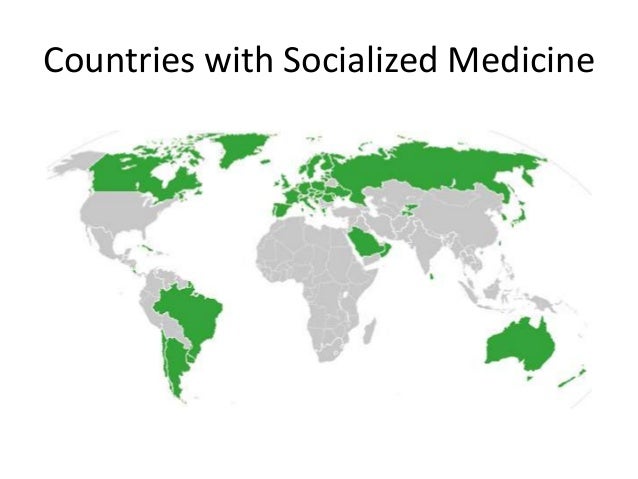
Socialized Medicine Has Won the Health Care Debate

https://newrepublic.com/article/145067/socialized-medicine-won-health-care-debate

Image result for socialized medicine


“It’s coming down to a choice between Federalism vs Socialism,” Senator Lindsey Graham proclaimed on Twitter earlier this week. “I chose Federalism of #GrahamCassidy.” His tweet echoed his words at a press conference days earlier, where he framed his Affordable Care Act repeal bill as the only way “to stop a march toward socialism.”

It’s unclear if the Republican senator realized that he was cribbing from socialist revolutionary Rosa Luxemburg. In a pamphlet composed a century ago while in prison, Luxemburg wrote: “Bourgeois society stands at the crossroads, either transition to socialism or regression into barbarism.” Graham, presumably, didn’t mean to liken his bill to barbarism. But increasingly, those are the terms in which Americans view the health care debate—as a choice between socialism and regression. Republicans have used “socialized medicine” as a bogeyman—and they’ve steadily lost ground on the issue. Despite Graham’s attempts to portray the idea of caring for sick people regardless of their income level as a “nightmare” scenario, just 7 percent of those polled thought Graham-Cassidy would help them.

The repeated rebukes of attempts to undo Obamacare have shown that the average American is no longer moved by the threat of the “S-word.” If we are on a slippery slope toward socialized medicine, it appears that Americans are just fine with that. For the left, there’s a lot to learn from the successful battles against going backward on health care—lessons about how Trump-era politics can be used to push “socialist” policies that move Democrats, and the American public, forward in unexpected ways.

Introduced after the Bernie Sanders Medicare for all bill made its debut with 16 co-sponsors in the Senate, the Graham-Cassidy bill looked all the worse by comparison. Both bills arrived at the end of a summer of activism, a summer that has treated us repeatedly to the sight of people in wheelchairs carted out of the Senate chanting, “No cuts to Medicaid! Save our liberty!” The health care movement has been led by the people directly affected—people with disabilities, in many cases, along with veterans of the AIDS movement. They understood the power of spectacle, initiating those dramatic clashes at the Capitol. They also know better than anyone the inequalities baked into the existing system. Their fighting skills were honed fighting for decades against those who say, implicitly or explicitly, that they don’t deserve care.

Of course, politicians have long been disconnected from the American public on the issue of health care. But the movement to defend Obamacare has drawn into stark relief the difference between what people want and what politicians want to offer. Republicans like Graham banked on the attachment Americans have to the class system we like to pretend doesn’t exist. They played on the idea, honed through decades of dog-whistles, that government programs are always giveaways for the undeserving poor and people of color. As one law professor and conservative columnist complained on Twitter, “Years from now, when your child is denied a liver transplant bc of transplant diversity goals, you’ll be sorry you allowed single-payer.”

In the U.S., we tend to either deny the existence of class or treat it like a set of characteristics divorced from power relations. A Make America Great Again baseball cap, a taste for Budweiser and NASCAR—those, rather than income level or accumulated wealth, are the signifiers of class that we understand. Meritocracy is supposed to be the thing we have instead of class; you can hear it in the endless bipartisan odes to the ability to work hard and achieve anything—including, apparently, a liver transplant if necessary.

Barack Obama and Ben Carson are both heroes of the meritocratic tale, though with a different partisan inflection. Even Sanders falls victim to the meritocratic narrative at times, with his refrain that “No one who works 40 hours a week should be living in poverty.” The implication that comes with Sanders’s qualifier is that there are some people who may, in fact, deserve to be living in poverty. If class is just about some personal preferences rather than structures that maintain inequality, then it’s fine to maintain a healthcare system that treats only those who can afford it. After all, if they just worked harder, they’d have earned that liver.

Graham’s single most tone-deaf argument to sell his bill was drawing an analogy to welfare reform. Welfare reform, of course, was sold to the country by Reagan, Gingrich, and Bill Clinton through fearmongering about undeserving black mothersand “young bucks.” Graham’s rhetoric about the size of the Medicaid budget leaned hard on this analogy, hoping that Americans resented Medicaid as much as they were taught to resent welfare.

Like welfare reform, Graham-Cassidy would have turned Medicaid and the subsidies in the ACA into block grants for the states to manage as they see fit. But the problem with health insurance is that it is designed to be used. The goal of welfare reform was to kick people off of welfare; the goal of healthcare reform was theoretically to get more people onto health insurance plans. Welfare reform increased poverty; Graham and Cassidy didn’t want to admit their bill would do the same. The analogy failed, though it told us a lot about what Republicans think of the people who use Medicaid.

The ham-handed Republican attempts to dismantle the health care system—the “socialism” warnings, the appeals to the selfishness of privileged white folks—have only reinforced the public’s support for government taking care of its citizens. It was telling how, in Monday night’s televised debate between Graham and Cassidy and Senators Sanders and Amy Klobuchar, Graham fell right into a trap, unintentionally proving his opponents’ point about what Americans want. When Sanders asked, “Do you know what the most popular health insurance program in America is? It’s not the private insurance industry,” Graham jumped in like an overeager schoolchild: “It’s Medicare,” he said.


Both Republicans and Democrats have badly misunderstood what makes Obamacare unpopular. What people don’t like are the inequities that still prevail in our health care system, not the fact that “government is too involved.” When Vox’s Sarah Kliff visited Whitley County, Kentucky, to talk to Trump voters who benefited from the ACA, she heard complaints from those buying private insurance with their subsidies that their deductibles were still too high for them to access care. Others, not surprisingly, were angry that the very poor got Medicaid, while they had to pay monthly premiums for care they rarely used. But that anger hasn’t turned them against the program. Medicaid expansion—the “socialized” part of the ACA—remains wildly popular, with 84 percent of those polled by Kaiser Family Foundation saying it’s important to keep the expansion.

The ACA’s means-testing sets up a hierarchy of plans that at times seem calculated to fuel resentment of those getting “free stuff.” It also requires hours of work—I write from personal experience, as a freelancer who has attempted to explain repeatedly that my income varies from month to month and year to year—to prove to the system that you are not getting away with something you haven’t qualified for.

The ways that people have tried to patch the gaps that remain in Obamacare, through charities and crowdfunding, have also highlighted its inequities. As Helaine Olen recently wrote in The Atlantic, charities, too, are often means-testing applicants, while crowdfunding introduces a new kind of means-testing—“means-testing for empathy,” as writer Patrick Blanchfield told me recently. Most GoFundMe or YouCaring campaigns for medical bills don’t go viral; only around 10 percent of them met their stated goals. For those who have a big social media audience, or whose particularly compelling story takes off, crowdfunding might work. But the glut of such campaigns leaves people weighing story against story, deciding who is going to get their donations. It’s health care by popularity contest.

By focusing on the not-good poll numbers for Obamacare, politicians and pundits have missed the whole point: The law didn’t go too far for Americans to get behind. It didn’t go far enough. And while single-payer opponents continue to evoke rationed carelong lines and wait times, and other problems that supposedly plague England or Canada, the public seems well aware that the reality for many Americans is far worse. By their very complaints, the pundits and politicians continually highlight the inequality in the system; the complainers are those who can afford the kind of carethat comes with personal attention, privacy, shorter waits, and avoidance of rubbing elbows with undesirables.

To move forward, then, the single-payer movement should double down on what we learned through this fight: that expanding Medicaid made it harder, not easier, to claim that the program is a “giveaway” to undeserving poor. The willingness of people with disabilities to claim and hold the spotlight—as the New Republic’s Sarah Jones has written—has helped to challenge our preconceptions about who relies on Medicaid ,and to make politicians confront those who will not be served by a market-based program. And the willingness, finally, of politicians to fight publicly for single-payer—rather than mournfully shake their heads and say it will never happen—expands the range of policies that even establishment media is willing to discuss.

Most important, we have learned that the old fearmongering tropes about socialism are no longer enough to whip Republican votes for a major plank of their own platform. If anything, the successful fight should help progressives shed their fears of boldly advocating for what they know is right and working to change public sentiment without endlessly obsessing over potential political pitfalls.

It seems that barbarism, to Graham and his ilk, is the idea that they would lose their right to segregated, high-end care to some undeserving, poor person of color. To the rest of us, however, barbarism is a system that decides who deserves to live or die by the color of their skin, the money in their bank account, the hours that they work, or their ability to work at all. This is now an American consensus. And if socialism is the medicine our system needs, the country is ready to embrace it—even by name.

Obamacare Repeal Bills, Like ‘Game of Thrones’ White Walkers, Are Very Difficult to Kill

https://www.americanprogress.org/issues/healthcare/news/2017/09/21/439380/obamacare-repeal-bills-like-game-thrones-white-walkers-difficult-kill/

Image result for game of thrones white walkers

Michele and Igor speak with Andy Slavitt, former acting administrator at the Centers for Medicare and Medicaid Services under former President Barack Obama—and Twitter hero—about the latest efforts in Congress to repeal the Affordable Care Act in the form of the Graham-Cassidy bill. He reminds listeners why health care is far more personal and significant than partisan politics and how to work toward universal coverage.


3 Ways the Senate Budget Reopens the Door for ACA Repeal

https://www.americanprogress.org/issues/economy/news/2017/09/29/440039/3-ways-senate-budget-reopens-door-aca-repeal/

After the latest failed attempt to repeal the Affordable Care Act (ACA) in the Senate, Sens. Lindsay Graham (R-SC) and Ron Johnson (R-WI) declared that they would only support a new budget resolution that enabled them to keep trying to force through their own health care bill. The Senate has not had to meet the 60-vote standard to pass ACA repeal because of the budget reconciliation process, which lets the Senate pass legislation with a simple majority vote. This process began with reconciliation instructions included in the fiscal year 2017 budget that Congress passed in January 2017, but those instructions expire on September 30.

While the new FY 2018 budget resolution from the Senate Budget Committee retreats from ACA repeal to some extent—after massive public opposition—it would still enable Congress to revive major elements of ACA repeal using reconciliation. Here are three ways the proposed Senate budget supports ACA repeal.

1. An overly broad reconciliation instruction to the Senate Finance Committee

The Senate Finance Committee has jurisdiction over both tax policy and several federal health care programs, including Medicare and Medicaid. If the Senate wanted to limit the scope of a reconciliation bill to tax policy, the budget resolution could give instructions to the Senate Finance Committee that only cover revenues. Instead, the budget instructs the Finance Committee to produce legislation that increases deficits by up to $1.5 trillion over 10 years.

Since deficit changes can be accomplished via changes to both spending and revenues, the Finance Committee could use this reconciliation instruction to repeal ACA-related taxes as well as much of the spending that helps people purchase health insurance under current law. Politico reports that “95 percent of health care policy” goes through the Senate Finance Committee, according to a Republican Congressional staffer discussing ACA repeal. As a result, the staffer said, “it’s not like we couldn’t slip it in anyway.”

Every dollar the Finance Committee cuts from health care could be used to pay for tax cuts for the rich that would be on top of the $1.5 trillion tax cut financed by deficits. This reconciliation instruction could let Congress pass a huge deficit-financed tax cut for the wealthy and corporations, combined with major elements of ACA repeal, in a single omnibus reconciliation bill. If the Finance Committee’s overall bill does not increase deficits by more than $1.5 trillion over 10 years, the Senate could pass it on a party-line vote under reconciliation.

Aside from the Finance Committee, the only other committee involved in ACA repeal in the Senate is the Health, Education, Labor, and Pensions (HELP) Committee. The Senate budget resolution does not give a reconciliation instruction to the HELP Committee, which signals a meaningful retreat from full ACA repeal. Nevertheless, the Finance Committee instruction would still enable the Senate to change major parts of the law, which could include nullifying the ACA mandate for individuals to purchase health insurance, repealing the ACA-related taxes that finance the coverage expansion, and making all of the Medicaid cuts in earlier ACA repeal legislation, such as repealing the Medicaid expansion and making further cuts by turning the program into a block grant.

2. A deficit-neutral reserve fund for ACA repeal

The Senate budget resolution further smooths the path for ACA repeal with a deficit-neutral reserve fund for “repealing or replacing” the ACA. This allows Senate Budget Committee Chairman Mike Enzi (R-WY) to adjust the aggregates that are included in the budget resolution, such as overall spending and revenue levels, to accommodate ACA repeal. This reserve fund helps the Senate majority avoid points of order that could otherwise create hurdles for passing a future health care bill. A similar reserve fund was also included in the FY 2017 budget resolution.

Budget resolutions often include many reserve funds that are mostly designed to signal rhetorical support for an issue. Not only does the reserve fund for health legislation smooth the way for ACA repeal, it also shows that supporters of the Senate budget continue to endorse ACA repeal even after the FY 2017 reconciliation instructions expire on September 30.

3. Deficit-financed tax cuts

Even if Congress does not go after the ACA using reconciliation instructions in the FY 2018 budget, the deficits from the tax cuts the Senate budget enables will be used by the ACA’s opponents to attack the law in the future. Whipping up hysteria about budget deficits is a common tactic to advocate cuts to programs such as Medicare and Medicaid, and it is already being used to justify ACA repeal. When asked a question on CNN from a person who had recovered from substance abuse addiction and who worried about loss of Medicaid coverage for treatment for others suffering from addiction, Sen. Graham responded, “Let’s talk about $20 trillion of debt.”

If lawmakers increase the debt with the very tax cuts that Treasury Secretary Steven Mnuchin says will be “done by the end of the year,” it will add further fuel to their drive to slash programs for low- and middle-income Americans using reconciliation instructions in their next budget resolution for FY 2019. This will not be a long delay—the FY 2019 budget would be passed by April 15, 2018, if Congress follows the schedule for the regular budget process.

Lawmakers can cut taxes, increase deficits, and use those higher deficits to justify a renewed push to repeal the ACA, all before the 2018 midterm elections.

Conclusion

The window is closing for Congress to pass ACA repeal using the FY 2017 reconciliation instructions, but the Senate Budget Committee is reopening it with the FY 2018 budget. The quest to repeal the ACA—thereby cutting taxes for the wealthy, taking health insurance from tens of millions of Americans, eliminating protections for preexisting conditions, and driving up out-of-pocket costs—will continue if Congress passes the Senate budget resolution.

Following the ACA Repeal-and-Replace Effort, Where Does the U.S. Stand on Insurance Coverage?

http://www.commonwealthfund.org/publications/issue-briefs/2017/sep/post-aca-repeal-and-replace-health-insurance-coverage

Image result for Following the ACA Repeal-and-Replace Effort, Where Does the U.S. Stand on Insurance Coverage?

Conclusion and Policy Implications

The findings of this study could inform both short- and long-term actions for policymakers seeking to improve the affordability of marketplace plans and reduce the number of uninsured people in the United States.

Short-Term

The most immediate concern for policymakers is ensuring that the 17 million to 18 million people with marketplace and individual market coverage are able to enroll this fall.

Congress could take the following three steps:

  1. The Trump administration has not made a long-term commitment to paying insurers for the cost-sharing reductions for low-income enrollees in the marketplaces, which insurers are required to offer under the ACA. Congress could resolve this by making a permanent appropriation for the payments. Without this commitment, insurers have already announced that they are increasing premiums to hedge against the risk of not receiving payments from the federal government. Since most enrollees receive tax credits, higher premiums also will increase the federal government’s costs.9
  2. While it appears that most counties will have at least one insurer offering plans in the marketplaces this year, Congress could consider a fallback health plan option to protect consumers if they do not have a plan to choose from, with subsidies available to help qualifying enrollees pay premiums.
  3. Reinsurance to help carriers cover unexpectedly high claims costs.10 During the three years in which it was functioning, the ACA’s transitional reinsurance program lowered premiums by as much as 14 percent.

The executive branch can also play an important role in two ways:

  1. Signaling to insurers participating in the marketplaces that it will enforce the individual mandate. Uncertainty over the administration’s commitment to the mandate, like the cost-sharing reductions, is leading to higher-than-expected premiums for next year.
  2. Affirming the commitment to ensuring that all eligible Americans are aware of their options and have the tools they need to enroll in the coverage that is right for them during the 2018 open enrollment period, which begins November 1. The survey findings indicate that large shares of uninsured Americans are unaware of the marketplaces and that enrollment assistance makes a difference in whether people sign up for insurance.

Long-Term

The following longer-term policy changes will likely lead to affordability improvement and reductions in the number of uninsured people.

  1. The 19 states that have not expanded Medicaid could decide to do so.
  2. Alleviate affordability issues for people with incomes above 250 percent of poverty by:
    1. Allowing people earning more than 400 percent of poverty to be eligible for tax credits. This would cover an estimated 1.2 million people at an annual total federal cost of $6 billion, according to a RAND analysis.11
    2. Increasing tax credits for people with incomes above 250 percent of poverty.
    3. Allowing premium contributions to be fully tax deductible for people buying insurance on their own; self-employed people have long been able to do this.
    4. Extending cost-sharing reductions for individuals with incomes above 250 percent of poverty, thus making care more affordable for insured individuals with moderate incomes.
  3. Consider immigration reform and expanding insurance options for undocumented immigrants.

In 2002, the Institute of Medicine concluded that insurance coverage is the most important determinant of access to health care.12 In the ongoing public debate over how to provide insurance to people, the conversation often drifts from this fundamental why of health insurance. At this pivotal moment, more than 30 million people now rely on the ACA’s reforms and expansions. Nearly 30 million more are uninsured — because of the reasons identified in this survey. It is critical that the health of these 60 million people, along with their ability to lead long and productive lives, be the central focus in our debate over how to improve the U.S. health insurance system, regardless of the approach ultimately chosen.


Congress at crossroads after another GOP health care failure

http://abcnews.go.com/Health/wireStory/congress-crossroads-gop-health-care-failure-50121420

Image result for crossroads

Congress is at a crossroads after Republicans’ stinging failure to repeal Barack Obama’s health care law. But what’s next — more partisan conflict or a pragmatic shift toward cooperation?

Unless Republicans and Democrats in Congress can work together, and bring along an often unpredictable President Donald Trump, political conflict over health care may spread. Bipartisan talks on legislation to stabilize shaky insurance markets are on again, but time is short and there’s no guarantee of success.

Congress also has yet to renew funding for programs that traditionally enjoy broad support, such as children’s health insurance and community health centers, despite approaching deadlines.

Feelings were raw Tuesday after Senate GOP leaders announced they would not take their latest “repeal and replace” bill to the floor for lack of support. Some lawmakers said it’s still possible to bridge the partisan gap on a limited set of priority issues.

Sen. Lamar Alexander, R-Tenn., said he would resume efforts to reach a bipartisan deal with Sen. Patty Murray, D-Wash., to stabilize markets for individual insurance policies that 18 million people rely on. More than half of those consumers are covered under the health law.

Alexander is chairman of the Senate Health, Education, Labor and Pensions Committee; Murray is the top Democrat on the committee. Alexander runs the risk of being accused by some fellow Republicans of trying to “bail out Obamacare.”

Murray is under pressure from fellow Democrats not to make concessions to Alexander, who is seeking changes that would make it easier for states to get waivers from some of the law’s requirements, potentially leading to plans with lower premiums.

“I’m still concerned about the next two years, and Congress has an opportunity to slow down premium increases in 2018, begin to lower them in 2019, and do our best to make sure there are no counties where people have zero options to buy health insurance,” Alexander said in a statement.

Sen. Ron Wyden, D-Ore., who has worked with Republicans on a range of health care issues, said cooperation is the only way to avoid creating needless problems for constituents.

“You recognize the opportunities that are in front of you,” said Wyden, the top Democrat on the Senate Finance Committee, which oversees health care funding. “My hope is we can come together.”

Wyden’s list includes renewing the Children’s Health Insurance Program for 9 million kids, whose funding expires this week, as well as short-term action to stabilize the Affordable Care Act’s insurance markets, by guaranteeing subsidies for copayments and deductibles. Experts say that could cut expected double-digit premium increases in many states by about half.

The missing ingredient seems to be leadership, say outside observers.

Neither Trump, nor House Speaker Paul Ryan nor Senate Majority Leader Mitch Connell has given clear approval for a bipartisan approach. Some governors have called for a health care reset that would involve both parties working together on a limited agenda, but their suggestion hasn’t been embraced in Washington.

“The question is whether you can you forge a coalition that doesn’t include either the hard right or the hard left,” said GOP health economist Gail Wilensky. “I have not been able to answer who would provide the leadership for such an effort. Neither the leadership in the House or the Senate has embraced the notion of trying to forge a bipartisan coalition, and it is very hard to move legislation without that.”

Rep. Richard Neal, D-Mass., said Trump at a meeting with lawmakers raised the possibility of seeking a deal with Democrats. There’s no hint what that might entail.

If anything, Democrats have been moving to the left after Sen. Bernie Sanders, I-Vt., relaunched his “Medicare for all” plan recently. Under Sanders’ plan, government would pay for medical services, replacing employers and insurers. Some liberal activists argue that support for “single-payer” should be a qualifying test for Democratic candidates in 2018 and beyond.

Other Democrats say single-payer would lead to political defeat, because of the massive tax increases required.

“It’s not going to happen,” said former Rep. Henry Waxman, D-Calif., one of the main authors of the Obama law. “You can talk about it, and plant a flag, and say that’s where you’d like to go, but in the meantime people need their insurance coverage.”

Wednesday is the deadline for insurers to sign contracts to offer policies for 2018 on the health law’s markets. Sign-up season starts Nov. 1. About half the 18 million Americans with individual policies get no subsidies under the health law. Without congressional action some are facing premiums that rival a mortgage payment.

Saturday is the deadline for Congress to act on children’s health insurance and community health center funding. Brief delays are not expected to cause disruptions, but a protracted holdup would.


What Republicans must answer about their next steps on health care

https://www.brookings.edu/blog/fixgov/2017/09/26/what-republicans-must-answer-about-their-next-steps-on-health-care/?utm_campaign=Governance%20Studies&utm_source=hs_email&utm_medium=email&utm_content=56772969

Image result for What Republicans must answer about their next steps on health care

Congressional Republicans’ last-ditch efforts at repealing the Affordable Care Act using the budget reconciliation process appear to have failed. The procedural protections that prevent a filibuster of the current bill expire on September 30, when the government’s new fiscal year begins. But is the option of party-line legislating on health care really off the table for good? It depends, in large part, on Republicans’ answers to the following three questions:

1. Can Republicans agree to a new budget resolution?

To use the fast-track reconciliation process in a given fiscal year, Congress must first adopt a budget resolution that contains reconciliation instructions, or language outlining which congressional committees will develop reconciliation legislation. When the 115th Congress began in January, the plan was to use the process twice: once for health care (with instructions initiated by the fiscal year 2017 budget resolution) and then a second time for tax legislation (with instructions contained in the fiscal year 2018 budget resolution).

With the FY2017 health care attempt now exhausted, Republicans could write FY2018 instructions that allow them to tackle both policy goals. On one hand, this would not be that difficult. Two committees that have substantial jurisdiction over health legislation—House Ways and Means and Senate Finance—also are responsible for taxes, so will already be included. Other health-related committees (House Energy and Commerce and Senate Health, Education, Labor and Pensions) could be given relatively small deficit reduction instructions to cover all necessary bases.

On the other hand, however, Republicans have struggled to come to agreement on what a budget resolution with reconciliation instructions for 2018 would look like—and that’s without introducing health care into the fight. One of the challenges in reaching agreement on a 2018 budget has been House conservatives’ insistence that they need more details on a tax bill before they support the budget resolution that will initiate said legislation. Senator Lindsey Graham (R-S.C.) threatened over the weekend that he “will not vote for a budget resolution that doesn’t allow the healthcare debate to continue.” While it would be relatively easy to meet that demand in principle, might other Republicans insist on more details or other promises related to health care in exchange for their support of the budget resolution? In the Senate especially, the GOP can spare relatively few votes and still adopt the resolution needed to kick off the reconciliation process.

2. Should health care and taxes be tackled separately or together?

Under current interpretations of the reconciliation procedures in the Senate, there are limits on the number of reconciliation bills Congress can consider each fiscal year. Reconciliation measures may make three kinds of budgetary changes: changes in revenue, changes in spending, and changes to the debt limit. If one bill contains more than one kind of change, that counts as the Senate’s attempt at both categories.

This year’s attempts at rolling back the Affordable Care Act have included both spending and revenue provisions. If Republicans want to pass health care changes that follow the same general outline from earlier this year—that is, eliminate the ACA’s taxes and pay for it with cuts on the spending side—they would have two choices. One, they could put all the spending AND revenue provisions from both their health care AND tax proposals together in one bill. Or, they could cleave the spending-side provisions off into a separate piece of legislation from the revenue items and attempt two different bills. The last two times Congress used the reconciliation process to make major changes in spending and taxes in the same year—1997 and 2005—it was by using this two separate measures approach.

The first option has a number of challenges (see #3 below), but so does the second. First, there are some aspects of the ACA that touch both revenue and spending, which could make it difficult to actually separate the two halves. Second, only about a quarter of currently serving House Republicans and roughly half of currently serving Senate Republicans were in Congress the last time their party attempted such a move, so many members lack experience with the process. A health care spending-only bill would still have to meet the various requirements of the reconciliation process, including those imposed by the Byrd Rule, and much of the Republicans’ intra-party disagreement so far has been over the spending-side substance of the measure. Republicans would also have to choose which bill to tackle first: the health care measure that has been front and center all year, or the tax legislation widely believed to just as important to key parts of the Republican base. If whatever they choose first takes up significant time, the calendar might prevent action on the second—especially in an election year.

3. If the answer is “together,” how do Republicans get to “yes”?

Suppose Republicans decide they are willing to try to tackle health care and taxes in the same, filibuster-proof legislation—and can adopt a budget resolution that allows them to do so. So far, writing a health care bill with majority support in the House and Senate has proved elusive. The path to tax legislation hasn’t been much smoother. And while there are some situations where logrolling across multiple hard issues actually generates a bill that’s easier to pass; a former Representative Barney Frank (D-Mass.) once said, “the key to understanding deal making Congress is to remember that the ankle bone is connected to the shoulder bone. Anything can be the basis of a deal.” But this year has presented little evidence to suggest that putting tax legislation and health care together in one measure would be one of those situations. Given how much time and energy Republicans have spent thus far with nothing to show for it on health care, many may be reluctant to tie the fate of a tax bill to an issue where victory has been so difficult.

The fate of the Affordable Care Act specifically does not, of course, rest just with Republicans’ immediate choices about reconciliation legislation in fiscal year 2018. The Department of Health and Human Services, for example, is taking actions that many see as undermining the implementation of the law—decisions the Department can make and pursue without any congressional action whatsoever. But on the legislative front, while party-line legislating to rollback Obamacare remains possible, the political path to success is likely to get harder, not easier, in the short term.

Senate won’t vote on ObamaCare repeal bill

Senate won’t vote on ObamaCare repeal bill

Image result for let's beat this dead horse


Senate Republicans have decided to not vote on their latest ObamaCare repeal legislation, signaling a collapse in their last-ditch effort to kill off President Obama’s signature law.

“It would appear not,” Sen. Pat Roberts (R-Kan.) told reporters when asked about the prospect of a vote this week.

Senate aides confirmed the decision.

The legislation sponsored by Sens. Bill Cassidy (R-La.) and Lindsey Graham (R-S.C.) would dismantle ObamaCare’s insurance subsidy program and Medicaid expansion and convert their funding into block grants to states.

Senate Republicans said Tuesday that they will continue to work on health-care reform, even though they will likely miss the Sept. 30 deadline for the special reconciliation bill that would allow them pass legislation with a simple majority vote.

Senate Majority Whip John Cornyn (R-Texas) said earlier in the day that the Graham-Cassidy proposal to turn ObamaCare into state block grants was “a good idea” but said that lawmakers need more time to “socialize” it through public advocacy.

Sen. Susan Collins (Maine), one of three Republicans to publicly say they opposed the measure, urged colleagues to resume bipartisan negotiations in the Senate Health Committee between Chairman Lamar Alexander (R-Tenn.) and Sen. Patty Murray (D-Wash.).

“I think the best route is for us to resume the hearings in the HELP [Health, Education, Labor and Pensions] Committee that we were doing before we were diverted by Graham-Cassidy,” Collins told reporters.

She said “it would be helpful if the vice president outlined his support for resuming the hearings in the HELP Committee and the negotiations that were making such good progress,” she said ahead of a Republican lunch with Vice President Mike Pence.

Sen. James Lankford (R-Okla.) said Senate Republicans should “continue to negotiate until we get it solved.”

But Lankford does not want the health-care debate combined with the upcoming tax-reform debate.

Instead, he said that colleagues should continue to negotiate behind the scenes on replacing ObamaCare while a projected $1.5 trillion tax package takes center stage.

“We need to keep the two separate but both have to keep going,” he said. “You can’t not do health-care issues when everybody around the country are facing double-digit [premium] increases and hospitals are merging,” he said.

“Keep working behind the scenes until we get it resolved and ready for the floor.”

There had been talk about including ObamaCare repeal in a new budget reconciliation measure that has been planned for tax reform. That would allow both ObamaCare repeal and tax reform to be brought up under special rues that would prevent a filibuster.

But that would also put tax reform at risk by pairing the issue with health care, and a number of key Republicans, including Cornyn and House Freedom Caucus Chairman Mark Meadows (R-N.C.), voiced opposition to that plan on Tuesday.

Graham, Cassidy don’t want a vote on their health care bill

https://www.axios.com/there-wont-be-a-vote-on-graham-cassidy-health-care-bill-2489852728.html

Image result for uphill battle


The Senate seems unlikely to vote on its latest bill to repeal parts of the Affordable Care Act, two senior GOP aides said. At the GOP caucus lunches this afternoon, the bill’s sponsors — Sens. Bill Cassidy and Lindsey Graham — asked not to hold a vote, after it became apparent the bill wouldn’t pass. Leadership wants them to announce that decision, aides said.

What happens next: Expect much more discussion about whether to include both health care and tax reform in the 2018 budget, which would let Republicans make another attempt at passing a bill on a party-line vote.