Transparency – All Cards Face-Up

Transparency – All Cards Face-Up

Related image


Creating and leading high-performing teams in any setting requires a high-trust environment.  A critical component in creating and keeping that trust is complete transparency across the team.  Having seen the empowering effect of this simple notion, I regularly reminded my direct-reports that the expectation was, “All cards are face-up on the table for the full team, in every decision and on every topic.”

I first learned the value of this kind of full transparency during my years working in the Mission Control Room while operating Space Shuttles and the International Space Station.  Everyone on the team reviewed every report, procedure, and mission-related communication of any kind between Mission Control and the astronauts.

That thorough transparency was never about micro-management.  It was in recognition that:

  • Every area of responsibility on the team affects the overall risk to the mission (e.g. if any single critical system fails, the entire spacecraft, and all the astronauts, are in jeopardy).
  • Any part of the team can and will make a mistake.
  • If not caught and corrected, combinations of seemingly small mistakes, or even some single mistakes, could lead to a failed mission or worse.
  • Conversely, there is so much talent in every part of the team, that as a team we can catch each other’s mistakes, offer suggestions from different perspectives, and come up with better overall solutions to problems.

Everyone on the team knew that it was team success that mattered, not simply individual performance.  “Showing our work” to our peers was not a threat to our individual authority.  It was an easy method to get more eyes on every problem and engage broader and deeper expertise to ensure nothing slipped past us.  Rather than slowing down decision-making, for decades these teams have routinely discussed and resolved exceptionally complex issues and have been able to take critical actions in minutes to protect a spacecraft hurtling through space.

The same risks often apply in management, where mistakes in one part of a company can have ripple effects that cause problems for other areas.  If poorly managed or left unsolved, those problems can cost the company money, erode product quality, bankrupt the company, and in some industries, injure employees and worse.

Just as we discovered in Mission Control, transparency is the simplest way to engage all members of the management team, and with them, the expertise and perspective of the organizations they led for the enterprise.  And just like in Mission Control, that greater engagement brings with it better informed, highly-reliable decision-making.

As an executive managing a $650 million/year enterprise, my direct-reports would often quote me before telling me and their peers some “ugly truth” or something they didn’t think I’d want to hear, “Just remember, you always say, all cards on the table…”

Every time they used that quote, it made me smile and think, “Now we’re talking!  Now we’re getting to it.”  More times than not, what followed was news about a project that was over budget or behind schedule, an unresolved engineering hurdle with an upcoming mission, or some mistake we had made in an earlier decision that was now putting us at risk.  Most importantly, it gave the full senior management team and the team’s they led an opportunity to help us find the best solution.  In the end, this is never about highlighting some part of the team’s mistakes, it is to ensure the team catches any weakness in our on-going performance.

Of course, transparency does not just protect the boss from the team’s mistakes.  It also allows the team to catch and correct the boss’s mistakes, as well as to offer innovations the boss may not see, which I was reminded of as the boss many times.

For example, during a tour in a development lab, I was shown a demonstration version for a new space station simulator based in a desktop personal computer.  Seeing a cost saving potential, I suggested several copies be made immediately available for testing by a number of our divisions.  Eyes widened around the room, including by several senior managers, but the team saluted and went to work.

After months of mixed reviews, the division responsible for managing and developing our training systems reported, “Look, Paul, this isn’t going to work.  We never thought it would, but you told our people to do it, so we did.  We can keep throwing money and manpower at it, but the answer won’t change for a long time.  However, we can accomplish what you’re after through some other work we’ve been doing, and we’re ready to show that to you and the management team any time.”

What followed became a project that moved our space station training software from $2 million sets of equipment that filled a room, to a single rack of servers costing $50,000 and contributed to total fixed cost reductions of more than 50 percent.

Lesson learned:  Share those great ideas with the full management team before giving direction.  Rely on the same transparency to spark discussions that can lead to better ideas and innovations that deliver.

This kind of transparency can become a habit and part of your culture.  It isn’t just for the bad news, but also for routine requests for better ideas, assurance that we’re not missing something, sharing resources to the areas that can make the next big gain… it makes us stronger and more successful as an enterprise.

Yes, the truth will set you free, and transparency is the way to find it and set the entire team free.
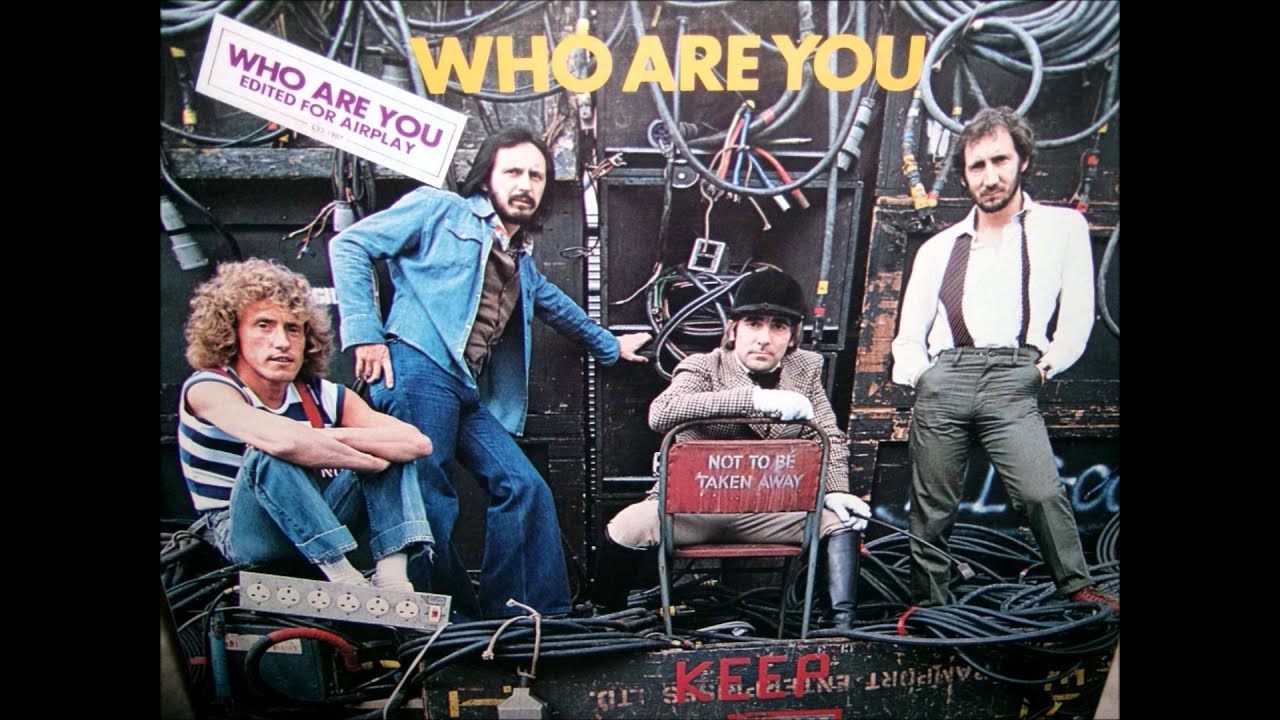
Who are you?

Who are you?

Image result for the who who are you

Abstract: This is an article about integrity and its importance as a critical success factor in business.

A very good friend of mine suggested I write an article entitled, “Who are you?”  After thinking about this concept, I decided that this is a very good question.  Who are you?  What are you made of?  What are your values, morals, mores, ethics and guiding principles?  What are the tenants of your faith?  To what power do you ultimately ascribe?

My living has shown me that a lot of people wax eloquently about their high values and standards.  I have heard my fill of this around churches.  My experience has taught me that in the course of life, you will be tested.  Sometimes the test is over a big issue with substantial consequences and a high level of visibility.  At other times, the test is trivial.  The only witnesses will be you and your God.  Will that test show that you are who you say you are when it really matters?  Will your proclamations be affirmed by your actions?

I was coming back to my mountain house one day.  As we approached, we saw the man of the family that was renting the house next door and two of his small children coming out of our driveway with all of our firewood they could carry.  When I confronted the man with his children as witnesses, he offered to pay me for the wood.  I told him that if he needed the wood bad enough to feel compelled to enlist his small children in the act of theft by taking, I did not want his money.  He offered to return the wood.  I asked him if he was inclined to return the wood, why would he steal it in the first place?  I told him that if he had asked me in advance, I would have given him enough wood to build a campfire for his family.  I told him to enjoy the stolen wood.  I did not want it back.  I think the man was so ashamed that he did not know what to say.  I hope his encounter with me burned an image onto his mind and the minds of his children they will never forget.  I wonder how the children’s opinion of their father might have been permanently altered by their encounter with me?  The children were not old enough to think about who they are but I wonder if what their dad was doing with them was consistent with other values he was supposed to be teaching them?  I wonder if the man will remember his encounter with me when his children become teenagers and get involved in considerably more serious thefts?  I wonder if he will connect the dots back to the day he was teaching his children that theft was acceptable?  Who was this man?  Is who he really is consistent with who he tells others he is?  Who will his children grow up to be?

I have seen my fill of  bizarre behavior in healthcare organizations.  People that will say or do anything to advance their cause in the organization.  Business partners that are actively or complicity involved in less than honorable dealings.  I worked with a man who had a very simple test of integrity:   Does the other person do what he says he will do or not?  If you cannot trust someone to do what they say they will do, what can they be trusted about?  I have developed a serious problem dealing with people I do not trust.  I know that this is more the rule than the exception in politics where anything goes but I choose to avoid dealing with people who have demonstrated they cannot be trusted.

When my children were growing up, I taught them that there is a major problem with integrity.  You can spend an entire lifetime developing integrity, respect and rapport among your acquaintances that can be permanently destroyed in a matter of seconds when a breach of honor or integrity occurs.  After the breach, there is no cure.  People aware of the indiscretion will never trust you again because they have no way of knowing if what you are saying this time is true or not.  Along the way, I came across the following poem.  It had a profound effect on me and my children and probably has something to do with them going up to be the adults they are.  Their formative years were very highly influenced by their grandparents.  Do not underestimate you ability to have an effect on others, especially children.  Remember the Randy Travis song ‘He Walked On Water?’  I cannot listen to this song without tearing up because Randy is singing about my mother’s father, a man whose shoes I could never hope to fill.

Your Name

You got it from your father,

it was all he had to give.

So it’s your’s to use and cherish, for as long as you may live.

If you lose the watch he gave you, it can always be replaced.

But a black mark on you name son, can never be erased.

It was clean the day you took it, and a worthy name to bear.  When he got it from his father, there was no dishonor there.

So make sure you guard it wisely, after all is said and done. You’ll be glad the name is spotless, when you give it to your son.

So, who are you?  Are you who you say you are?  Who do others say you are?  Do you have to tell people who you are or is it evident in your living?  What will you do when you are tested?  I can say from personal experience that I have been tested and I failed a test when I was younger in an effort to protect my self-interest by going along with something that I knew was wrong.  While I have been forgiven, I have never been able to forgive myself.  I have been tested since then and I will not make the same mistake twice if for no other reason than the pain of bearing the guilt and remorse is not worth it.  What would you do if the stakes of the test was your job?  What if you did the wrong thing and still got the outcome you were trying to avoid?  Would you judge the risk as having been worth taking?  My experience has taught me that it is not worth it to take such a chance in the first place regardless of the risk.

An acquaintance of mine has been charged with felonies by the government related to alleged falsification of reporting related to a corporate integrity agreement among other things.  Did he know the reporting  was incorrect?  The trial will make that determination.  If the erroneous reporting was intentional, the result will be devastating.   The government has asked the court for his assets to be forfeited.  He and his family will be severely impacted regardless of the outcome of this dispute.  Sadly, the government’s case has carried so often when healthcare compliance is involved that political candidates like John Osoff run on the claim that they will save the government by curtailing abuse of the Medicare program.  The Attorney General recently made news by announcing that he was bringing charges against over four hundred people at the same time alleging they defrauded the Medicare program.  Anyone involved in making any kind of disclosure to the government that does not take the potential consequences of inaccurate disclosures whether intentional or not seriously is a certifiable idiot in my opinion.  That someone would spend a single second contemplating whether or not to do the right thing when compliance is involved says everything about who they really are.

Willie Nelson said in a song that, “Regret is just a memory written on my brow and there’s nothing I can do about it now.”  While you cannot change anything that has happened before, you can change a lot going forward.  If you owe anyone an apology for anything you regret, strongly consider doing it.

I would like to thank my dear friend Linda Jackson who is one of the strongest and most incredible people I have ever met for inspiring this article.

Contact me to discuss any questions or observations you might have about these articles, leadership, transitions or interim  services.  I might have an idea or two that might be valuable to you.  An observation from my experience is that we need better leadership at every level in organizations.  Some of my feedback is coming from people who are demonstrating interest in advancing their careers and I am writing content to address those inquiries.
The easiest way to keep abreast of this blog is to become a follower.  You will be notified of all updates as they occur.  To become a follower, just click the “Following” bubble that usually appears near the bottom each web page.
I encourage you to use the comment section at the bottom of each article to provide feedback and stimulate discussion.  I welcome input and feedback that will help me to improve the quality and relevance of this work.
This is original work.  This material is copyrighted by me with reproduction prohibited without attribution.  I note and  provide links to supporting documentation for non-original material.  If you choose to link any of my articles, I’d appreciate notification.
If you would like to discuss any of this content, provide private feedback or ask questions, I may be reached at ras2@me.com.

Culture Is Not the Culprit

https://hbr.org/2016/04/culture-is-not-the-culprit

hen organizations get into big trouble, fixing the culture is usually the prescription. That’s what most everyone said General Motors needed to do after its recall crisis in 2014—and ever since, CEO Mary Barra has been focusing on creating “the right environment” to promote accountability and head off future disasters. Pundits far and wide called for the same remedy when it came to light that the U.S. Department of Veterans Affairs, deemed a corrosive bureaucracy by federal investigators, kept veterans waiting months for critical health care. Cultural reform has likewise been proposed as the solution to excessive use of force by police departments, unethical behavior in banks, and just about any other major organizational problem you can think of. All eyes are on culture as the cause and the cure.

But the corporate leaders we have interviewed—current and former CEOs who have successfully led major transformations—say that culture isn’t something you “fix.” Rather, in their experience, cultural change is what you get after you’ve put new processes or structures in place to tackle tough business challenges like reworking an outdated strategy or business model. The culture evolves as you do that important work.

Though this runs counter to the going wisdom about how to turn things around at GM, the VA, and elsewhere, it makes intuitive sense to look at culture as an outcome—not a cause or a fix. Organizations are complex systems with many ripple effects. Reworking fundamental practices will inevitably lead to some new values and behaviors. Employees may start seeing their contributions to society in a whole new light. This is what happened at Ecolab when CEO Doug Baker pushed decisions down to the front lines to strengthen customer relationships. Or people might become less adversarial toward senior executives—as Northwest employees did after Delta CEO Richard Anderson acquired the airline and got workers on board by meeting their day-to-day needs.

The leaders we spoke with took different approaches for different ends. For example, Alan Mulally worked to break down barriers between units at Ford, whereas Dan Vasella did a fair amount of decentralizing to unleash creative energy at Novartis. But in every case, when the leaders used tools such as decision rights, performance measurement, and reward systems to address their particular business challenges, organizational culture evolved in interesting ways as a result, reinforcing the new direction.

Revisiting their stories provides a richer understanding of corporate transformation and culture’s role in it, so we share highlights from our conversations here. Most of these stories involve some aspect of merger integration, one of the most difficult transitions for companies to manage. And they all show, in a range of settings, that culture isn’t a final destination. It morphs right along with the company’s competitive environment and objectives. It’s really more of a temporary landing place—where the organization should be at that moment, if the right management levers have been pulled.

The Error at the Heart of Corporate Leadership

https://hbr.org/2017/05/managing-for-the-long-term?utm_campaign=hbr&utm_source=facebook&utm_medium=social

Image result for The Error at the Heart of Corporate Leadership

In the fall of 2014, the hedge fund activist and Allergan shareholder Bill Ackman became increasingly frustrated with Allergan’s board of directors. In a letter to the board, he took the directors to task for their failure to do (in his words) “what you are paid $400,000 per year to do on behalf of the Company’s owners.” The board’s alleged failure: refusing to negotiate with Valeant Pharmaceuticals about its unsolicited bid to take over Allergan— a bid that Ackman himself had helped engineer in a novel alliance between a hedge fund and a would-be acquirer. In presentations promoting the deal, Ackman praised Valeant for its shareholder-friendly capital allocation, its shareholder-aligned executive compensation, and its avoidance of risky early-stage research. Using the same approach at Allergan, he told analysts, would create significant value for its shareholders. He cited Valeant’s plan to cut Allergan’s research budget by 90% as “really the opportunity.” Valeant CEO Mike Pearson assured analysts that “all we care about is shareholder value.”

These events illustrate a way of thinking about the governance and management of companies that is now pervasive in the financial community and much of the business world. It centers on the idea that management’s objective is, or should be, maximizing value for shareholders, but it addresses a wide range of topics—from performance measurement and executive compensation to shareholder rights, the role of directors, and corporate responsibility. This thought system has been embraced not only by hedge fund activists like Ackman but also by institutional investors more generally, along with many boards, managers, lawyers, academics, and even some regulators and lawmakers. Indeed, its precepts have come to be widely regarded as a model for “good governance” and for the brand of investor activism illustrated by the Allergan story.

Yet the idea that corporate managers should make maximizing shareholder value their goal—and that boards should ensure that they do—is relatively recent. It is rooted in what’s known as agency theory, which was put forth by academic economists in the 1970s. At the theory’s core is the assertion that shareholders own the corporation and, by virtue of their status as owners, have ultimate authority over its business and may legitimately demand that its activities be conducted in accordance with their wishes.

Attributing ownership of the corporation to shareholders sounds natural enough, but a closer look reveals that it is legally confused and, perhaps more important, involves a challenging problem of accountability. Keep in mind that shareholders have no legal duty to protect or serve the companies whose shares they own and are shielded by the doctrine of limited liability from legal responsibility for those companies’ debts and misdeeds. Moreover, they may generally buy and sell shares without restriction and are required to disclose their identities only in certain circumstances. In addition, they tend to be physically and psychologically distant from the activities of the companies they invest in. That is to say, public company shareholders have few incentives to consider, and are not generally viewed as responsible for, the effects of the actions they favor on the corporation, other parties, or society more broadly. Agency theory has yet to grapple with the implications of the accountability vacuum that results from accepting its central—and in our view, faulty—premise that shareholders own the corporation.

The effects of this omission are troubling. We are concerned that the agency-based model of governance and management is being practiced in ways that are weakening companies and—if applied even more widely, as experts predict—could be damaging to the broader economy. In particular we are concerned about the effects on corporate strategy and resource allocation. Over the past few decades the agency model has provided the rationale for a variety of changes in governance and management practices that, taken together, have increased the power and influence of certain types of shareholders over other types and further elevated the claims of shareholders over those of other important constituencies—without establishing any corresponding responsibility or accountability on the part of shareholders who exercise that power. As a result, managers are under increasing pressure to deliver ever faster and more predictable returns and to curtail riskier investments aimed at meeting future needs and finding creative solutions to the problems facing people around the world.

Don’t misunderstand: We are capitalists to the core. We believe that widespread participation in the economy through the ownership of stock in publicly traded companies is important to the social fabric, and that strong protections for shareholders are essential. But the health of the economic system depends on getting the role of shareholders right. The agency model’s extreme version of shareholder centricity is flawed in its assumptions, confused as a matter of law, and damaging in practice. A better model would recognize the critical role of shareholders but also take seriously the idea that corporations are independent entities serving multiple purposes and endowed by law with the potential to endure over time. And it would acknowledge accepted legal principles holding that directors and managers have duties to the corporation as well as to shareholders. In other words, a better model would be more company centered.

Before considering an alternative, let’s take a closer look at the agency-based model.


IN NEARLY 25% OF BUSINESSES LEADERS BELIEVE 30%-50% OF EMPLOYEES AVOID RESPONSIBILITY*

In nearly 25% of Businesses Leaders Believe 30%-50% of Employees Avoid Responsibility*

if-you-want-people-to-take-responsibility-hold-yourself-accountable

3 surprising steps toward accountable leadership*:

#1. See yourself through your own eyes.

Growth begins when you see yourself, not until. Leaders who lack self awareness believe others need to change, they don’t. A sure sign that you’re out of touch is expecting others to take responsibility while letting yourself off the hook.

Lack of self awareness results in blaming behaviors. Blame creates frustration,  because you wrongly believe others are the solution to issues you should address.

#2. See yourself through the eyes of others.

Leaders develop when they appreciate the impact of their behaviors on others.

#3. Meet the standards of others.

  • Own mistakes and commit to make them right.
  • Provide credible performance in the eyes of others.

Sean said, “We tend to meet standards that we think are important. What we have to remember is that we are credible in other people’s eyes. … Seek out, understand, and try to meet the standards of others.”

Chris Van Gorder on 3 major themes of front-line leadership

http://blog.americashealthcareleaders.com/chris-van-gorder-on-3-major-themes-of-front-line-leadership/

frontlineleader_600x375

In today’s video segment, Chris Van Gorder talks about the 3 major themes of what he calls front-line leadership—the focus of his book, The Front-Line Leader: Building a High-Performance Organization from the Ground Up.

Chris Van Gorder, president and CEO of Scripps health discusses the following three themes featured in his book.

  • Get out of the office – “I’ve got to find a way to connect to that if I am going to make good leadership decisions down the road.”
  • Take care of your people – Be mindful of your people and provide support when needed.
  • Hold people accountable – “I believe in fierce accountability.”

AHL founder and CEO Dan Nielsen ends by encouraging viewers to get the book and study it! Use the resources that have been provided to become a better leader.

To view the complete segment, click below:

4 Specific Areas of Focus and Responsibility

http://blog.americashealthcareleaders.com/mark-solazzo-4-specific-areas-of-focus-and-responsibility/?utm_source=AHL+Blog+Subscribers&utm_campaign=de789c1dad-AHL_ESSENTIAL_RSS_EMAIL_CAMPAIGN&utm_medium=email&utm_term=0_aab606a0e1-de789c1dad-117304501

Every organization has vision, which requires focus in order to achieve. The focused pursuit of vision is what truly sets apart a successful organization from another. In today’s featured segment, Mark Solazzo, EVP & COO of Northwell Health, discusses his focused pursuit of Northwell’s vision and mission.

According to the bio referenced in this clip, Mark Solazzo is “responsible for integrating the strategic plan of the organization through its operations and maintaining an organizational culture that recognizes the importance of strategic change leadership, excellence in execution, accountability and the ongoing commitment to long-term growth and innovation.”

In reference to this, Dan Nielsen asks Solazzo:

“What are the actions that you take or the decisions that you make to make sure that those are embedded in your organization on a daily basis?”

Solazzo answers by discussing how strategic change leadership and long-term growth and innovation go hand in hand. “It starts with the team you select.”  Solazzo emphasizes the importance of picking a diverse team and then trusting them to get the job done.

In regard to “excellence in execution and accountability,” Solazzo states: “We have a very well-developed system of metrics and accountability reporting.” This is system wide and monitored closely.

To view the full segment and hear the rest of Solazzo’s response, click below.

Stop Enabling Bad Management

https://www.eremedia.com/tlnt/stop-enabling-bad-management/?utm_source=hs_email&utm_medium=email&utm_content=41647590&_hsenc=p2ANqtz–0lLWV7ZDcPd0W8UBSYSzx08STfXoHCOd3o-DbpmB9yUtPYzgmYmQkhQINZmLRflrYWgCuCeG98zS_LWaWcFgE18AkEA&_hsmi=41647590

pulp fiction wolfe

One of my favorite movies is the classic Quentin Tarantino film, Pulp Fiction.

There’s a character in the movie who they refer to as “The Wolfe.” He’s a fixer. When someone screws up or makes a serious mess, they call The Wolfe. He shows up to save the day by making the problem
disappear.

I think this is how management often thinks of HR — as their own personal version of “The Wolfe.” When an uncomfortable conversation is needed or they’ve made a mess with an employee, they call HR. And, since we love to feel needed in HR, we swoop in and handle things. The manager’s problem disappears. Everybody wins, right?

Wrong.

Here’s the problem: “The Wolfe” in Pulp Fiction is not a good guy. In fact, he’s a very bad guy who helps other bad guys cover up the bad things they’ve done. He’s an enabler of really bad behavior.

When HR swoops in like The Wolfe to take over for a manager in uncomfortable conversations, we enable bad behavior. When we help them cover up that they aren’t managing their employees’ performance diligently, we enable bad behavior.

When managers don’t feel the consequences of their behavior, there’s no fuel for change. Bad managers continue practicing bad management, HR continues trying to fix it, and employees continue paying the price.

SOLUTION SATURDAY: DEALING WITH MR. IRRATIONAL

Solution Saturday: Dealing with Mr. Irrational

second chances after repeated offenses

Stop:

Stop doing things that haven’t worked. More of the same will yield more disappointment and frustration.

His vision:

I’m not sure “Irrational’s” behavior is irrational to him. He’s behaving in ways that make sense to him.

The fact that his first year went well indicates he knows how to perform within your culture.

Identify wants:

Clarify what your team member wants for himself, colleagues, and your organization. You may believe you know what he wants, but it’s worth a conversation or two.

How do behaviors reflect and align with wants?