
How do you ‘hire’ (and manage) an interim executive?

How do you ‘hire’ (and manage) an interim executive?

Image result for interim cfo

Abstract:  This article is about the optimum relationship between an interim executive and their client.  It has been a while since I wrote on Interim Executive Services.  In this article,  I  return to the primary topic of this blog.

What is the difference between interviewing and hiring an interim vs. an employee?

First of all, it is not in your best interest to ‘hire’ an interim.

If the interim is furnished though a firm, they are more than likely paid on a W-2 and you are not technically ‘hiring’ the interim, you are engaging or entering a contact with their firm.  The interim is ’employed’ by the firm and not you.  Employed is loosely used in this case because while the interim may be on a W-2 program with their firm, the only time they are paid is if they’re producing billable revenue. Sadly for the interim, they get to bear all of the disadvantages of being paid by W-2 while consulting without having the ability to reap any of the benefits of being an independent expert.

Now assume that you are smart enough and lucky enough to source the perfect independent or free lance interim directly, what then?

Congratulations, you are probably well on your way to having a far superior resource that will  be highly motivated to address your situation without the interference of a third party that in my experience, adds little if any value beyond sourcing the interim.  If you have experience with this, you know what I’m talking about.  When was the last time you saw anyone from the interim firm you engaged other your interim?

With a free agent, you will be contracting with the Interim or a company (LLC or S-4 Corporation) they own.  Legally, you are dealing with a sole proprietor in most cases regardless of whether their corporate entity is involved or not.  For this reason and depending upon the circumstances, you might want to get their personal guarantee of their firm’s performance.

I have a S-4 Corporation that I can use for contracting.  The problem for me is that if I bill though my corporation, I am obliged to pay the federal government 9% of my earnings in the form of federal unemployment tax or FUTA that I can never claim because as an independent consultant, I cannot be ‘laid off’ so I am ineligible to receive FUTA.  Don’t get me started.  I have been fortunate that my clients have agreed to engage me directly and individually.  A corporate structure when dealing with a sole provider affords disproportionate list to the provider.

What about insurance?  Increasingly, client firms are requesting or requiring professional liability insurance.  Setting aside the fact that I have never seen a claim against a professional liability policy for interim services, I have been successful in convincing my clients to name me under their Directors and Officer’s Insurance (D&O) coverage if I as an interim am going to be authorized to execute documents and take actions on behalf of my client.  To me, this makes more sense for the client because if I am required to obtain insurance that will most likely be less robust than the organization’s D&O coverage, that cost is going to be passed along and in effect, the client will be paying twice for the same coverage.  Not only that, in the event of a problem, you are more than likely going to be drawn into a subrogation fight.  If I have no authority and I am not going to be executing documents, i.e., I am engaged to do project work, then liability insurance should be a non-issue.

In another article, I talk about how to find interim executives.

If you have found the ‘perfect’ interim for your transition or challenge, good for you.  If the interim is experienced and sophisticated, you should not have any reservation about engaging them directly and putting them to work in your organization immediately.

Once the interim is aboard, do not lose sight and do not allow your organization to lose site of the purpose of the interim engagement which is usually to help an organization work through a transition usually while beginning the process of addressing major challenges or problems.  The scope of the work to be performed should be mutually understood and memorialized in the contract with the Interim Executive.  Subsequent departures from the agreed scope represent sub-optimization of the engagement at best and a useless waste of resources at worst.

An interim is not an employee and the more you treat them like an employee, the less effective they will be and the higher risk you will bear with respect to their status as an independent contractor.

A number of requirements must be met before your interim reaches reach the threshold of independent contractor status.  To name a few:

  • You cannot set the interim’s hours
  • You cannot dictate when and how the interim does their work
  • You cannot require the interim to use your facilities and equipment to do their job
  • You cannot subject the interim to your personnel policies and procedures like travel policies, etc.
  • You should not require the interim to participate in employee related activities like employee health, computer system training, etc., unless their specific responsibilities require patient contact or hands-on operation of hospital systems which should be very rarely.
  • You should never require interims to record time on your organization’s timekeeping system

The more you require your interims to engage in the actives of employees; things like requiring them to attend out of scope meetings, the higher your risk that the IRS may subsequently find that they were not independent contractors and subject your organization to payroll tax liability and overtime claims that you did not anticipate.

Time and again, I have been required by hospital personnel departments to go through all of the clearances and sometimes orientation of employees.  Then I get invited to every meeting in the organization.  All of this increases the client’s risk while wasting my time.  I have asked the person that executed my contract to screen and approve meeting requests to insure that I am able to stay on task and that the rest of the organization understands my roles and its limitations from their perspective.

I tell clients that regardless of the number of hours they pay for, they receive 100% of my mental capacity virtually 100% of the time.  I find it difficult if not impossible to mentally divorce myself from the needs and issues of my client whether I am ‘on the clock’ or not.  Because of this, flexibility of hours should not be an issue because when I am engaged, I am always working for the benefit of my client.  That said, I assure my client that regardless of the ‘normal’ schedule we agree to, I endeavor to make myself available on-site as needed.  This means spending weekends in the client’s city and/or traveling on behalf of the client for matters not related to Interim services commuting.

Take another look at my article about how to find an interim.  The effort you expend to locate a ‘free agent’ Interim Executive is worth the trouble.  My prediction is that you will thank yourself for taking charge of what should be expected to be one of the most important decisions you may ever make because of the potential of a well conceived Interim Engagement to be favorably transformative in your organization.

If you are a Board member or a CEO and you do not know where to start or how to go about finding an Independent Interim, get in touch with me and I will give you some pointers.

Contact me to discuss any questions or observations you might have about these articles, leadership, transitions or interim  services.  I might have an idea or two that might be valuable to you.  An observation from my experience is that we need better leadership at every level in organizations.  Some of my feedback is coming from people that are demonstrating interest in advancing their careers and I am writing content to address those inquiries.
The easiest way to keep abreast of this blog is to become a follower.  You will be notified of all updates as they occur.  To become a follower, just click the “Following” bubble that usually appears near the bottom each web page.
I encourage you to use the comment section at the bottom of each article to provide feedback and stimulate discussion.  I welcome input and feedback that will help me to improve the quality and relevance of this work.
This is original work.  This material is copyrighted by me with reproduction prohibited without attribution.  I note and  provide links to supporting documentation for non-original material.  If you choose to link any of my articles, I’d appreciate notification.
If you would like to discuss any of this content, provide private feedback or ask questions, I may be reached at ras2@me.com.

5 Things Every Wannabe CEO Needs to Know

http://www.healthleadersmedia.com/leadership/5-things-every-wannabe-ceo-needs-know?spMailingID=12034960&spUserID=MTY3ODg4NTg1MzQ4S0&spJobID=1242515111&spReportId=MTI0MjUxNTExMQS2#

Image result for CEO Skill Sets


Hospitals and health system boards are still looking for strong leaders, but what’s changing is the kind of experience you need to elevate to the top job.

So you want to be the CEO of a hospital or a health system.

Here’s the first thing to know: Like it or not, the role of acute care is slowly being relegated.

It’s still important, and it’s still a high-reimbursement area, but specifically because of that, scores of people and companies are trying to figure out how to use it less.

As a result, even in organizations where acute care represents the lion’s share of revenue, the competencies of today’s successful CEO range far from the acute-centric skills many hospital and health system executives and boards once prized.

All of today’s CEO candidates have to understand the critical interactions between the inpatient and outpatient realms, and the fact that delivering value rests on managing those interactions, not from maximizing patient census and inpatient days.

“Running a health system is about trying to provide coordinated care in an environment that’s patient- and family-centric,” says Jim King, senior partner and chief quality officer with Witt/Kieffer, a healthcare executive search firm.

Given the need to reduce reliance on acute care services, leaders who want to be CEOs have to learn skills applicable to the rest of the patient’s healthcare journey.

Auditor: 15-bed Missouri hospital at heart of $90M billing fraud scheme

http://www.beckershospitalreview.com/finance/auditor-15-bed-missouri-hospital-at-heart-of-90m-billing-fraud-scheme.html

Image result for fraud and abuse

Putnam County Memorial Hospital, a 15-bed hospital in Unionville, Mo., received $90 million in insurance payments in less than a year for lab services that were performed at other facilities across the country, according to The St. Louis Post-Dispatch, which cited a report released Wednesday by Missouri State Auditor Nicole Galloway.

According to Ms. Galloway’s report, Putnam County Memorial Hospital contracted with Hospital Laboratory Partners in September 2016 to operate a clinical laboratory on behalf of the hospital.

“Immediately upon signing the management contract with the hospital, the CEO and his associates began billing significant amounts of out-of-state lab activity through the hospital,” according to the auditor’s report.

Putnam County Hospital allegedly acted as a shell company by submitting claims for other labs and funneling the insurance payments through the hospital.

“Based on our review of hospital accounts, the vast majority of laboratory billings are for out-of-state lab activity for individuals who are not patients of hospital physicians,” states the auditor’s report.

Ms. Galloway has turned her findings over to the Missouri attorney general, the FBI and the Putnam County prosecuting attorney, according to KCUR.

On Thursday, Hospital Laboratory Partners said the auditor’s report mischaracterizes the payments. The company said Putnam County Hospital, a critical access hospital, is authorized to bill for off-site lab work.

“The assignment of non-patient lab specimens has been standard practice for rural and critical access hospitals for many years,” Hospital Laboratory Partners attorney Mark Thomas said in a statement to The Kansas City Star“The purpose of the rural/critical access exceptions is to give rural healthcare facilities a fighting chance to survive and serve their local communities.”


Bon Secours Richmond CEO orders managers, others to take paid leave to reduce expenses

http://www.beckershospitalreview.com/finance/bon-secours-richmond-ceo-orders-managers-others-to-take-paid-leave-to-reduce-expenses.html

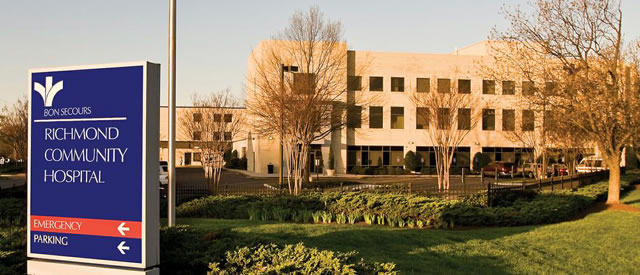
Image result for Bon Secours RichmondPer


Bon Secours Richmond (Va.) Health System CEO Toni Ardabell, BSN, issued an order July 19 mandating select salaried workers at the health system take five paid days off to reduce the health system’s expenses by the end of its fiscal year Aug. 31, according to the Richmond Times-Dispatch.

A health system spokesperson said in a written statement to the Times-Dispatch Aug. 10 the order applies only to salaried management and professional personnel who accrued a large number of paid vacation days but had not used them during the first 10 and a half months of the fiscal year. The rule does not apply to employees who “have little or no accrued PTO … [or] those who have just returned from a leave of absence or those who may be getting ready to take one,” the spokesperson said.

Ms. Ardabell’s memorandum, obtained by the Times-Dispatch, called for “full compliance with these instructions,” provided the stipulation does not affect patient care or reduce patient volume. She also wrote management should not attempt to replace employees on leave with “other workers in a way that adds incremental expense.”

“Replacing a salaried employee with an hourly employee you have to pay doesn’t help,” Ms. Ardabell wrote. “However, if another salaried employee who is being paid anyway simply stretches to cover the work of two people for a few days, then we realize the savings.”

The spokesperson said the order does not reflect any financial distress at the health system. Bon Secours is “a financially strong and fiscally sound organization with consistently high bond ratings and financial performance,” she told the Times-Dispatch.

More Memorial Hermann execs to depart

https://www.bizjournals.com/houston/news/2017/07/31/more-memorial-hermann-execs-to-depart.html?lipi=urn%3Ali%3Apage%3Ad_flagship3_feed%3B5bILEwnxSM%2BkK22A0oNGSA%3D%3D

Image result for More Memorial Hermann execs to depart

Three more executives plan to leave Memorial Hermann Health System, Houston’s largest nonprofit health care system, according to multiple reports.

Last week, Arizona-based Banner Health announced it hired Dennis Laraway as CFO, effective Sept. 29. Laraway has been CFO of Memorial Hermann since 2011.

Following the announcement, Modern HealthcareHealthcare Finance and others reported that two other executives plan to step down. Memorial Hermann spokeswoman Alex Loessin confirmed to the publications that Christopher Lloyd, CEO of Memorial Hermann’s physician network, and Jim Garman, chief human resources officer, also plan to leave. That’s in addition to Craig Cordola, president of Memorial Hermann Health System’s west region, whose departure was announced earlier this month.

The reports did not specify when Lloyd and Garman will step down or what their next positions will be. Cordola, however, will become senior vice president of St. Louis-based Ascension Healthcare and ministry market executive of Ascension Texas, effective Sept. 1. Memorial Hermann is evaluating a successor for Cordola internally, Loessin previously told the Houston Business Journal.

“Career moves by top leaders to other signature health systems speak volumes about the caliber of talent we have at Memorial Hermann,” CEO Chuck Stokessaid in a statement to the publications last week. “While we will miss the contributions of these individuals to the organization, I’m incredibly proud of all they accomplished, and I wish each of them the very best. We have a strong management team at Memorial Hermann and excellent support from our board.”

Stokes was named CEO for Memorial Hermann in early July. He had served in an interim capacity for a few weeks after Dr. Benjamin Chu abruptly stepped down from the position June 19.

Molina to cut 1,400 positions to improve financial performance

http://www.healthcarefinancenews.com/news/molina-cut-1400-positions-improve-financial-performance?mkt_tok=eyJpIjoiTXpVelkyRXhZMkpqTmpKaSIsInQiOiJFVjFscVRVVDdXZmZqek02STNMSVNjelwvREEwMmZmckZrWmNyZjNrQnVcL0szTGZuNXA4ZGdrOGRhT1V5bnREanBwWitPbTNkQllLZW5BTmd4VDk5TDg0ak1NNStnTllqdEllQlNpQmRZbDUwcm5JdVNaZ1lJcmpVVXJNYWxcL0JcL28ifQ%3D%3D

Image result for molina healthcare

The cuts follow removal of CEO and CFO due to financial losses blamed on Affordable Care Act market.

Molina Healthcare, which fired its CEO and CFO in May due to the poor financial performance of the company, will eliminate about 1,400 jobs over the next few months, according to an internal memo obtained by Reuters.

The cuts are due to financial losses blamed on Molina’s individual business in the Affordable Care Act market, in which it has been a major player.

Molina will reduce its workforce by the elimination of 10 percent of its 6,400 corporate positions and about 10 percent of 7,700 health plan jobs, according to Reuters. It will not affect Molina’s Pathways behavioral health business, which employs about 5,500 people.

Interim CEO and CFO Joe White sent the memo to employees saying the cuts aim to contribute to savings by 2018 in what he called “Project Nickel,” to do more with less.

In March, Molina was touted as an ACA success story.

Former CEO J. Mario Molina, MD, was an outspoken opponent of the Republican plan to repeal and replace the ACA. His brother, John C. Molina, who served as CFO. was also let go in a decision by the board to turn around the company’s financial position.

Last week Molina said it was concerned about Republicans repealing the ACA without having a replacement plan in place, the roll back of Medicaid expansion and the lack of a guarantee of federal cost-sharing reduction payments, which allows insurers to offer lower-income consumers lower deductibles and out-of-pocket expenses.

Molina also argued for the continuation of the individual mandate to get insurance.

“The bedrock of any coverage system is a requirement that people must obtain health insurance,” Molina said. “The lack of such a requirement will be detrimental to the individual market risk pool and will result in adverse selection, which would significantly increase costs.”

In June, Molina said it would file rates for 2018 to remain in the exchange market in Florida.

The California Department of Insurance is releasing on August 1 the insurers which have filed rates for the ACA market in 2018.

Healthcare CEO pay climbs steadily since ACA passage

http://www.healthcaredive.com/news/healthcare-ceo-pay-climbs-steadily-since-aca-passage/447772/

Dive Brief:

  • Earnings of healthcare CEOs have continued to grow under the Affordable Care Act (ACA) and the pay packages give them little incentive to rein in spending, a new Axios analysis concludes.
  • Since the ACA was passed in 2010, CEOs of the 70 largest healthcare companies have cumulatively earned a whopping $9.8 billion — or almost 11% more money on average each year. However, because most of the pay is in vested stock, CEOs often base decisionmaking on what boosts stock prices (e.g., bigger sales, more tests and procedures) and not the ACA goals of patient-centered, value-based care.
  • The analysis was based on financial reports from 70 publicly traded U.S. healthcare companies comprising more than $2 trillion in annual revenues. Not-for-profit hospital CEOs were not included.

Dive Insight:

The biggest payout — $863 million — went to John Martin, CEO of biotechnology company Gilead Sciences, according to the analysis. Other takeaways include:

  • Just four of the 113 healthcare CEOs in the analysis were women
  • 11 of the top 20 top earners were CEOs of pharma and drug-related companies;
  • CEOs earned a little less as a whole last year versus 2015 due to market uncertainty over the presidential election.

Rising salaries are drawing increased scrutiny and some pushback. In April, North Carolina lawmakers approved a bill that would bar compensation for CEOs of behavioral health managed care organizations from exceeding by more than 30% the average salary of other behavioral health managed care businesses in the state. The bill seemed targeted at Cardinal Healthcare Innovations CEO Richard Topping, whose salary was $435,000 more than the average salary for a managed care organization in the state.

Salaries of executives at nonprofit organizations have also been growing. According to a Wall Street Journal report in March, many nonprofits are embracing salary strategies used in the for-profit world and offering packages totaling more than $1 million, with possibility of bonuses and deferred payments. In 2014, about 75% of nonprofit pay packages totaling $1 million or more went to healthcare executives.

In Massachusetts, in fact, pay for hospital CEOs outpaced state health spending. The largest compensation package went to Elizabeth Nabel, president of Brigham and Women’s Hospital, who received $5.4 million in 2014, up 119% from the previous year. By contrast, overall healthcare spending in Massachusetts rose 4.8% that year.

In an analysis earlier this year, Axios found that Sutter Health CEO Patrick Fry gets paid the most per patient stay ($6.88 a day) among the 20 largest hospital systems. Greenwich Hospital CEO Norman Roth earned the most ($56.40 a day) among other studied hospitals.

https://www.axios.com/the-sky-high-pay-of-health-care-ceos-2442398819.html


Building a ‘nimble’ multi-state health system: 5 questions with Ascension CEO Dr. Anthony Tersigni

http://www.beckershospitalreview.com/hospital-management-administration/building-a-nimble-multi-state-health-system-5-questions-with-ascension-ceo-dr-anthony-tersigni.html

Image result for ascension health system

With 2,500 sites of care — including 141 hospitals and 30 senior living facilities that sprawl across 23 states and Washington, D.C. — St. Louis-based Ascension may not seem well-suited to make sudden business changes. But Ascension President and CEO Anthony Tersigni, EdD, aims to make the nation’s largest nonprofit health system into one of America’s most agile hospital networks.

Here, Dr. Tersigni discusses the system’s recent national rebrand, how he instills a spirit of risk-taking and innovation and the issues he is focusing on over the next five years, despite uncertainty on Capitol Hill.

Question: What prompted the decision to rebrand Ascension’s healthcare facilities? What effect has the rebranding had within the organization and outside in the communities it serves since being implemented in 2016?

Dr. Anthony Tersigni: In 1999 we decided not to brand Ascension because the brand equity was in the local entities. But since then, we believe we’ve made enough inroads in safety, quality and high-reliability that we felt Ascension has developed a reputation of its own. How do we combine the national reputation with the local reputation? Since co-branding the Ascension name with the names of our hospitals in our communities in advertising and on the web, the results have been outstanding. It’s about making it easier for the people we serve to navigate our system within a particular community because they now understand we’re all connected. We’re going to roll this out throughout the country, but we’re doing it in a sequential way because it’s very costly. But we believe now is the time to position ourselves as the national system that we are.

Q: What are your primary goals for the organization for the next five years?

AT: We want to continue to grow our primary care, expand access and continue to move toward value-based care. We want to be able to take on risk in a way where we can move into first-dollar coverage so we can move the patient through the continuum of care. We promise healthcare that works, that is safe and that leaves no one behind — for life. For us to do that, we need to be able to put patients in the right setting for the right care at the right time. If we can take on risk and walk with our patients and their families through our clinically integrated systems of care, we believe we can keep them well.

When it comes to population health management, the mindset is we need to change the way we look at our current business. We are moving from fee-for-service, where we get paid for doing things, to fee-for-value, or how to keep people well. We’ve been so successful as a hospital company under fee-for-service, and now we have to change the mindset and culture of all of these stakeholders. We have to go in a different direction. It’s like changing a flat tire on a car while it’s moving. No one has figured out yet how to do it, but you’re going to have to figure it out.

Another priority is mental and behavioral health. That’s very important to us. It’s a core part of our mission, and we want to be partners with whoever else sees that as a key component.

Q: What are the most important management practices when leading such a vast system with thousands of employees?

AT: In the 18 years since we created Ascension, we’ve been trying to have a culture that’s transparent, candid and nonpunitive. That’s a dramatic departure from the healthcare industry of old. I like to think I surround myself with really bright individuals and subject matter experts, and I try to empower everyone to do what’s in the best interest of those we serve. That’s what this is really all about. I like to think I hire people who are brighter than I am and give them the resources to do their jobs. Then I get out of the way.

That’s one of the principles we try to instill in our Leadership Academy — a program where we take high-potential employees for two to three years and help them develop. They focus on spiritual health to better understand their inner self. The second thing is leadership development. Everyone comes to us with certain gifts. We want them to hone those gifts and develop other skills. And the other piece, which people don’t talk about often, is personal health and vitality management. We expect our executives to work eight, 10 or 12 hours per day at optimal performance level. That’s virtually impossible unless you understand the physiology of your body.

Q: How would people describe you personally as a boss?

AT: My job is to allow leaders across the country to do what they are capable of doing. I like to think I am the supporting cast to what they do, and therefore I want to give them as much leeway and support as possible, and I want them to take risks. I am a risk-taker. As long as you don’t hurt people, that’s how we learn — through making mistakes. So take that risk.

Q: How do you plan for the future amid the current uncertainty surrounding healthcare policy?

AT: We need to be the highest-quality, lowest-cost, best-outcome provider in every market that we’re in. Then regardless of what happens in Washington D.C., we are going to be there for our patients and they’re going to want to seek us out.

We are working to do our part to reduce costs and cut waste in healthcare. But at the other end of what we do are human beings whose lives can either be helped or ruined by our actions or inactions. We are constantly advocating as a voice for the voiceless because many of those folks don’t get a chance to have this kind of conversation. I feel compelled to represent them because we are at ground zero in terms of healthcare. We see the pain and suffering that’s happening in society. They are in our clinics; they’re in our emergency rooms; they’re in our hospitals; they’re in our nursing homes.

I spent a couple weeks on Capitol Hill meeting with every senator I could meet and say, “Look, we want to be a resource. If you have a policy idea, let us know what that is and we will tell you the practical implications of that policy on the people we serve.”

We will continue to advocate for the poor and vulnerable. Last year we provided $1.8 billion of community care, community benefit and charity care. Given where this is going, I believe that number is going to go up next year. Because we are a faith-based, Catholic organization, we are going to continue to serve those people. If it ends up being over $2 billion, we’re going to figure out a way to serve them. We have to do so until we find a national solution here.

Optum CEO Amir Rubin departs for top spot at concierge medicine firm One Medical

http://www.beckershospitalreview.com/hospital-executive-moves/optum-ceo-amir-rubin-departs-for-top-spot-at-concierge-medicine-firm-one-medical.html

Image result for amir dan rubin

Amir Rubin, executive vice president and CEO of UnitedHealth’s Optum division, is leaving to take on the CEO role at One Medical, according to a CNBC report.

One Medical is a concierge primary care group with 60 locations across the country. It also offers a virtual medical team and mobile applications. Members pay an annual fee and can get access to same-day appointments, scheduled electronically.

Companies can also offer One Medical’s services as a benefit. The group has gained more than $180 million in investor funding since its inception a decade ago, according to the report.

Mr. Rubin led Optum since January 2016, prior to which he served as president and CEO of Palo Alto, Calif.-based Stanford Health Care. His previous leadership roles include serving as COO for the UCLA Health System in Los Angeles and COO at Stony Brook University Hospital in New York City.

Mr. Rubin succeeds One Medical founder Tom X. Lee, who will stay on as executive chairman of the group.