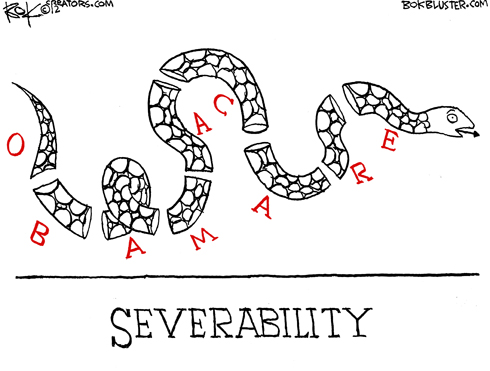
So, about being the “party of health care”

https://www.axios.com/newsletters/axios-vitals-4b66c0e1-2525-4bb1-a974-f97c9e3e5392.html?utm_source=newsletter&utm_medium=email&utm_campaign=newsletter_axiosvitals&stream=top

Image result for kicking the can

GOP leaders are trying their best to put a lid on President Trump’s talk of a new and wonderful health care plan that would define the Republican Party for 2020.

“Not any longer,” Senate Majority Leader Mitch McConnell said yesterday when asked whether he and Trump differ on health care.

  • McConnell said he spoke to Trump Monday and “made it clear to him that we were not going to be doing that in the Senate.”
  • RNC Chair Ronna McDaniel and Trump campaign manager Brad Parscale also “tried to tell the president they could not understand what he was doing,” The New York Times reports.

Rhetorically, Trump has kicked the can past 2020, just after pushing his administration to dive back into — and escalate — the legal fight that hurt Republicans so badly in 2018.

  • “I wanted to delay it myself,” Trump said in the Oval Office yesterday, denying that McConnell forced his hand. “I want to put it after the election, because we don’t have the House.”

Reality check: It’s still the Justice Department’s position that the courts should strike down the Affordable Care Act. As long as this lawsuit is still active — and that will be a while — it’ll be accurate for Democrats to say on the campaign trail that Trump is trying to end protections for pre-existing conditions.

  • In the short term, Trump’s rhetorical punt to 2021 may dampen the intensity of questions about how Republicans would rebuild a new system for individual coverage — questions the party has struggled to answer for the past 9 years.
  • But in the end, the only good way out is for the Trump administration to lose this case.


A motley crew in Texas v. Azar

A motley crew in Texas v. Azar

Image result for severability

Together with Jonathan Adler, Abbe Gluck, and Ilya Somin, I’ve filed an amicus brief with the Fifth Circuit in Texas v. Azar. Those of you who’ve been closely following health-reform litigation know that Abbe and I often square up against Jonathan and Ilya. It’s a testament to the outlandishness of the district court’s decision that we’ve joined forces. Like our original district court filing, the brief focuses on severability.

In 2017, Congress zeroed out all the penalties the ACA had imposed for not satisfying the individual mandate. Yet it left everything else undisturbed, including the guaranteed-issue and community-rating provisions. That simple fact should be the beginning and end of the severability analysis. It was Congress, not a court, that made the mandate unenforceable. And when Congress did so, it left the rest of the scheme, including those two insurance reforms, in place. In other words, Congress in 2017 made the judgment that it wanted the insurance reforms and the rest of the ACA to remain even in the absence of an enforceable individual mandate.

Because Congress’s intent was explicitly and duly enacted into statutory law, consideration of whether the remaining parts of the law remain “fully operative”—an inquiry courts often use in severability analysis as a proxy for congressional intent—is unnecessary.

Nor does the district court’s incessant focus on findings that Congress made about a mandate backed by financial penalties hold water.

The 2010 Congress believed that 2010’s penalty-backed mandate was necessary to induce a significant number of healthy people to purchase insurance, and thereby “significantly reduc[e] the number of the uninsured.” 42 U.S.C. § 18091(2)(E). But because the neutered mandate of 2017 lacks a penalty, it could not have been based on those earlier findings. They are thus irrelevant. The earlier findings have been overtaken by Congress’s developing views—based on years of experience under the statute—that the individual marketplaces created by the ACA can operate without penalizing Americans who decline to purchase health insurance.

At bottom, a toothless mandate is essential to nothing. A mandate with no enforcement mechanism cannot somehow be essential to the law as a whole. That is so regardless of the finer points of severability analysis or congressional intent. The district court’s conclusion makes no sense.

There are (at least!) two other notable amicus briefs in the case.

The first is from Sam Bray, Michael McConnell, and Kevin Walsh. In a terse 1,000 words, they argue—correctly, in my view—that “Congress has not vested the federal courts with statutory subject-matter jurisdiction to opine whether an unenforceable statutory provision is unconstitutional.” In this, they sound many of the same themes that Jonathan Adler and yours truly sounded in arguing that plaintiffs lack standing under the Constitution. But Bray, McConnell, and Walsh hitch their argument not to Article III, but to the jurisdictional reach of the Declaratory Judgment Act.

The second is from the Republican attorneys general of Ohio and Montana. They agree that the mandate is unconstitutional, but they have no truck with the argument that all or part of the Affordable Care Act should be struck down. “At the same time that Congress made the mandate inoperative, it left in place the remainder of the Affordable Care Act. As a result, the application of the severability doctrine in this case requires no ‘nebulous inquiry into hypothetical congressional intent.’ … To the contrary, the Court can see for itself what Congress wanted by looking to what it did.” Their participation suggests deep fractures in the down-with-the-ACA-at-all-costs coalition.

So, by my count, the parties and amici have pressed at least four independent reasons for getting rid of this case. First, because plaintiffs lack standing. Second, because the courts lack jurisdiction under the Declaratory Judgment Act. Third, because there is no “mandate” and thus no constitutional problem (as Marty Lederman has rightly argued). And fourth, because even if there is a mandate and it’s unconstitutional, it’s fully severable.

This isn’t a federal case. It’s a choose-your-own-adventure book where all the adventures lead to the end of this misbegotten litigation.


HRSA rolls out drug pricing site for 340B hospitals

https://www.fiercehealthcare.com/hospitals-health-systems/hrsa-rolls-out-drug-pricing-site-for-340b-hospitals?mkt_tok=eyJpIjoiWldVeU5HSmtZek5oT1dSaiIsInQiOiJYUXRUNlZ3dGc2aVBWOVdtZ1BGb3Y2bUZNOFowbFwvQ2Y3SzZBcTB6aWswRFJtSEZ5eWFFVStCWmt1TFprZ2V4bDIzS29idkZoZ2dcL1dPbDhQV3NuV0dZXC9cL1M4XC9rc0hKMkNvY3JFa1B6OHlHeWFRZm5YcjdZa1hCdEl0bU9sdkgxIn0%3D&mrkid=959610&utm_medium=nl&utm_source=internal

Drug prices

After multiple delays, the Health Resources & Services Administration (HRSA) has finally launched an online tool that 340B hospitals can use to determine the maximum that pharmaceutical companies can charge for drugs.

HRSA’s new pricing site went live on Monday morning and is one of the elements mandated in the long-delayed final rule for the 340B drug discount program. That rule, which took effect on Jan. 1, also adds monetary penalties for drug companies that overcharge hospitals in the program.

The final rule was first issued in January 2017 and was delayed five times by the Trump administration before going into effect this year. HRSA finally rolled out the rule as it determined the provisions would not interfere with the administration’s broader drug pricing policy

Provider groups and 340B advocates cheered the website’s launch. Maureen Testoni, CEO of 340B health, a group that represents more than 1,300 providers participating in the program, said in a statement that the new tool’s release “marks a positive milestone in the history of the 340B program.” 

“Today’s launch of a secure website listing the maximum allowable prices for all 340B covered drugs brings a healthy dose of sunshine into a marketplace that has, for far too long, been a black box,” Testoni said. “Until today, hospitals, clinics and health centers participating in 340B had no way to be sure they were paying the correct amount for the drugs they purchase.” 

340B Health was joined by the American Hospital Association (AHA), America’s Essential Hospitals and the Association of American Medical Colleges on a lawsuit filed in September with the goal of pushing HRSA to implement the rule.

Tom Nickels, executive vice president at AHA, said in a statement that the group was “pleased” that its lawsuit led to the site’s launch.

“As prescription drug prices continue to skyrocket, the 340B program is as crucial as ever in helping hospitals provide access to healthcare services for patients in vulnerable communities,” Nickels said. 

Amid the drug price debate, the 340B program has been under the microscope. The program has enjoyed traditionally bipartisan support, but intense lobbying from the pharmaceutical industry has led to criticism that it has grown too large.

The Centers for Medicare & Medicaid Services also slashed the program’s payment rate in 2017, a shift in a longstanding Medicare policy that culled $1.6 billion in payments from the program. Hospital groups are currently battling the payment changes in court


ELITE HOSPITALS PLUNGE INTO UNPROVEN STEM CELL TREATMENTS

https://www.healthleadersmedia.com/clinical-care/elite-hospitals-plunge-unproven-stem-cell-treatments?utm_source=silverpop&utm_medium=email&utm_campaign=ENL_190402_LDR_BRIEFING%20(1)&spMailingID=15395736&spUserID=MTY3ODg4NTg1MzQ4S0&spJobID=1620119090&spReportId=MTYyMDExOTA5MAS2

Hospitals say they’re providing options to patients who have exhausted standard treatments. But critics suggest the hospitals are exploiting desperate patients and profiting from trendy but unproven treatments.

The online video seems to promise everything an arthritis patient could want.

The six-minute segment mimics a morning talk show, using a polished TV host to interview guests around a coffee table. Dr. Adam Pourcho extols the benefits of stem cells and “regenerative medicine” for healing joints without surgery. Pourcho, a sports medicine specialist, says he has used platelet injections to treat his own knee pain, as well as a tendon injury in his elbow. Extending his arm, he says, “It’s completely healed.”

Brendan Hyland, a gym teacher and track coach, describes withstanding intense heel pain for 18 months before seeing Pourcho. Four months after the injections, he says, he was pain-free and has since gone on a 40-mile hike.

“I don’t have any pain that stops me from doing anything I want,” Hyland says.

The video’s cheerleading tone mimics the infomercials used to promote stem cell clinics, several of which have recently gotten into hot water with federal regulators, said Dr. Paul Knoepfler, a professor of cell biology and human anatomy at the University of California-Davis School of Medicine. But the marketing video wasn’t filmed by a little-known operator.

It was sponsored by Swedish Medical Center, the largest nonprofit health provider in the Seattle area.

Swedish is one of a growing number of respected hospitals and health systems — including the Mayo Clinic, the Cleveland Clinicand the University of Miami — that have entered the lucrative business of stem cells and related therapies, including platelet injections. Typical treatments involve injecting patients’ joints with their own fat or bone marrow cells, or with extracts of platelets, the cell fragments known for their role in clotting blood. Many patients seek out regenerative medicine to stave off surgery, even though the evidence supporting these experimental therapies is thin at best, Knoepfler said.

Hospitals say they’re providing options to patients who have exhausted standard treatments. But critics suggest the hospitals are exploiting desperate patients and profiting from trendy but unproven treatments.

The Food and Drug Administration is attempting to shut down clinics that hawk unapproved stem cell therapies, which have been linked to several cases of blindness and at least 12 serious infections. Although doctors usually need preapproval to treat patients with human cells, the FDA has carved out a handful of exceptions, as long as the cells meet certain criteria, said Barbara Binzak Blumenfeld, an attorney who specializes in food and drug law at Buchanan Ingersoll & Rooney in Washington.

Hospitals like Mayo are careful to follow these criteria, to avoid running afoul of the FDA, said Dr. Shane Shapiro, program director for the Regenerative Medicine Therapeutics Suites at Mayo Clinic’s campus in Florida.

‘EXPENSIVE PLACEBOS’

While hospital-based stem cell treatments may be legal, there’s no strong evidence they work, said Leigh Turner, an associate professor at the University of Minnesota’s Center for Bioethics who has published a series of articles describing the size and dynamics of the stem cell market.

“FDA approval isn’t needed and physicians can claim they aren’t violating federal regulations,” Turner said. “But just because something is legal doesn’t make it ethical.”

For doctors and hospitals, stem cells are easy money, Turner said. Patients typically pay more than $700 a treatment for platelets and up to $5,000 for fat and bone marrow injections. As a bonus, doctors don’t have to wrangle with insurance companies, which view the procedures as experimental and largely don’t cover them.

“It’s an out-of-pocket, cash-on-the-barrel economy,” Turner said. Across the country, “clinicians at elite medical facilities are lining their pockets by providing expensive placebos.”

Some patient advocates worry that hospitals are more interested in capturing a slice of the stem-cell market than in proving their treatments actually work.

“It’s lucrative. It’s easy to do. All these reputable institutions, they don’t want to miss out on the business,” said Dr. James Rickert, president of the Society for Patient Centered Orthopedics, which advocates for high-quality care. “It preys on people’s desperation.”

In a joint statement, Pourcho and Swedish defended the online video.

“The terminology was kept simple and with analogies that the lay person would understand,” according to the statement. “As with any treatment that we provide, we encourage patients to research and consider all potential treatment options before deciding on what is best for them.”

But Knoepfler said the guests on the video make several “unbelievable” claims.

At one point, Dr. Pourcho says that platelets release growth factorsthat tell the brain which types of stem cells to send to the site of an injury. According to Pourcho, these instructions make sure that tissues are repaired with the appropriate type of cell, and “so you don’t get, say, eyeball in your hand.”

Knoepfler, who has studied stem cell biology for two decades, said he has never heard of “any possibility of growing eyeball or other random tissues in your hand.” Knoepfler, who wrote about the video in February on his blog, The Niche, said, “There’s no way that the adult brain could send that kind of stem cells anywhere in the body.”

The marketing video debuted in July on KING-TV, a Seattle station, as part of a local lifestyles show called “New Day Northwest.” Although much of the show is produced by the KING 5 news team, some segments — like Pourcho’s interview — are sponsored by local advertisers, said Jim Rose, president and general manager of KING 5 Media Group.

After being contacted by KHN, Rose asked Swedish to remove the video from YouTube because it wasn’t labeled as sponsored content. Omitting that label could allow the video to be confused with news programming. The video now appears only on the KING-TV website, where Swedish is labeled as the sponsor.

“The goal is to clearly inform viewers of paid content so they can distinguish editorial and news content from paid material,” Rose said. “We value the public’s trust.”

INCREASING SCRUTINY

Federal authorities have recently begun cracking down on doctors who make unproven claims or sell unapproved stem cell products.

In October, the Federal Trade Commission fined stem cell clinics millions of dollars for deceptive advertising, noting that the companies claimed to be able to treat or cure autism, Parkinson’s disease and other serious diseases.

In a recent interview Scott Gottlieb, the FDA commissioner, said the agency will continue to go after what he called “bad actors.”

With more than 700 stem cell clinics in operation, the FDA is first targeting those posing the biggest threat, such as doctors who inject stem cells directly into the eye or brain.

“There are clearly bad actors who are well over the line and who are creating significant risks for patients,” Gottlieb said.

Gottlieb, set to leave office April 5, said he’s also concerned about the financial exploitation of patients in pain.

“There’s economic harm here, where products are being promoted that aren’t providing any proven benefits and where patients are paying out-of-pocket,” Gottlieb said.

Dr. Peter Marks, director of the FDA’s Center for Biologics Evaluation and Research, said there is a broad “spectrum” of stem cell providers, ranging from university scientists leading rigorous clinical trials to doctors who promise stem cells are “for just about anything.” Hospitals operate somewhere in the middle, Marks said.

“The good news is that they’re somewhat closer to the most rigorous academics,” he said.

The Mayo Clinic’s regenerative medicine program, for example, focuses conditions such as arthritis, where injections pose few serious risks, even if that’s not yet the standard of care, Shapiro said.

Rickert said it’s easy to see why hospitals are eager to get in the game.

The market for arthritis treatment is huge and growing. At least 30 million Americans have the most common form of arthritis, with diagnoses expected to soar as the population ages. Platelet injections for arthritis generated more than $93 million in revenue in 2015, according to an article last year in The Journal of Knee Surgery.

“We have patients in our offices demanding these treatments,” Shapiro said. “If they don’t get them from us, they will get them somewhere else.”

Doctors at the Mayo Clinic try to provide stem cell treatments and similar therapies responsibly, Shapiro said. In a paper published this year, Shapiro described the hospital’s consultation service, in which doctors explain patients’ options and clear up misconceptions about what stem cells and other injections can do. Doctors can refer patients to treatment or clinical trials.

“Most of the patients do not get a regenerative [stem cell] procedure,” Shapiro said. “They don’t get it because after we have a frank conversation, they decide, ‘Maybe it’s not for me.'”

LOTS OF HYPE, LITTLE PROOF

Although some hospitals boast of high success rates for their stem cell procedures, published research often paints a different story.

The Mayo Clinic website says that 40 to 70% of patients “find some level of pain relief.” Atlanta-based Emory Healthcare claims that 75 to 80% of patients “have had significant pain relief and improved function.” In the Swedish video, Pourcho claims “we can treat really any tendon or any joint” with PRP.

The strongest evidence for PRP is in pain relief for arthritic knees and tennis elbow, where it appears to be safe and perhaps helpful, said Dr. Nicolas Piuzzi, an orthopedic surgeon at the Cleveland Clinic.

But PRP hasn’t been proven to help every part of the body, he said.

PRP has been linked to serious complications when injected to treat patellar tendinitis, an injury to the tendon connecting the kneecap to the shinbone. In a 2013 paper, researchers described the cases of three patients whose pain got dramatically worse after PRP injections. One patient lost bone and underwent surgery to repair the damage.

“People will say, ‘If you inject PRP, you will return to sports faster,'” said Dr. Freddie Fu, chairman of orthopedic surgery at the University of Pittsburgh Medical Center. “But that hasn’t been proven.”

2017 study of PRP found it relieved knee pain slightly better than injections of hyaluronic acid. But that’s nothing to brag about, Rickert said, given that hyaluronic acid therapy doesn’t work, either. While some PRP studies have shown more positive results, Rickert notes that most were so small or poorly designed that their results aren’t reliable.

In its 2013 guidelines for knee arthritis, the American Academy of Orthopaedic Surgeons said it is “unable to recommend for or against” PRP.

“PRP is sort of a ‘buyer beware’ situation,” said Dr. William Li, president and CEO of the Angiogenesis Foundation, whose research focuses on blood vessel formation. “It’s the poor man’s approach to biotechnology.”

Tests of other stem cell injections also have failed to live up to expectations.

Shapiro published a rigorously designed study last year in Cartilage, a medical journal, that found bone marrow injections were no better at relieving knee pain than saltwater injections. Rickert noted that patients who are in pain often get relief from placebos. The more invasive the procedure, the stronger the placebo effect, he said, perhaps because patients become invested in the idea that an intervention will really help. Even saltwater injections help 70% of patients, Fu said.

A 2016 review in the Journal of Bone and Joint Surgery concluded that “the value and effective use of cell therapy in orthopaedics remain unclear.” The following year, a review in the British Journal of Sports Medicine concluded, “We do not recommend stem cell therapy” for knee arthritis.

Shapiro said hospitals and health plans are right to be cautious.

“The insurance companies don’t pay for fat grafting or bone-marrow aspiration, and rightly so,” Shapiro said. “That’s because we don’t have enough evidence.”

Rickert, an orthopedist in Bedford, Ind., said fat, bone marrow and platelet injections should be offered only through clinical trials, which carefully evaluate experimental treatments. Patients shouldn’t be charged for these services until they’ve been tested and shown to work.

Orthopedists — surgeons who specialize in bones and muscles — have a history of performing unproven procedures, including spinal fusion, surgery for rotator cuff disease and arthroscopy for worn-out knees, Turner said. Recently, studies have shown them to be no more effective than placebos.

MISLEADING MARKETING

Some argue that joint injections shouldn’t be marketed as stem cell treatments at all.

Piuzzi said he prefers to call the injections “orthobiologics,”noting that platelets are not even cells, let alone stem cells. The number of stem cells in fat and bone marrow injections is extremely small, he said. In fat tissue, only about 1 in 2,000 cells is a stem cell, according to a March paper in The Bone & Joint Journal. Stem cells are even rarer in bone marrow, where 1 in 10,000 to 20,000 cells is a stem cell.

Patients are attracted to regenerative medicine because they assume it will regrow their lost cartilage, Piuzzi said. There’s no solid evidence that the commercial injections used today spur tissue growth, Piuzzi said. Although doctors hope that platelets will release anti-inflammatory substances, which could theoretically help calm an inflamed joint, they don’t know why some patients who receive platelet injections feel better, but others don’t.

So, it comes as no surprise that many patients have trouble sorting through the hype.

Florida resident Kathy Walsh, 61, said she wasted nearly $10,000 on stem cell and platelet injections at a Miami clinic, hoping to avoid knee replacement surgery.

When Walsh heard about a doctor in Miami claiming to regenerate knee cartilage with stem cells, “it seemed like an answer to a prayer,” said Walsh, of Stuart, Fla. “You’re so much in pain and so frustrated that you cling to every bit of hope you can get, even if it does cost you a lot of money.”

The injections eased her pain for only a few months. Eventually, she had both knees replaced. She has been nearly pain-free ever since. “My only regret,” she said, “is that I wasted so much time and money.”


TRUMP PUNTS ACA REPLACEMENT UNTIL AFTER 2020 ELECTION

https://www.healthleadersmedia.com/strategy/trump-punts-aca-replacement-until-after-2020-election

Image result for punt

‘Vote will be taken right after the Election when Republicans hold the Senate & win … back the House,’ Trump tweeted a week after his administration shifted its position on the ACA’s legality.


KEY TAKEAWAYS

After fellow Republicans expressed doubt in the White House’s renewed focus on replacing the ACA, the president appears to have backed down.

The administration continues to argue that the entire ACA should be invalidated by the federal courts.

In a series of tweets Monday evening, President Donald Trump appeared to punt his renewed focus on eliminating and replacing the Affordable Care Act until after the 2020 election.

The White House made news a week earlier by shifting its position on the ACA’s legality, arguing that federal judges should invalidate the entire law. Trump then said the GOP would become “The Party of Healthcare,” and he signaled that another GOP-driven legislative proposal to replace the ACA with something better was forthcoming.

This week, however, he said Congress will vote on such a legislative proposal in about 19 months—in the event that Republicans maintain their majority in the Senate and regain control of the House.

“Everybody agrees that ObamaCare doesn’t work,” Trump tweeted Monday. “Premiums & deductibles are far too high – Really bad HealthCare! Even the Dems want to replace it, but with Medicare for all, which would cause 180 million Americans to lose their beloved private health insurance. The Republicans…..”

“….are developing a really great HealthCare Plan with far lower premiums (cost) & deductibles than ObamaCare. In other words it will be far less expensive & much more usable than ObamaCare,” he continued. “Vote will be taken right after the Election when Republicans hold the Senate & win……”

“….back the House. It will be truly great HealthCare that will work for America. Also, Republicans will always support Pre-Existing Conditions,” Trump wrote. “The Republican Party will be known as the Party of Great HealtCare. Meantime, the USA is doing better than ever & is respected again!”

Trump’s apparent punt comes after GOP leaders said they wanted him to back down. Republican lawmakers have even declined to voice support for a new legislative proposal before seeing its details, so they can distance themselves from it if necessary, as Politico’s Quint Forgey and John Bresnahan reported.

“I look forward to seeing what the president is proposing and what he can work out with the speaker,” Senate Majority Leader Mitch McConnell, R-Kentucky, told Politico in a brief interview Thursday.

This development comes also as two Republican state attorneys general formally disagreed with those who argue the entire ACA should fall, arguing in an amicus brief filed Monday that only the ACA’s individual mandate should be struck down.


The winning health care message will be about out of pocket costs

https://www.axios.com/winning-2020-health-care-out-of-pocket-costs-d5708e35-b308-4c91-a636-121e45f82032.html

Illustration of a wallet full of band-aids

As the 2020 campaign ramps up, Democrats may be able to rally their base by talking about universal coverage and making health care a right through Medicare-for-all. Republicans may be able to motivate their core voters by branding progressive Democratic ideas as socialism.

The catch: But it’s the candidates who can connect their plans and messages to voters’ worries about out of pocket costs who will reach beyond the activists in their base. And the candidates aren’t speaking to that much, at least so far.

By the numbers:

  • The anxiety over out of pocket costs is real. In a January 2017 Kaiser poll, 48 percent of voters worried about paying their health care bills.
  • People who are sick are especially concerned, with 66 percent worried and 49 percent very worried.
  • It isn’t just in their heads: a whopping half of people who are sick have a problem paying their medical bills over the course of a year. The health insurance system is not working for people who are sick.

Thanks in part to the Affordable Care Act, only 10 percent of the population remains uncovered. But that means many Americans are less focused on getting to universal coverage, even though candidate after candidate talks about it. They have insurance and are focused on their own, often crippling health care costs.

  • Most Americans are healthy and don’t use much care, but almost everyone, not just people with a major illness, worries about what might happen if they or a family member get cancer or heart disease or suffer a permanent injury.
  • That’s what fuels health care as an issue: the fear of facing costs people know they cannot afford. And that’s why protections for people with pre-existing conditions broke through as a prominent issue in the midterm election.
  • The debate and the Democratic message could shift back to the ACA again, after President Trump and the Justice Department’s surprise decision to push for throwing out the entire law in the courts. That move handed Democrats a political opportunity they will not ignore: a pre-existing conditions debate on steroids.

Recent trends have made problems with out of pocket costs worse:

Some of the administration’s policies are exacerbating the problem, such as their efforts to push cheaper short term insurance plans for the healthy, which drive up costs for the sick because they leave fewer healthy people in the regular insurance plans to help pay for sick people’s costs.

  • Several of the candidates’ plans address out of pocket costs, including the Bernie Sanders plan, which eliminates them. Their advocates just don’t talk about it much.

The bottom line: It’s hard to see the new debate about the health system breaking out of familiar boxes unless the messaging changes. And when the general election comes, both parties will have to convince voters that they will do something about out of pocket costs if they want to reach beyond core base voters. 


GOP tax law boosts health care profits

https://www.axios.com/newsletters/axios-vitals-1102fe1c-124e-4bbf-9647-ad0efd6392a3.html?utm_source=newsletter&utm_medium=email&utm_campaign=newsletter_axiosvitals&stream=top

Image result for 1 big thing: GOP tax law boosts health care profits

The GOP tax law is padding health care companies’ bottom lines, according to my colleague Bob Herman’s analysis of newly released financial information from the last quarter of 2018. Overall, the industry’s profits were up significantly from the same period a year earlier.

The big picture: The law made it easier to bring home money that was parked abroad. It also eliminated tax provisions that have specifically helped large companies like Blue Cross Blue Shield insurers. But the lower corporate tax rate is the main event.

  • Drug giant Pfizer received a $563 million tax benefit in the fourth quarter, and its corporate income tax rate in all of 2018 was just 6%.
  • Johnson & Johnson’s effective tax rate in the last quarter of 2018 was 2.6%.
  • Almost half of the $551 million tax break recorded by hospital chain HCA Healthcare in 2018 came in the fourth quarter.

Between the lines: The tax law aside, the companies that handle the most revenue — like health insurers collecting premiums or drug distributors shipping products — are not the most profitable.

  • The highest margins still usually belong to pharmaceutical companies and medical-devices.


DOJ supports striking entire ACA: 5 things to know

https://www.beckershospitalreview.com/legal-regulatory-issues/doj-supports-striking-entire-aca-5-things-to-know.html

Image result for severability

In a March 25 court filing, the Department of Justice said it supports a judge’s ruling that the entire Affordable Care Act should be invalidated, according to CNN.

Five things to know:

1. In December, a federal judge in Texas held that the ACA is unconstitutional. He sided with the Republican-led states that brought the lawsuit, Texas v. United States, calling for the entire ACA to be struck down because Congress eliminated the healthcare law’s individual insurance mandate penalty.

2. The case is now pending in the 5th Circuit Court of Appeals. In a filing with the appellate court on March 25, the Justice Department said it supports the federal judge’s ruling that invalidated the ACA.

3. “The Department of Justice has determined that the district court’s judgment should be affirmed,” lawyers for the Justice Department wrote to the 5th Circuit Court of Appeals, according to Politico. “[T]he United States is not urging that any portion of the district court’s judgment be reversed.”

4. The filing signals a major shift in the Justice Department’s position. When Jeff Sessions was attorney general, the administration argued only certain parts of the ACA, like protections for people with pre-existing conditions, should be struck down, but the rest of the law could stand, according to CNN.

5. A coalition of Democratic-led states is challenging the Texas ruling. Regardless of the outcome, the 5th Circuit’s ruling is likely to be appealed to the Supreme Court, according to Politico.

Access the full CNN article here.

Access the full Politico article here.


Trump admin now backs elimination of ACA in court

https://www.healthcaredive.com/news/trump-admin-now-backs-elimination-of-aca-in-court/551319/

UPDATED: AHA blasted the decision, calling it “unprecedented and unsupported” by law or facts and warned it would lead to repeal of Medicaid expansion and gut protections for those with pre-existing conditions.

Dive Brief:

  • The Trump administration has reversed its stance on the Affordable Care Act, arguing in a court filing Monday that the entire law should be eliminated instead of just removing provisions protecting people with preexisting conditions.
  • The move came hours after Democratic attorneys general defending the ACA filed their brief arguing that the landmark law is still constitutional even without an effective individual mandate penalty. Both filings are in the Fifth Circuit following an appeal of a Texas judge’s decision from December declaring the law unconstitutional after Congress set the mandate penalty to zero in tax overhaul legislation. That decision was stayed pending appeal.
  • Industry groups lambasted the administration’s about-face. America’s Health Insurance Plans CEO Matt Eyles said in a statement the decision was, like the Texas ruling, “misguided and wrong.” He added the payer lobby “will continue to engage on this issue as it continues through the appeals process so we can support and strengthen affordable coverage for every American.” Federation of American Hospitals CEO Chip Kahn said in a statement the decision is “unfortunate but not unexpected considering [the administration’s] long-held views on the health law.”

Dive Insight:

Elimination of the ACA would be a particular blow for some payers that have found increasing profitability in the individual market. Centene and Molina have found success with the exchanges and have expanded their footprints.

It would also put major hospital chains in a bad spot. Companies like HCA, Tenet and Community Health Systems have exposure that could subject them to reduced patient volumes and more bad debt, Leerink analyst Ana Gupte said when the Texas ruling first came down.

Public support for the ACA has gradually increased over the years, and the latest polling from the Kaiser Family Foundation shows about 53% of respondents giving a favorable view and 40% unfavorable. Individual components of the law are even more popular.

The ACA, which just days ago marked its ninth anniversary, brought forth massive change in American healthcare. A repeal of the law would do the same, stripping insurance coverage for as many as 17 million people.

The Trump administration’s new stance presents an intensely stark contrast with the growing field of Democratic presidential contenders, who have shifted the healthcare conversation to the left as the 2020 field shapes up. Candidates have proposed various forms of Medicare for all as well as scaled back versions that still greatly expand government coverage.

It moves the DOJ away from even some Republicans. During last year’s midterms a few GOP candidates said they approved of the ACA’s most popular element — protection for people with preexisting conditions (although voting records didn’t necessarily back them up).

Most Democrats in Congress aren’t fully backing any single-payer model at the moment, but their support for the ACA is strong. Democrats in the House of Representatives are expected to announce a legislative package Tuesday that would strengthen the ACA by eliminating short-term health plans that don’t comply with the law and increasing subsidies for exchange plans.

Since the GOP’s quite public failure to repeal the law two years ago, efforts to do so through Congress have sputtered to nearly a halt. Instead, the Trump administration started chipping away at the law’s provisions. It cut the open enrollment period for ACA plans, as well as the advertising budget for promoting sign-ups, and stopped cost-sharing reduction payments to insurers.

More recently, HHS has bolstered short-term and association health plans that offer cheap but skimpy coverage not in line with ACA requirements. Analysts fear proliferation of these plans could draw young and healthy people away from the exchanges, jeopardizing the stability of the risk pool.

A Democratic-led House panel launched an investigation into short-term plans and is requesting documents from Anthem and UnitedHealth Group, among other companies.

The legal issue at hand is known as severability — the question of whether a single provision of the law, in this case the individual mandate, becoming unenforceable invalidates the entire statute. The mandate was also the key question in the original U.S. Supreme Court ruling allowing the ACA to move forward.

The high court has since lurched to the right, which is notable if the appeal on the Texas ruling reaches that stage, although that would likely be far down the road.


An unexpected twist in the ACA case

https://www.axios.com/newsletters/axios-vitals-20db892f-3887-47d7-8a2f-075e3afc8bc0.html?utm_source=newsletter&utm_medium=email&utm_campaign=newsletter_axiosvitals&stream=top

Image result for unexpected twist

A Florida man is capitalizing on the Trump administration’s sudden legal reversal in an attempt to get off the hook for accusations of Medicare fraud.

Philip Esformes, who operated about 20 nursing homes in the Miami area, was arrested in 2016 and charged with committing $1 billion in Medicare fraud through a complex kickback scheme.

  • But Esformes’s lawyers now argue the charges should be dismissed because of the Justice Department’s new position on the Affordable Care Act. ThinkProgress’ Ian Millhiser was the first to flag this creative argument.

How it works: Some of the specific charges against Esformes stem from parts of the Affordable Care Act. They are, his lawyers say, among the specific sections of law that Judge Reed O’Connor invalidated when he threw out the entire ACA.

  • Esformes’s lawyers acknowledge that those statutes are still on the books.
  • But the Justice Department has said it agrees with all of the O’Connor’s decision — which means it has said that “the very statutes it is seeking to enforce in this trial are unenforceable,” his brief argues.
  • The government shouldn’t be able to prosecute Esformes using legal authorities that it’s simultaneously saying are invalid, the lawyers argue.

My thought bubble: This seems like the kind of thing a good prosecutor will probably find a way to wriggle out of. It also seems like the kind of thing career lawyers at DOJ would have caught, if they had been allowed to shape DOJ’s position in the ACA case.