

http://www.beckershospitalreview.com/finance/presence-health-closes-on-1b-bond-sale.html


As major insurers UnitedHealth, Humana and Aetna — along with smaller insurers like the Scott & White Health Plan in Texas — plan to leave theObamacare insurance markets, the exodus will leave some states without much competition on the exchanges.
A new study by Avalere predicts one-third of the country will have no exchange plan competition in 2017. Seven states: Alaska, Alabama, Kansas, North Carolina, Oklahoma, South Carolina and Wyoming, will have only one carrier per rating region in every region in the state, the Avalere study said.
States divide up their exchange market region into rating areas. Consumers may only purchase plans offered within the rating region in which they reside.
Nearly 55 percent of exchange market rating regions have two or fewer carriers, the Avalere study said.
Giant insurer Aetna announced this week that it was withdrawing from the Obamacare exchanges in 11 of the 15 states it had been doing business, becoming the third major insurance company to scale back its offerings dramatically in the face of heavy losses. The news led to a chorus of “I told you so’s” from critics of the 2010 healthcare law, who have long predicted that it would collapse under its own weight. But they are confusing the growing pains of a new market with the death rattle of a failing one.
It’s important to bear in mind what Obamacare, formally known as the Patient Protection and Affordable Care Act, set out to do. Over the long term, it sought to improve the quality of healthcare and rein in costs — an ambitious effort that may not yield significant results for years, if ever. In the short term, its goal was to extend insurance coverage to millions of uninsured Americans. To do so, it barred insurers from denying coverage or charging higher rates to those with preexisting conditions, required all adults to obtain coverage and offered subsidies to help poorer households pay their insurance premiums.
These changes reinvented the market for individual policies, which serves those not covered by large employer plans or government-run health programs. No longer could insurers minimize their risk by denying coverage to or gouging those with preexisting conditions. The new subsidies also attracted many previously uninsured people who had no track record to guide insurers on their needs and costs.
The result was a hotly competitive market with winners and, yes, losers. The insurance companies that have done well include those with experience serving low-income communities, as well as those in states such as California that have worked hard to bring young and healthy customers into the market. But Aetna and UnitedHealth, which announced in April that it would withdraw from almost all the Obamacare exchanges it had entered, had previously focused on serving large employers, a much less risky and volatile market.
For years, insurance provider Health Net Inc. used illegal severance agreements to try to keep departing employees from talking to state and federal officials about company violations, the U.S. Securities and Exchange Commission said Tuesday.
The Woodland Hills company agreed to pay a $340,000 penalty to settle the SEC’s allegations. It also agreed to contact former employees who had signed the severance agreements between Aug.12, 2011, and Oct. 22, 2015, and inform them that they were not prohibited from blowing the whistle about potential securities violations.
Health Net did not respond to requests for comment. The SEC said the company had agreed to the settlement without admitting or denying the commission’s findings.
The health insurer changed language in its severance agreements after the Dodd-Frank financial reform legislation was enacted in 2010. The law encourages whistleblowers to report possible securities law violations by providing financial awards and other incentives.
Under Health Net’s amended severance agreements, former employees waived their right to any monetary recovery that came from becoming a whistleblower. The SEC’s order does not address non-securities-related whistleblower lawsuits.
“Financial incentives in the form of whistleblower awards, as Congress recognized, are integral to promoting whistleblowing to the commission,” said Antonia Chion, associate director of the SEC’s enforcement division. “Health Net used its severance agreements with departing employees to strip away those financial incentives.”
http://www.healthleadersmedia.com/physician-leaders/outpatient-imperative-beyond-putting-heads-beds

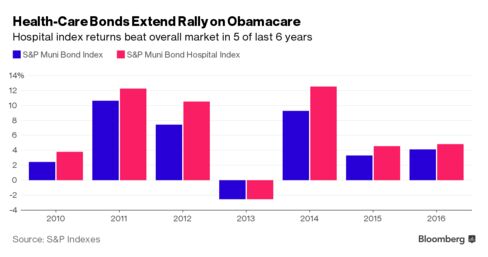
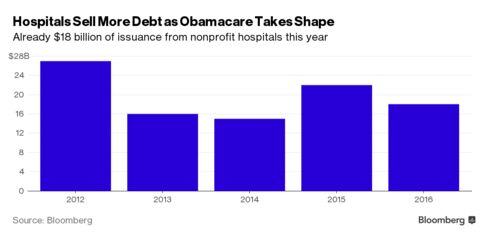
The $250 billion municipal hospital-bond market is proving immune to Donald Trump’s plan to eliminate Obamacare.
Sutter Health is among nonprofits tapping demand for the tax-free debt, with the California chain planning to sell $850 million in new securities this week. Health-care bonds are beating the overall $3.7 trillion municipal market for a third straight year as the federal law expanding medical coverage to Americans improves business. Despite the Republican presidential nominee’s goal, the rally has been undaunted as investors hunt for yield while rates hold near record lows.
“There’s lots of demand with all of the money pouring in,” said Mike Quinn, a managing director at Chicago-based investment bank Ziegler, which underwrites bonds for hospitals. “This is a really great environment for health-care borrowers to issue tax-exempt money.”

Participants at the 2017 HealthLeaders Media CFO Exchangein Coeur d’Alene, Idaho last week said they are generally optimistic about weathering the storm of regulatory changes, new payment models, and shifting market forces buffeting their organizations.
The finance executives at the invitation-only event also shared many mutual concerns such as offsetting traditional revenue-stream declines at hospitals and assessing the appetite to adopt value-based care models in their markets.
Here are 10 of the most insightful comments from the gathered finance leaders:

Healthcare has some of the highest CEO pay growth of any industry and it shows no signs of slowing down.
In Massachusetts, hospital chief executives saw a pay bump throughout the state from 2013 to 2014, with the steepest raise of all going to Brigham and Women’s Hospital President Elizabeth Nabel, M.D., according to the Boston Business Journal.
The newspaper reports that Nabel’s total compensation soared 120 percent to $5.5 million in 2014. To put that in perspective, the publication noted that Gary Gottlieb, M.D., CEO of Brigham and Women’s parent company Partners Healthcare, and Nabel’s boss at the time, made $3.1 million. Most of Nabel’s compensation–$3.9 million–wasn’t even base salary, but rather retirement and nontaxable benefits.
Central Ohio hospital chief executives are seeing similarly big paydays, according to Columbus Business First. For example, Dave Blom, chief executive of Columbus’ OhioHealth Corp., led the region in compensation, with his base salary and performance bonuses coming to $2.64 million, with Steven Gabbe, M.D., who served as CEO of Ohio State University Wexner Medical Center January to March 2015, a distant second with $1.57 million.
The exorbitant paychecks for hospital CEOs have raised concerns among some consumer advocates, who say they hurt patients, but efforts to rein them in have had limited success.


 HENRY KOTULA