The 2017 Flu Killed 80,000 in the US. Get a Flu Shot!

Healthcare Triage: The 2017 Flu Killed 80,000 in the US. Get a Flu Shot!

Image result for Healthcare Triage: The 2017 Flu Killed 80,000 in the US. Get a Flu Shot!

Influenza killed 80,000 people last year in the United States. That is the highest number of deaths since the CDC started keeping records in the 1970s. Help protect yourself and those around you. Get a flu shot!

Massachusetts officials attach stiff conditions to Beth Israel-Lahey merger

https://www.healthcaredive.com/news/massachusetts-officials-attach-stiff-conditions-to-beth-israel-lahey-merger/539515/

Dive Brief:

  • Massachusetts public health officials have set tough new conditions for the proposed merger of Beth Israel Deaconess Medical Center and Lahey Health that will require the parties to demonstrate they’re holding down costs while ensuring access to low-income patients, The Boston Globe reports.
  • The conditions, laid out at a Wednesday meeting of the state’s Public Health Council, include yearly reporting of how the hospitals will apply savings from the merger to enhance care quality and access to services. If savings surpass the state’s 3.1% benchmark for controlling healthcare costs, the new system will have to put more money back into services and community hospitals and clinics.
  • The conditions also require the system, within six months, to develop a plan to increase services to Medicaid patients and, within two years, ensure full participation by Beth Israel-Lahey physicians in the state Medicaid program.

Dive Insight:

The conditions follow a Health Policy Commission report that warned the merger could result in a $128.4 million to $170.8 million increase in healthcare spending for inpatient, outpatient and adult primary care services and up to $59.7 million for specialty physician services.

The commission concluded that while the merger could lead to improvements in quality and efficiencies, the companies hadn’t explained how that would happen. The new conditions call for a second report in five years to assess the merger’s impact on healthcare costs and services in the state.

BIDMC CEO Kevin Tabb called the commission’s conditions “strict,” but said they won’t discourage the planned merger. “While the conditions are unprecedented, we are eager to move forward together as Beth Israel Lahey Health,” he told Healthcare Dive via email. “The status quo in this market is unacceptable, and it’s time to do something different.”

As mergers and acquisitions continue in healthcare, potential problems could lead to more stringent conditions. Research has shown, for example, that horizontal mergers can drive up costs. Once completed, Beth Israel-Lahey Health would rival Partners HealthCare System in terms of market share in Massachusetts. The new company could use its increased bargaining power to raise prices for commercial payers, increasing healthcare spending.

A recent National Bureau of Economic Research analysis also played down the extent to which hospital mergers increase efficiencies. According to NBER, acquired hospitals save just 1.5% of total costs following a merger — or an average of $176,000 a year.

And a recent University of California-Berkeley study of health system consolidation in the state found that highly concentrated markets led to higher hospital and physician service fees, as well as higher Affordable Care Act premiums, especially in northern California.


Managing across conflicting business models

https://us17.campaign-archive.com/?u=526c5e99ee0439b6f83f7c051&id=1f51eaa989

Recall that over the past few weeks, we’ve been sharing our framework for thinking through the path forward for traditional health systems, as they look to drive value for consumers. We began by describing today’s typical health system as “Event Health”, built around a fee-for-service model of delivering discrete, single-serve interactions with patients. We then proposed the concept of “Episode Health”, which would ask the health system to play a coordinating role, curating and managing a range of care interactions to address broader episodic needs. Finally, last week we shared our vision for Member Health, in which the system would re-orient around the goal of building long-term, loyalty-based relationships with consumers, helping them manage health over time. In this broader conception, the health system would “curate” a network of providers of episodes, and events within those episodes, and ensure that the consumer (and their information) moves seamlessly across care interactions.

As we mentioned earlier, most successful health systems will play a combination of these roles at the same time, pursuing strategies that allow them to manage episodes while moving closer to a risk-based model that gives them the ability to create a member value proposition for consumers. As the graphic below illustrates, however, that pluralistic approach will create some important tensions for the health system.

Episode Health is fundamentally a fee-for-service approach—these systems will become specialists in delivering specific episodes (e.g., joint replacement), and will seek to drive increased volume through their model. That may not be an ideal outcome on the Member Health side of the business, however, where more episode volume could mean lower profitability, given the capitation-like incentives of “owning lives”. That’s a tension that faces every health system with its own health plan—even systems that have been pursuing both strategies for years still find it challenging to manage across conflicting incentive models. (Witness Intermountain Healthcare, long a pioneer of the Member Health model, which is in the midst of a structural overhaul to allow it to better manage across the two businesses.)

Recognizing the tensions inherent in shifting away from Event Health toward more comprehensive approaches is critical for organizations looking to make the leap forward. Health systems run the risk of being doomed by their own success if they don’t take steps to realign operating structures, administrative and clinical incentive schemes, and even market-facing branding to navigate the complexity inherent in running parallel business models.


11 headwinds facing hospitals and health systems

https://www.beckershospitalreview.com/hospital-management-administration/11-headwinds-facing-hospitals-and-health-systems.html

Related image

It’s not all bleak and this is part of a larger talk on healthcare as a zero sum game. But here are 11 headwinds facing systems.

1. Pharmaceutical costs particularly non-generic.

2. Payers expanding into providers and combining with providers.

3. Payer market share.

4. Health IT and cybersecurity costs.

5. Labor costs and a labor intensive business.

6. High costs of bricks and mortar.

7. Medicare as a larger percentage of health system revenue and Medicare reimbursement softening now and over time as federal deficits rise.

8. Slowing overall healthcare inflation as hospital costs rise.

9. Siphoning off of better paying commercial patients.

10. Siphoning off of profitable ancillaries.

11. Entry of big technology firms into healthcare.

How to Fix Bullying Culture in Health Care

https://www.kevinmd.com/blog/2018/06/how-to-fix-bullying-in-health-care.html

Image result for physician bullying


When we think of bullying, we’re usually worrying about our school-age kids or remembering bad experiences from high school.

We learn quickly in the health care field that bullies don’t change once they enter the clinical world. Health care, with its incredible differential in knowledge, authority and pay creates large power differentials and easily generates subordinate/superior relationship dynamics.

Bullying occurs within professions between trainees and trainers and faculty, and across clinical areas when there are knowledge differences such as between specialists and primary care. Mistreatment also frequently occurs in an interdisciplinary manner between physicians and non-physicians, supervisors and direct reports, nurses, and technicians.

For many (bully and bullied alike), this has been considered the price of entry into the healthcare arena.

The fears generated by the power differentials are very real:

  • loss of one’s job
  • loss of referrals
  • loss of business to a competitor

Through trial and error, bullies find the right formula to preserve the power dynamics.

These unspoken fears create a culture of silence. It then becomes very difficult to achieve a culture of high reliability, which operates on a framework of deference to everyone’s expertise with an intense preoccupation with avoiding errors and failure.  I have seen this culture of silence lead to OR fires and use of new OR equipment and procedures without adequate training or supervision.

An organization-wide “anti-bullying statement” should stop the problem, right? Not likely.  An organization where I once served in administration had such a statement but also had a “hidden agenda,” i.e., ‘”We need these doctors to bring in business and need these nurses’ experience.”  It led to confusion as to what the organization would stand for.  Staff began accepting physician rounding at 10 p.m. and used equipment in the OR without proper training.

Working with the medical staff leadership, we opened some honest conversations around patient safety. Both groups were surprised. The medical staff thought administration was OK with the unsafe behaviors; the administration team hadn’t even been made aware of them until that point.

Having a policy against disruptive physicians and nurses is a Band-Aid for a much deeper issue. Many physicians rightly resent the implication that a legitimate disagreement with another healthcare professional can immediately and irrevocably label one “disruptive” without a fair hearing.  Stories of false accusations fuel the need for physicians to protect each other, to the detriment of improving the system.

There are more effective ways to address this complex problem. Those on the “wrong side” of the power differential need scripting to defuse the confrontation. For example, a nurse being yelling at by a physician about being paged at 2:00 a.m. regarding “non-urgent orders” could neutralize the situation by calling attention to the behavior, while still allowing an escape route for de-escalation by saying “It sounds like you are having a bad night. Are you yelling at me or simply venting?” Simple lines like these can empower line staff to safely de-escalate these situations and re-train those on the “right side” of the power differential.

Now, a single physician or nurse practicing scripting won’t be able to implement a culture change. It’s up to medical and nursing officers to establish the expectation that physicians and nurses will learn and apply such tools.

Medical staff officers must enlighten clinicians on how a culture of fear leads to more complications and patient harm. Medical errors occur when the safety systems designed to catch an error before it reaches a patient are short-circuited, which is commonplace if physicians give in to the doctor yelling the loudest.

Research from the Vanderbilt Center for Patient and Professional Advocacy in Patient Advocacy Reporting System (PARS) and Co-Worker Observation Reporting System (CORS) databases supports the notion that truly disruptive physicians are the minority and can be identified by staff and patient complaints. It further validates the potentially adverse outcomes and unsafe environment physician bullies perpetuate.

Their research also shows that “what gets measured, matters” as these “disruptive providers” don’t always need to be reported to NPDB. Some physicians simply need to understand that their behavior, though considered acceptable in past generations, needs to change.

With new scripting to manage an increasingly difficult health care environment and clear expectations laid out by medical staff officers, it’s entirely reasonable to expect the same zero tolerance for bullying in health care environments that now exists in our children’s schools.


Essentia to continue mandatory flu shot policy

https://www.beckershospitalreview.com/human-capital-and-risk/essentia-to-continue-mandatory-flu-shot-policy.html?origin=bhre&utm_source=bhre
Related image

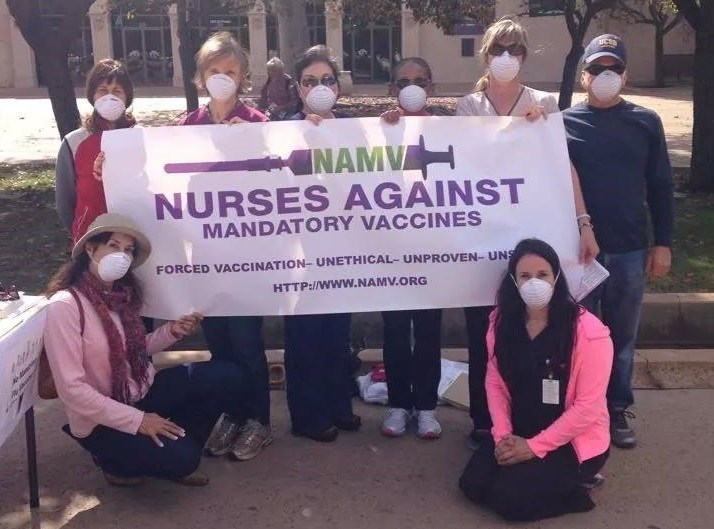
Duluth, Minn.-based Essentia Health rolled out a mandatory flu shot policy last year, and the health system will continue the program this year.

Under the program, employees had until Nov. 20, 2017, to receive a flu shot, obtain a medical/religious exemption or face termination. Essentia reported more than 99.5 percent compliance with the program.

For 2018, Essentia will continue its mandatory flu shot program, which also applies to students who train and vendors who operate at the health system’s facilities, as well as people who volunteer through Essentia programs.

To ensure there is plenty of time to review medical/religious exemptions before this year’s Nov. 20 compliance deadline, Essentia moved up the deadline to submit exemption requests.

“The first year [is] the most difficult because everyone [is] doing first-time medical and religious exemption requests,” said Rajesh Prabhu, MD, infectious disease and chief patient quality and safety officer for the system. “Those granted medical exemptions last year still [have their medical exemptions] in place. For religious exemptions, they just have to confirm their belief hasn’t changed from last year.”

He expects compliance to increase this year since fewer people need to request medical exemptions for the first time. Essentia now has 14,700 employees and began its flu shot campaign Oct. 2.

Dr. Prabhu encouraged other systems or hospitals considering a mandatory flu shot program to focus on the reasoning behind beginning the program.

“It’s not just a technical change. You have to get everyone to feel why this is important for not only our employees but [also] the patients we serve. We focus a lot of efforts on that end,” he said.

Dr. Prabhu said support from leadership helped make the first year of Essentia’s mandatory flu shot program a success.

“We had support from our CEO and everyone in leadership,” he said. “[They had] direct, in-person communication with some of those hesitant to get vaccinated because sometimes it’s good to talk to people to understand their concerns and barriers.”

Lessons learned

Essentia announced its mandatory flu shot program in September 2017 and some employees felt they didn’t get enough notice to comply. However, Dr. Prabhu said he believes some employees would not have complied with the program even if they were given more time.

“No matter how much lead time you give, I don’t think it will change the minds of people who are resistant to get the influenza vaccine,” he said.

Essentia’s flu shot policy encountered opposition from unions as well. The Minnesota Nurses Association and some other labor groups that represent Essentia employees continue to challenge the flu shot policy. In July, an arbitrator sided with Essentia over the United Steelworkers Union regarding the policy.

Despite the opposition and a few challenges in the initial rollout, Dr. Prabhu said Essentia needed the policy. He said the system was not going to get to where it wanted to be with its previous voluntary policy, which had 82 percent compliance. And, after evaluating the first year, Essentia decided it was necessary to continue the policy into the 2018-19 flu season.

2018-19 flu season

For this flu season, the CDC recommends everyone 6 months and older receive a flu vaccine by the end of October. Nasal spray FluMist was not recommended last season, but it is recommended for 2018-19 as an option for flu vaccination of nonpregnant individuals age 2 to 49.

It’s unclear how severe the 2018-19 flu season will be. Last year’s flu season was particularly severe, with about 900,000 people hospitalized and about 80,000 people dead due to the virus.

Dr. Prabhu said the flu season hasn’t hit the Duluth area yet, but Essentia is trying to do everything possible to prevent the spread of the virus among patients and staff.


Battle heats up between Stanford Health Care, union over hospital charge initiative

https://www.beckershospitalreview.com/human-capital-and-risk/battle-heats-up-between-stanford-health-care-union-over-care-cost-initiative.html?origin=bhre&utm_source=bhre

Image result for stanford health care


Stanford (Calif.) Health Care and an employees union are disputing over a November ballot initiative to place a 15 percent cap on hospital charges in Palo Alto, Calif., The Stanford Daily reported.

Seven things to know:

1. The ballot initiative, initially filed in May, would place a 15 percent cap on the amount Palo Alto-based hospitals can charge in excess of direct patient care costs. Hospitals, medical clinics and other providers in Palo Alto would have to refund payers for charges exceeding the 15 percent cap within 180 days of each fiscal year.

2. The Service Employees International Union-United Healthcare Workers West sponsored the measure. It represents healthcare workers at Stanford Health Care — which has a main campus in Palo Alto.

3. Stanford University announced its opposition to the measure in a Sept. 28 statement.

The measure “would threaten Stanford Health Care’s ability to provide top-quality healthcare to patients from Palo Alto and across the region,” officials said.

“Such a policy is estimated to reduce Stanford Health Care’s budget by 25 percent, requiring significant cutbacks and the possible closure of many services and programs that are essential to high-quality healthcare in the local area.”

4. Union spokesperson Sean Wherley argued the measure will provide accountability for local healthcare providers and the city, according to the report.

“This is about transparency [and] letting people understand how much [they] are being charged, and why [they] are being charged so much more than the clinic down the street or in the neighboring community,” he told The Stanford Daily. “This is our chance as an organization to get healthcare costs under control.”

5. The union has also taken issue with Stanford Health Care’s profits, but the system said these are necessary resources to maintain its specialists, facilities and community benefit program, and that the system invests all its profit margin.

6. Palo Alto City Council members voted this summer to oppose the measure. According to the report, they attributed the decision to not having adequate bureaucratic infrastructure to regulate healthcare charges from local providers.

7. As of Oct. 3, the political action committee of the union and the opposition committee — Protect Our Local Hospitals and Health Care — had spent a combined $1.8 million on the measure.


How are hospitals complying with patient medical record requests? Not well, study finds

https://www.beckershospitalreview.com/legal-regulatory-issues/how-are-hospitals-complying-with-patient-medical-record-requests-not-well-study-finds.html

Image result for medical record access

Most hospitals were found to be noncompliant with federal and state regulations when completing patient medical records requests, according to a study published in JAMA Network Open.

Through a simulated patient experience, researchers analyzed 83 U.S. hospitals across 29 states that maintained independent medical records request processes and medical records departments reachable by telephone. The hospitals were among the top 20 hospitals for each of the 16 adult specialties in the 2016-17 U.S. News & World Report Best Hospitals National Rankings.

Under HIPAA, patients have a right to access their protected health information. Federal law requires medical record requests must be fulfilled within 30 days of receipt, in the format the patient requests and for a fair cost to the patient.

Information on records request authorization forms differed from that obtained from patient telephone calls in terms of requestable information, formats of release and costs, according to the researchers. Additionally, 8 percent of hospitals were noncompliant with state requirements for processing times.

On telephone calls, all 83 hospitals said they were able to release entire medical records to patients, but on the forms, fewer than 9 hospitals (11 percent) provided the option of selecting one of the categories of requestable information, such as laboratory test results, medical history and discharge summaries, and only 44 hospitals’ forms (53 percent) gave patients the option to acquire the entire medical record.

There were also differences between the formats hospitals said they could use to release information. On telephone calls, 83 percent of hospitals stated they would allow the patient to pick up their records in person, compared with 48 percent of forms listing this option. Forty-seven percent of hospitals indicated they could email patients their records when patients asked on the telephone calls, while only 33 percent of hospitals’ forms listed email as an option.

The researchers also identified 48 hospitals that charged well above the federal government’s recommendation of $6.50 for electronic records — charging as much as $541.50 for a 200-page record.

“Requesting medical records remains a complicated and burdensome process for patients despite policy efforts and regulation to make medical records more readily available to patients,” the study reads. “As legislation, including the recent 21st Century Cures Act, and government-wide initiatives like MyHealthEData continue to stipulate improvements in patient access to medical records, attention to the most obvious barriers should be paramount.”


7 latest healthcare industry lawsuits, settlements

https://www.beckershospitalreview.com/legal-regulatory-issues/7-latest-healthcare-industry-lawsuits-settlements-100518.html?origin=cfoe&utm_source=cfoe

Related image

From the U.S. Equal Employment Opportunity Commission suing a Tennessee health system over its flu shot policy to a Montana health system paying $24 million to settle a whistle-blower lawsuit, here are the latest healthcare industry lawsuits and settlements making headlines.

1. EEOC sues Saint Thomas Health over mandatory flu shot policy
The U.S. Equal Employment Opportunity Commission filed a lawsuit against Nashville, Tenn.-based Saint Thomas Health Sept. 28, alleging Murfreesboro, Tenn.-based Saint Thomas Rutherford Hospital violated federal law by ordering an employee to receive a flu shot despite his religious belief

2. Montana hospital pays $24M to settle ex-CFO’s whistle-blower suit
Kalispell (Mont.) Regional Healthcare System and six subsidiaries and related entities agreed to pay the federal government $24 million to resolve allegations they violated the False Claims Act, Stark Law and the Anti-Kickback Statute.

3. DaVita resolves false claims, whistle-blower allegations for $270M
HealthCare Partners Holdings, which does business as DaVita Medical Holdings, will pay $270 million to settle False Claims Act violations and a whistle-blower lawsuit.

4. AmerisourceBergen to pay $625M to settle civil fraud charges linked to repackaging scandal
Drug wholesaler AmerisourceBergen will pay $625 million to resolve allegations that the company improperly distributed tampered and repackaged drugs.

5. Kansas physician awarded $29M in wrongful termination suit
A jury awarded a Kansas emergency physician $29 million for his lawsuit claiming he was wrongfully terminated by the emergency room staffing company he worked for after voicing concerns about the organization’s business practic

6. Disability advocacy firm sues Arizona hospital over access to patients
The Arizona Center for Disability Law filed a lawsuit Sept. 12 against Phoenix-based Arizona State Hospital, claiming hospital officials violated federal law by refusing to provide the center with access to the facility, patients and their records.

7. Louisiana health system stuck in antitrust suit brought by ex-hospital operator, health plan
BRF, a hospital operator in Shreveport, La., and the regional Vantage Health Plan are surging forward with an antitrust lawsuit against Shreveport-based Willis-Knighton Health System, even though BRF left the hospital business Oct. 1.


12 recent hospital, health system outlook and credit rating actions

https://www.beckershospitalreview.com/finance/12-recent-hospital-health-system-outlook-and-credit-rating-actions-10-5-18.html?origin=cfoe&utm_source=cfoe

Image result for hospital credit ratings


The following hospital and health system credit rating and outlook changes or affirmations occurred in the last week, beginning with the most recent:

1. S&P assigns ‘AA+’ rating to OhioHealth‘s bonds
S&P Global Ratings assigned its “AA+” long-term rating to Columbus-based OhioHealth’s $125 million series 2018A and $50 million series 2018B. Concurrently, S&P assigned its “AA+/A-1+” dual rating to the health system’s $37.5 million series 2018C and $37.5 million series 2018D.

2. S&P assigns ‘AA-‘ long-term rating to Atrium Health‘s bonds
S&P Global Ratings assigned its “AA-” long-term rating to Charlotte, N.C.-based Atrium Health’s series 2018A-E bonds. Concurrently, S&P affirmed its “AA-” underlying rating on the health system’s existing bonds.

3. S&P revises Mercy Health Services‘ outlook to positive
S&P Global Ratings revised Baltimore-based Mercy Health Services outlook to positive from stable.

4. Fitch assigns ‘BBB+’ issuer rating to ProMedica
Fitch Ratings assigned its “BBB+” issuer default rating to Toledo, Ohio-based ProMedica. Concurrently, Fitch assigned its “BBB+” long term rating to ProMedica’s $300 million series 2018A bonds and $1.15 billion series 2018B taxable bonds.

5. Fitch upgrades St. Francis Healthcare System to ‘AA’
Fitch Ratings upgraded Cape Girardeau, Mo.-based St. Francis Healthcare System’s rating to “AA” from “AA-,” affecting $139.3 million of debt. Concurrently, Fitch assigned the health system its “AA” issuer default rating.

6. S&P downgrades South Georgia Medical Center‘s rating to ‘BBB+,’ assigns negative outlook
S&P Global Ratings downgraded its long-term rating on Valdosta, Ga.-based South Georgia Medical Center’s certificates to “BBB+” from “A-.”

7. Fitch assigns ‘A’ rating to Edward-Elmhurst Healthcare‘s bonds
Fitch Ratings assigned its “A” rating to Naperville, Ill.-based Edward-Elmhurst Healthcare’s series 2018 bonds, affecting about $249.74 million of debt. Concurrently, Fitch affirmed its “A” issuer default and revenue bond ratings.

8. S&P revises PeaceHealth‘s outlook to positive for improved operations
S&P Global Ratings affirmed its “A” long-term and underlying rating on Vancouver, Wash.-based PeaceHealth and assigned its “A” rating to the health system’s series 2018A bonds. Concurrently, the outlook was revised to positive from stable.

9. S&P revises SSM Healthcare‘s outlook to stable
S&P Global Ratings affirmed its “A+” long-term and underlying rating on St. Louis-based SSM Health. Concurrently, the outlook was revised to stable from negative.

10. S&P downgrades Crawford Memorial Hospital‘s rating to ‘BBB’
S&P Global Ratings downgraded Robinson, Ill.-based Crawford Memorial Hospital’s long-term and underlying rating to “BBB” from “A.”

11. S&P downgrades Lexington Medical Center to ‘A’ after error correction
S&P Global Ratings downgraded West Columbia, S.C.-based Lexington Medical Center’s series 2011, 2016 and 2017 revenue bonds to “A” from “A+.

12. S&P assigns ‘AA-‘ rating to Parkview Regional Medical Center
S&P Global Ratings assigned its “AA-” rating to Fort Wayne, Ind.-based Parkview Regional Medical Center’s series 2018 and 2019A bonds, affecting about $162 million of debt.