The health care industry needs workers. So it’s turning to former factory and retail workers

http://money.cnn.com/2018/06/21/news/economy/health-care-worker-shortage-ohio/index.html

Image result for allied health


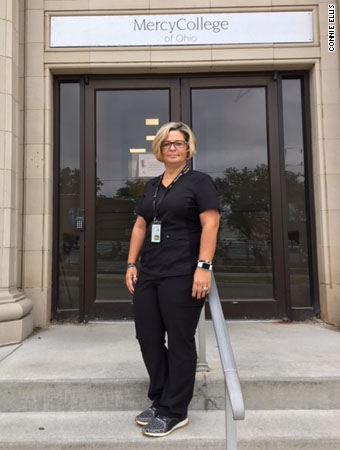
Connie Ellis had been working at railroad operator CSX Corp. for seven years when she accepted a buyout package and left the company.

In the three years since, she’s worked as a janitor at a local college, then as a quality manager at an auto supplier. But she wanted a position that offered a lot more job security – and better pay than those jobs.

When she heard about the growing demand for health care workers, she started looking around and found Mercy College of Ohio about 10 minutes away.

The school, which is based in Toledo, specializes in health sciences and offers 16 programs that train students for a variety of medical professions, including certificate programs that can be completed in as little as one semester to master’s degrees.

connie ellis
Connie Ellis enrolled in Mercy College’s sleep technology certificate program in January.

In January, Ellis enrolled to get a certificate in polysomnographic technology, which will qualify her to conduct sleep studies for patients suffering from disorders such as sleep apnea. To her, it was a perfect fit: not only could she complete the program in just 12 months, she was already accustomed to working late shifts.

“I worked nights a lot at CSX. And most sleep studies are also done at night,” she said, noting that her classmates include a former mechanic, a musician and someone who worked for a delivery company.

At job fairs and community events, Mercy College’s recruiters are seeking out students from a variety of fields, but especially the manufacturing and retail sectors — which have been hit by layoffs after big companies like General Motors, DHL and Toys R Us left scores of people looking for work.

That could prove to be a real boon for the area’s health care system, said Jason Theadore, vice president of ambulatory services and business development with Mercy Health, which partners with the college and operates 23 hospitals and 500 health care centers throughout the state.

Manufacturing workers, he said, come with the experience of working long shifts and odd hours And former retail workers can help put a different spin on customer care in a health care setting.

“People from diverse career backgrounds are helping us think differently about how we deliver care,” said Theadore.

mercy college opthalmic technology
Displaced workers are enrolling in health care certificate programs, such as Mercy College’s 12-month ophthalmic technology course.

The health care industry also desperately needs the workers. Consulting firm Mercer estimates the United States will need to hire 2.3 million new health care workers by 2025 to adequately take care of the country’s aging population.

“Right now, the labor supply just isn’t there,” said Matt Stevenson, a partner at Mercer.

With unemployment near record lows, the workers that are available often aren’t armed with the right skills.

That’s where programs like Mercy College’s comes in.

Each year, the school graduates roughly 400 students. Among its most popular short-term programs are the ophthalmic technology (training to assist ophthalmologists), community health worker, EMT/paramedic and the sleep technology certificates.

Many of the grads end up working for the Mercy Health System, which operates 23 hospitals and 500 health care centers throughout Ohio.

Kathy Damshroder 2
Kathy Damschroder conducts sleep studies for patients suffering from disorders such as sleep apnea.

Kathy Damshroder has been teaching polysomnographic technology at Mercy College since last year.

“Everyone with this skill who wants a job has gotten one,” said Damshroder, 55, who also works as a sleep technologist at Mercy Health hospital in Toledo.

According to Mercy College, nearly all the school’s certificate graduates have been employed in their specialty.

Damshroder graduated from Mercy in 2010. Before that, she ran her own hair salon for 25 years in the nearby town of Elmore, Ohio.

“I still own it,” she said.

Like Ellis, the long-term job security of working in the health care industry appeals to her.

“And there’s bang for the buck,” she said. “Entry level pay is about $22 an hour and goes up. The other huge draws are benefits and retirement plans, which I didn’t have as an entrepreneur.”


Healogics to Pay Up to $22.5M in False Claims Settlement

https://www.healthleadersmedia.com/finance/healogics-pay-225m-false-claims-settlement

Image result for hyperbaric chamber

Whistleblower lawsuits had alleged that the Florida-based wound care specialist knowingly filed bogus claims to Medicare for services that weren’t needed.

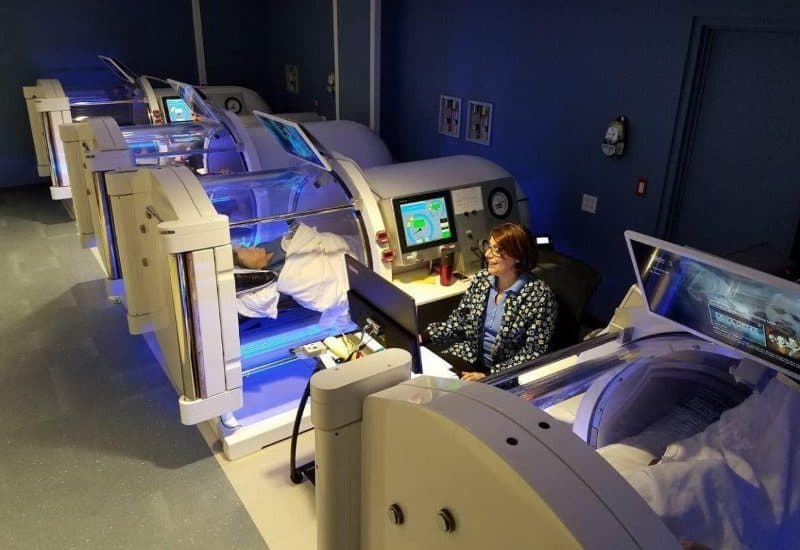
Healogics, Inc. will pay up to $22.51 million to settle whistleblower allegations that billed Medicare for medically unnecessary and unreasonable hyperbaric oxygen therapy, the Department of Justice said.

Jacksonville, FL-based Healogics manages nearly 700 hospital-based wound care centers across the nation.

The settlement resolves allegations that from 2010 through 2015, Healogics knowingly submitted false claims to Medicare for medically unnecessary or unreasonable HBO therapy, DOJ said.

Healogics will pay $17.5 million, plus an additional $5 million if certain financial contingencies occur within the next five years, for a total potential payment of up to $22.51 million. The company has also has entered into a five-year Corporate Integrity Agreement with the Department of Health and Human Services Office of Inspector General.

“When greed is the primary factor in performing medically unnecessary health care procedures on Medicare beneficiaries, both patient well-being and taxpayer funds are compromised,” said HHS OIG Special Agent in Charge Shimon R. Richmond.

The settlement came as the result of whistleblower lawsuits filed by a former executive at Healogics, and a separate suit filed by two doctors and a former program director who worked at Healogics-affiliated wound care centers. The four whistleblowers are expected to share $4.2 million of the settlement.


Temple University Health System hires restructuring officer for potential sale

https://www.beckershospitalreview.com/hospital-transactions-and-valuation/temple-university-health-system-hires-restructuring-officer-for-potential-sale.html

Image result for temple university hospital

Philadelphia-based Temple University’s board of trustees announced June 20 the institution will hire a chief restructuring officer for its affiliated health system, and is considering the potential sale of two of its hospital assets, according to The Inquirer.

Temple University President Richard Englert and Temple University Health System CEO Larry Kaiser, MD, said in a joint statement to the community TUHS “faces significant operational and financial challenges. More must be done to maintain a viable and sustainable healthcare enterprise in a highly competitive and volatile market,” according to the report.

Officials also said the health system is considering the sale of Jeanes Hospital and the Fox Chase Cancer Center, both in Philadelphia.

The Inquirer reports Temple University Health System incurred a net loss of $31.1 million in the nine months ended March 31, compared to the system’s $19.9 million loss the year prior.


Allegheny Health Network plans four micro-hospitals

https://www.healthcaredive.com/news/allegheny-health-network-plans-four-micro-hospitals/526218/

Dive Brief:

  • Allegheny Health Network (AHN) said it will open neighborhood hospitals near Pittsburgh in Brentwood Borough, Hempfield, Hamar and McCandless over the next year.
  • The smaller facilities will be open 24/7 and offer an emergency department, 10 inpatient beds, diagnostic care and other medical services. The neighborhood hospitals will also have onsite primary and specialty care physicians.
  • The four neighborhood hospitals are part of AHN and parent company Highmark Health’s $1 billion investment plan in western Pennsylvania.

Dive Insight:

AHN said it’s creating a for-profit joint venture with Emerus to build and manage the new facilities. The Texas-based company operates neighborhood hospitals, also known as micro-hospitals.

AHN said the four neighborhood hospitals are going into communities that have limited options for healthcare services.

Cynthia Hundorfean, AHN president and CEO, said the neighborhood hospitals will use a “patient-centered model” that will focus on emergency care, short hospital stays and outpatient services.

As hospitals move away from large, inpatient facilities, some healthcare organizations have turned to these kinds of facilities. They’re smaller, have less overhead and are not meant for long patient stays. More serious acute care cases would go to traditional local hospitals. Micro-hospitals have a small inpatient component, which makes them different from urgent care and standalone emergency departments.

Earlier this year, the Advisory Board Company released a report on micro-hospitals that predicted significant growth over the next five years. The report predicted that micro-hospital growth will depend on regulatory decisions and certificate of need approvals.

“Ultimately, the new wave of micro-hospitals will need to show they can consistently meet CMS’ minimum census requirements. However, the strategic flexibility these sites offer parent systems means their future can be bright. Expect significant growth over the next five years, with the potential for further growth contingent on positive clinical and financial results,” Advisory Board said.

AHN’s neighborhood hospital plan comes after the provider wing of Highmark Health reported its best operating performance year. Highmark announced in March that AHN enjoyed a nearly 8% increase in revenues in 2017 compared to the previous year. AHN finished 2017 with $3.1 billion in revenues.

Company officials said factors in the growth included stable hospital volumes and high patient acuity, greater operational efficiencies, better care coordination and improved business and clinical process, such as revenue cycle operations. In addition, physician office visits increased by more than 4% and ambulatory surgery center volume increased by 10%. However, AHN also laid off 75 employees in corporate jobs earlier this year, though the company said it plans to add another 1,000 jobs.


CMS seeks input on Stark Law changes amid value-based care shift

https://www.healthcaredive.com/news/cms-seeks-input-on-stark-law-changes-amid-value-based-care-shift/526239/

Related image

Dive Brief:

  • The Centers for Medicare & Medicaid Services asked stakeholders Wednesday for input on how to change the Stark Law to allow for better care coordination and new alternative payment models or other novel financial arrangements.
  • The American Hospital Association has been vocal in pushing for changes to the physician self-referral law, calling it outdated. AHA argues the law presents “nearly impenetrable roadblocks in the move toward value-based care.”
  • The agency specifically is requesting input on what new exemptions to the Stark Law are needed to protect accountable care organization models, bundled payment models and other payment models, including how to allow coordination care outside of an alternative payment model. It also asks for help examining definitions for terminology such as risk-sharing, enrollee, gain-sharing and other terms.

Dive Insight:

The Stark Law, enacted in 1989, aims to cut down on financial incentives impacting physician care decisions. It prohibits certain Medicare-payable referrals to entities they have a financial or familial relationship with, and stops such entities from filing Medicare claims for referred services, unless exempted under certain instances.

CMS says that it is issuing the RFI in response to comments it has received that raised concern that the Stark Law is impeding participation in healthcare delivery and payment reform efforts.

“We are particularly interested in your thoughts on issues that include, but are not limited to, the structure of arrangements between parties that participate in alternative payment models or other novel financial arrangements, the need for revisions or additions to exceptions to the physician self-referral law, and terminology related to alternative payment models and the physician self-referral law,” the CMS notice states.

In a statement submitted by AHA to the House Subcommittee on Health of the Committee on Ways and Means, the group urged Congress to step in to change Stark Law to allow hospitals and physicians to more closely work together.

“Congress should create a clear and comprehensive safe harbor under the anti-kickback law for arrangements designed to foster collaboration in the delivery of health care and incentivize and reward efficiencies and improvement in care,” AHA said.  “In addition, the Stark Law should be reformed to focus exclusively on ownership arrangements. Compensation arrangements should be subject to oversight solely under the anti-kickback law.”

CMS Administrator Seema Verma appears to be sympathetic. In a Wednesday blog post, she said the Stark Law may be prohibiting value-based arrangements that HHS has made a priority to shift towards. Previously, Verma said that CMS was going to put together an inter-agency group to examine potential changes to the law.

“I think that Stark was developed a long time ago, and this gets to where we are going modernizing the program,” Verma told AHA President and CEO Rick Pollack during a webcast in January. “The payment systems and how we are operating is different, and we need to bring along some of those regulations and figure out what we can do. And I’m not sure that this is not going to require some congressional intervention as well.”

CMS is asking for comments to be submitted on the RFI by August 24.


AT&T, Time Warner, and the Future of Health Care

https://www.commonwealthfund.org/blog/2018/att-time-warner-and-future-health-care?omnicid=EALERT%25%25jobid%25%25&mid=%25%25emailaddr%25%25

AT&T Time Warner Merger

Policymakers and private actors should not interpret a federal court’s AT&T and Time Warner ruling as an unconditional green light for vertical integration in health care.

The need for change in the U.S. health care system is obvious, but whether vertical integration is the change we need remains to be determined.

The recent federal district court ruling allowing the merger of AT&T and Time Warner — a case of so-called vertical integration — will likely encourage similar unions throughout the U.S. economy, including in health care. Nevertheless, a close look at the court’s decision, and at the wide variety of vertical health care mergers under way, suggests that policymakers and private actors should not interpret the court’s ruling as an unconditional green light for vertical integration in health care, or any other sector.

Vertical integration typically involves the combination of entities operating on different parts of a supply chain in the production of a particular product. Manufacturers of tires, for example, are part of the supply chain that results in a finished automobile. Similarly, ambulatory physician services are sometimes seen as an input on the supply chain of more advanced hospital services. The acquisition of physician practices by hospitals is often characterized as vertical integration.

Some antitrust experts question whether the analogy between manufactured products and health care delivery is accurate. Independent physicians, for example, often work within hospitals and help to produce their “products.” Nevertheless, there are clear differences between mergers across the same types of health care organizations, like hospitals, and those between different types of providers, like physicians and hospitals.

The AT&T/Time Warner case was the first time in 40 years that the government has taken a proposed vertical integration to court, and many commentators have noted that antitrust theory with respect to vertical integration could use some updating. In the meantime, however, Judge Richard Leon’s 172-page opinion seems to have relied on traditional antitrust considerations: would the merger increase or decrease competition, and thereby increase or decrease consumer welfare? His ruling rested heavily on what he viewed as the government’s failure to supply evidence that the merger would have adverse effects. In other words, if the government had produced more convincing data, the ruling could have gone the other way.

Judge Leon’s ruling may be appealed and, if so, may not stand. But if it does, what are its implications for vertical integration in health care? Simply put, the facts matter. And unfortunately, the facts about vertical integration in health care are obscure, and likely to vary enormously according to the details of the merger and from market to market.

Evidence on the effects of horizontal health care mergers has grown considerably in recent years, and generally shows that they increase prices. But studies of vertical health care mergers are much less common. Perhaps the most relevant experience concerns long-standing integrated health systems, such as Kaiser Permanente, Intermountain, Geisinger, and a handful of similar organizations.

Widely regarded as industry leaders in quality and efficiency, these systems seem to demonstrate the benefits of vertical integration: they are able to coordinate services across different types of providers, and, when incentives encourage it, they can easily substitute less expensive services (e.g., ambulatory care) for more expensive ones (e.g., hospital care). However, whether the experiences of these integrated systems are generalizable to the current flock of mergers is unclear. Each of these venerable organizations has a unique history and culture that have shaped its performance over decades.

Studies of vertical integration will have to take into account the type of merger under consideration. The most common type of vertical integration seems to be the acquisition of physician groups — both primary care and specialty — by hospitals. Between 2012 and 2016, the number of hospital-employed U.S. physicians increased from 95,000 to 155,000.

But health care is witnessing a variety of other types of vertical integration. Insurers are buying physician groups, as in the case of UnitedHealth Group’s acquisition of parts of DaVita’s physician network. Drug store chains are buying insurers, as in the case of CVS’s purchase of Aetna. And integrated health systems like Partners HealthCare are proposing to buy insurers like Harvard Pilgrim Health Care.

The effects of these varied mergers will depend on the types of services being combined and the markets affected. From both a societal and legal standpoint, the facts matter.

For example, it turns out that the CVS-Aetna merger includes an important horizontal union between Part D health plans owned independently by CVS and Aetna. Part D health plans provide drug coverage to Medicare beneficiaries. In recent testimony before the California Department of Insurance, economist Richard Scheffler showed that in a number of markets, the merger of these Part D plans would significantly reduce competition, and thereby, could potentially increase the prices of drug coverage for Medicare patients. Fear of consolidation among Part D plans has caused the American Medical Association to oppose CVS’s acquisition of Aetna.

Adding to the uncertainty surrounding these questions is the unique nature of the health market, in which governments are the largest purchasers and consumers often don’t know the prices or value of the products they buy. Traditional competition in local markets sometimes results in radically increasing prices and costs, as providers pile on new technologies and facilities and compete for star physicians in an effort to attract customers. And many parts of health care already have a high degree of consolidation that limits price competition.  The result is a level of dysfunction that has created an almost universal cry for radical disruption of the status quo.

Health care is a conundrum on many levels, and how and whether to regulate vertical integration among its varied components may turn out to be another one. The need for change is obvious. Whether vertical integration is the change we need, and how the courts will treat it, remain to be determined.


Should My Health System Launch a Health Insurance Plan?

Should My Health System Launch a Health Insurance Plan?

Image result for Health Plan

Here are a few things providers whose vision and strategy include launching a health plan should consider

In 1929 the stock market crashed and the US collapsed into the Great Depression. Coincidentally, it was also in 1929 that Baylor Hospital in Dallas Texas devised a plan that would provide access to health care services to patients and give patients the ability to pay for their care so the hospital could remain viable.

In the nine decades since Baylor Hospital helped create what is known today as Blue Cross, hospitals, physicians and other providers of health care services have regularly asked themselves the questions: Should we develop and own a health insurance plan? Should we take financial risk for care we provide? Should we partner with physicians and/or with a health insurer?

Since the passage of the Affordable Care Act (ACA) in 2010, hospital and physician executives have considered these questions with new motivation. Several have jumped in, but only a few health system-sponsored plans launched in the ACA era are nearing profitability. Others have deferred, waiting to see what develops, wanting to digest lessons from Medicare’s ACO program, direct contracts with employers, and ACO arrangements with commercial payers. The latter has been difficult to achieve even for risk-motivated providers, as many dominant commercial plans are reticent to enable providers to manage risk—and in the long run, create a direct competitor. This has provided new motivation for health systems and large physician groups to evaluate a provider-owned plan.

Today’s mantra is “we are moving from volume to value!” Though the words are fresh, the concepts and concerns are much the same, as are the risks and rewards. Having served in executive roles in provider owned health plans for nearly 40 years, 19 years at Kaiser Permanente, and 21 years at Sentara Health Care, I have observed multiple cycles of providers rushing into the health plan business followed by the rapid exit of providers who fail in managing risk. Here are a few “Be’s…” providers whose vision and strategy include launching a health plan should consider:

Be cautious, but not cowardly

Be courageous, but not careless

Be cognizant, but not cocky


These “Be’s…” need some explanation.

Commentary:

A five-year business plan that anticipates start-up costs, operating losses and regulatorily required “risk-based capital” will give executives an “eyes-wide-open” going-in perspective. A Board-approved business plan that is both conservative and credible will plan on operating losses for several years.

When the first members are enrolled in the new health insurance plan, the operating losses will begin. Yes, every start-up health plan will experience losses for a period of time. Detailed preparation and thoughtful execution will not eliminate losses in the early years, but they will hasten the march to profitability.

Commentary:

Getting the right people, and the right number of people on this bus is imperative. Expert people are available, but they are probably not current members of your team. Inexperienced talent and under staffing this strategic initiative will result in disaster.

The total value of your health insurance plan includes much more than bottom line performance. Provider sponsored plans can lead the market in customer satisfaction, quality of care metrics and “total cost of care.” Table stakes for operating a health plan include enrollment, billing, claims processing and financial systems. These systems can be purchased or partnered. However, to maximize value, wise investment in population health IT should be implemented as soon as possible. State of the art population health tools will enable providers to close gaps in care and improve both health outcomes and financial performance. Later on, investing in consumer-centric digital health applications will optimize the customer experience and offer value a provider sponsored plan can bring to the market in a unique manner.

Growing the membership as fast as possible is vital. Without substantial membership, providers will have little reason to focus on changing the model of care. Rapid membership growth can occur in a variety of ways, but the best way is to win contracts for large populations. Securing a Medicaid contract, enrolling the provider’s employees and winning two or three large group commercial accounts, and Medicare Advantage/CMS ACO depending on the players in the MA space in a given market are all good strategies for rapid growth. The sequencing of membership type is less important than the rate of growth.

Commentary:

Given the losses suffered by providers who took risk in 1990’s, and the spotty performance of provider sponsored health plans in today’s CMS ACOs and commercial offerings, you are probably thinking, why do I think we can do better?  Being aware of other’s failures and successes will embolden Boards and CEOs to accept the risk because they recognize the rewards.

A few lessons to be learned from Kaiser include:

  • The imperative of physician leadership and commitment
  • The efficiency of integrated services
  • The clarity of the connection between quality of care and the cost of care

Lessons to be learned from provider sponsored health plans, both those that have succeeded and those that have failed, include:

  • The tolerance and patience for early losses
  • The balance between integration and separation of the health plan and the providers
  • The clarity of purpose and mission. Having a health plan to fill hospital beds is not a sustainable mission

Additional Considerations:

Beyond financial results, most provider sponsored health plans tout other benefits that speak to both the mission of the organization and the financial performance of the enterprise in total. Such benefits include, but are not limited to:

  1. Improved performance in quality, service and total cost of care
  2. Enhanced understanding of the consumer/customer
  3. Control of the premium dollar

Of these added benefits, perhaps the benefit derived from the control of the premium dollar is least intuitive and most important. Here is a simple way to think about this issue:

If XYZ Health Insurer brings in $100 of premium, they will pay a hospital about $40 for inpatient and outpatient services. If the hospital is well run, it will make 4% or $1.20 on the $40 of revenue.

However, if the hospital owns the health insurance plan, and the insurance plan is making a 2% margin on the premium of $100 ($2.00), then the enterprise will earn $3.20, 2% on the premium and 4% on the “inter-company” transfer between the owned health insurance company and the hospital. (NOTE: this is a simple example. The actual arrangements between the hospital, its owned health insurance plan, and the contract with the non-owned health insurance companies will determine the actual results, but the principle is demonstrated with the simple example.)

To be sure, the challenges in owning and operating a health insurance plan are both daunting and different from operating a hospital system. However, the rewards can be worth the effort.

One provider sponsor health insurance plan generated enough net income over a five-year period that the “dividend” to the sponsoring health care system was deployed by the system to build not just one new hospital, but three!

Nearly 90 years after Baylor created the first Blue Cross health insurance company, it merged with Scott & White Clinic, which owns a health insurance plan. Baylor Scott & White is well-positioned to thrive as a fully integrated delivery system. If your system is asking “Should we launch a health plan?” please reach out. I’d be happy to share more of the lessons I’ve learned in my decades as CEO of provider sponsored health plans and discuss your system’s opportunity.


That ‘Living Will’ You Signed? At The ER, It Could Be Open To Interpretation.

https://khn.org/news/that-living-will-you-signed-at-the-er-it-could-be-open-to-interpretation/?utm_campaign=KFF-2018-The-Latest&utm_source=hs_email&utm_medium=email&utm_content=63802439&_hsenc=p2ANqtz-8uQV0eVmG6wiZv36zFavvka4x7M8g4pB9yDnPy-P8deurp_gxKZvOLOC81MBUTzeYS82F1UH-wLxvRh2GzcFnuXmwbtg&_hsmi=63802439

“Don’t resuscitate this patient; he has a living will,” the nurse told Dr. Monica Williams-Murphy, handing her a document.

Williams-Murphy looked at the sheet bearing the signature of the unconscious 78-year-old man, who’d been rushed from a nursing home to the emergency room. “Do everything possible,” it read, with a check approving cardiopulmonary resuscitation.

The nurse’s mistake was based on a misguided belief that living wills automatically include “do not resuscitate” (DNR) orders. Working quickly, Williams-Murphy revived the patient, who had a urinary tract infection and recovered after a few days in the hospital.

Unfortunately, misunderstandings involving documents meant to guide end-of-life decision-making are “surprisingly common,” said Williams-Murphy, medical director of advance-care planning and end-of-life education for Huntsville Hospital Health System in Alabama.

But health systems and state regulators don’t systematically track mix-ups of this kind, and they receive little attention amid the push to encourage older adults to document their end-of-life preferences, experts acknowledge. As a result, information about the potential for patient harm is scarce.

new report out of Pennsylvania, which has the nation’s most robust system for monitoring patient safety events, treats mix-ups involving end-of-life documents as medical errors — a novel approach. It found that in 2016, Pennsylvania health care facilities reported nearly 100 events relating to patients’ “code status” — their wish to be resuscitated or not, should their hearts stop beating and they stop breathing. In 29 cases, patients were resuscitated against their wishes. In two cases, patients weren’t resuscitated despite making it clear they wanted this to happen.

The rest of the cases were “near misses” — problems caught before they had a chance to cause permanent harm.

Most likely, this is an undercount, said Regina Hoffman, executive director of the Pennsylvania Patient Safety Authority, adding that she was unaware of similar data from any other state.

Asked to describe a near miss, Hoffman, co-author of the report, said: “Perhaps I’m a patient who’s come to the hospital for elective surgery and I have a DNR (do not resuscitate) order in my [medical] chart. After surgery, I develop a serious infection and a resident [physician] finds my DNR order. He assumes this means I’ve declined all kinds of treatment, until a colleague explains that this isn’t the case.”

The problem, Hoffman explained, is that doctors and nurses receive little, if any, training in understanding and interpreting living wills, DNR orders and Physician Orders for Life-Sustaining Treatment (POLST) forms, either on the job or in medical or nursing school.

Communication breakdowns and a pressure-cooker environment in emergency departments, where life-or-death decisions often have to be made within minutes, also contribute to misunderstandings, other experts said.

Research by Dr. Ferdinando Mirarchi, medical director of the department of emergency medicine at the University of Pittsburgh Medical Center Hamot in Erie, Pa., suggests that the potential for confusion surrounding end-of-life documents is widespread. In various studies, he has asked medical providers how they would respond to hypothetical situations involving patients with critical and terminal illnesses.

In one study, for instance, he described a 46-year-old woman brought to the ER with a heart attack and suddenly goes into cardiac arrest. Although she’s otherwise healthy, she has a living will refusing all potentially lifesaving medical interventions. What would you do, he asked more than 700 physicians in an internet survey?

Only 43 percent of those doctors said they would intervene to save her life — a troubling figure, Mirarchi said. Since this patient didn’t have a terminal condition, her living will didn’t apply to the situation at hand and every physician should have been willing to offer aggressive treatment, he explained.

In another study, Mirarchi described a 70-year-old man with diabetes and cardiac disease who had a POLST form indicating he didn’t want cardiopulmonary resuscitation but agreeing to a limited set of other medical interventions, including defibrillation (shocking his heart with an electrical current). Yet 75 percent of 223 emergency physicians surveyed said they wouldn’t have pursued defibrillation if the patient had a cardiac arrest.

One issue here: Physicians assumed that defibrillation is part of cardiopulmonary resuscitation. That’s a mistake: They’re separate interventions. Another issue: Physicians are often unsure what patients really want when one part of a POLST form says “do nothing” (declining CPR) and another part says “do something” (permitting other interventions).

Mirarchi’s work involves hypotheticals, not real-life situations. But it highlights significant practical confusion about end-of-life documents, said Dr. Scott Halpern, director of the Palliative and Advanced Illness Research Center at the University of Pennsylvania’s Perelman School of Medicine.

Attention to these problems is important, but shouldn’t be overblown, cautioned Dr. Arthur Derse, director of the center for bioethics and medical humanities at the Medical College of Wisconsin. “Are there errors of misunderstanding or miscommunication? Yes. But you’re more likely to have your wishes followed with one of these documents than without one,” he said.

Make sure you have ongoing discussions about your end-of-life preferences with your physician, surrogate decision-maker, if you have one, and family, especially when your health status changes, Derse advised. Without these conversations, documents can be difficult to interpret.

Here are some basics about end-of-life documents:

Living wills. A living will expresses your preferences for end-of-life care but is not a binding medical order. Instead, medical staff will interpret it based on the situation at hand, with input from your family and your surrogate decision-maker.

Living wills become activated only when a person is terminally ill and unconscious or in a permanent vegetative state. A terminal illness is one from which a person is not expected to recover, even with treatment — for instance, advanced metastatic cancer.

Bouts of illness that can be treated — such as an exacerbation of heart failure — are “critical” not “terminal” illness and should not activate a living will. To be activated, one or two physicians have to certify that your living will should go into effect, depending on the state where you live.

DNRs. Do-not-resuscitate orders are binding medical orders, signed by a physician. A DNR order applies specifically to cardiopulmonary resuscitation (CPR) and directs medical personnel not to administer chest compressions, usually accompanied by mouth-to-mouth resuscitation, if someone stops breathing or their heart stops beating.

The section of a living will specifying that you don’t want CPR is a statement of a preference, not a DNR order.

A DNR order applies only to a person who has gone into cardiac arrest. It does not mean that this person has refused other types of medical assistance, such as mechanical ventilation, defibrillation following CPR, intubation (the insertion of a breathing tube down a patient’s throat), medical tests or intravenous antibiotics, among other measures.

Even so, DNR orders are often wrongly equated with “do not treat” at all, according to a 2011 review in the Journal of General Internal Medicine.

POLST forms. A POLST form is a set of medical orders for a seriously ill or frail patient who could die within a year, signed by a physician, physician assistant or nurse practitioner.

These forms, which vary by state, are meant to be prepared after a detailed conversation about a patient’s prognosis, goals and values, and the potential benefits and harms of various treatment options.

Problems have emerged with POLST’s increased use. Some nursing homes are asking all patients to sign POLST forms, even those admitted for short-term rehabilitation or whose probable life expectancy exceeds a year, according to a recent article authored by Charlie Sabatino, director of the American Bar Association Commission on Law and Aging. Also, medical providers’ conversations with patients can be cursory, not comprehensive, and forms often aren’t updated when a patient’s medical condition changes, as recommended.

“The POLST form is still relatively new and there’s education that needs to be done,” said Amy Vandenbroucke, executive director of the National POLST Paradigm, an organization that promotes the use of POLST forms across the U.S. In a policy statement issued last year and updated in April, it stated that completion of POLST forms should always be voluntary, made with a patient’s or surrogate decision-maker’s knowledge and consent, and offered only to people whose physician would not be surprised if they die within a year.


7 AREAS CFOS MUST ADDRESS FOR ORGANIZATIONAL VIABILITY

https://www.healthleadersmedia.com/finance/7-areas-cfos-must-address-organizational-viability?utm_source=silverpop&utm_medium=email&utm_campaign=20180613_HLM_SPOTLIGHT_Cost-Containment%20(1)&spMailingID=13684315&spUserID=MTY3ODg4NTg1MzQ4S0&spJobID=1421195534&spReportId=MTQyMTE5NTUzNAS2

Image result for financial viability


An upcoming CFO roundtable provides a peer-sharing platform to learn best practices for advancing a healthcare organization’s financial health.

Today’s healthcare financial leaders face escalating costs, quality improvement issues, difficult reimbursement environments, an increasingly complex service portfolio, and risk management associated with performance contracting.

Pressure mounts on CFOs to ensure their organizations remain viable as they deal with these issues, which makes gleaning proven strategies from colleagues imperative.

Four dozen executives will convene at a private roundtable forum during the 2018 HealthLeaders Media CFO Exchange, August 8–10 in Santa Barbara, California, to
address top-of-mind concerns.

In pre-event planning calls, Exchange participants—representing integrated health systems, academic medical centers, community hospitals, and safety net providers from across the U.S.—want to know how others are taking on risk, improving costs, addressing consumerism, and capturing additional reimbursement.

During the two-day event, a series of moderated roundtables will explore areas of special interest expressed by CFOs, including the following:

1. Cost improvement

Since costs are increasing at rates higher than reimbursement, how does a CFO drive cost performance to maintain sufficient operating margins? How are systems successfully leveraging scale to rationalize administrative and support services?

2. Proliferation of mergers and acquisitions

How can an independent organization survive in this environment? Should it consider other affiliations? For those involved in new entities, how are leaders achieving value?

3. Taking on risk

How does an organization prepare to take on and reduce risk, and when does an organization know that it is ready? How can CFOs build reserves to offset unexpected outlays?

4. Enhancing revenue cycle performance

How can financial leaders improve payer terms, reduce denials, ensure payer compliance, and improve clinical documentation? What are effective ways to deploy new workflow technologies in patient accounts?

5. Performance-based contracts

How are organizations engaging medical staff to reduce the cost of care and improve outcomes?

6. Medical group employment

How does a health system minimize provider subsidies for employed physicians and improve practice performance?

7. Medical consumerism

How can healthcare organizations compete against disruptors in the growing environment of consumer choice? What are creative ideas for meeting consumer demand without adding cost?

Additional information will be shared during the two-day gathering. The CFO Exchange is one of six annual HealthLeaders Media events for healthcare thought leadership and networking.

Revenue cycle and patient financial experience

Recently, HealthLeaders Media hosted a Revenue Cycle Exchange, which brought together 50 executives to discuss improving the patient financial experience; maximizing reimbursement; managing claims denials; technology adoption and data analytics; revenue cycle optimization; and creating a leaner, more effective team.

Noting how consumerism is influencing bill payment and giving rise to the patient voice, leaders are seeking ways to make paying easier. Consumer feedback suggested easy-to-understand and consolidated statements.

“We have a single business office with Epic, so regardless of where a patient gets their services, they get one bill from our organization,” says Cassi Birnbaum, director of health information management and revenue integrity at UC San Diego Health.

“We’ve also created a position for a patient experience director, so any complaint goes through that unit and they’ll contact one of my supervisors to ensure the patient gets the answers they need. That’s helped a lot and provides a one-stop, concierge, patient-facing experience to help ensure the patient’s balance is paid,” Birnbaum says.

Providing estimates and leveraging technology are also helpful for fostering patient payments. More health systems are promoting MyChart, an online tool for patients to manage their health information, as well as kiosks in key locations.

“We have a patient portal in which you can see any outstanding balance at a hospital or clinic and decide what you want to pay today,” says Mary Wickersham, vice president of central business office services at Avera in Sioux Falls, South Dakota.

“Patients can also extend their payments since we have a hyperlink that goes to the extended loan program if needed. With kiosks at our clinics, patients pull out their credit card and complete their copay. Nobody asks; they just automatically do it,” she says.

Staffing

Front- and back-end staff play an integral role in calculating payment estimates, collecting dollars in advance of procedures and tests, and communicating the often-puzzling connection between hospital charges for physician practice and provider-based department patients.

“One of our big challenges now is we’re bringing a lot of that back-end work to the front,” says Terri Etnier, director of system patient access at Indiana University Health in Bloomington, Indiana.

Centralizing processes

As facilities move toward centralized scheduling systems to manage reimbursement, some facilities are centralizing coding and billing processes.

“We don’t have a full comprehensive preregistration function for our clinics mainly due to volume. We’re piloting a preregistration group for our clinic visits to work accounts ahead of time since we are continuing to work toward automation,” says Katherine Cardwell, assistant vice president at Ochsner Health System in New Orleans.

“We have kiosks in some of our clinics. Epic has an e-precheck function where we can now do forms. You can sign forms on your phone, and make your payment and your copayment ahead of time. And you can actually get a barcode that you can just scan when you get to the clinic,” Cardwell says.

INSURANCE CONSOLIDATION MAY SOON INCLUDE HOSPITALS, CREATE POWERHOUSES

https://www.healthleadersmedia.com/finance/insurance-consolidation-may-soon-include-hospitals-create-powerhouses

Image result for healthcare conglomerates


Recent moves to consolidate insurance customers under one corporate structure could lead next to carriers acquiring hospital networks.

The continued market consolidation and efforts to create an “all-in-one” approach to healthcare insurance customers may lead to carriers acquiring large hospital networks, particularly if the CVS-Aetna transaction proves to be successful and profitable, one analyst says.

The mergers and acquisitions in the insurance industry over the last year is the preamble for what will happen over the next two years, says CEO of Tom Borzilleri of InteliSys Health, a company aimed at bringing greater transparency to prescription drug prices, and the former founder and CEO of a pharmacy benefit manager (PBM).

The effort will ramp up to include hospitals if health plans start seeing financial rewards from the recent moves, he says.

“We are seeing carriers acquiring PBMs, as with Cigna/Express Scripts, and pharmacy chains/PBMs acquiring carriers, like CVS/Aetna, in search of cost efficiencies to increase earnings,” he says. “One may view these mergers and acquisitions as a favorable strategy to delivering both cost savings and patient convenience, but this strategy also has the potential to produce a serious negative effect on other critical stakeholders like doctors, hospitals, clinics, and others.”

In the past, many carriers managed their pharmacy benefits internally and found that it would be more cost-efficient to outsource that function to third-party PBMs, Borzilleri notes.

“As the PBM industry grew significantly over the last decade, allowing PBMs to gain market share and buying power for the millions of lives they managed, it opened the door for PBMs to methodically profiteer at the expense of both the carriers and their insured through the vague and complicated contracts for services the carriers were forced to sign,” he says.

Borzilleri continues, “In essence, the carriers really didn’t know what they were paying for at the end of the day for these services. As the market began to change with the onset of a movement and demand within the industry for more price transparency, carriers began to realize that they would be better served to bring the PBM function back in-house to reduce costs and increase earnings.”

CREATING A CLOSED LOOP

Borzilleri explains that a merger like the CVS-Aetna acquisition provides the insurer the ability to:

  • Control drug costs by eliminating the profits that the PBM formerly enjoyed
  • Realize cost efficiencies to dispense medications at the pharmacy level
  • Directly employ the providers that can treat their members at a cost much lower than the reimbursement rates they currently pay their network doctors
  • Create a brand-new revenue stream from the retail products sold in these stores

That brings a ton of reward to CVS-Aetna, but not to anyone else, Borzilleri says.

“This type of closed-loop network will limit patient options to everything from who will be treating them, where they will be treated, and how much they will be forced to pay for services and their prescriptions,” he says.

“Based on the millions of patient lives that both CVS-Caremark and Aetna manage, patients will be herded into their own locations to be treated by their own doctors/providers and the independent physician or practice will be significantly impacted. So in essence, both the patients and doctors who treat them will lose,” Borzilleri says.

RETURNING TO CLASSIC DESIGN

Hospital acquisition also could be driven by consumers, says Bill Shea, vice president  of Cognizant, a company providing digital, consulting, and other services to healthcare providers. As consumers select health services on demand, they will create their own systems of care instead of relying on a third party to do so, he says.

“The impact of these changes likely means integrated delivery systems must focus on providing on-demand healthcare and do so on a large scale. These systems can point to the proven value of offering a vetted and curated set of cost-effective providers and coordinating care to deliver better cost and quality outcomes,” Shea says.

Health plans also may consider returning to their pre-managed care origins to purse a classic insurance model of benefit design, risk management, and underwriting, he says. Some organizations could become a one-stop shop for every insurance need.

“These diversified insurance players will have the economies of scale to better manage profit and loss across multiple lines of business and to take creative approaches to health-related insurance, such as offering personalized policies targeted to specific market segments,” Shea says.

MORE STATE, REGIONAL MOVES

Consolidation is likely to increase at the state and regional level, says Suzanne Delbanco, PhD, executive director of Catalyst for Payment Reform.

“As providers with market dominance command higher prices, insurers will need to amass greater market power to push back. This means fewer choices of insurers for employers, other healthcare purchasers and consumers,” Delbanco says.

She says, “Fewer choices means less competition and less pressure to innovate. It’s possible we’ll see more of the integrated delivery systems and accountable care organizations beginning to offer insurance products where state laws and regulations allow them to as new entrants into the market.”

Those changes will make it more and more difficult to thrive as a small insurer or a small provider, she says.

Also, while rising prices and a continuation of uneven quality will motivate employers and other healthcare purchasers to demand greater transparency into provider performance and prices, larger players may more easily resist that call, she says.

“Increasingly it will be a seller’s game, not a buyer’s,” Delbanco says. “While quality measurement, provider payment reforms, and healthcare delivery reforms increasingly move toward putting the patient at the center, this may be more lip service than reality. Even if consumers end up with more information to make smarter decisions, their options may have dwindled to ones that are largely unaffordable.”