


Cartoon – Co-Paying for the Bagel
https://www.healthcaredive.com/news/ascension-presence-health-ink-deal-to-merge/517334/

Anthony Tersigni, president and CEO of Ascension, said the organizations remain committed to “providing compassionate and personalized care for all, with special attention to persons living in poverty and those most vulnerable.” Bringing the two companies together will “strengthen Catholic healthcare as we provide affordable, accessible and quality care to the community.”
The companies said the transaction advances their “joint commitment to the mission of faith-based healthcare.” They also specifically highlighted both companies’ accountable care organizations (ACOs) that will allow AMITA Health “to even more efficiently and effectively address the growing emphasis on managing the health of large populations.”
Hinsdale, Illinois-based Adventist Midwest Health, which is part of Adventist Health System, and Arlington Heights, Illinois-based Alexian Brothers Health System, part of Ascension, formed AMITA Health in February 2015. AMITA Health is an integrated health system with nine hospitals that serves western and northwestern suburban Chicago.
Ascension is in talks to buy Providence St. Joseph Health, the Wall Street Journal reported late last year, which would make the company even bigger with estimated annual revenue of $45 billion.
The agreement is the latest involving health systems trying to find ways to cut costs and reach scale, while looking to improve quality of care. These deals are becoming increasingly important as hospitals face lower reimbursements and patient volumes and payers push more care to outpatient settings.
A recent Kaufman Hall report found hospital and health system M&A increased from 102 deals and $31.3 billion in 2016 to 115 and a whopping $63.2 billion in 2017. Eleven of those sales involved sellers with net revenues of $1 billion or more, which was the most megadeals recorded.
Kaufman Hall predicts the M&A trend will continue this year, including blockbuster deals, aligning non-traditional players with targeted segments, partnerships involving nonprofits and for-profits and transactions along the continuum of care.
“2017 will likely be looked back upon as a bellwether for 2018 and beyond as the industry transforms itself with both proactive initiatives and reactionary responses to epic levels of disruption,” said Kaufman Hall.

Chief wellness officers are becoming more mainstream.
As healthcare organizations look for ways to reduce physician burnout, some are placing their bets on a new C-suite role: chief wellness officer.
Hospitals that appoint an executive to oversee wellness anticipate not only happier employees but also improved patient experience and outcomes.
Physician burnout is at an all-time high. In a recent Medscape survey, nearly two-thirds of doctors reported feeling burned out, depressed or both. Worse, 33% of respondents said those feelings impacted their patient interactions. Burnout rates were highest among family physicians, intensivists, internists, neurologists and OB-GYNs, and were higher among women than men.
This epidemic, if you will, comes as the nation faces a growing shortage of doctors. The Association of American Medical Colleges projects the physician shortage could reach 105,000 by 2030.
Among factors fueling burnout are long hours, increasing regulatory and recordkeeping requirements and administrative and computer tasks. An Annals of Family Medicine report in September found that primary care physicians spend more than half their workday on EHR tasks. But the implications go beyond the looming shortage; physician burnout has been linked to lower productivity and absenteeism, medical errors, poorer outcomes and lack of engagement with patients.
Enter the chief wellness officer, or chief physician wellness officer as the title is sometimes called. The idea is not new, says Linda Komnick, a senior partner and co-leader of the physician integration and leadership practice at Witt/Kieffer. Companies and large organizations have employed them for more than a decade. However, it’s only in the past couple of years that they’ve started cropping up in healthcare.
“I would not call it a ‘trend’ yet,” she told Healthcare Dive. “What is a definite trend is that healthcare organizations are trying to be more holistic in supporting employees.”
The idea of CWOs aligns with the shift toward value-based, patient-centric care. Hospitals are trying to differentiate themselves culturally while they manage cost and risk. And there’s growth in self-insured plans and the overall societal thrust toward wellness.
Last summer, Stanford Medicine became the first academic medical center in the U.S. to designate a CWO, naming Dr. Tait Shanafelt, a hematologist who spearheaded an anti-burnout initiative at the Mayo Clinic.
Concerns about chronic disease and rising healthcare costs led the Cleveland Clinic to appoint the C-suite role a decade ago. The question was “could we change the culture and environment of the organization by figuring out incentives to help people stay well and then reward them for staying well?” explains CWO Dr. Michael Roizen. “And what would that do to absenteeism and productivity?”
To do that, the clinic asked employees to achieve six “normal” vital signs — blood pressure, fasting blood sugar, body mass index, LDL cholesterol, healthy urine, learn to manage stress and see a primary care physician once a year. Those who meet those targets or are on a clear path to achieving them get the insurance rates and benefits in effect in 2008, when the CWO program took off. Everybody else gets rates in line with the current economy.
Preventing burnout is a big part of Roizen’s role. He says stress levels for healthcare workers were five deviations above the mean in 1983 when the Perceived Stress Scale was developed. To address the problem, the clinic offers an online stress management program. Those who take it see their stress and burnout levels fall by about 75% and 44%, respectively, he says.
The clinic also designated two physicians to work solely on reducing EHR clicks for physicians and uses scribes to assist its primary care practices.
There have been environmental changes as well, such as removing sugary products from vending machines, eliminating fried foods and trans fats in its eateries and making on-campus fitness centers free to employees.
The effort has paid off. In 2008, about 6% of clinic employees had six normal vital signs. Today, 63.8% of employees are in chronic care management programs and 40% have the six normal numbers. “That’s saved us, compared with competitors, $254 million for 101,000 employees in the past three years,” Roizen tells Healthcare Dive.
In addition, absentee rates have dropped from 1.07% to 0.70%. That change alone, if all the clinic did was replace the nurses, saves about $7 million a year, he adds.
It’s a win for employees, too, Roizen notes. The lower insurance rates translate to about $200,000 more in retirement funds, and employees live about eight years younger, meaning their risk of getting a chronic disease is that of someone younger.
Dr. Edward Ellison, executive medical director and chairman of Southern California Permanente Medical Group, hired a CWO six years ago after physicians ranked the organization “very low” on wellness support in an internal survey. The response stood in contrast to that of managers and other staff.
The survey was trigger of sorts, Ellison says. “I had been a practicing physician and I knew the stresses. I knew the challenges of the electronic health record and how it had made many positive gains for systems of care and caring for patients, but created an added burden for physicians.” The survey was a “data point for me and what really prompted me to appoint a chief physician wellness officer,” he adds.
To increase physician satisfaction, the group now offers flexible and alternate work schedules, reduced hours, mental health resources and peer-to-peer support. Specified teams help physicians prioritize administrative tasks so that others can handle the clerical work. There is also a physician concierge to help with non-work life planning, social events aimed at reducing the isolation physicians can feel in their job. Doctors are taught to practice personal preventive care and provided access to workout equipment.
“You have to take a very holistic approach,” Ellison tells Healthcare Dive. “It starts with culture, but it’s also about the practical, tactical time in your day. It’s about reducing the hassle factor and some of the bureaucracy of systems, and it’s about personal care and resilience and connecting people so that they don’t feel isolated.”
SCPMG has repeated the survey that showed physicians did not feel the organization supported their wellness. The response today: double-digit improvements on culture and wellness, Ellison says.
So what qualities does a CWO need? Healthcare organizations are still figuring that out, says Komnick. Some are tacking physician and employee wellness onto medical director, chief human resource officer or chief experience officer roles. For those focused on physician wellness, it helps to have someone with a medical degree or research credentials. Other assets include the ability to lay out a vision for long-term wellness and supportive programs and exceptional collaborative and communication skills to get people on board with new ways of working in organizations that are traditionally resistant to change, she says.
The challenges for CWOs are huge and call for a wide continuum of solutions. “It’s not one size fits all, and we have to do this in the face of enormous change in healthcare, a lot of ongoing changes in reimbursement strategies and systems of care,” says Ellison, noting CWOs have to navigate all of that while focusing on wellness and resilience.
Meanwhile, the problem of burnout is only getting worse. Ellison sees a parallel in airline passengers being told to don their own oxygen mask before helping others. “We need to make sure that our physicians are as healthy as they can be because they are then going to be able to be their for their patients and support them,” he says. “It is in line with taking care of our patients.”

Hospitals are already feeling the squeeze from cuts in Medicare reimbursements, which are driving patients with less serious ailments to urgent care and other outpatient treatment facilities. Depressed patient admissions and payments have providers searching for cost savings. The result has been a near constant stream of divestitures, mergers and layoffs that shows no signs of abating. At the same time, hospitals have been acquiring physician practice and outpatient care sites to diversify their revenue streams as demand shifts.
Those efforts could be undermined as insurers move into the provider space by buying up professional practices, for example.
“As the insurer owns more non-acute healthcare providers — particularly physician groups — it would be better able to carve out hospitals or certain services from its contracts, which would translate into lower volume and revenue for hospitals,” the report said.
Vertically integrated private payers will cut into hospital revenues by offering similar outpatient and post-acute care to members at lower costs than hospitals can afford, Moody’s says. With enough integration, they could siphon more patients and revenue from struggling hospitals.
Optum’s physician acquisitions and similar deals will also cut into hospitals’ referral volumes. “The acquisition of relatively large physician groups is noteworthy because these providers are the key decision makers in determining what type of treatment the patient will receive and where the care is provided,” the report said.
Increasing scale fueled by more Medicare and Medicaid managed care members, coupled with market concentration, will also give insurers the edge in price negotiations, according to the report. Meanwhile, reduced government payments will make hospitals more dependent on private insurance to cover their costs.
“Insurers flexing their negotiating power by offering lower rate increases will likely result in more standoffs and terminations of contracts between insurers and hospitals,” Diana Lee, a vice president at Moody’s, said in the report. “To gain leverage, we expect hospitals to continue M&A and consolidation.”
https://www.healthcaredive.com/news/cms-seeks-expansion-of-aca-skirting-short-term-plans/517399/

The proposed rule builds off of an executive order President Donald Trump signed in October, which instructed the federal government to explore more access to association health plans, expanding short-term limited duration plans and changes to health reimbursement arrangements or HRAs.
Consumers buying these short-terms plans could lose access to certain healthcare services and providers and experience an increase in out-of-pocket expenditures for some patients, according to the proposal.
The short-term plans “would be unlikely to include all the elements of ACA-compliant plans, such as the preexisting condition exclusion prohibition, coverage of essential health benefits without annual or lifetime dollar limits, preventive care, maternity and prescription drug coverage, rating restrictions and guaranteed renewability,” according to the proposed rule.
The Trump administration argues that expanding access to short-term plans is increasingly important due to rising premiums in the individual markets.
But if young and healthy people leave the individual market for short-term plans, it could contribute to an unbalanced risk pool. HHS itself states that the exodus of young and healthy exchange members could contribute to rising premiums within the ACA exchange markets.
“If individual market single risk pools change as a result, it would result in an increase in premiums for the individuals remaining in those risk pools,” the proposed rule stated.
But when asked about concerns that the idea might hurt the stability of the ACA marketplaces by siphoning healthy people away, CMS Administrator Seema Verma argued there would be little impact.
“No, we don’t think there’s any validity to that — based on our projections only a very small number of healthy people will shift from the individual market to these short-term limited duration plans. Specifically, we estimate that only 100,000 to 200,000 people will shift. And this shift will have will have virtually no impact on the individual market premiums,” Verma said on a press call.
But the insurance lobby cautioned that the action could increase insurance prices for the most vulnerable.
The American Hospital Association and Association for Community Affiliated Plans also slammed the short-term plans, saying they would increase the cost of comprehensive coverage.
“Short-term, limited-duration health plans have a role for consumers who experience gaps in coverage. They are not unlike the small spare tire in a car: they get the job done for short periods of time, but they have severe limitations and you’ll get in trouble if you drive too fast on them,” ACAP CEO Margaret Murray said in a statement.
“While we are reviewing the proposed rule to understand its impact on the people we serve, we remain concerned that expanded use of short-term policies could further fragment the individual market, which would lead to higher premiums for many consumers, particularly those with pre-existing conditions,” said Kristine Grow, SVP of communications at America’s Health Insurance Plans.
HHS anticipates most individuals switching from individual market plans to short-term coverage plans would be relatively young or healthy and not eligible to receive ACA’s premium tax credits.
CMS said the proposal is one to help the 28 million Americans without health insurance, pointing to the 6.7 million who chose to pay the individual mandate penalty in 2015 as evidence that ACA-compliant plans are too expensive.
“In a market that is experiencing double-digit rate increases, allowing short-term, limited-duration insurance to cover longer periods gives Americans options and could be the difference between someone getting coverage or going without coverage at all,” Verma said in a statement.
Senate HELP Committee Chair Lamar Alexander, R-Tenn., praised the action, but cautioned that states still have a responsibility to protect consumers.
“Millions of Americans who are between jobs and who pay for their own insurance will welcome this extended option for lower-cost, short-term policies. States will have the responsibility for making sure these policies benefit consumers,” Alexander said in a statement.
Democrats largely oppose the move, arguing it will further destabilize the market for millions of Americans in the ACA exchanges. “Widespread marketing of these bare bones, junk plans will further destabilize health insurance markets, and will lead to higher premiums for everyone,” a group of House Democrats said in a joint statement.
As Republicans are not likely to take up ACA repeal again any time soon, the Trump administration has been working to pare back the law in the past several months. It halved the enrollment period and stopped paying cost-sharing reduction payments to insurers. Also, the recent tax overhaul included a repeal of the law’s requirement that most people have coverage.

As commercial payers swallow up more physician groups and nonacute care services, nonprofit hospitals will see greater pressure on their volumes and margins, according to Moody’s Investors Service.
Moody’s analysts predict insurers will be able to provide preventive, outpatient and post-acute care to their members through acquired providers at a lower cost than hospitals. As a result, insurers will begin carving out hospitals and select services from their contracts, leaving nonprofit hospitals with fewer patients and less revenue.
CVS Health’s $69 billion bid for Aetna and Optum’s takeover of Surgical Care Affiliates are examples of integrations that could threaten nonprofit hospitals’ bottom lines, Moody’s said.
On another front, nonprofit hospitals face increasing pressure from insurers moving quickly to value-based payment programs. Payers will also leverage their growing scale, driven by Medicare and managed Medicaid expansions, in rate negotiations.
“Insurers flexing their negotiating power by offering lower rate increases will likely result in more standoffs and terminations of contracts between insurers and hospitals,” according to Diana Lee, a Moody’s vice president. “To regain leverage, we expect hospitals to continue [merger and acquisition] and consolidation.”

Executives at Chapel Hill, N.C.-based UNC Health Care and Charlotte, N.C.-based Atrium Health have reportedly addressed a number of shared concerns regarding their proposed merger. However, the issue of control over the merged organization has yet to be decided — a decision that will have ramifications for both institutions, according to The News & Observer.
William L. Roper, MD, CEO of UNC Health Care and dean of the UNC School of Medicine, provided an update about the organizations’ negotiations Feb. 20 following a closed-door session with a special committee of the UNC System’s board of directors earlier that same day.
“I had a lengthy conversation with our Charlotte friends this morning, and I think we are making some progress in narrowing the differences but we have not yet reached agreement,” Dr. Roper told The News & Observer. “Both sides are interested in the key questions of who’s in charge, how are decisions going to be made, how can we balance the interests so that both sides feel fairly represented in the decision-making process. Those are the big questions and we’re still working on them.”
The decision of who maintains control over the merged entity, which would comprise 60 hospitals and at least 90,000 employees, would have significant effects on UNC’s medical research and the UNC School of Medicine, a state-owned entity belonging to the UNC System.
The organizations entered into negotiations regarding a potential merger last August. At that time, officials selected Atrium Health CEO Gene Woods to serve as CEO and Dr. Roper as chair of the combined system’s board of directors. Dr. Roper said Feb. 20 that following the completion of his term as chairman, Atrium Health’s board chairman would assume the role. After that, UNC Health Care and Atrium Health would alternate appointing leaders to the role.
Dr. Roper’s update comes after multiple organizations, including the state’s largest insurer, Blue Cross Blue Shield of North Carolina, said they could not support the proposed merger. North Carolina Attorney General Josh Stein wrote a letter Feb. 15 to the chief executives of both health systems demanding additional information regarding the proposed deal, stating the systems had not provided enough information about how the transaction would affect healthcare costs for consumers.
Dr. Roper’s announcement Tuesday also reportedly did not satisfy concerns voiced by North Carolina Treasurer Dale Folwell, who last week called on UNC Health Care to issue a $1 billion performance bond to guarantee cost savings from the proposed deal.
Mr. Folwell said Tuesday Dr. Roper’s update did not provide assurance healthcare costs would decrease and that the update underscores the huge stakes involved in the negotiations, according to the report.
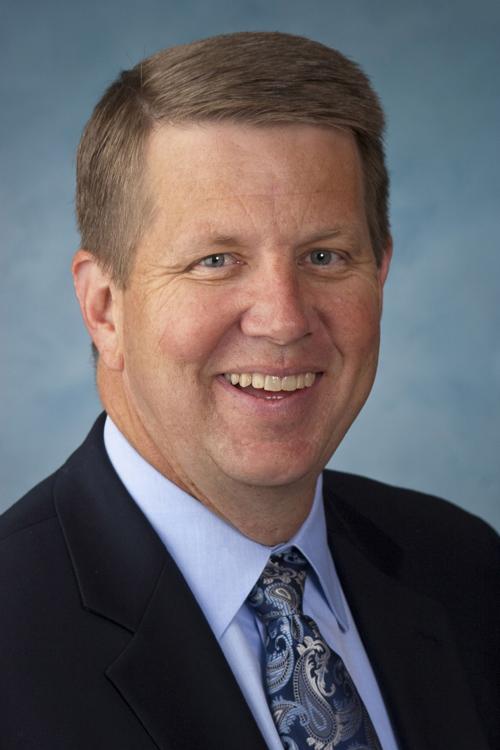
Cliff Robertson, MD, is senior vice president of divisional operations at Englewood, Colo.-based CHI and CEO of CHI Health, the system’s Nebraska/Southwest Iowa Division.
As CEO of CHI Health, he oversees 14 hospitals, 136 clinical locations and over 12,500 employees. Prior to joining the system in 2014, Dr. Robertson simultaneously served as interim CEO of Houston-based St. Luke’s Health System and COO of CHI Franciscan Health in Tacoma, Wash.
Dr. Robertson took the time to answer three key leadership questions from Becker’s.
Editor’s note: Responses have been lightly edited for length and style.
Question: Is it important for CEOs to have a public presence?
Cliff Robertson: A public presence is critically important for a CEO; in fact it was one of the biggest changes I experienced when I transitioned from COO to CEO.
I believe a CEO has an obligation to dedicate time toward community engagement because that leads to a public presence for the organization. I actively participate in the local Chamber of Commerce, am willing to meet with media to discuss the issues of the day and specifically meet with business leaders. These gatherings are not only “meet and greets,” but they give me an opportunity to share information about our organization’s strategic direction and initiatives. I also make a point of communicating with community stakeholders directly through monthly updates and video blogs. All of these efforts can be valuable and are designed to create a more public presence for CHI Health.
Q: What is the biggest challenge you face right now as a CEO?
CR: The biggest challenge all CEOs face is explaining the “why” to front-line staff and clinicians. The considerable changes taking place in healthcare today and accompanying disruption create doubt about the future and anxiety for all of us in healthcare.
I focus on helping our team understand “what” is changing and then the “why” behind the decisions we make as an organization. I learned a while ago the best thing I can do as CEO is help our team understand where we are going and at the same time answer their question of, “What does this change mean for me?”
Q: What is the greatest misconception people have about being a CEO?
CR: I think some folks assume I make decisions all the time. I actually believe in the wisdom of groups. That includes having our front-line staff involved in deciding how best to resolve our organizational problems. I see my role as a facilitator of groups that have to “get their hands dirty” as they help us solve the many challenges we face.


 HENRY KOTULA