The past year has been an eventful one for payers, from the tumultuous Affordable Care Act (ACA) exchange markets to potential mega-mergers. Insurers continue, however, to keep their efforts focused on lowering healthcare costs where possible, with the intention that quality of care is not sacrificed.
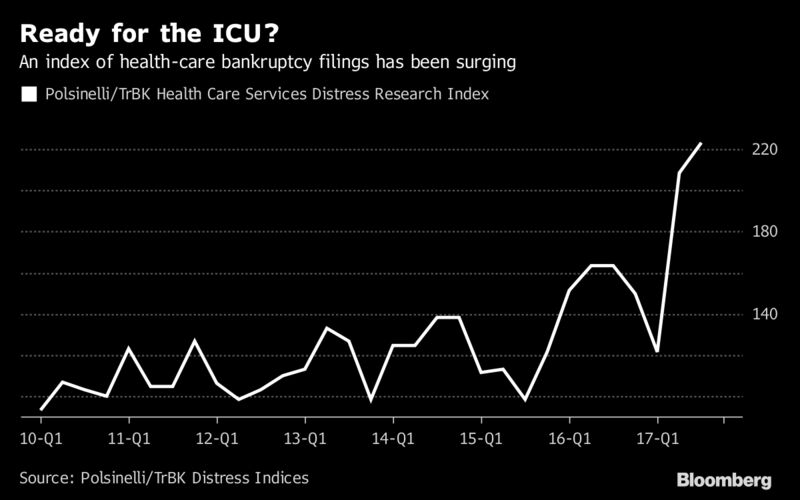
Those payer efforts are working. Healthcare spending growth dropped to the lowest level in nearly two years, and hospital spending growth lags behind all other healthcare sectors. Hospital spending increased by only 0.8% year-over-year in June, which was the slowest growth rate since January 1989.
Payers have ratcheted down hospital payments by creating policies with an eye toward providing care at less-costly locations, designing health plans that put more healthcare utilization costs on members and by replacing fee-for-service payments with value-based contracts. Providers have also teamed up with insurers in partnerships that look to offer better outcomes.
Looking ahead to next year, you can expect payers to implement more cost-saving measures and push for value-based contracting. Here’s a look at five payer trends to watch for in 2018, and some tips for preparing to deal with them.
1. Payers will continue to ramp up ways to cut costs
Insurance companies have created policies, designed plans and narrowed provider networks to bring down healthcare costs. They’ve shown success. Expect payers to accelerate those programs and policies and search for more cost-saving levers in 2018.
The most public example of health insurers cutting costs over the past year was Anthem’s policies to not pay for unnecessary emergency department visits or imaging services at hospitals. Anthem’s policies looked to nudge patients to less costly outpatient facilities, including urgent care centers and freestanding imaging centers.
Michael Abrams, co-founder and managing partner at Numerof & Associates, told Healthcare Dive that Anthem’s decision to not reimburse hospital outpatient MRI and CT scans without precertification is “an important message to the provider community.” Anthem’s policy is in response to “ballooning growth in outpatient imaging — both in volume and in unit cost.”
For hospitals searching for ways to improve their bottom lines, many health systems viewed imaging as a way to make up for lost reimbursements and less utilization elsewhere. However, Abrams said the payer’s message was that medical necessity is the stronger consideration and that unit pricing needs to reflect broader market pricing.
“Many provider institutions had turned this under-regulated service line into a profit center,” Abrams said. “Anthem’s action made it clear that such actions would not be acceptable.”
Aneesh Krishna, partner in McKinsey & Company’s Silicon Valley office, told Healthcare Dive payers will likely roll out similar policies for imaging, lab, diagnostic testing and low-risk surgeries. “We see a trend toward rationalizing the levels of payments across various sites of service,” he said. “Imaging-related initiatives are the first steps in that direction.”
In addition to pushing for more services outside of hospitals, Fred Bentley, vice president at Avalere, told Healthcare Dive that he expects payers to focus on readmissions. Providers will need to manage patients post-discharge and keep them healthy in their homes rather than in hospitals.
Though not as high profile as Anthem’s policies, payers have been narrowing provider networks to bring down costs. This has been especially true in ACA exchange plans and Medicare Advantage (MA). In fact, a recent Kaiser Family Foundation study found that 35% of MA enrollees were in narrow-network plans in 2015, while only 22% were in broad-network plans.
Bentley said narrow provider networks haven’t had a huge impact yet. However, the “significant value” associated with narrow and tiered provider networks will ultimately cause more payers to expand narrow provider networks in the employer-based market.
2. Greater emphasis on value-based care and contracting
Payers and the CMS have pushed for more value-based care and payments, but it’s been slow going.
“Payers see potential to contain costs and improve quality in such contracts. However, the pace of adoption is tempered by provider resistance to taking on risk and by payer reluctance to push providers to do so before they are operationally prepared to be successful,” Abrams said, referencing findings in Numerof & Associates’ 2017 State of Population Health Survey.
Krishna believes payers may move more into bundled payments, bonus payments and capitation as it pushes providers to care for the whole patient rather than receiving payments for individual services.
Krishna said the shift toward cost-effective sites of service will require payers to align provider incentives to get the best outcomes. It also gives providers greater flexibility to choose the right care for their patients. This will additionally mean payers will need to share the right data to providers. “Increasing levels of data availability and easier integration between payer and provider systems will make the transition easier and scalable,” Krishna said.
“Increasing levels of data availability and easier integration between payer and provider systems will make the transition easier and scalable.”
Aneesh Krishna
Partner, McKinsey& Company’s Silicon Valley office
Steve Wiggins, founder and chairman of Remedy Partners, told Healthcare Dive payers will continue to leverage payment models that encourage patients to find care in the most cost-effective locations and use those service efficiently. This will lead to more bundled payments that trigger at diagnosis rather than only at inpatient admission, which is already happening in Medicare, he said.
“Orthopedics, all post-acute services, oncology care, most elective surgeries, all episodes that patients control and a wide range of chronic conditions lend themselves to bundled payments that start at diagnosis,” Wiggins said.
3. More outpatient and virtual care utilization
Payers have been pushing more patients to outpatient facilities as a way to cut costs.
“Care delivery is moving out of the acute care setting and into the community. Such a trend is responsive to consumer demands for fast, convenient access, and it offers the potential for higher volume and lower costs in specialized clinic settings. An increasing portion of hospital system revenues comes from outpatient services, and that ratio will continue to define the progress of systems in a market-driven, value-based healthcare environment,” Abrams said.
Wiggins said innovations will also play a larger role in keeping down costs. He said shifting away from traditional delivery models and fee for service to bundled payment models will lead to more remote monitoring and telemedicine.
“Bundled payments hold great potential to become the driver of innovations that leverage the explosion of wearables, remote monitoring and greater patient engagement,” Wiggins said.
A recent KLAS Research and the College of Healthcare Information Management Executives survey found that reimbursement remains the main barrier to telehealth expansion, but Krishna said virtual care will play a bigger role in the coming year, including for initial consultations and follow-up visits that don’t require an onsite doctor visit.
“Overall, these trends will likely shift significant patient volume from higher-intensity settings to lower-intensity settings while maintaining — or in some cases even improving — quality of care or patient experience,” Krishna said.
Abrams said the cost consequences of virtual care are not fully known, but consumers want that access to providers. More virtual care could include nurses offering guidance on day-to-day health issues and physicians monitoring and visiting virtually with chronically ill patients at home.
“As larger and better capitalized healthcare systems move toward risk-based contracting, we expect to see growth in the use of such services,” Abrams said.
4. Consumers want cost, quality transparency
Consumers are demanding more healthcare cost data on procedures. A recent HealthFirst Financial Patient Survey found that 77% of healthcare consumers say it’s important or very important to know costs before treatment.
Higher out-of-pocket costs and high-deductible health plans are the biggest reasons for this greater interest in transparency. A recent Kaiser Family Foundation study found that out-of-pocket spending is outpacing wage growth.
Deductibles went from accounting for less than 25% of cost-sharing payments in 2005 to almost half in 2015. The average payments toward deductibles rose 229% from $117 to $386, and the average payments toward coinsurance increased 89% from $134 to $253 in that period. Overall, patient-cost sharing increased by 66% from an average of $469 in 2005 to $778 in 2015.
With members taking on more healthcare utilization costs, payers and employers view cost and quality data as a key to reducing healthcare costs. However, the information is not always easy to find for consumers.
Bentley said consumers are frustrated and confused by their bills. Health systems understand they need to provide pricing and outcomes information and payers like Anthem have created comparison shopping tools for consumers, he said.
That is just the start of a greater move toward consumerism as patients take on more out-of-pocket costs.
“In the new market-based healthcare landscape that is evolving, buyers will look for transparency, accountability for cost and quality across the continuum and consumer choice based on real competition,” Abrams said.
5. More payer/provider partnerships
Payers have pushed more cost controls that are affecting provider bottom lines, but there have been some moments this year when payers and providers have seen eye-to-eye. Providers and payers have increasingly worked collaboratively.
Payer-provider partnerships vary in type, size, location and model. There are 50/50 joint ventures with co-branding, and less intensive partnerships like pay for performance, accountable care organizations, patient-centered medical homes and bundled payments. Oliver Wyman found the partnerships can be broken down depending on providers’ appetite for risk.
They involve national payers like Aetna, Cigna and various Blues and new players in the payer space like Oscar Health and Bright Health.
Bentley said healthcare is becoming a “messy hybrid world” in which payers get more involved in the provider side and vice-versa. Increasingly, providers and payers are more concerned about managing patients’ health rather than viewing them as volume. Bentley said to expect more experiments and partnerships as the lines in healthcare continue to get blurred.
How hospitals and providers should prepare for these trends
Now, the important question for hospitals and providers is: What should we do to get ready?
Here are five suggestions from experts:
- Strengthen your acute care core. Krishna suggested providers do this by addressing the acute care cost structure, improving care coordination/continuity and expanding efforts to deliver lower costs of care in post-acute care.
- Think about a patient’s total episode of care, including what happens to patients long after discharge. Wiggins said providers should think like a product manager in industrial America who is responsible for the entire value chain. Stop organizing hospitals into specialty silos and organize around patient conditions, episodes and needs. Providers should also track behaviors and identify failures and inefficiencies in patient care. “With those insights, dive into value-based payment models, especially bundled payments that are most closely aligned with the role hospitals play,” said Wiggins.
- Consider your approach to value-based care and long-term transition in the market. Krishna said systems need to find the right balance to move into value-based care. Moving too quickly from fee-for-service will reduce near-term earnings, but moving too slowly could leave you behind.
- Bolster revenue cycle management capabilities to manage both patient responsibility and payer denials, said Krishna. The revenue cycle is a key aspect for hospitals, and that’s morphing as patients take on more responsibility. Tracking down patient payments is quite different from working with payers, but hospitals and health systems will need to make sure they are prepared to handle both.
- Focus on efficiencies on operating costs. Hospitals and health systems have turned to M&A as a way to improve profit margins. Some systems like Community Health Systems, which is divesting at least 30 hospitals this year, are shedding unprofitable facilities. Health systems will need to continue that process to sell off facilities that don’t make sense financially or don’t fit a health system. “I do think it is time for them to review their portfolio of assets on inpatient and outpatient to figure out is this something we need to own,” Bentley said.










 HENRY KOTULA